Minecraft Dungeons II drops the mission-select table that defined the first game and replaces it with a world you move through directly. That single change reshapes how you explore, fight, and travel between fights. If you are wondering whether the sequel counts as open world, the answer depends on what you expect that phrase to mean.
Quick answer: Yes, Minecraft Dungeons II uses an interconnected open world you can roam freely, but it is not a build-anything survival sandbox like Minecraft. It stays an action RPG built around combat, loot, and quests.
What “open world” means in Minecraft Dungeons II
The original Minecraft Dungeons sent you from a central camp into isolated levels, each with a clear start and finish. The sequel removes that structure. Instead, you travel across large, connected regions without picking stages off a menu between runs.
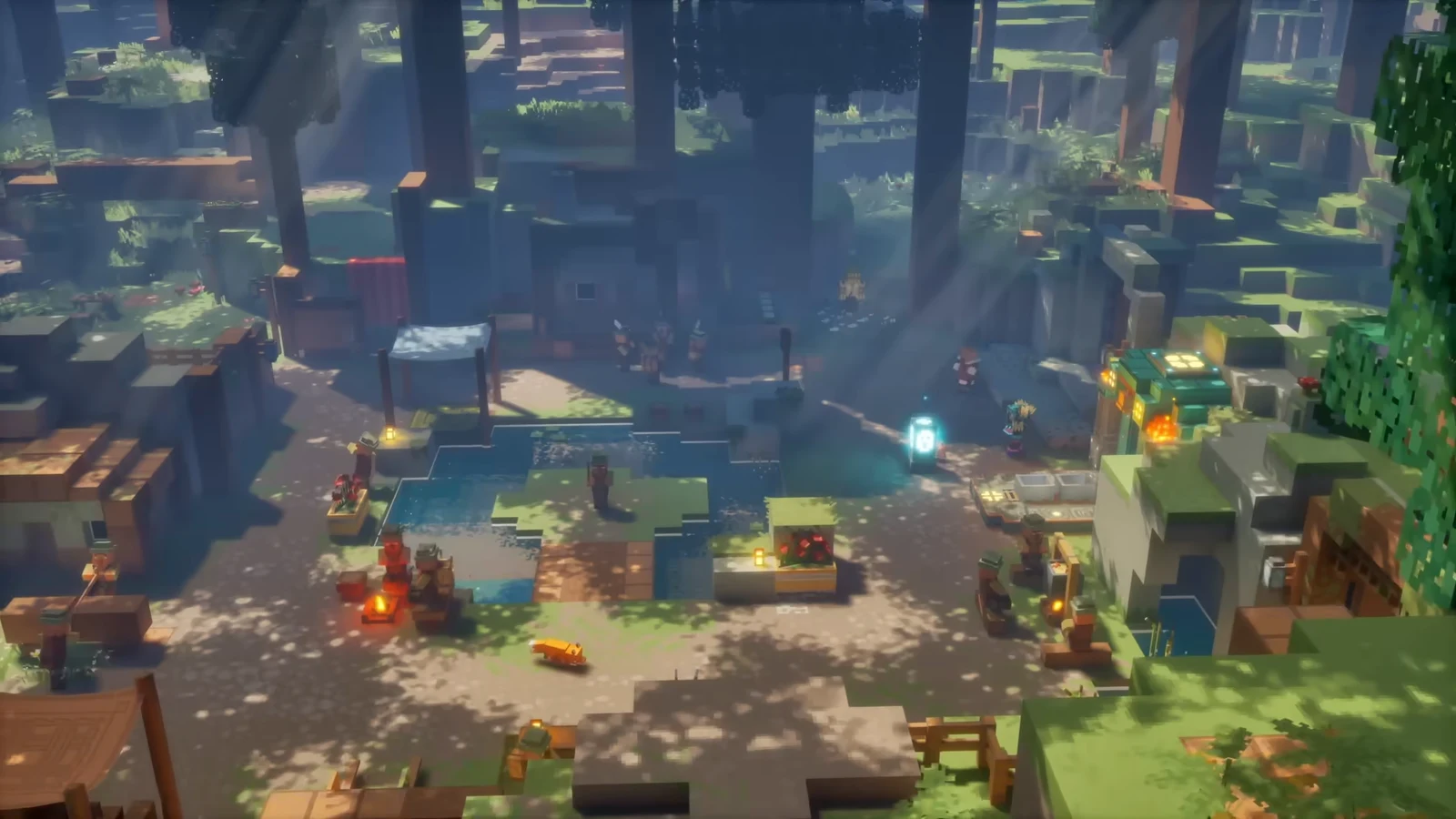
The Overworld is now a single fixed environment rather than a set of separate mission maps. Gameplay shown during Xbox Gamescom confirmed you can move seamlessly across these regions, discovering settlements, points of interest, and dangerous encounters along the way. Points of interest cover narrative events, side quests, structures, caves, forgotten ruins, and fast-travel hubs.
Some areas, like caves and ruins, can have layouts that change between visits, so exploration stays unpredictable even in a fixed world. A world map helps you navigate, and you can teleport to a nearby friend if you lose your bearings.
Where you can go: the Overworld and the Sift
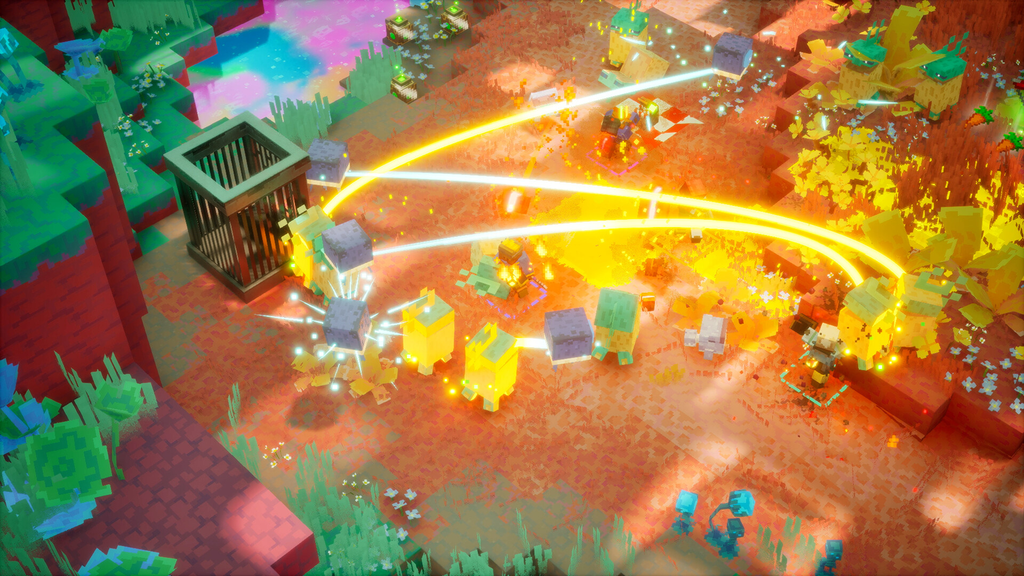
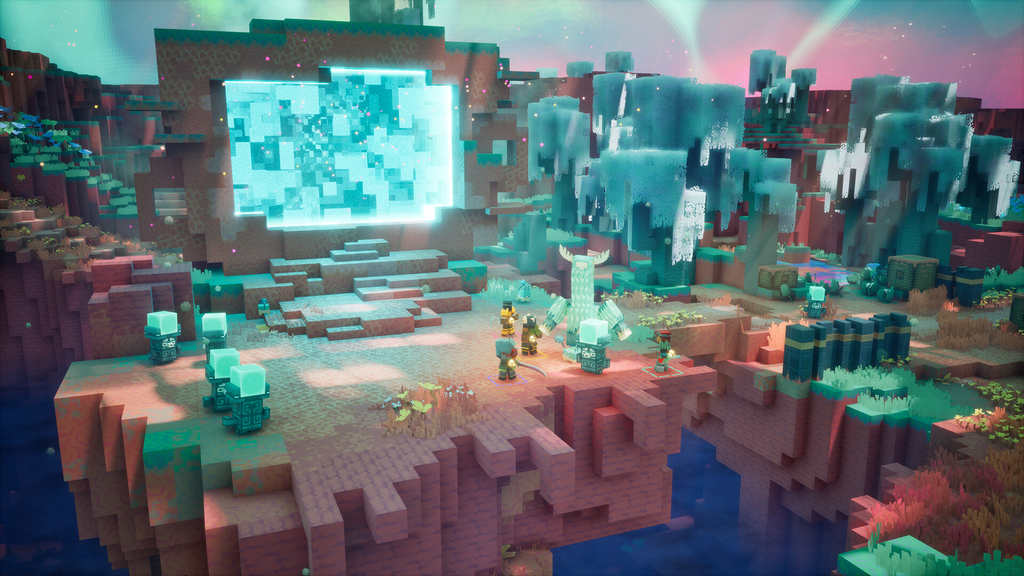
The game spans two main dimensions. The Overworld is your home base and starting point, while the Sift is a new dimension reached through rifts tearing open across the map. Below are the locations revealed so far.
| Location | Dimension | Role |
|---|---|---|
| Brave Haven | Overworld | Central hub where your journey begins |
| Honeycomb Fields | Overworld | Explorable region |
| Howling Woods | Overworld | Explorable region |
| Frozen Highlands | Overworld | Explorable region |
| The Sift | Separate dimension | Uncharted lands reached through rifts |
Brave Haven is where you prepare for later adventures and set out into the wider world. The Sift introduces threats and mechanics separate from anything in the Overworld, and both regions tie into the main story as you track down the source of the strange events unfolding.
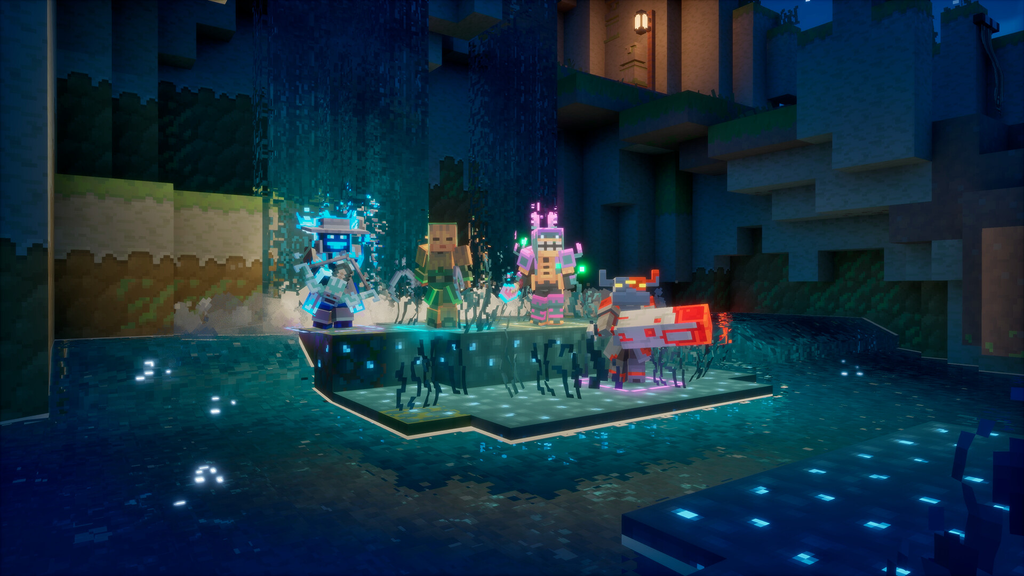
Fast travel across the map
Because the world is large, you will find fast-travel hubs placed at important checkpoints throughout the regions. During the Gamescom showcase, the developers used a minecart fast-travel system to jump from Brave Haven straight to a boss fight area, so long trips do not force you to walk the whole way back.
What the open world does not let you do
Free movement does not mean full sandbox freedom. Minecraft Dungeons II remains an action RPG, so you cannot break blocks or build structures the way you can in vanilla Minecraft. The world is there to explore and fight through, not to reshape.
- No block breaking or building.
- No unrestricted access to every area from the start.
- Focus stays on combat, loot, quests, and co-op play for up to four players.
The trade-off is depth in combat instead of construction. Buildcrafting comes from gear, armor split into four pieces, talismans, and an expanded set of weapons rather than placing blocks. You can find full details on the official Minecraft Dungeons II page.
So the short version holds up. Minecraft Dungeons II is open world in the sense that it is one connected space you roam at will, split between the Overworld and the Sift, but it is not the block-by-block sandbox that carries the Minecraft name elsewhere.