
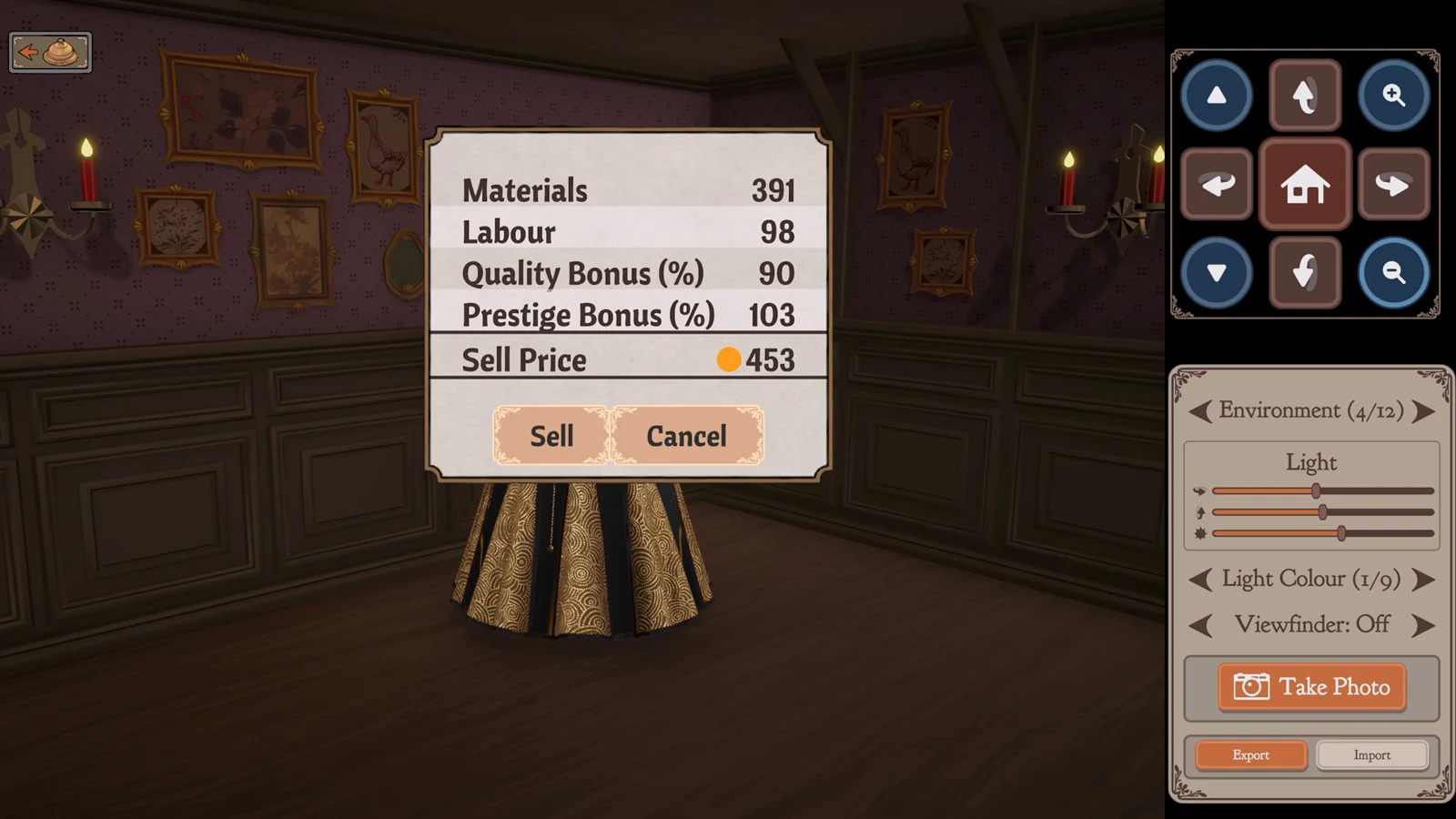
Commissions in Dressmaker pay out, but the real gold machine is selling off-the-rack dresses. Every off-the-rack sale returns a profit because the game bakes your material cost, labour, quality, and prestige into the price before you ever hit Sell. Build the cheapest possible dress, load it with one expensive accessory, and the percentage bonuses do the rest.
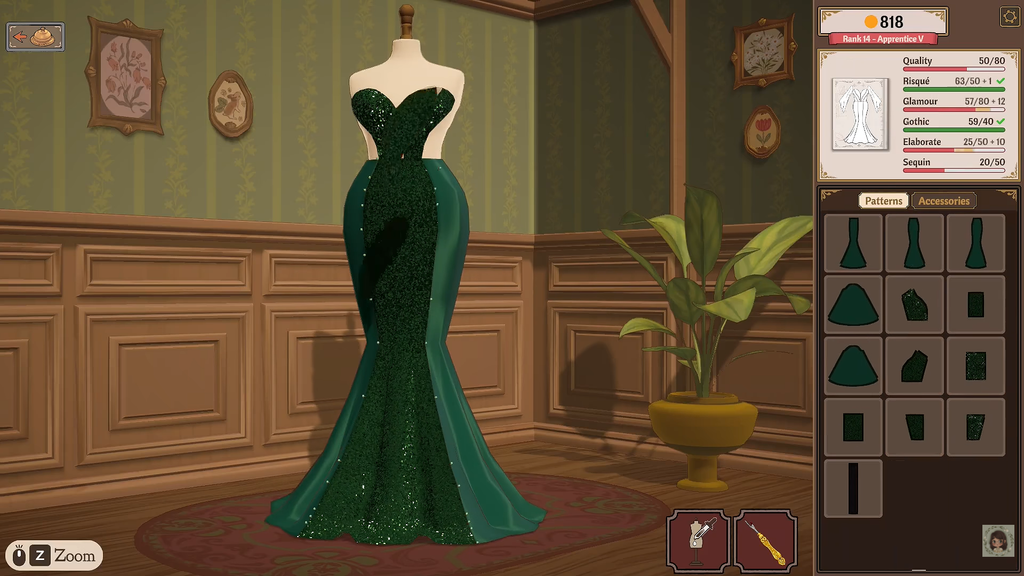
Quick answer: Make a strapless bodice and pencil skirt out of free burlap, buy as many of your single most expensive placeable accessory as you can afford, Shift-click them all onto the sewn dress, and sell. You will net gold every time.
How the off-the-rack sell price works
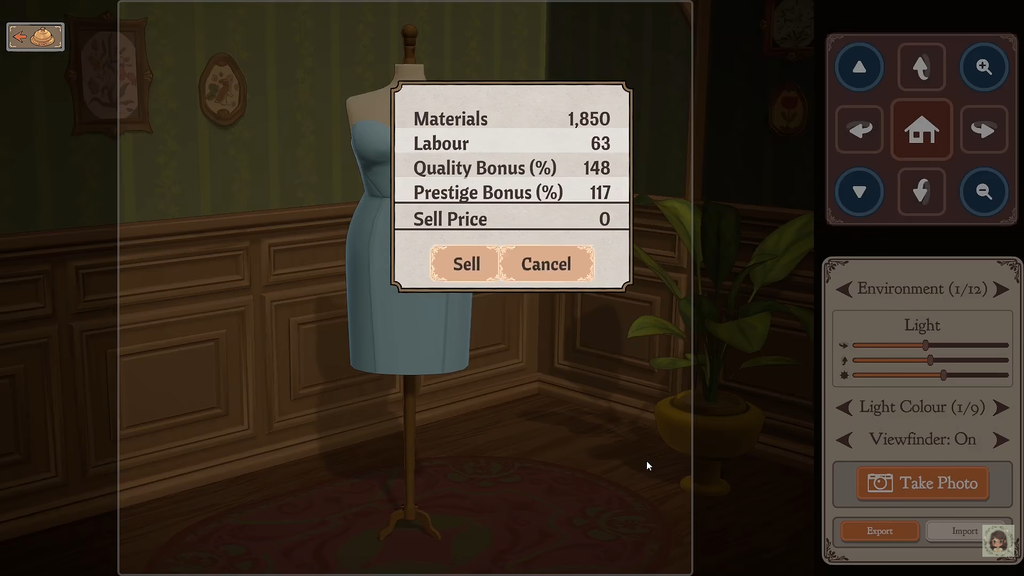
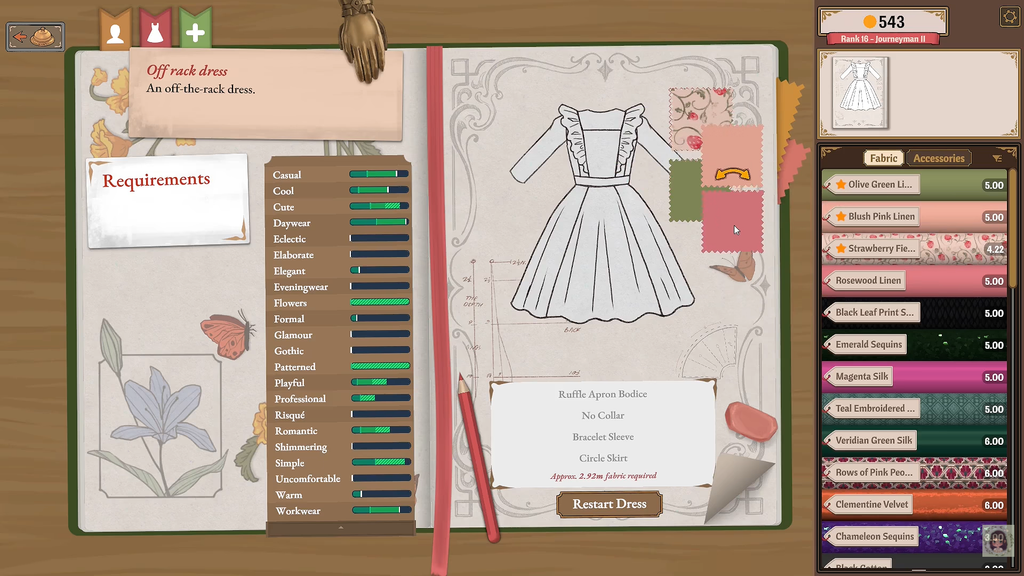
Off-the-rack designing unlocks after your first few commissions, when a new tab appears in the sketchbook that lets you create a dress with no client requirements. From that point, selling a finished off-the-rack dress always pays more than it cost to make.
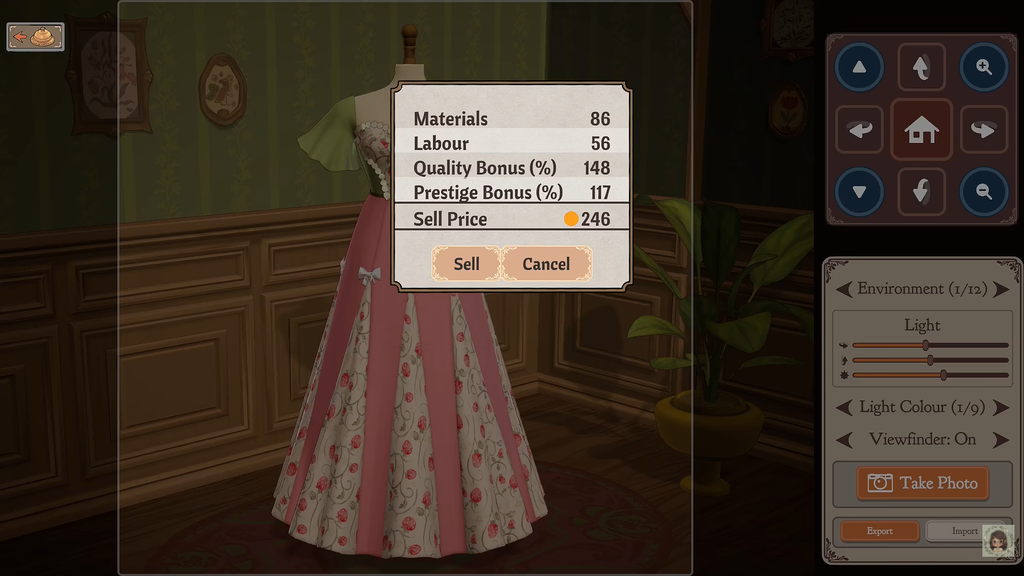
The sale price comes from four numbers. The game adds your material and labour costs, then multiplies that total by your quality and prestige bonuses:
(Materials + Labour) × (Quality% / 100) × (Prestige% / 100) = Sell PriceBecause the bonuses are multipliers, more money spent on materials means more money back. A dress with 6,750 gold in materials and labour at 150% quality and 111% prestige sells for 11,239 gold. That is why pouring gold into one dress snowballs instead of breaking even.
- Materials — the fabric and accessories you used.
- Labour — added automatically based on the work.
- Quality Bonus — up to 150%, set by how cleanly you cut and sew.
- Prestige Bonus — rises with your rank as you progress.
The fast burlap and accessory method
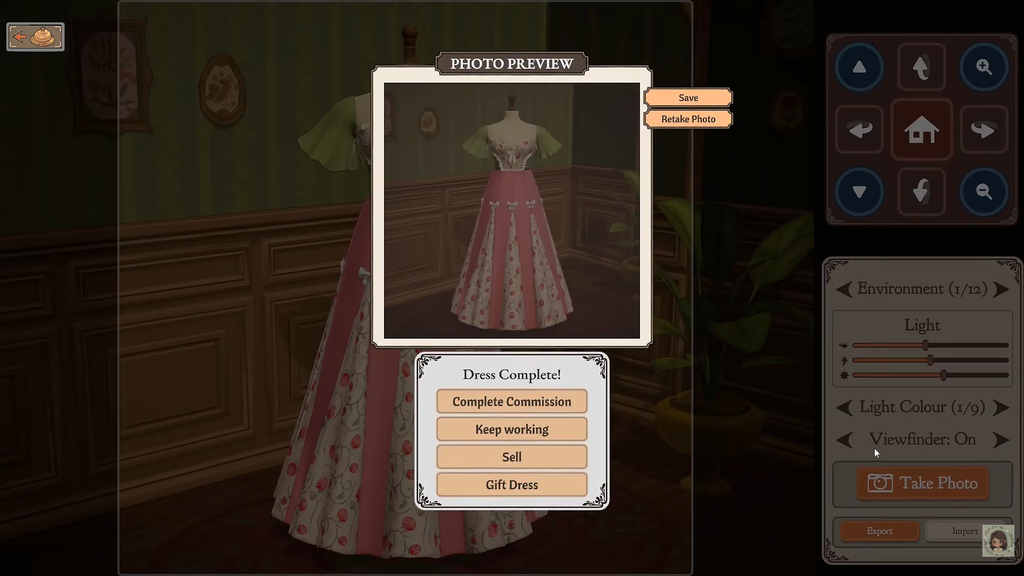
Placing a large number of accessories in one dress can also pop a few of the game’s achievements along the way.
What the profit looks like in practice
Reinvesting each sale into the next dress scales fast. The numbers below come from three brooch dresses made back to back, each one buying more brooches than the last. The third ended up with over 700 brooches.
| Dress | Materials | Sell Price | Profit |
|---|---|---|---|
| Dress 1 | 9,240 | 16,259 | 7,019 |
| Dress 2 | 16,320 | 28,887 | 12,567 |
| Dress 3 | 28,880 | 51,539 | 22,659 |
Quality held at 149–150% and prestige at 115–116% across all three, so the rising material spend is what drove the bigger returns. All three dresses took under 30 minutes and pushed a balance from below 10,000 to over 50,000.
You can push harder with an autoclicker on the accessory placement. A single dress using around 1,000 cut diamonds can return roughly 44,000 gold.
Keep prestige climbing with commissions
Prestige is a direct multiplier on every off-the-rack sale, and completing commissions is the main way to raise it. Keep taking client requests alongside your burlap runs so each future dress sells for more. When you do take a commission, stick to what the client asks for. Adding extra fabrics and accessories they did not request can cost more than the payout and turn the job into a loss.
Save gold while you build the loop
A few habits stop you from leaking the gold you are trying to grow:
- Recycle unwanted pattern pieces before cutting. Dropping a piece into the recycle bin restores the uncut fabric so it is not wasted.
- Check the exact fabric requirement on the draft, then dial the shop slider down to buy only that amount instead of a full bolt.
- Keep fabric scraps. Cut smaller skirt panels from leftovers and sew tiered patchwork dresses to sell rather than binning the remnants.
You know the loop is working the moment the Sell window shows a number higher than what you spent on materials. Finished burlap dresses look chaotic once they are buried in diamonds or brooches, but they sell regardless, and each sale refills the bank for a bigger next one.