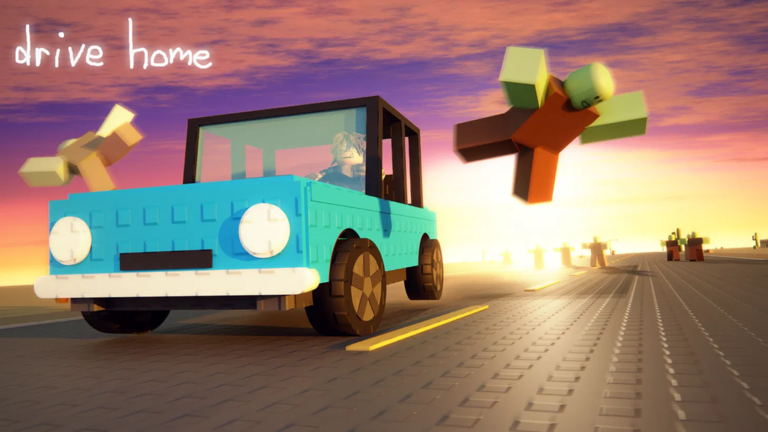
drive home is an open-world survival driving game on Roblox built around one long, dangerous road. You wake up in a desert garage next to a broken-down car, piece the vehicle back together, and set off down an endless highway crawling with zombies. The whole run is a loop of keeping the car running, scavenging parts from wrecks, and pushing toward the next checkpoint while fighting off whatever the road throws at you.
Quick answer: It is a zombie-themed road trip survival game where you repair and upgrade a single car using salvaged parts, fight through stops like Las Dunas, and claim a jet booster to climb the mountain pass toward home.
The core loop: build the car, keep it running
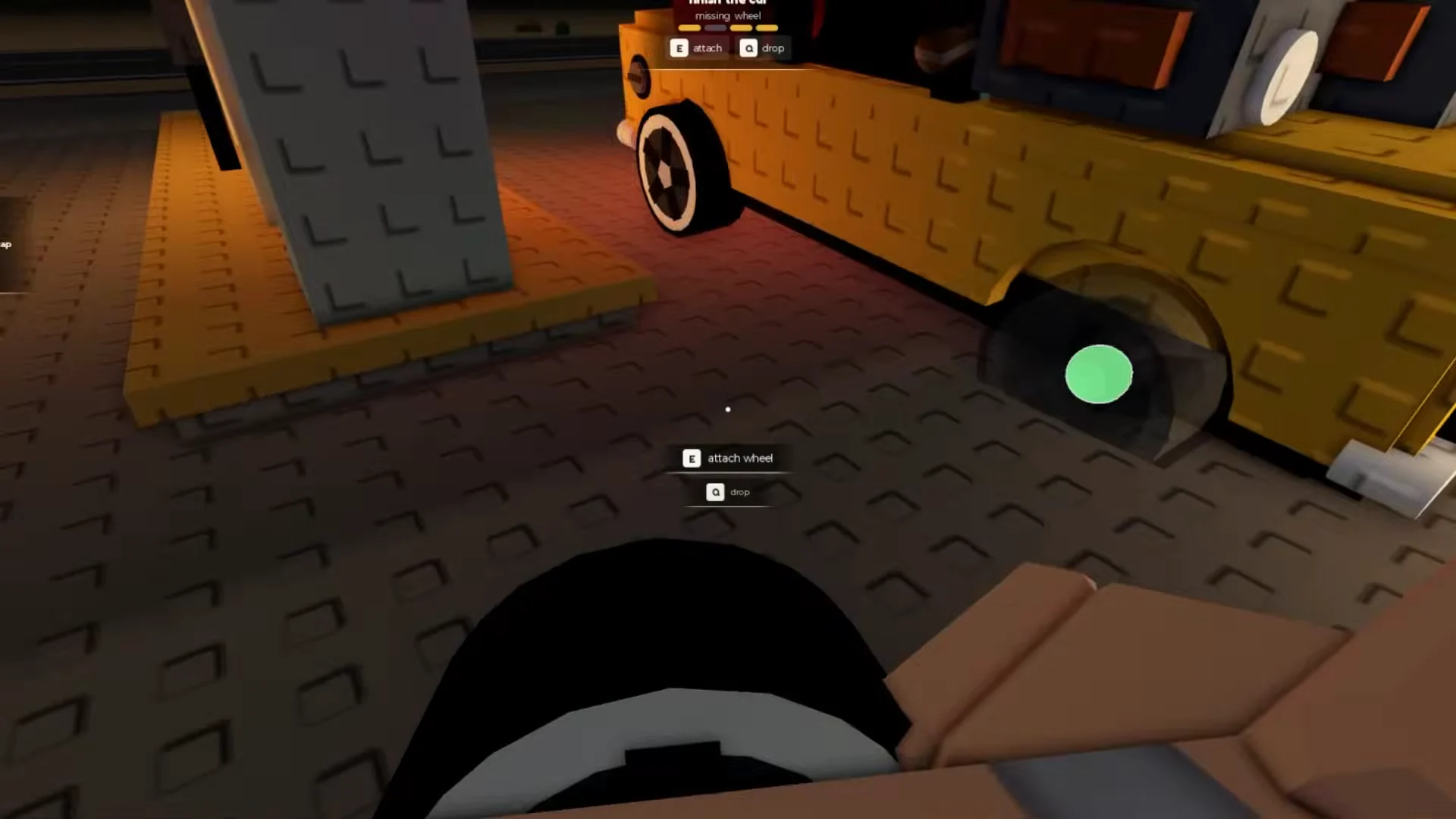
The game opens outside an open garage in the desert, with a yellow car that is missing its wheels. Before you can drive anywhere, you fit the wheels and get the vehicle mobile. A car in drive home only works when it has its core functional parts in place, which means wheels, an engine, a battery, and fuel tanks.
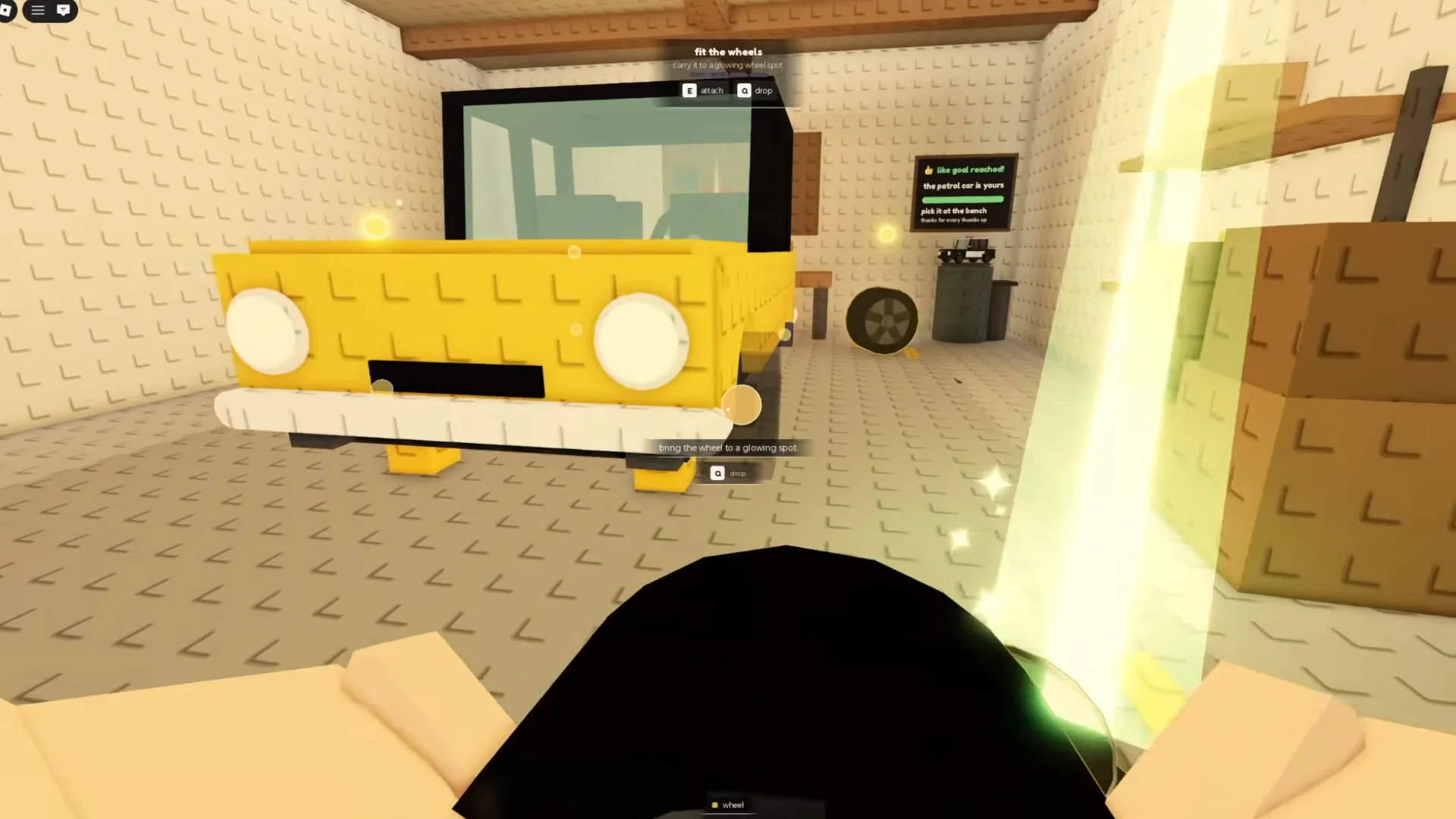
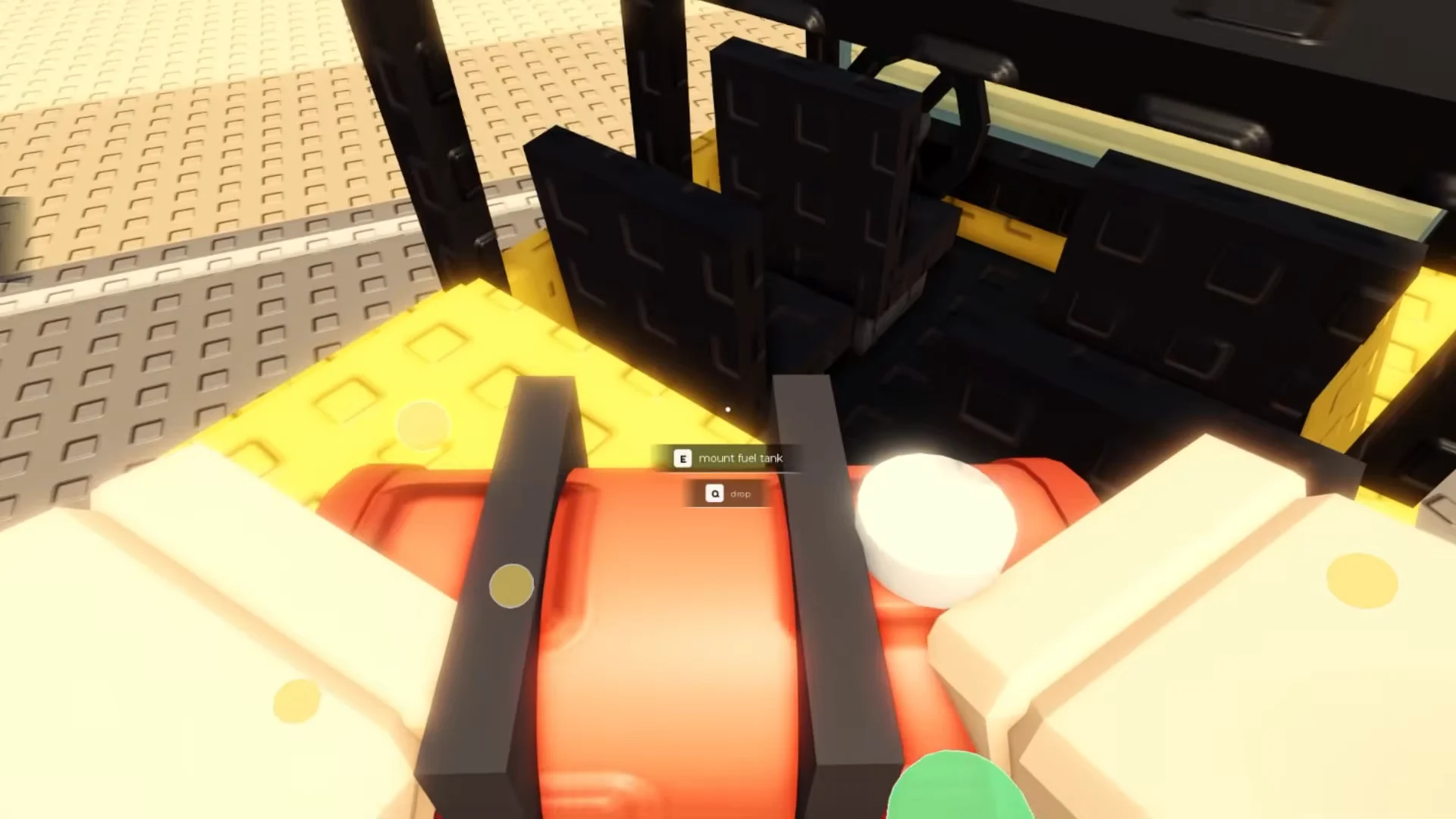
Parts are not handed to you. You strip them off the wrecked vehicles scattered along the road. The game teaches this early with a simple two-button flow: one press pulls a part off a wreck, and a second press bolts it onto your own car. Mount points glow with green and yellow interaction circles so you can see exactly where a battery, engine, or fuel tank slots in.
The road and the zombies
Once you drive out of the garage, the highway stretches on with no clear end. Zombies wander across the lanes, and you can run many of them down from behind the wheel. Tutorial billboards line the early stretch to explain the controls, and a quest card tracks your progress.
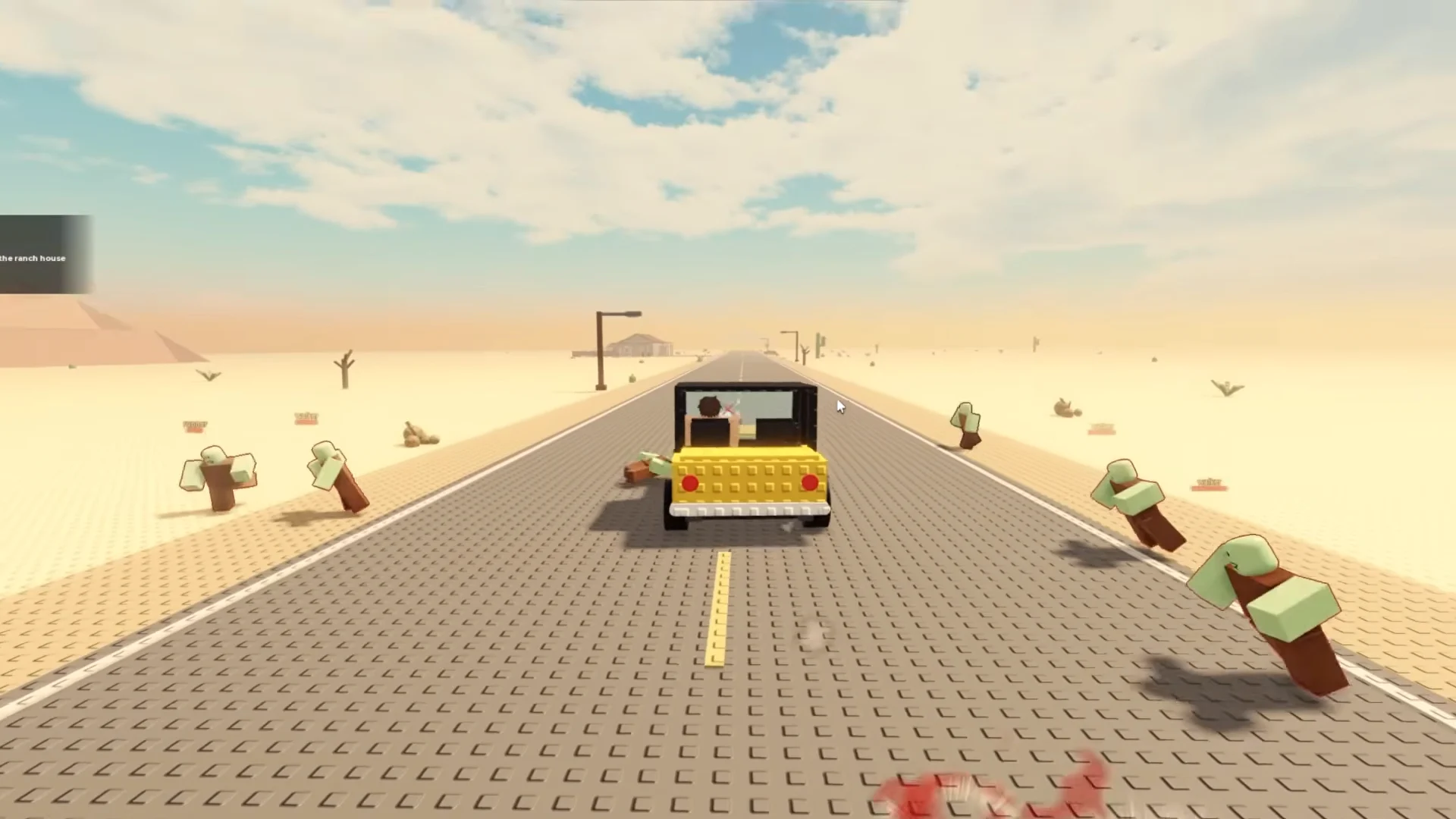
Time of day matters. The desert runs bright at first, then shifts to night as you travel, forcing you to switch on the car headlights. Night is when the threat ramps up, with signs warning that the dead come out after dark. Service stops go dark and fill with zombie hordes that are better handled with a melee weapon than with the car.
Scavenging wrecks for parts and fuel
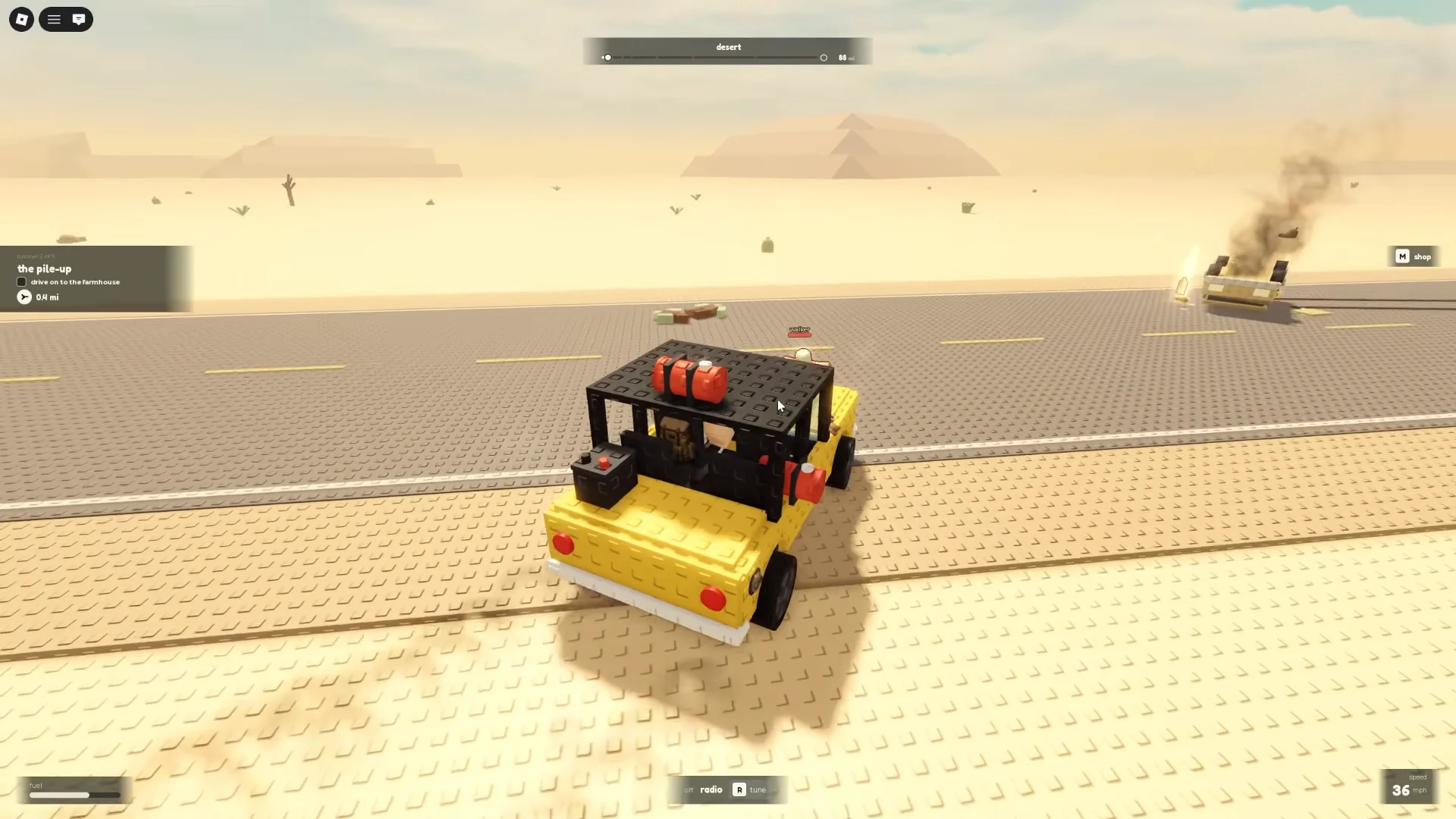
A major stop early on is “the pile-up,” a crash of tangled cars you can strip for supplies. Here you pull a battery, an engine, and fuel tanks, mounting each onto your car. Fuel is a running concern, so you keep an eye out for jerrycans and spare tanks to carry extra range.
Side stops hold more than just engine parts. A fenced water tower has ladders to climb and leads into melee combat. An abandoned two-story house further down the road holds food and gear worth searching for.
Weapons and consumables
You arm up almost immediately in the garage, grabbing a revolver and ammo and loading it before heading out. The gun is a standard six-shot revolver, which pairs well with melee for crowd control. A frying pan turns up as an early improvised weapon too.
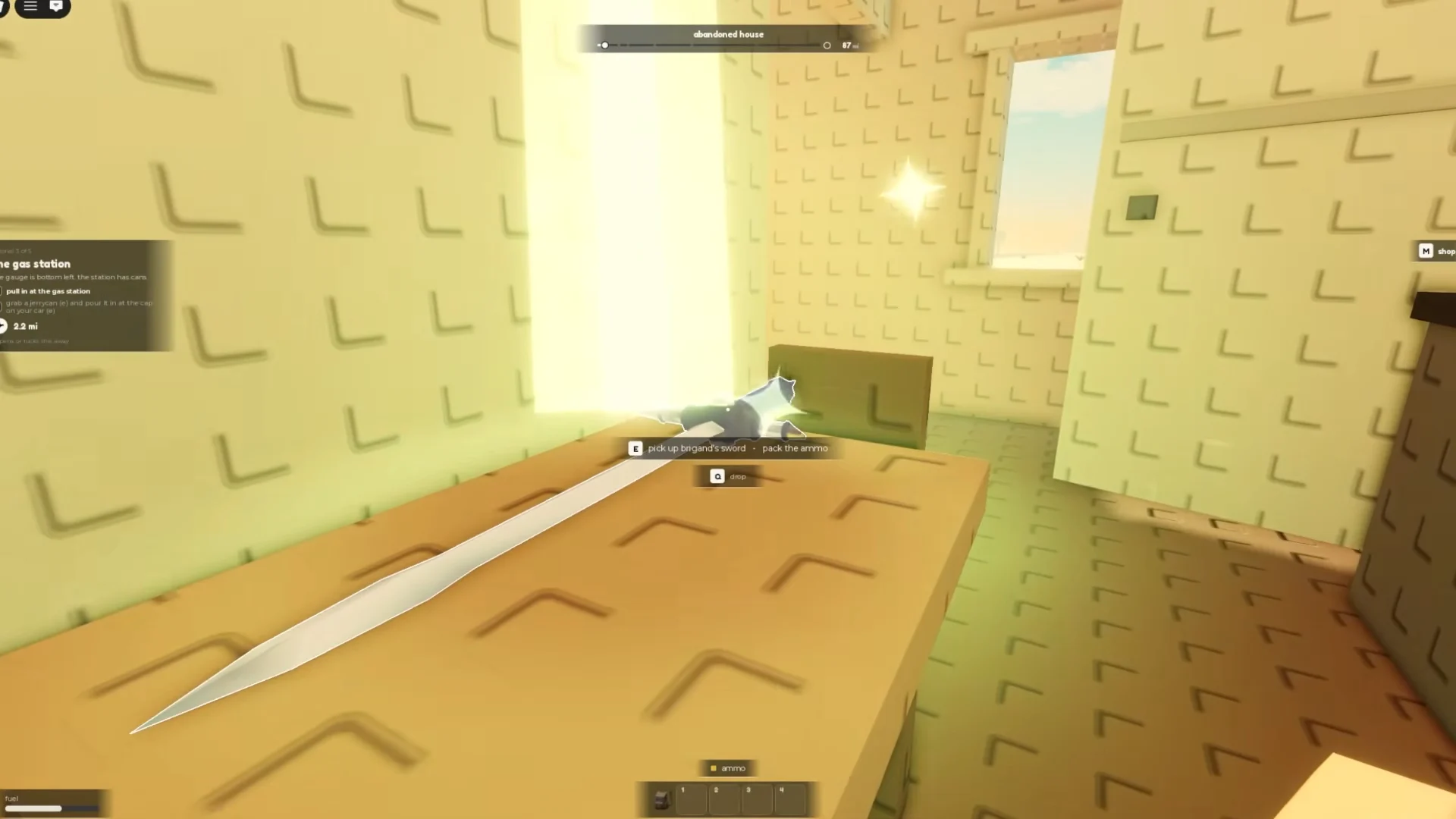
The abandoned house holds a stronger melee option, the brigand’s sword, which becomes the go-to tool for cutting through packed hordes at night. Food and drink round out the loot, with burgers and chocolate milk acting as consumables you collect while exploring.
Upgrades along the route
Stops double as upgrade points. At a night service station you can attach better wheels, refuel from jerrycans, and bolt on extra fuel tanks. Whitewall wheels are one such swap, replacing the basic tires you started with.
A windmill outpost yields a suspension spring, another car component you can mount. The pattern holds throughout: every named landmark is both a combat encounter and a chance to improve the car before the next stretch.
Checkpoints on the journey
The road is broken into named stops, each with its own purpose. These mark your progress and give you targets to reach before fuel or daylight runs out.
| Stop | What it offers |
|---|---|
| The pile-up | Battery, engine, fuel tanks from wrecks |
| Water tower | Climb and melee combat, whitewalls |
| Abandoned house | Brigand’s sword, burgers, wheels |
| Service station | Wheel swaps, refuel, extra tanks |
| The windmill | Suspension spring |
| Las Dunas tunnel | Entrance to the city of Las Dunas |
Las Dunas and the jet booster
Past the mountain highway, you reach the Las Dunas tunnel, which leads into a neon-lit city strip marked as a quarantine zone. Signs tell you the city is closed and to turn back, but the route forward runs through it. The draw here is “the dune,” a casino advertising a grand prize on its top floor.
That grand prize is a jet booster, and claiming it means clearing the casino floor by floor. You fight up through the building with the revolver and sword, past bars, buffet and ballroom areas, and staff staircases, until you reach the top-floor prize room and defeat the enemies guarding it.
The jet booster is too big to carry in your backpack, so you take it back down to the street and mount it directly onto the car before leaving the city.
The mountain pass home
With the jet booster fitted, the car can crash through road blockades and truck barricades that would otherwise stop you. The freeway home points you toward a destination 88 miles out, and the final stretch climbs Lucera Pass toward a summit 18 miles ahead.
The mountain grades are steep enough to need low gear, and hazards like ice appear on the road. Floating golden boost rings line the climb. Driving through them feeds the jet booster, and firing it rockets the car up slopes it could not manage on engine power alone. That combination of boost rings and the jet booster is what carries the run into the higher mountain stretches.
Taken as a whole, drive home keeps a simple idea moving across a long map. You are always doing one of three things: driving, fixing the car, or fighting. Each landmark layers a new part, weapon, or upgrade onto the vehicle, and the jet booster from Las Dunas turns the slow desert crawl into a mountain-climbing machine for the final push toward home.