Nonolith starts out looking like a tiny block-building sandbox. Its new game overview trailer, shown during The MIX Fall Game Showcase 2026, spends two minutes taking that impression apart. The game is a 2D puzzle-exploration game. Every block, jump pad, and piston has uses the game never explains, and finding those uses is how you make progress. The narrator calls it a “Metroid-brania,” which is a fair summary of the idea.
Quick answer: Nonolith is a single-player 2D puzzle metroidvania from Justcamh, published by Inner Pocket. It is planned for Q4 2026 on Steam, and a free demo is playable now.
Nonolith release date, platforms, and demo
Nonolith does not have a specific day-and-time launch yet. Its Steam listing gives a planned window of Q4 2026, which is the quarter we are in now. No exact date has been confirmed.
| Detail | Nonolith |
|---|---|
| Developer | Justcamh |
| Publisher | Inner Pocket |
| Release window | Q4 2026 |
| Platforms | Windows, macOS, SteamOS + Linux |
| Storage | 100 MB |
| Demo | Available on Steam |
| Interface languages | 11 |
| Soundtrack | Clockmaker |
The game needs a 64-bit processor and operating system on Windows 10 or later. Mac players need an Apple M1 or Intel Core M chip. It supports Steam Achievements, Steam Cloud, and Family Sharing, and it is tagged for controller play. Its interface is available in English, French, Italian, German, Spanish (Spain), Japanese, Korean, Polish, Brazilian Portuguese, Russian, and Simplified Chinese. There is no voice audio or subtitle support in any language. The demo lives on its own store page, and the full game can be wishlisted on the Nonolith Steam page.
How Nonolith’s block manipulation works in the trailer
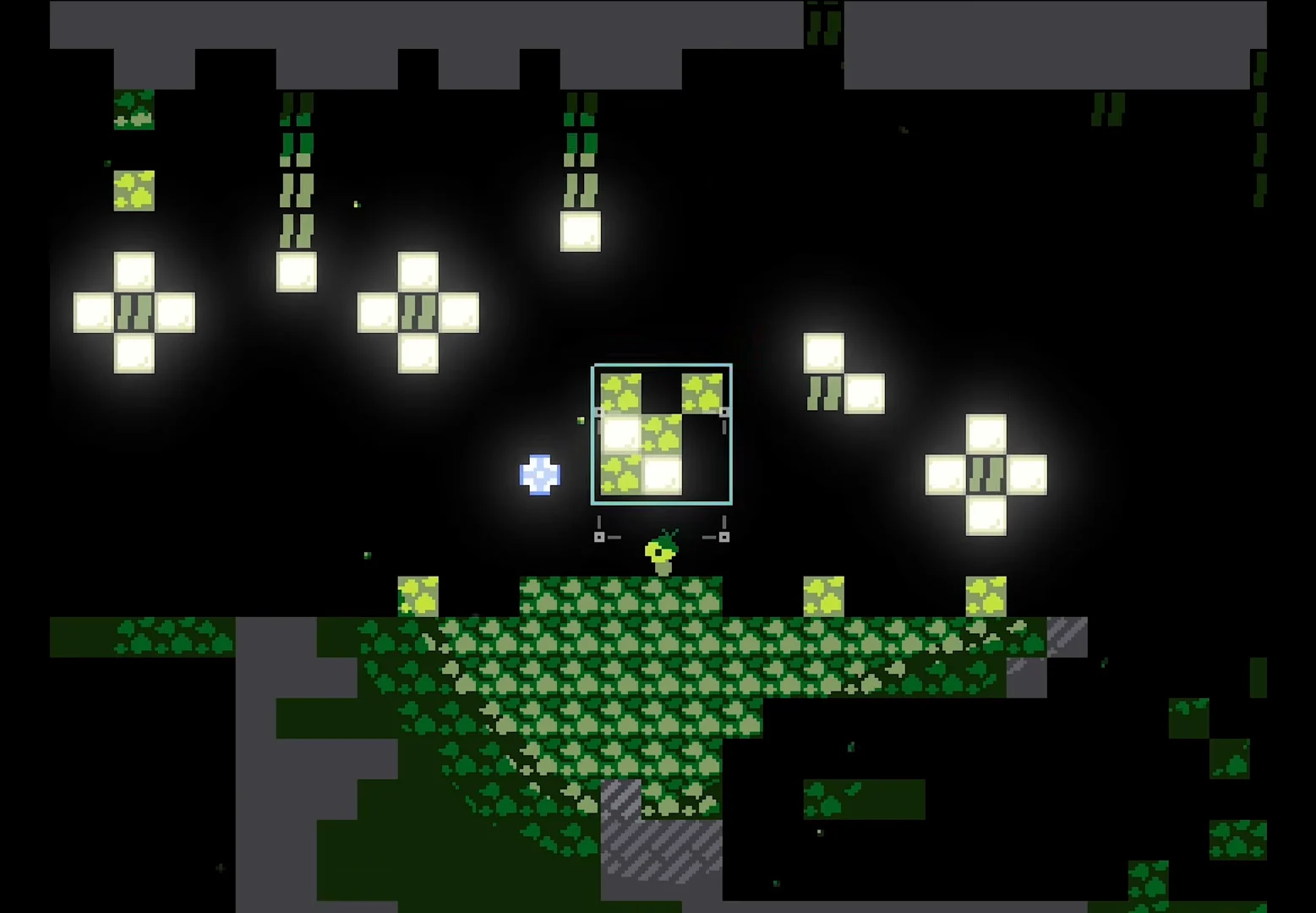
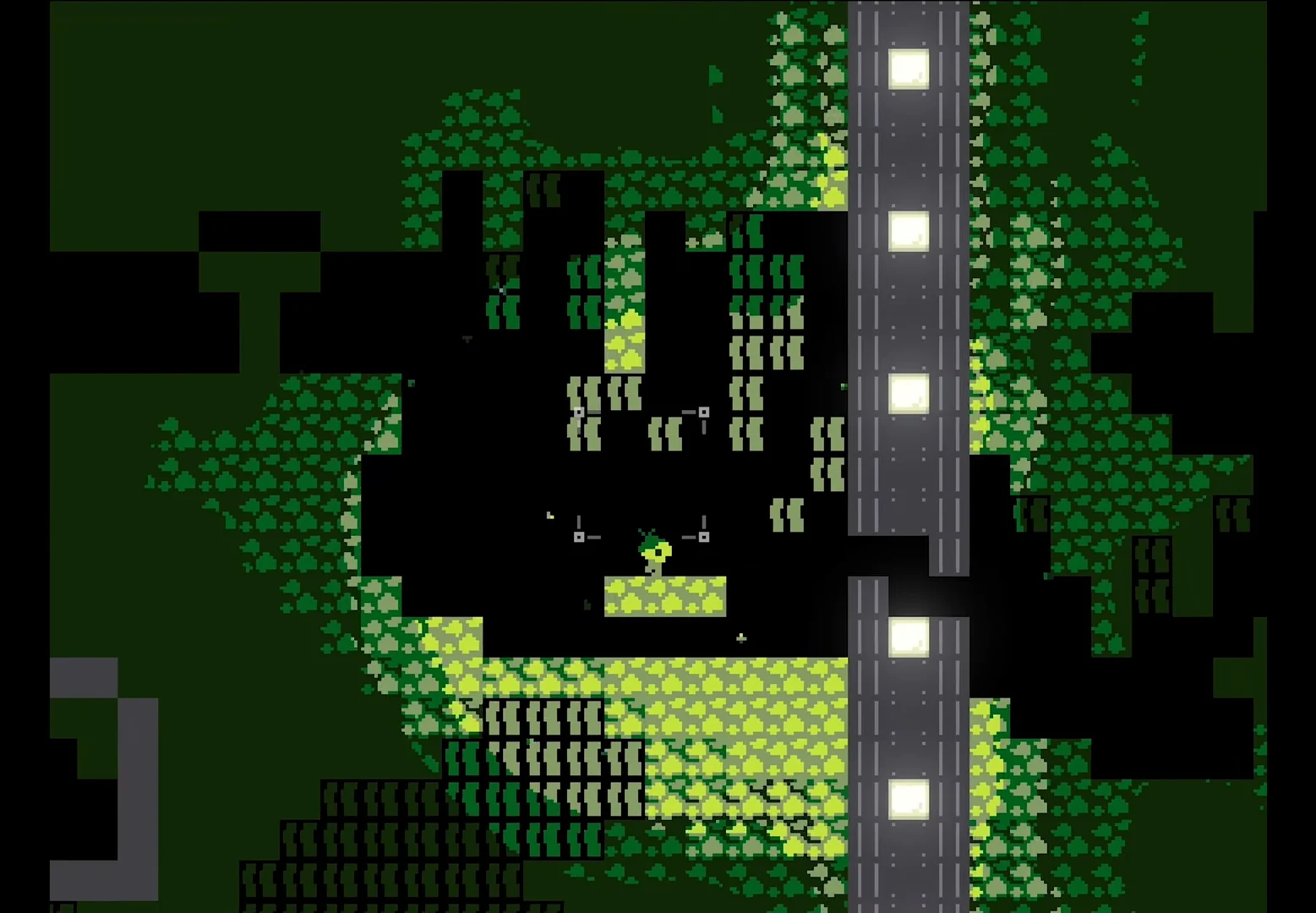
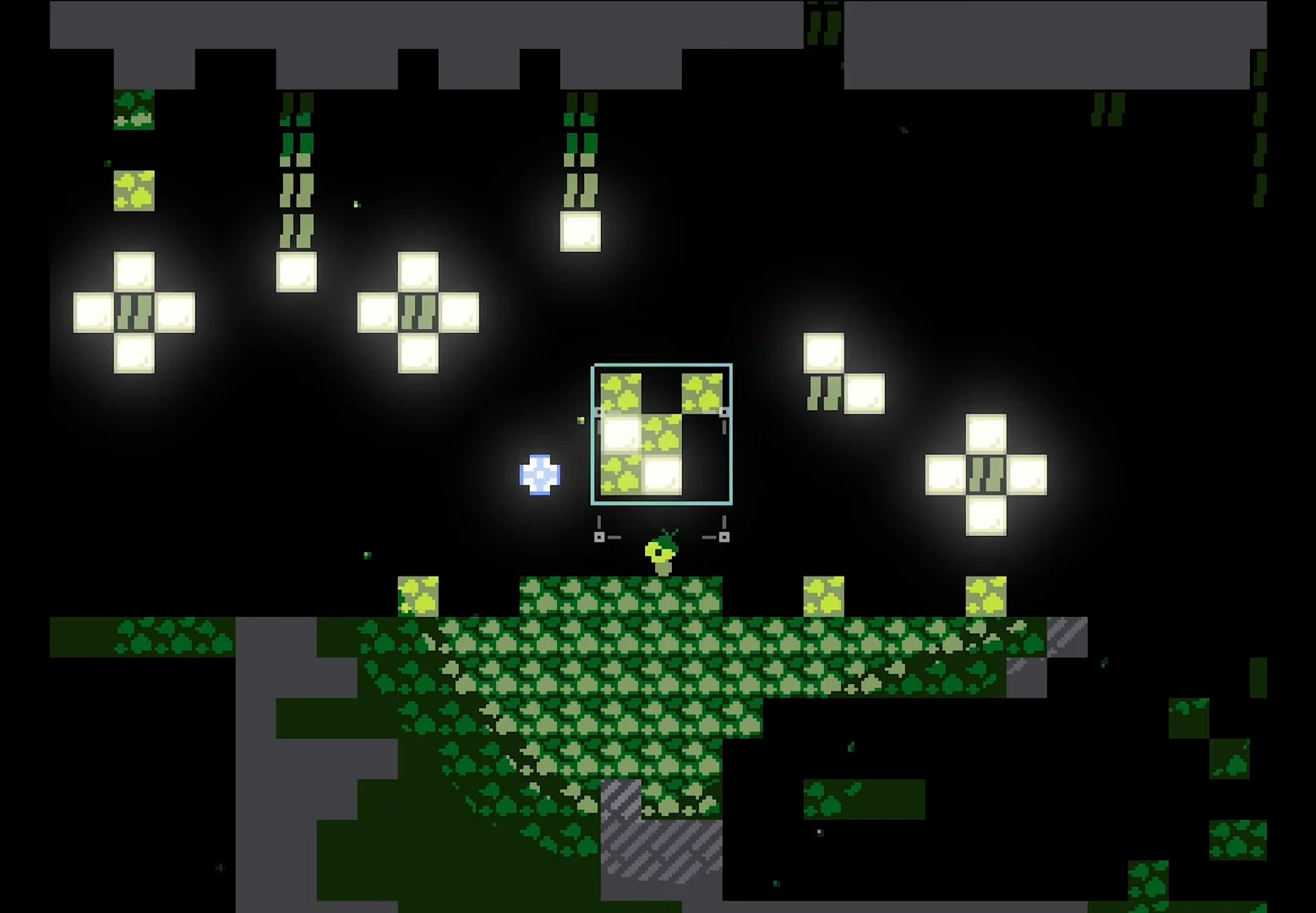
You play as a small pixel creature with big round white eyes. Its color changes with each world’s palette, so it shows up green, yellow, pink, or orange. The premise is simple. You are trapped inside the Nonolith, a living structure, and any piece of it can be moved, rotated, or destroyed. The trailer shows the character lifting blocks out of the terrain, carrying them above its head, and setting them down somewhere else. A dotted reticle shows where a block will land and which way it will face.
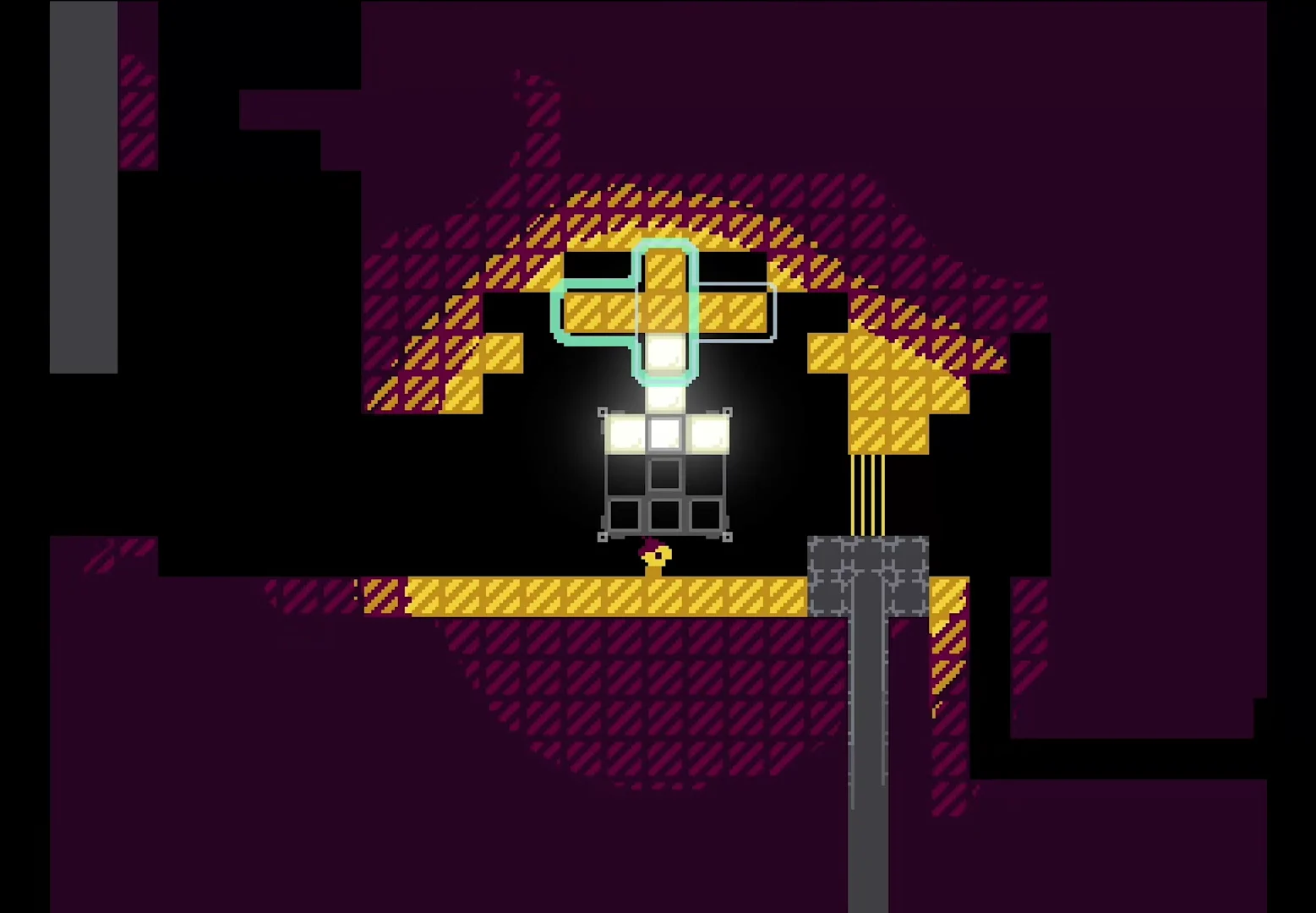
The trailer then plays a joke on that sandbox setup. The player arranges blocks into a cross shape, and a glowing yellow arch with pixel eyes appears. It does not open a new path. Instead it throws the player back to a 3×3 grid selector. The lesson is that building something is not enough. You need to understand what the shape actually does.
Jump pads, pistons, and hidden block functions
Nonolith never hands you new abilities. Its Steam description says plainly that nothing unlocks. Every trick you find was available from the start, and you just didn’t know about it yet. That is the main difference from a standard metroidvania. You don’t collect upgrades. You learn things.
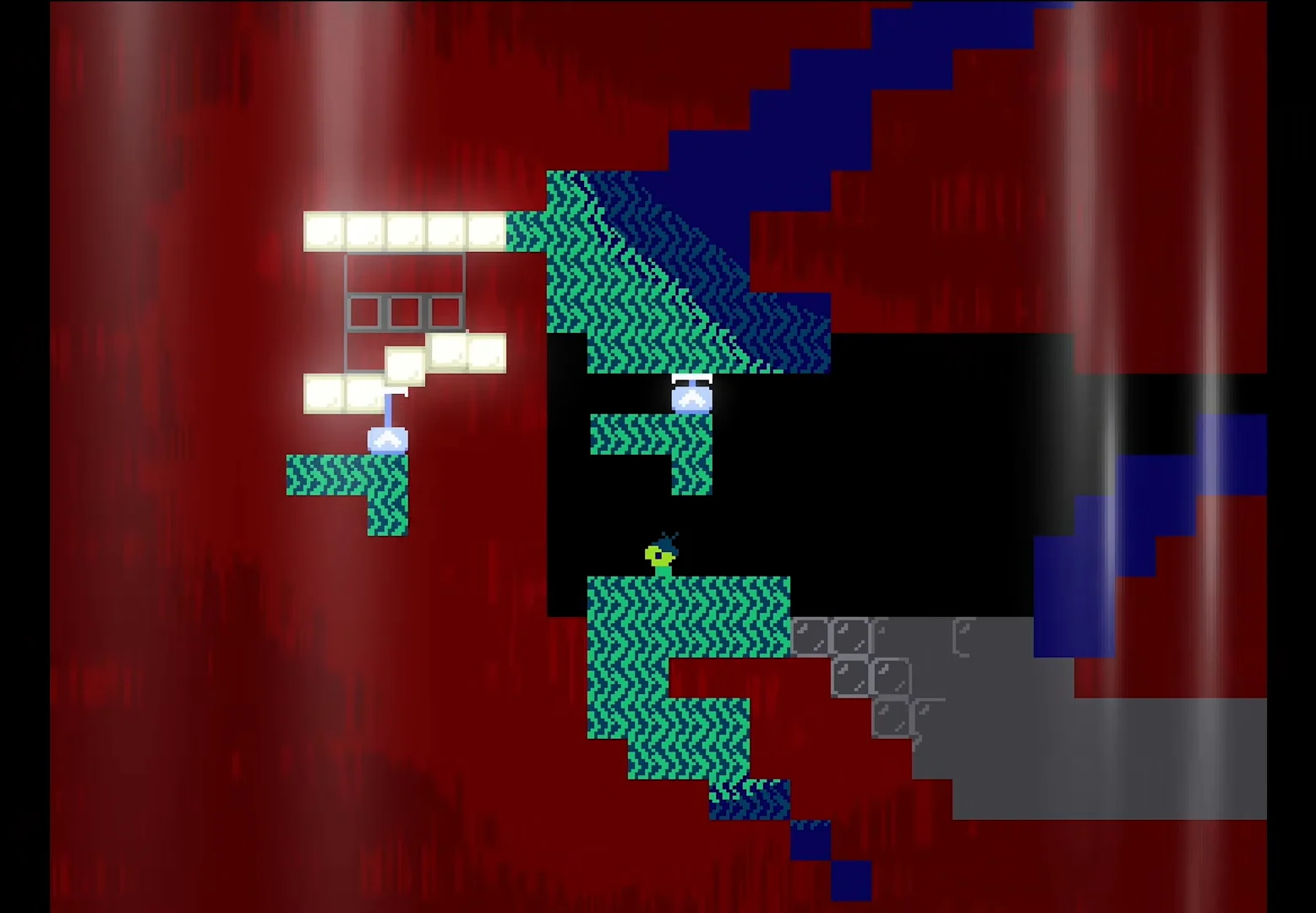
The jump pad is the trailer’s clearest example. At first it is a white, bouncy block that launches the player upward. Turn it to face another way, though, and it works as a piston that pushes in that direction. One object ends up covering two jobs, traversal and machinery.
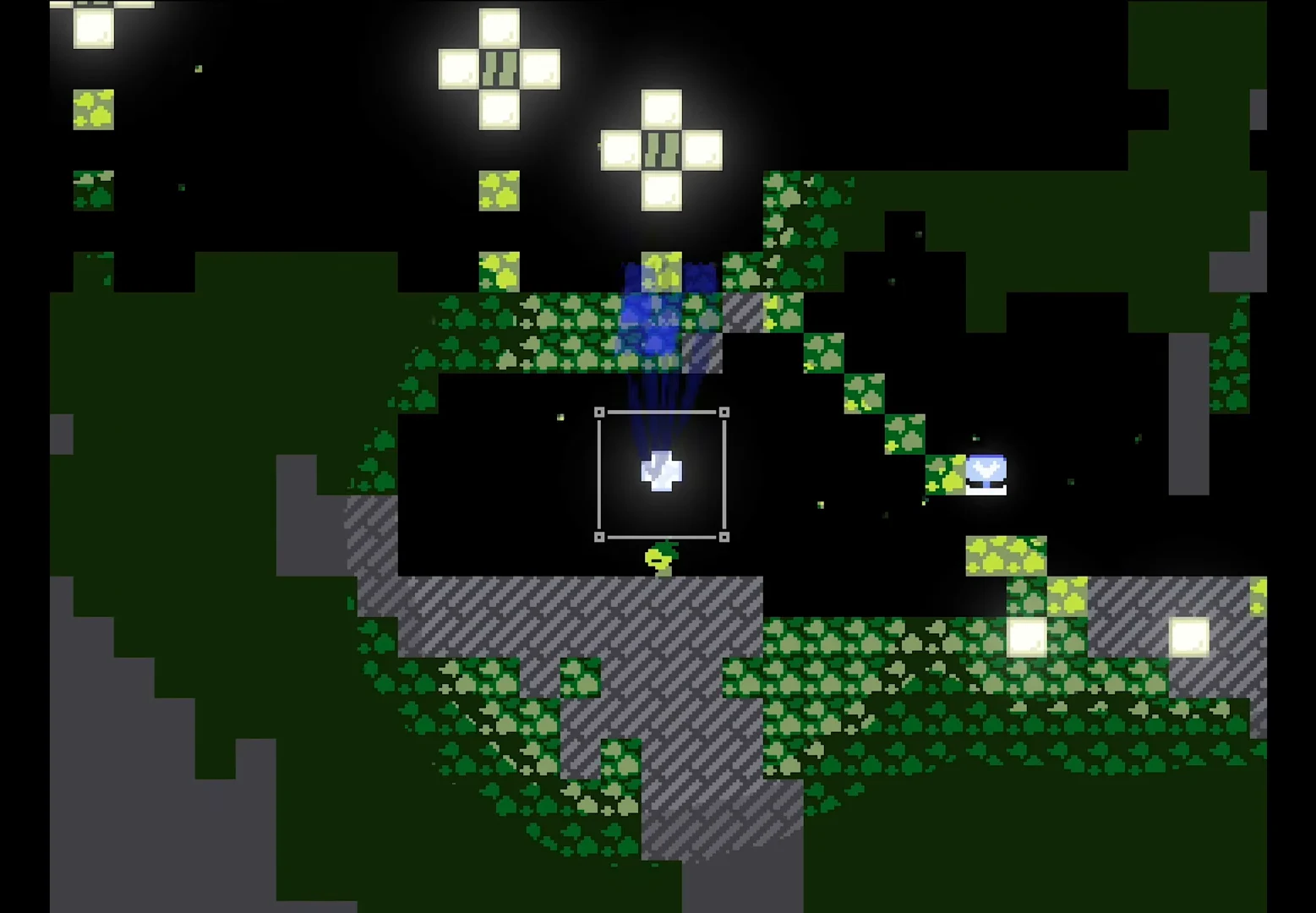
Later scenes build on that idea. The player shapes blocks into cross-shaped tools and sliding mechanisms, then clears paths through rocky and neon-lit areas. Dashed white outlines mark which group of blocks is selected at any moment.
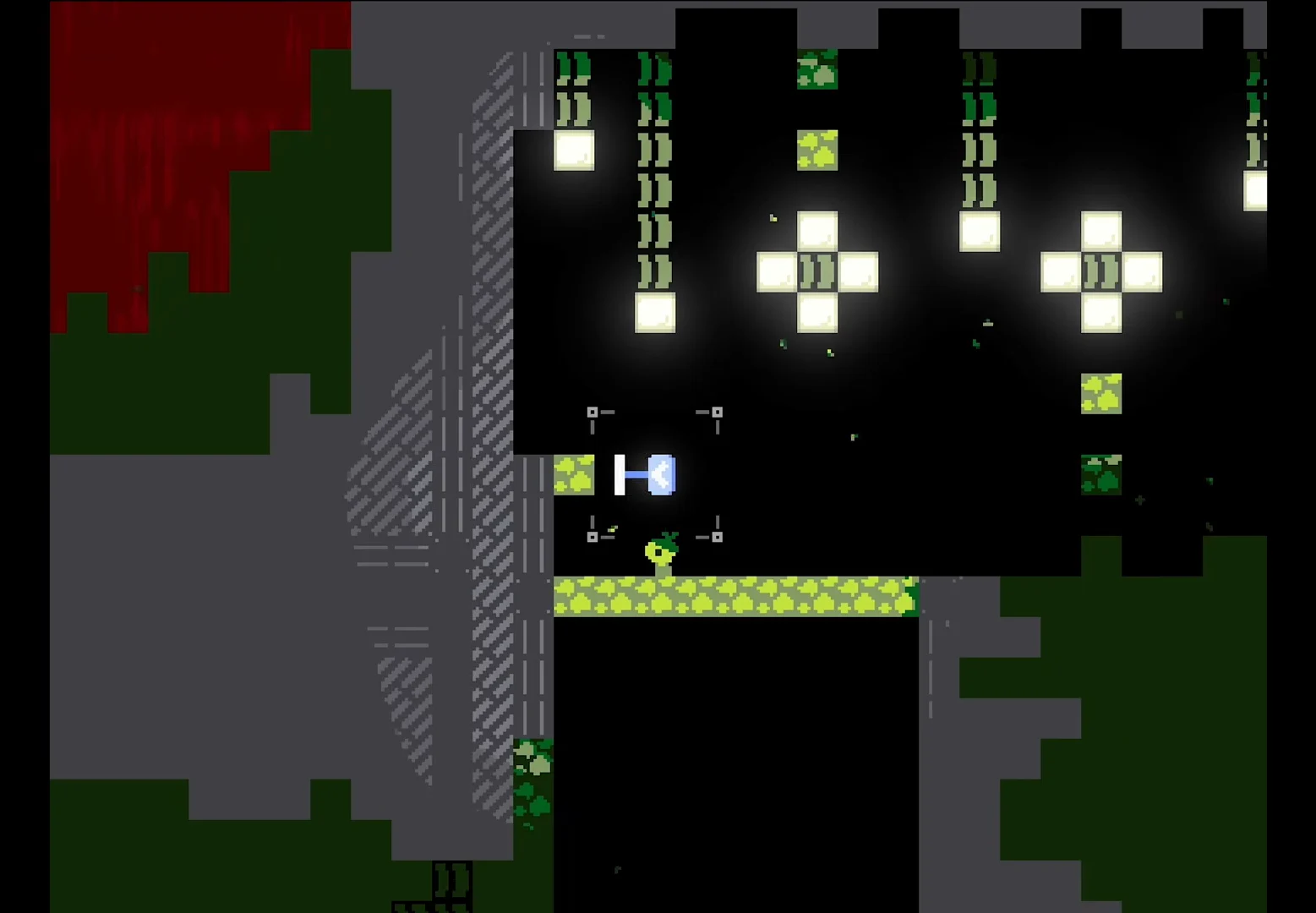
By about the one-minute mark, the puzzles have turned into chain reactions. Jump blocks, wires, and rotating switches are linked together, and each one triggers the next until a door opens or a switch flips. The store page describes the same freedom more broadly. You can build bridges, dig tunnels, and reach places that look like they are out of bounds.
Nonolith’s nine worlds and the 3×3 hub
The 3×3 grid is the game’s main hub. Each of its nine panels leads to a separate themed world. The trailer shows a quick montage of them, ranging from dark purple and blue rooms to rocky caves and neon areas. The hub sets a few firm rules for how you move through the game:
- There are nine worlds in total, and you can enter them in any order.
- If one world blocks your progress, return to the hub and select a different world.
- No abilities are gated behind progress. A trick learned in one world works everywhere.
- The game is built to be compact, and the full install is only 100 MB.
This structure suits a game about knowledge. You cannot be locked out of a world for missing an item. The only thing holding you back is not yet seeing what the blocks can do.
Escaping the Nonolith and the endgame beyond it
Getting out is your first objective. Close to the trailer’s end, the player arranges luminous white pillars into a pattern in a green grove. The pattern triggers an intense white flash, then an illustrated scene: the pixel character’s human form, a young person with round spectacles in a yellow hooded coat, sits atop a roof beneath a spiral galaxy and touches a glowing blue crystal.
Escaping is not where the game ends. The final section of the trailer goes back to earlier worlds and shows what was hidden there all along. There are huge concealed structures, flipped physics, glitches that bend the world, and dense logic puzzles. The last few seconds show explosive spells, screen-filling particle bursts, and floating glyphs. The store page presents this as a second goal. Escaping comes first, and full mastery lets you take control of the structure itself. The game’s Steam tags include Multiple Endings, which fits that two-stage design.
The trailer is intentionally vague about what most of those secrets actually do, and that seems to be the point. Nonolith works best when you discover its rules yourself. The demo is the easiest way to see whether that kind of slow-building “aha” moment appeals to you before the Q4 2026 release.