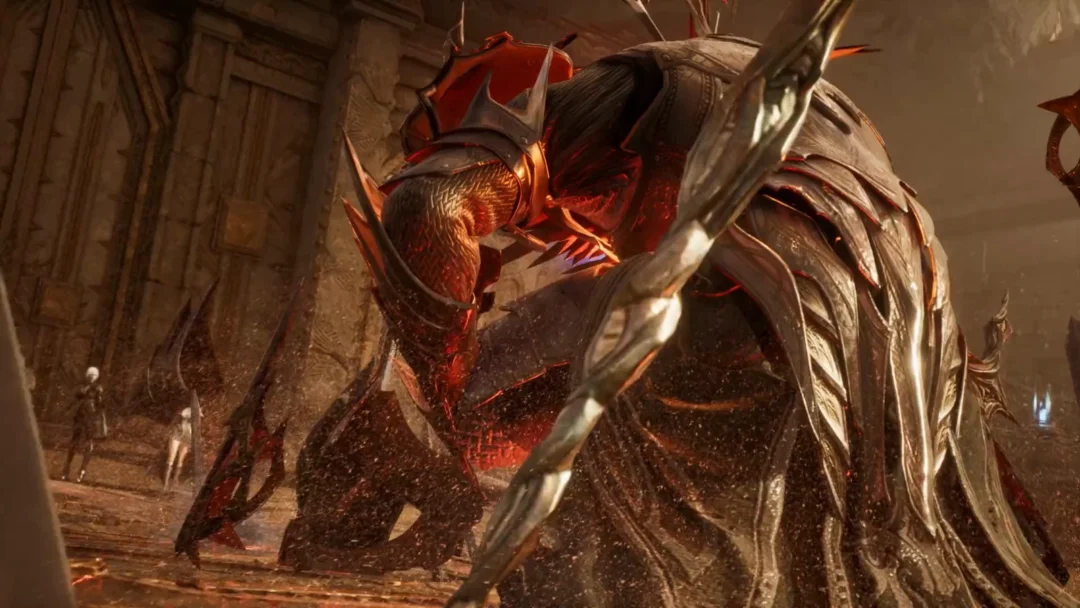
The Adventures of Elliot: The Millennium Tales is Square Enix’s first action-RPG built in the HD-2D engine that powered Octopath Traveler, Triangle Strategy, and the recent Dragon Quest remakes. Made by Claytechworks and the team often called Team Asano, it trades turn-based menus for real-time, top-down combat that openly nods to early The Legend of Zelda and the Mana series. It launches June 18, 2026 on Nintendo Switch 2, PlayStation 5, Xbox Series X|S, and PC.
Quick answer: Elliot is a polished, great-looking action-RPG with satisfying combat and a story that pays off in its back half, held back mainly by a single world map reused across four time periods. Critic scores cluster in the high 70s to low 80s, and a standard playthrough runs about 30 hours.
Release date, platforms, and length
The game arrives simultaneously in Japan, North America, and Europe. A free prologue demo is already on the storefronts, and progress carries over into the full game. On Xbox it is a Play Anywhere title, so one purchase covers both Xbox and PC. The standard price is $59.99.
| Detail | Information |
|---|---|
| Release date | June 18, 2026 (JP, US, EU) |
| Platforms | Switch 2, PS5, Xbox Series X|S, PC |
| Developer / Publisher | Claytechworks / Square Enix |
| Standard playthrough | About 30 hours |
| Full completion | Around 50 hours |
Director Shota Fukebara has said a standard run takes roughly 30 hours, climbing to about 50 hours if you explore every inch of the map across all the eras. Optional activities, side quests, and Faie’s unlockable mini-games push that figure higher depending on how much you wander.
Story and the four Ages
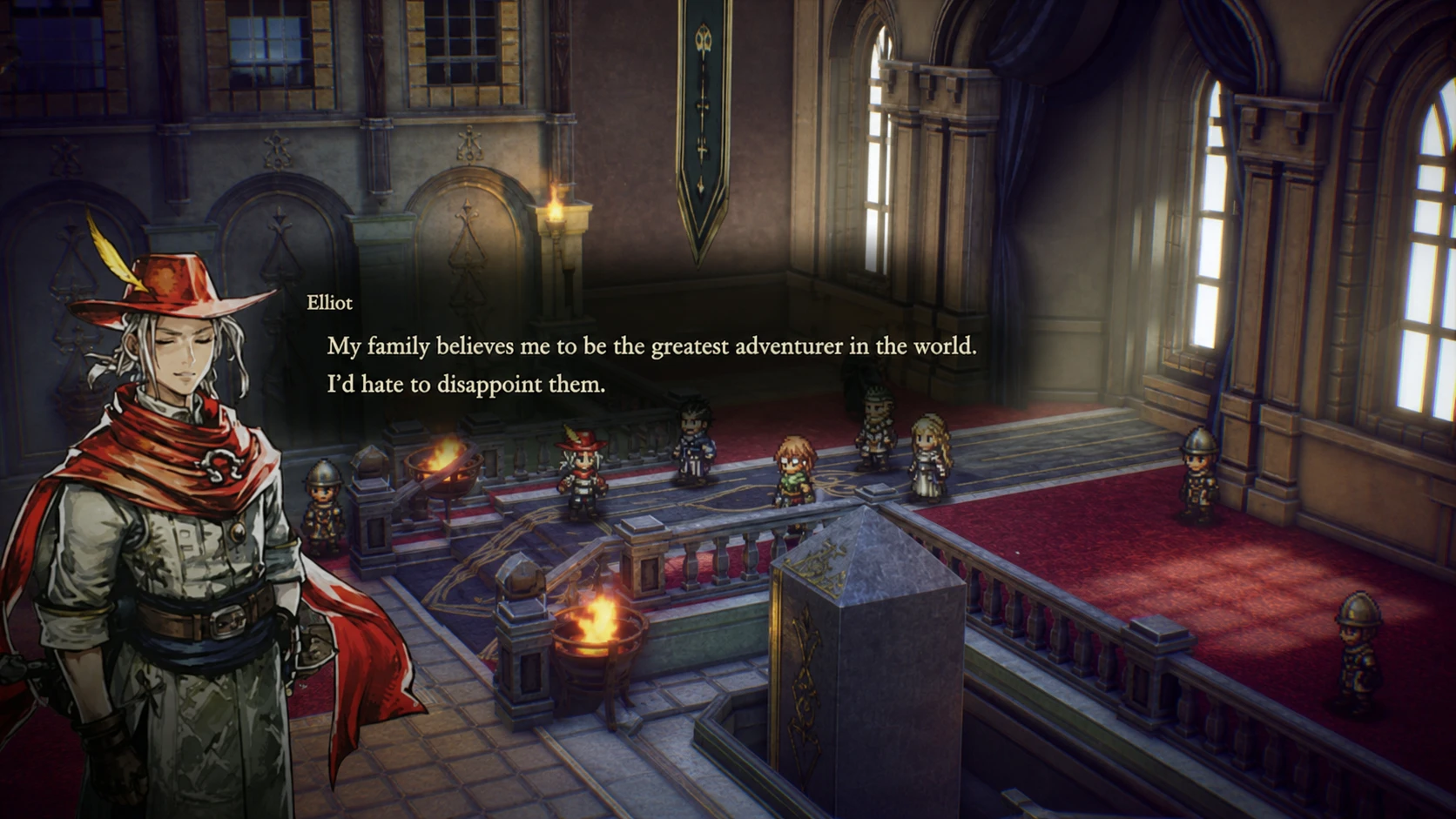
The setting is a fantasy world where humans live behind a magic barrier in the Kingdom of Huther, sheltered from the beast tribes roaming the land outside. When unknown ruins appear beyond the wall, the king sends Elliot, an orphan turned adventurer, to investigate. That discovery throws him through time and introduces Faie, a fairy only Elliot can see who fights, casts magic, and helps solve puzzles.
The plot spreads across four periods, each the same kingdom at a different point in its history. They run from the Age of Budding, when magic is first discovered, through the Age of Magic and the Age of Reconstruction, up to the present-day Age of Safekeeping. The early hours feel predictable, but the writing layers in real motivation for its antagonists, and the back half delivers genuine twists along with multiple endings worth chasing.
Combat, weapons, and the Magicite system
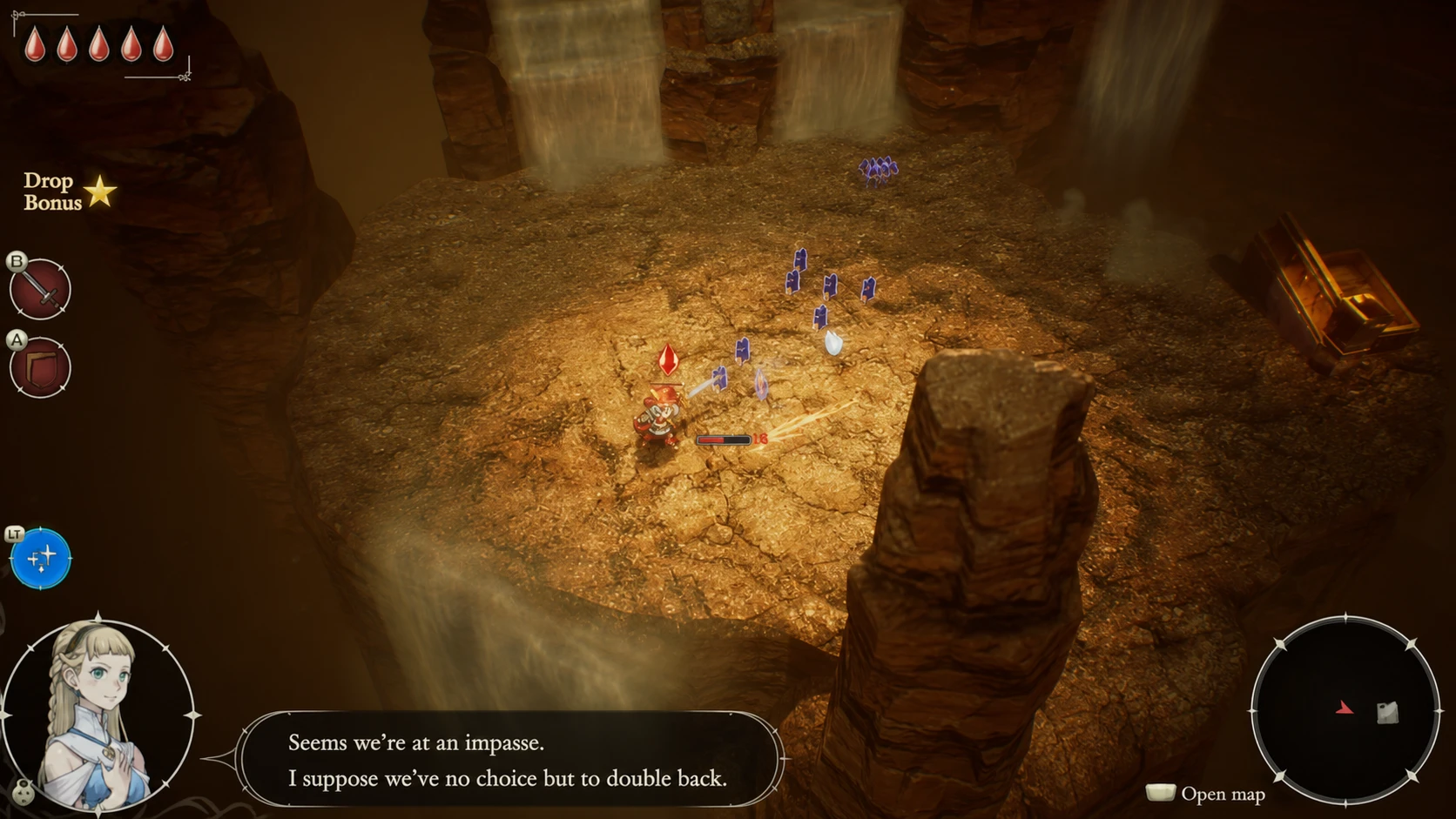
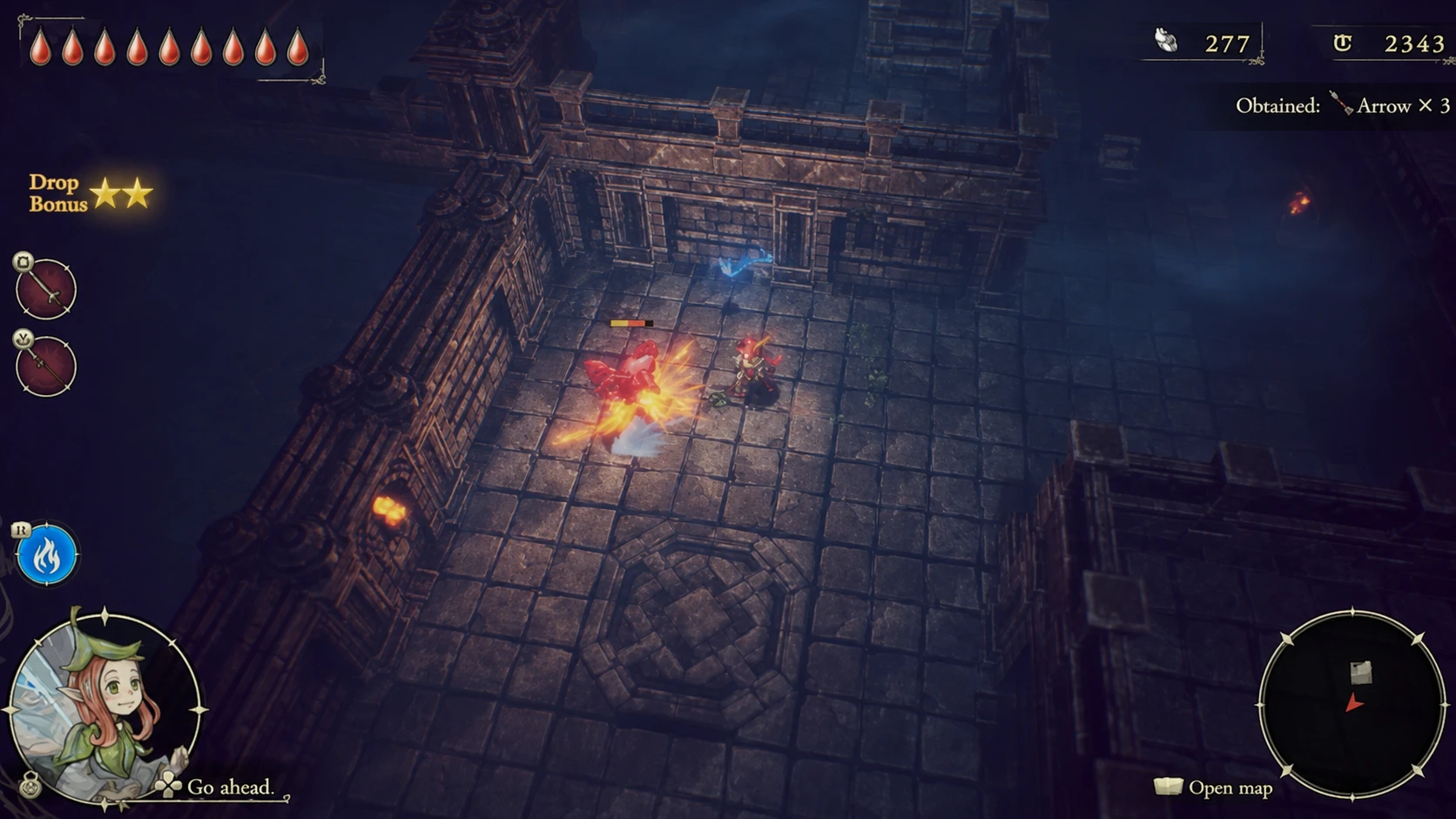
Elliot carries four melee weapons, each with a combat role and a puzzle use. The hammer’s charge attack drives nails into the ground to clear a path, for example, while bombs break cracked walls, the boomerang strikes enemies repeatedly, and arrows handle range. There is no dodge. Instead you rely on a shield, and a perfect guard you unlock early stuns enemies and quickly becomes essential.
| Tool | Use |
|---|---|
| Sword | Standard melee with charge attacks |
| Spear | Reach and thrusting attacks |
| Hammer | Heavy hits; charge drives nails to clear paths |
| Sickle | Close-range strikes with puzzle utility |
| Bombs | Destroy cracked walls and boulders |
| Boomerang | Multi-hit, ranged tool |
| Arrows | Long-range attacks |
| Shield | Blocks and enables perfect guard to stun |
The depth comes from Magicite, equippable abilities that change how each weapon behaves. One might make your boomerang larger but slower, another boosts sword damage when the shield gauge is full, and another makes bombs bounce before exploding. You can equip two weapons at once, each mapped to its own button, and swap loadouts on the fly. Combat starts slow and constrained, then opens up considerably in the final third once you have the full kit and a stable of Magicite builds to test.
How Faie changes exploration and puzzles
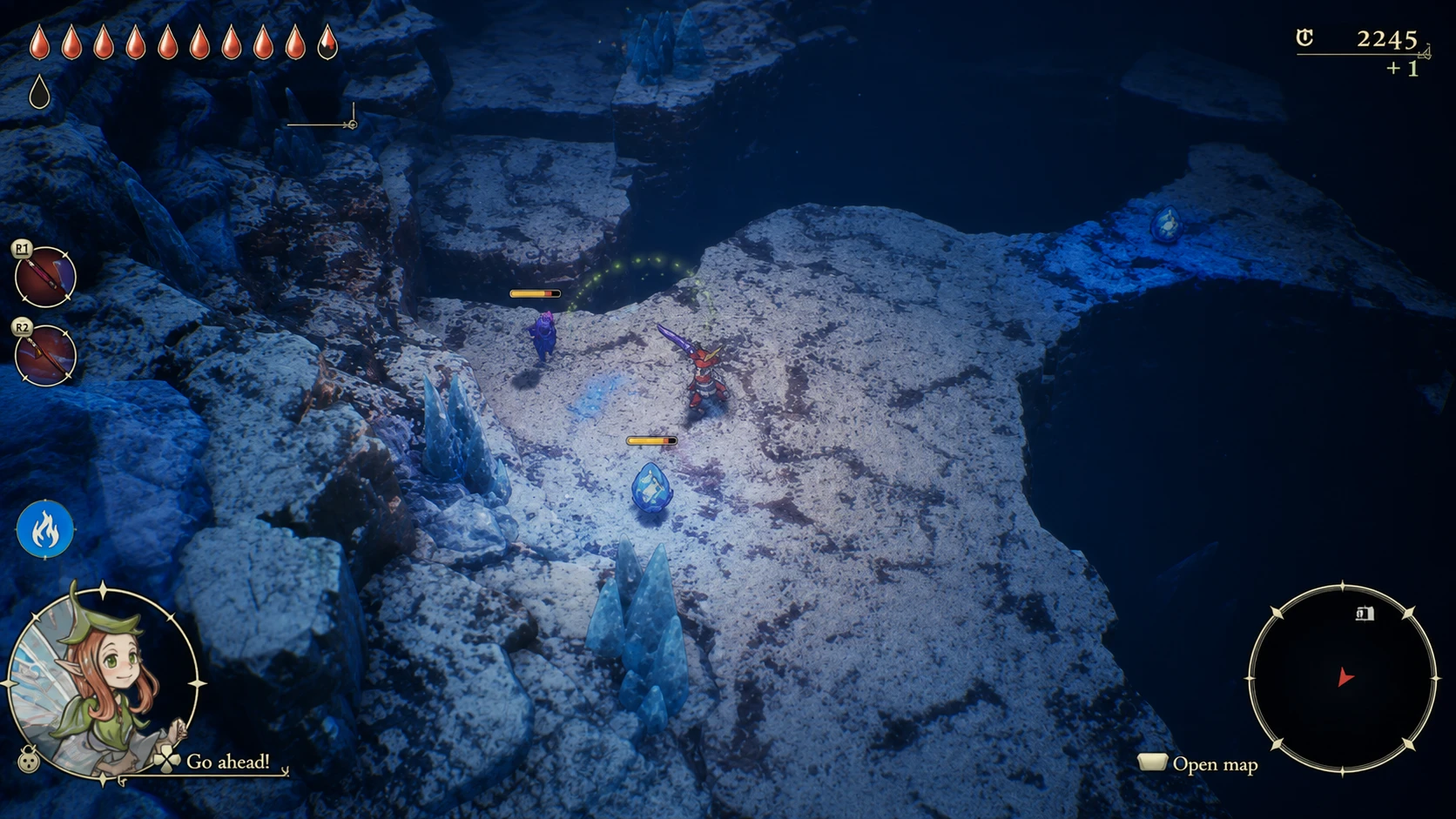
Faie is far more than a talking sidekick. You can steer her independently with the right stick to teleport Elliot, ignite torches, attack with fire, or create a doppelganger that mirrors his moves. Those abilities expand the puzzle design, letting you send her across gaps or through small mazes to reach switches Elliot cannot. New powers and upgrades come from visiting the Shrine of the Mystic.
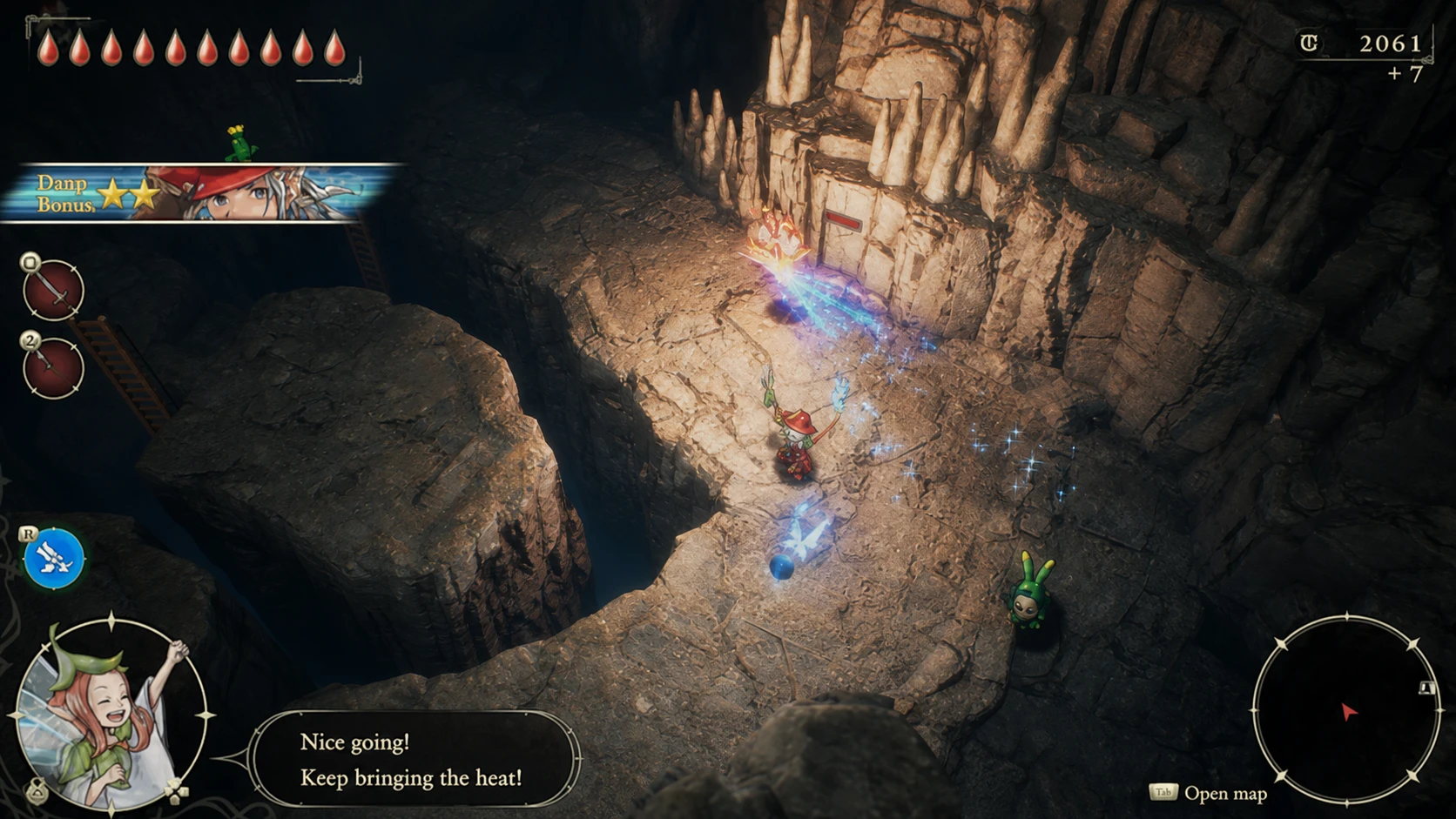
Faie can also revive you mid-battle, though each revive in a single fight costs more Tul, the game’s currency. A second player can take direct control of her, turning the campaign into a casual co-op experience and making her combat support easier to manage. Her one persistent drawback is how much she talks. Even with the party chatter setting turned down, her lines repeat often enough to stick in your head.
The repetition problem with the time-travel map
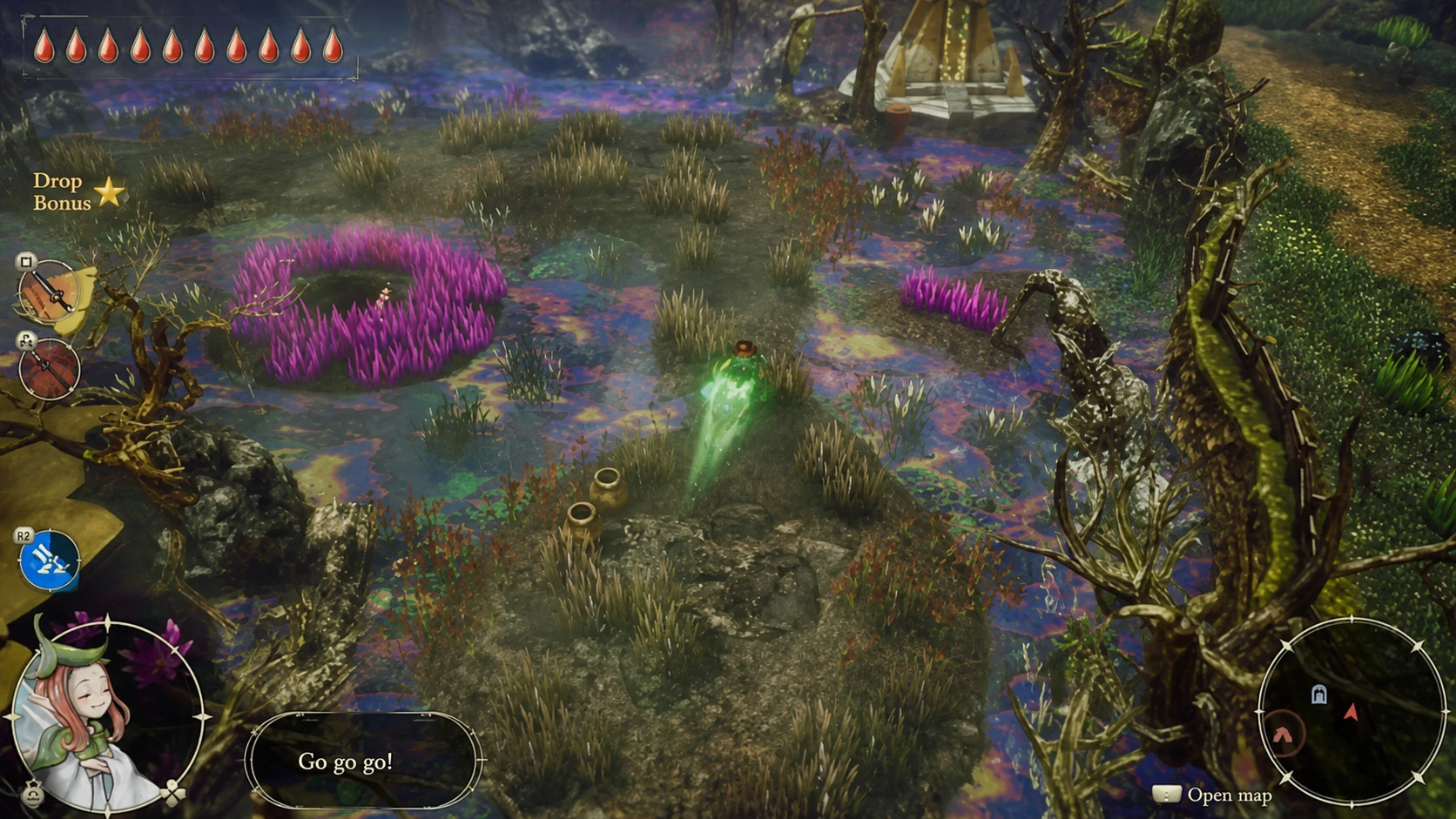
The central gimmick is also the biggest sticking point. Because each Age is the same kingdom across history, the game reuses one world map four times over. Dungeon locations, shortcut tunnels, and even many enemy types stay put from era to era, with only minor changes layered on top. The idea is to show how time reshapes a place, but in practice it can feel monotonous as you retread the same ground.
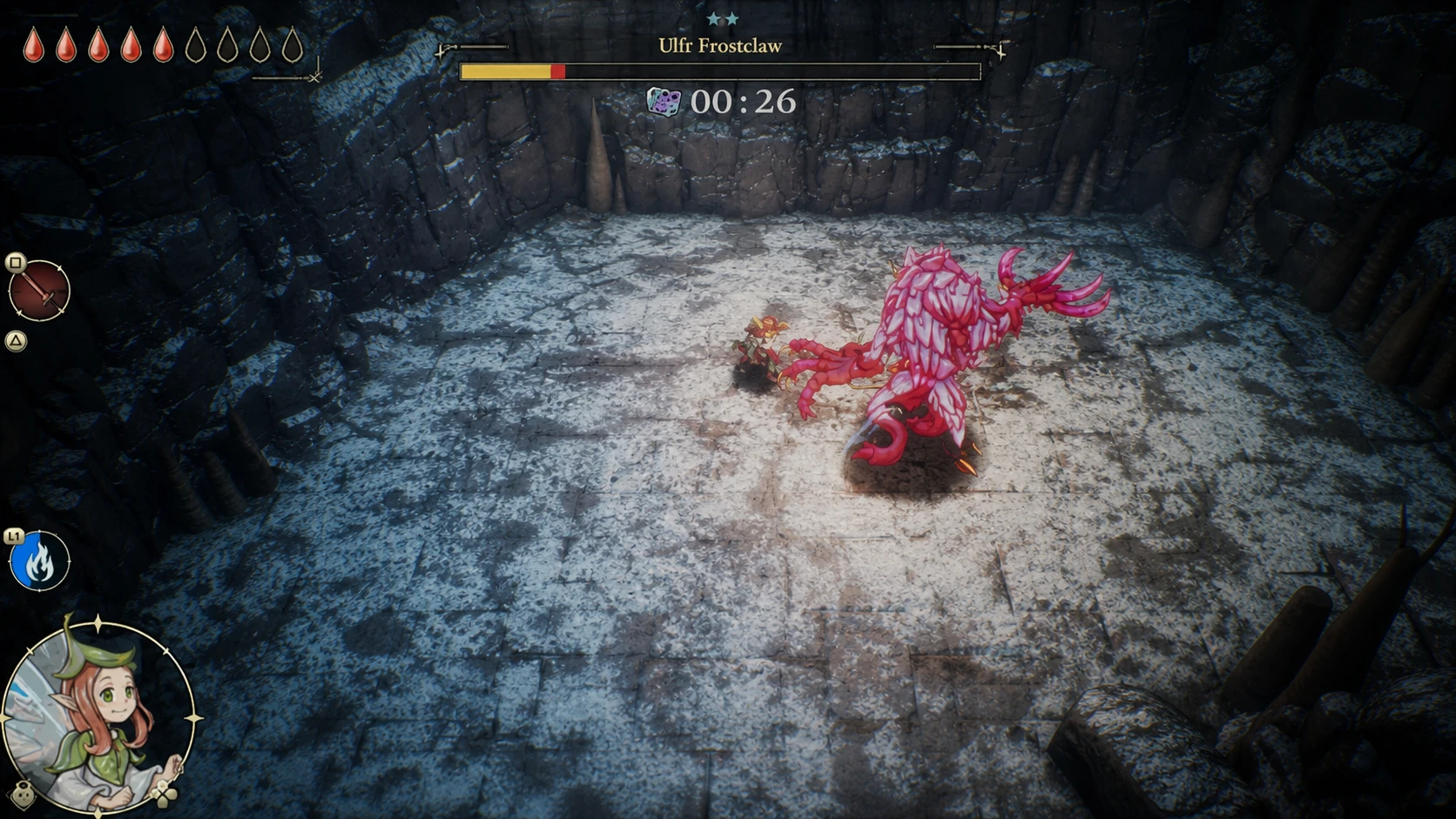
It causes some specific frustrations. A dungeon that is fully open in one Age might be ruined or overgrown in another, leaving a single accessible room and almost no reward for the trip. Bosses recur too, with multiple variations of the same fight appearing even early on. Some dungeon puzzles also lean on a single ability rather than the full toolset Elliot carries.
One quality-of-life detail softens the backtracking. Once you open cavern routes in one era, they stay open in the others, so you do not have to re-clear the same shortcuts every time you jump through history.
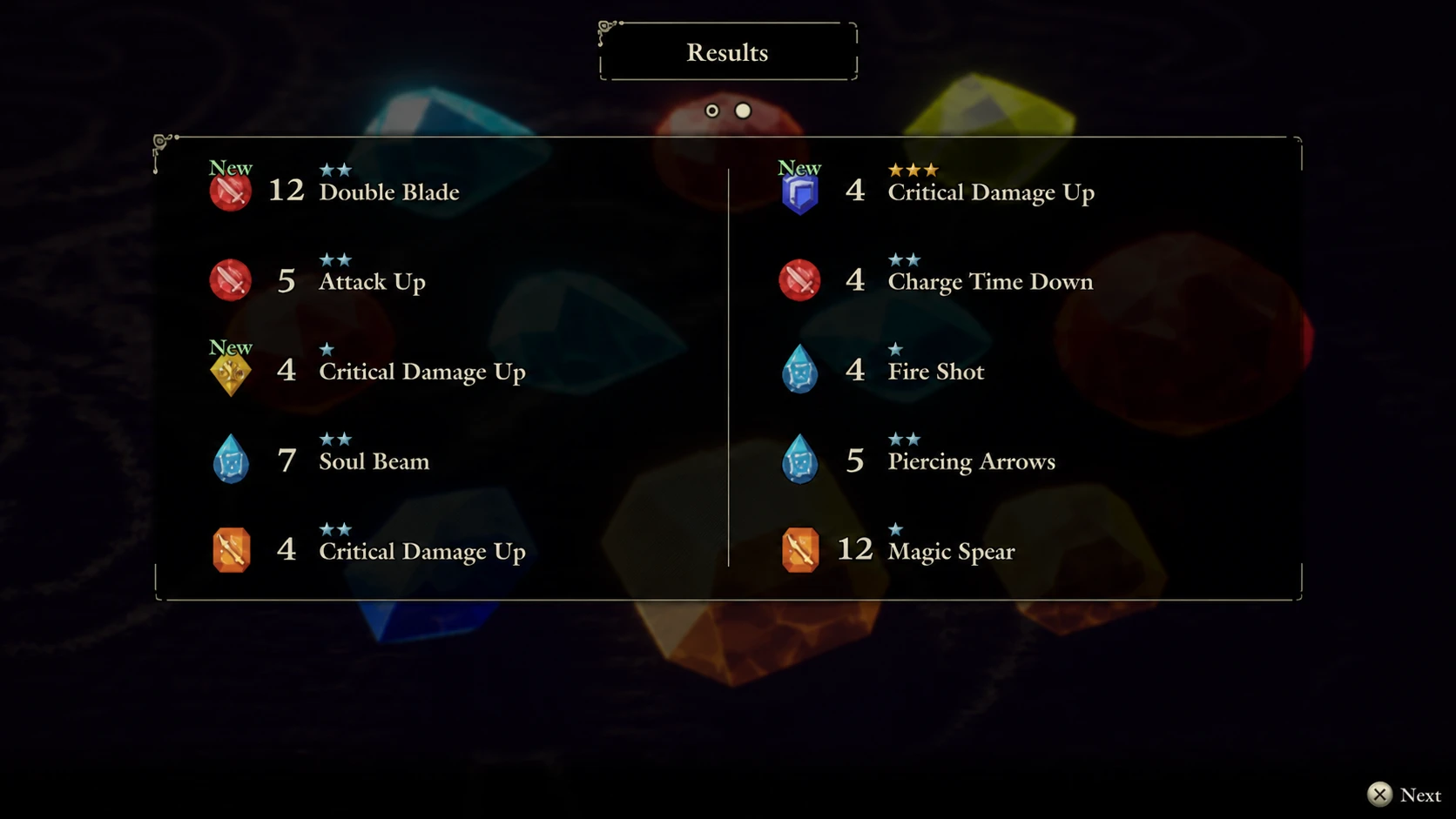
Magicite progression is the other tedious spot. You gather fragments while adventuring, then spend Tul to craft new Magicite and upgrade your Magicite case for better odds at higher rarities. The game always shows the drop chances, so it is not gambling in the loot-box sense, but reaching maximum power means a lot of repeated crafting and a fair amount of luck.
Performance on Switch 2 and PS5
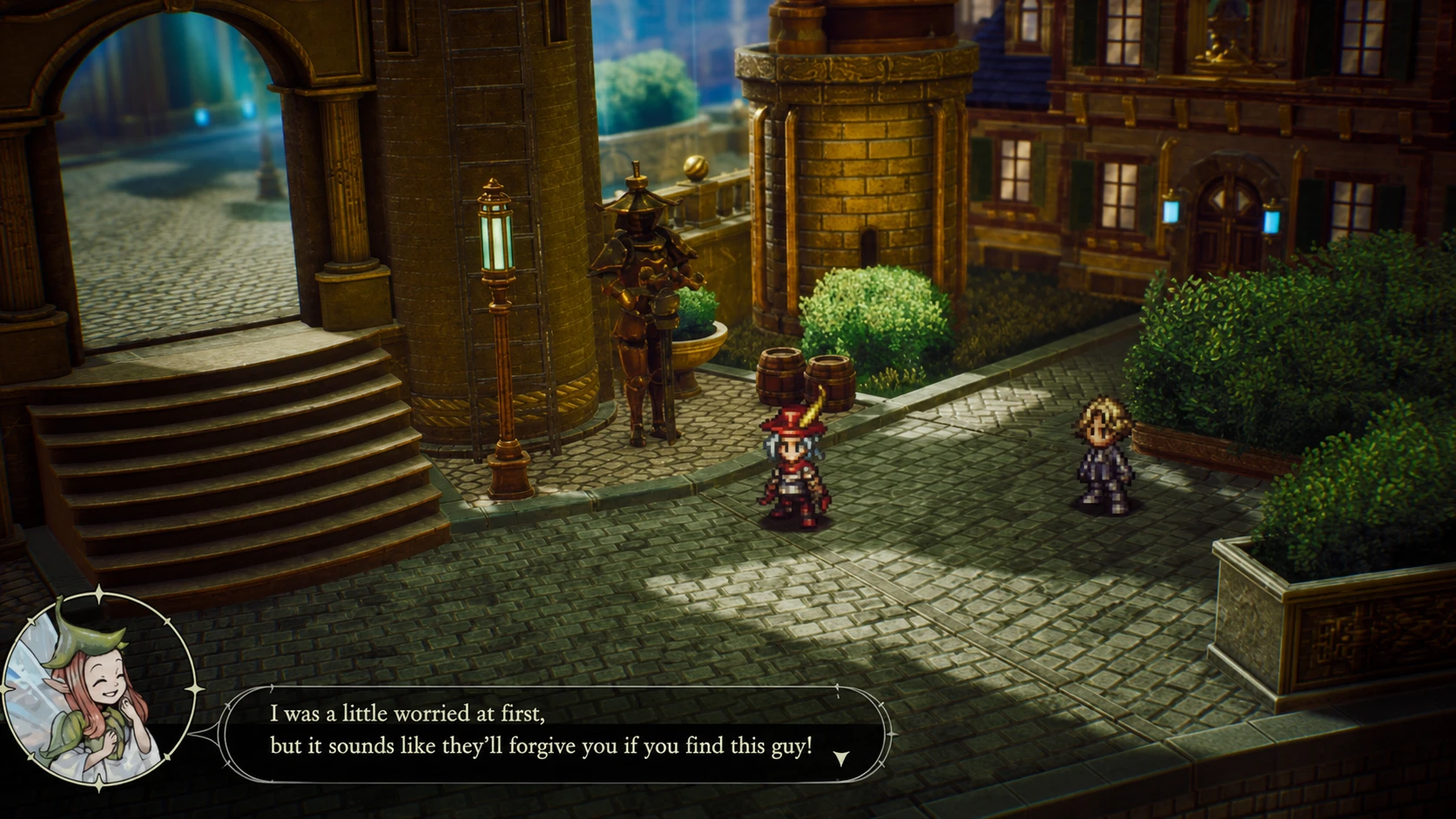
On PS5 Pro the game runs cleanly with no setup needed, with only a brief, isolated slowdown reported in one late dungeon. On Switch 2, handheld play can dip below 60 fps in places, though it stays playable. The HD-2D presentation is the standout, pushing lush foliage and bright vistas well beyond the medieval settings of past games in the style, backed by an orchestral score that balances epic and whimsical tones.
Critic reception and scores
Reviews settle into generally favorable territory, with an aggregate around 79 across roughly 19 critic reviews and no negative verdicts at launch. The split is consistent: praise for the art, music, and combat, with reservations about the reused map and recycled bosses.
| Outlet | Score |
|---|---|
| TierraGamer | 91 |
| Kakuchopurei | 90 |
| Final Weapon | 90 |
| Famitsu | 34/40 |
| IGN | 80 |
| 4P.de / Checkpoint / Eurogamer Germany / Nintenduo | 80 |
| IGN Deutschland | 70 |
| RPG Site | 7/10 |
| Gamekult | 60 |
The higher scores frame it as comfort-food adventuring that uses its time-travel hook well and rekindles classic Zelda and Mana nostalgia. The more critical takes argue the era-hopping works better as a design shortcut than a fully realized concept, and that the pacing front-loads filler before the story finds its footing. Both camps agree the foundation is strong.
If you want a focused action-RPG that respects your time, Elliot fits the bill. It looks fantastic, the combat clicks once the systems open up, and the cast and endings reward players who explore. Just know going in that you will walk the same ground across four eras, and how much that wears on you will decide whether this feels like a great summer pickup or a near-miss with untapped potential. The free demo is the quickest way to find out where you land before launch day.