The homestead system in Where Winds Meet turns a plot of land into a working business. You hire staff, gather raw materials, grow crops, cook and brew, then sell what you make through a tavern. Qinghe is the first city to receive the system, with an extension planned for the Invisible Mountain location.
Quick answer: Hire workers and assign them to resource gathering, plant seeds for cooking and drinks, set pottery to make wine jugs, then funnel finished dishes and drinks to your tavern waiters. Level up production buildings, raise prosperity by placing buildings and furniture, and bank enough melons to push the homestead to its maximum level of 10.

Homestead currencies and how to earn them
Four currencies drive the homestead economy. Each one buys a different category of materials, so you will want a steady flow of all of them rather than focusing on a single type.
| Currency | What it buys | How to earn it |
|---|---|---|
| 🍈 Melons | Furniture, seeds, buildings, and worker upgrade books | Weekly cargo tasks, achievements, tavern food and wine sales, and selling surplus materials to a trader |
| 🪵 Logs | Structural units already buildable in the guild | Chopping bamboo, and (best option) sending workers out to gather materials daily |
| 💚 Green drops | Unique items | Growing vegetables in your garden beds |
| 🌾 Wheat | Homestead materials | Weekly cargo, weekly quests, and achievements |
Melons are the most flexible currency, since they cover seeds, buildings, decor, and the books you need for staff. Keeping your tavern stocked and clearing weekly cargo is the most reliable way to keep them coming in.
Workers: hiring, beds, and upgrade books
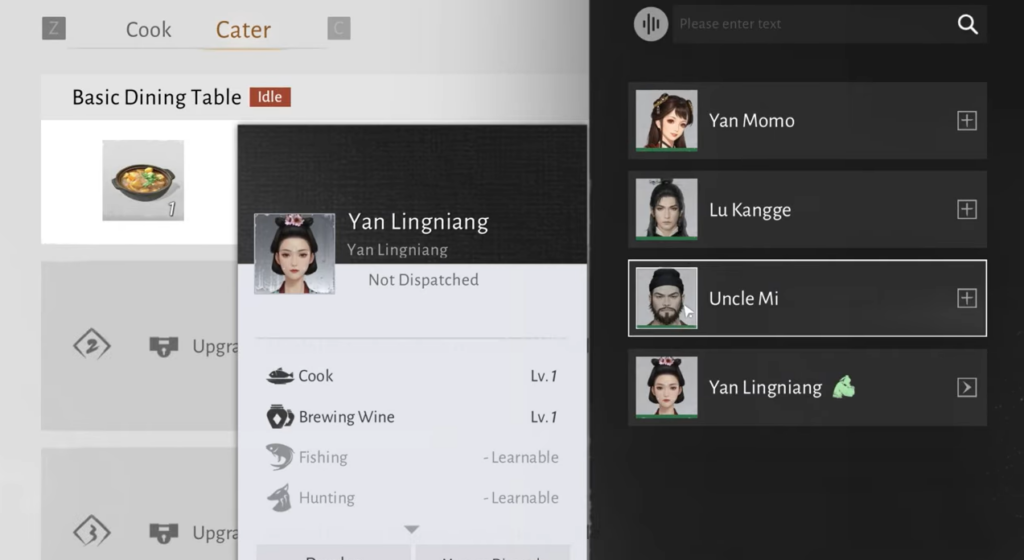
Nothing on the homestead runs without staff. Every business and every gathering route needs an assigned worker, and many roles call for specific skills. Workers are the backbone of the whole system, so plan to grow your roster as you expand.
To take on someone new, open the workers menu, find the “+” button, and select the NPC you want. Some hires happen through a simple conversation, while others carry conditions you must meet first. You also need a bed placed for each worker, because you cannot hire more staff than you have beds.
To unlock skills and raise worker levels, you need books. These are redeemed weekly in the store, and you also earn them from weekly quests and other homestead activities. Spend them on the staff tied to your most important production lines first.
Set up your production chain
Building a business runs through a clear sequence. Pick a spot on your island first. Keeping stoves and tables together in one place makes the workflow easier to manage, and the island alone is enough space for a full operation.
Each production type comes with its own decor, such as a large oven or stove, tables for visitors, and flower beds. Place these as you build out each line so the right business unlocks and operates.
How to reach homestead level 10
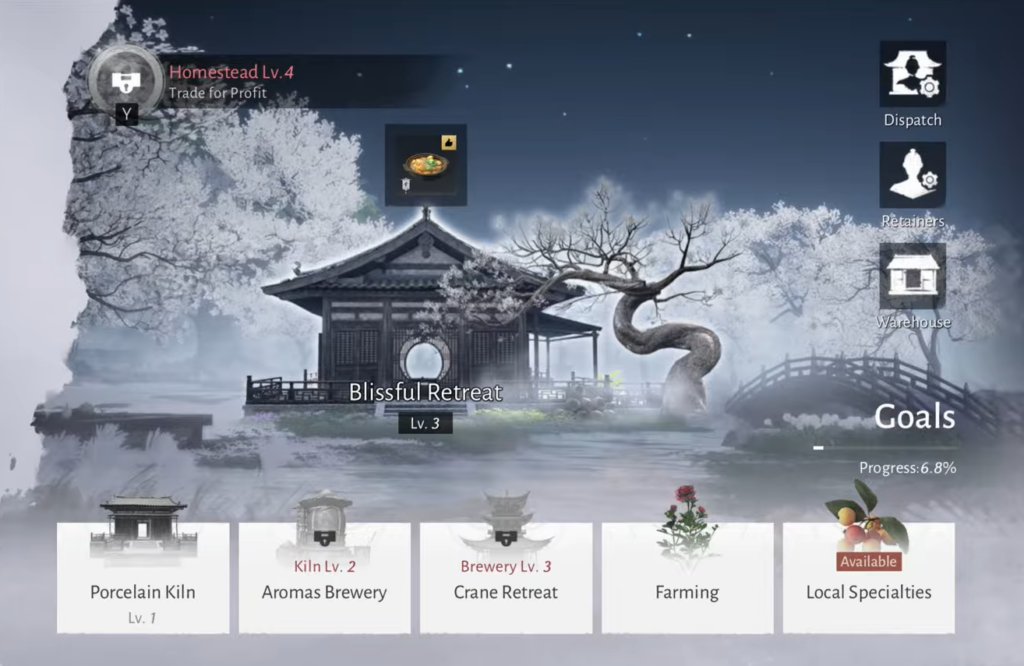
The homestead caps at level 10. Raising the overall level unlocks bigger businesses and adds more furniture options to the store. Three things move that meter.
- Increase the level of production elements such as pottery and the kitchen.
- Raise prosperity by constructing buildings or placing furniture on your island, or in other spots where the system is available.
- Collect enough 🍈 melons to meet the level requirement.
Note: Many of these steps are introduced through quests that accompany the homestead gameplay, so expect the game to walk you through parts of the setup as you progress.
Once gathering, farming, pottery, cooking, and the tavern are all linked together, the homestead largely runs itself. From there, the loop is simple: keep your production buildings leveling, keep placing buildings and furniture for prosperity, and keep banking melons until you hit level 10.