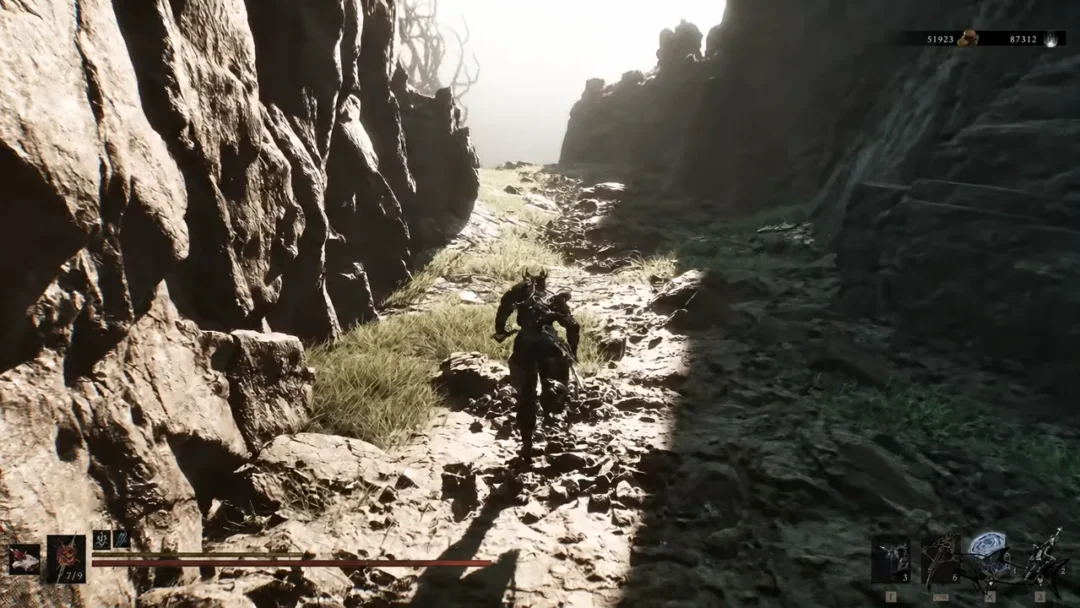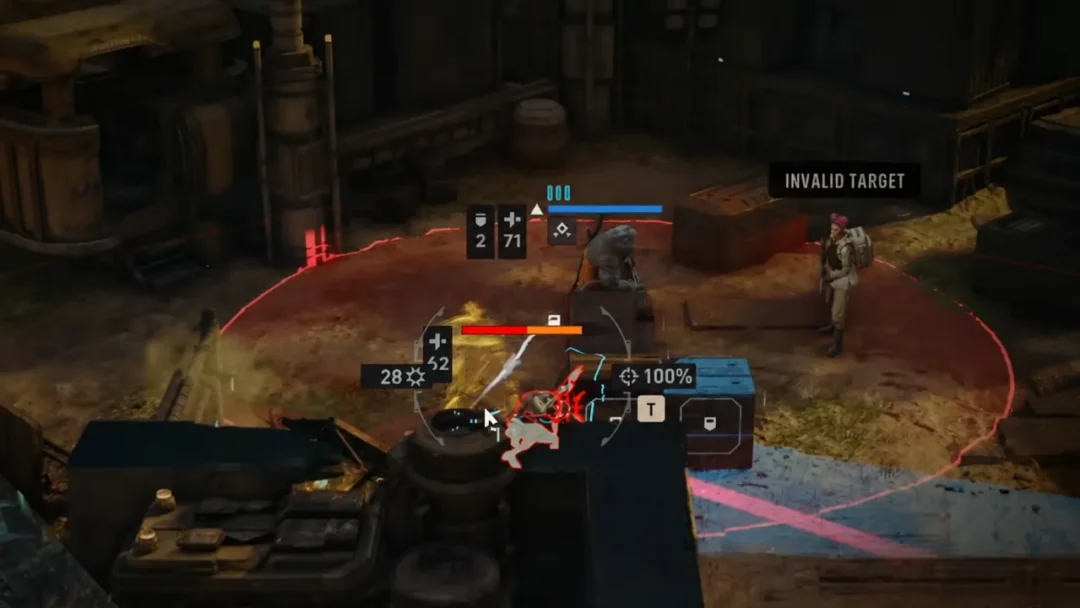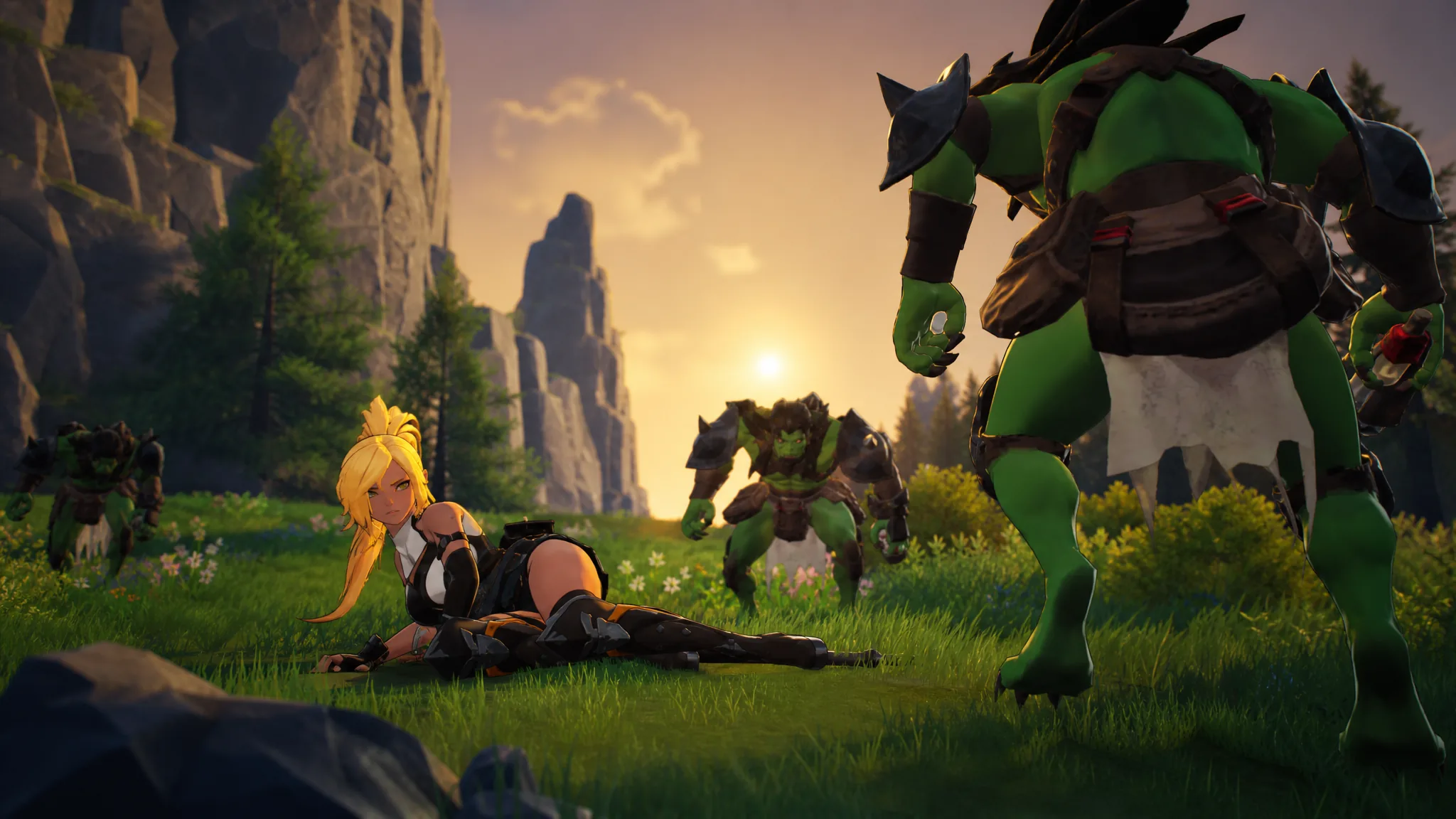
Three strong heroes do not make a strong team in DragonSword: Awakening. The combat loop rewards lineups where one character sets a status condition, a second answers it with a Signal Skill, and a third keeps the sequence alive. If your party cannot create the next teammate’s entry condition, individual damage stops mattering fast.
Quick answer: Run Cerese, Othello, and Dana while you are still learning a boss and want a repeatable ranged clear. Switch to Charlotte, Johnny, and Reina once you can handle aerial pressure and constant manual switching. For a straightforward starting party, use Lute, Theresia, and Ornette.
How status ailments and Signal Skills drive every team
Elites and bosses carry heavy power armor, so raw hits alone will not break them. Attacking fills an ailment gauge, and once it fills the enemy is afflicted with an effect such as Bleed, Stun, Airborne, Knockdown, or Knockback. That affliction is the real payoff, because it opens a Signal opportunity.
When the active hero applies an ailment, your off-field heroes flash a prompt on screen. Tapping the matching swap button brings that companion in with a Signal Skill, an entrance attack that deals far more than their standard kit and stacks the next ailment. A visible portrait alone does not mean the Signal is ready. You have to wait for the real ailment state and the active teammate input, then swap inside a narrow window.
A complete team fills three jobs. A field driver stays active and creates the next repeatable condition. A Signal answer enters when that condition lights up. A bridge extends pressure or restores spacing before handing the fight back. Every good lineup also needs a fallback for moments when Super Armor blocks the normal launch or juggle route.
Best team comps by role and content
The table below matches each lineup to the situation it clears most reliably, plus its main failure point and where to spend upgrades first.
| Team | Best for | Main risk | Build first |
|---|---|---|---|
| Cerese / Othello / Dana | Learning bosses, keeping arena visibility, repeatable clears | Retreating into a wall and losing space | The ranged hero carrying the field phase, then Othello, then the second ranged hero |
| Charlotte / Johnny / Reina | Aerial pressure, fast reactions, frequent switching | Losing Charlotte before the next safe handoff | Charlotte, then Johnny, then Reina |
| Cerese / Othello / Reina | Dana replacement that adds ground mobility | More pressure on Reina’s entry timing | The ranged field hero, then Othello, then Reina |
| Lute / Theresia / Ornette | Beginners who want survival and easy triggers | Lower damage ceiling | Theresia, then Ornette, then Lute |
Cerese, Othello, and Dana (ranged boss learning)
This is the calmest route for players who keep losing the active hero at close range. Cerese and Dana handle most of the ranged phase, and they do not need a fixed lead. Trade field time based on position, current skill availability, and which hero has the stronger working build. Othello holds the fixed job: enter when the boss closes distance, finish the immediate melee exchange, and reopen space so the ranged pair can resume.
Your main resource here is space. Open with the better-positioned ranged hero, keep a lateral exit lane, and use the Signal entry before the boss forces you into a corner. After Othello’s close-range phase, move sideways rather than straight back. Straight retreat eventually pins you to a wall and turns a ranged team into an awkward melee one.
Charlotte, Johnny, and Reina (high-input endgame)
This is the aggressive option, and its value depends on execution more than the ranged team’s does. Charlotte is the field driver with the broadest movement kit. She moves between ground and air, and her air dash lets you redirect instead of committing to one long arc. Open with her, test whether the target launches, and stay active until the next teammate opportunity appears.
Johnny is the ground continuation. He returns to the floor quickly during his sequence, so use him to take over after Charlotte’s safe aerial pressure ends rather than trying to make him a second Charlotte. Reina is the mobile bridge, with a sprint-style movement and a separate dodge that give her two repositioning options. Use the longer movement to restore space and save the shorter dodge for the next committed attack.
Stop using this lineup when persistent hazards cover the close-range area, the camera makes aerial tracking unreliable, or Charlotte repeatedly dies before the next safe handoff.
Lute, Theresia, and Ornette (beginner party)
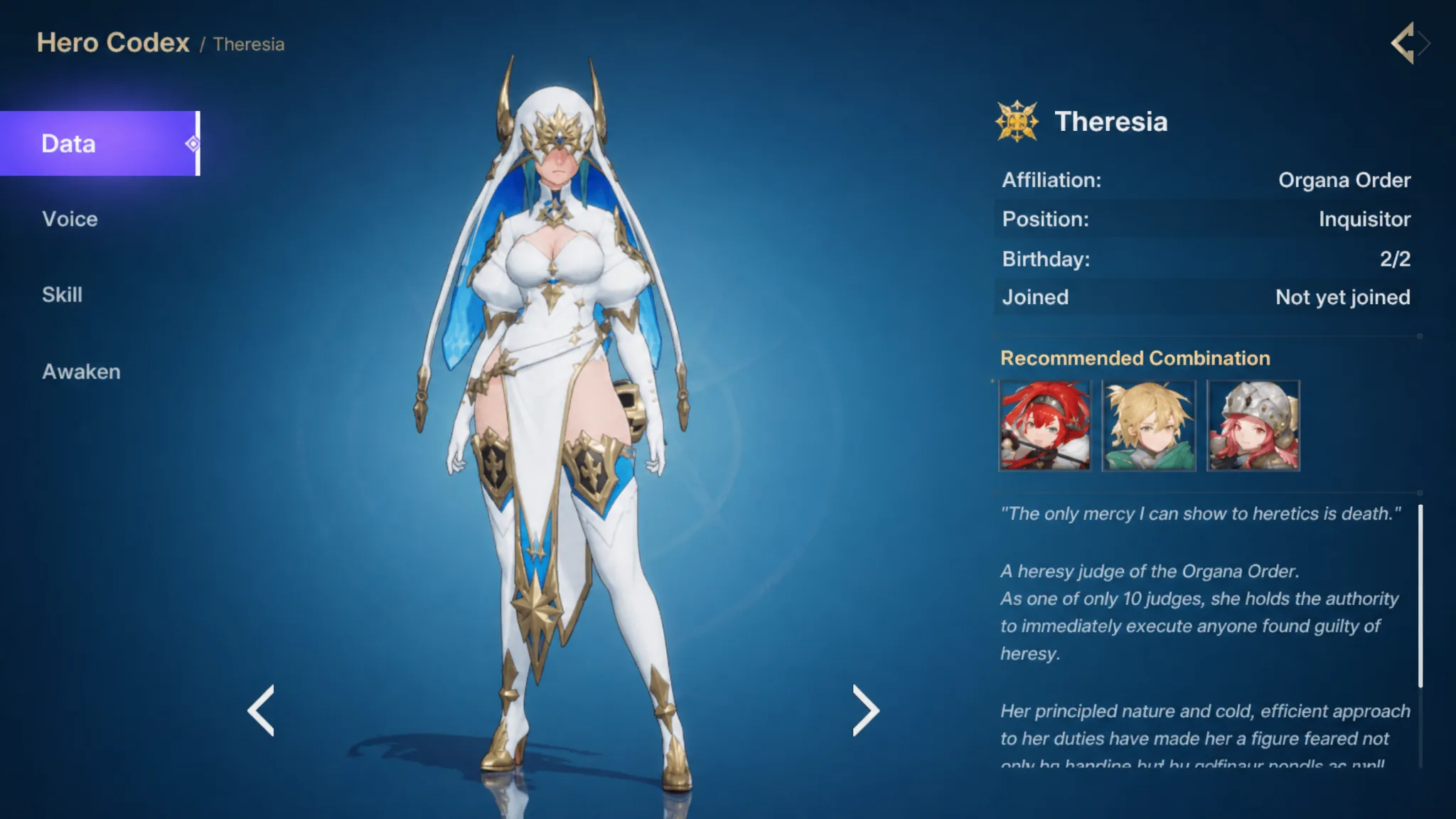
You unlock Theresia and Ornette early, and this trio does not demand frame-perfect inputs. Theresia handles status application, Ornette provides shields and stability as a safety net, and Lute acts as versatile damage with a bit of healing for hard boss fights. It is balanced rather than optimal, but it teaches the Signal loop while keeping you alive.
Ailment-chain teams for specific enemies
When a boss resists your normal plan, switch to a team built around the ailment it is weak to. The pattern is always the same: an initiator sets the state, a Signal Skill exploits it, and a third hero extends or converts.
| Team | Core loop | Best against |
|---|---|---|
| Theressia / Roxy / Castella (or Lute) | Consecration applies Bleed, Celestial Verdict adds Stun, Roxy tags in on Stun, Castella or Lute detonates | High-HP single targets that need sustained damage |
| Reina / Castella / Lute (or Aria) | Rising Cutter or Wind Slayer launches, Tempest suspends, Lute extends the juggle, Castella slams down | Launchable enemies that cannot fight back while airborne |
| Ornette / Castella / Alex (or Lute) | Ornette or Alex breaks power armor, a heavy Knockdown triggers, Castella capitalizes on downed damage | Bosses with massive armor bars that resist soft crowd control |
Airborne teams lose value the moment Super Armor keeps the enemy planted, so keep an armor-break or Break-focused option ready. Bleed-heavy setups take time to stack but ignore certain defenses, which makes them strong on the longest fights.
Character tiers and where each hero fits
Placement here weighs complete team value, not personal damage alone. Signal compatibility, safe field time, mobility, Break pressure, survivability, and how well a hero handles Super Armor all matter. An A-tier hero inside the correct Signal sequence will outperform an S-tier character whose entry condition never fires.
| Tier | Heroes | Why |
|---|---|---|
| S | Cerese, Othello, Reina, Charlotte, Theressia | Safe ranged organizers, close-range pivots, flexible bridges, and reliable status primers |
| A | Dana, Johnny, Lute, Castella, Roxy, Ornette | Strong sub-DPS, ground continuations, conditional healing, burst finishers, and shields |
| B | Alex, Aria | Niche armor break and situational control that need more deliberate team building |
Cerese improves consistency by preserving visibility and rarely getting trapped under a boss. Othello prevents a ranged team from collapsing into an improvised melee scramble. Reina ranks high because she slots into several structures, from airborne juggles to the Cerese-Othello hybrid. Charlotte controls pace when targets launch and the camera stays readable, but she punishes players who over-extend an aerial combo.
On the A tier, Dana completes the safest ranged core but leans on that full structure. Johnny’s value is tied to Charlotte’s field pressure. Lute stabilizes an outgoing hero during a swap but cannot repair a Signal chain that never connects. Castella finishes sequences rather than starting them, and Ornette lowers the execution bar for beginner and armor-break teams.
A reusable combat rotation
After spending an Active Skill, keep attacking while it is safe. Hits make the skill return faster, so standing outside the fight waiting for icons to refill only wastes time. This sequence works across every team above.
- Spend one safe Active Skill, then continue a short recovery string.
- Create Break or the required ailment condition.
- Confirm the teammate input is actually lit, not just showing a portrait.
- Use the Signal Skill, then leave before the follow-up becomes unsafe.
- Return to the field driver once the important actions recover.
Break is the clearest early condition to read, which makes it a good habit for players still learning the timing on Signal windows.
Fix synergy problems before swapping heroes
Before replacing an entire roster, separate two different failures. A synergy problem means the current heroes never create the conditions the next Signal input needs. A build problem means the team works mechanically but its gear, Karma, or skills are not ready for the activity. Changing characters does not fix weak gear, and more gear does not fix a Signal sequence that never starts.
When one member is missing, identify the condition your remaining two heroes create consistently, then filter for heroes whose Signal requirement answers that condition. The Cerese, Othello, and Reina hybrid is a clean example. It keeps Cerese on the ranged side and Othello as the pivot, while Reina trades part of the original ranged rhythm for movement and recovery.
Two habits protect any lineup. Do not funnel every upgrade into a single main DPS while your setup heroes die in one hit, because off-field characters are as important as on-field ones. And watch your stamina, since it controls dodging, heavy attacks, and traversal, and running dry mid-phase leads to avoidable deaths. Familiars and cooked meals add passive buffs to status application and stamina on top of your three active heroes.
Because the PC release drops the original gacha system, you unlock every hero and Familiar through normal progression, so these teams are all reachable by playing through the campaign and exploring Orbis. You can confirm the current build on the game’s official Steam page. Major balance or roster changes can shift which lineup carries a given fight, so treat these as tested starting points and adjust as you learn each encounter.