
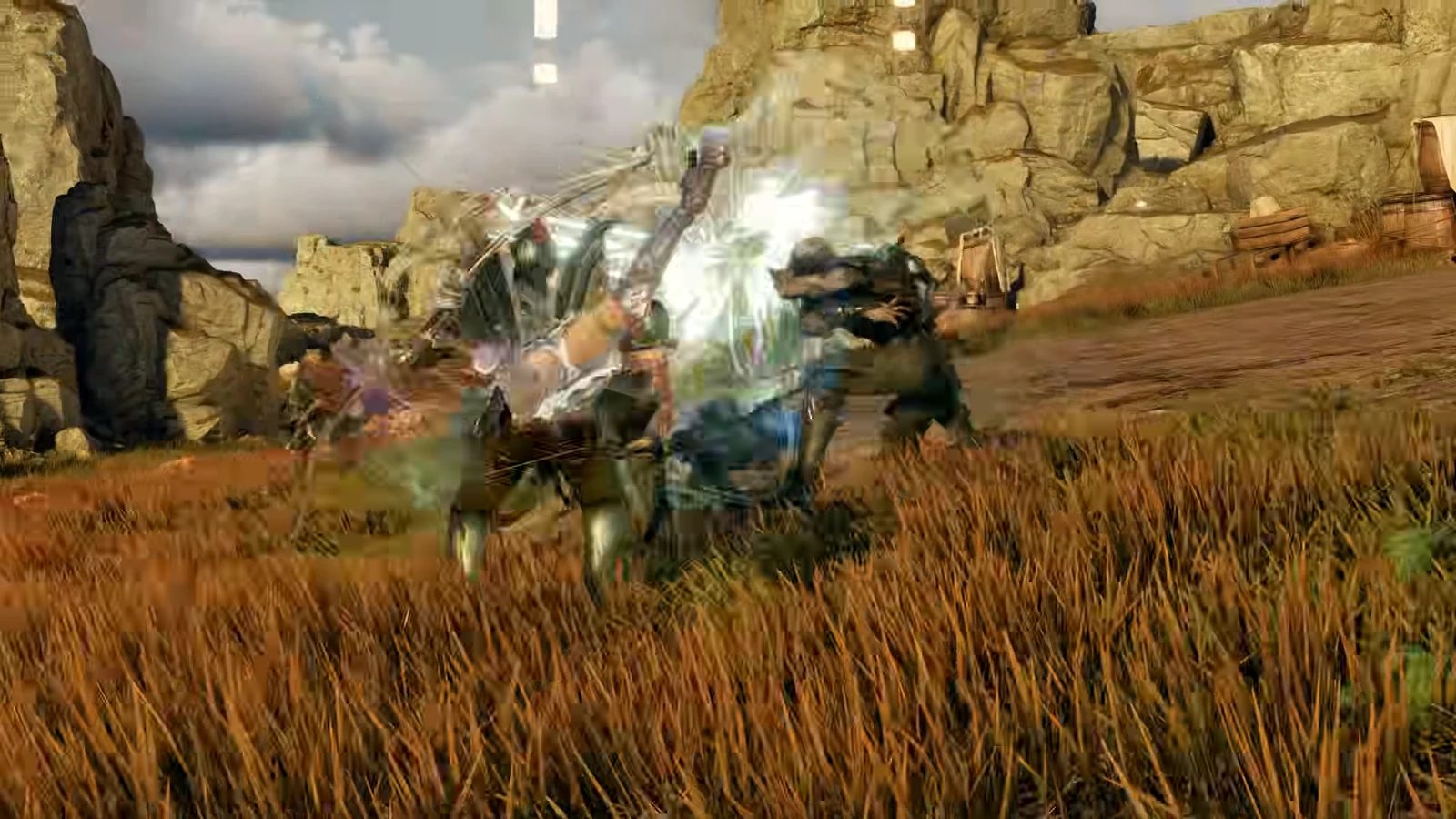
AION 2 opens with eight playable classes, and the class selection screen sorts them cleanly into tanks, damage dealers, and support roles. Each one carries its own weapon, combat identity, and place in party play, so the choice you make at the character creation screen shapes how the entire game feels. The showcase footage runs through all eight, weapon by weapon, using the default preview models to demonstrate what each class brings to a fight.
Quick answer: AION 2 ships with eight classes across tank, DPS, and support roles. You get four free character slots per account, so you can create and test several before committing to a main.
AION 2’s eight launch classes and their roles
Every class fits a defined role, and the weapon it wields signals its playstyle before you read a single skill tooltip. Here is the full launch roster.
| Class | Role | Weapon |
|---|---|---|
| Gladiator | Melee DPS / off-tank | Greatsword |
| Templar | Main tank | Sword and shield |
| Assassin | Melee DPS | Dual daggers |
| Ranger | Ranged DPS | Bow |
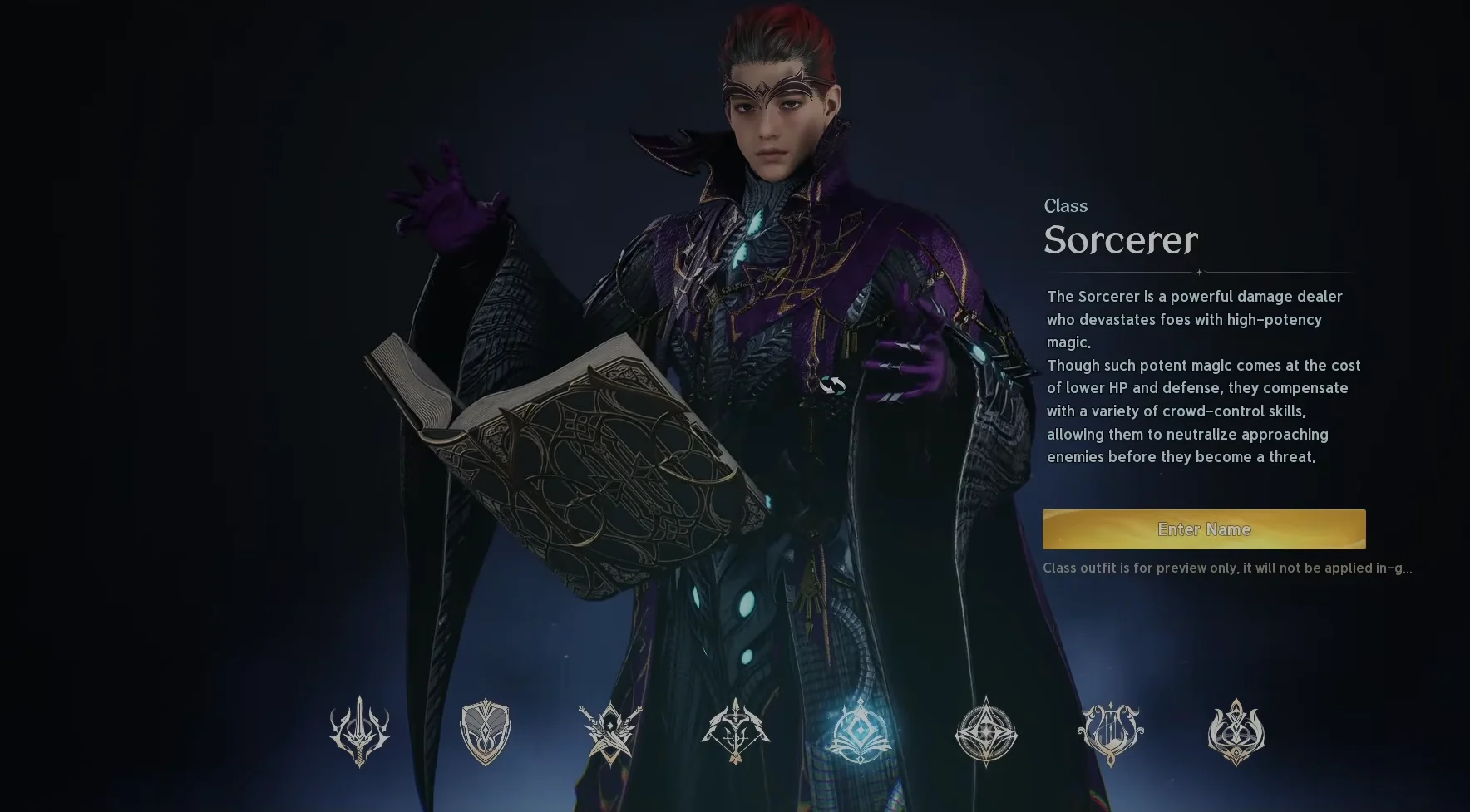
| Sorcerer | Magic DPS | Spellbook |
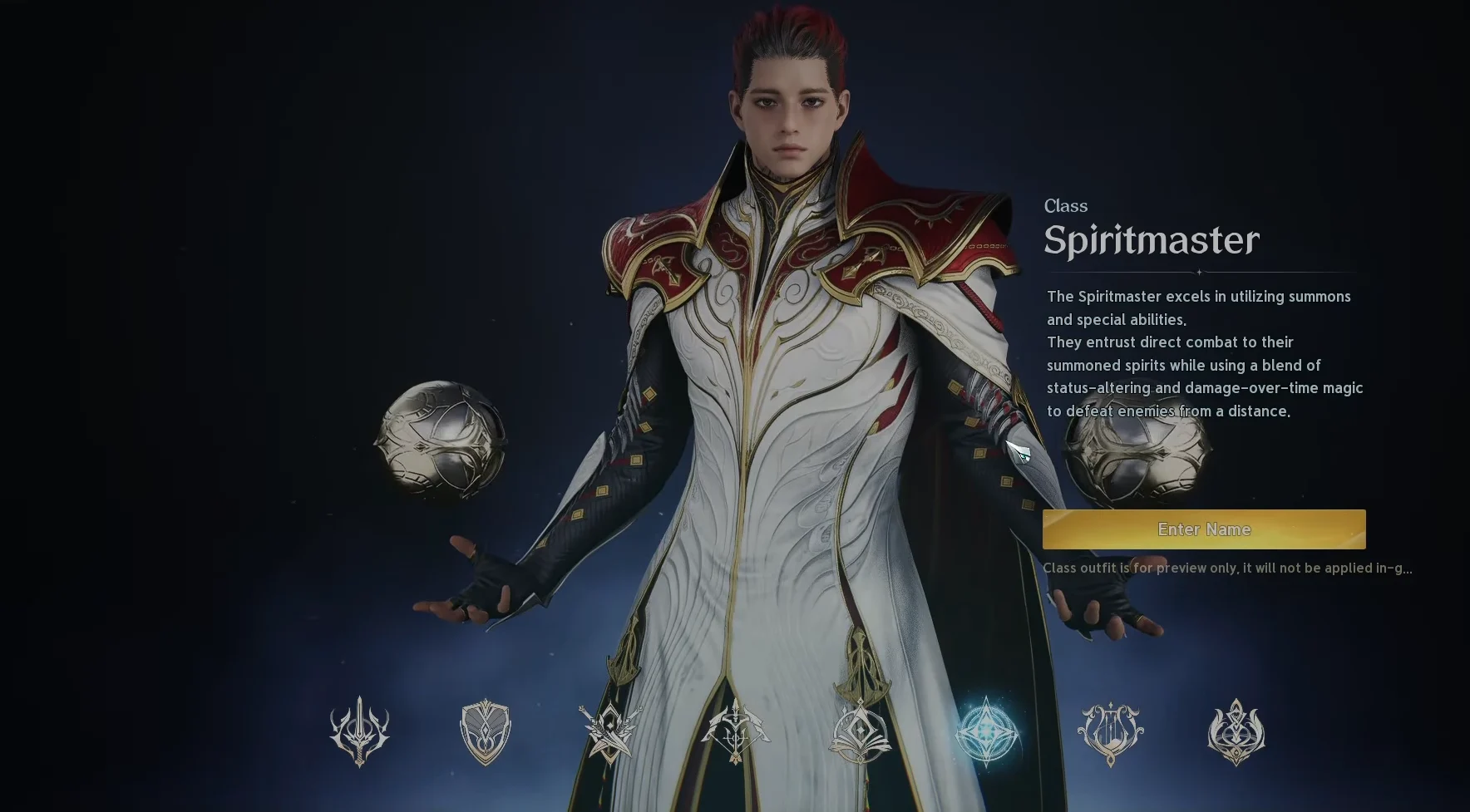
| Spiritmaster | Summoner | Floating orbs |
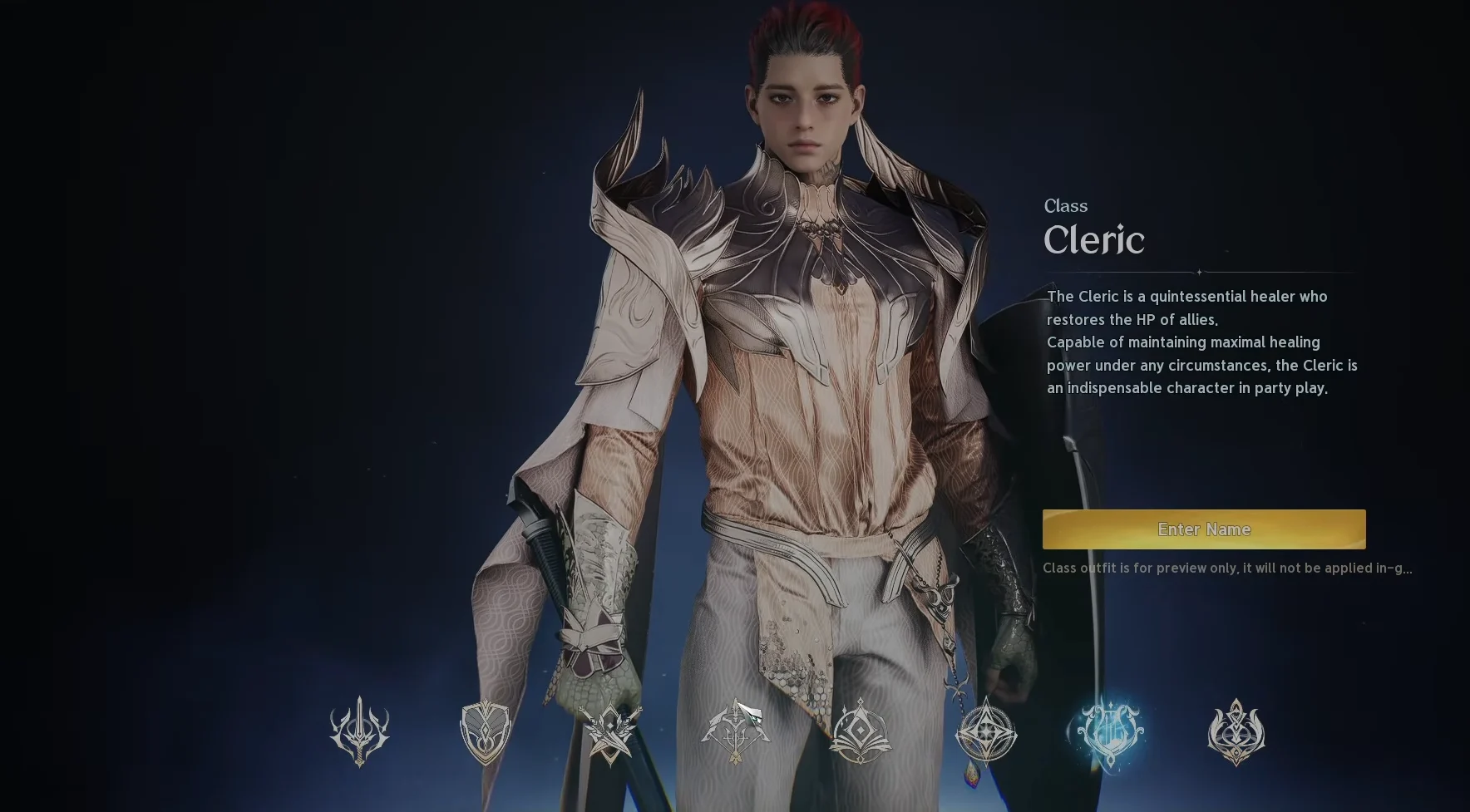
| Cleric | Healer | Mace |
| Chanter | Support / secondary healer | Staff |
Templar and Gladiator: the frontline classes
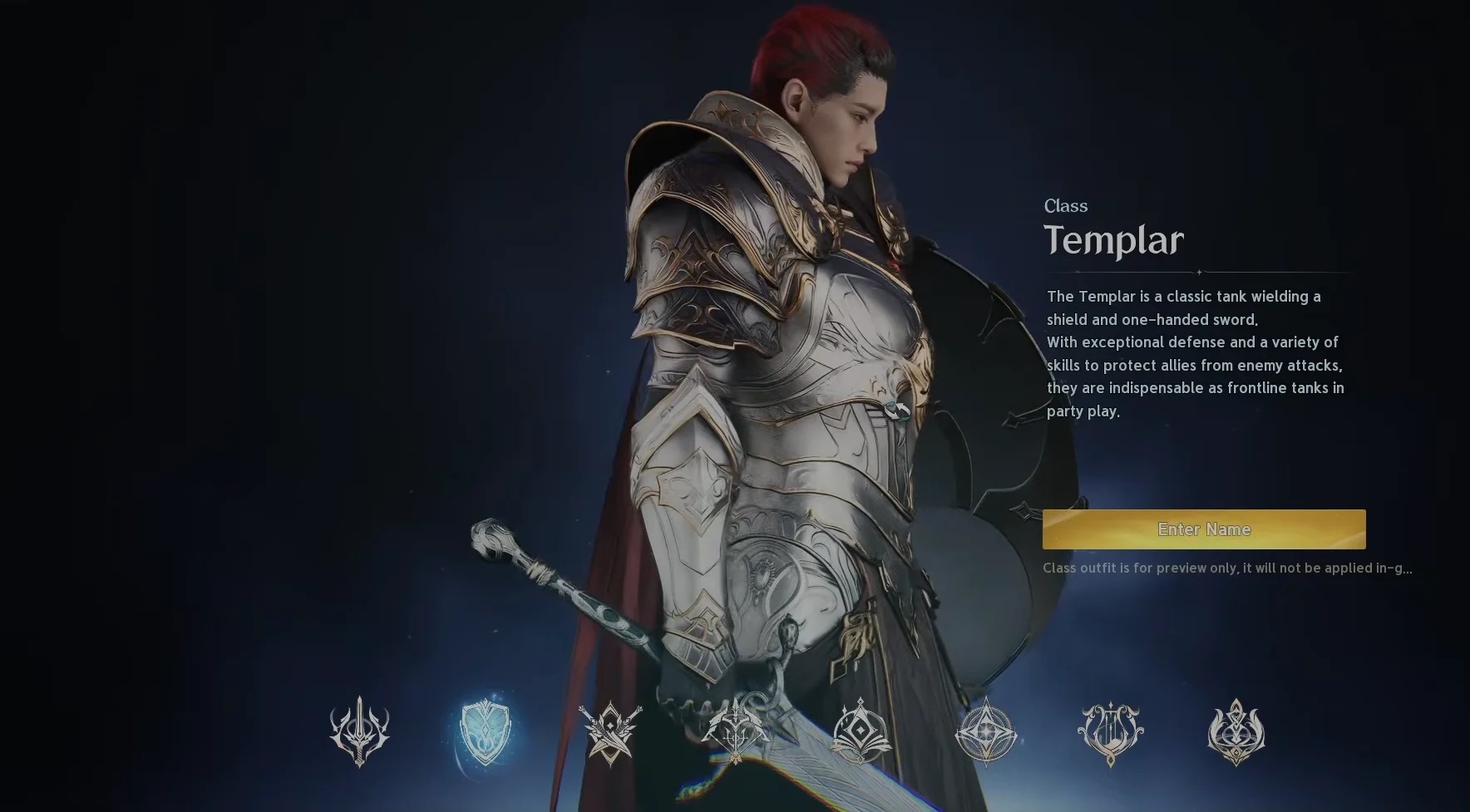
The Templar is AION 2’s dedicated main tank. Armed with a one-handed sword and a large shield, it leans on heavy defense and a set of protection skills designed to shield allies from incoming attacks and hold enemy attention. In group play it holds boss aggro, pulls enemies together, and buffs the party’s defense, which is why organized dungeon and raid groups treat a reliable Templar as a fixture. The trade-off is low personal damage, so solo leveling tends to be slower than on a pure DPS class.
The Gladiator is a greatsword melee fighter that sits between damage and durability. It functions as a frontline DPS but carries enough HP to act as a secondary tank, and its kit favors sweeping area attacks, gap-closers, knockdowns, and stuns. That mix of pressure and survivability makes it forgiving for newer players, since mistakes are less punishing when you can absorb hits and keep swinging. It performs consistently across solo content, world farming, and large-scale PvP.
Assassin, Ranger, and Sorcerer: the damage dealers
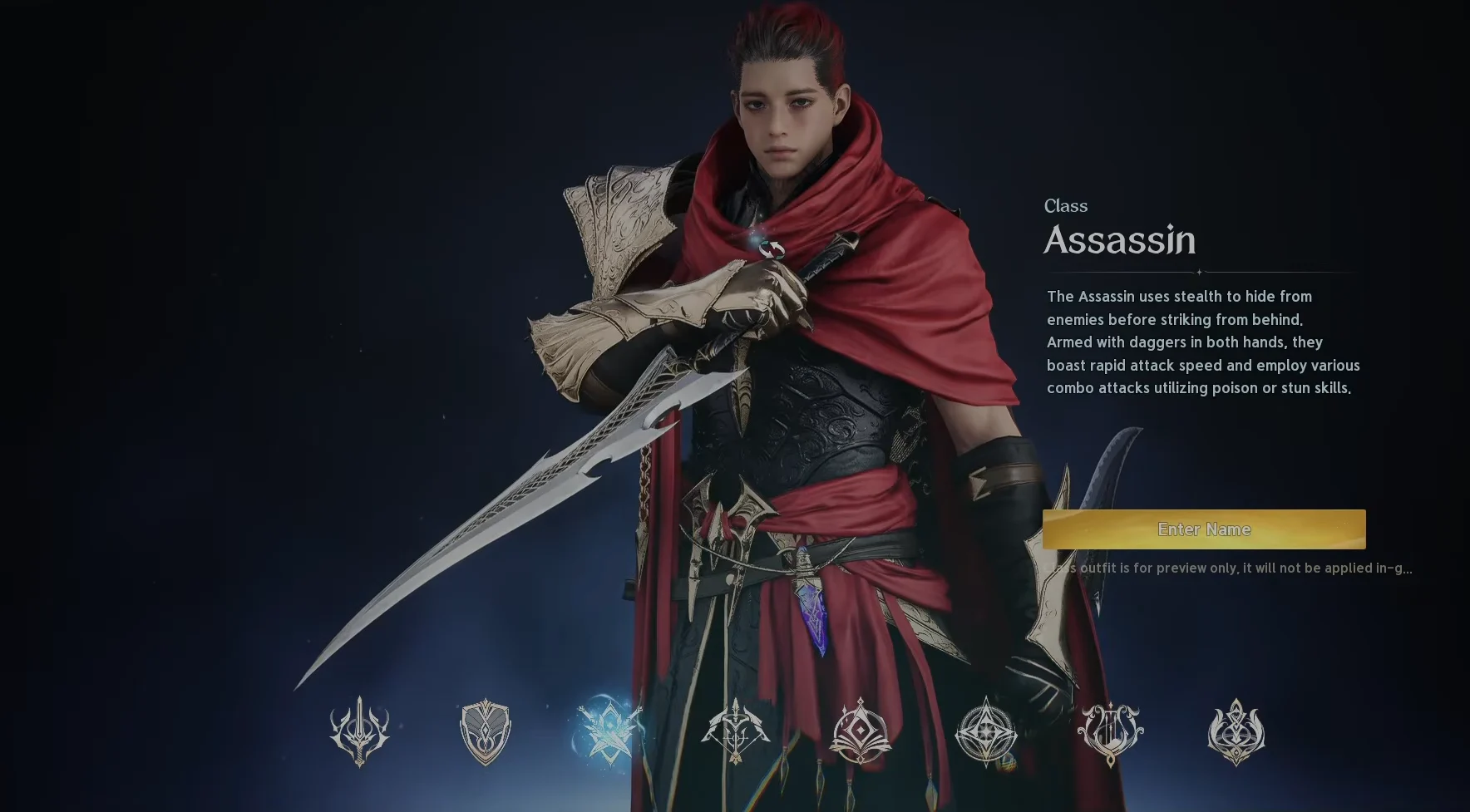
The Assassin wields daggers in both hands and is built around stealth and single-target burst. It slips out of sight, strikes from behind, and chains rapid combos that stack poisons and stuns to eliminate a priority target quickly. The payoff is high, but the class is fragile and demanding. It relies on precise rotations, good positioning, and low latency, and back attacks can be hard to maintain against bosses that reposition often.
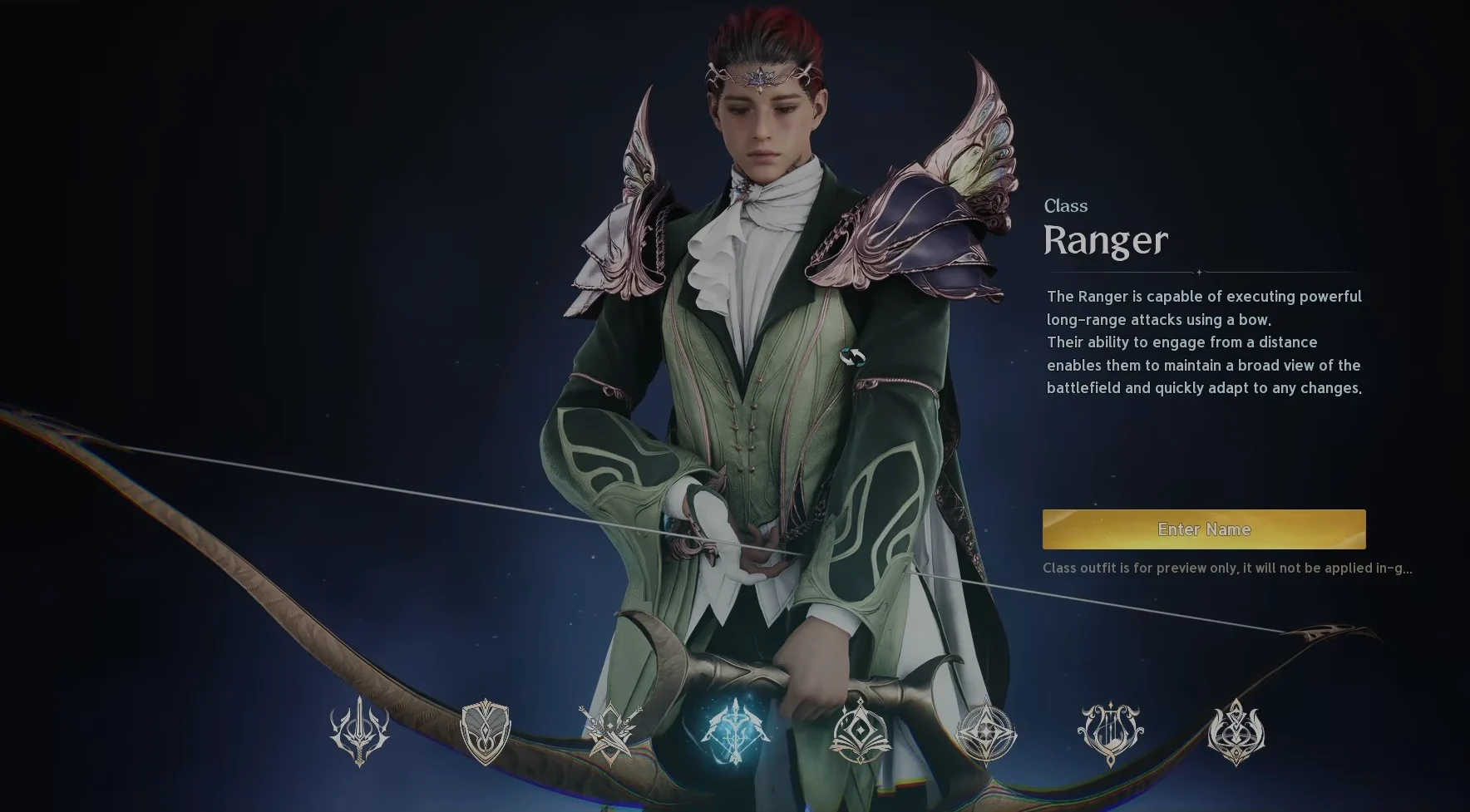
The Ranger is the bow-based ranged damage dealer. Its strength is fighting from a distance while staying mobile, kiting enemies, controlling space, and keeping a wide view of the battlefield. Attacking from range gives you more time to read incoming mechanics, and the skill rotation is more approachable than the Assassin’s, which makes it a comfortable pick for solo questing and open-world exploration.
The Sorcerer is the elemental caster, using floating spellbooks to throw out high-potency magic and area burst. It brings a range of crowd-control tools to lock down enemies before they close in, which balances out its weakness. Low HP and thin defenses make positioning critical, and its longer cast times mean an interrupted or missed spell cuts into its damage.
Spiritmaster: the summoner
The Spiritmaster fights through summoned elemental spirits rather than direct attacks, using a pair of floating orbs to command them. It leans on status-altering effects and damage-over-time magic to wear enemies down from a distance, and its summons create pressure from multiple angles at once. It is one of the more mechanically involved classes, since it depends on managing pets and combos, but skilled players get strong crowd control and battlefield disruption out of it. On the Korean and Taiwanese versions this class carries the name Elementalist.
Cleric and Chanter: healing and support
The Cleric is the primary healer, built around restoring ally HP, cleansing debuffs, and resurrecting fallen teammates. It keeps strong healing output in almost any situation, which makes it essential in raids, dungeons, and large-scale PvP, where a good Cleric can rescue allies who would otherwise die and force opponents to spend far more to secure a kill. Personal damage is lower, so solo leveling is slower, but its survivability lets it handle tough encounters and finding groups is easy.
The Chanter is a hybrid support that fights up close with a staff. Its identity is party-wide buffs, called Mantras, that raise ally stats such as movement speed and damage, layered with secondary healing, shields, and respectable melee output of its own. That flexibility lets it slide between buffer, backup healer, and damage dealer depending on what the group needs, which makes it a versatile fixture in organized parties.
How the classes rank in the current meta
Meta standings differ depending on the content and the analysis. On Asian server leaderboards, Gladiator and Assassin frequently show up as top DPS picks, while Cleric is treated as the essential healer and Ranger and Chanter earn strong marks for organized PvE. Rankings shift heavily between PvE and PvP, though. In group PvP, defensive and support classes like Templar and Cleric rise in value, whereas ranged classes like Ranger and Sorcerer benefit from staying out of melee range in large fights.
The bigger variable is not the class itself. Gear Score, Stigma builds, ping, party composition, and player skill all move a class’s real performance, and a well-geared character can make almost any class look powerful while an undergeared one struggles regardless of tier.
Balance patches change these standings over time, so treat any tier list as a snapshot rather than a fixed ranking.
Free character slots and the ninth class
Because every account starts with four free character slots, you are not locked into a single decision. You can roll several classes, test how each one plays, and settle on a main once you know which combat style clicks. That flexibility also cushions against balance changes, since you can keep an alt ready in a role that suits the current meta.
The global roster currently offers eight classes. Korean and Taiwanese editions have an additional ninth option: the Brawler, a gauntlet-wielding melee DPS. Those regions raise the level cap after Chapter 1, while global characters are expected to reach a maximum of Level 45. Until then, choose among the eight classes above; the best way to find your main is to try a few slots with the weapons and roles that appeal to you most.