
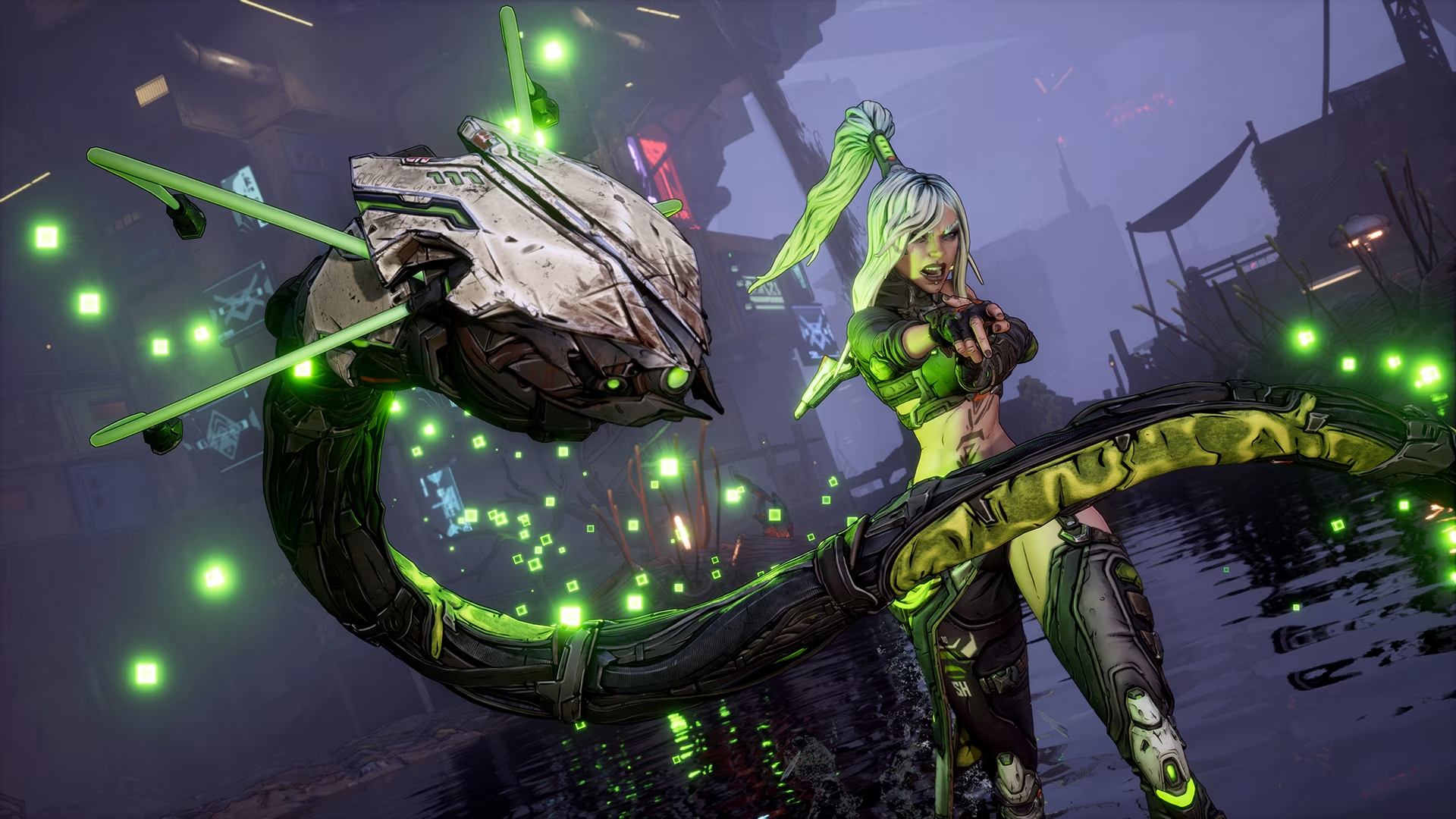
Loveless is the second downloadable Vault Hunter for Borderlands 4, and she plays like nothing else on the roster. She’s an ex-Anshin hacker turned assassin who shares her head with a digital virus, and that virus can digistruct into a physical Wyrm that fights beside her. Her whole kit leans on Corrosive and Radiation damage, fast movement, and melee that hits far harder than it looks.
Quick answer: Loveless has three action skills — Malignant Construct (Manifestation), Visual Paradox Nexus (Hack/Slash), and Plague Star (Virology). Her Hacker trait, RAM, fills from critical hits and status effects, raises her gun damage as the bar climbs, and converts a full bar into one empowered melee attack.
How to unlock Loveless in Borderlands 4
Loveless is not part of the base roster. She requires the Super Deluxe Edition of Borderlands 4 or a separate purchase, the same way C4SH was handled. She arrives on September 10, alongside the FL4K and the Last Resort story pack and Bounty Pack 5: Amara and the Vile Shadows.
Once she’s on your account, she appears as a selectable class when you create a new character. You cannot convert an existing Vault Hunter into Loveless.
RAM: the Hacker Vault Hunter trait
Every Vault Hunter in Borderlands 4 has a trait that works with all three of their action skills, and Loveless gets RAM. Landing a critical hit or applying a status effect fills the RAM bar. The fuller that bar is, the more gun damage she deals — so RAM is a passive damage stat as much as a resource.
When RAM is full, her next melee attack becomes Empowered and deals dramatically increased damage. Using it consumes the entire bar, which means you’re trading a stacked gun damage bonus for one big hit. RAM also drains on its own if you haven’t gained any recently, so the trait rewards constant crits or constant elemental application rather than slow, careful play.
Note: action skills in Borderlands 4 always deal Action Skill Damage, even when the skill text says melee damage. That matters for Loveless because several of her abilities are described in melee terms.
Loveless action skills, Functions, and Executables
Each action skill sits at the top of its own tree, and only one can be equipped at a time. What’s different about Loveless is that her skills carry extra inputs. A Function is a low-cooldown power spike triggered with a tap of the action skill button while the skill is live. An Executable is a high-impact finisher triggered by pressing and holding.
| Action skill | Tree | Core effect |
|---|---|---|
| Malignant Construct | Manifestation | Summons the digital Wyrm to fight alongside her and grants Symbiosis stacks |
| Visual Paradox Nexus | Hack/Slash | Boosts movement speed and critical hit damage; kills grant Stealth and spawn a Clone |
| Plague Star | Virology | Throws a Shuriken that deals Corrosive damage and applies Contagion |
Malignant Construct
Press the action skill to summon the Wyrm. While it’s out, tapping the button again is the Function, which teleports the Wyrm to an enemy and deals Radiation damage in an area around it. Holding the button is the Executable, ordering a powerful breath attack that deals Radiation melee damage.
Summoning the Wyrm also gives Loveless Symbiosis stacks, which unlock Symbiosis effects across her passives. She gains more Symbiosis when the Wyrm kills an enemy or through specific skills, and the stacks drain over time.
Visual Paradox Nexus
Activating the VPN gives Loveless increased movement speed and critical hit damage for a duration. Kill something while it’s active and she briefly enters Stealth, leaving a Clone at the spot where the enemy died. Only one Clone can exist at a time.
Its Function is a Kusarigama slash that sweeps nearby enemies with a wave of Radiation melee damage. If you use it while in Stealth, the slash is guaranteed to critically hit — and it ends Stealth, so the timing is the decision point.
Plague Star
Plague Star throws a digistructed Shuriken that deals Corrosive damage to everything it passes through and applies Contagion, a Corrosive status effect that ticks over time. When an enemy dies while carrying Contagion, it jumps to up to three nearby enemies, each inheriting half of the dead target’s stacks.
Holding the action skill is the Executable, detonating every active Contagion at once for Corrosive area damage and consuming the stacks in the process.
How the skill trees are laid out
The structure is the same as every other Borderlands 4 Vault Hunter. Each tree has a wide trunk of core skills at the top, then splits into three branches at the bottom. Tier 1 skills are open immediately, and each additional five points spent unlocks the next tier.
| Element | Rule |
|---|---|
| Branch access | Unlocks after 15 total points in that tree |
| Branch investment | Each branch needs its own points; progress in one does not unlock another |
| Augments | Two in the trunk plus one per branch, so five per tree |
| Equipped augments | One at a time; costs no skill point and can be swapped freely |
| Capstones | One at the bottom of each branch; only one can be equipped |
| Cross-tree use | Augments and capstones only work with their own tree’s action skill |
| Respec | Full tree resets are done at a HUB on Kairos |
You can swap action skills, augments, and capstones on the fly. Only a full point reset requires a trip back to a hub.
Manifestation tree: the Wyrm companion
Manifestation is the pet tree. Everything here feeds the Wyrm, feeds Symbiosis, or turns Radiation damage into a bigger number. The trunk opens with Drift Compatible, Corrupted Path, and Antivirus, which set up the basic companion and survivability layer.
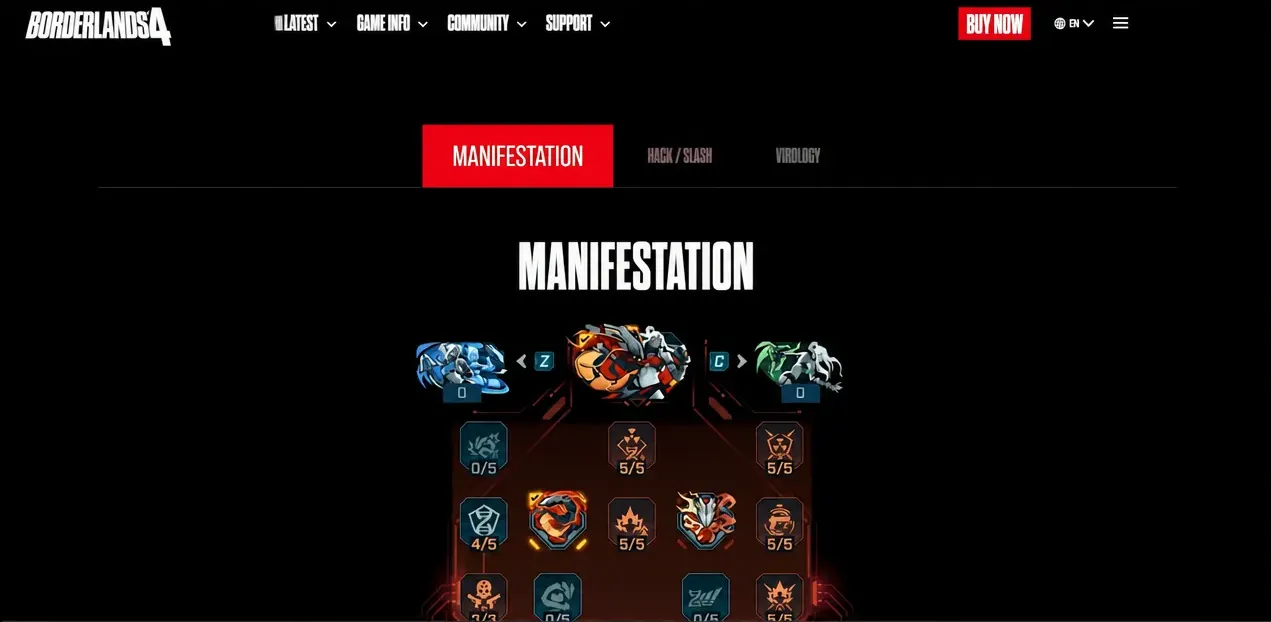
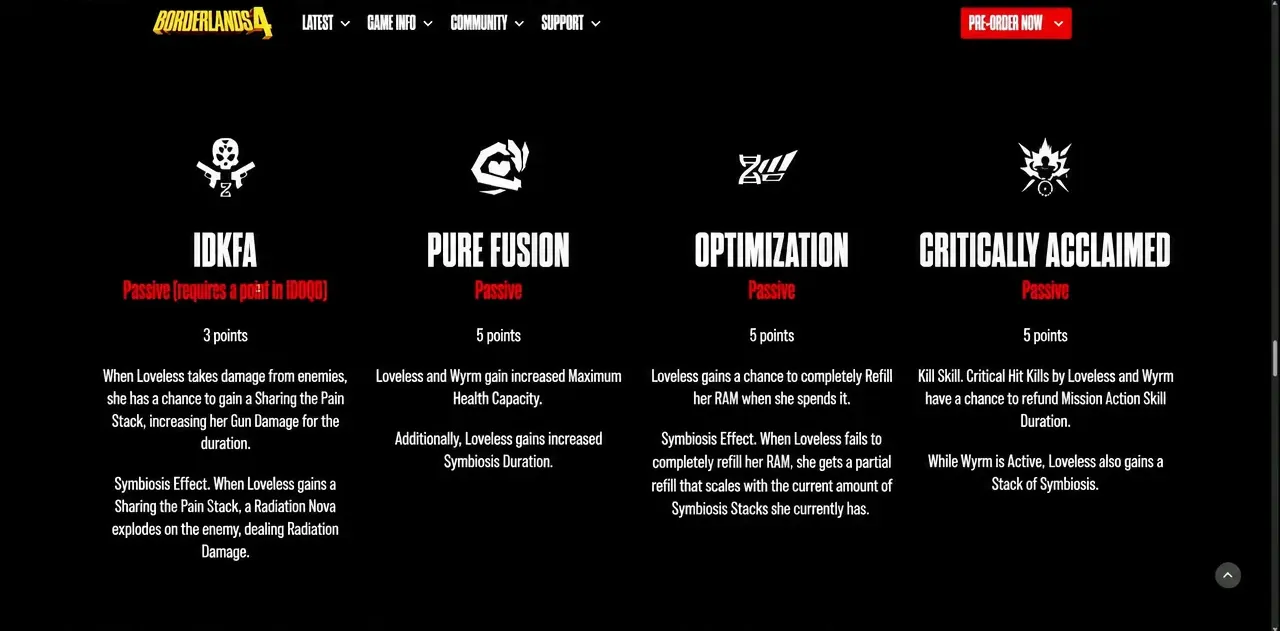
Deeper in the trunk you get IDQQD, Solid State Destruction, Overclock, Intelligent Artifice, and Finisher, followed by IDKFA, Pure Fusion, Optimization, and Critically Acclaimed. That last cluster is where the tree starts pushing critical hits, which loops straight back into filling RAM.
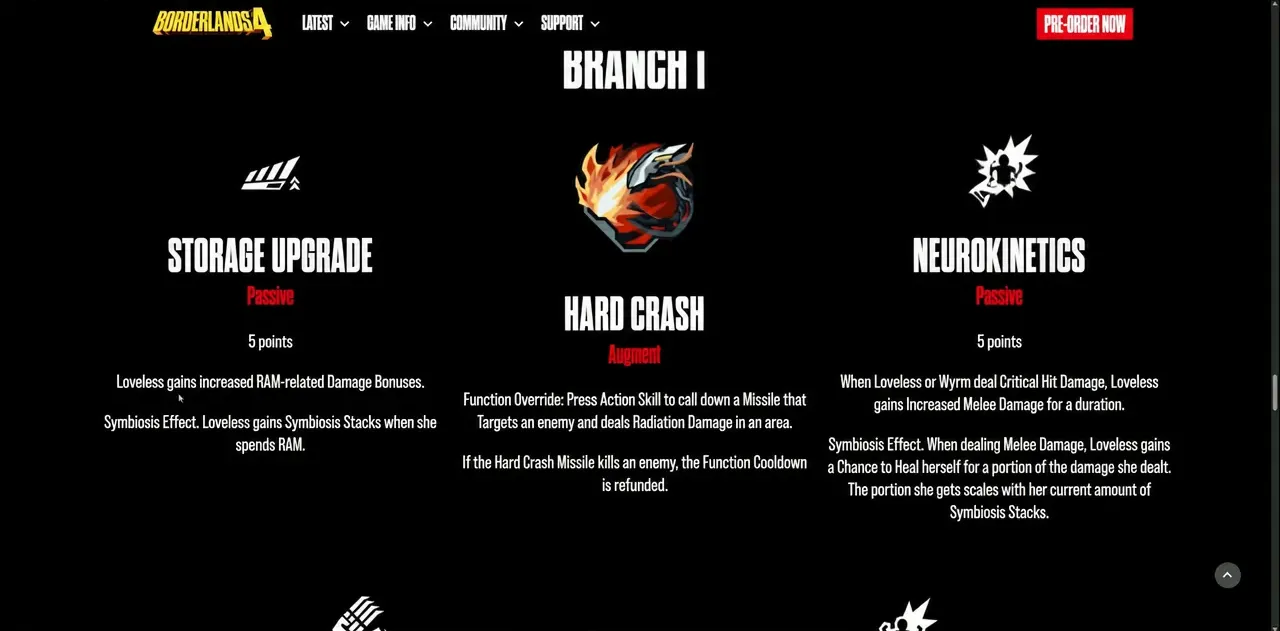
The first branch collects Storage Upgrade, Neurokinetics, and the Hard Crash augment, ending in the Barrag.exe capstone. Branch two runs through Fusion Friends-Y and Dark Web into Nuk.exe. Branch three covers Status Update and Giga Bite before finishing on Enrag.exe.
Hack/Slash tree: stealth, clones, and melee
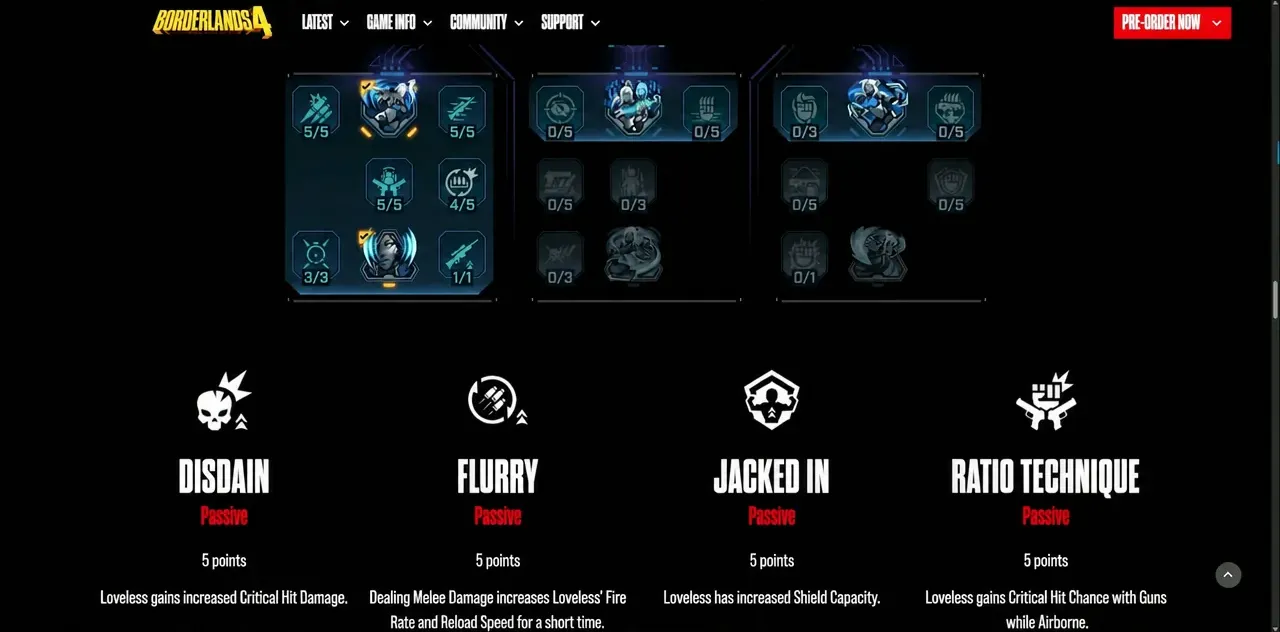
Hack/Slash is the most split of the three, and each branch pulls in a different direction. The trunk shares Disdain, Flurry, Jacked In, and Ratio Technique across all of them, so the early points are flexible no matter which ending you want.
| Branch | Focus | Notable skills and capstone |
|---|---|---|
| Branch 1 | Sniper rifles | Sudo Kill, Biathlon, Accelerat.exe |
| Branch 2 | Clones | Swarm, Siliconventional Warfare, Synchroniz.exe |
| Branch 3 | Melee | Ctrl/Alt/Del, Wrap Around, Engag.exe |
The sniper branch is the odd one out for a class with a chain-scythe Function, but it pairs neatly with the VPN’s critical hit damage bonus and the Stealth window that follows a kill. The melee branch is the natural home for RAM’s Empowered attack.
Virology tree: Corrosive damage and status effects
Virology is built around applying status effects and keeping them spreading. The trunk includes CPU and Contaminant, both of which push Corrosive output and status effect uptime — and since status effects fill RAM, this tree keeps the trait topped up without needing critical hits at all.
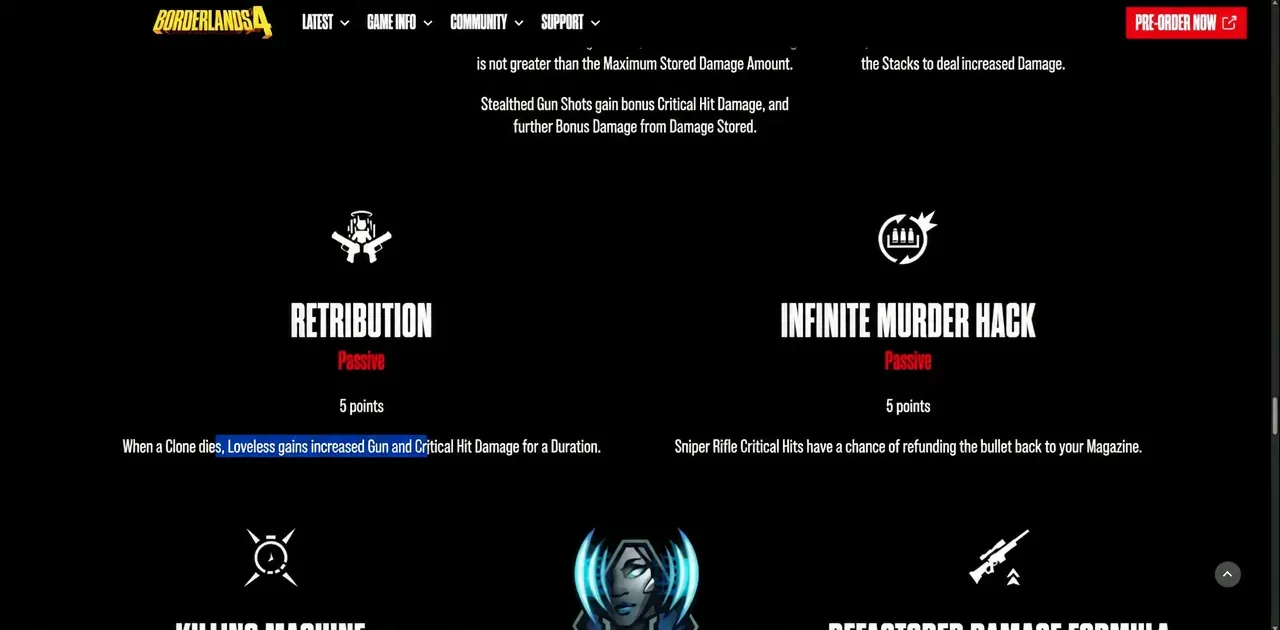
Branch one takes Cat 5 and Transmission Vector into the Replicat.exe capstone, which suits the Contagion spread mechanic. Branch two is the splash damage route, running System Restore and Burst Finish into Fulminat.exe. Branch three closes out with It’s Super Effective, When It Rains, and the Proliferat.exe capstone.
Known issue: radiation explosion scaling
There is a bug affecting how Radiation explosion damage scales, which touches parts of the Manifestation kit that lean on Radiation area damage. Until it’s addressed, damage numbers from those explosions may not line up with what the skill text implies, so treat any Radiation-heavy build math as provisional for now.
The short version: pick Manifestation if you want a pet doing Radiation damage while you stack Symbiosis, Hack/Slash if you want speed, Stealth, and crits, and Virology if you want everything on the screen melting at once. All three feed RAM from a different angle, which is what makes her flexible rather than locked into a single playstyle.