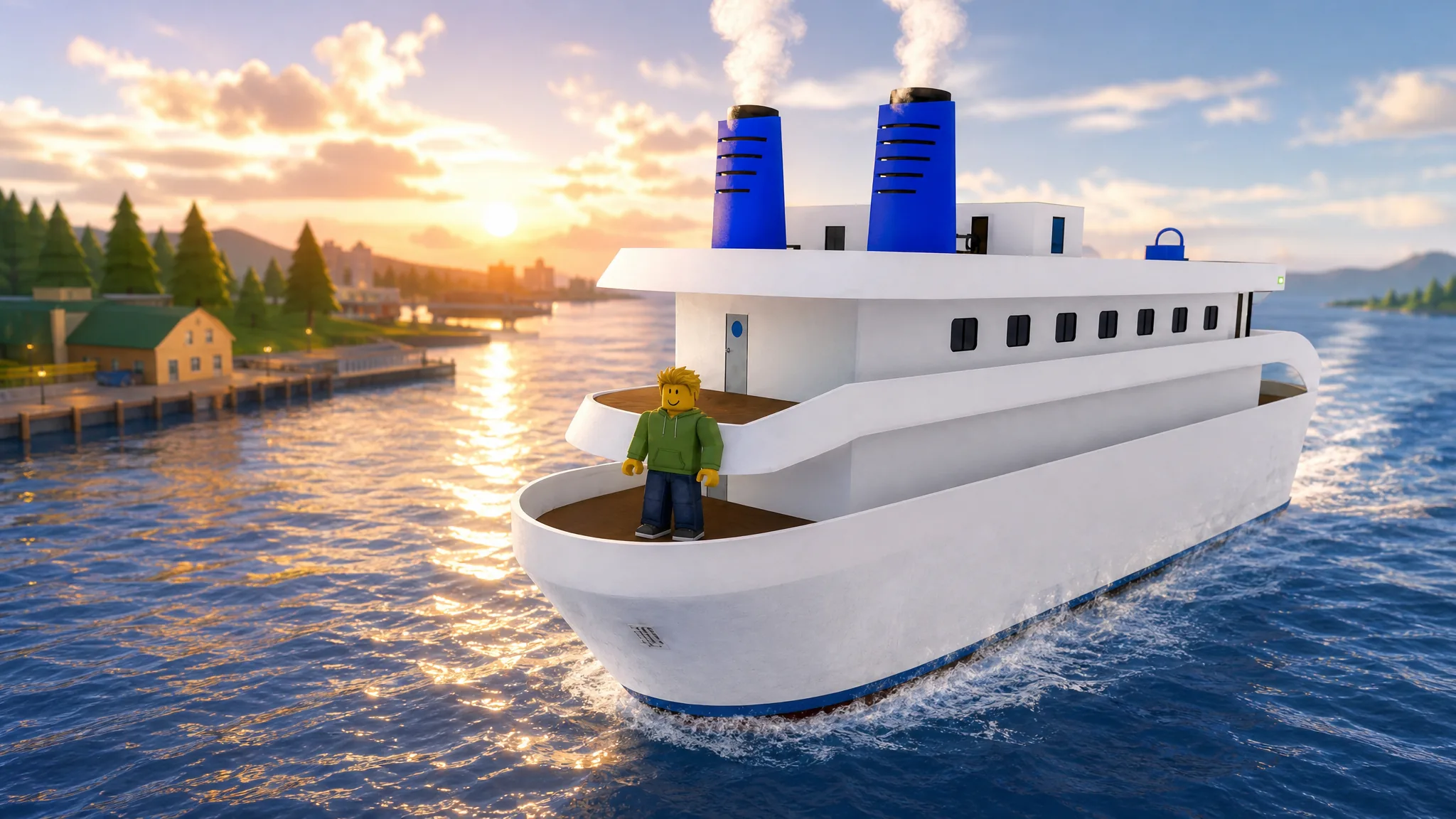
Money in Cruise Line Tycoon comes from one thing above all else: passengers paying an hourly rate to occupy your cabins while your ship completes a voyage. The most reliable way to farm cash is to fill a deck with high-rate rooms, lift your passenger rating with cheap amenities, then automate a multi-port route so the ship keeps earning while you are away.
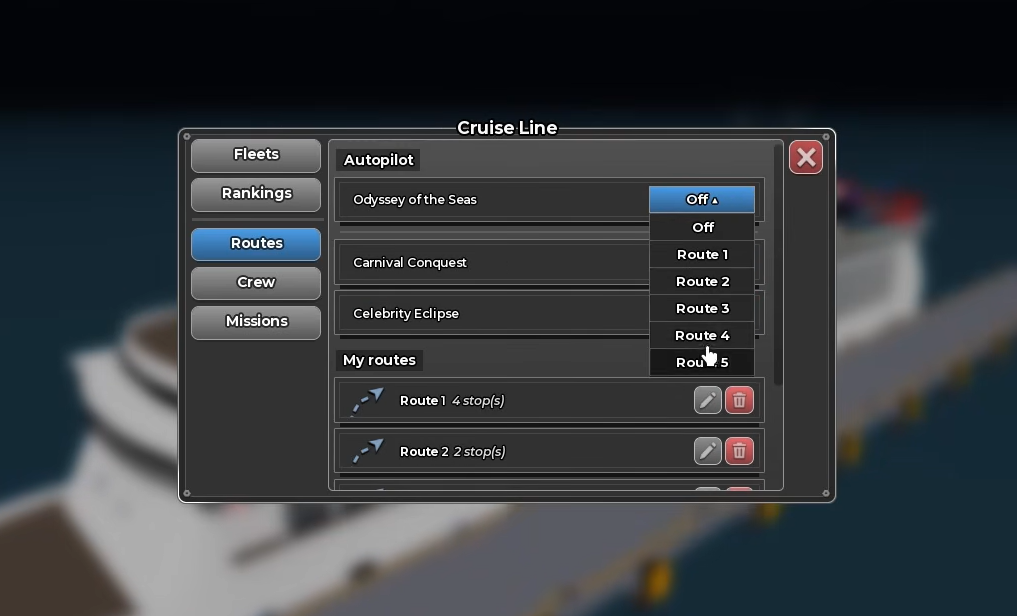
Quick answer: Cover a deck in the best cabins you can afford, add food, entertainment, comfort, and cleanliness items to raise the rating, hire a captain, install bridge consoles, and set a long route through several ports. You can run up to five automated routes at once for AFK income.
What actually generates income
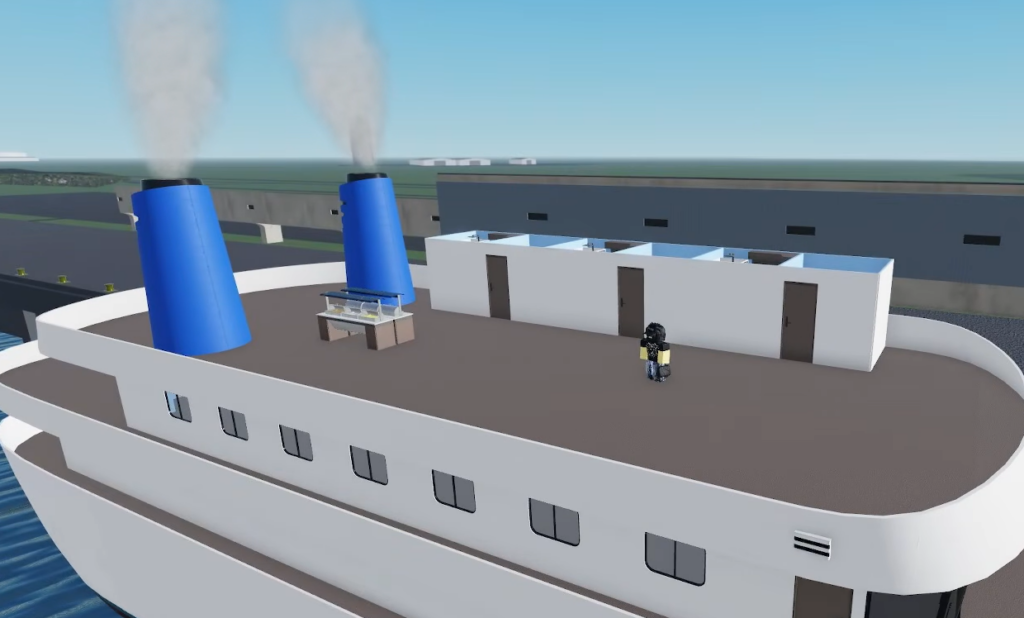
Every passenger room lists an hourly rate. That rate is the core of your income, so the layout question is simple: how many paying rooms can you fit, and how high is each one’s rate. Longer routes that stop at several ports pay more than a single short hop, so the same ship earns more per trip when you extend the loop rather than bouncing between two docks.
Rating matters as much as room count. Passengers reward food coverage, entertainment, comfort, and cleanliness, and a higher rating keeps rooms filled and cash flowing. In the early game, a well-rated small ship beats a large, half-empty one.
Exact hourly figures and income totals shown by players were recorded before the V2.0.0 Free Beta and are not guarantees. Treat the numbers below as a ranking of value, then confirm live rates on your own ship.
Cabin rates and cost per room
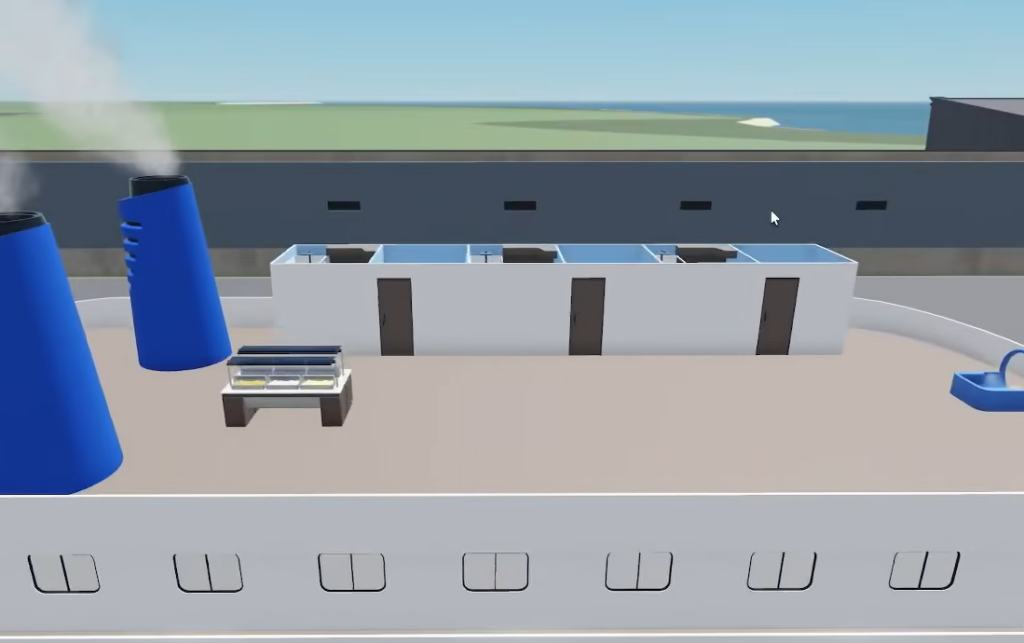
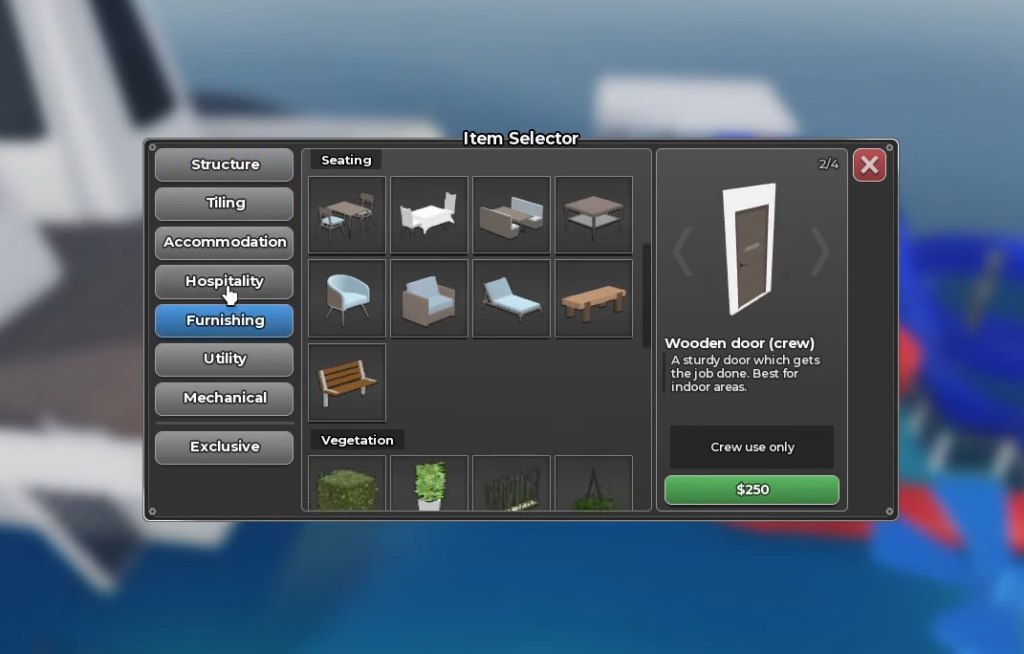
Cabins are found under the Accommodation tab in the Item Selector. Suites carry the highest hourly rates but also the highest build cost, so a money deck usually mixes a few top-tier suites with a bulk of cheaper rooms to fill space. Here is how the passenger rooms compare.
| Room | Rate | Cost |
|---|---|---|
| Large loft suite | $1,300/hr | $132,500 |
| Small loft suite | $750/hr | $75,000 |
| Large balcony stateroom | $250/hr | $30,000 |
| Balcony stateroom | $175/hr | $19,500 |
| Studio stateroom | $140/hr | $15,500 |
| Double balcony cabin | $140/hr | $15,500 |
| Double studio cabin | $100/hr | $11,000 |
| Single studio cabin | $50/hr | — |
The Double studio cabin is a common starter pick because it packs a usable rate into a low price, which lets you fill a full deck before your cash runs out. A symmetrical layout with a central hallway keeps guest circulation clean and fits eight cabins on a single small deck.
Cheap amenities that raise the rating
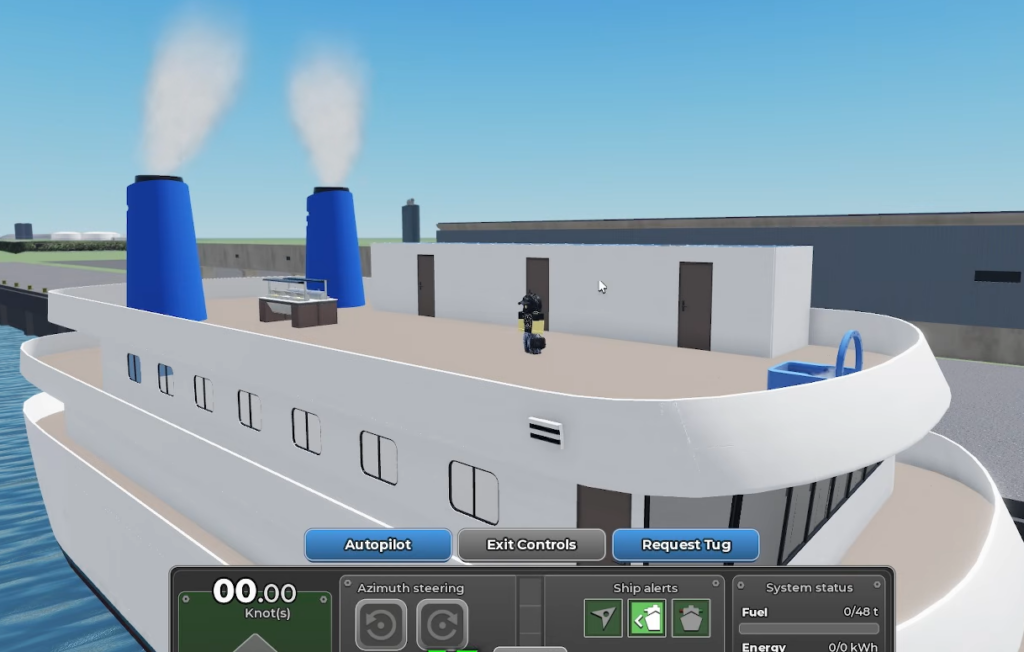
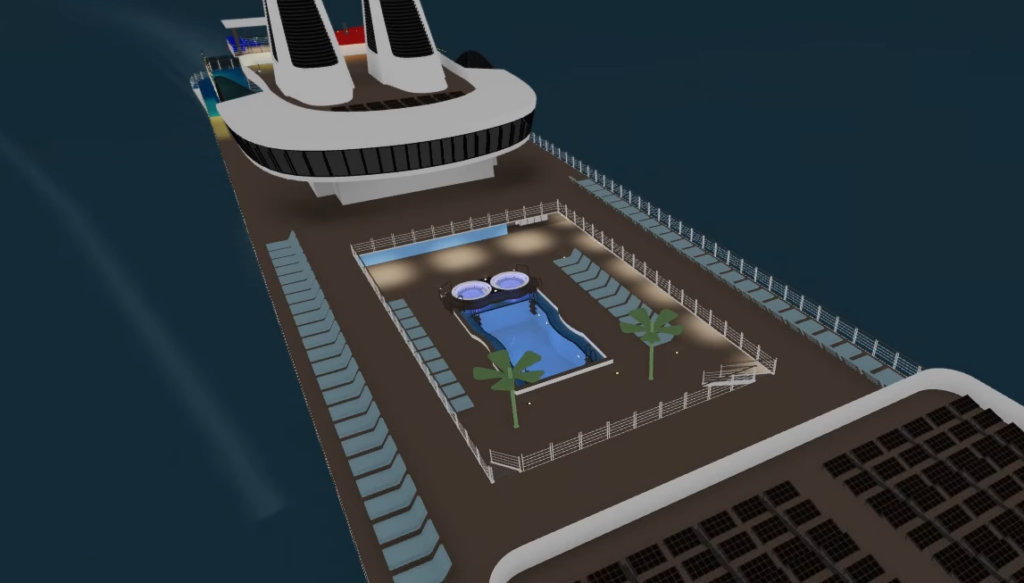
A money deck needs food, entertainment, comfort, and cleanliness to keep passengers satisfied. These items are inexpensive relative to cabins and pay for themselves by keeping rooms occupied.
| Item | Effect | Cost |
|---|---|---|
| Hot food buffet bar | $2/passenger, +1 food | $5,250 |
| Arcade machine | +2 entertainment | $2,850 |
| Small hot tub | +2 entertainment | $2,800 |
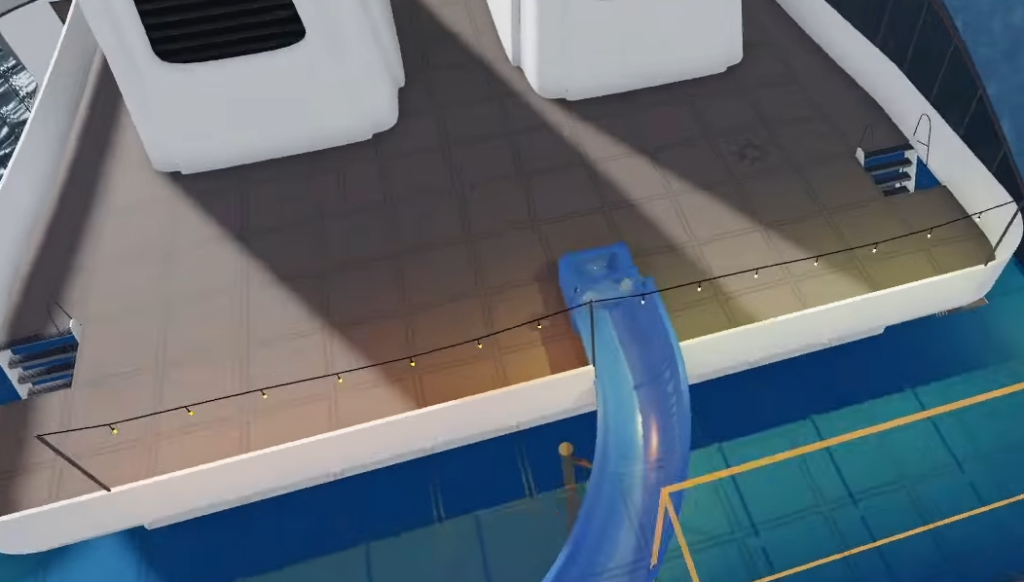
| Water slide entry | +2 entertainment | $2,000 |
| Water slide exit | Completes the slide | $2,000 |
| Single couch | +1 comfort | $250 |
| Trash can | +1 cleanliness | $150 |
Water slides only work when you place a matching entry and exit piece; a slide with just one end will not function or add entertainment. Trash cans spaced along the central corridor and couches lined down the walkways are cheap ways to push cleanliness and comfort up without eating into cabin space.
Engines, power, and fuel
A voyage cannot start without working propulsion, so pick an engine that fits your deck budget. Large hydrogen engines deliver high speed but eat a lot of deck space; diesel and hybrid engines are more compact. Hybrid engines generate electricity that has to be stored in batteries, and you can top that storage up with solar panels on the top deck.
| Component | Key stat | Cost |
|---|---|---|
| Large engine (diesel) | 800kW power, 15L/s fuel | $125,000 |
| Solar panels | 150kW production | $10,000 |
| Fuel tank (M) | 5.0kL capacity | $3,500 |
| Battery | 500 kWh capacity | $1,500 |
One popular money trick starts from a cheap hull. Deleting all the engines on a stock ship refunds enough to drop the build cost down to a bare frame, giving you a low-cost boat you then rebuild for income. Just remember you will need to reinstall propulsion before the ship can sail again.
Build the money loop
Set up autopilot for passive income
Passive earnings come from autopilot, which lets a ship sail and collect fares while you are AFK. Two things must be in place first: a hired captain and installed bridge consoles. Without both, the ship will not run a route on its own.
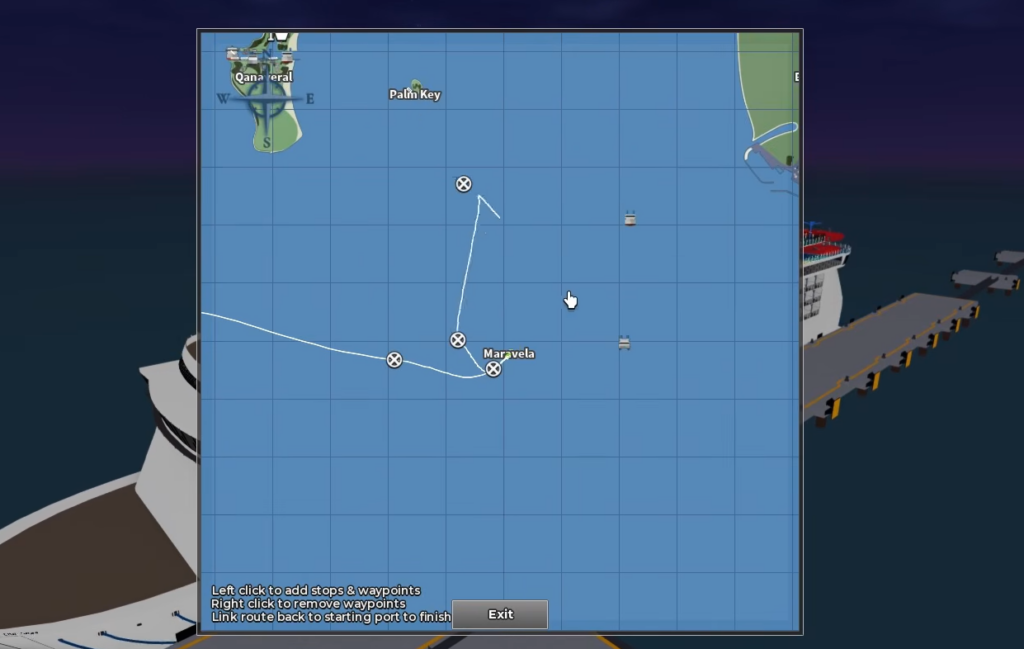
You know it worked when the ship departs on its own, and cash settles after it docks. A promised reward or a visual arrival is not income until the game records the settlement, so wait for docking before judging a route’s value.
Stop supply shortages on long routes
A stalled or under-supplied ship earns nothing and can burn through your reserve. On longer voyages, food runs out unless you install proper storage. Add shelving and walk-in freezers so supplies last the full trip, and stock fuel before departure so the ship never leaves on fumes. Never spend your whole balance on a build; keep enough set aside for one more complete voyage and a correction if the route fails.
Before scaling to a bigger hull or a fifth route, run your baseline loop once and confirm the settlement still clears fuel, supplies, and crew costs. Beta balance shifts between updates, so a route that paid well last patch is worth re-testing on the current version. You can launch the game and check live values from the official Cruise Line Tycoon Roblox page whenever you want to verify a build against the latest numbers.