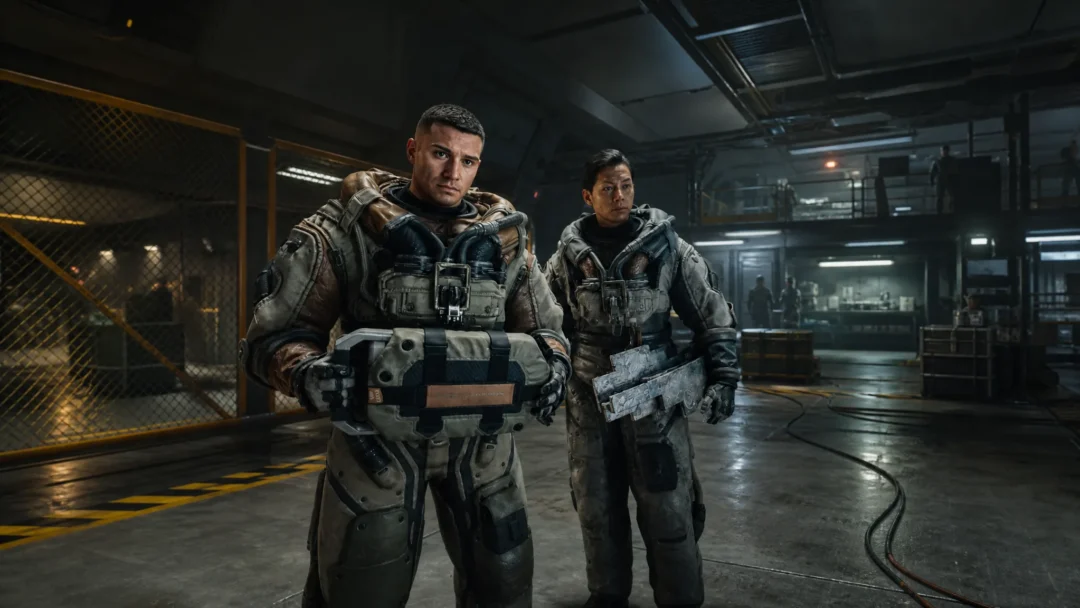
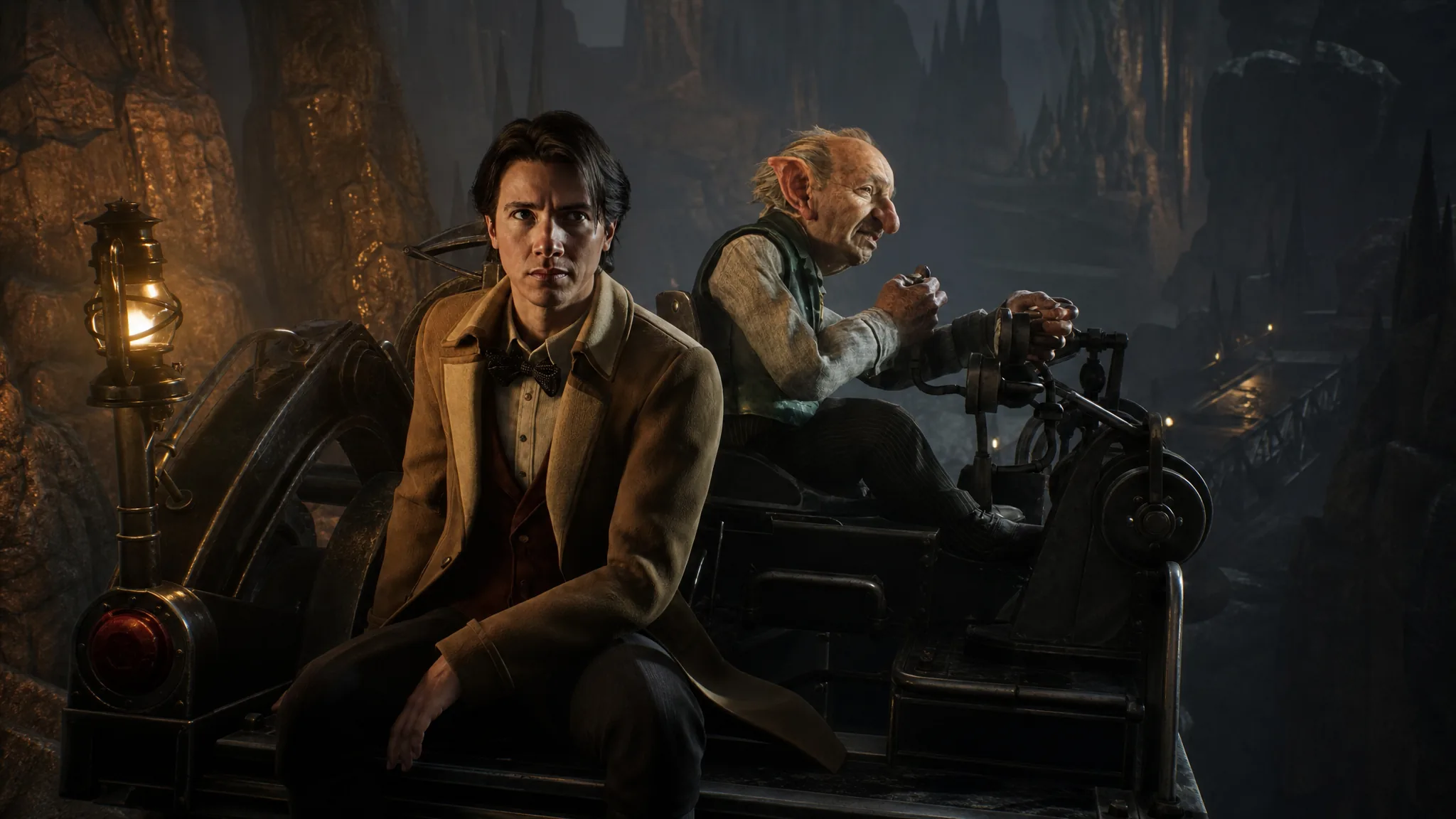
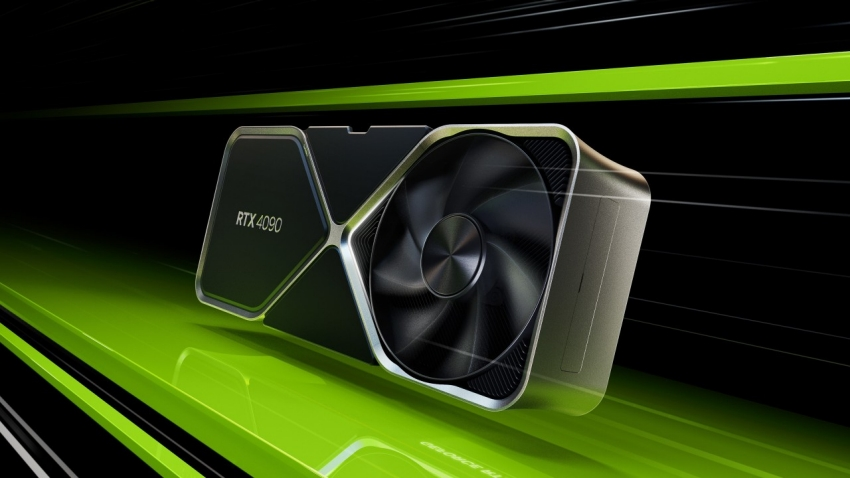
Nvidia’s DLSS 5 launched as an RTX 50 Series feature, but it is not permanently locked to that hardware. The company has now stated on the record that it intends to bring official DLSS 5 support to older GeForce RTX 40 cards once it finishes tuning performance on the newest generation.
Quick answer: DLSS 5 is officially available only on RTX 50 Series GPUs right now. Nvidia plans to expand official support to the RTX 40 Series later this fall, but no exact date is confirmed. RTX 30 and older cards are not on the official list.
What Nvidia said about RTX 40 support
An Nvidia spokesperson framed the rollout as a sequencing decision rather than a hardware limit. The company’s statement reads:
Our current focus is on optimizing performance for the GeForce RTX 50 Series with model updates expected later this fall. Once RTX 50 Series performance is more fully tuned, we plan to work on expanding official support to the GeForce RTX 40 Series.
That language matters for anyone holding an RTX 4090, RTX 4080, or another Ada Lovelace card. DLSS 5 was never blocked by a hardware wall on those GPUs. Nvidia chose to launch on RTX 50 first and is now confirming that RTX 40 cards are next in line for official support.
Owners of RTX 30 and earlier cards are, at least officially, left out for the neural rendering feature. No official plan for those generations has been stated.
DLSS 5 hardware support by GPU generation
| GPU generation | DLSS 5 Neural Rendering status |
|---|---|
| RTX 50 (Blackwell) | Supported at launch (Sept. 3) |
| RTX 40 (Ada Lovelace) | Official support planned later this fall |
| RTX 20 / 30 | Not supported |
Why RTX 50 gets DLSS 5 first
The DLSS 5 model runs on the FP8 numerical format, which is available on both RTX 50 and RTX 40 GPUs. That is the core reason the feature is not tied to Blackwell architecture in the way the early “RTX 50 exclusive” messaging suggested. In principle, RTX 40 silicon can execute the model.
What RTX 40 cards do not have is the newer frame-generation infrastructure Nvidia reserves for RTX 50, namely Multi Frame Generation and Dynamic Multi Frame Generation. DLSS 5 is heavy to run, and without those frame-multiplication tools, combined with a lower base frame rate on older hardware, the experience may not stay smooth. Tuning on RTX 50 first is the practical route to the frame rates Nvidia is marketing.
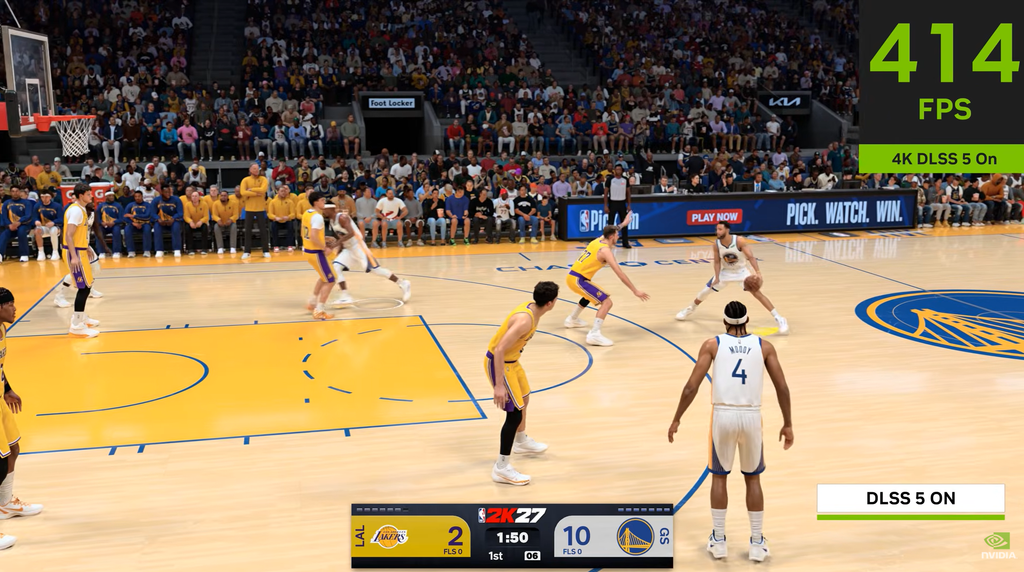
The performance demand is real even on the flagship. In one test of NBA 2K27 on an RTX 5090 at 4K with maximum settings and frame generation off, turning on DLSS 5 dropped the average frame rate from 192fps to 76fps.
Community modders have already shown RTX 40 compatibility ahead of official support. A version of DLSS 5 Neural Rendering has been demonstrated running on an RTX 4090 by swapping in compatible CUDA binaries, a relatively simple substitution rather than a deep rework. That underscores the point that “official support” is now less about whether RTX 40 can run the model and more about whether Nvidia is satisfied with how it performs.
What DLSS 5 does
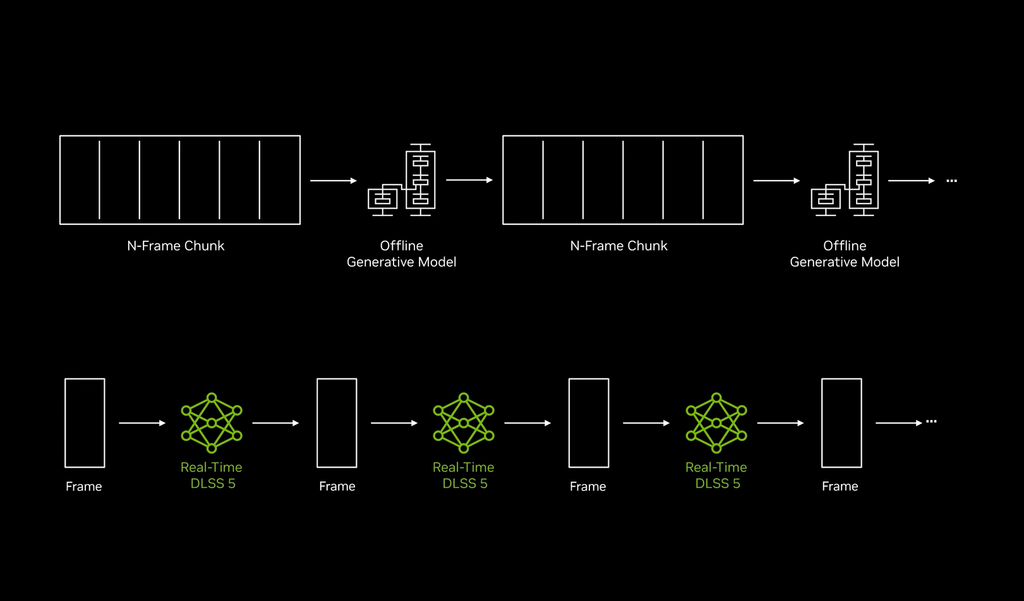
DLSS 5 introduces 3D-Guided Neural Rendering. Instead of only upscaling resolution or generating extra frames, it acts as the final stage of the rendering pipeline and uses AI to add lighting and material detail that real-time performance limits usually force developers to strip out. Nvidia describes the goal as bringing real-time graphics closer to film-grade realism while keeping the artist’s original frame as the foundation. You can read the full breakdown in Nvidia’s DLSS 5 announcement.
The model takes a rendered frame’s color plus motion vectors as its input. It does not consume the deeper 3D geometry or engine assets directly. Nvidia confirmed the model is fed a single 2D frame and motion vectors, and it is trained to interpret scene detail such as characters, hair, fabric, and translucent skin from that frame. The one-frame-in, one-frame-out design is meant to keep results stable and avoid shimmering or drifting as the player moves.
Because the design leans on final-frame processing, critics have compared the output to an AI filter, raising concerns about a synthetic look and deviations from a game’s intended art direction. Nvidia gives developers controls to manage this, including intensity, which blends the original image with the enhanced result, color grading for saturation, contrast, and gamma, and masking to remove the effect from specific parts of the image.
Which games support DLSS 5 now
NBA 2K27 is the only confirmed launch title, activated through a Game Ready driver on September 3. In-game, the feature appears as a “DLSS Neural Rendering” option alongside DLSS Super Resolution, Frame Generation, and Nvidia Reflex. Assassin’s Creed Shadows and Hogwarts Legacy are expected to add support in the future.
Tinkerers have also forced the feature into unsupported games, with modded runs producing sharp visual changes in newer titles like Cyberpunk 2077 and older ones such as GTA IV. Those are unofficial and separate from Nvidia’s supported list.
For RTX 40 owners, the takeaway is straightforward. DLSS 5 is coming to your card, Nvidia has said so directly, and the wait is about performance tuning rather than a missing capability. Until the official update lands, the feature stays confined to RTX 50 hardware and, for now, to NBA 2K27.