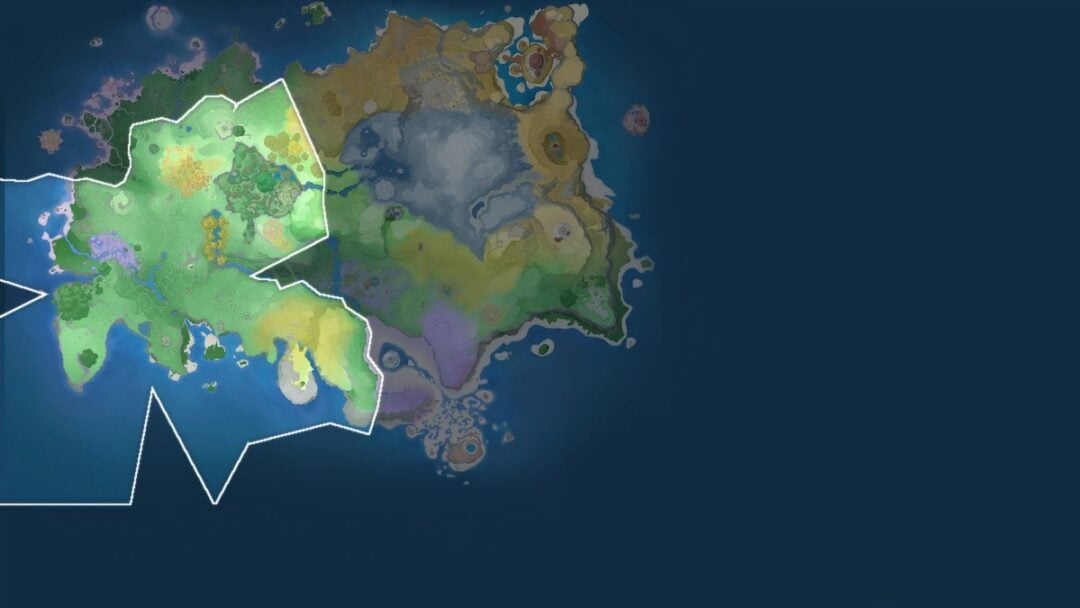
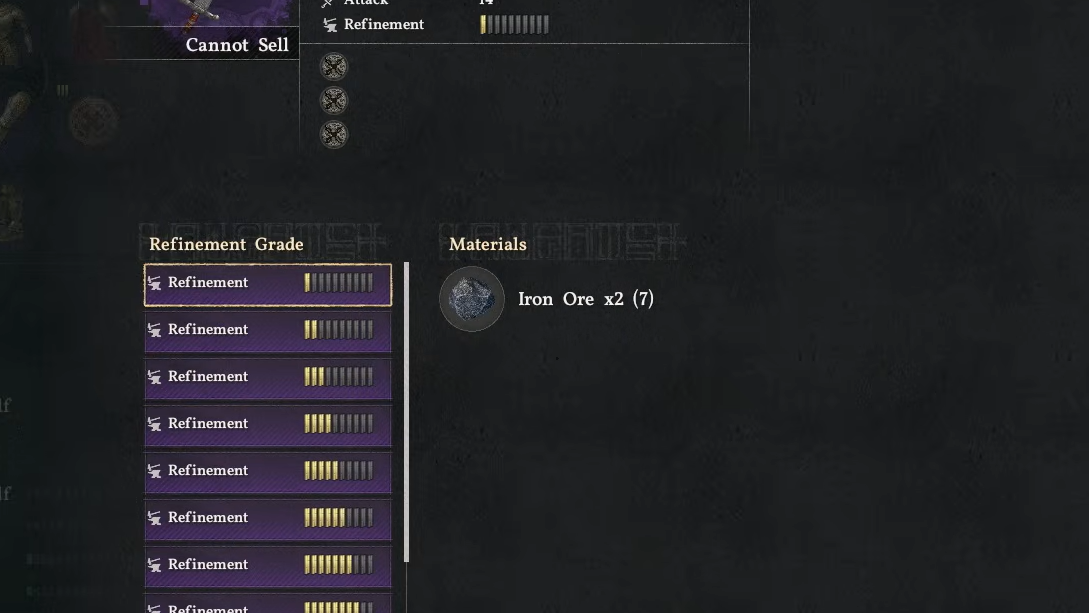
Crimson Desert’s refinement system lets you upgrade weapons, armor, shields, and accessories up to +10 at any blacksmith in Hernand. Each refinement tier demands specific crafting materials, and the higher you push, the rarer those materials become. You can check exactly what’s needed under the Refinement Details tab on any piece of refinable equipment.
Quick answer: Refinement materials fall into five categories — wood, ores and jewels, hides and bones, miscellaneous organics, and special endgame items (Abyss Artifacts and Aeserion’s Scale). You’ll need materials from every category depending on the gear type.
Tools you need before gathering
Mining ore requires a Pickaxe or the Force Palm skill. Felling trees requires a Logging Axe or the Turning Slash skill. Both the Pickaxe and Logging Axe can be purchased at the Provisioner’s Shop in Hernand. Ore deposits on high ledges can also be broken with the Charged Shot skill if climbing isn’t practical. Upgraded versions of these tools become available later — a better Logging Axe can be crafted with a specific key-locked recipe, and a chainsaw unlocks after Chapter 11.
Ores and jewels — Plate armor, weapons, metal shields, jewelry
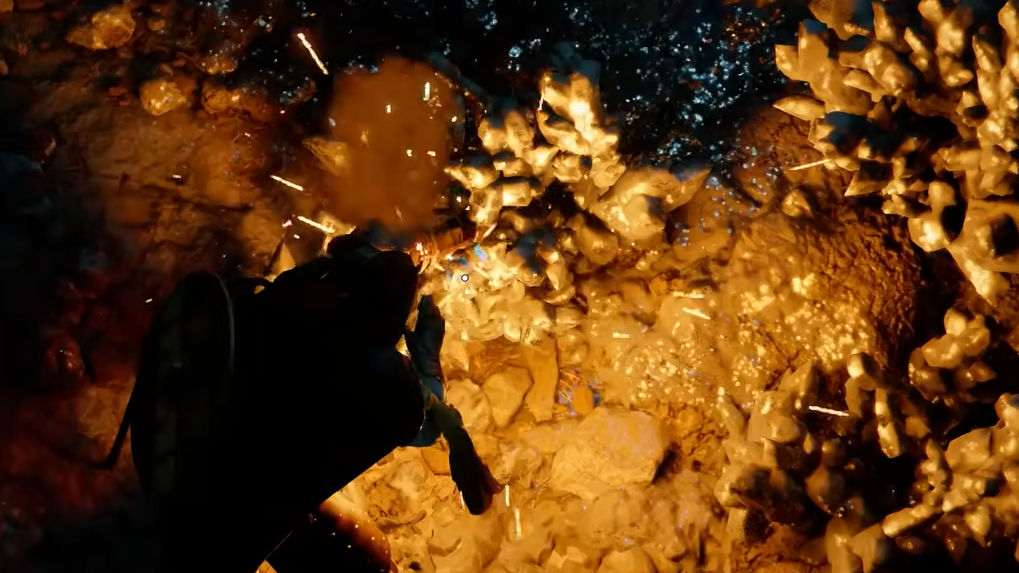
Ore veins appear on mountainsides throughout Pywel and stay marked on your map after you mine them. They regrow over time, so you can revisit the same nodes. Different regions favor different ore types, so expect to travel widely for the rarer minerals.
| Material | Rarity | Notes |
|---|---|---|
| Iron Ore | Common | Found throughout Pywel; also sold by merchants |
| Copper Ore | Common | Widespread; purchasable from merchants |
| Bloodstone | Moderate | Specific route-based farming locations |
| Scolecite Ore | Rare | Found in the farther reaches of the map |
| Silver Ore | Rare | Multiple deposit sites; limited per area |
| Gold Ore | Rare | At least five known deposit clusters |
| Bismuth Ore | Rare | Damages players on contact; guarded by Bismuth Crabs |
| Azurite | Rare | Found in remote regions alongside Garnet and Scolecite |
| Garnet | Rare | Clusters near Azurite and Scolecite deposits |
| Epidote | Rare | Separate farming location from other jewel ores |
| Diamond | Very Rare | Multiple deposit spots; also sold at a mineral shop |
Wood — Wooden shields
Timber is gathered by chopping trees with a Logging Axe or the Turning Slash skill. Three tiers of wood exist, each needed at progressively higher refinement levels.
| Material | Rarity |
|---|---|
| Timber | Common |
| Fine Timber | Moderate |
| Flawless Timber | Rare |
Better logging tools yield higher-quality wood more efficiently. After Chapter 11, the chainsaw becomes available and significantly speeds up timber farming.
Hides, bones, and fangs — Leather armor, jewelry
Hunting animals is the primary way to collect organic crafting materials. The type and size of the animal determines what it drops. A better skinning knife also becomes available as you progress, improving your yield.
| Material | Dropped By |
|---|---|
| Thin Hide | Smaller animals like deer and goats |
| Thick Hide | Larger animals like elephants and bears |
| Short Hair Hide | Cows and sheep |
| Long Hair Hide | Wolves and boars |
| Sturdy Hide | Reptilian animals like monitor lizards |
| Fang | Fanged creatures such as wolves |
| Small Bone | Smaller animals like deer and foxes |
| Large Bone | Rhinos, moose, and elephants |
Your Greymane Camp ranch is an excellent passive source for several of these materials. Sheep placed in the ranch produce Short Hair Hide and Fleece, while other ranch animals can supply Thin Hide and Small Bones without requiring active hunting.
Miscellaneous materials — Soft armor, cloaks, jewelry
These materials come from a wider variety of sources, including camp expansions, enemy drops, bird flocks, and specific world locations.
| Material | How to Obtain |
|---|---|
| Cloth Piece | Dropped by defeated bandits |
| Fleece | Farmed from sheep (ranch is the most efficient source) |
| Feather | Dropped from bird flocks, including flamingo spawns north of the Crimson Desert region |
| Ivory | Skinned from elephants and rhinos |
| Spider Web | Found in Arboria Castle in Hernand |
Some of these materials can also be purchased at the Provisioner’s Shop, though stock is limited and merchant inventories reset on a timer. Setting up Greymane Contract farming through your camp helps maintain a steady supply of Fleece and Cloth Pieces.
Abyss Artifacts — Required from refinement level 4 onward
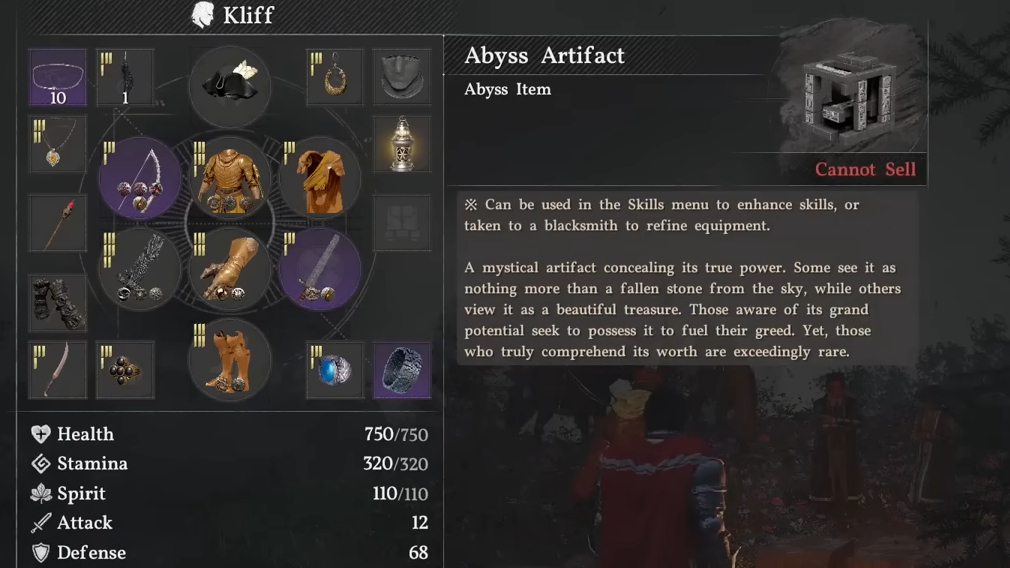
Abyss Artifacts serve double duty in Crimson Desert. They’re the primary resource for leveling your skill tree, but they’re also mandatory for every refinement upgrade from +4 through +9. This creates a real tension between spending them on character progression versus gear upgrades.
The yellow gauge to the left of the minimap fills as you defeat enemies. Each time it completes, you earn an Abyss Artifact. You can also earn them by completing Challenges, finishing camp quests, and unlocking Sealed Abyss Artifacts scattered throughout the world. Stealing is another method some players use to accumulate them faster.
Aeserion’s Scale — The +10 refinement material
Reaching the maximum refinement level of +10 on any piece of equipment requires Aeserion’s Scale. This material drops exclusively from Aeserion, the Great Serpent, a boss found at the Serpent Shrine Island in the waters southwest of Deleysia. There is no alternative source — you must defeat this boss to obtain the scale.
Once you have the scale, bring it to any blacksmith and select the refinement option on your +9 gear. The scale is consumed during the upgrade.
Refinement priority and farming efficiency
Not every piece of gear benefits equally from early refinement investment. Weapons generally provide the most noticeable stat gains per refinement level, so pushing your primary weapon first tends to be the most impactful use of materials. Armor pieces that cover your weakest defensive stat should come next.
For efficient material farming, invest skill points into gathering-related abilities. Maximized Mining, Woodcutting, Skinning, and Gathering skills all increase your yield per node or kill. Combine this with merchant reset farming — buying out a merchant’s material stock, fast-traveling away, and returning after their inventory refreshes — to supplement your gathered supplies with purchased ones.
Ore deposits and animal spawns both respawn after fast traveling or waiting, so establishing a circuit through high-density areas and repeating it is the fastest path to stockpiling what you need. Save before farming animal spawns, as some players have reported that certain spawn points can break if too many are killed at once without refreshing.