

Money in Fields of Mistria moves in a 28-day rhythm, and the fastest way to keep your farm funded is to match each season to the right mix of crops. Every season gives you three tools to work with: cheap seeds that turn a quick profit, slower crops that pay a big one-time sale, and regrowable crops that keep producing after their first harvest. Pick the wrong one for the days you have left and the plant simply withers when the month rolls over.
Quick answer: Open spring with Turnips, switch to Peas after the General Store upgrade, plant Tea in summer, Onion in fall, and Snow Peas in winter for steady regrow income. Use Cabbage, Watermelon, Pumpkin, and Daikon Radish when you want a large single payout instead.
The three crop roles that decide your profit
Every seed in the game falls into one of three jobs. Sorting your planting this way is more useful than memorizing individual prices, because it tells you what to plant based on how many days remain in the month.
- Fast starters are cheap and grow in four to six days. They give you a quick cash loop to fund tools and farm expansion, and they fit into short planting windows late in a season.
- Big single-harvest crops take around nine days but sell for a high lump sum. Plant them early to mid-season so they finish before the month ends.
- Regrowable crops cost more up front but keep yielding every few days after the first harvest, so you never buy more seed. These earn the most over a full season, but only if you plant them near day one.
Regrow crops only make money if you water them daily. Skip a day and you push back the whole harvest schedule, cutting into the season’s total. The one exception is rain, which waters your field for you.
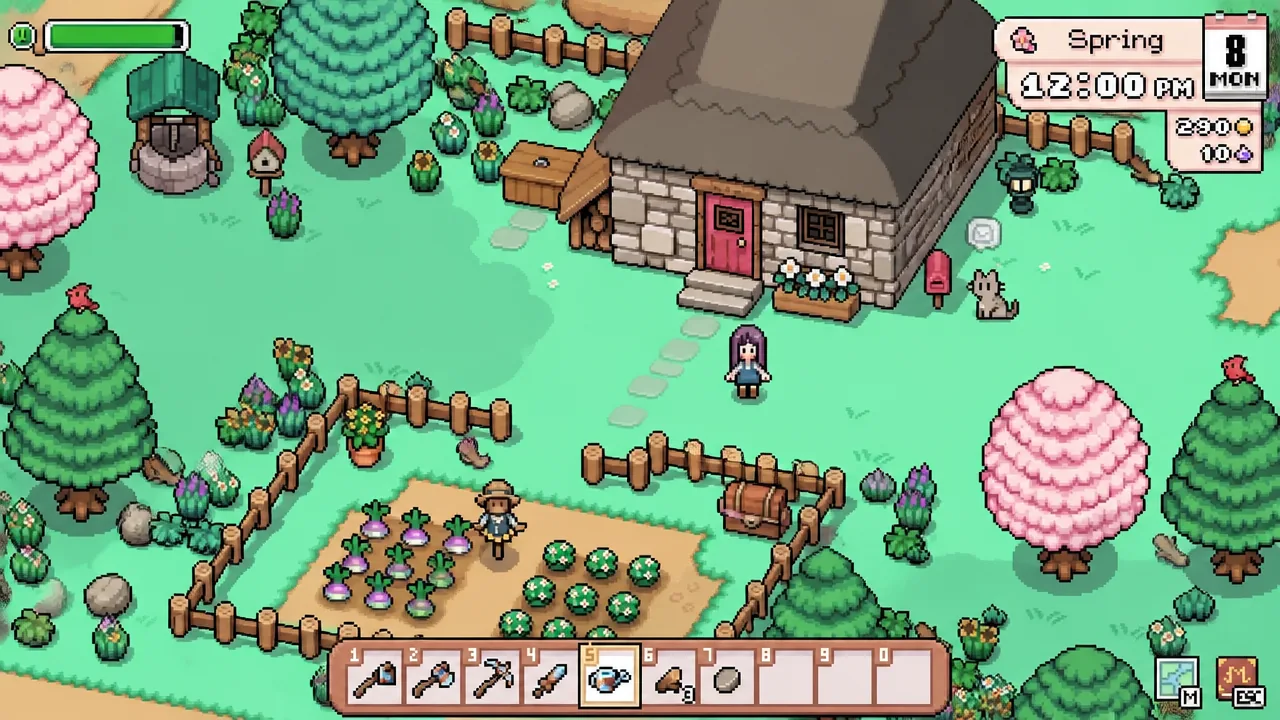
Best crop for each season at a reference
Growth days and sell prices are in Tesserae, the in-game currency. The regrow picks are your long-term earners; the single-harvest picks are the fallback when the season is too far along to make regrow worthwhile.
| Season | Fast starter | Big single sale | Best regrow |
|---|---|---|---|
| Spring | Turnip (4d, 40) | Cabbage (9d, 180) | Peas (5d, 135) |
| Summer | Cucumber (4d, 40) | Watermelon (9d, 180) | Tea (5d, 135) |
| Fall | Sweet Potato (4d, 40) | Pumpkin (9d, 180) | Onion (5d, 135) |
| Winter | Beet (4d, 40) | Daikon Radish (9d, 180) | Snow Peas (5d, 125) |
Spring: Turnips first, then Peas
Spring is about building starting capital. Turnips are the ideal day-one crop thanks to their low seed cost and four-day growth, and planting them back to back keeps a small profit loop running that pays for early tool upgrades and shovel expansion.
Cabbage seeds cost 70 Tesserae and take nine days, but each one sells for 180, so buying and planting them in bulk is worth the longer wait once you can afford it. Strawberries are a strong early regrow option too, selling for 125 every three days, though their edge fades after the first two weeks. Once the General Store is upgraded, Peas become the premier spring crop, producing continuously without any repeat seed purchase for high passive income through late spring.
Summer: Tea is the season’s top earner
Summer raises the stakes with higher-value seeds. Cucumbers are the cheap, fast entry point when you want a light upfront cost. For a bigger single payout, Watermelon carries a nine-day grow time but sells for 180, more than double its seed price.
Sugar cane is a solid mid-tier pick, and running it through a mill turns it into sugar for a 25 percent boost in value. The strongest summer crop is Tea, which unlocks after the General Store upgrade and regrows valuable harvests every few days for the rest of the season. Tea also feeds into recipes that several villagers like as gifts, giving it use beyond the shipping bin.
Fall: Onions for regrow, Pumpkins for a lump sum
Fall rewards precise timing, since the best crops here take longer to mature. Sweet potatoes are the flexible, low-cost pick for short planting windows or a quick mid-season reinvestment.
Pumpkins are the biggest single-harvest fall payout, needing nine days but fetching 180 each, which makes them essential for early-to-mid fall fields. Rice and wheat also deliver strong margins on single-harvest plots, and both can be milled into more valuable refined goods once you have the mill running. For long-term income, Onions take the top spot once they appear at the General Store. Plant them early and a single crop keeps producing high-value harvests right up to the end of the month.

Winter: Snow Peas keep the money coming
Unlike most farming sims, winter in Mistria stays an active growing season, so you are not stuck living off foraging, fishing, or the mines. Beets and frost lilies are the rapid, low-maintenance picks when you need a fast turnaround.
Daikon radishes demand a nine-day grow but return the highest single-harvest sale of the season at 180, making them the go-to for a big lump sum. To keep cash flowing through the frost, Snow Peas are the primary regrow winter crop. Sow them early and your plots keep yielding while the rest of the valley lies dormant. Winter is also a good time to stock up on Tesserae for the seed buying that spring demands.

Unlock the best regrow seeds with the General Store upgrade
Peas, Tea, and Onion all share one gate. They only appear at the General Store after you complete the store upgrade quest, which unlocks once you finish the first phase of town improvement quests. Until then, lean on the fast starters and the big single-harvest crops.
To finish the upgrade, place the following items in the donation box by the request board, then talk to Adeline.
| Item | Amount |
|---|---|
| Wood | 300 |
| Stone | 500 |
| Copper Ingot | 5 |
| Iron Ingot | 5 |
| Tesserae | 3,000 |
Wood and Stone come easily from breaking branches and rocks. The ingots come from the Mines, but Iron Ingots require completing the Water Tablet quest to reach floors beyond level 20. Once the store is upgraded, the wider seed list is what turns each season from a cash trickle into a reliable income stream.
The core habit that ties it all together is simple. Check a seed’s grow time against the days left in the current season before you buy, plant regrow crops at the very start of the month, and save the fast starters for the tail end when there is no time left for anything slower.