Beastmaster is the second limited job coming to Final Fantasy XIV, arriving with Patch 7.56 on September 8, 2026. It is a melee DPS that wields a one-handed axe and shield, and instead of casting spells like Blue Mage, it captures and commands beasts to fight alongside you. Lead battle content designer Masaki Nakagawa built both its action design and its exclusive board-game mode, the Crucible of the Unbroken.
Quick answer: To unlock Beastmaster in Patch 7.56, have at least one Disciple of War or Magic at level 50 or higher, finish the A Realm Reborn (2.0) main scenario, and have Dawntrail registered to your account. Beastmaster then starts at level 1 and caps at level 50.
Unlock requirements for Beastmaster
Like Blue Mage, Beastmaster is a limited job, meaning it sits outside the standard job roster and levels on its own track. All three requirements below must be met before the unlock quest becomes available in Patch 7.56.
| Requirement | Detail |
|---|---|
| Level | A Disciple of War or Magic at level 50 or above |
| Story progress | Completed the A Realm Reborn (2.0) main scenario |
| Account | Dawntrail registered to your account |
| Starting level / cap | Begins at level 1, caps at level 50 |
| Classification | Melee DPS, one-handed axe and shield |
Job quests are available at launch. Rather than delivering one quest every few levels, the story teaches mechanics by having you use them, and a training dummy sits near the quest giver so you can practice at your own pace.
The four core Beastmaster actions
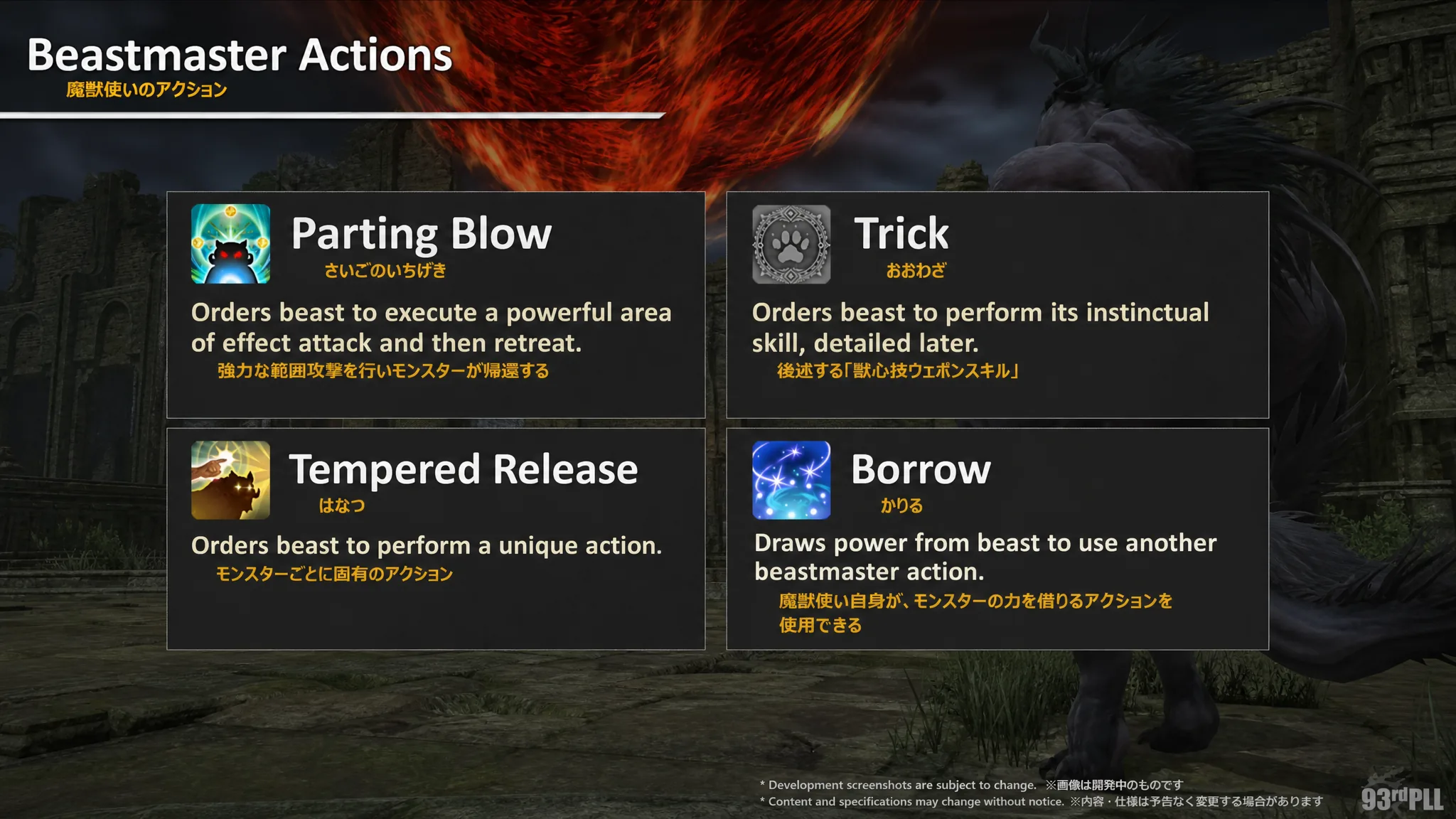
Three actions issue orders to a summoned beast, and the fourth lets you borrow the beast’s power for yourself. You choose up to 50 beast types for your bestiary and bring three into a given fight.
| Action | Effect |
|---|---|
| Parting Blow | Orders the beast to perform a powerful area attack, then retreat |
| Trick | Orders the beast to perform its instinctual skill |
| Tempered Release | Orders the beast to perform a unique action |
| Borrow | Draws on the beast’s power so the Beastmaster can use its ability |
Borrow pulls from one of eight beast classifications. Beastkin (Beastskin) reduces incoming damage, Wavekin (Quelling Wave) is single-target damage, and Soulkin (Soul Crush) deals damage while interrupting enemy actions. The remaining classifications are Vilekin, Cloudkin, Seedkin, Ashkin, and Scalekin. There are 50 actions available through Tempered Release and 8 through Borrow, which opens up a wide range of combinations.
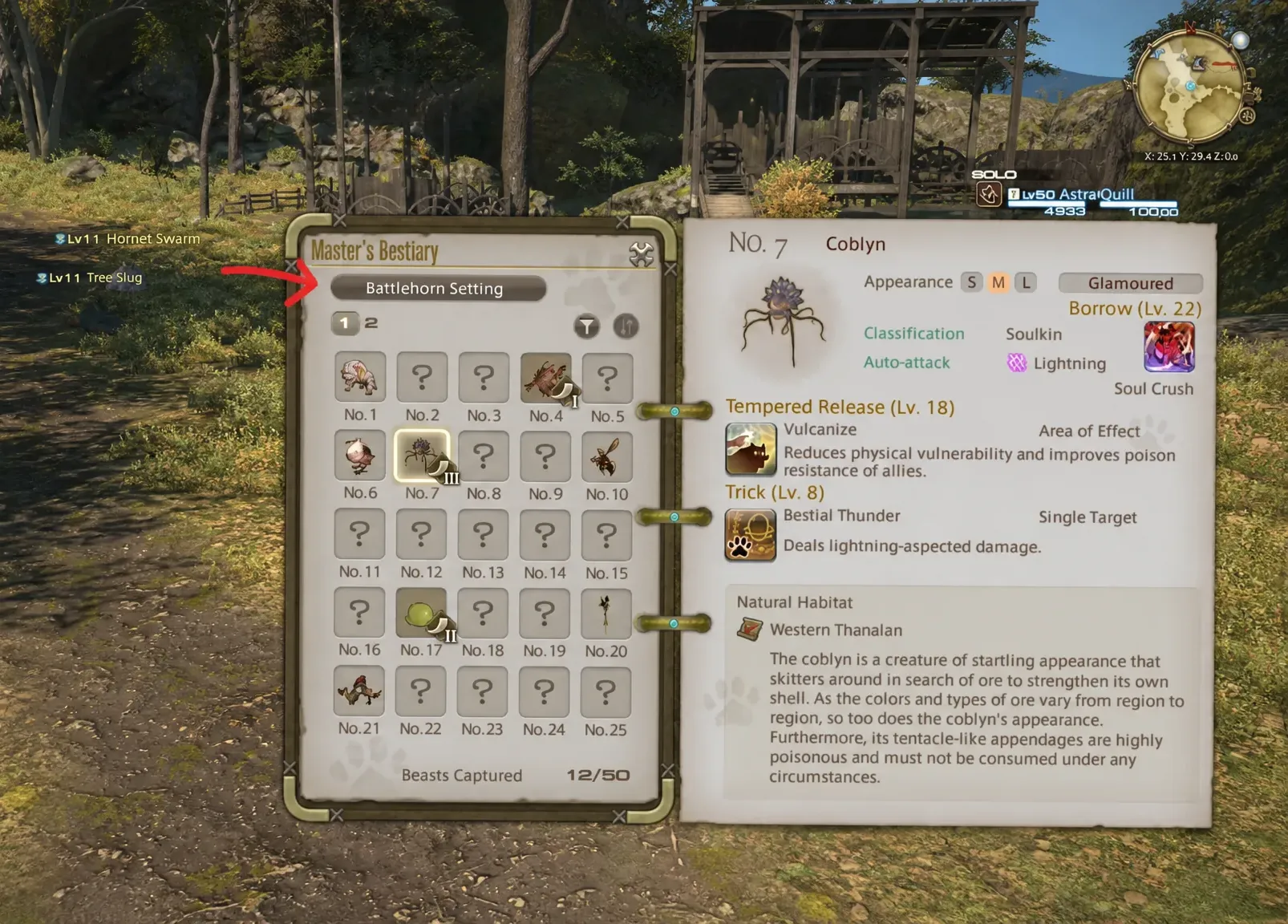
Summoning beasts with battlehorns
You call beasts through the Master’s Bestiary by assigning them to one of three battlehorns, then using each horn’s action to summon them. Outside of combat these have no cooldown, so you can swap freely. Once you engage, a summoned beast automatically attacks your target.
Using Parting Blow dismisses the beast and starts that battlehorn’s cooldown. Summoning a beast grants the One With Nature buff, which lets you use Tempered Release or Borrow once per summon. Because each summon only allows one such use, planning the order you call your three beasts is central to the job. Nakagawa demonstrated that after using a pugil’s wavekin ability, the next beast called could gain beneficial interactions.
Instinctual Combos and the clockwise rotation
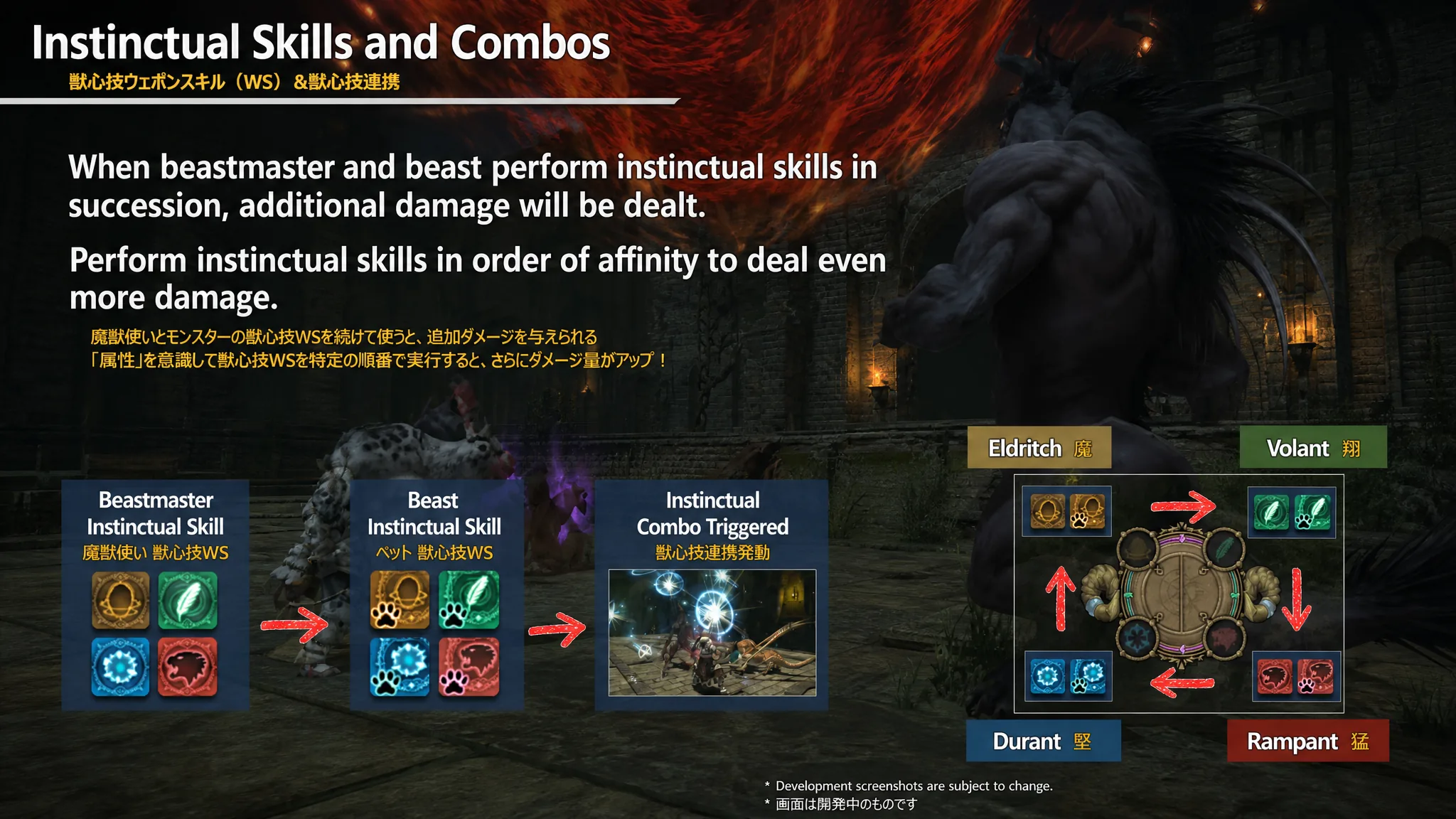
Both the Beastmaster and each beast have their own gauges used to fire Instinctual Skills. You have access to four; each beast has one. If you use one of your Instinctual Skills and a beast’s Instinctual Skill within seven seconds of each other, you trigger an Instinctual Combo for bonus damage.
The skills are color-coded by affinity, arranged in four quadrants: green is Volant, red is Rampant, blue is Durant, and brown is Eldritch. Following the clockwise order of affinity produces an “Intentional Combo,” which deals more damage than a plain combo. Combos performed out of order still work, but hit for less.
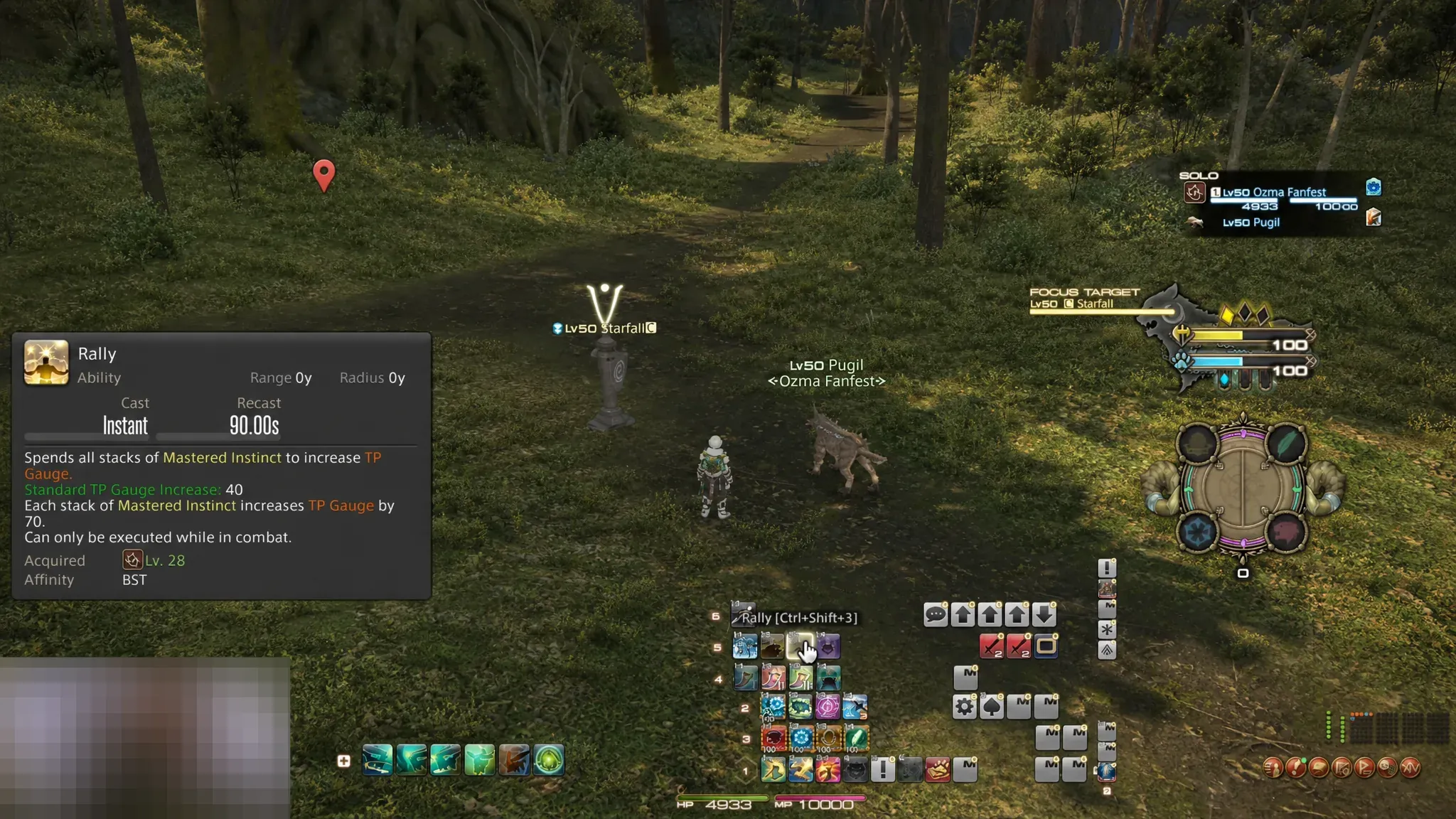
Rally and Rallying Cheer, unlocked later, let you chain up to four Instinctual Combos in a row for a large damage payoff. A numbered part of the gauge climbs the more combos you chain, and a higher number means greater damage. If the sequence gets confusing, the color and design of each action icon signals what to use next, and lining your hotbar up in the intended order makes the rotation easier to manage.
Crucible of the Unbroken: the Beastmaster board mode
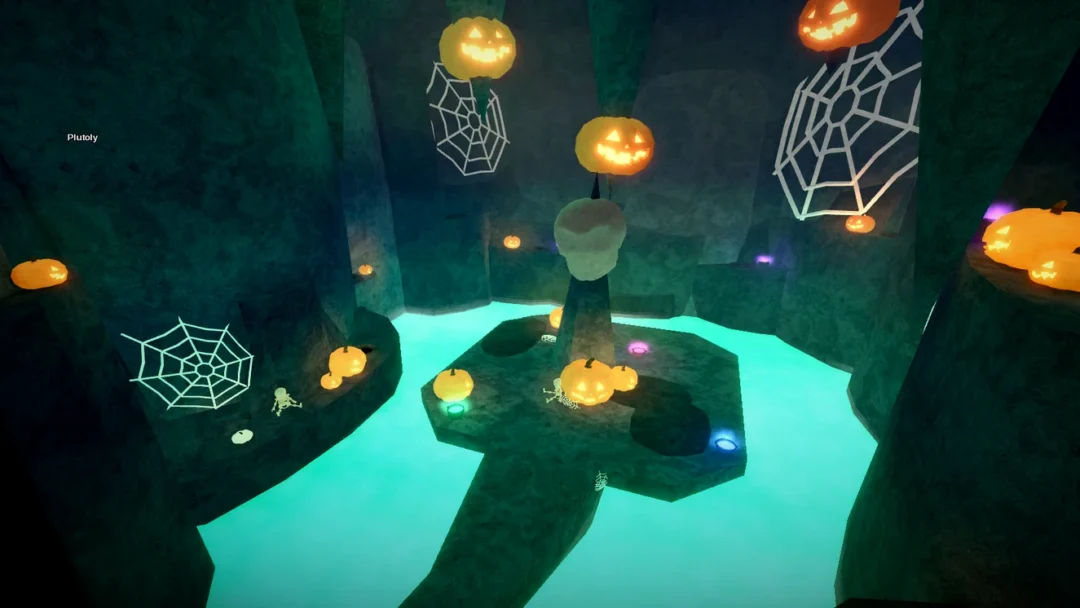
The Crucible of the Unbroken unlocks after the level 30 job quest and becomes the main way to progress beyond level 30. It plays like a tabletop board game where you move a game piece space by space toward a boss at the end, earning Beastmaster experience and leveling your beasts along the way.
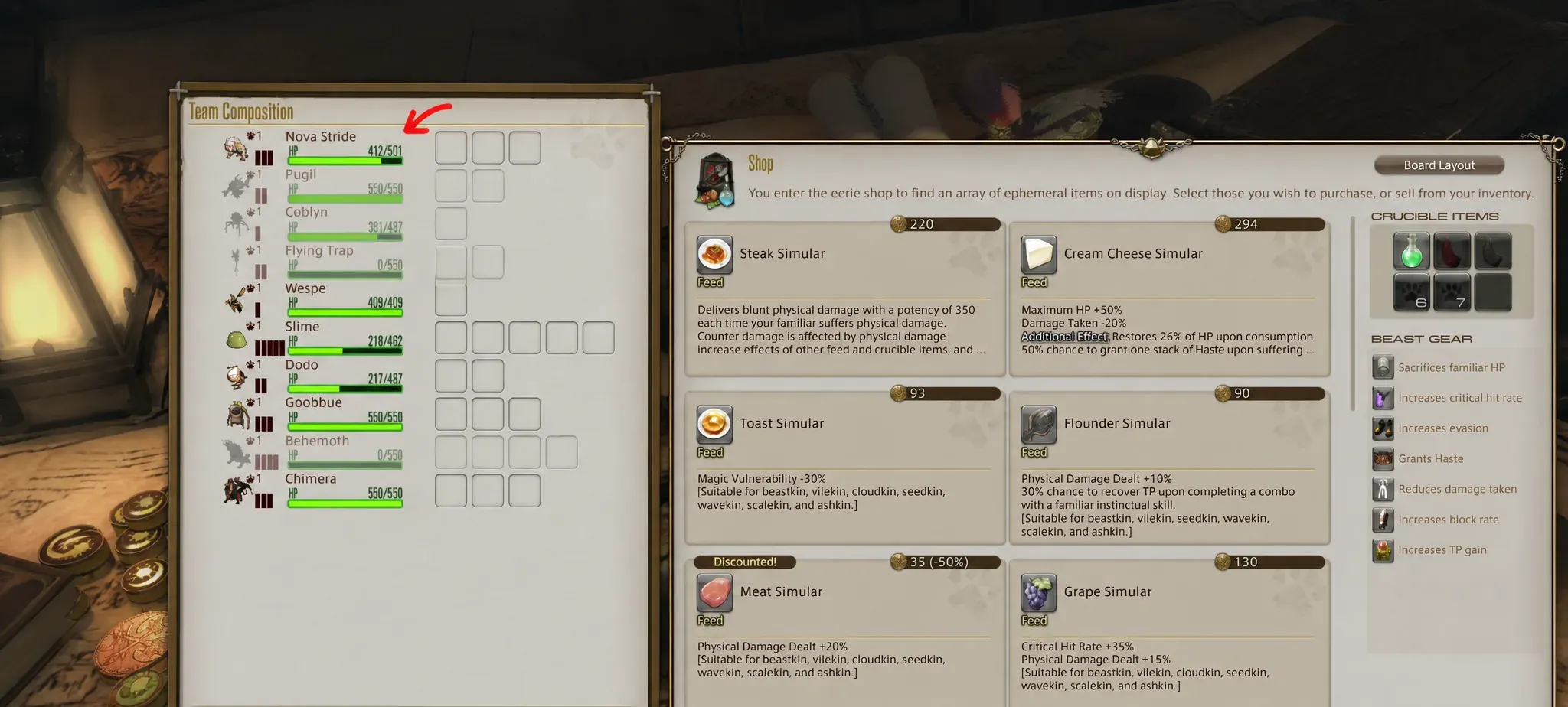
Beasts have their own rank inside the Crucible, and raising rank enhances their Strength, Intelligence, Physical Resistance, Magical Resistance, and Constitution. Before entering, you can inspect the board’s enemies, their attacks, and their elemental or status weaknesses, then assemble a roster of 10 to 15 beasts to counter them. A Recommended Team button auto-builds a roster if you would rather skip the research phase, and you can tweak its picks afterward. Yoshida suggested newer players lean on it early on.
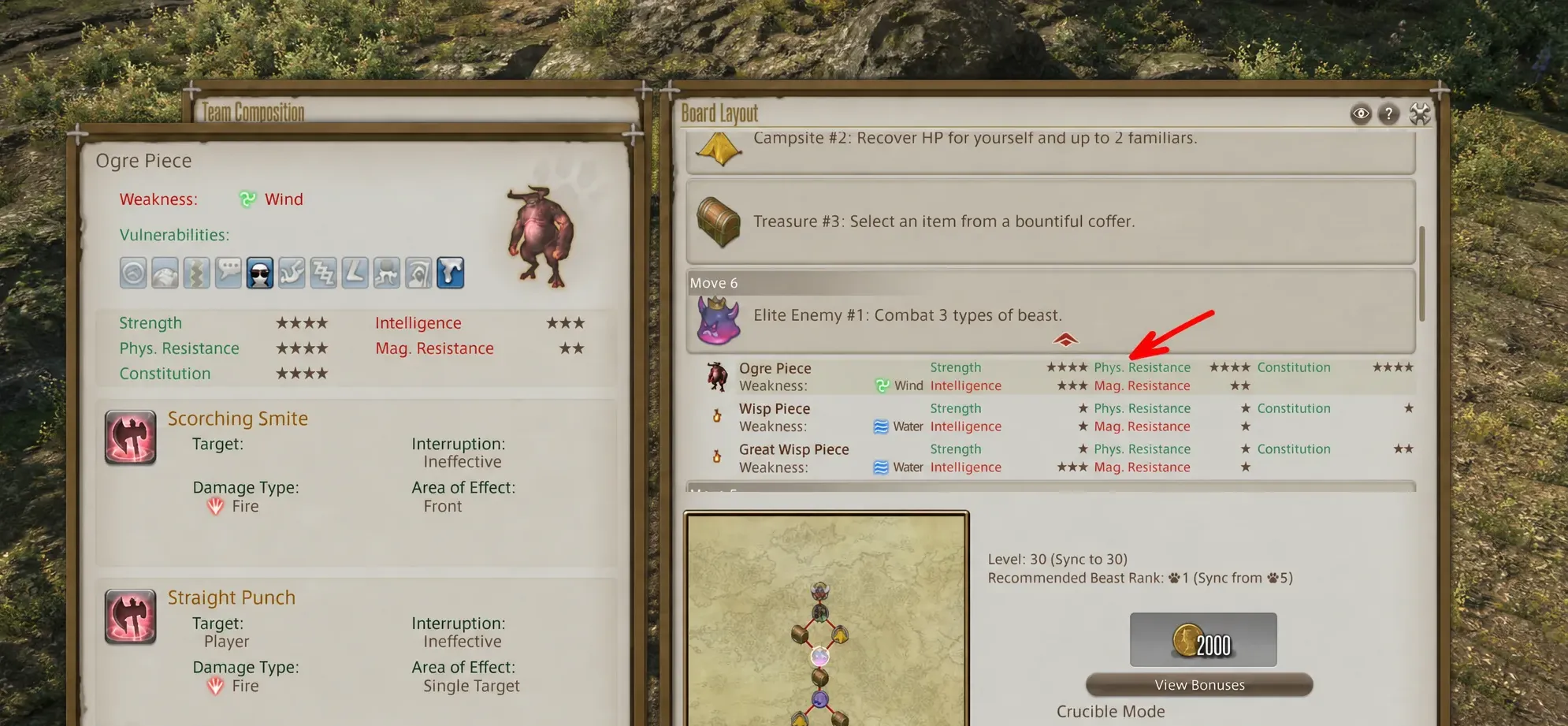
When a battle begins on a space, you bring three beasts, and they are automatically assigned to battlehorns. Two Duty Actions manage threat: Snarl makes a beast draw enmity, and Challenge makes the Beastmaster draw it. HP does not restore naturally between fights, so survival depends on exploiting weaknesses, managing enmity, and using abilities in the right sequence.
Board spaces carry different icons. A battle space pits you against enemies, a tent restores your and your beasts’ HP, and a treasure space offers four items from which you keep one. That pick matters. Facing an upcoming poison enemy, Nakagawa took the Angel Robe reward to nullify it. Shop spaces let you spend currency won in battle on Crucible items, Beast Gear, and Feed.
Feed powers up beasts and can only be bought at shops, with each beast limited by its Satiate stat, shown as satiety slots. Bugs, for example, eat little and have fewer slots. Some feed is restricted to certain classifications. Crucible items work like Deep Dungeon pomanders, restoring HP or applying other effects, and the Temporal Sand item restarts a battle if you lose after you consume it.
At the end of a run, win or lose, a results screen assigns a rank based on moves made, enemies defeated, and remaining HP. That rank sets your rewards, which include Faded Remnant of Resilience for upgrading Beastmaster gear, plus tallied beast experience. On Normal difficulty, Yoshida noted, you do not need a masterful grasp of the job to clear it.
Beast ranks, appearance changes, and Degrees
Beasts rank up to a maximum of 25. Once a beast reaches Rank 25, you can change its appearance, such as swapping a coat from white to black, and that change carries over even outside the Crucible so you can show it off in the open world.
Clearing every board unlocks Degrees, extra difficulty tiers running from First to Third. These are not Ultimate-style additions with piles of new mechanics. Instead, enemy max HP and outgoing damage scale up with each Degree. Nakagawa played on Second Degree during the demonstration and fell to a board boss named Pas De Seul, Breaker of Beasts. The Third Degree requires synergizing items to keep up.
Clearing all stages on Third Degree grants achievements, and Crucible Rankings then let you compete on Third Degree scores. The first ranking season starts two weeks after Patch 7.56 goes live and runs until Patch 7.58, with rankings resetting each season and a special reward for those at the top.
Beastmaster lands on September 8, 2026 as part of Patch 7.56, closing out the Dawntrail cycle ahead of the Evercold expansion in January 2027. It is a job built around preparation and sequencing, so the depth shows up less in the button count and more in how you order your beasts, chain your combos, and plan each board.