Catching scrooms is a two-part music minigame rather than a fight. You equip an instrument, tune it to find a nearby mushroom creature, then play in rhythm to hold that creature inside a catch zone until it joins your collection. The system runs through every region of the open-world Roblox game the developers revealed ahead of its October 10th launch, starting with the first scroom you meet in Songkeeper’s Grove.
Quick answer: Equip an instrument, tune it to the scroom’s frequency to reveal it, then keep the scroom inside the catch zone and follow the rhythm prompts until the progress bar fills.
Get your first instrument from Leo
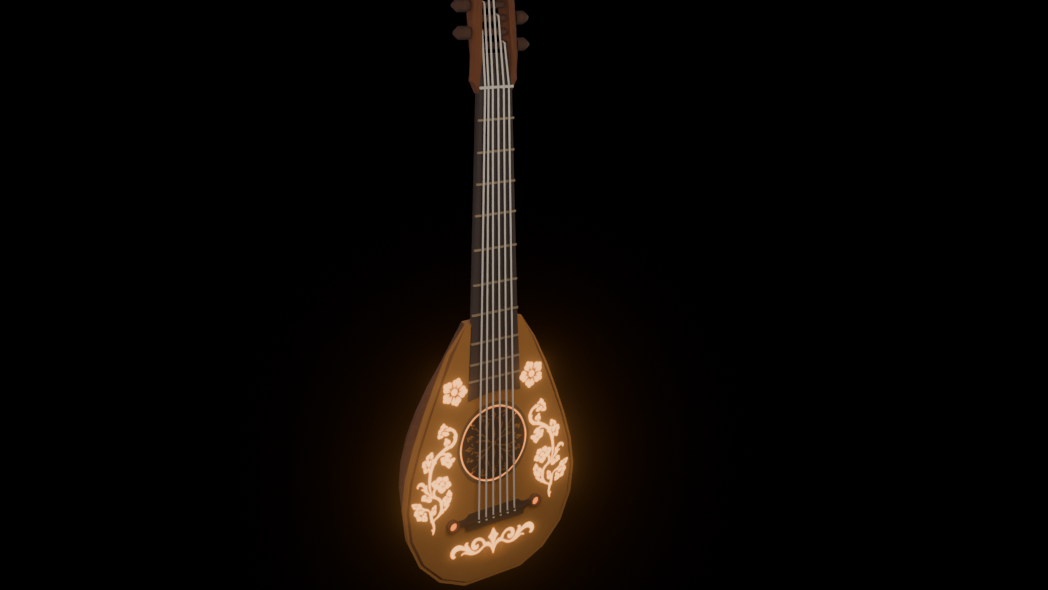
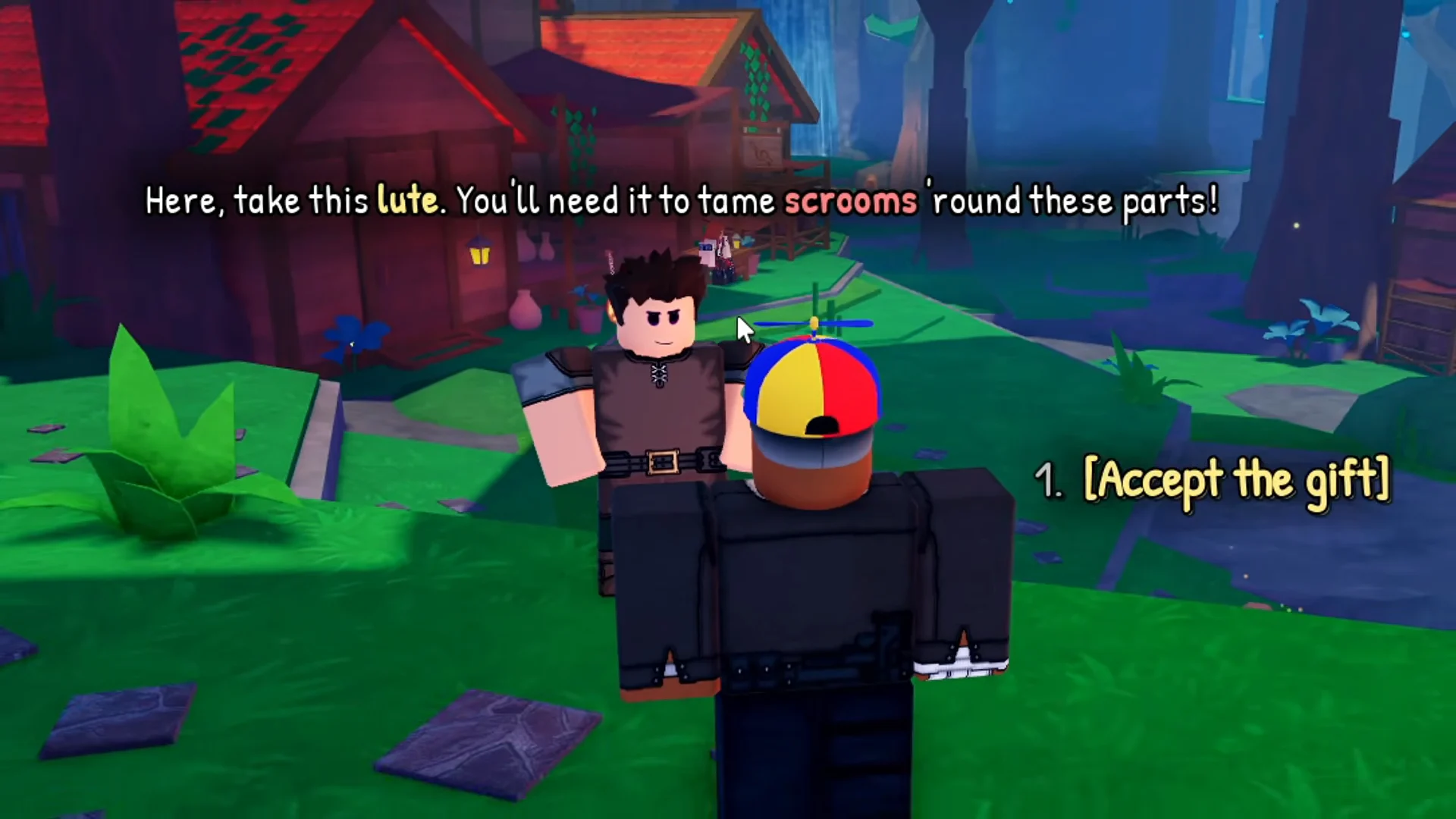
You cannot catch anything without an instrument. In Songkeeper’s Grove, speak to the NPC Leo, who hands you a Wooden Lute and marks the nearby scrooms you can tame. An “Unlocked the: Instrument” splash screen confirms the lute is yours along with the basics of taming.
Later instruments are bought from the merchant and shop with musical notes, the game’s currency. Each one raises the stats that decide how easy a scroom is to hold, and the top-tier violin extends the frequency range you can reach.
Tune your instrument to find a scroom
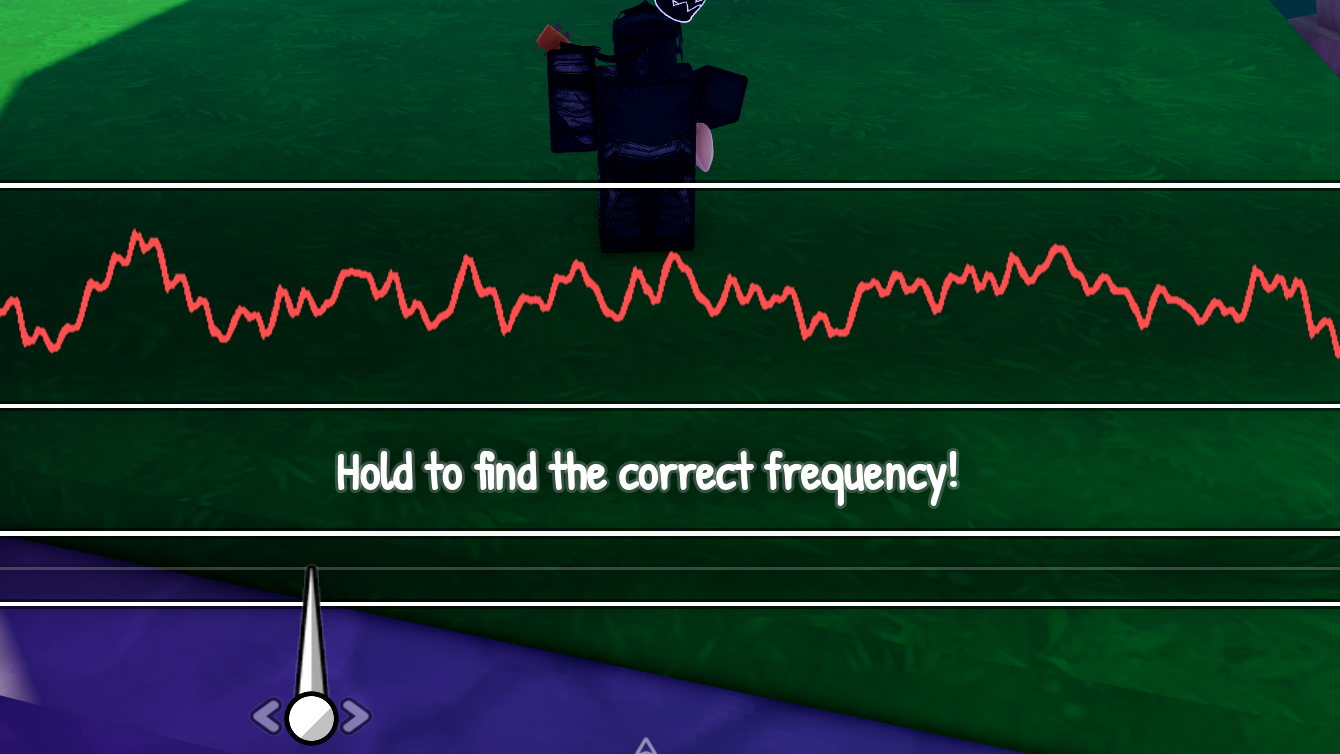
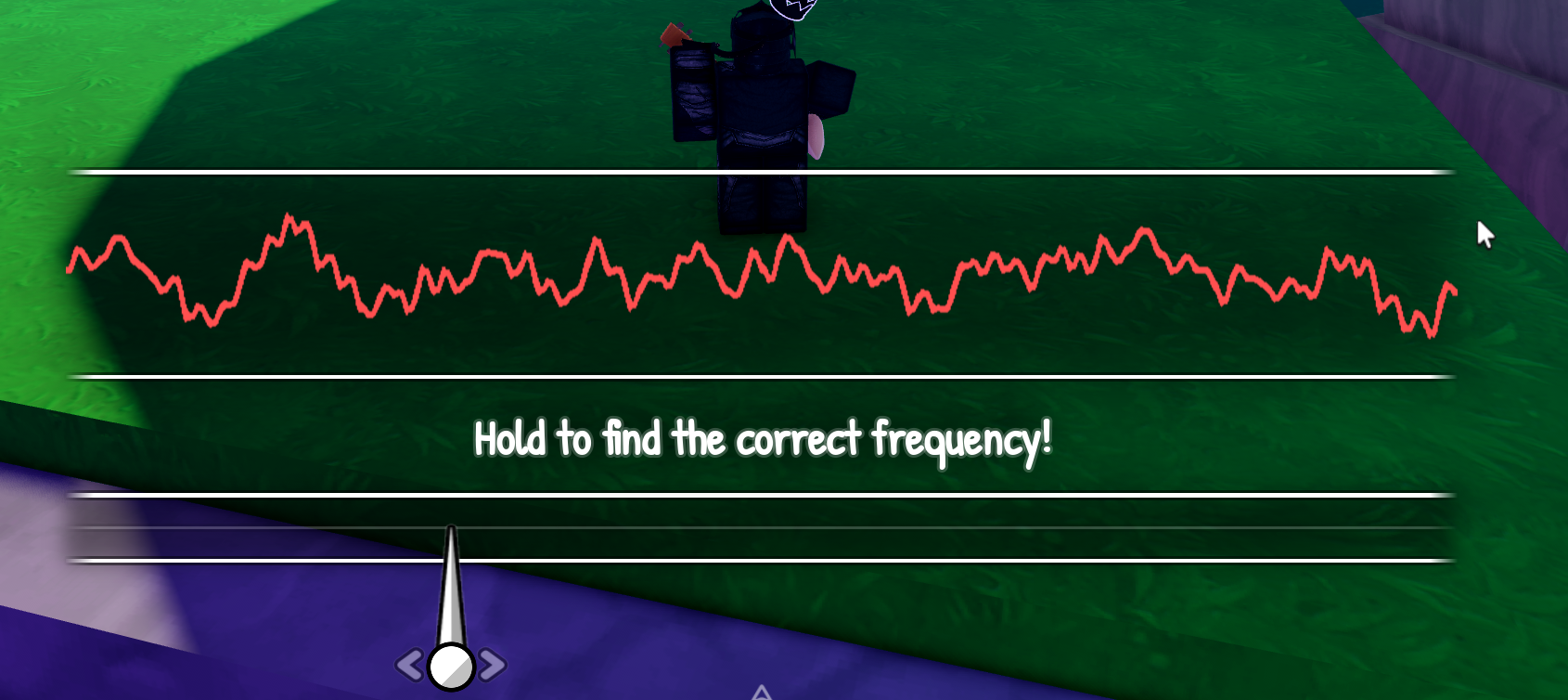
Each scroom sits at a specific frequency measured in hertz. With an instrument equipped, you start a tuning minigame that shows a waveform and a moving cursor. Align the cursor with the wave to lock onto the creature’s frequency and bring it into view.

Once the frequency matches, the scroom appears as an icon in the tuning interface, confirming you have found a valid target. Different creatures sit at very different values. The starter Toastbud shows up around 26.1 Hz, while a Koroom reaches as high as 77 Hz.

Keep the scroom in the catch zone
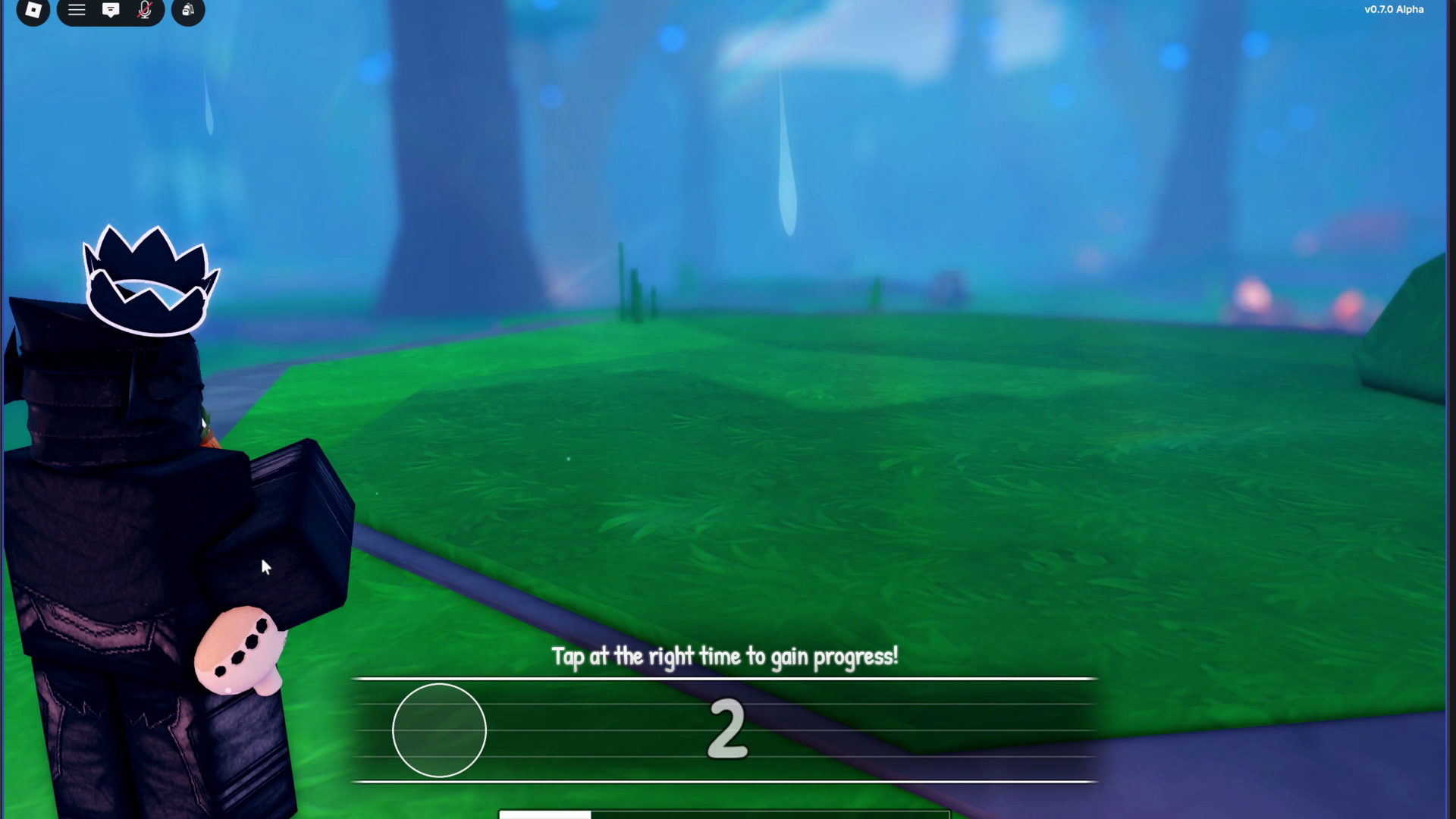
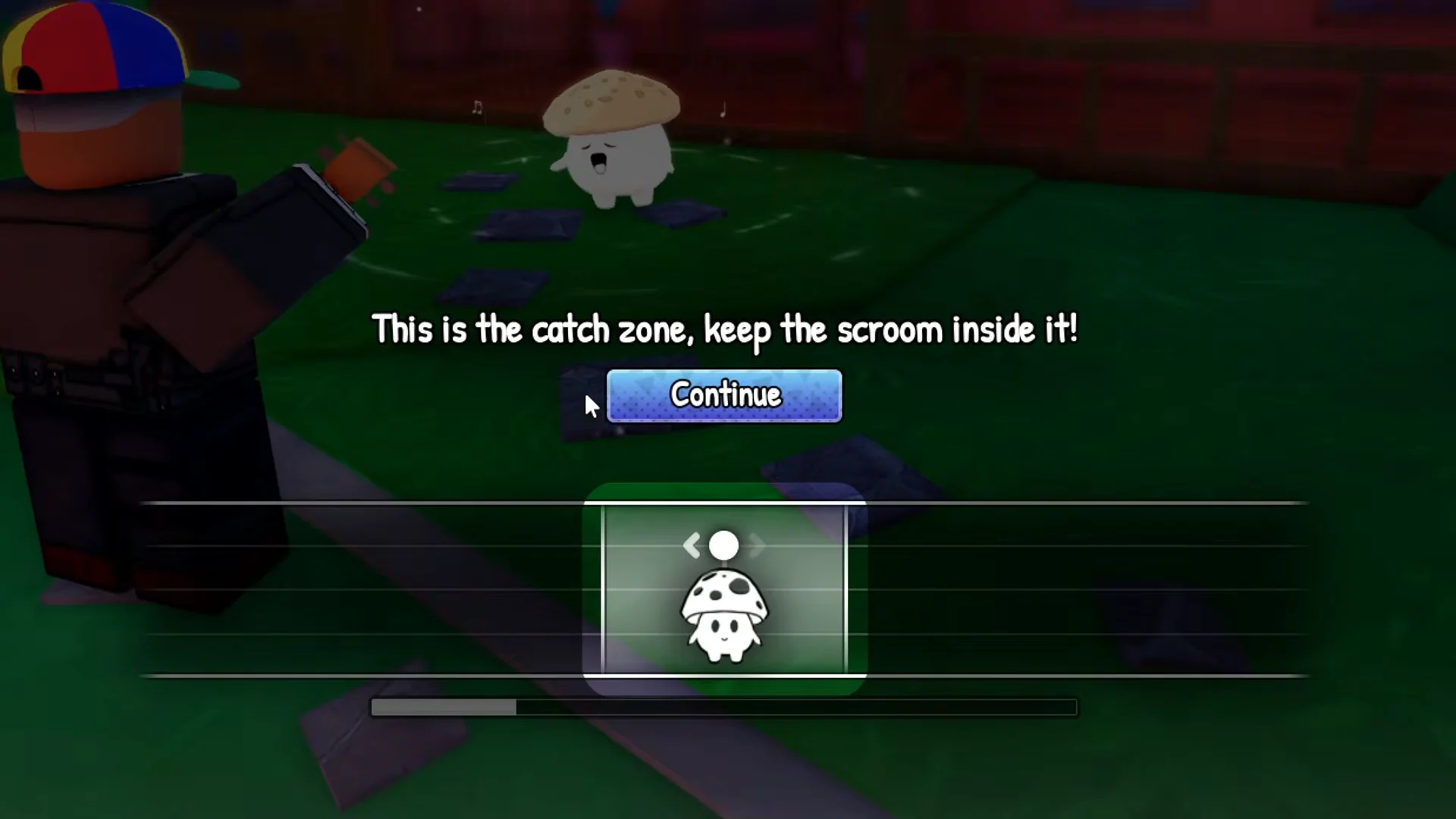
After tuning, the catch itself plays out on a horizontal rhythm bar. A mushroom marker slides along the bar, and you keep it inside the catch zone by playing in time. Hold it there and a progress bar steadily fills.

When the progress bar reaches full, the scroom is caught and logged. For your first Toastbud, the tutorial spells this out directly: keep the creature inside the catch zone until the bar completes, and the catch registers.
Some catches also use a circular timing ring with green success zones instead of or alongside the bar. The principle is the same: hit the marked windows to keep filling the meter until the scroom is tamed.
Instrument stats that affect catching
Every instrument carries six stats, visible in the Equipment Bag, that change how the tuning and catch stages behave:

- Precision — how tightly you need to hit the tuning and rhythm windows.
- Harmony — overall performance during the catch.
- Tension — how firmly the scroom is held in the zone.
- Luck — influence on rarer outcomes.
- Tune Speed — how quickly you lock the frequency.
- Resonance — the frequency range the instrument can reach.
Buying stronger instruments is how you catch more and rarer scrooms. The shop progression runs from the free lute up to a violin that unlocks far higher frequencies.
| Instrument | Cost | Notable stat |
|---|---|---|
| Wooden Lute | Free (from Leo) | Starter |
| Tamer’s Guitar | 200 notes | Early upgrade |
| Adventurer’s Tambourine | 750 notes | Higher Tension and Tune Speed |
| Violin of Pilgrimage | 2,000 notes | Resonance III, up to 400 Hz |
The faster reel on the Adventurer’s Tambourine, for example, makes holding a quicker scroom like a Bluebell much easier than it is with the Wooden Lute.
Rarity, mutations and higher frequencies
Scrooms carry rarity values, and some appear with visual mutations that raise their worth. Rarer creatures tend to sit at higher frequencies, so reaching them depends on an instrument with enough Resonance to tune that far. A rare Faebud, for instance, is caught around 41 Hz, and a Burlcap at 37.4 Hz unlocks its rare entry once held.
Catching tops out a region’s collection. Reeling in a Koroom at 77 Hz completes the full Songkeeper’s Grove Index, so chasing the highest-frequency species is how you close out an area.

Where your catches go after taming
Every tamed scroom is recorded in the Index, which tracks discovery progress per zone and shows silhouette slots for species you have not caught yet. Filling it out is the long-term goal, with each new catch pushing a region’s completion percentage upward.
Catches also feed the economy. You sell scrooms to the merchant Julian for musical notes — a basic Toastbud fetches 10 notes — and those notes buy the next instrument. Some scrooms are instead handed to quest NPCs: a Funglebee delivered to Beekeeper Jones completes his request for 750 Exp, and a Faebud brought to Luca does the same.
That loop of tune, catch, sell and upgrade is the core of the open-world adventure, which arrives on PC, mobile and console on October 10th.
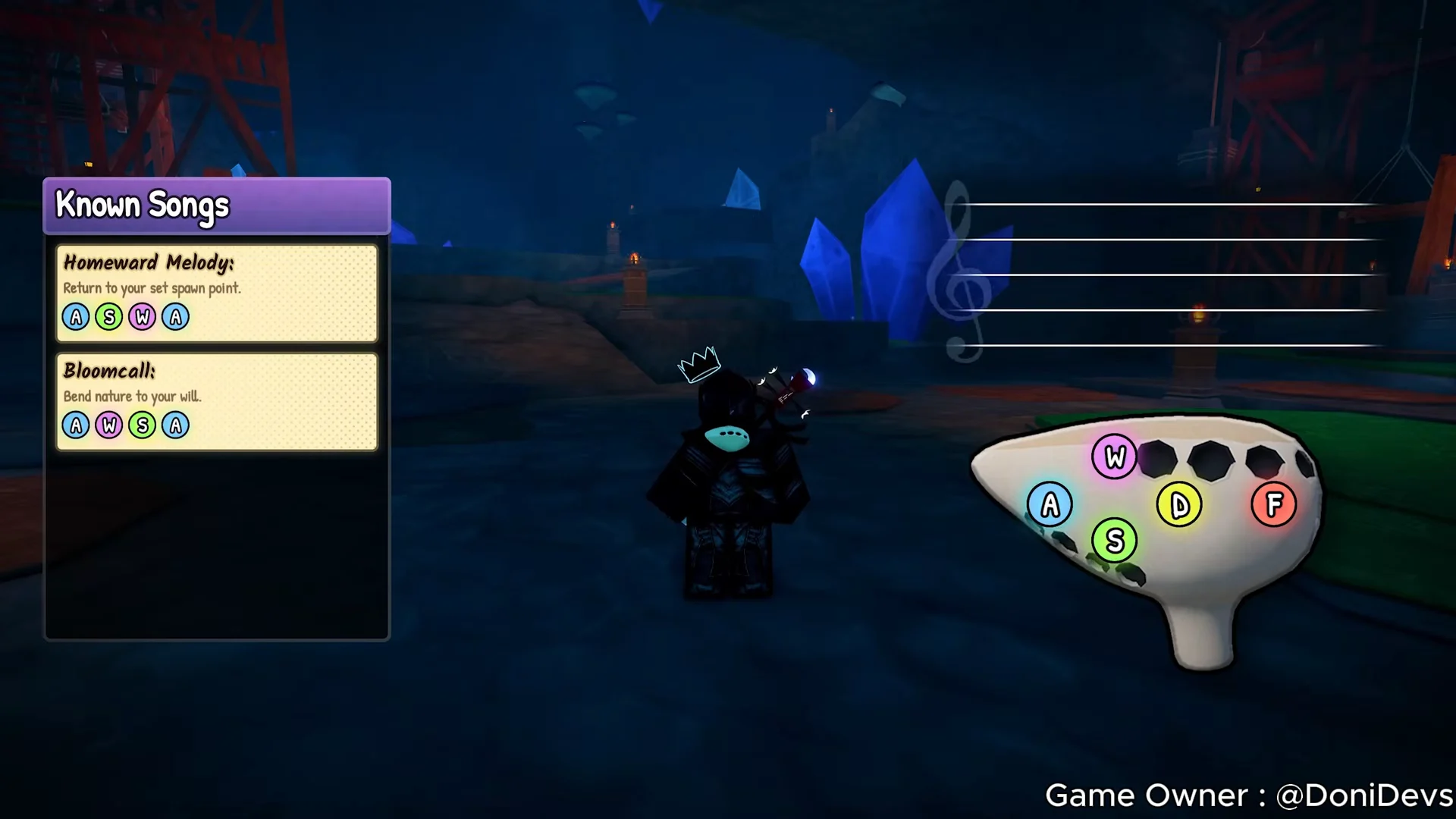
You can see the full catching loop in motion in the release trailer.