
Geysers now generate across the Minecraft overworld, blasting steam upward and flinging anything standing on them high into the air. They also serve as a surface clue that a sulfur caves biome sits somewhere below. You can build a fully working geyser yourself, and the trick comes down to stacking two specific blocks and adding the right amount of water.
Quick answer: Place a magma block at the bottom of a vertical hole, put a potent sulfur block directly on top of it, then fill the space above with one to four water source blocks. More water makes a stronger eruption, but anything past four water blocks stops the geyser from working.
Blocks required to make a geyser
A working geyser needs just two solid blocks plus water. The surrounding terrain has no effect on whether it erupts, so you can build one almost anywhere.
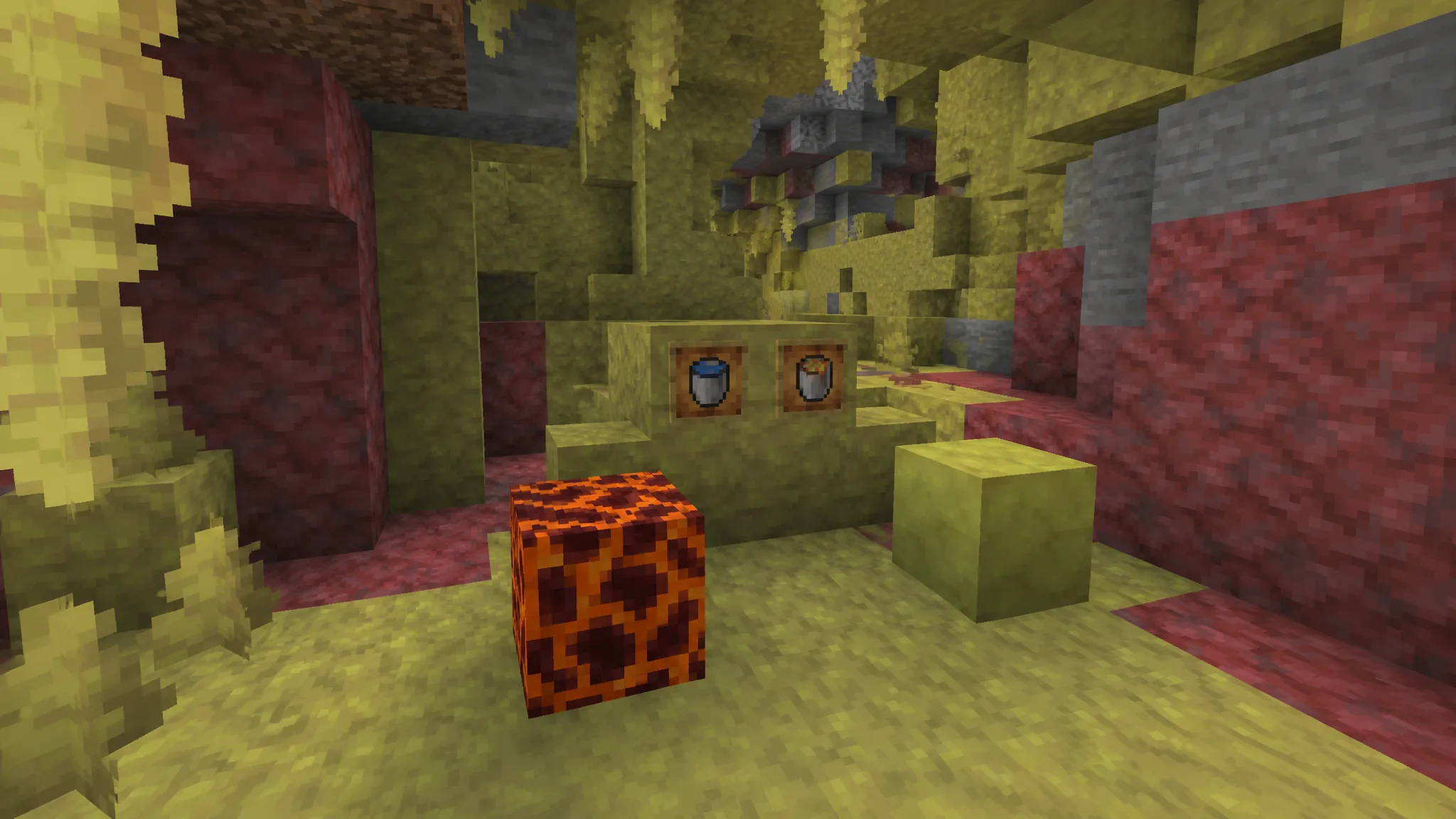
| Item | Amount | How to get it |
|---|---|---|
| Magma block | 1 | Underwater overworld caves, the Nether, or crafted from four magma cream |
| Potent sulfur block | 1 | Sulfur caves biome, or crafted from nine sulfur blocks |
| Bucket of water | 1–4 | Filled from any water source |
If you find a geyser that generated naturally, you can mine it with a pickaxe to collect both the magma block and the potent sulfur block at once. That saves the trouble of farming or crafting them separately.
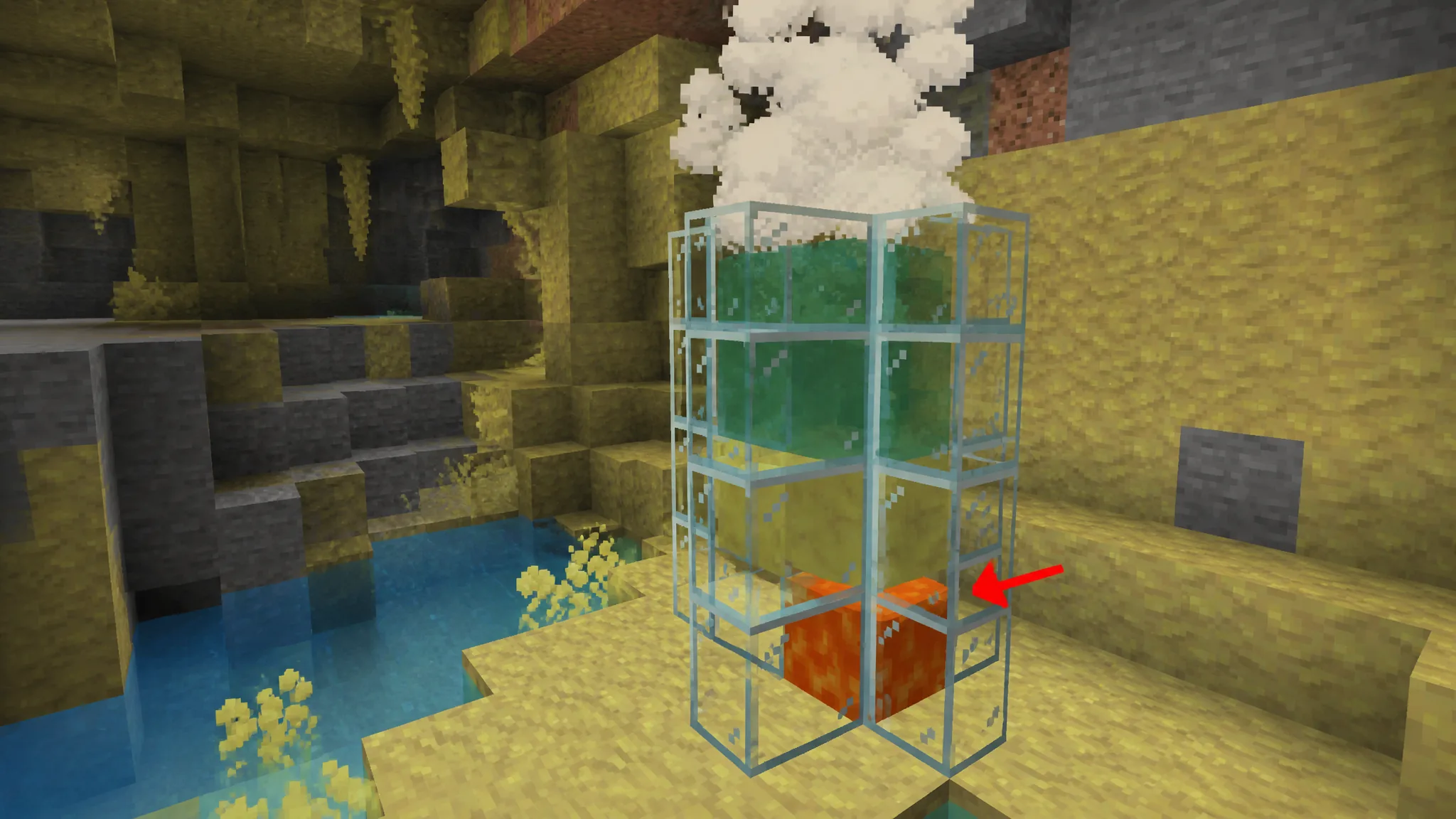
How to build a working geyser
Every geyser follows the same order from the bottom up. The magma block goes first, the potent sulfur block sits directly above it, and water fills the rest of the shaft. The only thing that changes between builds is how deep you dig and how much water you pour in.
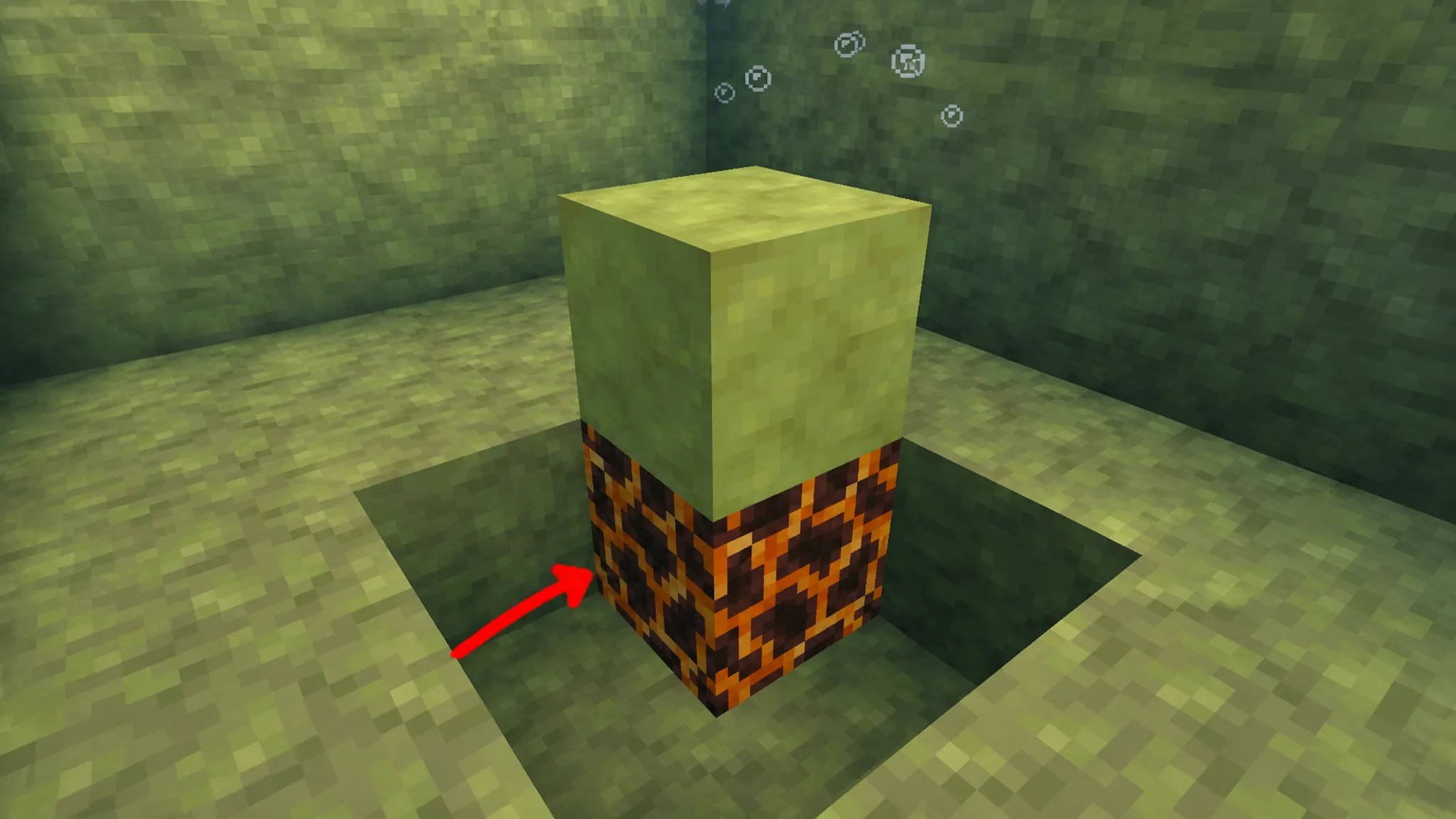
Geyser strength levels and water amounts
Geysers have four eruption strengths. Each step up adds one more block of depth and one more water source block above the sulfur block. A stronger geyser launches players, mobs, and items higher.
| Strength | Dig depth | Water source blocks |
|---|---|---|
| Level 1 (minimum) | 3 blocks | 1 |
| Level 2 | 4 blocks | 2 |
| Level 3 | 5 blocks | 3 |
| Level 4 (maximum) | 6 blocks | 4 |
In every case, the magma block stays at the bottom, and the potent sulfur block sits directly above it. The water always fills the column above the sulfur block, right up to the surface.
How to confirm the geyser works
Once the blocks and water are in place, a working geyser erupts on its own. Eruptions fire on a random but short cooldown, sending steam upward and launching any player, mob, or item resting on the column high into the sky. If you stand on it and get thrown upward after a short wait, the build is correct.
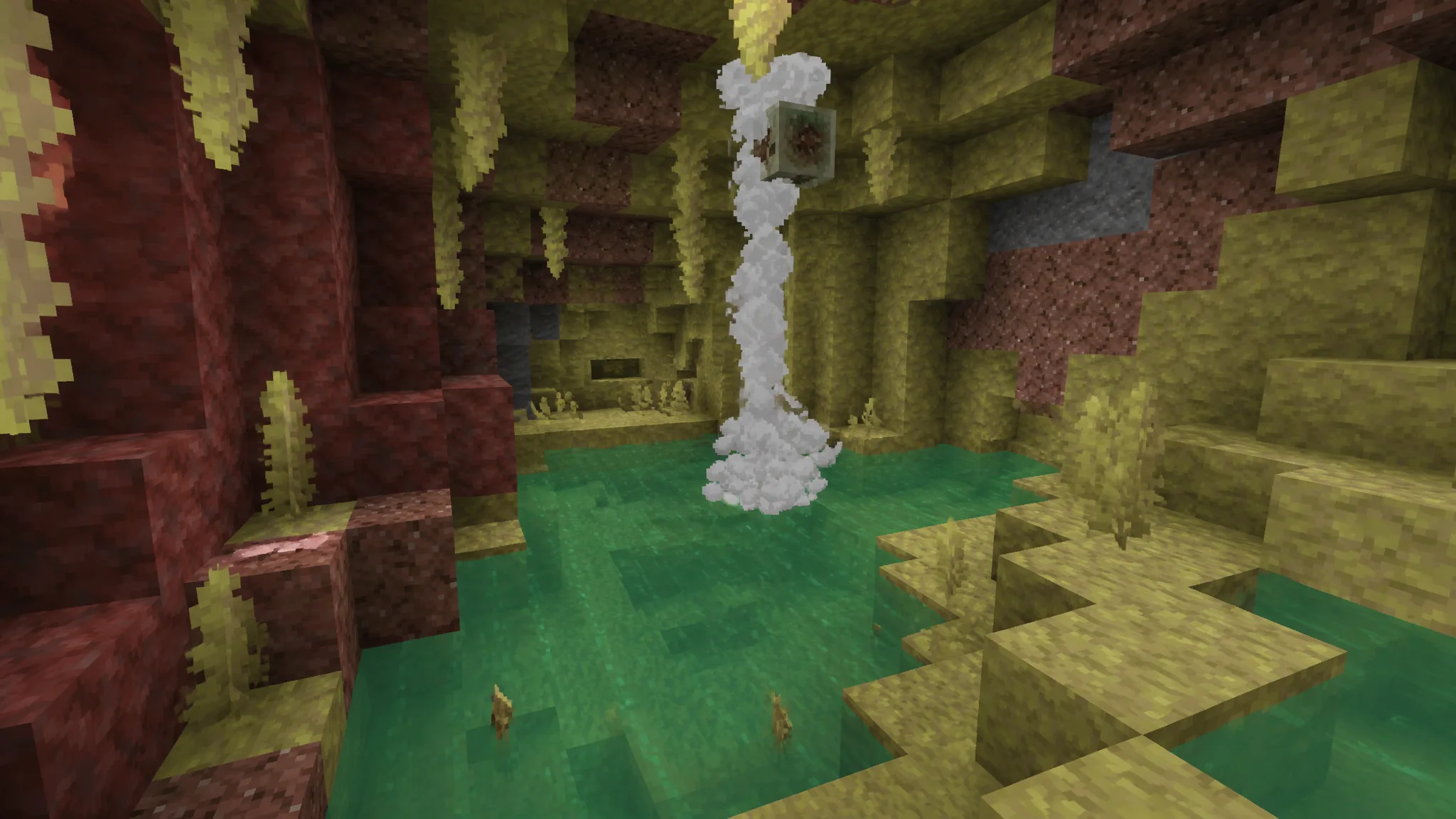
The most common reason a geyser fails to erupt is too much water. Adding more than four water source blocks breaks the mechanic entirely, so the column will sit still no matter how long you wait. Stick to the depth and water amounts in the table, keep the magma and sulfur blocks in the correct order, and the eruptions will trigger reliably.