The whole game of Codenames lives and dies on the clue. As spymaster, you can see which of the 25 words belong to your team, but your teammates can’t. Your only tool is a single word and a number, and the better that pairing connects your agents without touching the assassin, the faster you win.
Quick answer: Say one word, then a number, in the form “Clue, N” (for example “Pop, 2”). The number tells your team how many of your words tie to that clue. They get to guess up to N+1 times, so pick a word that links two or three of your agents cleanly and shares no link with the assassin or the other team’s cards.
How a Codenames clue actually works
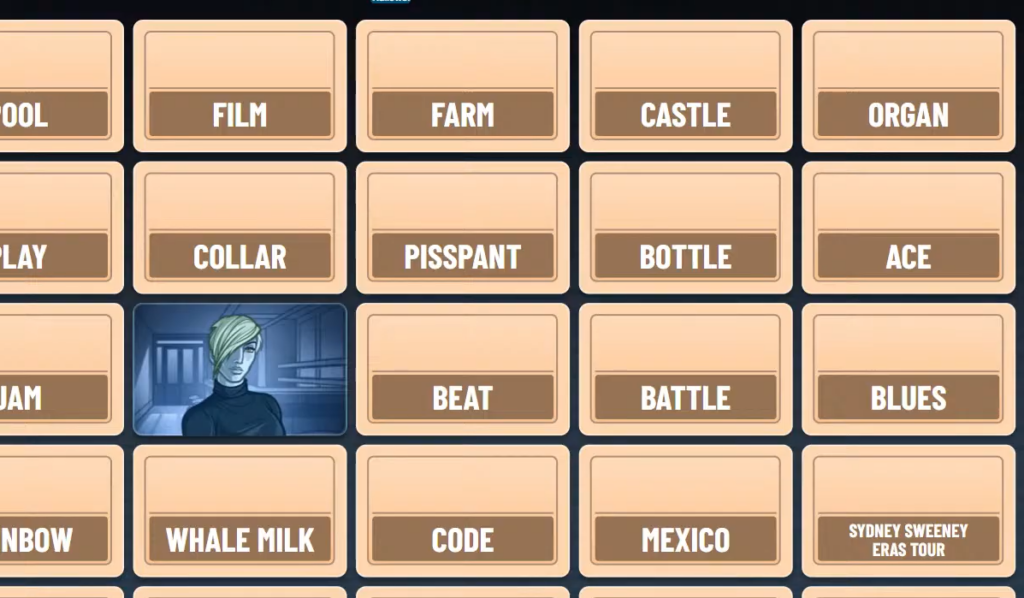
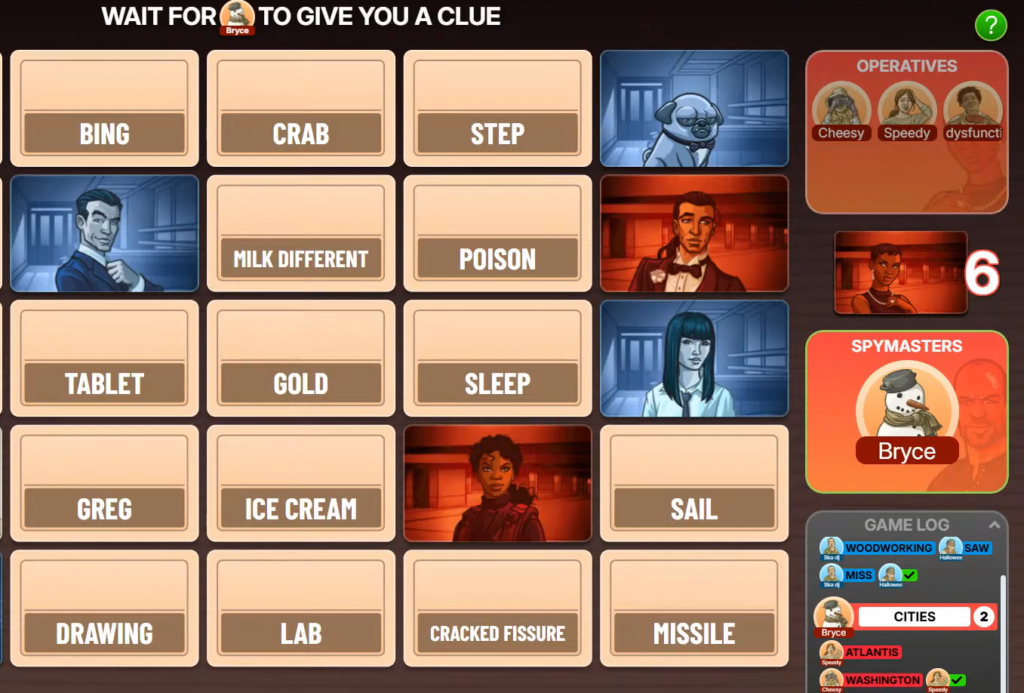
Two teams, blue and red, race to identify all of their agents on a 5×5 grid of word cards. One spymaster per team sees the secret colors. Everyone else, the operatives, sees only the words. On your turn, you give a clue made of exactly one word plus a number, and your team starts touching cards.
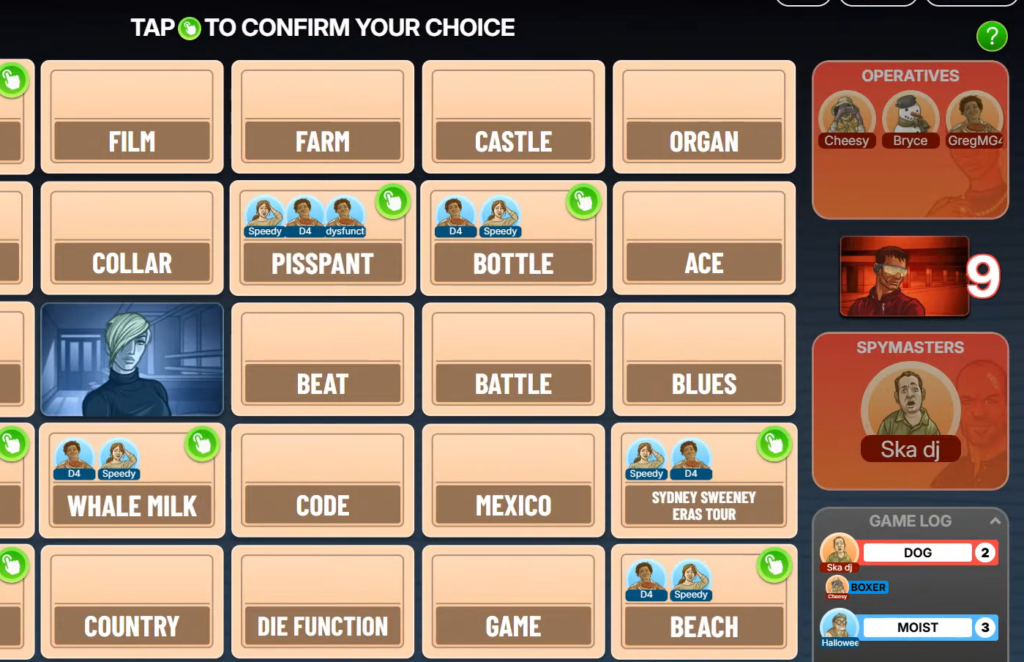
Touching a card is binding, with no take-backs. The outcome decides what happens next.
| Card touched | Result |
|---|---|
| Your own color | Score a point, keep guessing |
| Innocent bystander | Turn ends |
| Other team’s color | Helps them, turn ends |
| Assassin | Your team loses instantly |
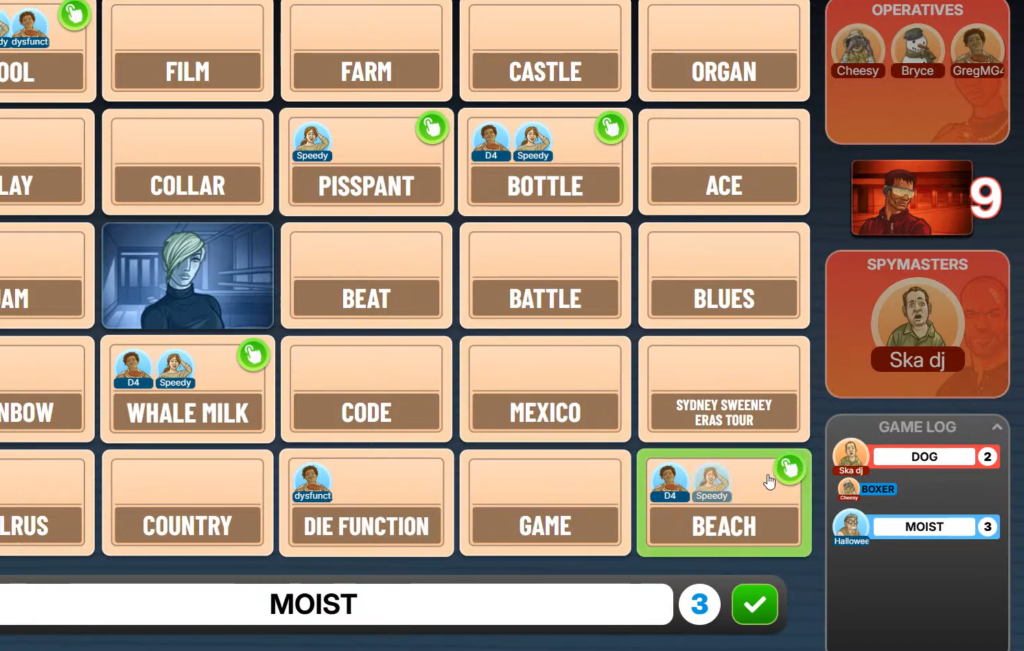
Your team may guess one more time than the number you said. A clue of “Pop, 2” allows up to three picks, which lets them chase a leftover word from an earlier clue if they’re confident. The turn also ends the moment they reach that N+1 limit or decide to stop.
Pick a clue word that links two or three agents
A strong clue is open enough to cover several of your words but specific enough to fence out everything else. “Pop, 2” pointing at “soda” and “balloon” works because both words pop, yet the word stays narrow. Knocking out two or three agents per round is the steady target, and it keeps you ahead without taking wild risks.
Bigger swings exist. Linking four, five, or six words in one clue is possible, and the best moment to attempt it is at the very start, when all 25 cards are still in play. Sometimes the second or third round opens up instead, once the other team clears a few decoys off the board.
Keep a poker face. Avoid hedging out loud with lines like “this one’s a stretch,” because that leaks information and can steer your team toward the wrong card.
Scan the whole board before you commit
Tunnel vision is the most common spymaster mistake. It’s easy to fixate on your own words and forget that a clue can also drag your team toward the opposing team’s cards, a bystander, or worst of all the assassin. Read all 25 words and ask whether your clue accidentally points anywhere it shouldn’t.
The assassin deserves a hard check every single round. There must be no plausible link between your clue and that card, because one touch on it ends the game in your opponent’s favor.
Use the zero clue to steer your team away from a trap
A clue with the number zero is a steering tool, not a scoring one. It tells your team that none of your words match the clue, so they should avoid anything that does. Say your words are “bride,” “flowers,” “altar,” “love,” “proposal,” and “ring,” but “cake” is a decoy. Give “Baking, 0” and your team learns to leave “cake” alone. Next turn, you can swing big with something like “Wedding, 6.”
The zero clue also defuses the assassin when it sits dangerously close to one of your target words. The cost is real, though. A full game often ends in three to six turns, so spending a whole round on a zero clue is a steep price to pay unless it prevents a loss.
Plan a rough roadmap, but stay flexible
You don’t need to map out the entire game from turn one. As cards leave the board, cleaner clues open up that weren’t possible before. Planning matters most near the end, when you might be stuck with two stubborn words like “parachute” and “ketchup” that share no obvious link. Start thinking about how to pair your final words once you have roughly four agents left.
How operatives should test a clue before touching a card
If you’re guessing, the strongest habit is to imagine a better clue. Suppose the spymaster says “animal” and you’re torn between “manatee” and “dolphin.” Both are animals, but a sharper spymaster would have said “aquatic” or “narwhal” to single one out. When an obviously better clue exists for the word you’re about to pick, treat that as a warning sign and reconsider.
You may always ask the spymaster to clarify spelling, such as “blew” versus “blue,” since the spoken clue can be ambiguous. The spymaster stays silent on everything else. Note that your guesses don’t have to match the current clue; you can spend a guess on a word left over from an earlier round if you’re sure of it.
Why your clue fails, and how to know you’re winning
A clue goes wrong for a short list of concrete reasons. Spotting them ahead of time is what separates a safe round from a turn-ending mistake.
- The clue links to a bystander, ending your turn early.
- The clue links to an opposing word, handing the other team progress.
- The clue shares any association with the assassin, which loses the game.
- The number is too high, pushing your team to guess past safe ground.
You’ll know a clue landed when each touched card flips to your team’s color and the count of agents you still need drops. Win the moment your team reveals the last of their agents. The game also ends the instant either team touches the assassin, so every clue you give should be measured against that single black card first.
Codenames rewards the spymaster who connects words their teammates already share a history with, then states the link in one tight word. Aim for two or three a round, save the zero clue for traps, and read the whole board before you ever say the number out loud.