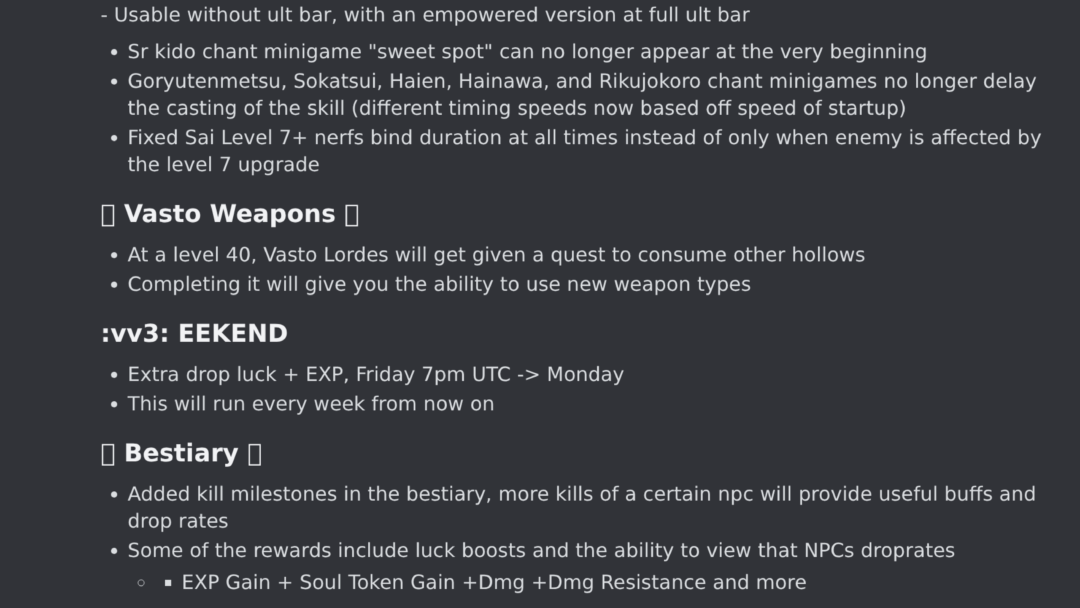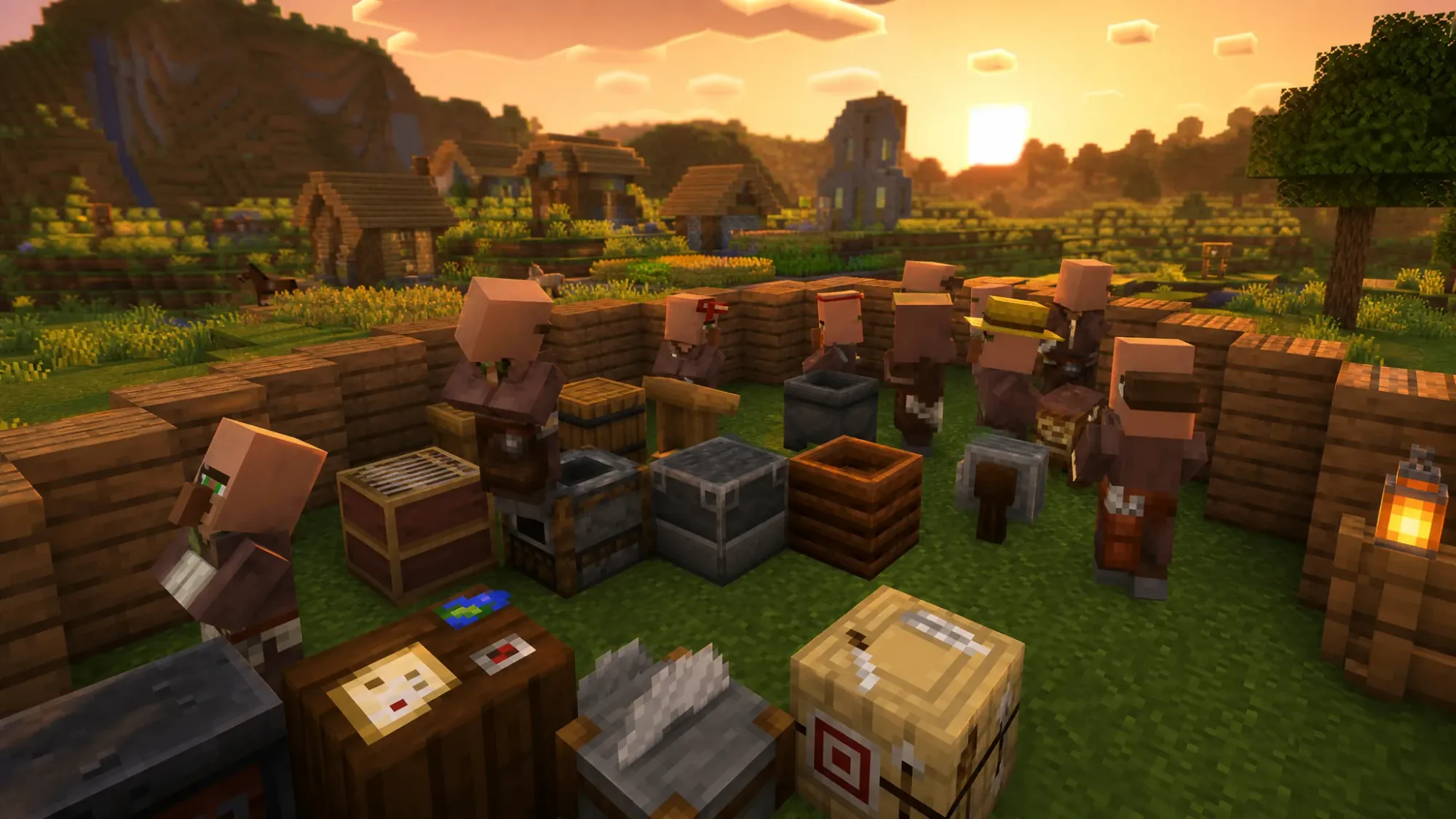
Villagers in Minecraft trade emeralds for some of the most valuable items in the game, from enchanted books and diamond gear to maps, food, and crafting blocks. Each villager picks a profession based on a nearby job site block, and that profession decides what it sells. There are 15 villager statuses in total, made up of 13 working professions plus two non-working states, nitwit and unemployed.
All 15 villager professions and their job site blocks
A villager only takes a job if the matching workstation is nearby and unclaimed. The table below lists every profession and the exact block that assigns it, along with the headline trades you can expect.
| Profession | Job site block | Key trades |
|---|---|---|
| Armorer | Blast Furnace | Iron armor, shields, bells, enchanted diamond armor |
| Butcher | Smoker | Cooked meats, rabbit stew, sweet berries |
| Cartographer | Cartography Table | Empty maps, explorer maps, banners, item frames |
| Cleric | Brewing Stand | Redstone, lapis lazuli, ender pearls, Bottle o’ Enchanting |
| Farmer | Composter | Bread, cake, golden carrots, glistering melon slices |
| Fisherman | Barrel | Cooked fish, campfire, enchanted fishing rod |
| Fletcher | Fletching Table | Arrows, bows, crossbows, tipped arrows |
| Leatherworker | Cauldron | Leather armor, horse armor, saddle |
| Librarian | Lectern | Enchanted books, bookshelves, name tags, clocks |
| Mason | Stonecutter | Bricks, polished stone, terracotta, quartz |
| Shepherd | Loom | Wool, carpets, beds, banners, paintings |
| Toolsmith | Smithing Table | Stone, iron, and enchanted diamond tools |
| Weaponsmith | Grindstone | Iron and diamond swords/axes, enchanted weapons |
| Nitwit | None | None |
| Unemployed | Any job site block | None until employed |
How villager trade levels work
Every working villager starts as a Novice and ranks up by trading with you. Each level unlocks new and usually better offers, and you can tell a villager’s rank by the badge on their clothing. The fastest way to level one up is to use newly added trades as soon as they appear.
| Level | Badge | Notes |
|---|---|---|
| Novice | Stone | Starting rank after the job is assigned |
| Apprentice | Iron | Unlocks after 10 trade experience |
| Journeyman | Gold | Unlocks better mid-tier trades |
| Expert | Emerald | Unlocks second-best trades |
| Master | Diamond | Unlocks the best-in-class offers |
Librarian — enchanted books and more
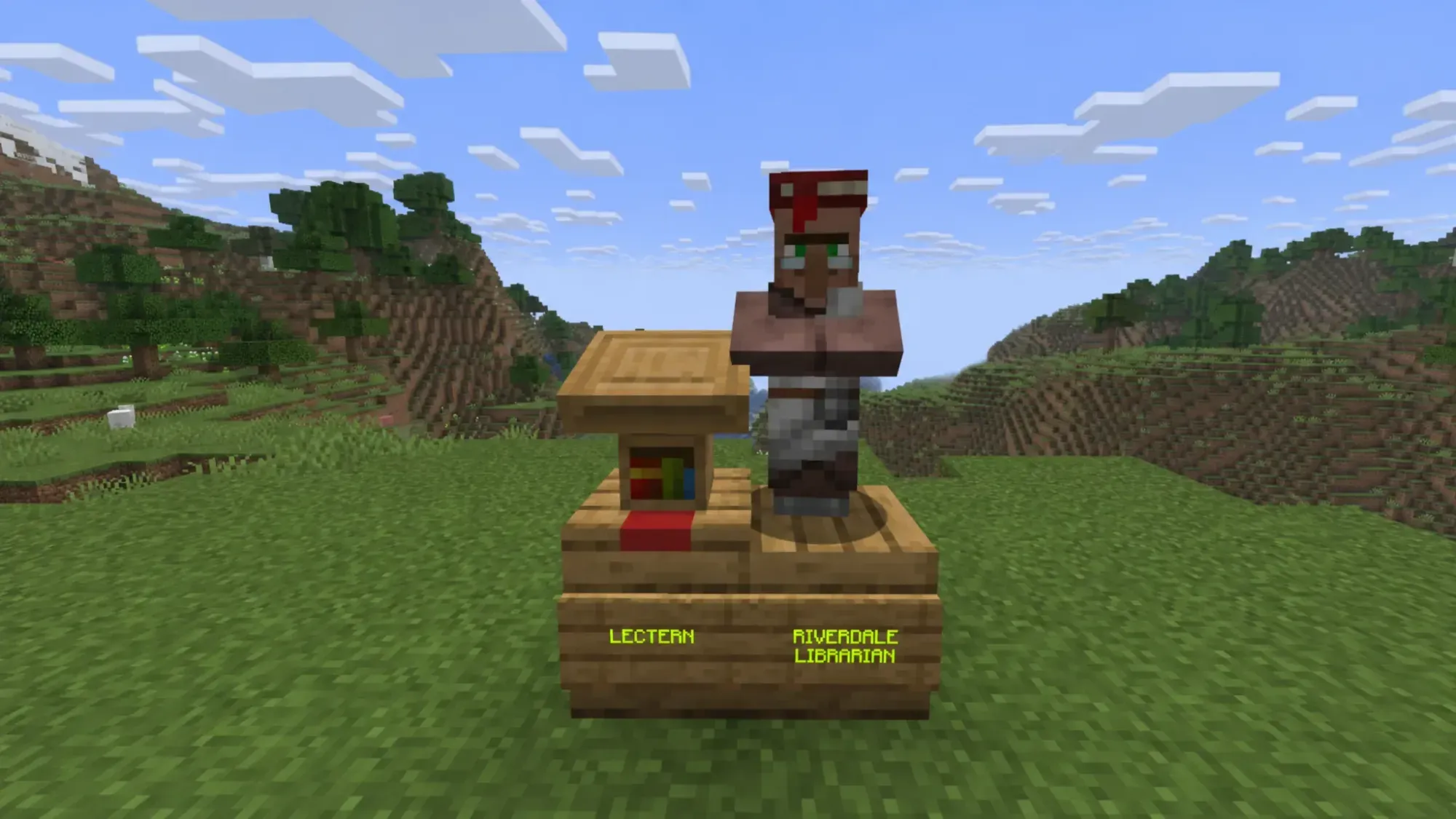
The Librarian uses a Lectern and is one of the most useful villagers you can have. Beyond enchanted books, librarians sell bookshelves, lanterns, glass, clocks, compasses, and name tags. The enchantments they offer now depend on the biome they live in as well as their level, with the strongest books reserved for the Master rank.
Armorer — iron and diamond protection
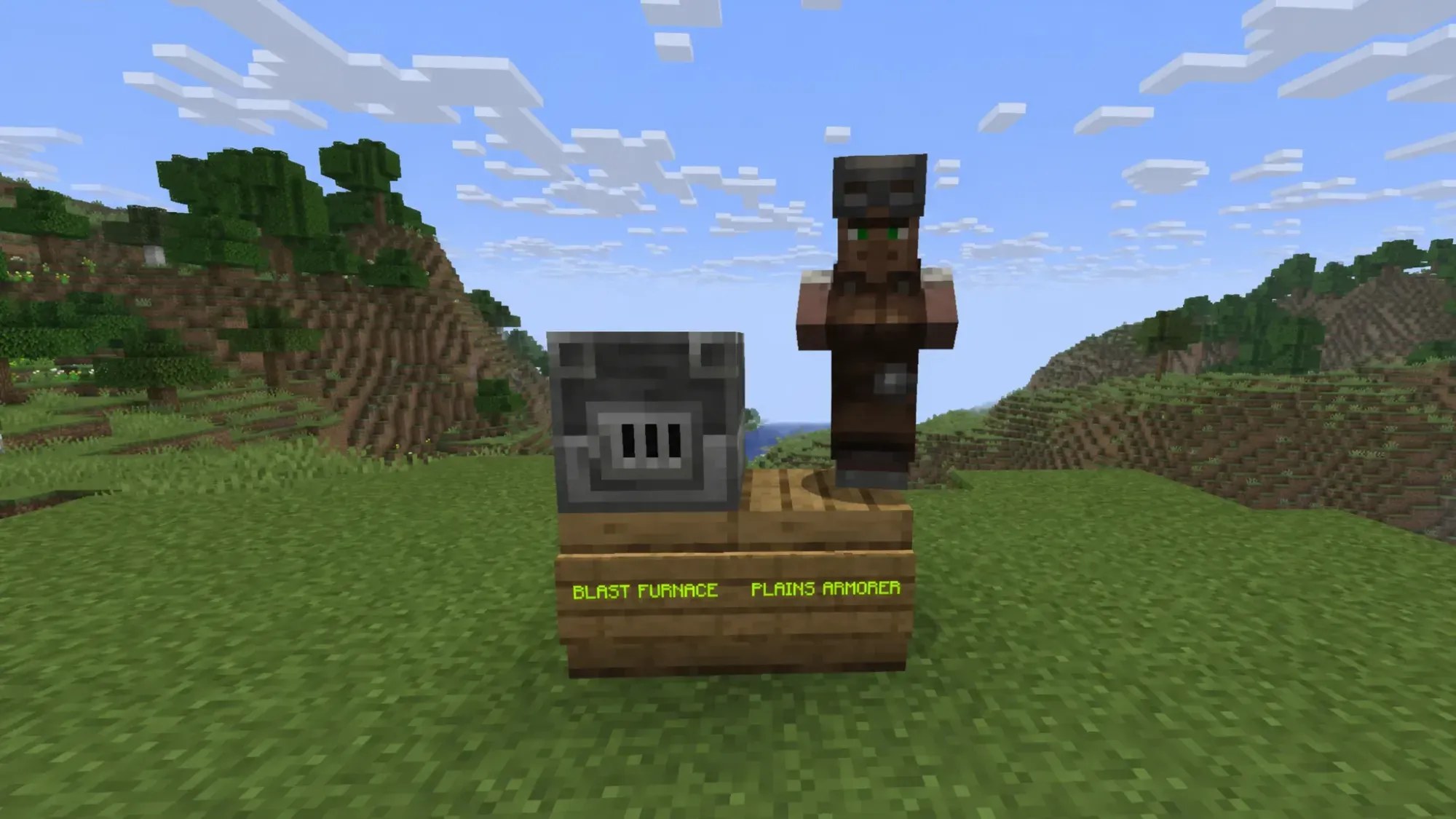
A Blast Furnace turns a villager into an Armorer. They trade iron armor, chainmail, shields, and bells. At Expert and Master levels, you can buy enchanted diamond armor pieces with emeralds. They also pay you emeralds for coal, iron ingots, lava buckets, and diamonds.
Toolsmith — harvesting tools
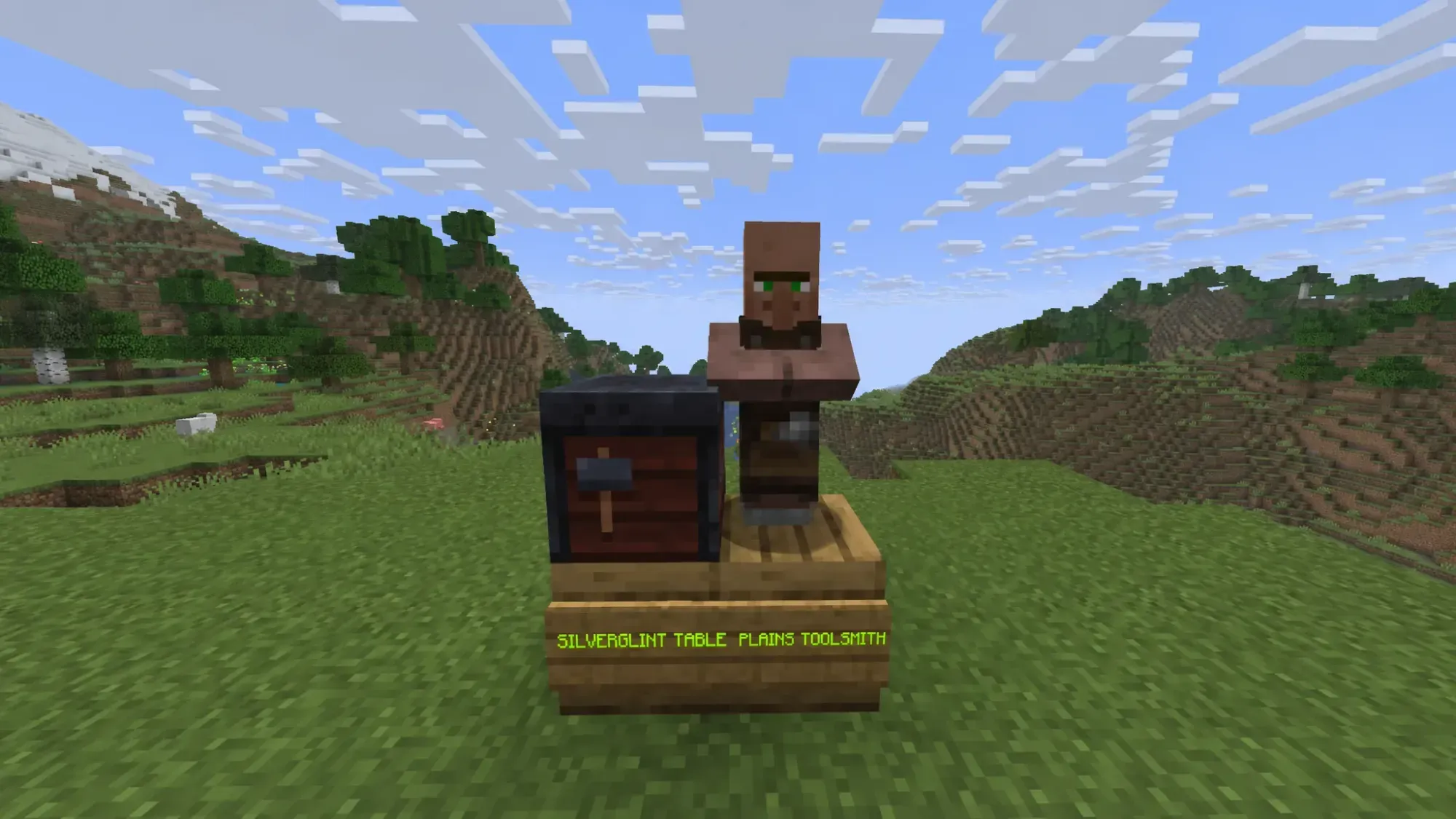
The Toolsmith works at a Smithing Table and sells pickaxes, axes, shovels, and hoes. As they rank up, the quality climbs from stone to iron and finally enchanted diamond tools. They sometimes offer bells too. The smithing table itself is also how you upgrade diamond gear to netherite.
Weaponsmith — swords and axes
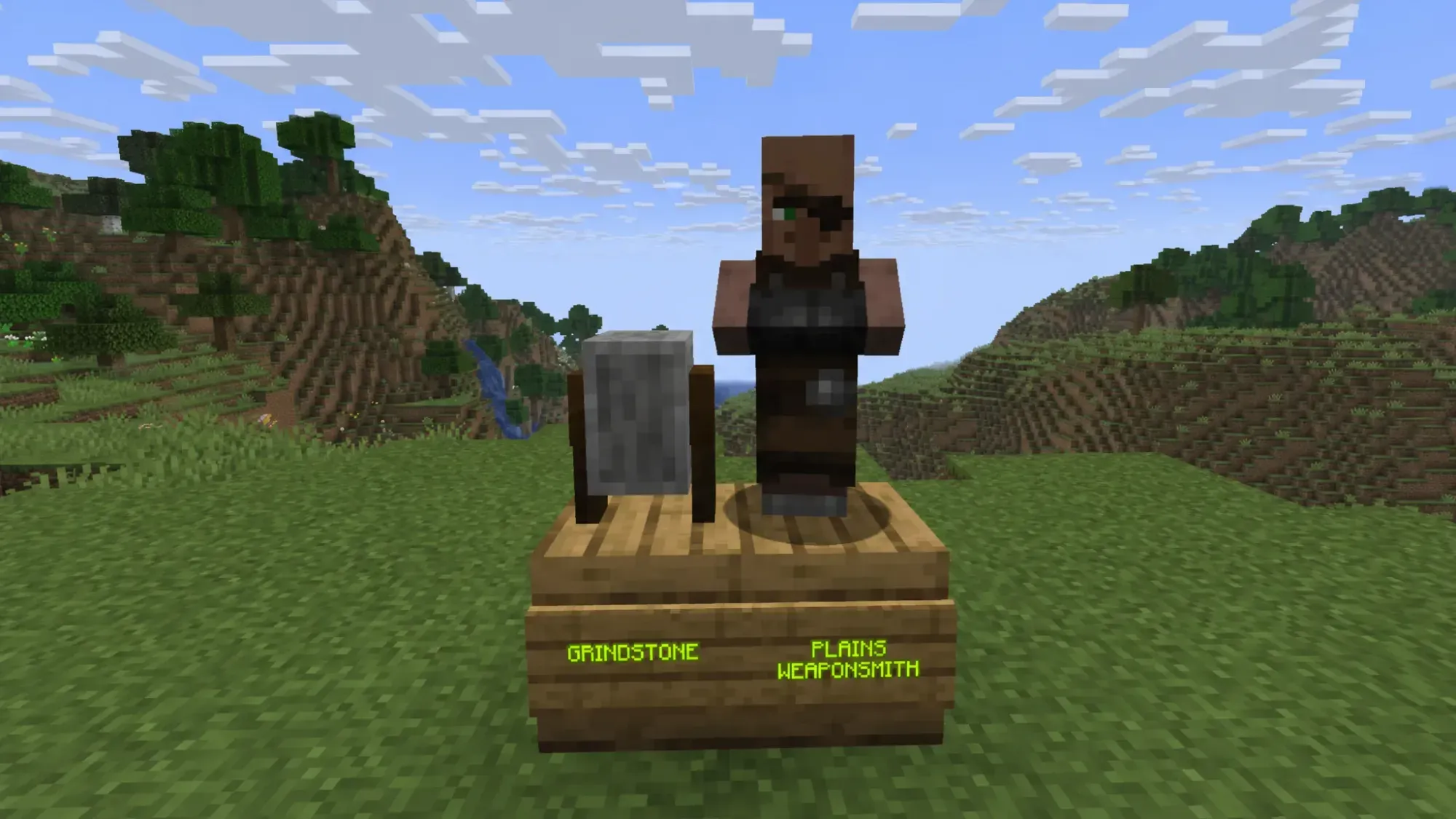
A Grindstone assigns the Weaponsmith profession. Early on they sell mediocre weapons, but higher ranks bring powerful enchanted swords and diamond axes. They also trade bells, and the grindstone doubles as a tool for repairing gear and removing enchantments.
Butcher — reliable cooked food
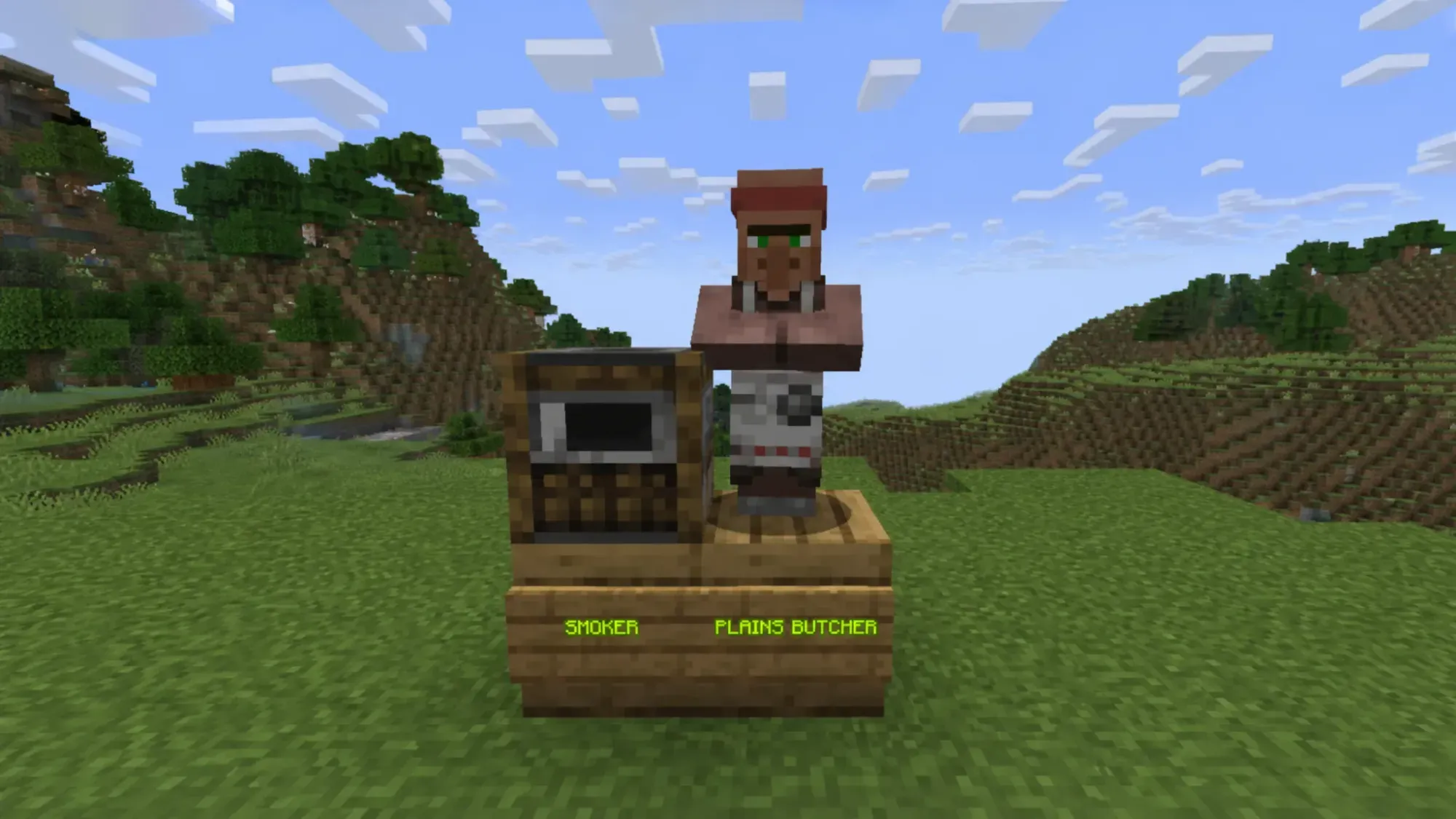
The Butcher uses a Smoker, buying raw meat and selling cooked porkchops, cooked chicken, and rabbit stew. A Novice butcher will hand over rabbit stew for a single emerald. At higher levels they also buy dried kelp blocks and sweet berries.
Cartographer — explorer maps
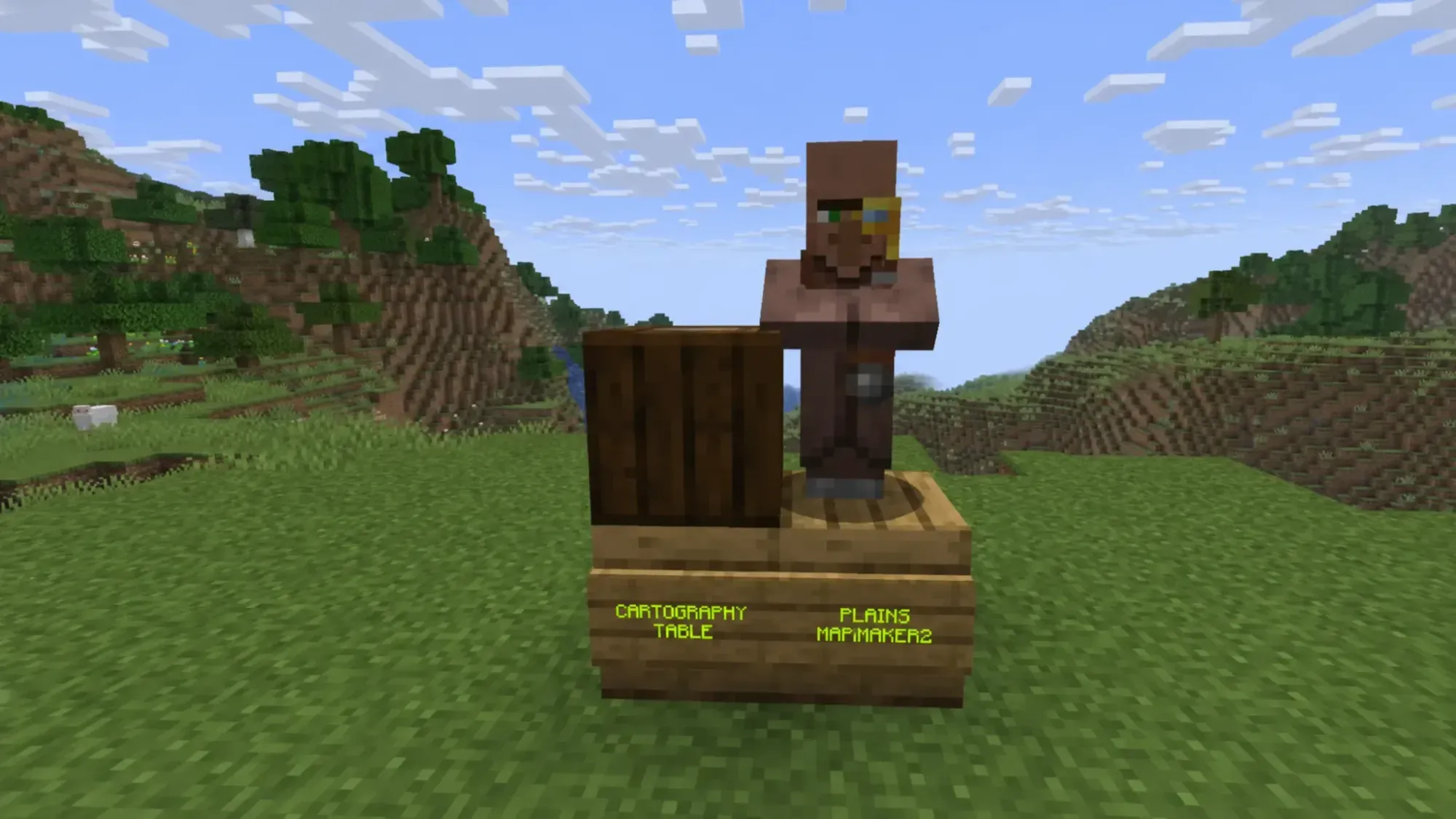
The Cartographer needs a Cartography Table and deals in maps. They sell empty maps along with ocean and woodland explorer maps, which lead you to ocean monuments, woodland mansions, and buried treasure. Expert and Master cartographers add item frames, colored banners, and the globe banner pattern.
Cleric — brewing and enchanting items
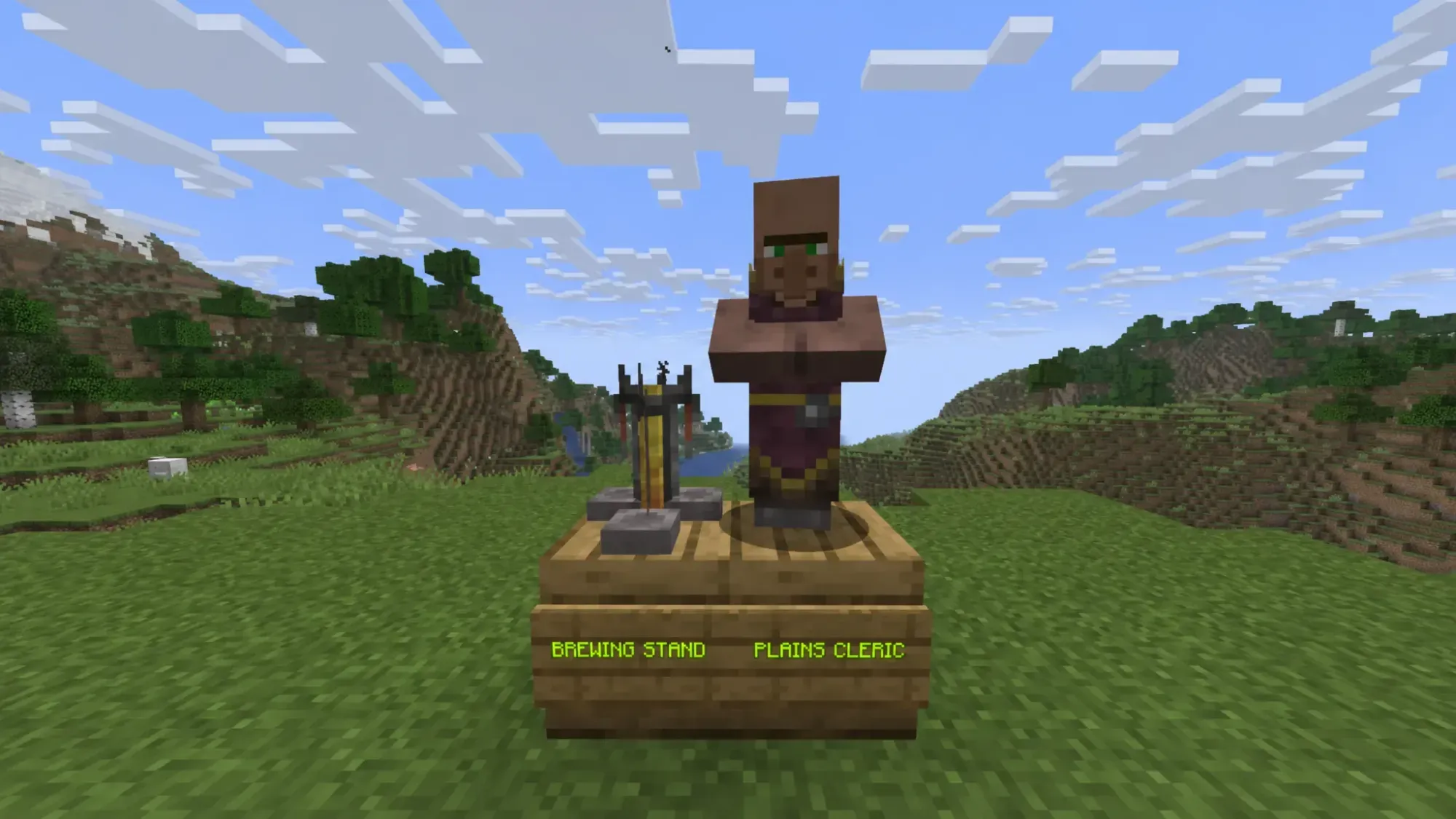
A Brewing Stand creates a Cleric, your source for redstone dust, lapis lazuli, glowstone, and ender pearls. They buy rotten flesh, which is otherwise nearly useless. The standout offer is the Bottle o’ Enchanting, available at Master level.
Farmer — food and emerald farming
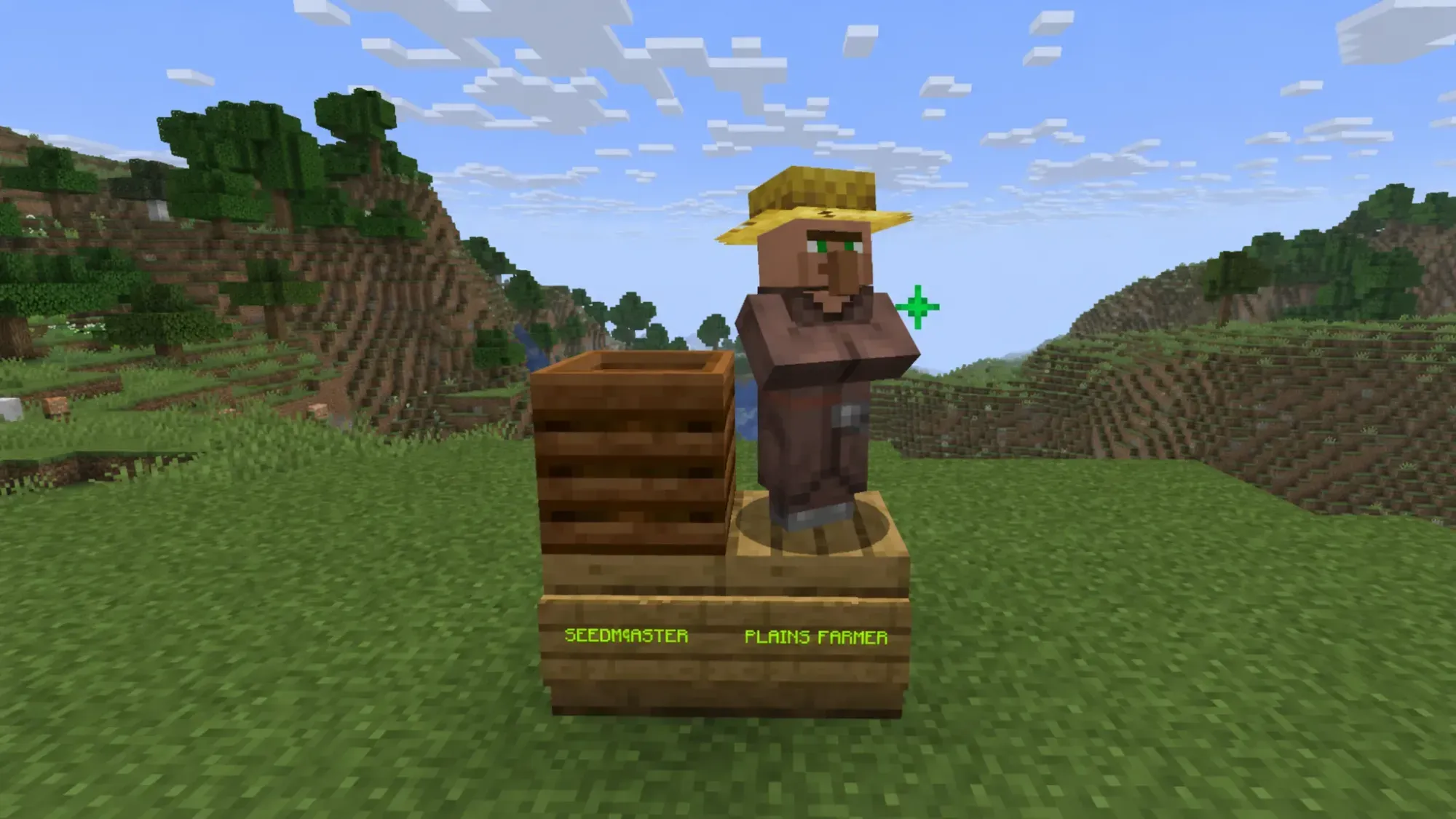
The Farmer works at a Composter and buys most crops while selling bread, apples, cake, and cookies. At the top ranks they offer suspicious stews, golden carrots, and glistering melon slices. Farmers also feed other villagers, which raises village willingness so they can breed when beds are available. They are one of the best professions for earning emeralds.
Fisherman — fish and an enchanted rod
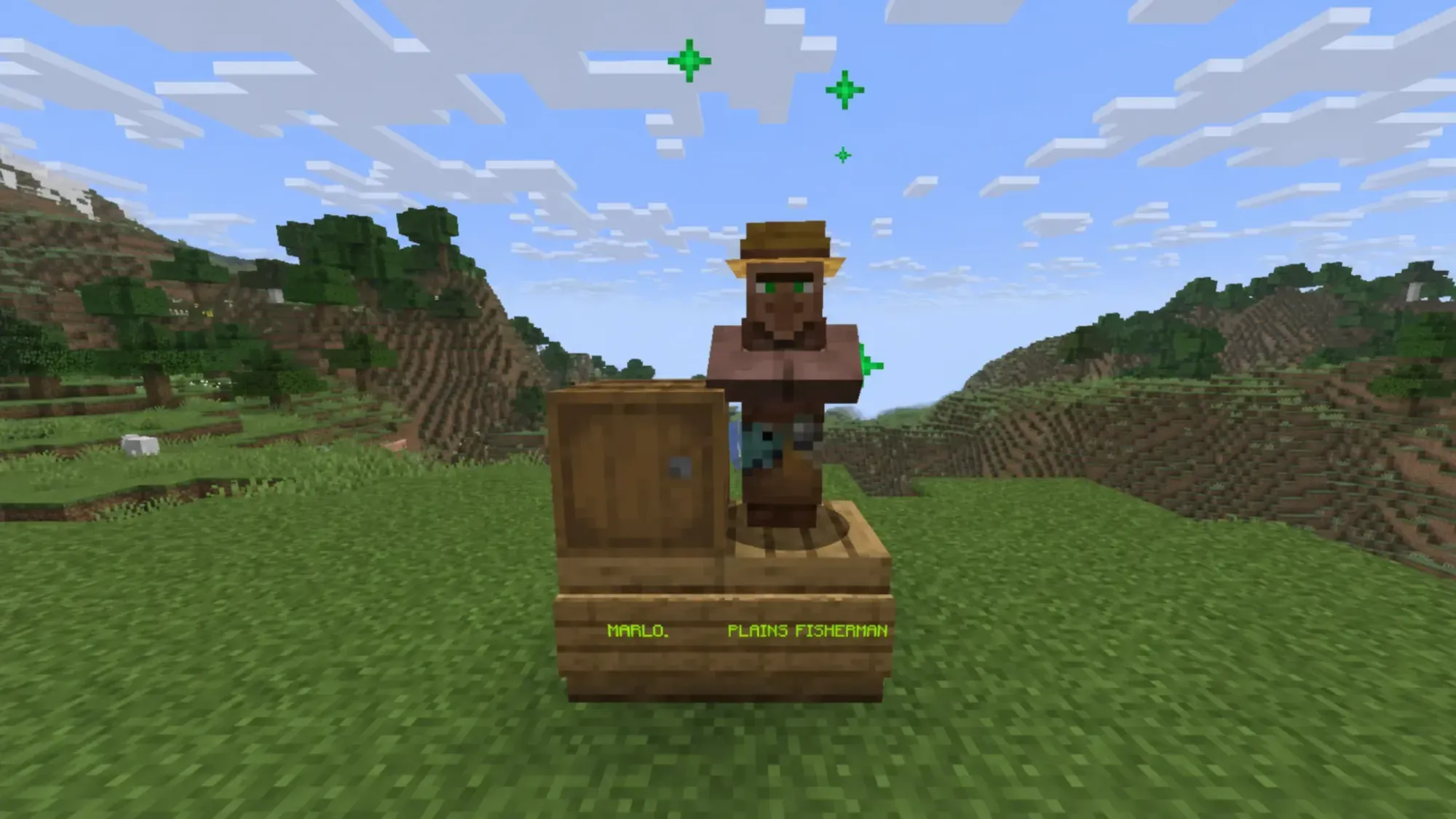
A Barrel turns a villager into a Fisherman, trading raw fish, coal, and string. They sell cooked cod and salmon, buckets of cod, and campfires. At Journeyman level they offer an enchanted fishing rod. Selling fish to them is a steady way to build emeralds.
Fletcher — bows, crossbows, and arrows
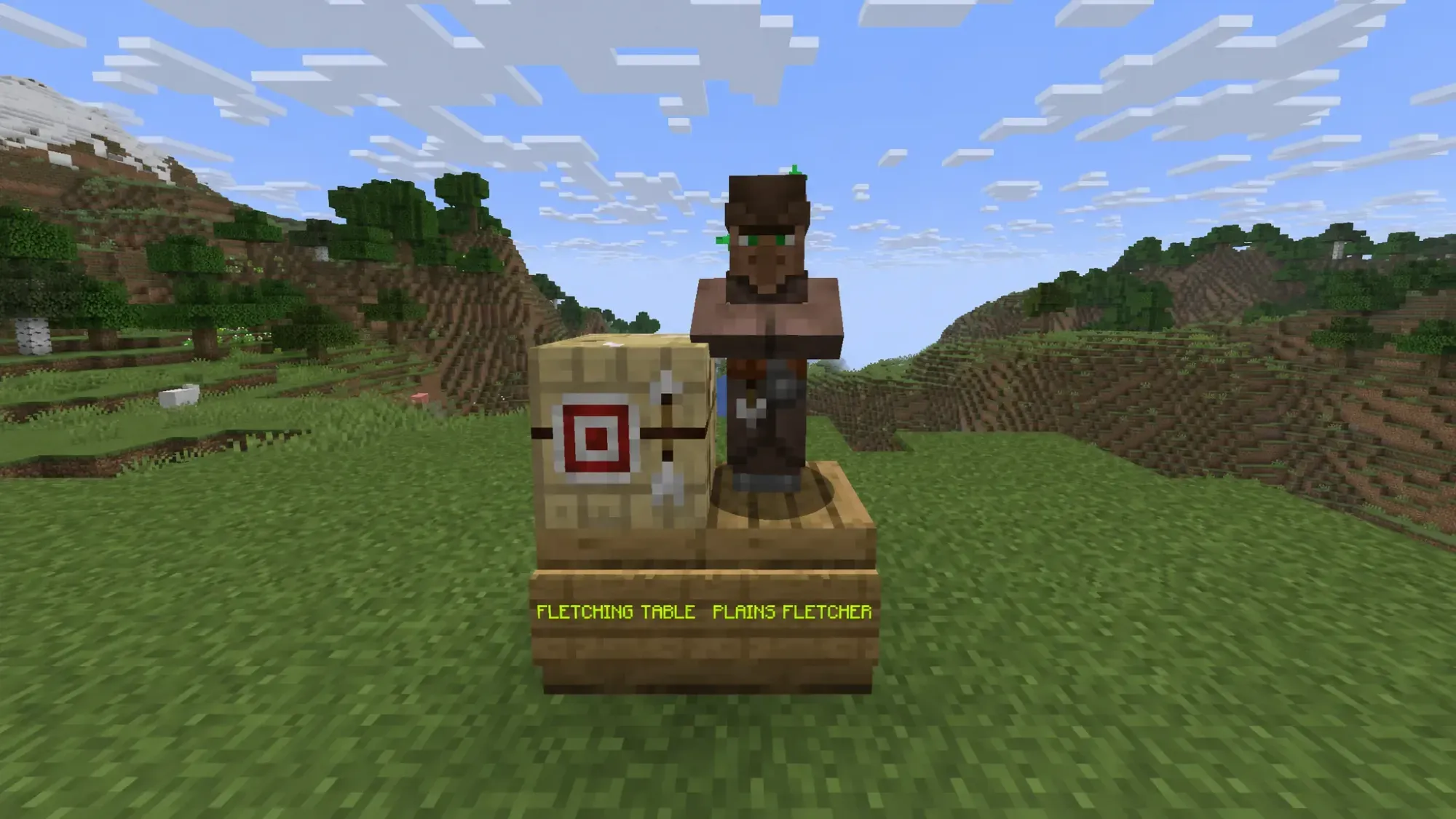
The Fletcher uses a Fletching Table and centers on ranged weapons. Low-level fletchers sell arrows, flint, bows, and crossbows, while Expert and Master fletchers offer enchanted bows, enchanted crossbows, and tipped arrows with status effects.
Leatherworker — leather gear and saddles
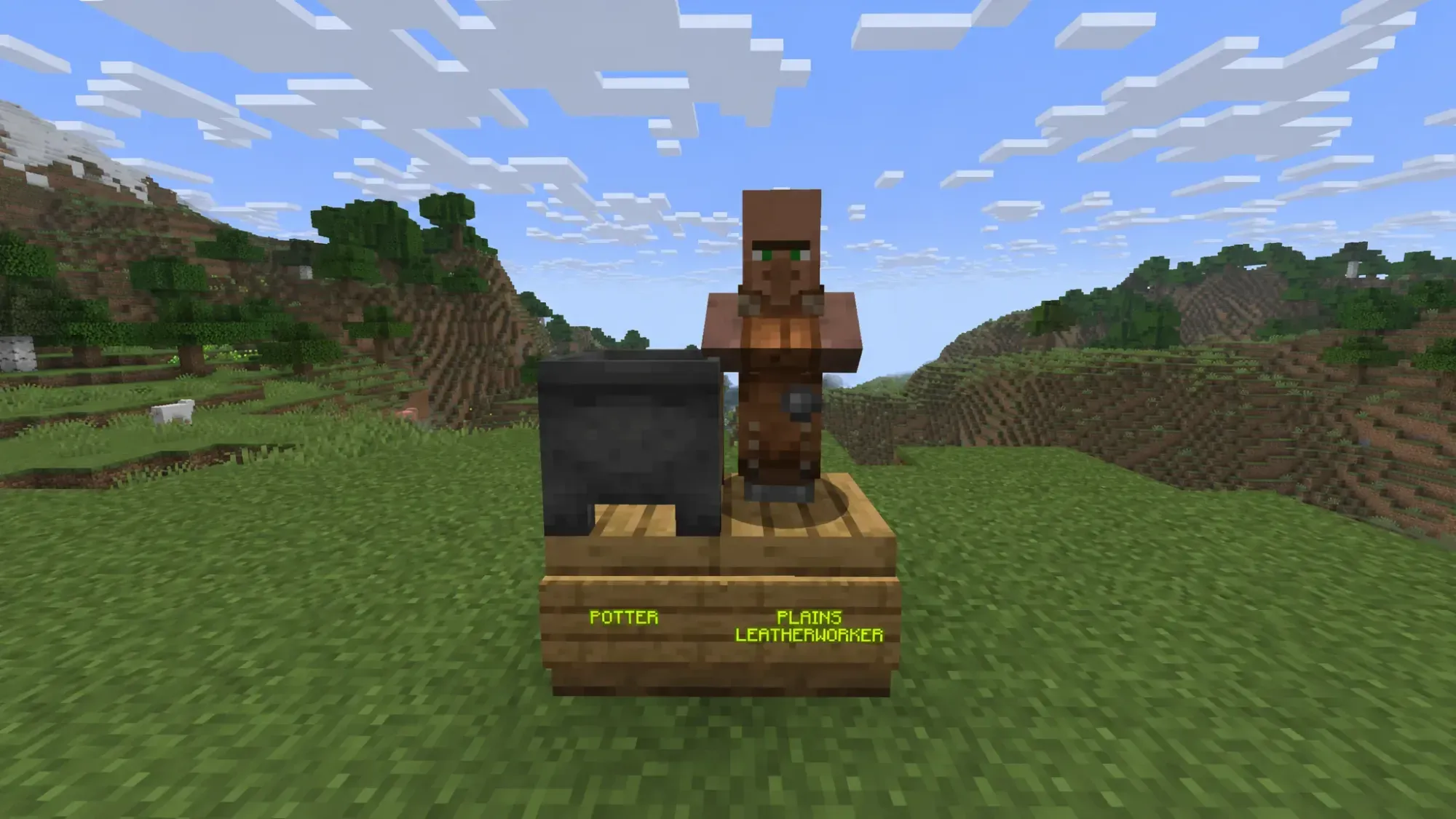
A Cauldron assigns the Leatherworker, who sells leather armor for players and leather horse armor. The most valuable item is the saddle, available only from a Master-level leatherworker. The cauldron itself can hold water, lava, or powder snow.
Mason — stone, terracotta, and quartz
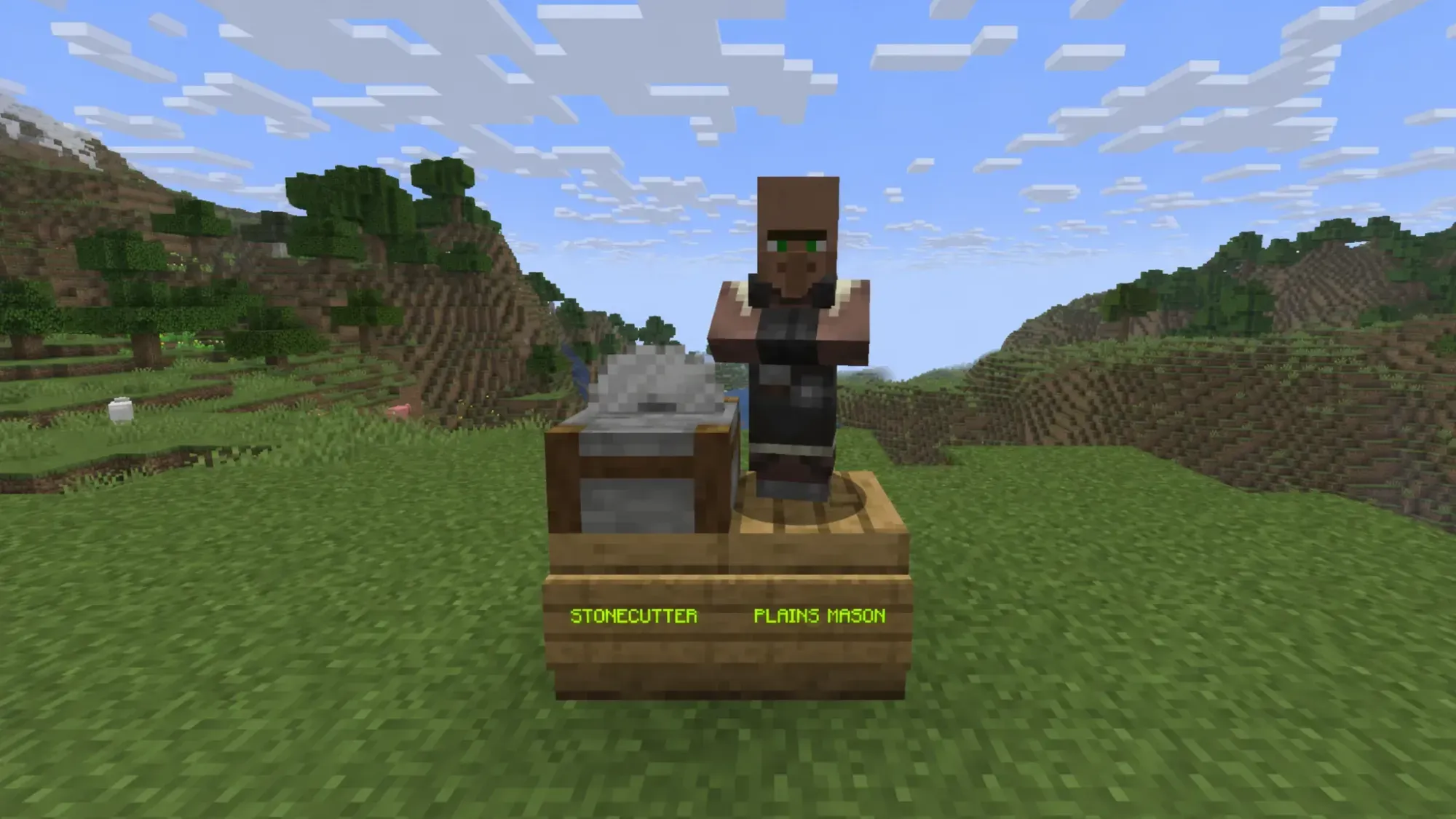
Called a Mason in Java Edition and a Stonemason in Bedrock, this villager uses a Stonecutter. They sell bricks, polished andesite, diorite, and granite, plus dripstone blocks. Higher levels add colored and glazed terracotta and quartz blocks.
Shepherd — wool and decoration
A Loom turns a villager into a Shepherd, who mainly buys dyes and wool. Novice shepherds sell shears, and as they level up they offer wool, beds, carpets, and banners in any color. Master shepherds sell paintings.
Nitwit and unemployed villagers
Nitwits wear green robes regardless of biome and cannot take a job or trade at all. Placing a job site block near one does nothing. Unemployed villagers wear biome-based clothing and are the blank slate you actually want, since they will claim any job block you give them.
How to assign and change a villager’s job
To change a job, the villager must not have traded yet. Break its current job block, wait for it to revert to plain clothing, then place a different block nearby. Once you have completed even one trade, the profession is locked and can no longer be reset.
The wandering trader
The wandering trader looks like a villager but does not belong to any village and cannot be assigned a job. It spawns randomly near you, often after an in-game day has passed, alongside two leashed trader llamas within roughly a 48-block radius. Its offers are random, ranging from packed ice to flowers, and it despawns after a while, so its trades are temporary.
With the right job site blocks in place, a single village can supply enchanted books, diamond gear, food, maps, and building materials without long expeditions. Stock up on emeralds by selling crops to a Farmer or sticks to a Fletcher, then level up your most important villagers to reach their Master-tier offers.