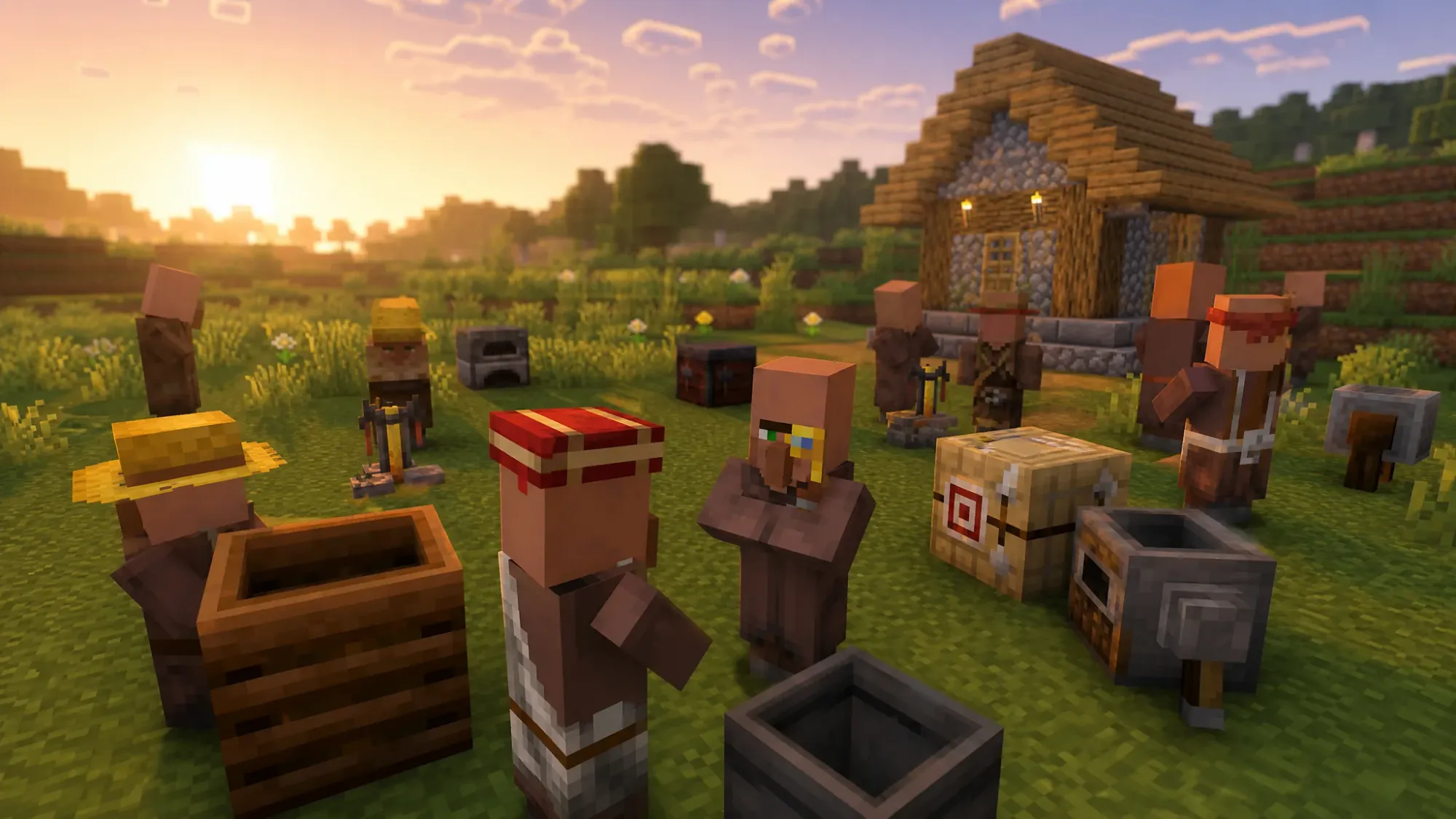
Villager trading turns blocky townsfolk into reliable shops. Instead of mining for hours or exploring rare structures, you can hand over emeralds for finished gear, or sell common items back for emeralds. Each profession has its own pool of offers, and a handful of those trades are good enough to plan a base around.
How villager trading and levels work
Every adult villager with a profession trades through a job-site block. Place the right block next to an unemployed villager and they take that job. Once you make your first trade with them, that profession locks in permanently.
Villagers have five career ranks: Novice, Apprentice, Journeyman, Expert, and Master. You unlock higher ranks by trading, and each new rank adds better offers while keeping the old ones. Trades have limited stock and refresh up to twice per day when the villager can reach its job-site block. In Bedrock Edition, the villager also needs a bed nearby to restock.
Prices are not fixed. Trading often and curing a zombie villager give you discounts, while attacking a villager raises prices. Only the first item in a trade changes price, and it never drops below 1 or above a full stack.
| Rank | Badge | Total XP needed |
|---|---|---|
| Novice | Stone | 0 |
| Apprentice | Iron | 10 |
| Journeyman | Gold | 70 |
| Expert | Emerald | 150 |
| Master | Diamond | 250 |
Best villager trades to buy items with emeralds
These are the offers that give you something hard to make or find. The smith trades make diamond gear renewable, while the Librarian and Cleric supply items you cannot easily craft at all.
| Item received | Default price | Villager |
|---|---|---|
| 1x Bottle o’ Enchanting | 3 emeralds | Master Cleric |
| 10x Bricks | 1 emerald | Novice Mason |
| 1x Campfire | 2 emeralds | Apprentice Fisherman |
| Diamond Helmet / Chest / Leggings / Boots | 19 / 27 / 27 / 12 emeralds | Master Armorer |
| 1x Enchanted Book | 5-64 emeralds | Librarian (Journeyman+) |
| 4x Glass | 1 emerald | Journeyman Librarian |
| 3x Golden Carrots | 3 emeralds | Master Farmer |
| 1x Name Tag | 20 emeralds | Master Librarian |
| 1x Quartz Block | 1 emerald | Master Mason |
| Redstone Dust | 1 emerald | Novice Cleric |
Diamond gear from the smith villagers
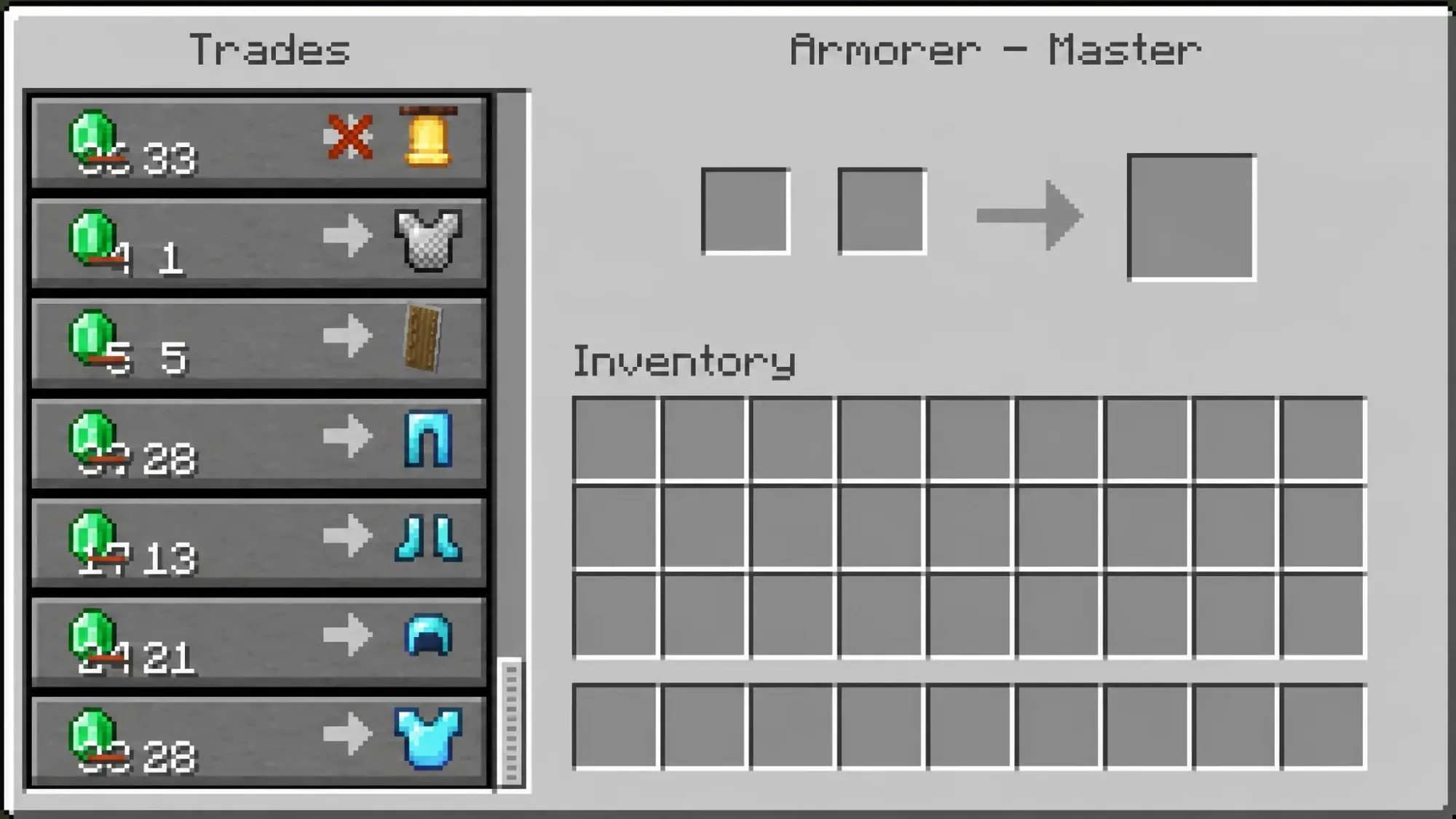
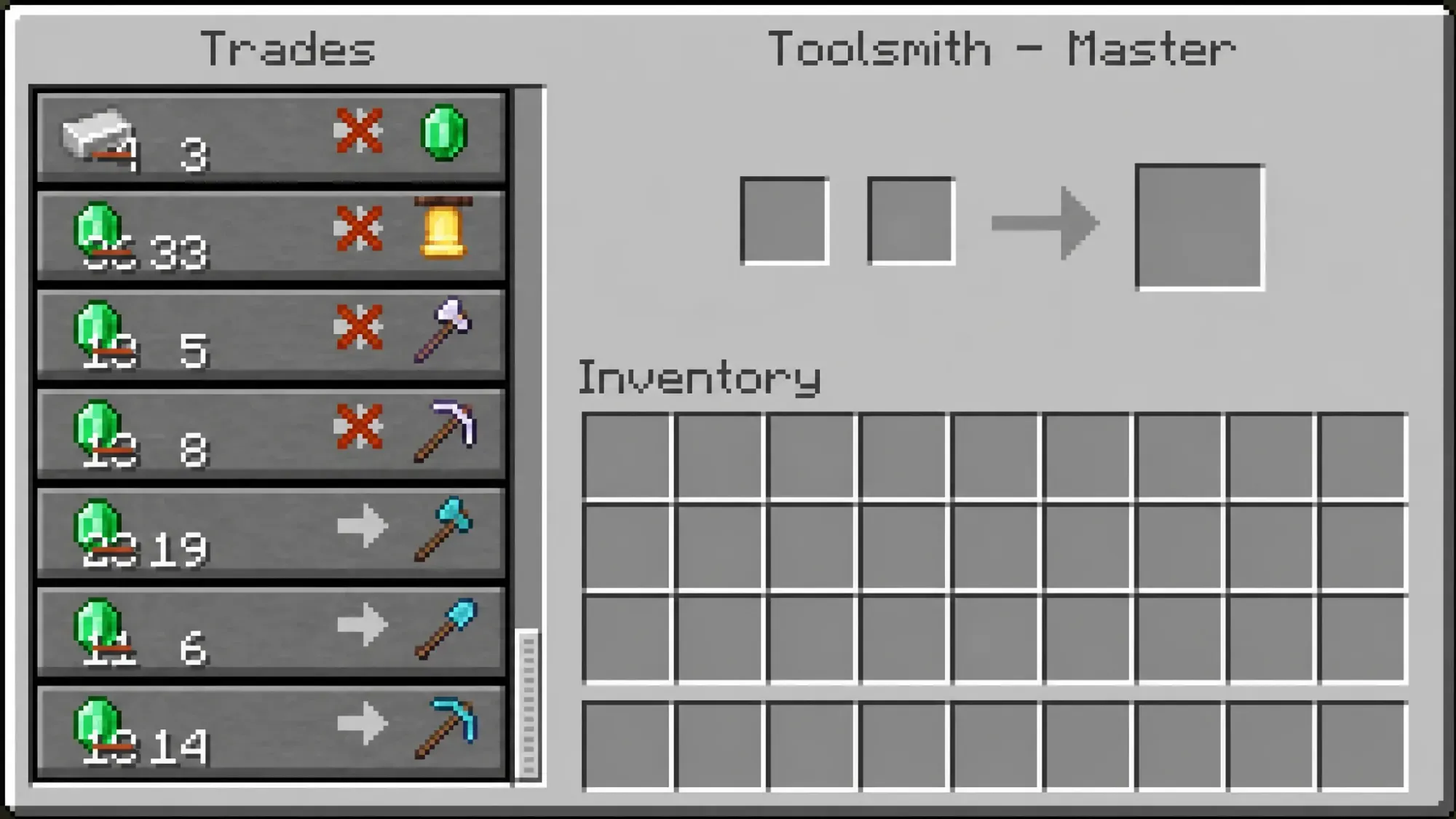
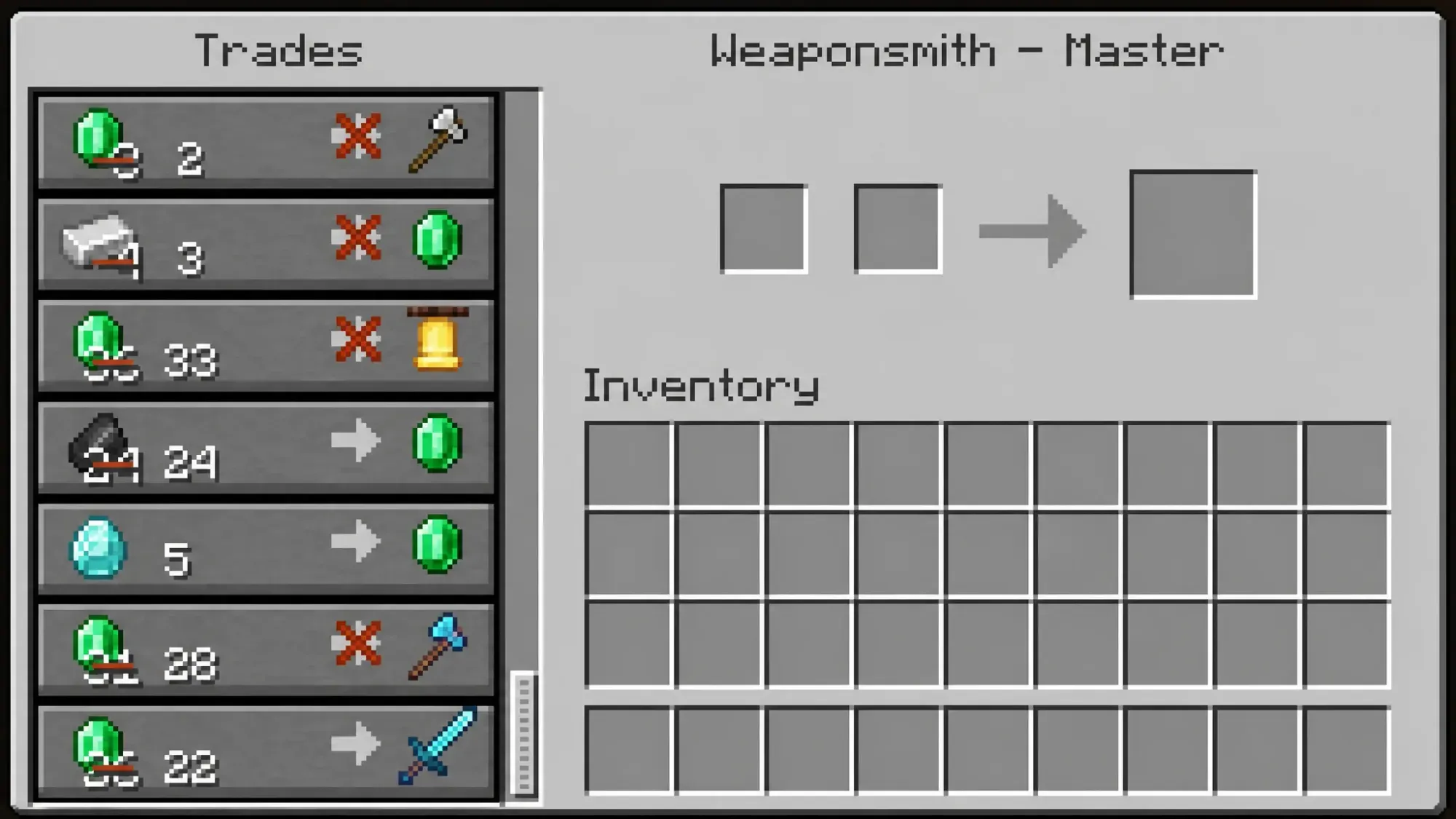
The three smith professions make diamond equipment renewable, which is the single biggest reason to keep them around. The Armorer (Blast Furnace) sells diamond armor pieces for roughly 13 to 35 emeralds. The Toolsmith (Smithing Table) sells a diamond hoe for 4 emeralds and other diamond tools for 10 to 32 emeralds. The Weaponsmith (Grindstone) sells diamond weapons for 13 to 31 emeralds.
Most of this gear comes pre-enchanted at random. The enchantments are often weak, and from these smiths they will never include treasure enchantments. Many players strip the random enchantments off and apply their own using books or an enchanting table.
Enchanted books from the Librarian
The Librarian (Lectern) is the most valuable single villager for many players. Across its levels it sells enchanted books for 5 to 64 emeralds, and that includes treasure enchantments such as Mending and Frost Walker that you cannot pull from a normal enchanting table. Because the offers are renewable, you can fully kit out gear without gambling at the table.
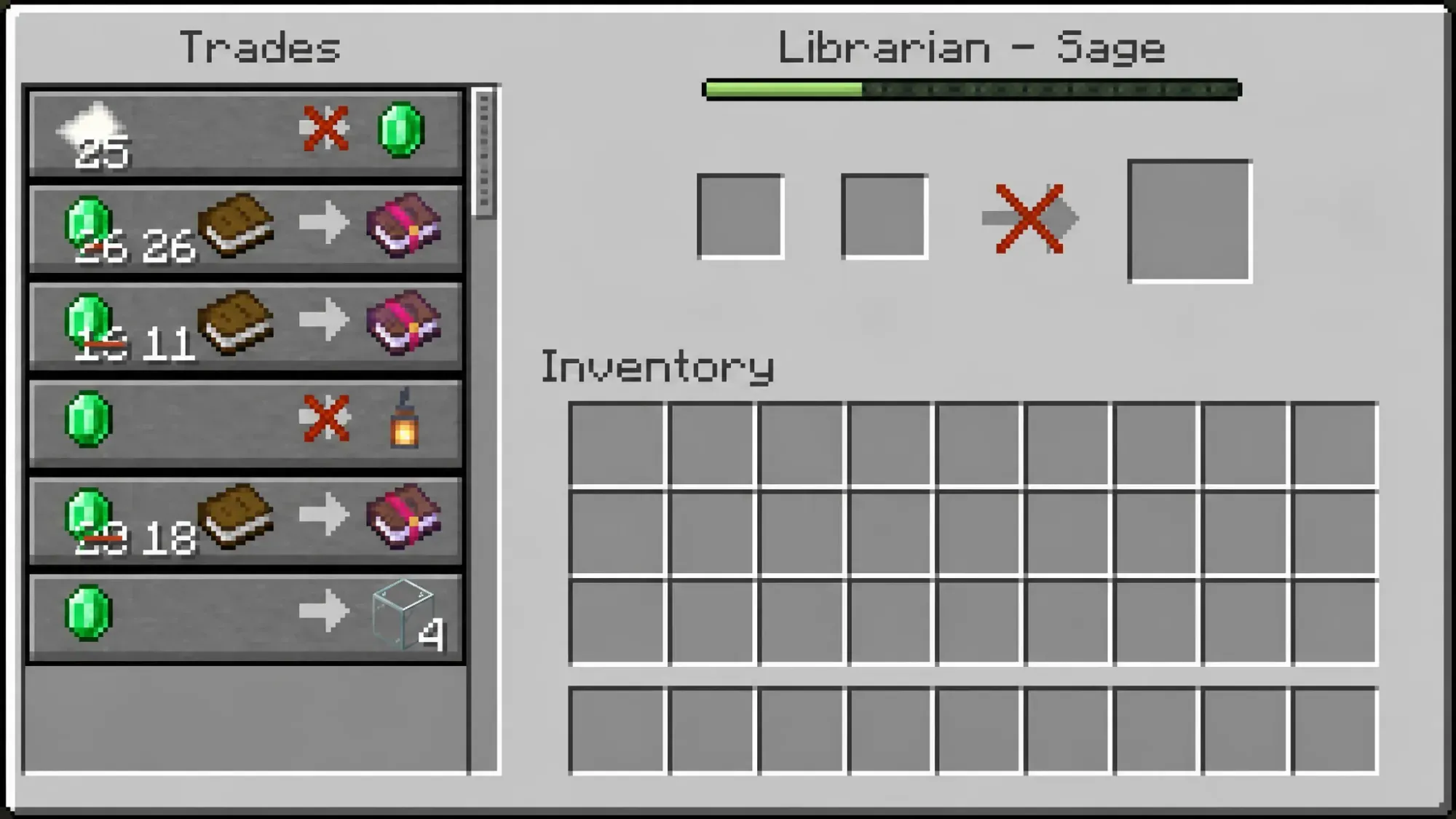
A Journeyman Librarian also sells 4 glass for 1 emerald, and a Master Librarian sells name tags for 20 emeralds each. Name tags stop renamed mobs from despawning, which keeps mob-based farms running.
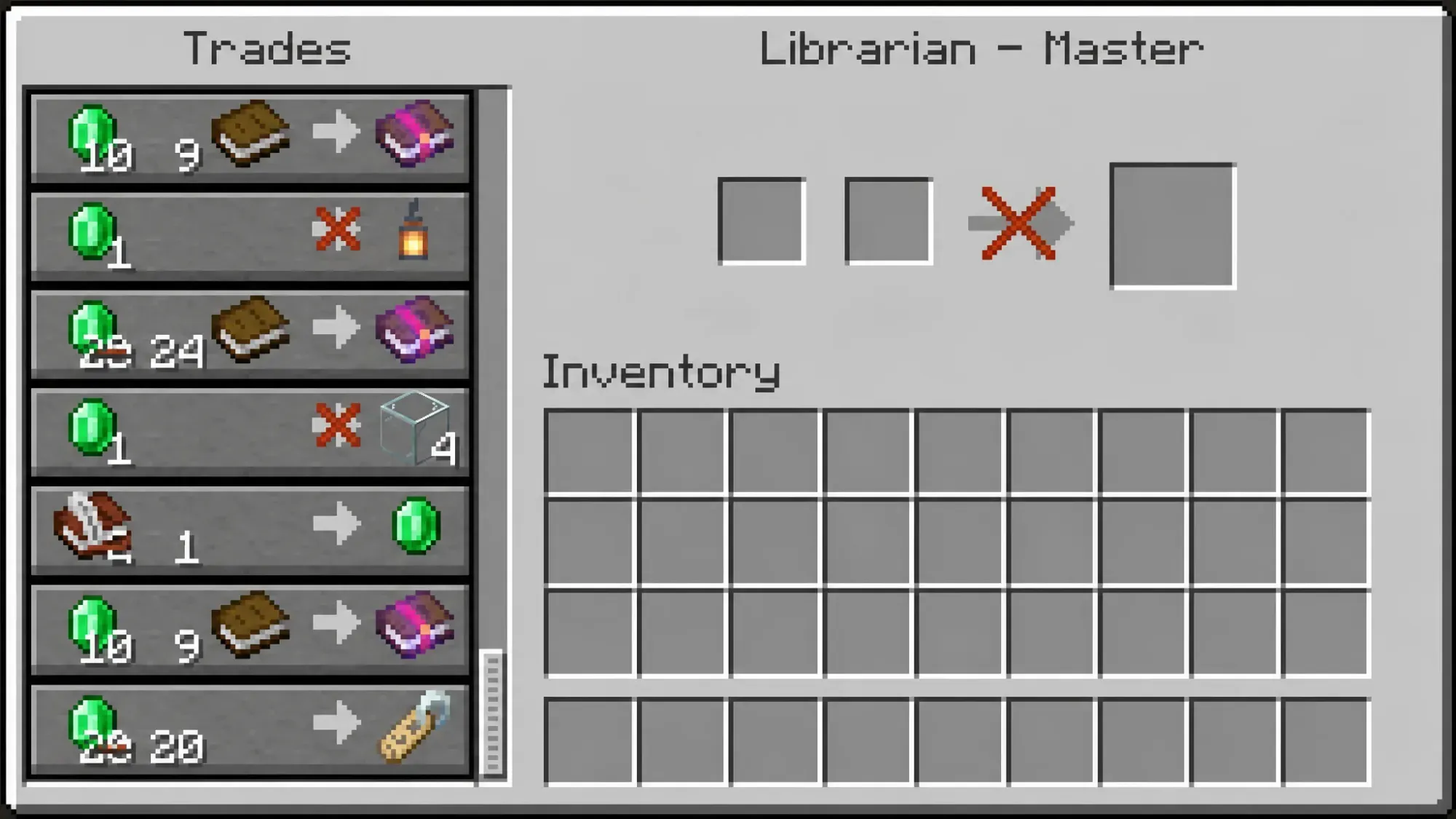
Cleric items: Bottle o’ Enchanting and Redstone
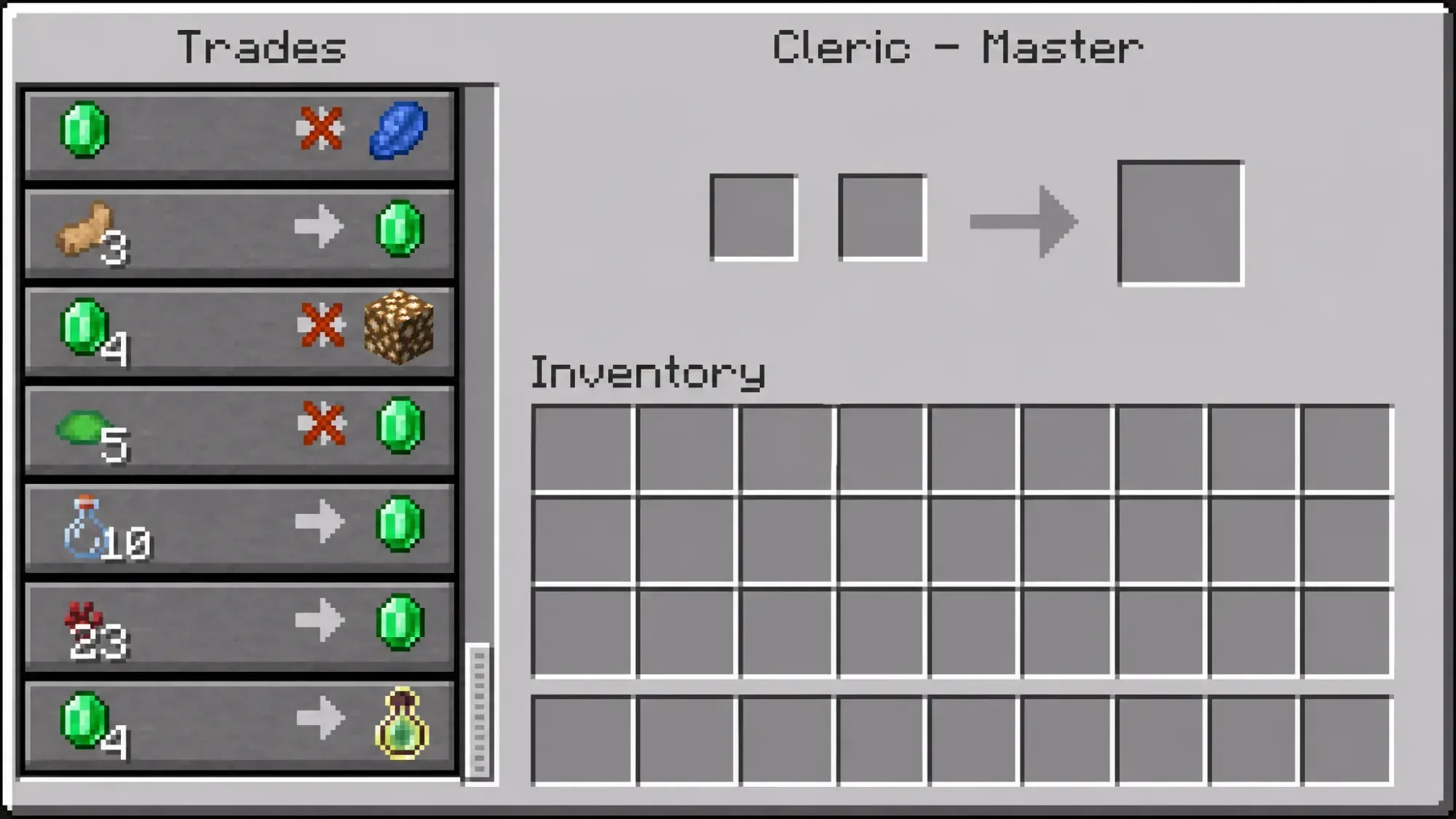
The Cleric uses a Brewing Stand as its job-site block. A Master Cleric sells one Bottle o’ Enchanting for 3 emeralds. These are portable XP. Throw one like a splash potion and it bursts into experience orbs where it lands.
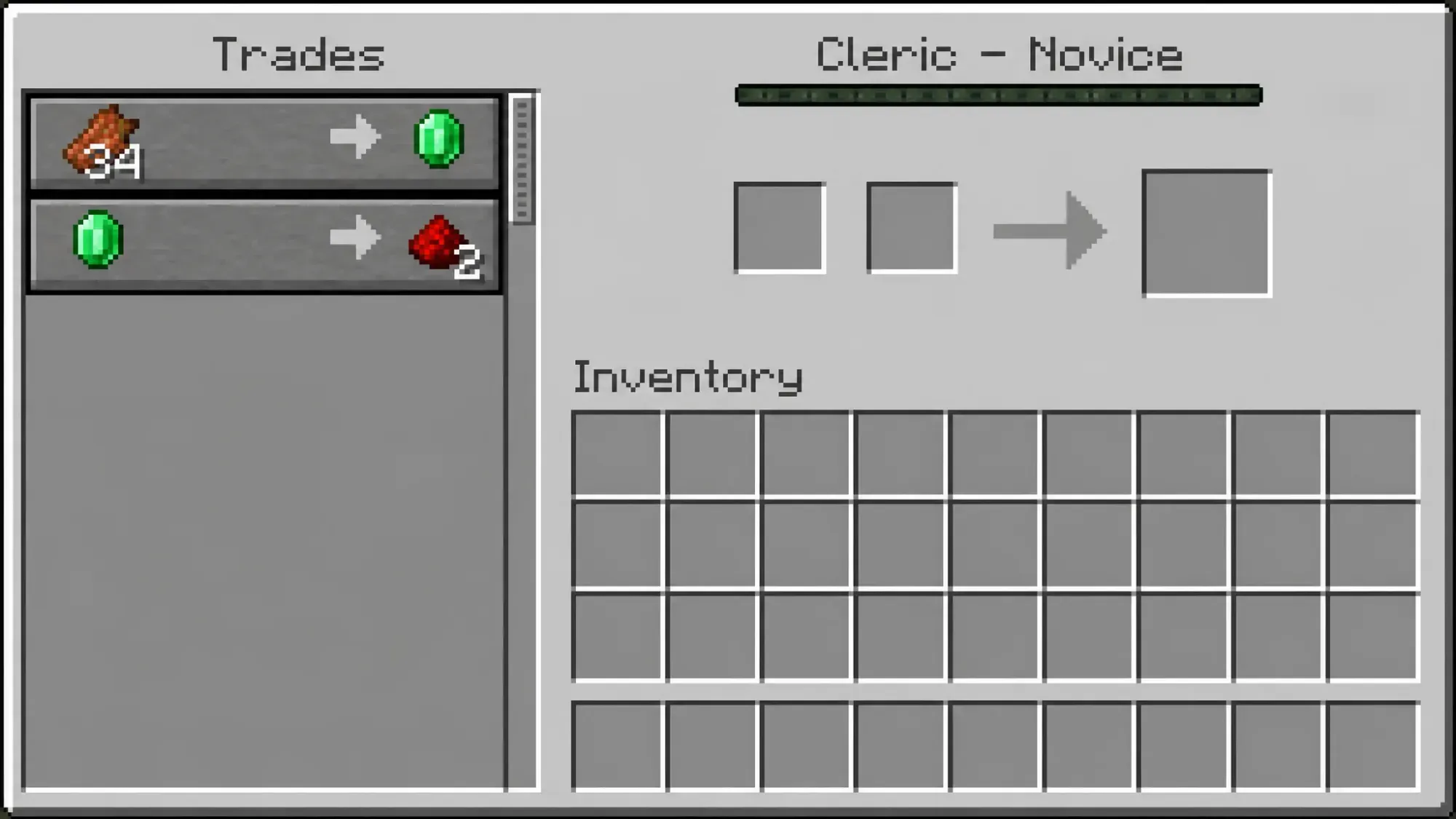
At the Novice level, the same villager sells 2 redstone dust for 1 emerald. That is an unlimited redstone supply without mining, which matters if you build a lot of contraptions and farms.
Bulk building blocks from the Mason
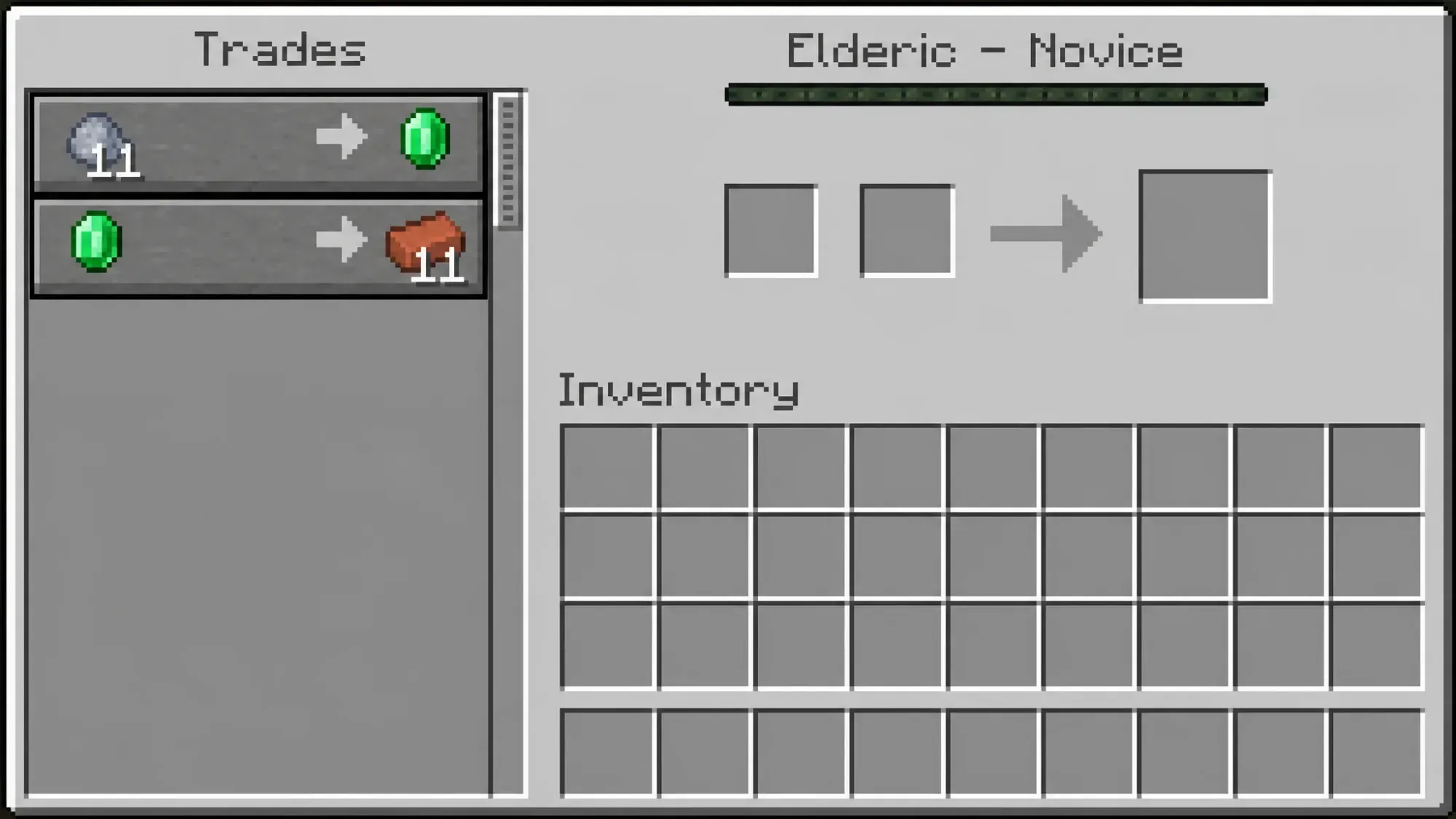
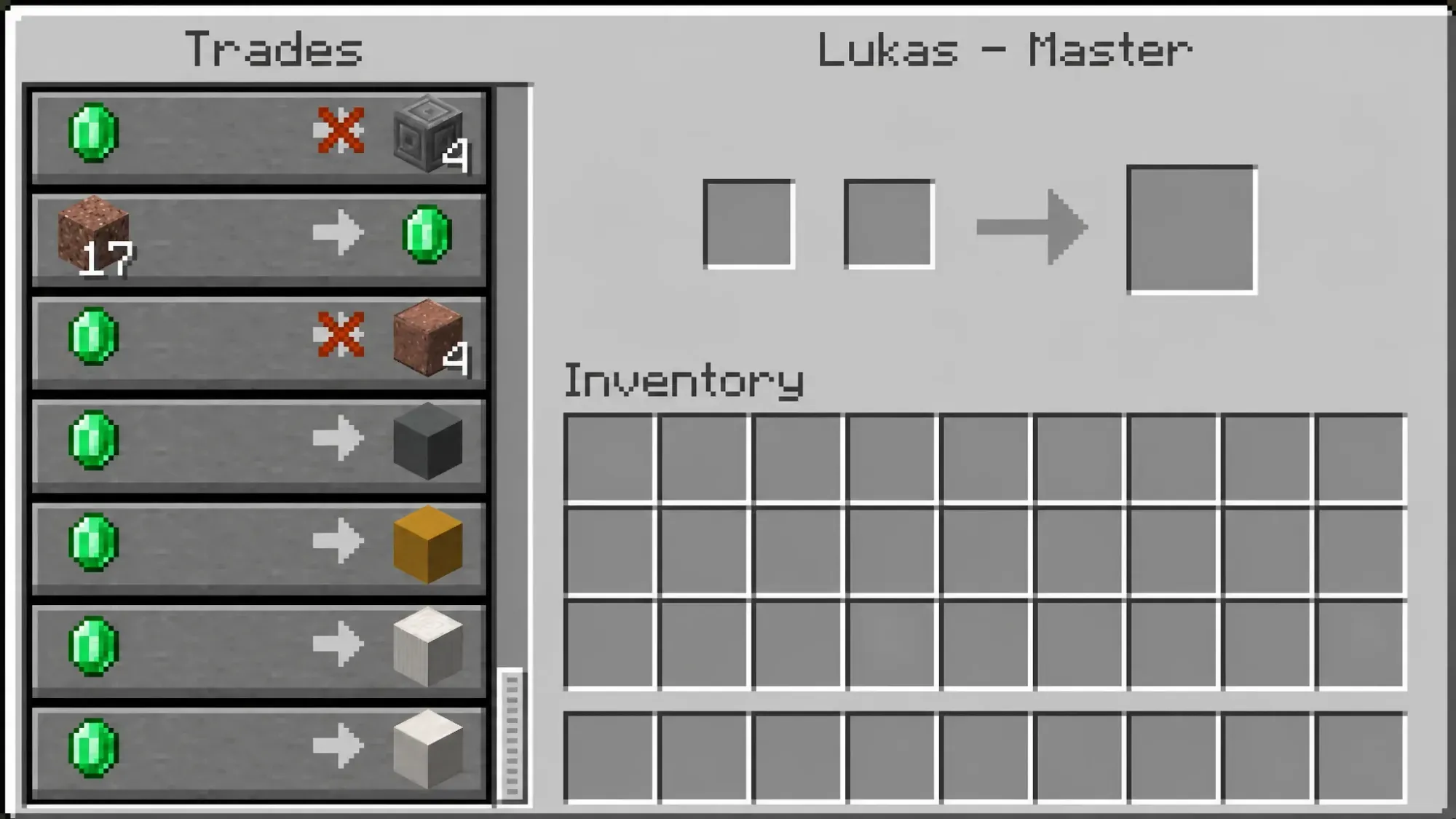
The Mason (Stonecutter) covers two useful buys. A Novice Mason sells 10 bricks for 1 emerald, which is far faster than collecting clay and smelting it. A Master Mason sells one quartz block for 1 emerald, saving you long trips to the Nether to mine quartz ore.
Golden Carrots from the Farmer and a Campfire from the Fisherman
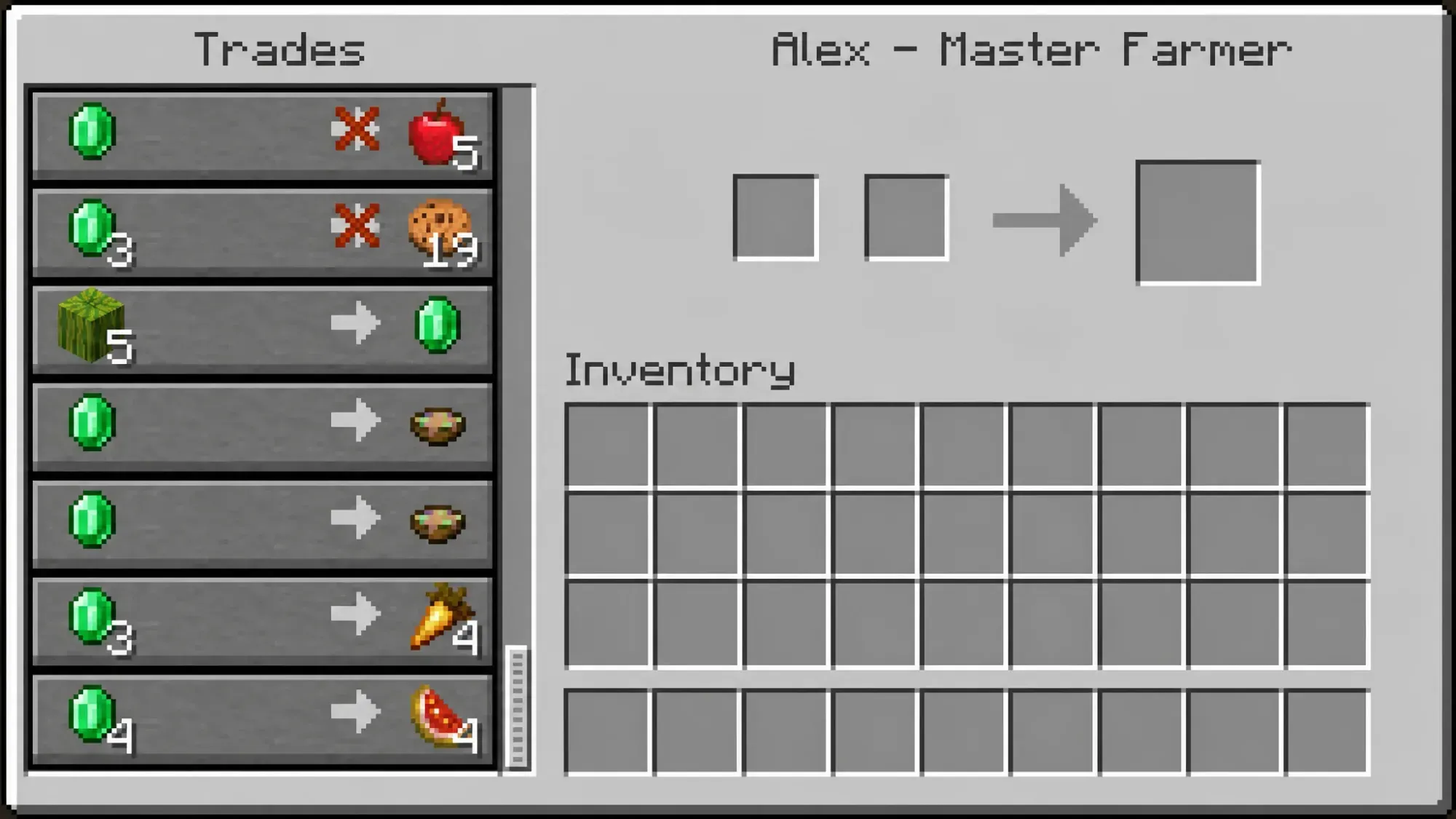
A Master Farmer (Composter) sells 3 golden carrots for 3 emeralds. Golden carrots are the best stackable food for saturation, so they keep your hunger bar full far longer than steak, and they are also a night vision potion ingredient.
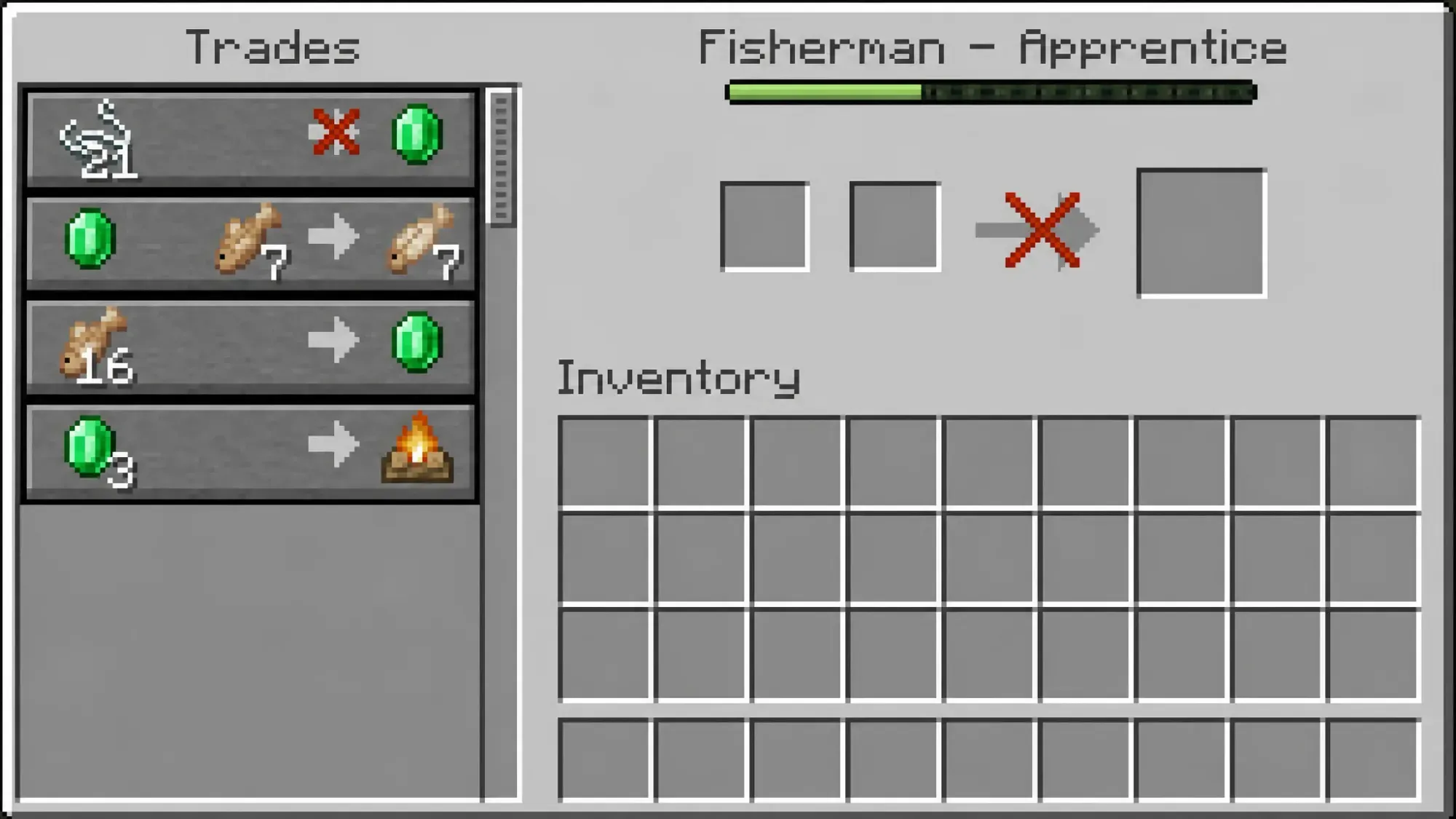
An Apprentice Fisherman (Barrel) sells one campfire for 2 emeralds. Crafting a campfire eats sticks, logs, and coal or charcoal, so buying them in bulk is cheaper for big decoration projects or food cooking spots.
Best villager trades to earn emeralds by selling items
Villagers also buy items from you, and that is the cleanest way to build an emerald stockpile. The best sell trades use items you can mass-produce with simple farms.
| Item sold | Emeralds earned | Villager |
|---|---|---|
| 20 Wheat / 26 Potatoes / 22 Carrots / 15 Beetroot | 1 emerald | Novice Farmer |
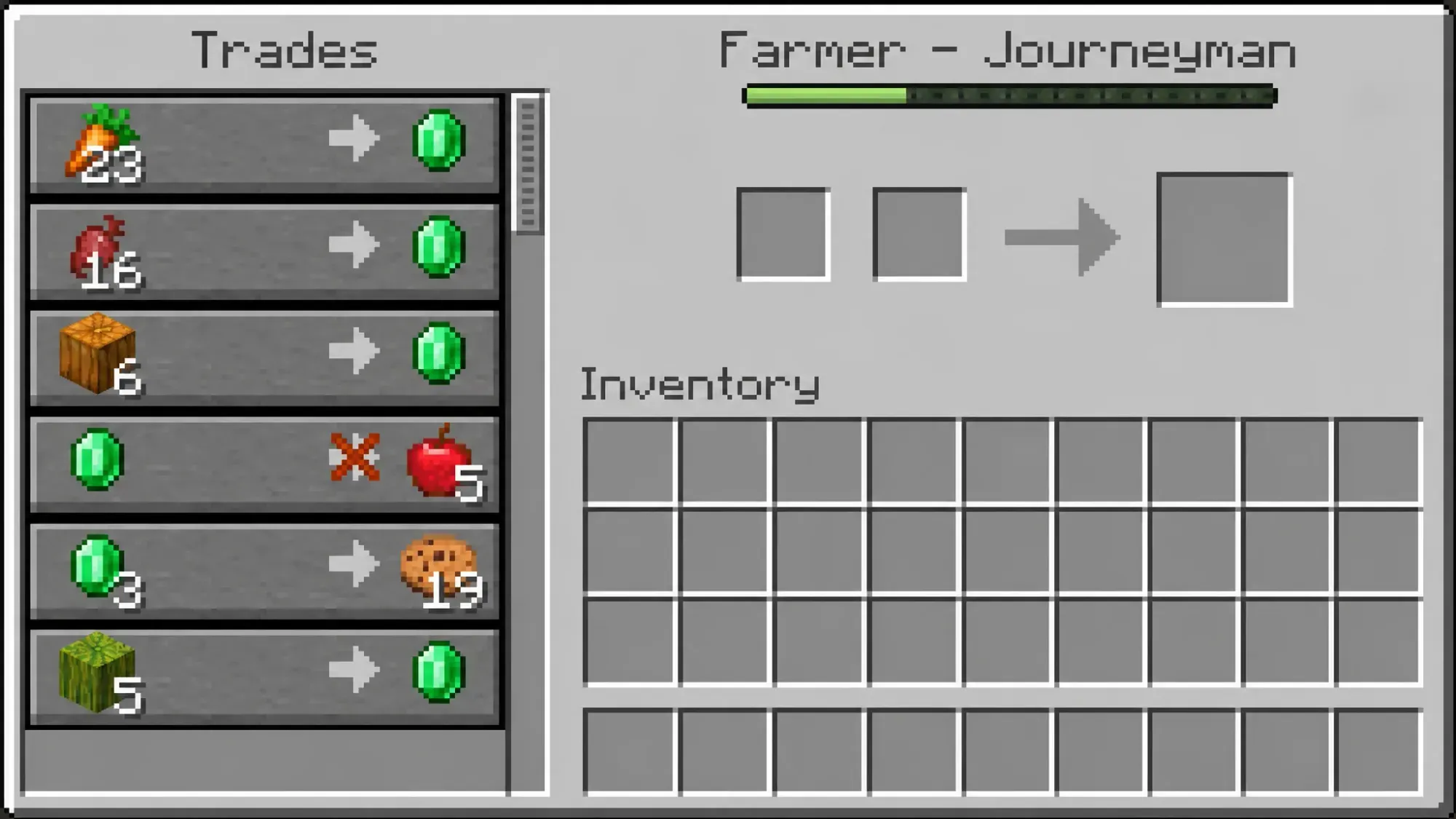
| 6 Pumpkins | 1 emerald | Apprentice Farmer |
| 4 Melons | 1 emerald | Journeyman Farmer |
| 11 Glass Panes | 1 emerald | Apprentice Cartographer |
| 3 Gold Ingots | 1 emerald | Apprentice Cleric |
| 4 Iron Ingots | 1 emerald | Apprentice Armorer / Toolsmith / Weaponsmith |
| 32 Sticks | 1 emerald | Novice Fletcher |
| 20 Stone | 1 emerald | Apprentice Mason |
| 10 Sweet Berries | 1 emerald | Master Butcher |
Sticks to the Fletcher
Selling 32 sticks for 1 emerald to a Novice Fletcher (Fletching Table) is the most iconic emerald farm in the game. Sticks come from planks or fall from decaying leaves, so a tree farm gives you a near-endless supply. Cure the Fletcher a few times and the trade can drop toward 1 stick for 1 emerald.
Crops to the Farmer
Selling crops to Farmer villagers (Composter) is the easiest early-game emerald source. Wheat, potatoes, carrots, and beetroot work at the Novice level, with pumpkins and melons unlocking at higher ranks. Automated crop farms make this hands-off.
Iron, gold, and stone from farms
All three smiths buy 4 iron ingots for 1 emerald, so an iron farm doubles as an emerald engine while also giving you buying options for diamond gear. An Apprentice Cleric buys 3 gold ingots for 1 emerald, useful when a gold farm leaves you with more than you need. An Apprentice Mason buys 20 stone for 1 emerald, which pairs well with a cobblestone generator and smelter.
The glass pane and glass loop
The Apprentice Cartographer (Cartography Table) buys 11 glass panes for 1 emerald. Pushed down by curing to 1 pane for 1 emerald, this combines with a Librarian selling 4 glass for 1 emerald. Buy 8 glass for 2 emeralds, craft 16 glass panes, and sell them back for 16 emeralds, a 14-emerald profit per cycle.
Sweet berries to the Butcher
A Master Butcher (Smoker) buys 10 sweet berries for 1 emerald. Sweet berries grow on bushes in taiga biomes, and foxes can harvest them for you since they are immune to the bush damage, making this farmable in bulk.
How to confirm a trade and push prices lower
You know a trade worked when the items move into your inventory and your experience bar ticks up. Each successful trade gives 3 to 6 experience, plus an extra 5 if the villager levels up, marked by green and pink particles around them.
If an offer shows a red “X” in Java Edition or a red trade slot in Bedrock, the villager is out of stock. Let it reach its job-site block so it can restock, which happens up to twice per day. To lower prices for good, trap and cure a zombie villager. Curing grants a permanent major discount, and repeating it on the same villager can drive expensive trades down toward 1 emerald.
Build around the Librarian and the smiths for gear, lean on Fletchers and Farmers for emeralds, and keep at least one zombie-curing setup ready. That combination keeps diamond equipment, enchantments, and an emerald supply flowing without long mining or exploration runs.