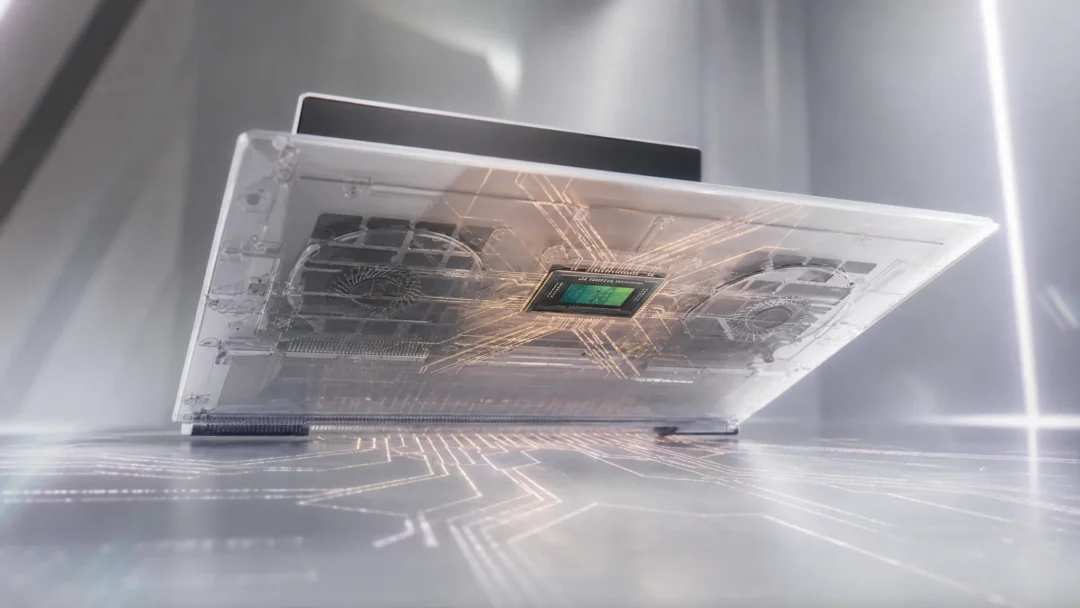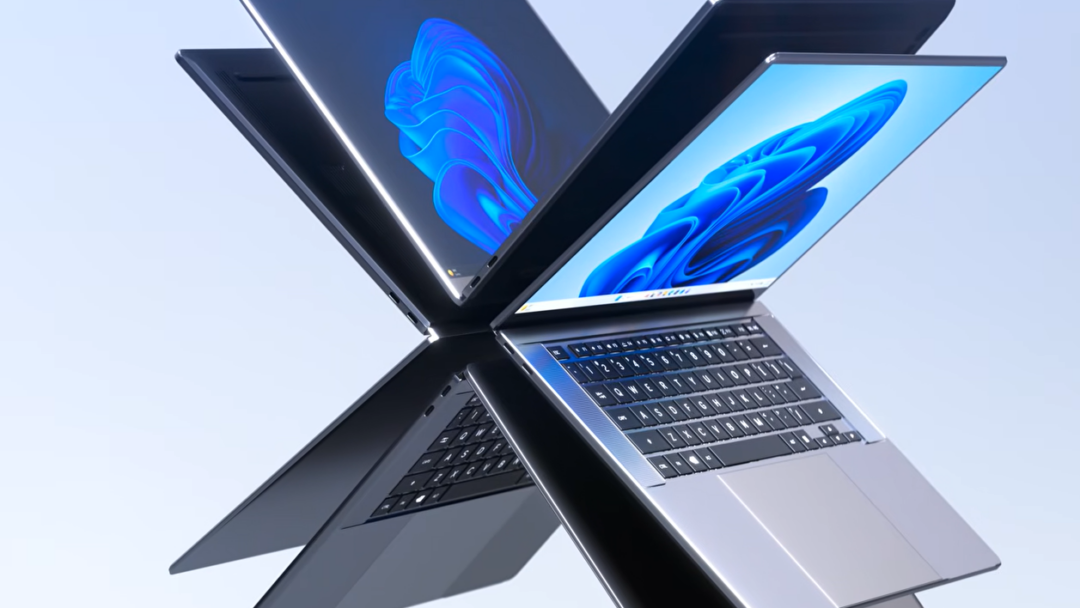
Nvidia has built a single chip meant to replace the way you think about a Windows PC. The RTX Spark is a “superchip” that packs an Nvidia Blackwell RTX GPU and an Arm-based Grace CPU onto one package, delivering up to 1 petaflop of AI compute and as much as 128GB of unified memory. It is aimed at slim laptops with all-day battery life and small, power-efficient desktops, and it is designed first and foremost to run AI agents directly on your machine instead of sending everything to the cloud.
Quick answer: RTX Spark is an Nvidia Grace Blackwell superchip for Windows PCs with 6,144 Blackwell CUDA cores, a 20-core Grace CPU, up to 128GB of unified memory, and up to 1 petaflop of FP4 AI performance. Devices using it ship this fall from ASUS, Dell, HP, Lenovo, Microsoft Surface, and MSI, with Acer and GIGABYTE to follow.
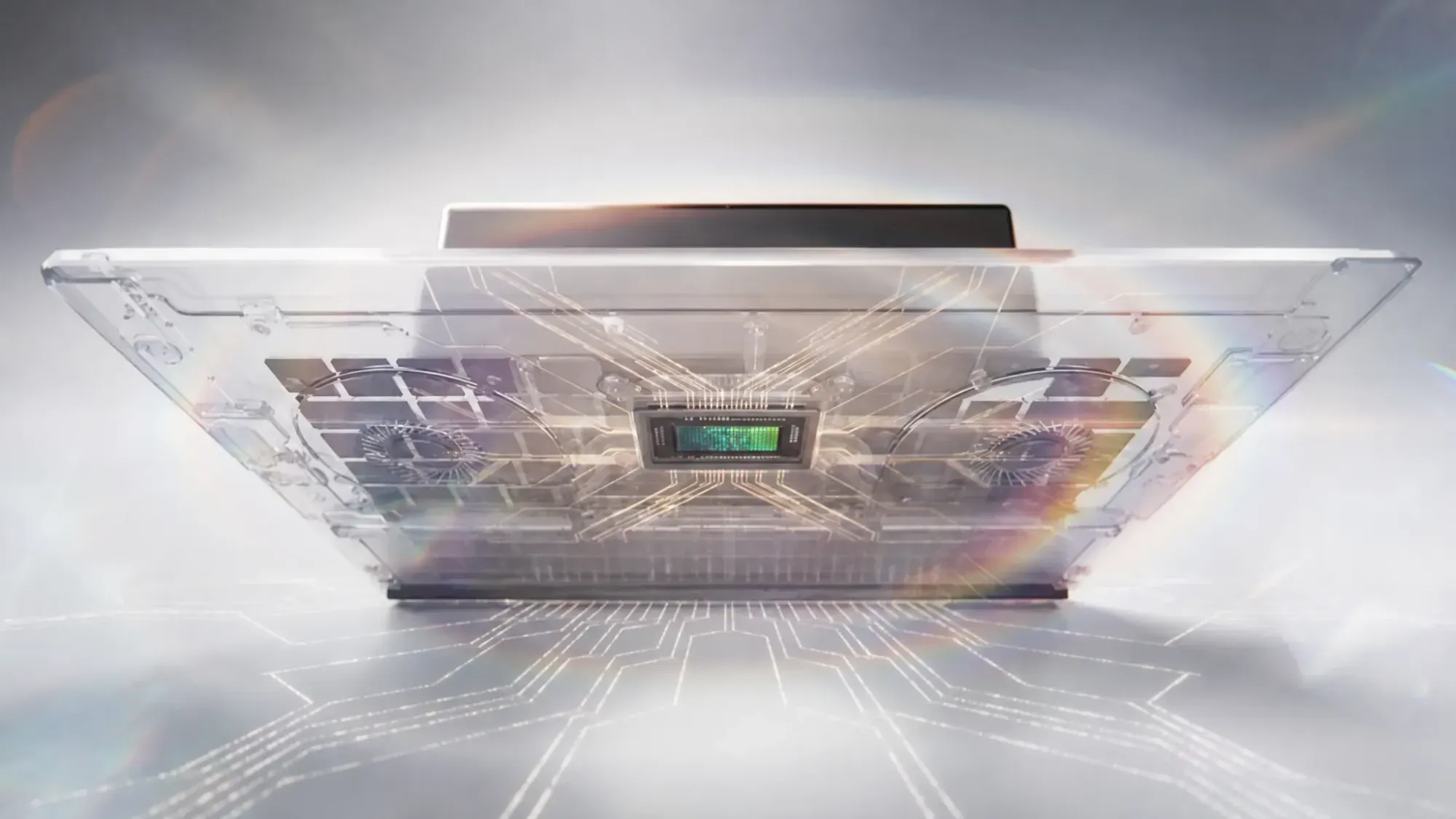
RTX Spark specifications and key numbers
The chip combines a Blackwell RTX GPU with fifth-generation Tensor Cores that support FP4 precision, linked to a 20-core Grace CPU through Nvidia’s NVLink-C2C chip-to-chip interconnect. MediaTek, which builds Arm-based system-on-a-chip designs, worked with Nvidia on the custom CPU, contributing to its power efficiency and connectivity. You can read the full breakdown on the official RTX Spark product page.
| Component | Detail |
|---|---|
| Architecture | Nvidia Grace Blackwell |
| GPU | Blackwell RTX, 6,144 CUDA cores, 5th-gen Tensor Cores (FP4) |
| CPU | 20-core Nvidia Grace, Arm-based (MediaTek co-designed) |
| Interconnect | NVLink-C2C chip-to-chip |
| AI performance | Up to 1 petaflop (FP4) |
| Unified memory | 16GB to 128GB |
| Power draw | Single-digit watts up to 80W |
| NPU | Meets the 40 TOPS requirement for Copilot+ |
Nvidia says the graphics performance is comparable to an RTX 5070 laptop GPU while drawing significantly less power. The chip also includes a fast neural processing unit that clears Microsoft’s 40 TOPS bar for the Copilot+ program.
Built for on-device AI agents
The headline use case is running personal AI agents locally and privately. To make that work, Nvidia and Microsoft are pairing new Windows security primitives with the Nvidia OpenShell runtime. The Windows primitives handle identity, containment, and policy so agents can run natively, while OpenShell lets you define what an agent can and cannot do, route queries to local models based on your privacy settings, and mask personal details before anything is sent to a cloud model.
That combination matters because the limiting factor for personal agents has not been the software so much as the lack of a safe, private way to run them on a main PC. With up to 128GB of unified memory and up to 1 petaflop of compute, RTX Spark can run a 120-billion-parameter language model with up to 1 million tokens of context entirely on the machine. Agent projects such as OpenClaw and Hermes Agent are building Windows apps on top of this security layer.
Microsoft is folding the experience into Windows itself. “Our goal is to deliver unmetered intelligence to every home and every desk with Windows,” said Satya Nadella, chairman and CEO of Microsoft, calling RTX Spark “a real breakthrough towards that vision.” Nvidia CEO Jensen Huang framed the shift more bluntly: “For forty years, you launched apps. Click. Type. With RTX Spark and Microsoft Windows, you ask — and the PC does the work.”
Creating and gaming performance
RTX Spark carries the full Nvidia graphics stack, including CUDA, RTX, DLSS, TensorRT, OptiX, Reflex, and G-SYNC. That translates into concrete workloads creators and gamers can run on a portable machine.
| Workload | What RTX Spark can do |
|---|---|
| 3D rendering | Render 90GB+ scenes with OptiX and DLSS |
| Video editing | Edit 12K 4:2:2 footage with the Blackwell decoder |
| AI video | Generate 4K AI videos |
| Local LLMs | Run 120B-parameter models with up to 1M tokens of context |
| Gaming | AAA titles at 1440p over 100 fps with ray tracing, DLSS, and Reflex |
New RTX features are landing alongside the platform. DLSS 4.5 Ray Reconstruction, using a second-generation transformer model, is coming to Blender 5.3 and dozens of games, and RTX Video with 4x Frame Generation is coming to ComfyUI. Nvidia says more than 100 Windows software makers, including Adobe, Blackmagic Design, Blender, CapCut, ComfyUI, and OTOY, plus game developers such as KRAFTON, NetEase, Remedy Entertainment, Riot Games, and Xbox, are supporting the chip.
Adobe is going a step further by rebuilding Premiere and Photoshop for RTX Spark. Firefly-powered Generative Fill in Photoshop and Generative Extend in Premiere are among the accelerated tools, and Nvidia says editing, coloring, effects, and AI tasks run up to 2x faster.
Windows compatibility on an Arm chip
Because RTX Spark uses an Arm-based CPU, app compatibility is a real concern. Nvidia worked with Microsoft on the design over several years to ensure older Windows software runs through the Prism emulation layer. The company is also working with major anti-cheat providers so popular games run properly, an area that has tripped up earlier Copilot+ machines.
On the system side, Microsoft tuned Windows 11’s workload scheduling for the chip. “The Windows scheduler on RTX Spark will ensure you get the best performance and efficiency out of your CPU,” said Pavan Davuluri, head of Windows and devices.
When and where you can buy RTX Spark devices
RTX Spark hardware comes in two forms, slim laptops with premium displays and all-day battery life, and compact desktop PCs. The first wave ships this fall.
| Availability | Manufacturers |
|---|---|
| This fall | ASUS, Dell, HP, Lenovo, Microsoft Surface, MSI |
| Following later | Acer, GIGABYTE |
Early named devices include the Surface Laptop Ultra and the Dell XPS 16, with more models expected across the major PC makers. The RTX Spark is positioned to compete directly with AMD’s Ryzen AI Max and Qualcomm’s Snapdragon X2, and it marks Nvidia’s return to building its own consumer system-on-a-chip products since its Tegra line.