


Running PlayStation 5 games on a Windows or Linux PC has moved from a theoretical idea to a set of active, open-source projects in a matter of months. Several efforts now boot commercial PS5 titles, and a few reach limited gameplay. None of them is a finished product, and none replaces real hardware, but the pace of progress is unusual for a console still in its current generation.
Quick answer: A handful of PS5 games now reach menus or unstable gameplay on PC through KytyPS5 and SharpEmu, while AnyPS5 is testing a native-execution approach. No project offers a playable, console-equivalent experience, and all require a decrypted game dumped from a console you own.
What actually runs on PC right now
“Playable” in this scene means something narrow. Most demonstrations show boot progress, splash screens, menus, and short bursts of gameplay on high-end PCs, not stable, bug-free play across a library. Frame rates swing widely and crashes are common.
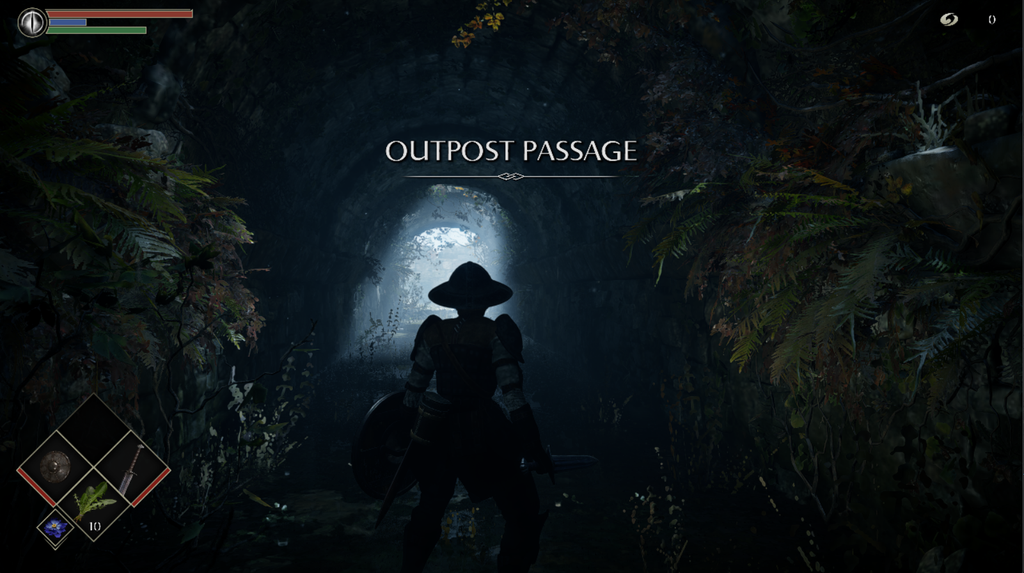
Demon’s Souls Remake is now the key benchmark. In one release, KytyPS5 improved from around 2 fps to approximately 10–18 fps—an eightfold gain. A modified fork later ran at 40–50 fps on an RTX 5090 with a Core i9-14900K, while a clip reached 120 fps through DLSS frame generation over a consistent 30 fps render.
| Title | Project | Best reported result |
|---|---|---|
| Demon’s Souls Remake | KytyPS5 / fork | 40–50 fps on high-end hardware (modified build) |
| Astro Bot | KytyPS5 | Boots into gameplay, ~11 fps, heavy rendering issues |
| Grand Theft Auto V (PS5) | KytyPS5 | Loading screen, main menu, settings navigation |
| Marvel’s Wolverine | KytyPS5 | Main menu in slow motion, around 2 fps |
| Silent Hill 2 Remake | KytyPlus (fork) | In-game render on an integrated Radeon GPU |
| Quake II Remastered | KytyPS5 | Reported fully playable |
| Ghost of Yotei | SharpEmu | Reaches splash screen before crashing |
| Dreaming Sarah | AnyPS5 / SharpEmu | 60 fps natively on a GTX 1050 Ti (AnyPS5) |
KytyPS5 also reaches in-game status with more titles, among them Astro’s Playroom, as well as Crash Bandicoot 4, and Hitman: World of Assassination; Uncharted 4, plus Spider-Man: Miles Morales; Silent Hill f, and Tekken 8. Some of the most notable results—such as the top Demon’s Souls performance and the Silent Hill 2 render on an iGPU—were achieved with forked or internal builds, not the mainline release.
A large share of these results used GPUs in the RTX 5090 class. Development and testing for KytyPS5 have focused mostly on NVIDIA hardware; players with AMD or Intel GPUs have reported further visual glitches.

The emulator projects
Three traditional emulators dominate the scene. Each recreates the PS5’s internal environment in software and translates instructions as a game runs. All are open source under GPL-2.0 with full code on GitHub, which matters for the legal picture later.
KytyPS5
Built in C++ and currently limited to Windows, with Linux support planned, KytyPS5 currently handles commercial games better than the other two. It can start games made with Unreal Engine 4 or 5, Unity, and proprietary engines. New test releases appear frequently in its repository, sometimes several times in one day. The project name comes from a 2021 research effort that had been abandoned; this version was rebuilt from scratch.
SharpEmu
SharpEmu, an unusual C# project, became public in mid-July and quickly attracted substantial attention: within days it had 3,818 GitHub stars and 309 forks. Its graphics backend uses Vulkan with a SPIR-V shader pipeline, and its design centers on the PS5’s Zen 2 processor. Early versions reached the splash screens of newer exclusives, but KytyPS5 has since made greater in-game progress.
RPCSX
RPCSX is the earliest project here: it began in 2023 as a branch of the established PS3 emulator RPCS3 and aims to support both PS4 and PS5. On PS5, it can start the system shell and safe mode, with audio and controller input functioning. Launching full commercial games remains under development.

AnyPS5 and the native-execution approach
AnyPS5 takes a different route. Instead of emulating the console, it converts a PS5 game’s executable into a standalone Windows PE or Linux ELF binary that the PC’s operating system launches directly, closer to how Proton lets Windows games run on Linux. The tool relinks the game against reimplemented PS5 system libraries, and shaders in the console’s native format are recompiled to SPIR-V so a PC’s own GPU driver can render them through Vulkan.
This is possible because the PS5 uses an AMD x86-64 Zen 2 CPU, the same instruction set family that powers most PCs sold since 2020. That compatibility removes the need to translate CPU instructions in real time, which is the hardest part of emulating older, architecturally different consoles.
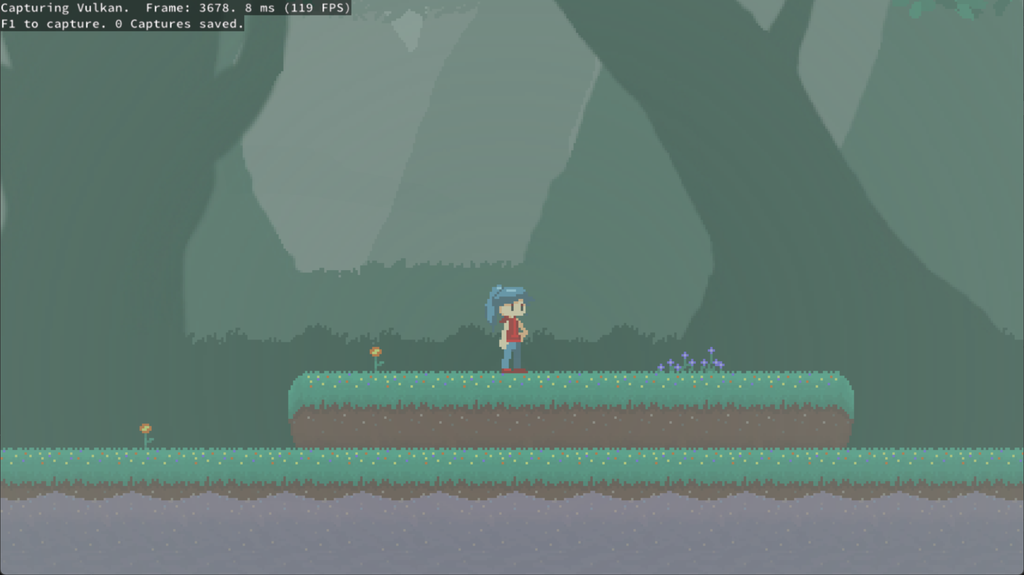
AnyPS5’s public progress remains limited. In demonstrations, it has reached a commercial game’s logo and begun displaying a main menu; one example included audio, but the emulator crashed at about frame 168. Dreaming Sarah, a 2D platformer, is the sole title shown working all the way through: it maintained 60 fps on a GTX 1050 Ti and i5-7500, both older than PS5 hardware. No public build or verified playable-game list is available, and larger titles have no published frame-rate benchmark.
Why the scene surged in 2026
Two shifts in Sony’s policy lined up with the wave of public development. The timing is hard to miss, with most public work beginning after each announcement.
- Sony moved to scale back PC ports of its big single-player games, reframing the access debate for preservationists and PC players.
- Sony confirmed it will stop producing physical discs for new PlayStation games starting in 2028, fueling interest in alternative ways to keep libraries playable.
- SharpEmu went public in July, and KytyPS5’s first release arrived that same month, about two weeks after the disc announcement.
The hardest problems are not raw CPU compatibility. They are the PS5’s tightly integrated GPU command translation, its purpose-built storage and scheduling pipeline, and the proprietary system software that games assume is present. Each of those interfaces has to be reimplemented through observation and clean-room work.
What you need, and what you cannot do
Every project runs into the same requirement. The software needs a decrypted PS5 executable, and obtaining one requires access to a console’s internal decryption process, typically through a jailbroken or modified PS5. None of these projects distributes copyrighted game files, and they assume you already own the content you dump.
In the United States, an emulator may be created and distributed legally if it avoids infringing copyrighted code, as the Sony v. Connectix and Sony v. Bleem cases established. The DMCA separately limits circumvention of access controls. In 2024, Library of Congress exemptions covered preservation work by qualified institutions, but they did not give consumers a general permission to decrypt PS5 firmware or games.
Treat any site claiming to offer a full-speed PS5 emulator with the entire game library, or asking you to download ROMs or firmware, as almost certainly fraudulent. Legitimate projects make their source and issue trackers available on GitHub instead of providing instant game downloads.

How to judge real progress from here
Short clips and in-game screenshots will keep spreading across genres, but a few concrete milestones separate genuine advancement from hype.
- A public, reproducible end-to-end playthrough of a commercial PS5 game from a mainstream build, not a one-off fork.
- Stable GPU output with fewer crashes at first render and correct synchronization across engines like Unreal and Unity.
- A formal AnyPS5 release demonstrating a full native run or a repeatable toolchain for at least one title.
It’s hard to forecast the pace of progress. ShadPS4, the PS4 compatibility layer that served as inspiration for AnyPS5, is still at an early stage years after it first appeared. Progress so far has changed views on how quickly researchers can examine a current-generation console in public, yet playing PS5 games on a PC with console-level performance remains far off.