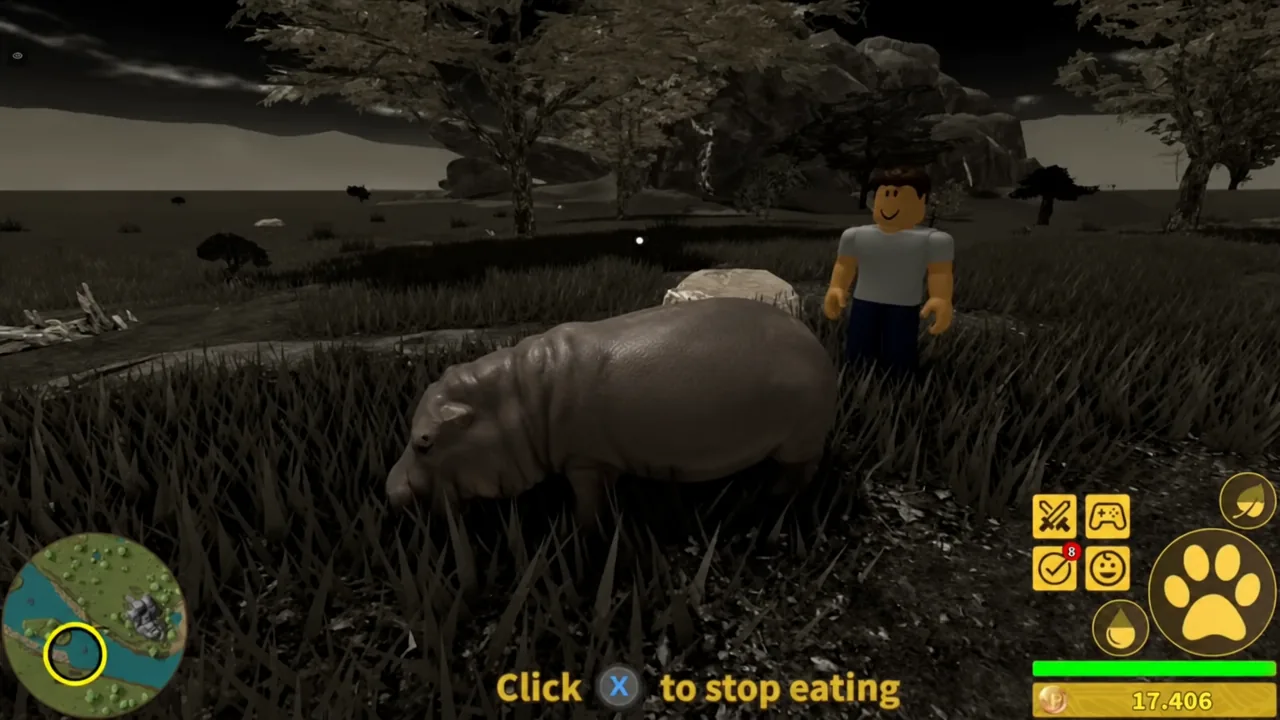
Kosing is the Savannah Life community’s shorthand for “Killing On Sight” — a playstyle where you attack any player animal you run into, rather than roleplaying or grazing peacefully. The three heaviest herbivores in the game, the Hippopotamus, the Bush Elephant and the White Rhinoceros, are the ones most often built for it, because their health pools and attack damage let them win fights that smaller animals cannot survive. Each one, though, only dominates in a specific type of terrain.
Quick answer: Fight as a hippo in deep water, as a rhino on open plains where you can sprint targets down, and as an elephant wherever you can land hits without being surrounded — then restore any growth you lose by paying coins in the Buy Back Growth window.
Hippo, elephant and rhino stats compared
Every stat in Savannah Life scales with growth, so the numbers you see on a 90% animal are not the numbers you see at full adult size. The figures below are the ones displayed on near-max characters, which is the state most players fight in.
| Animal | Health | Attack damage | Top speed | Buy back cost |
|---|---|---|---|---|
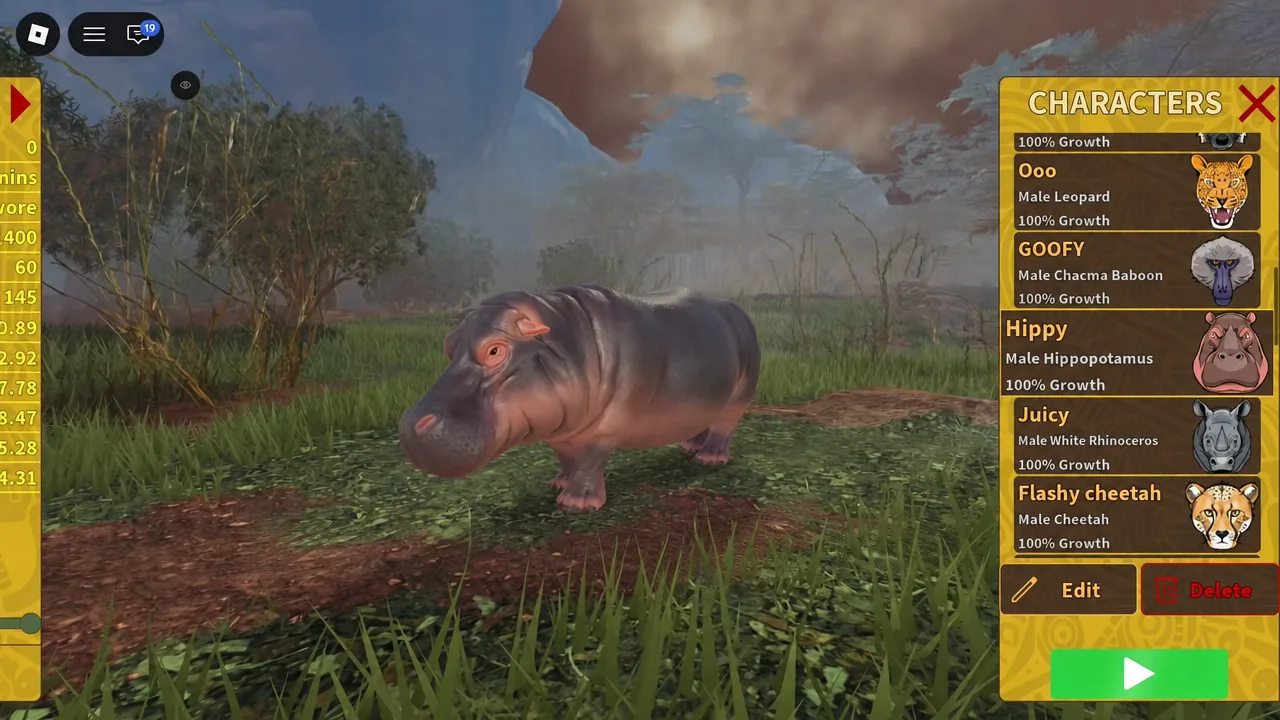
| Hippopotamus (93% growth) | 1228 | 53 | 17.22 swim | 575 coins |
| Bush Elephant (100% growth) | 1688 | 64 | 19.28 sprint | 750 coins |
| White Rhinoceros (90% growth) | 1013 | 47 | 23.41 sprint | 500 coins |
The elephant carries the largest health pool of the three but moves slowly, so it wins by absorbing damage and trampling anything that stays close. The rhino has the lowest health of the group yet the fastest sprint, which lets it run down zebras, wild dogs and other light animals that would escape an elephant. The hippo sits in between on land and outclasses both in water.
A fully grown White Rhinoceros keeps climbing past those figures. At 100% growth it reaches 1500 health, 70 attack damage and a running speed of 33.06, but its swimming speed drops to 5.83 — the reason a full-adult rhino should never chase a fight into deep water. The rhino costs 50,000 coins to unlock and takes 40 minutes to grow from baby to adult.
Where each animal wins fights
Terrain decides most of these matchups before the first hit lands. Water is the hippo’s territory: with a swim speed of 17.22 it can chase crocodiles through Hippo Swamp, break off from land predators that cannot follow it, and hold a river line that lions drown in. Big cats that swim after a hippo run out of stamina and die without the hippo needing to win a straight fight.
Open ground is where the rhino operates. Its sprint outruns most prey animals, and it can hold pressure on smaller predators across areas like Sabie Delta and the plains around Pride Rock. The elephant is the opposite — slow enough that anything nimble can disengage, but heavy enough that lions, leopards and zebras caught inside its swing lose the exchange outright.
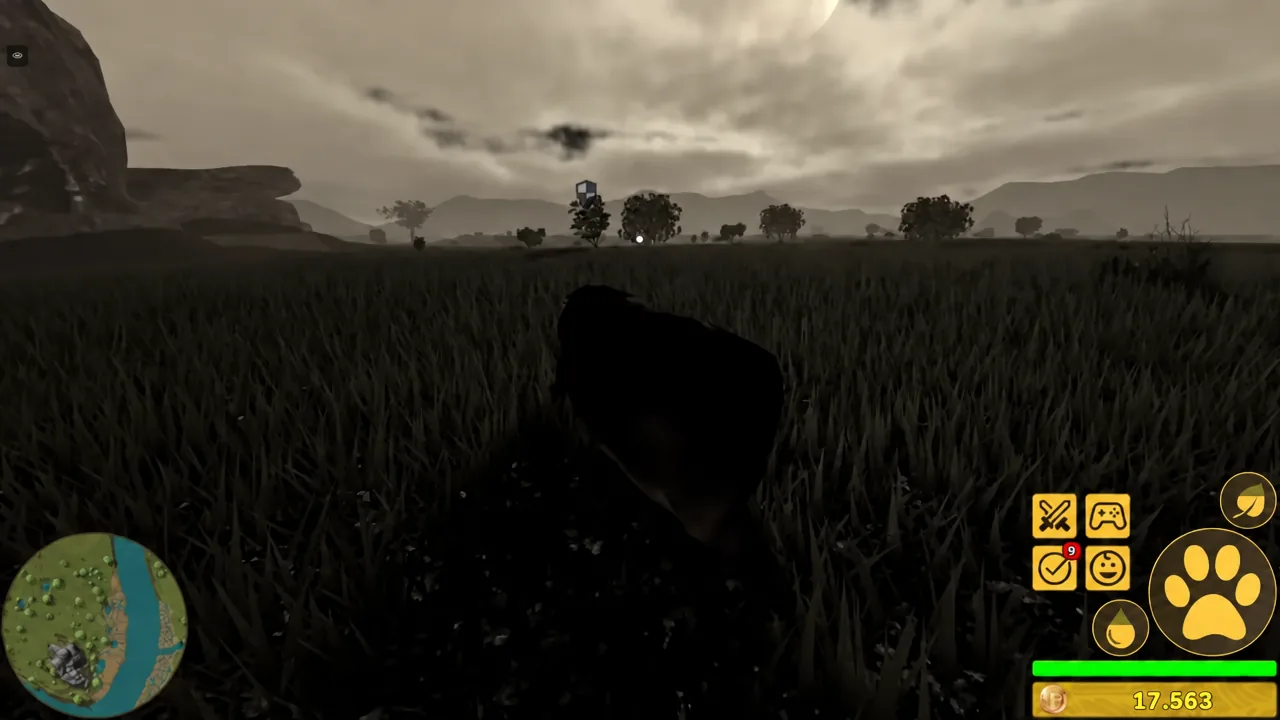
Pride Rock is the one place where terrain works against all three. The rock structure funnels players into narrow ledges and crevices, so a heavy animal that climbs up can be swarmed with no room to reposition. Group brawls there routinely pull in buffaloes, lions, elephants and rhinos at once.
Using the rhino Charge ability (F)
The rhino is the only one of the three with a dedicated movement attack. Pressing F triggers Charge, which tramples and ragdolls whatever it connects with — including a hippo. A ragdolled opponent cannot act, so the reliable follow-up is to circle around, stop next to the body and land normal hits while it is down.
If a predator latches on, switch from trotting to walking. Walking gives tighter turning control, which is what you need to shake the attacker loose. The moment it is pushed off, it is briefly stunned — turn and Charge immediately to knock it over again before it recovers.
Buying back growth after a defeat
Dying knocks your animal back down the growth scale, and waiting it out means growing again in real time. Instead, open the character menu after respawning and use Buy Back Growth to spend coins and jump straight back to 100%.
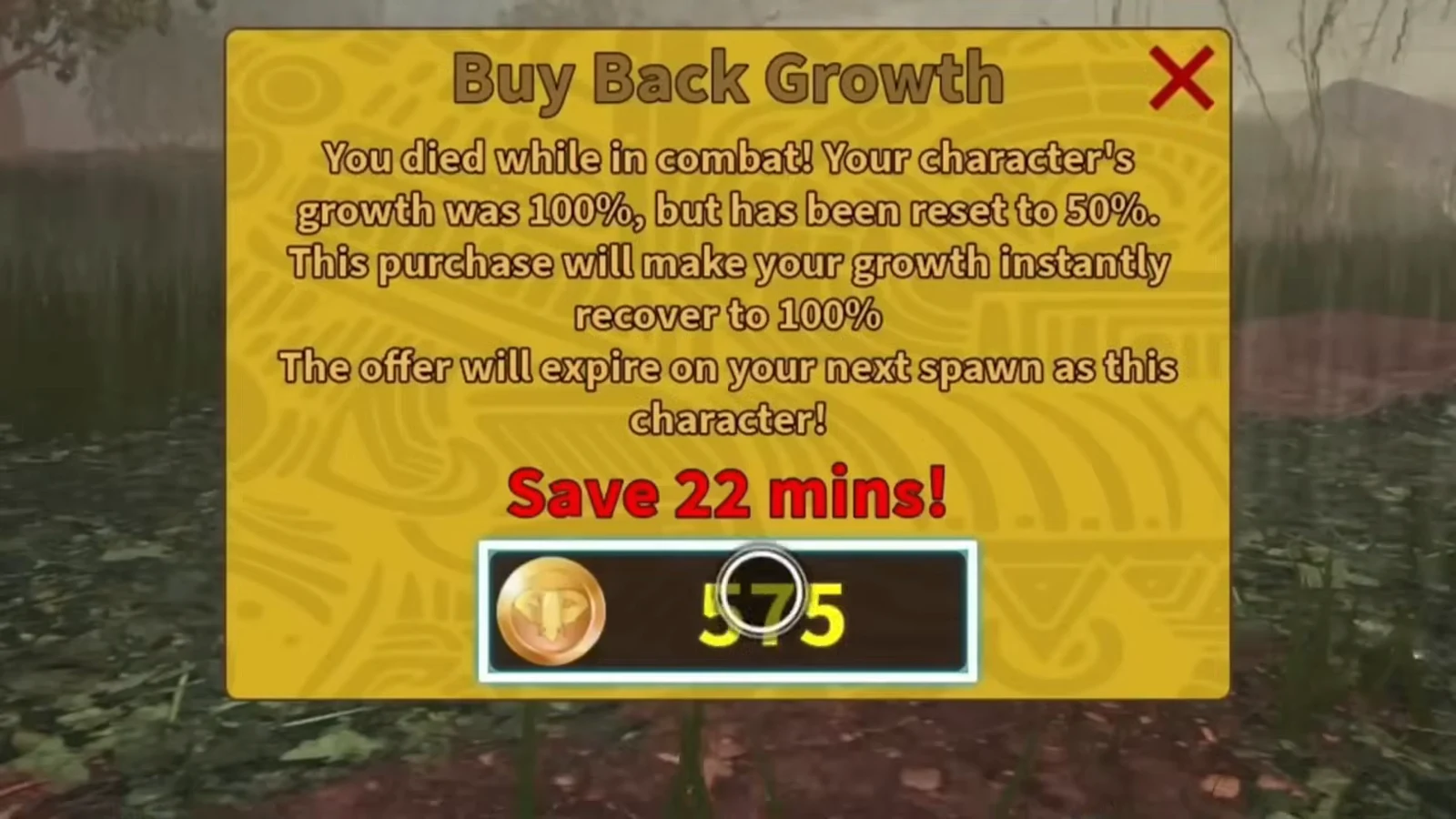
The price scales with how much growth you lost, which is why the same three animals show different totals from fight to fight — 575 coins for a hippo, 750 for an elephant and 500 for a rhino are all typical single-death costs. Coins accumulate faster if you like the experience and join the developer group, which grants 500 coins plus a 10% coin multiplier, and Roblox subscribers earn 15% more on top of that. The game is available to play on Roblox.
Why big herbivores still lose fights
Health totals do not protect you from numbers. Servers hold up to 65 players, and organised prides of lions and leopards will focus a single large target until it drops — an elephant at full 100% growth can be pulled down in a river by a cooperating pride, and a hippo caught away from water by a pack of elephants and lions has no escape route. Rhinos, with the smallest health pool of the three, fall fastest when swarmed in open areas like Sablerock.
The other repeat cause of death is fighting outside your element. A rhino or elephant that follows prey into deep water gives up its speed advantage entirely, and crocodiles wait in exactly those places. Hippos face the reverse problem: away from the river they lose their swim-speed edge and become a slow, single target.

Treat the three as specialists rather than interchangeable tanks. Pick the animal that matches where you intend to fight, keep an exit toward your own terrain, and budget coins for the buyback so a bad ambush costs you a few hundred coins instead of another 40-minute grow cycle.