Stuck on today’s five-letter word? Below are clean, progressive clues and strategy notes for Wordle #1544, followed by the verified solution.
Quick refresher
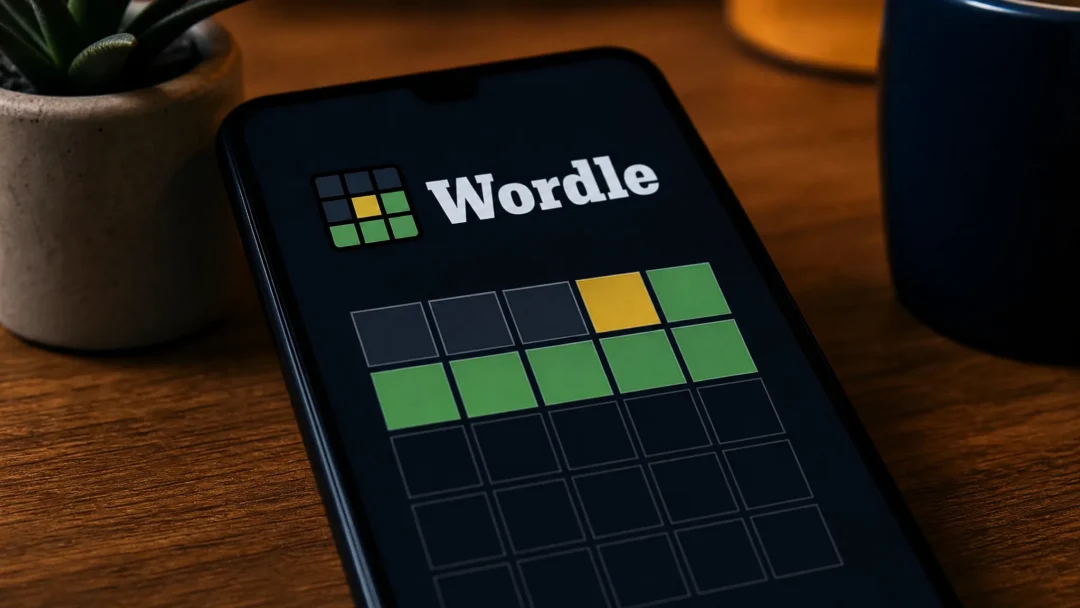
Wordle is the daily five-letter puzzle from The New York Times. You have six guesses, with color feedback after each try: green (right letter, right spot), yellow (right letter, wrong spot), and gray (not in the word). The puzzle refreshes at midnight local time.
Today’s structured hints (no spoilers)
- Meaning: Describes a sulking or sullen look.
- Letters: No repeated letters.
- Pattern: Two vowels appear consecutively.
- Starting point: The word begins with a consonant.
- Extra nudge: Think of how lips look when someone is petulant.
Answer
Verified in the Wordle Review No. 1,544, today’s solution is: POUTY — an adjective for a sullen or sulking demeanor.
How difficult was #1544?
Test-solvers averaged about 3.4 guesses (described as easy). That aligns with the letter set: the consonants are common in everyday words, the two-vowel sequence narrows choices quickly, and an ending in Y is a familiar English pattern.
Strategy notes for this puzzle (and similar ones)
- Target the vowel pair early. A vowel-rich opener such as AUDIO (or any start that covers at least three distinct vowels) increases the chance you’ll reveal the consecutive-vowel pattern fast.
- Check for Y endings efficiently. If you uncover O and U without a clear finish, a probe like RUSTY or DUSTY helps test both T and Y in strong positions without repeating letters.
- Avoid premature duplicates. Because today’s word has no repeated letters, second and third guesses should prioritize new consonants (P/T/Y-level coverage) over reusing greens and yellows in the same slots too soon.
- Leverage cluster logic. Common “OU” clusters steer you toward endings such as -TY, -ND, -CH, or -GH. Eliminating just one of those consonant pairs rapidly collapses the remaining candidate list.
- Lock placement with contrast. After you’ve found the vowel pair, pivot to guesses that shuffle likely consonants through different slots. This maximizes positional information and typically saves a turn compared with cycling near-duplicates.
Example solve path (one of many)
- Guess 1 (broad vowels): AUDIO — Quickly tests A/U/I/O.
- Guess 2 (Y ending probe): RUSTY — Checks U in a different slot and introduces R/S/T/Y.
- Guess 3 (commit to P/T/Y): With U/O indicated and no repeats, try POUTY.
Note: This is an illustrative path; your grid may differ depending on your opener and feedback.
Analyze your solve
For a breakdown of efficiency and alternative lines, use the Wordle Bot. It evaluates guess quality, suggests optimal branches, and compares your path to a solver baseline.
Keep playing
If you want more practice beyond the daily puzzle, the Wordle archive offers a large back catalog for eligible subscribers; it’s available under the archive listing.
Tip: When you detect consecutive vowels and a possible Y ending, prioritize high-frequency consonants (T/N/L/R) in the final two positions first. That tends to minimize total guesses on patterns like today’s.