
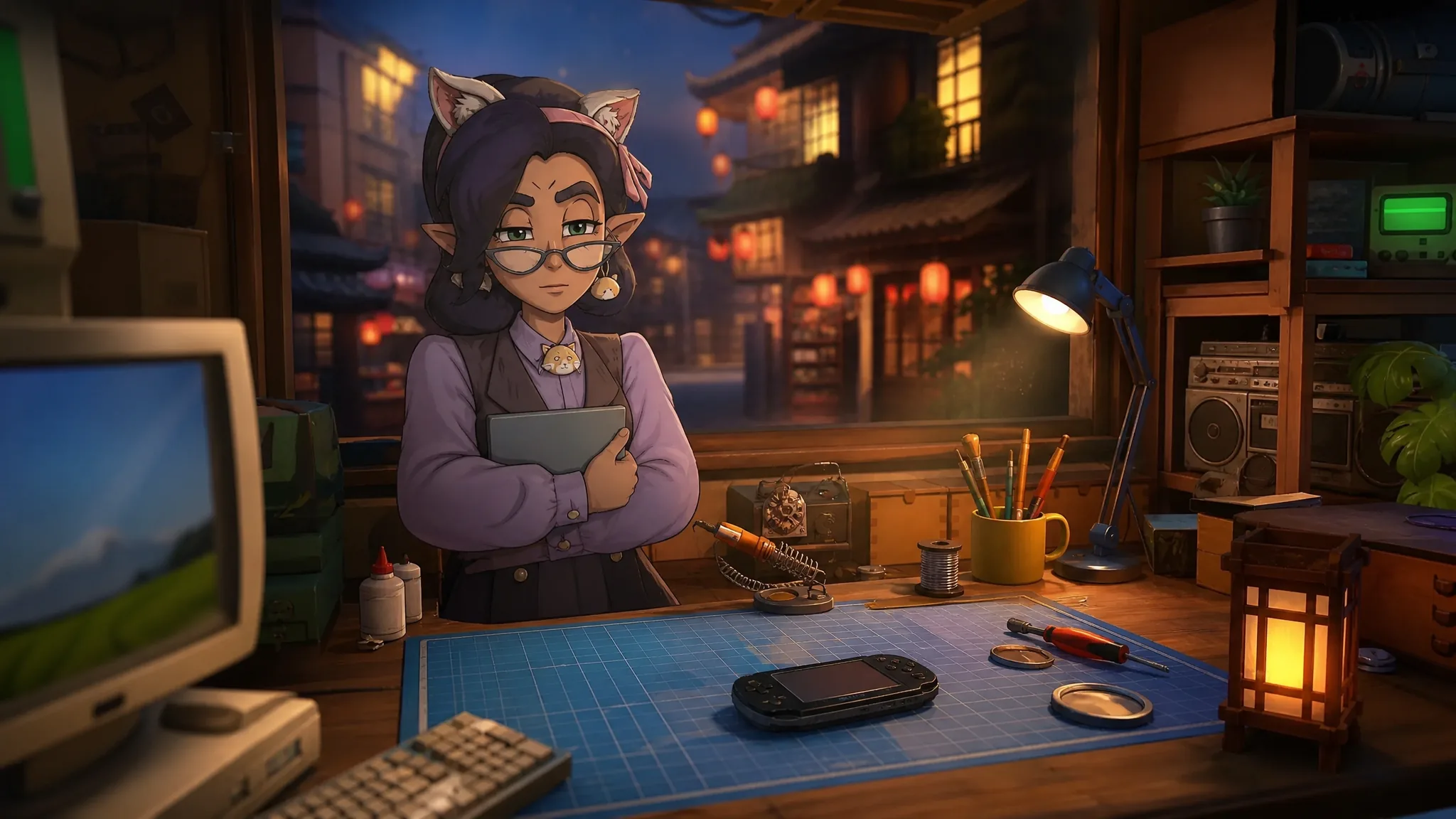
The ending you see in ReStory: Chill Electronics Repairs is not chosen at a single dramatic moment. The game quietly tracks how you handle each customer across your run, then weighs those decisions when the story wraps up. Treat every visitor like a routine repair job and you will drift toward the plainest outcome. Slow down, talk to people, and sometimes take the less profitable option, and you open the better branches.
Quick answer: There are four endings. Resolve the arcs of the former gangster, the lovestruck student, the Eggotchi girl, and landlord Hashimoto positively to reach the good ending; complete those same arcs and their hidden follow-up scenes for the secret ending; ignore or mishandle those customers for the bad ending; and finish the story without meeting any special conditions for the default ending.
How the branching system decides your ending
There is no morality meter, karma bar, or on-screen marker telling you which decisions count. Instead, the game records how each customer’s story arc plays out and checks those results at key story beats. That is why most players miss entire branches on a first run. They rush repairs and skip the conversations that flag the important choices.
To steer toward a specific ending, you need to engage with the personal stories behind the devices, charge customers fairly, and accept that the right call is sometimes the one that earns you less money.
The four endings and how long each takes
| Ending | How it triggers | Approx. length |
|---|---|---|
| Default | Finish the main story without meeting any special conditions. | 8–10 hours |
| Good | Resolve all four key NPC arcs positively. | 10–12 hours |
| Secret | Clear the four positive arcs and their hidden follow-up scenes. | 12–15 hours |
| Bad | Consistently ignore, rush, or mishandle the key customers. | 6–8 hours |
The default ending is what most people reach on a blind first playthrough. It carries a bittersweet but hopeful tone. The good and secret endings are the warmer, more complete conclusions, while the bad ending is short because it skips almost all of the story exploration.
Good ending: resolve all four customer arcs
The good ending requires you to close out four specific character arcs in a positive way. Each one hinges on a single decision point, so missing any one of them drops you back toward the default outcome.
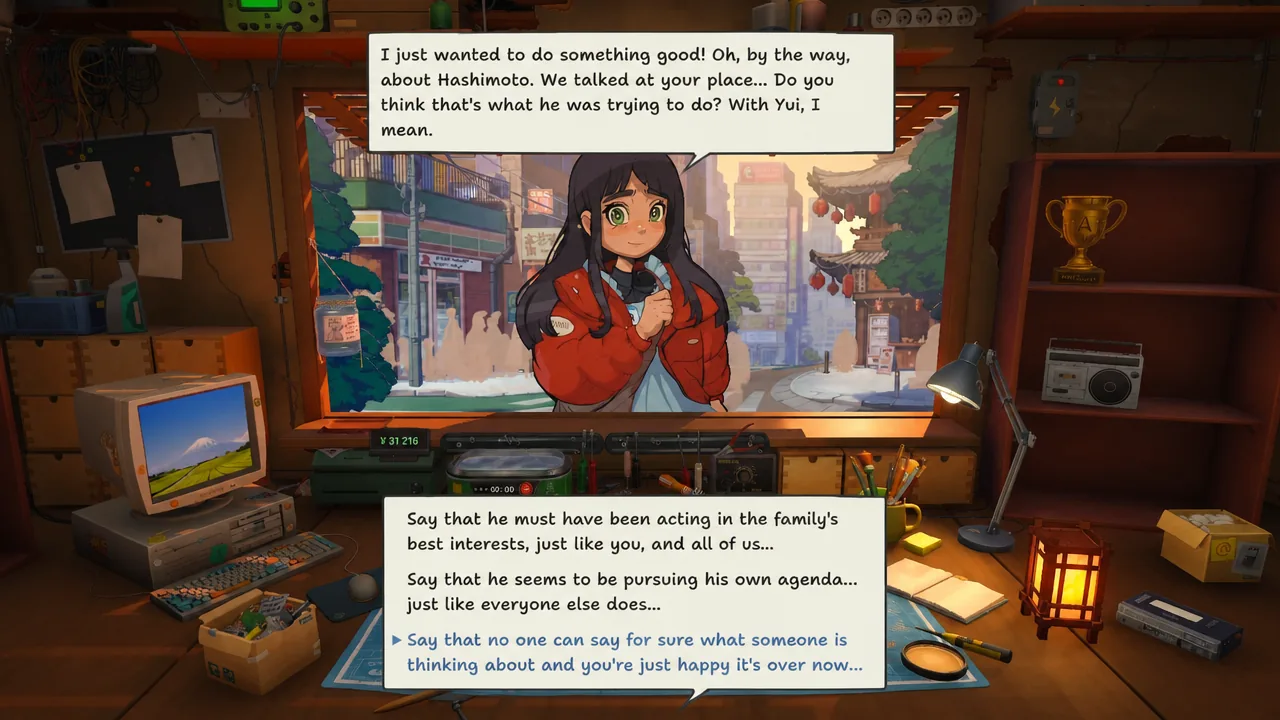
- The former gangster: When he brings in a phone containing disturbing content, stay silent instead of reporting him. Reporting leads to his arrest and blocks his redemption. After staying quiet, keep talking to him on later visits and help him find legitimate work.
- The lovestruck student: When he asks for help writing a confession message, help him rather than brushing him off. Take time to understand his situation instead of writing something generic.
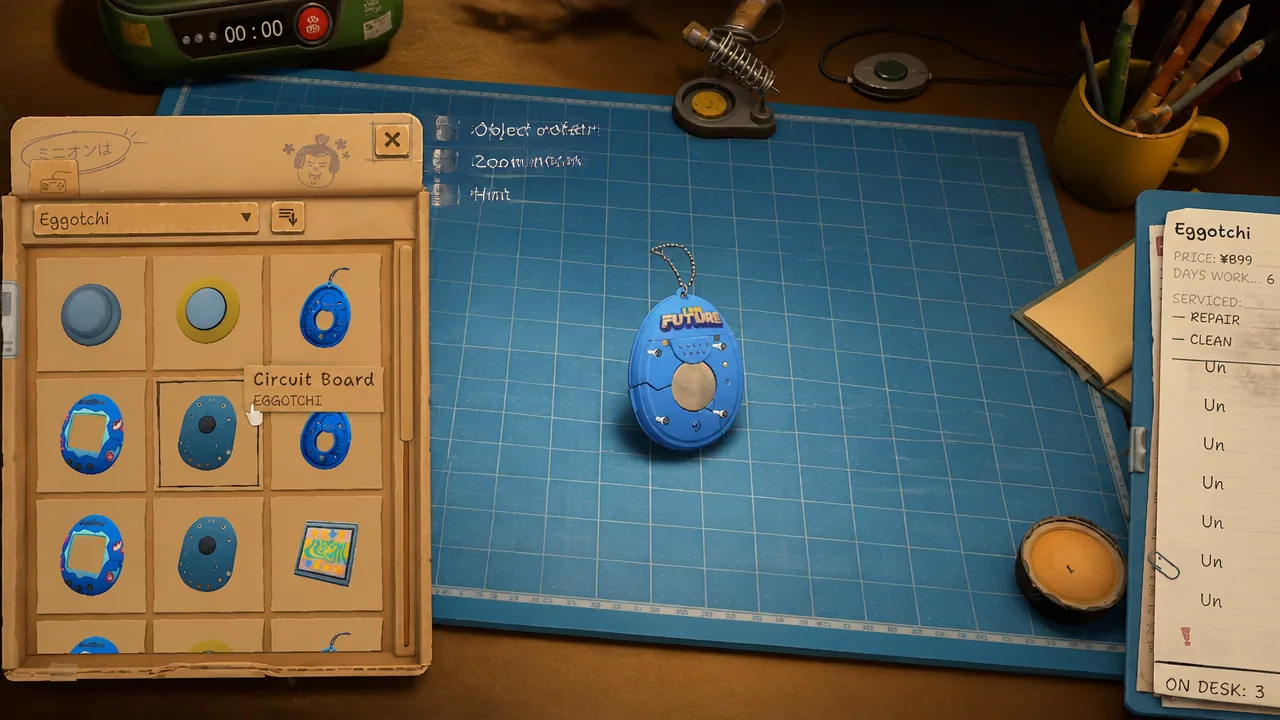
- The Eggotchi girl: The Eggotchi holds hidden data about her family. Do not just fix the screen. Fully restore all the data on the device.
- Landlord Hashimoto: When he brings a device in for repair, do not charge full price. Offer a discount or do the work for free, and ask about the device’s history.
Hit all four and the run closes on a warm, satisfying note.
Secret ending: the hidden follow-up scenes
The secret ending is the hardest to reach. It builds directly on the good ending, so you first need all four positive arcs from above. On top of that, you must uncover an extra hidden scene tied to each of those same characters.
- The gangster’s second chapter: After he changes his life, he returns with requests that test whether you genuinely believe in him. Help him again to unlock his final scene.
- The student’s real motivation: Ask follow-up questions beyond the confession request. Doing so reveals that his situation connects to another customer.
- The Eggotchi girl’s family: Once you fully restore the device data, a family reconciliation scene plays out.
- Hashimoto’s locked drawer: Completing his arc fully opens a locked drawer that reveals information about the shop’s previous owner. This ties directly into the secret ending’s conclusion.
Because it layers these extra beats on top of the good ending, a secret-ending run takes the longest of the four.
Bad ending: what pushes you toward it
The bad ending is the result of repeatedly failing the key customers rather than one single misstep. You fall into it by doing the opposite of the good-ending choices. Reporting the gangster’s phone content, always putting profit ahead of the relationship, rushing repairs without any conversation, and refusing to engage with each customer’s personal story all steer you here. Since there is barely any story exploration on this path, it wraps up faster than any other ending.
How to confirm you are on the right path
Each arc gives you clear signals that a choice registered. The gangster reappearing on later visits, the student opening up about who his message is really for, the Eggotchi’s restored data triggering the family scene, and Hashimoto’s drawer unlocking are all confirmations that a branch is progressing. If a character stops showing up or their story never advances, you likely missed their decision point and are heading toward the default or bad ending instead.
The most common reasons a good or secret ending fails to trigger are treating visits as pure repair jobs, prioritizing money over the discount and free-work choices, and skipping the extra dialogue that reveals each character’s deeper story. Because the branches are decided across the whole playthrough rather than at the finale, a single ignored arc is enough to lock you out of the ending you were aiming for.