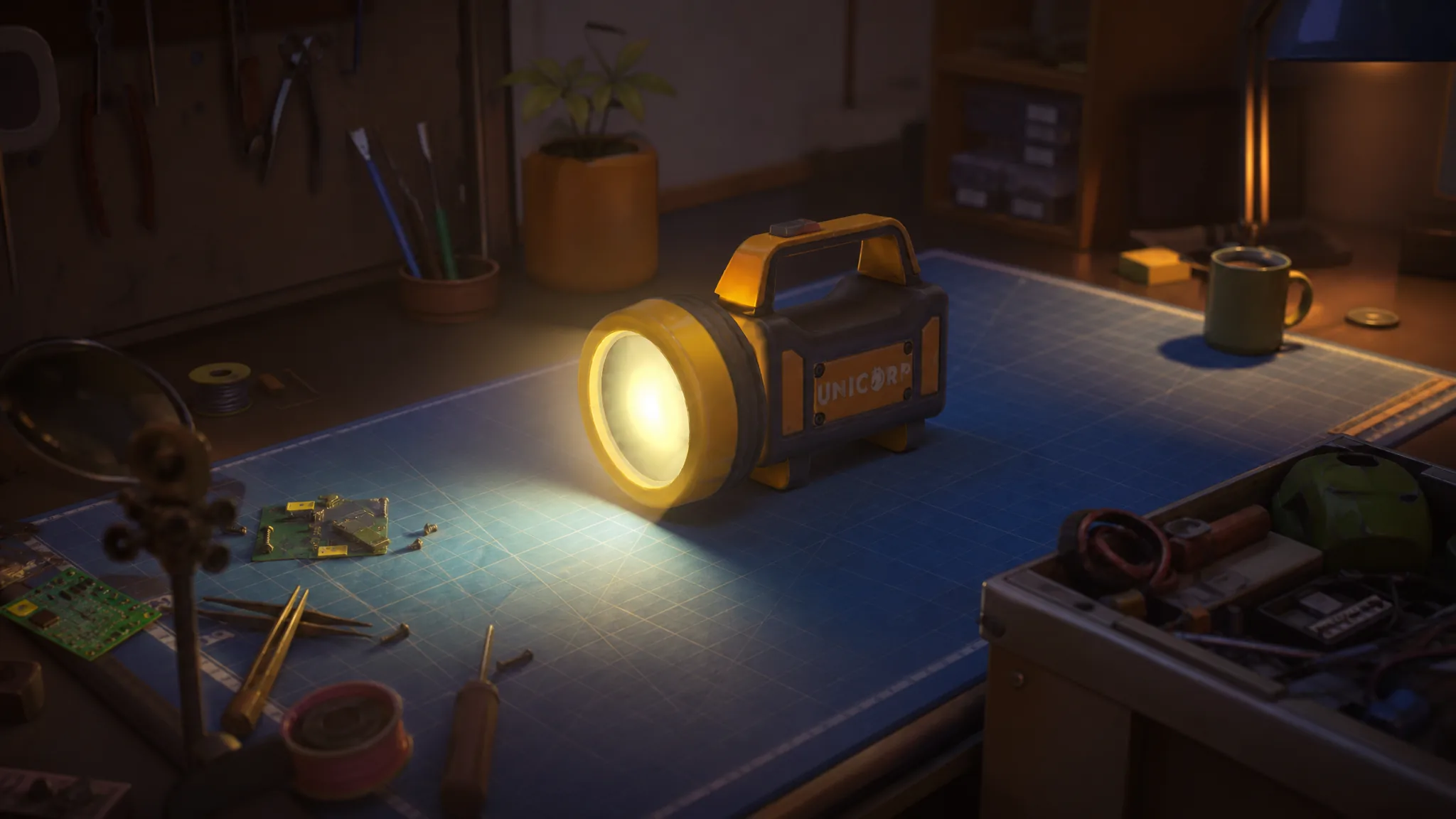
Running a repair shop in mid-2000s Akihabara sounds relaxing, and it is, but ReStory: Chill Electronics Repairs quietly hides a real progression system behind all the screwdriving and dust brushing. Spend your early yen on the wrong things and you stall the story for hours. Spend it right and the money starts compounding on its own.
Quick answer: Buy licenses before tools, since only license-gated repairs move the story forward. Among tools, get the tip jar and the final screwdriver upgrade first, upgrade the cleaning brush next, and skip the compressed air can entirely. Check the marketplace every day for spare part boxes and clear online orders before their 3-day window closes.
The repair loop every device follows
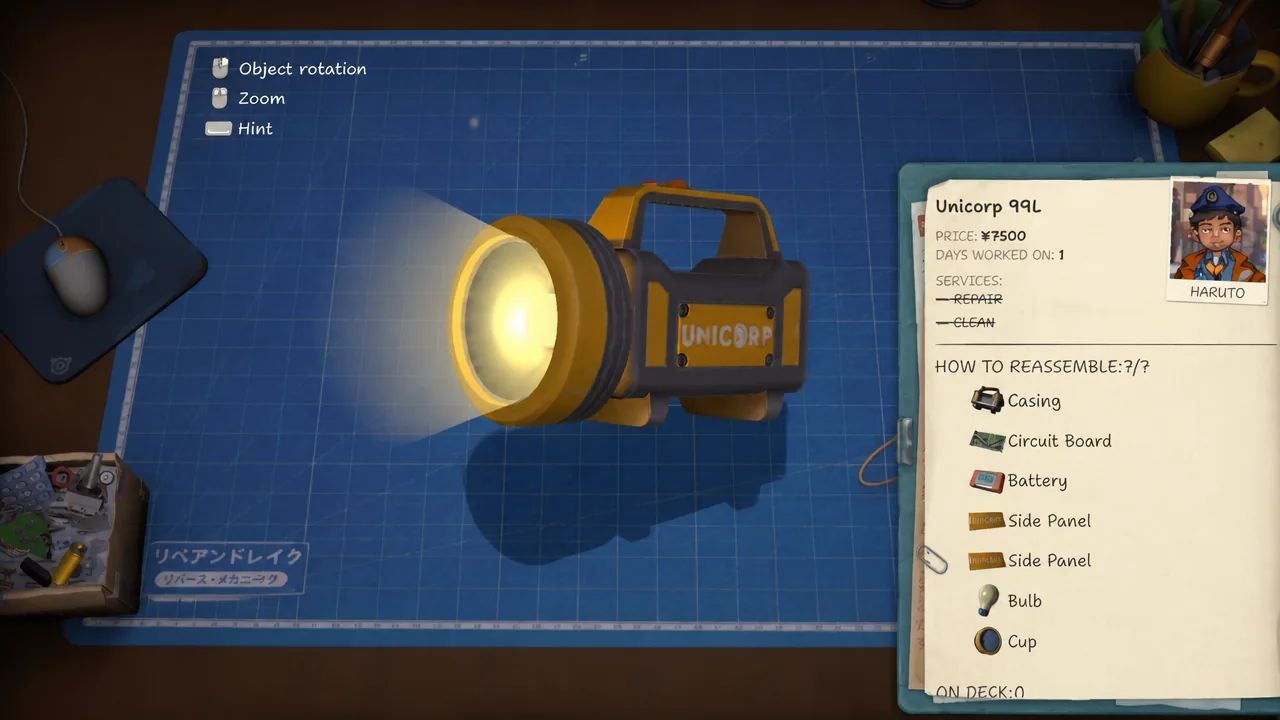
No matter what lands on your bench, whether it is a flip phone, a handheld console, or an officially licensed Atari machine, every job runs through the same sequence. Learn it once and you can clear repairs fast.
- Unscrew the outer casing to open the device.
- Remove components one layer at a time.
- Inspect each part. Dirty parts get cleaned, broken parts get replaced.
- Keep dirty parts on one side of the bench and clean ones on the other so nothing gets missed.
- Brush every dirty component before reassembly.
- Source replacement parts for anything broken.
- Reassemble in the reverse order of disassembly.
- Complete and send the job.
The notepad on the right tracks all of it for you, which parts are dirty, broken, or missing, and the exact order components came out. When you hit a device with twenty-plus pieces and forget where a bracket goes, trust the notepad over your memory.
Four ways to make yen without grinding
Money comes from four streams, and none of them require busywork. They all happen naturally as you work through each day. Two of them are passive once you unlock them, which is exactly why you want those unlocks early.
| Income source | How it pays |
|---|---|
| Walk-in repairs | Your primary income. Complete jobs fast and send them back. Missing deadlines lowers your reputation and customer ratings. |
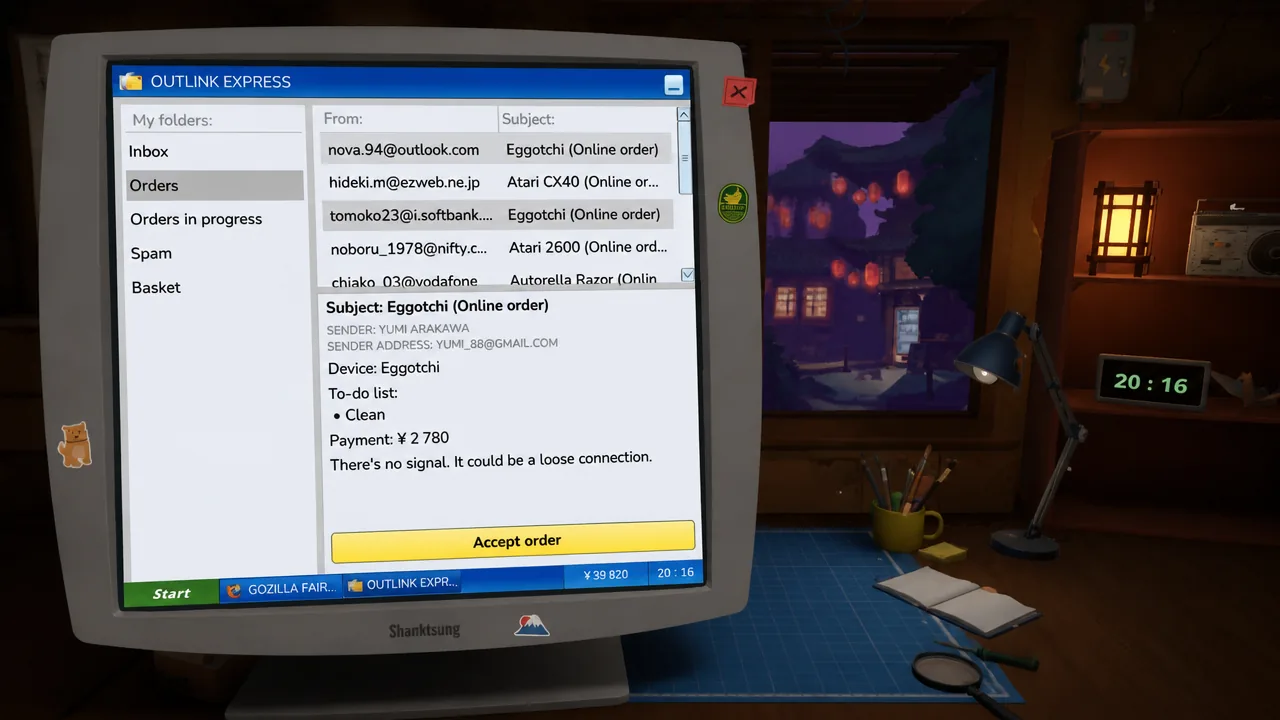
| Online orders | Eleven refresh in your email daily, each with a 3-day window. A mix of cleaning-only jobs and full repairs. |
| Tip jar | Pays an extra 200 to 500 yen on every completed job, walk-in or online, for the rest of the game. |
| Shredder | Turns broken parts into roughly 200 to 500 yen each, instead of trashing them. |
Online orders are the standout for effort spent. The cleaning-only ones can be knocked out during quiet hours when the shop is shut, since it closes at midnight and reopens at 8 AM. That turns dead time into steady income.
The tip jar and shredder are the two investments that keep paying you. Both are cheap, both are permanent, and both attach a small bonus to activity you were already doing. Buy them as soon as you can afford them.
Where to get spare parts
You cannot finish a repair without the right parts, and they come from three places. Each has a trade-off between price and reliability.
The secondhand marketplace
The marketplace sells used devices and loose components at shifting prices, but condition reports and seller descriptions are not trustworthy. A device advertised as needing “minor cleaning” can show up with several broken internal parts. Factor that risk in, especially before you have a parts buffer, but still open the marketplace every single day. Good listings vanish quickly.
Spare part boxes
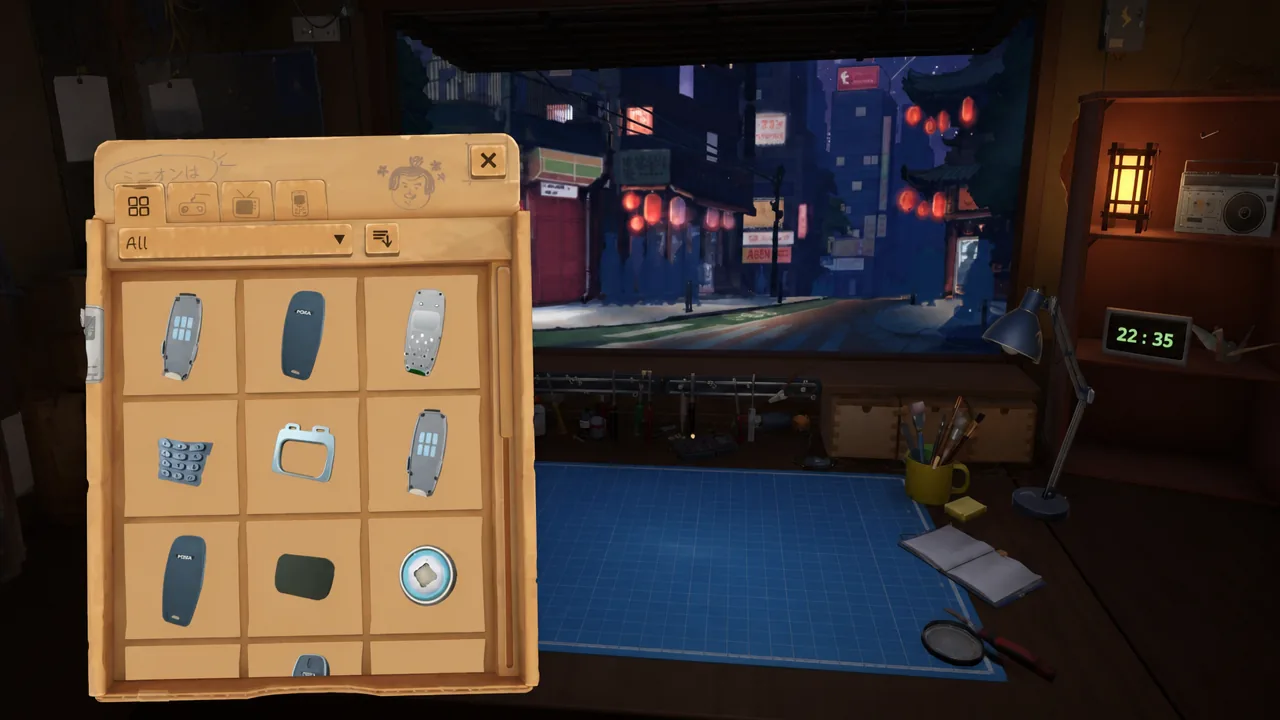
The marketplace stocks small, medium, and large boxes filled with random components. You do not know what is inside until they arrive, but the cost per part beats buying individual pieces or stripping whole devices. They are the cheapest way to build a stockpile, and they sell out fast, so grab them whenever they appear.
Direct manufacturer purchases
Once you own a license for a device, its manufacturer becomes a direct supplier. This removes all the condition guesswork. You know exactly what you are ordering and it arrives in perfect shape. It is not always cheaper than the marketplace, but paying for a guaranteed part is worth it when a job is waiting on one specific piece.
Which upgrades to buy first
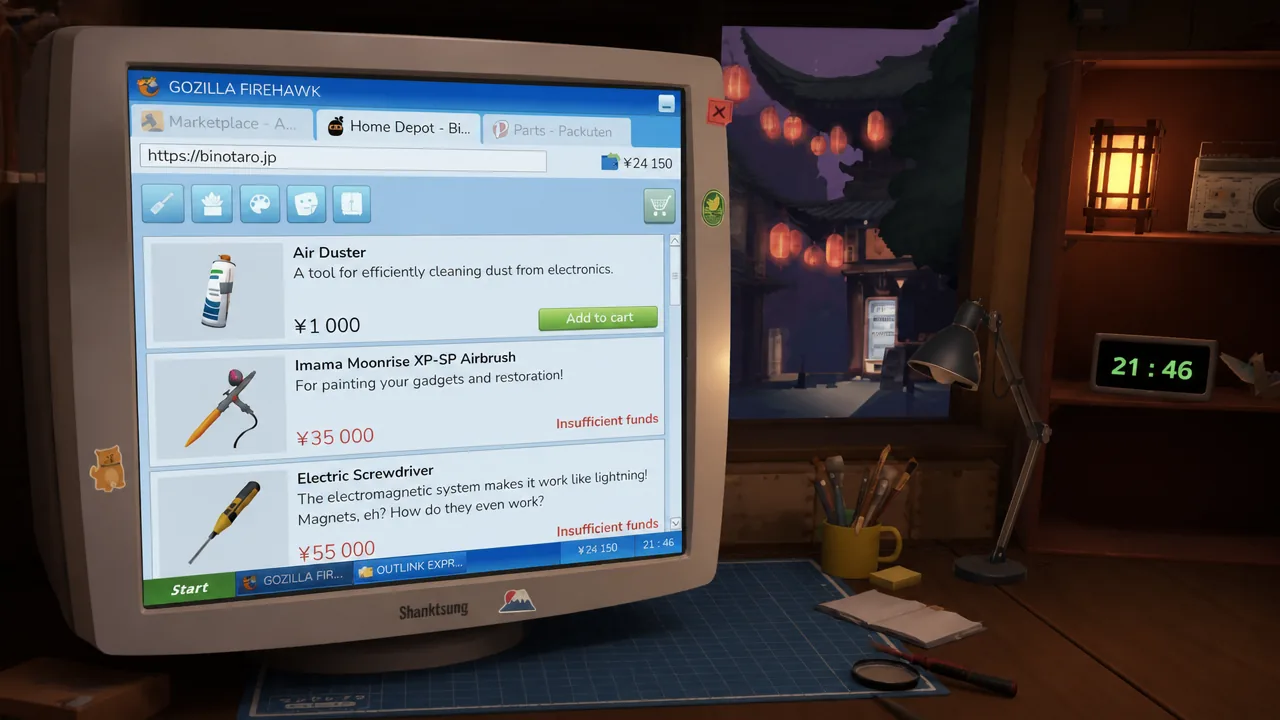
The temptation is to snap up every new tool the moment it appears. Resist it. Most tools are not urgent, and yen is better spent on licenses in nearly every case. Only a handful of upgrades earn a spot at the front of the line.
| Upgrade | Verdict |
|---|---|
| Screwdriver (final level) | Buy first. The last of its two upgrades makes screw removal instant, saving time across hundreds of repairs. |
| Cleaning brush | Buy early. Radius upgrades clean larger areas per stroke. Cheap and they pay back quickly. |
| Tip jar | Buy early. Cheap, permanent, and pays out on every completed job. |
| Compressed air can | Skip. It is a consumable that runs out. Put the money toward brush upgrades instead. |
| Sonic bath | Wait. Its 30-second cycles waste time on small devices. Useful later on large, multi-part repairs. |
| Airbrush and toolkit | Optional. Neither raises a device’s sell value. Only buy if a specific job needs it. |
The screwdriver matters because every repair starts and ends with screws, so instant removal compounds over your whole playthrough. The brush matters because cleaning is the most repetitive step in the game, and shaving seconds off each part adds up to extra jobs per day.
Licenses are the real progression system
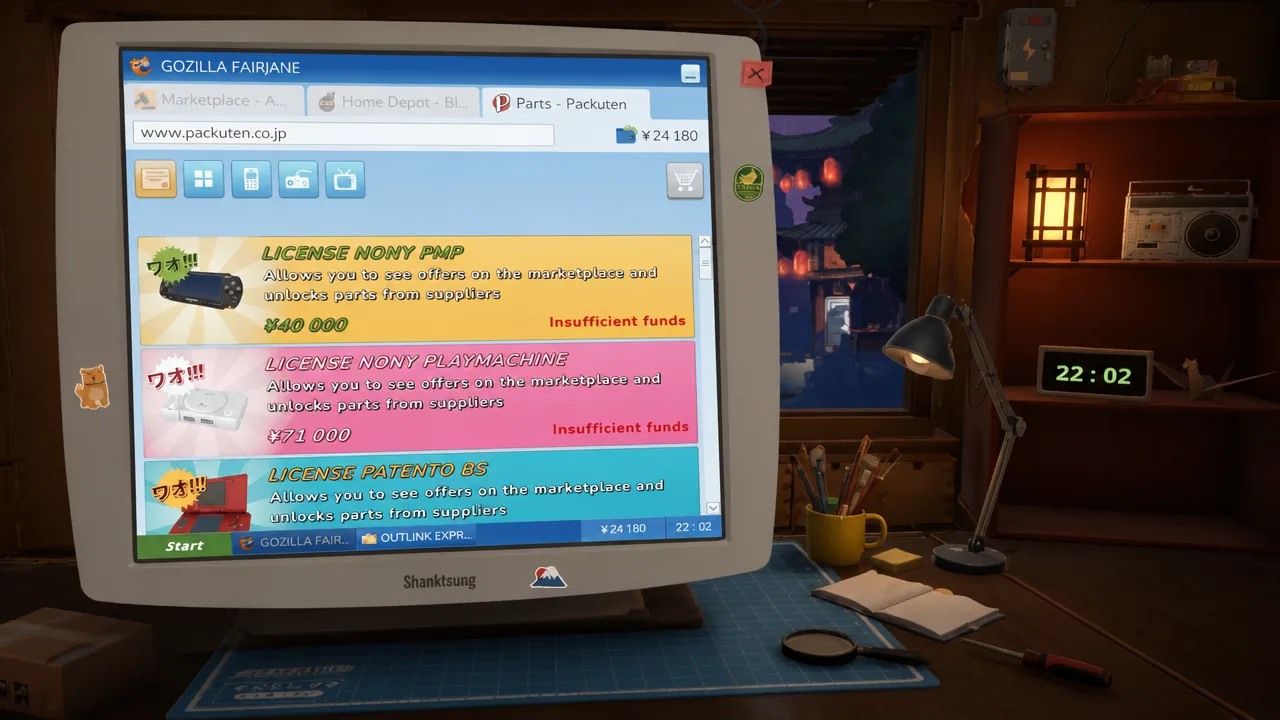
Every license you buy unlocks a new device type, and with it new customers, new story beats, and access to that manufacturer’s parts. Without the right license, customers drop off devices you cannot fix, and the story stalls until you catch up. The plot only advances through license-gated repairs, so hoarding yen for tools quietly holds everything else back.
Buy a license as soon as you can afford it. There are 21 in total, and collecting all of them earns the PLATINUM PARTNER achievement.
Bills, internet plans, and choices you cannot undo
Bills arrive weekly and cover rent, internet, and eventually electricity and a security fee as the story goes on. If you take the top internet plan at 1,500 yen per week, your total weekly bill comes to 6,000 yen, which stays manageable even early. Keep at least one week of bills in reserve and you will never get caught short.
The 1,500 yen internet tier is worth taking. It does not change gameplay in the current version, but the developers have signaled it may matter later, and the price gap between plans is small. Two other rules are worth locking in early. Missing an online order deadline after its 3 days dents your reputation, so do not accept more jobs than you can finish. And dialogue choices are permanent within a save file, with no warning or prompt to reconsider before the story moves on.
Stick to the order that pays off, licenses first, then the tip jar, screwdriver, and brush, and check the marketplace daily. Do that and the shop starts funding its own growth while the story keeps rolling forward.