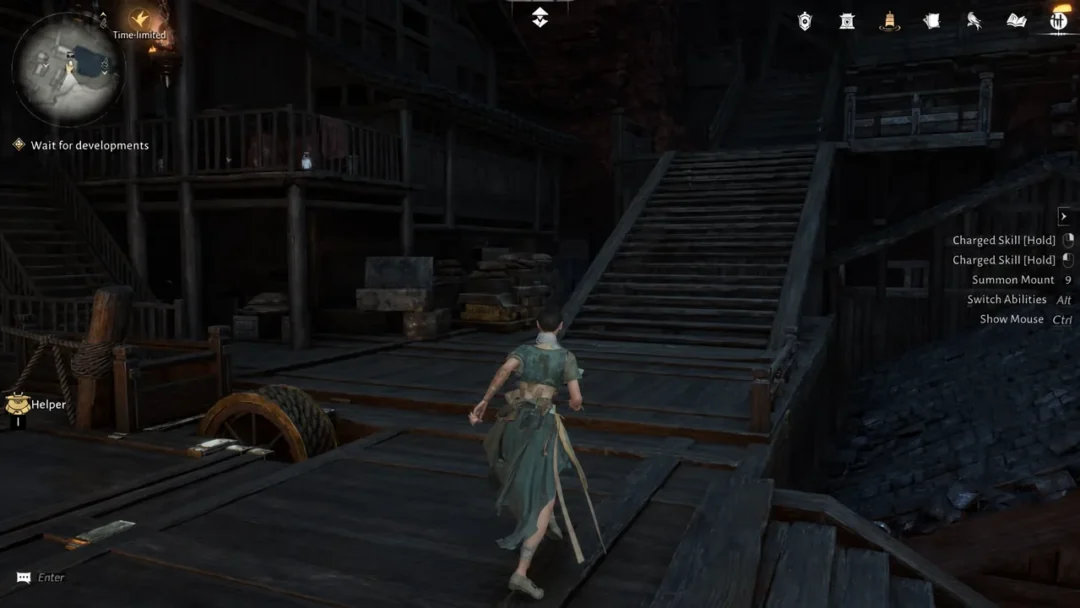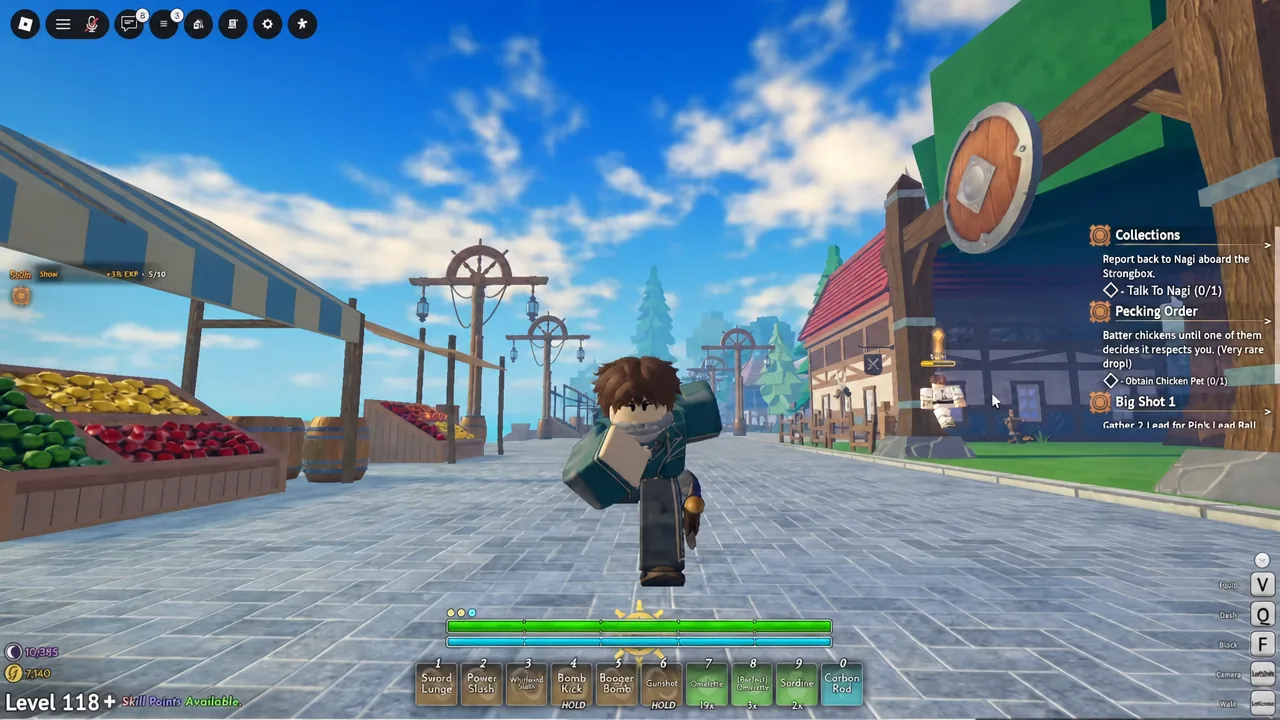
Grand Blue is a One Piece-style Roblox game from Eternal Pose, currently running in early access, and it does almost nothing to explain how progression works. There are three towns, a stat sheet, a shovel quest that hands out a fruit, and a lot of repeatable quests that pay wildly different amounts of experience depending on where you take them. Knowing which quest to grind at which level is the entire early game.
Quick answer: Pay 25 gold to open the Anchor Town gate and farm the repeatable Marine Captain quest to level 30, move to Clown Town for Johnny’s repeatable quest and the Buggy Clown boss until level 70, then finish out at 100+ on Gus’s repeatable quests in Maple Village. For your first Cursed Fruit, complete Almighty Calvin’s Wizards Apprentice dig quest in Anchor Town.
Fastest leveling route from level 1 to 100+
Every efficient route in Grand Blue runs on repeatable quests rather than free-roam grinding. Each town has one NPC whose quest resets immediately, and sticking to that single loop is faster than clearing every side objective around it.
| Level range | Where to grind |
|---|---|
| 1 – 30 | Anchor Town, repeatable Marine Captain quest behind the paid gate |
| 30 – 70 | Clown Town, Johnny’s repeatable clown officer quest plus the Buggy Clown boss |
| 70 – 100+ | Maple Village, repeatable quests from Gus and the surrounding NPCs |
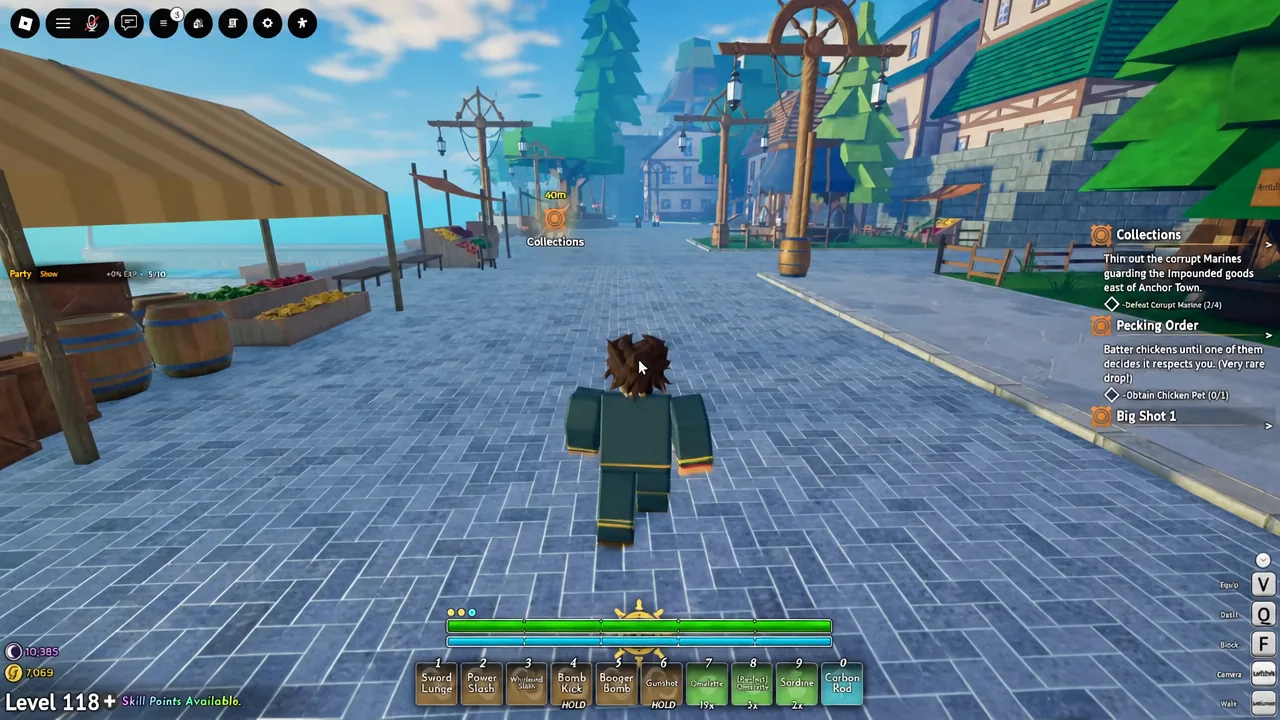
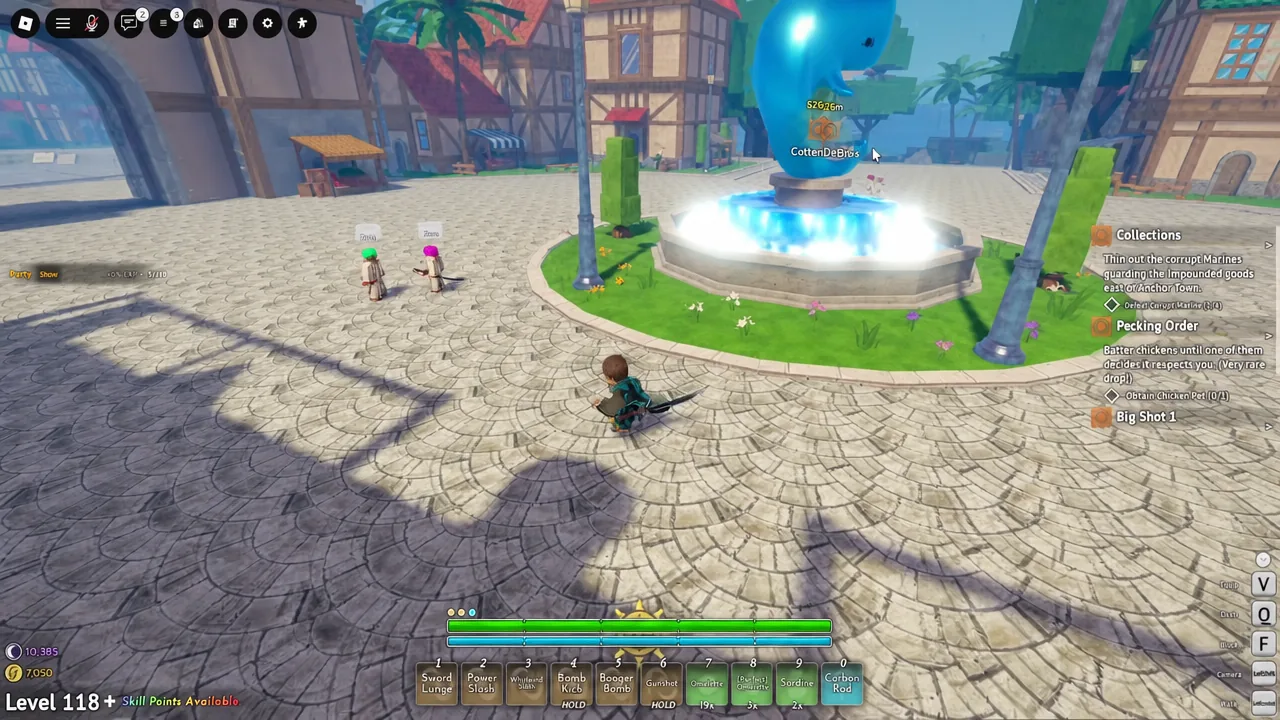
Bosses are worth breaking the loop for. Axe-Hand Morgan has a real moveset with grabs, spin attacks, ranged pressure, and a second phase where he recovers health, but beating him hands over several levels, stat points, and an extra skill slot. Block properly instead of trading hits, because his grab lands almost instantly if you’re standing still.
There’s also an arm-wrestling mini-game in Clown’s Hub that comes down to raw click speed. Players commonly run an auto-clicker for it, since manually keeping pace is the limiting factor.
How to get a Cursed Fruit in Grand Blue
Grand Blue calls its Devil Fruits Cursed Fruits. Eating one attaches a permanent ability set to your character, and you can only have one active at a time — eating a second replaces the first. Fruits can be stored, so you don’t automatically lose everything you pick up along the way.
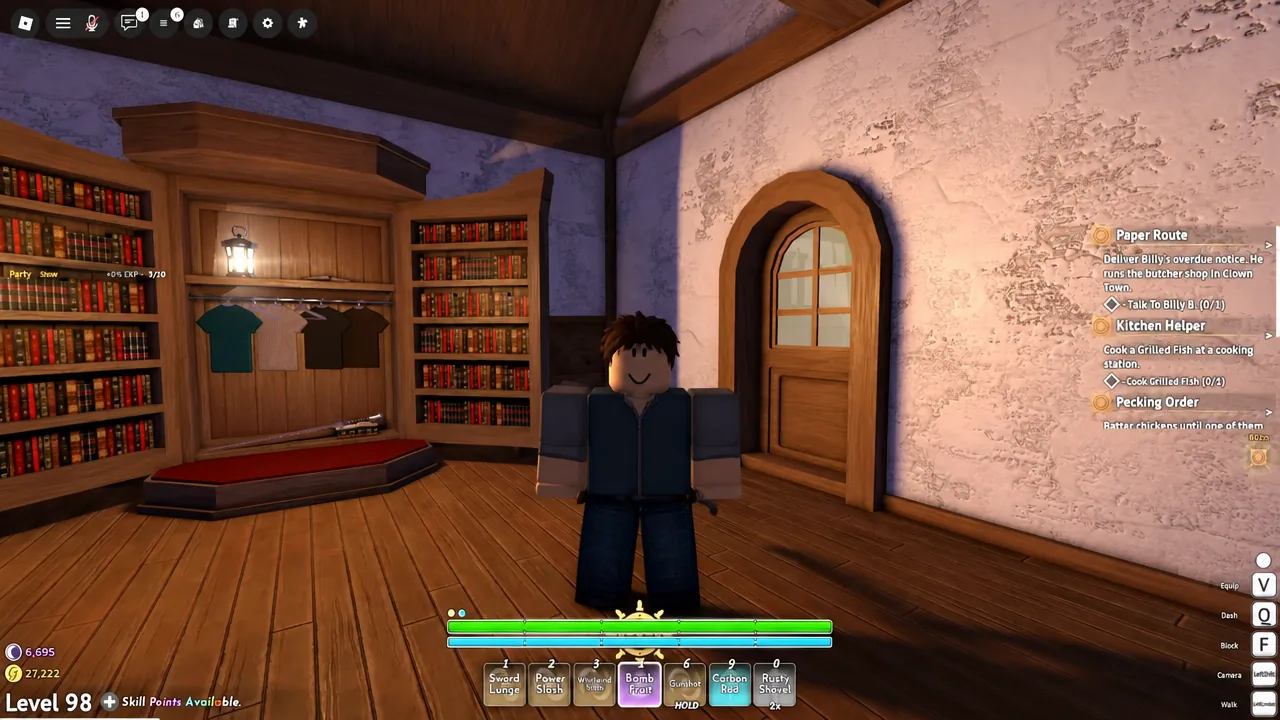
Wizards Apprentice quest (the guaranteed early route)
Note: Wizards Apprentice is one-time only. After that, every other fruit has to come from the sources below.
Every other Cursed Fruit source
| Source | What to expect |
|---|---|
| Codes | Active codes can hand out free Fruit Chests, though most rewards are small boosts rather than a guaranteed fruit |
| Fruit Chests | Bought with Celestial Coins or Robux; larger bundles cost less per chest |
| Fruit Trader NPC | Buy a fruit outright once you can reach the trader and afford it |
| Treasure maps and achievements | Farm maps and complete Logbook achievements for Celestial Coins, then spend them on chests |
| World bosses | Hourly spawns that drop Fruit Chests and Celestial Coins |
| Island exploration | Fruits spawn randomly out in the world; the slowest and least reliable option |
Celestial Coins and Fruit Chest prices
Celestial Coins are the premium currency, and they are grindable. You earn them from Logbook achievements and from the special quests marked with a purple exclamation mark, plus hourly world boss events. That matters because the shop takes either coins or Robux for the exact same chests.
| Bundle | Celestial Coins | Robux |
|---|---|---|
| 1x Fruit Chest | 1,200 | 96 |
| 3x Fruit Chest | 3,300 | 264 |
| 10x Fruit Chest | 11,000 | 880 |
| 20x Fruit Chest | 21,000 | 1,680 |
Clearing achievements in the Logbook is the most consistent free income, so it’s worth checking that menu early and picking off anything you’ve nearly completed.
Codes, traits, and race rerolls
Codes are redeemed from the character customization screen, the same menu that handles rerolls. Two codes have been active in early access, Release! and TwitterGoalReached. Redeem them before you spend anything, since reroll currency and Fruit Chests are exactly what they tend to hand out.
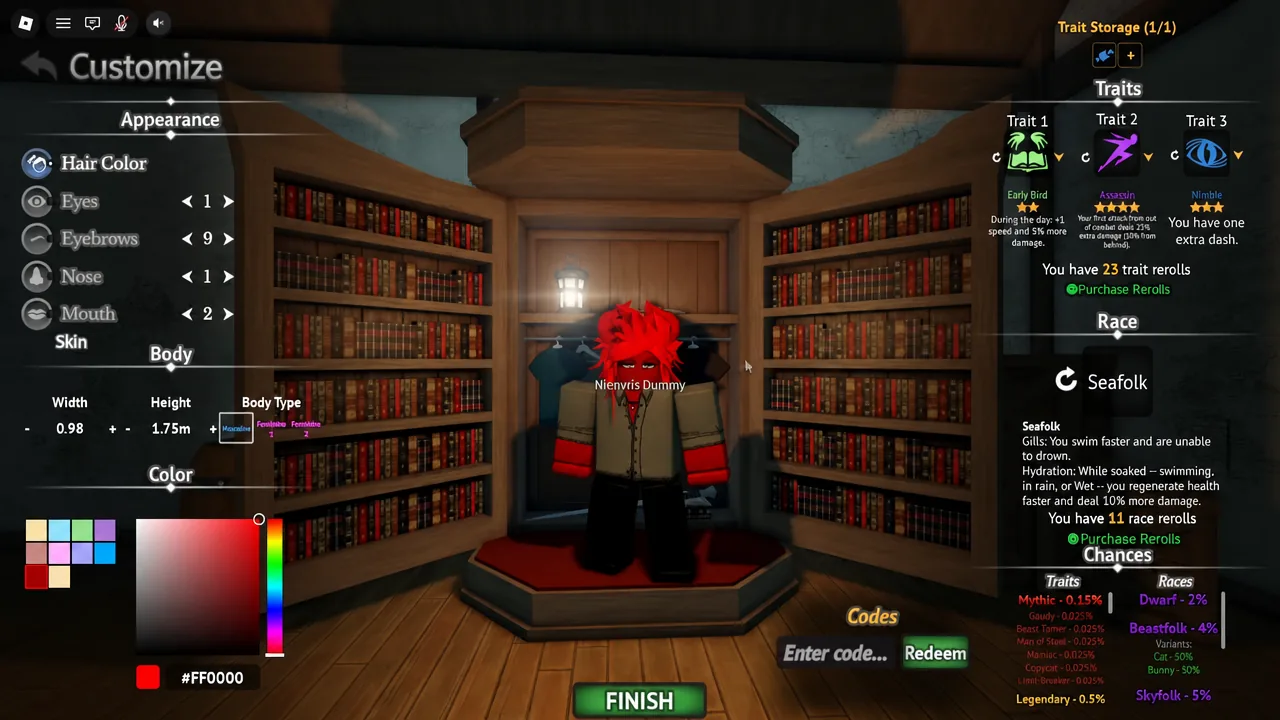
Races include Human, Seafolk, Dwarf, Beastfolk (with Cat and Bunny variants), Skyfolk, Celestial, Half Fish, and Long Arm. Rerolls come in rarity tiers, and there’s an extremely rare Celestial variant for Humans sitting at roughly a 0.1 percent chance. Buying rerolls with Robux runs about 5,000 Robux for 100 of them, but daily activities and quests also pay out reroll currency, so hunting a rare race without spending is possible — just slow.
Traits are the second half of that menu, with options like Early Bird, Assassin, Nimble, Beastmaster, Man of Steel, Limit-Breaker, Predator, Prodigy, Adrenaline, Escape Artist, Gourmand, Iron Will, and Chameleon. Their effects are practical rather than cosmetic. Some make food buffs 25 percent stronger or 25 percent longer, others grant a speed burst when your health drops below 30 percent, and one gives you an extra dash.
Weapons, skills, and stat points
Basic weapons come from town shops. The top-end sword, Last Laugh, is sold by Smuggler NPCs rather than a regular vendor, so don’t expect to find it on a shop counter.
| Weapon | Price |
|---|---|
| Rusty Shovel | 25G |
| Cutlass | 2,000G |
| Willow Blade | 8,000G |
| Katana | 10,000G |
| Last Laugh | 12,500G (Smuggler NPCs) |
Skills aren’t bought from a single menu. Some come from trainers, some drop from enemies as skill scrolls, and others are tied to a specific weapon type — Sword Lunge, Sword Leap, and Clearing Strike for blades, Axe Spin for axes, plus fighting-style moves like Bomb Kick, Razor Flip, Dirty Kick, and Pickpocket. Sword training quests unlock more as you go, and one early requirement is dealing roughly 200 sword damage to earn Power Slash.
Abilities can also be upgraded rather than replaced. Power Slash, for example, can be improved so the slash launches a projectile. Guns work as a secondary weapon with their own skill set, so a ranged build is viable alongside melee.
Tip: watch your Energy stat. Abilities drain it fast, and running dry mid-fight is the most common reason an early boss attempt falls apart.
Life skills: mining, fishing, farming, and cooking
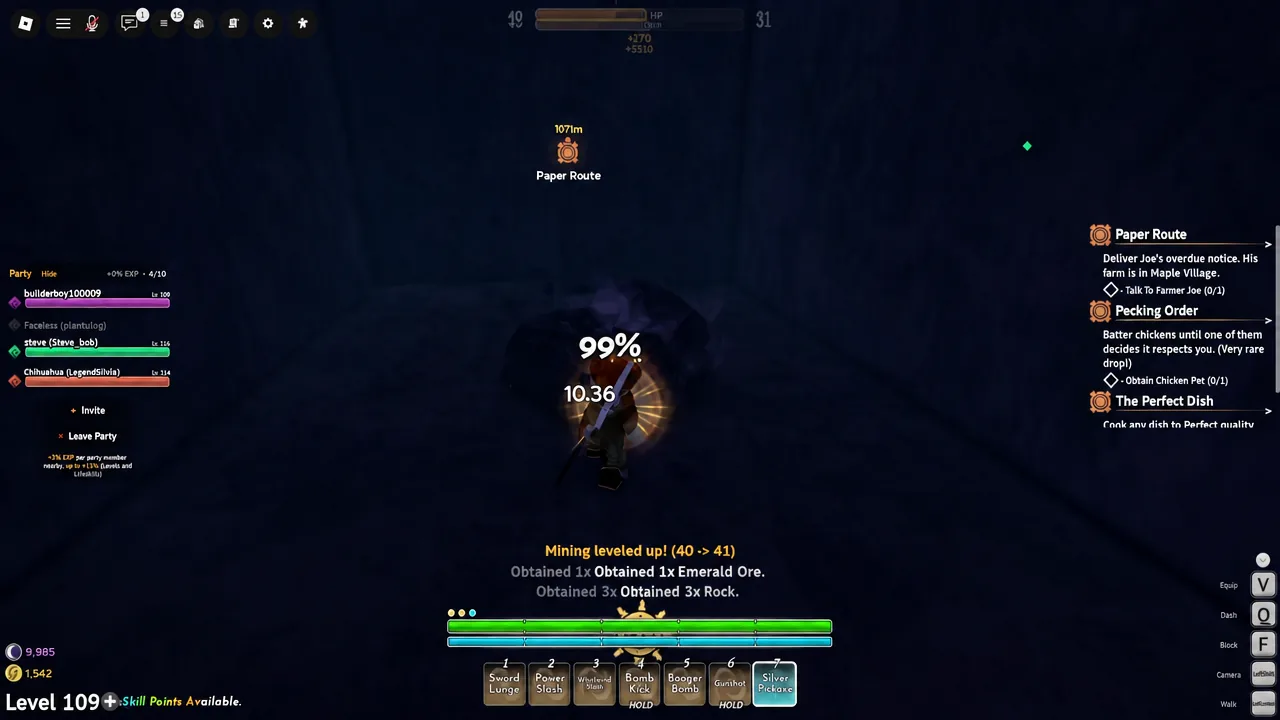
Life skills aren’t filler content. Mining and farming feed the materials used for weapon upgrades, while fishing and cooking produce food that grants stat buffs before a boss fight. If you rolled a trait that strengthens or extends food buffs, cooking becomes noticeably more valuable.
Buying and customizing a ship
Larger ships are sold by Mary in Maple Village, which is another reason to push to level 70 rather than parking in Clown Town. Ships can be customized, and the cannons and anchor are functional rather than decorative, so anchoring matters when you’re trying to stay put near an island instead of drifting.
The short version: of the early game is that Grand Blue rewards commitment to one repeatable quest at a time. Open the Anchor Town gate, do the shovel quest for a free Cursed Fruit, then move between the three towns as soon as each one’s repeatable stops paying. Everything else — rerolls, chests, ships, better swords — gets easier once the levels are already banked.