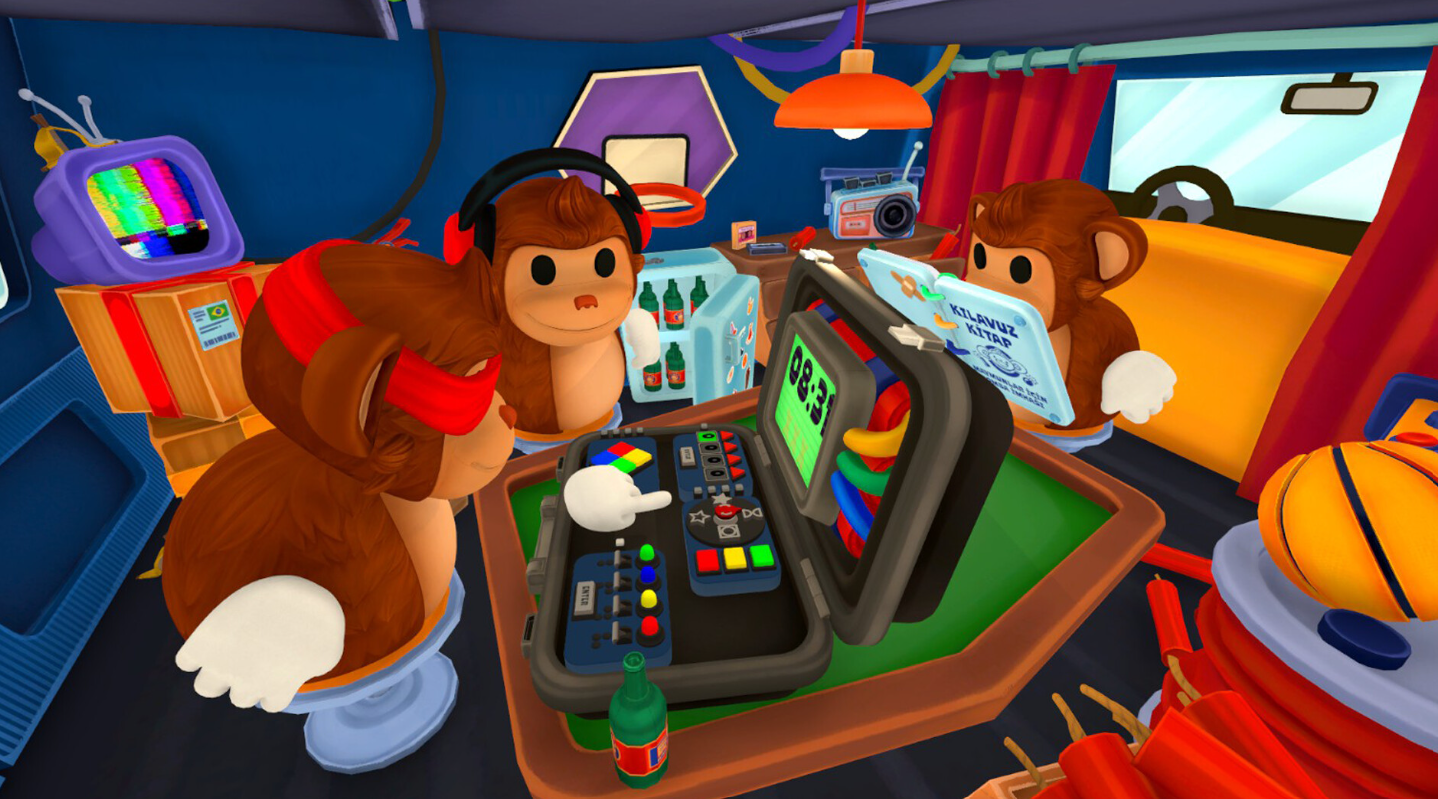
The first five bombs in Bombanana! teach the core loop the rest of the campaign builds on. You play as three monkeys, each missing a sense, and the only way through is to pass information cleanly from the Mute player who holds the manual to the Blind player whose hands are on the bomb. The puzzles themselves are simple. Getting the answer across without wasting the timer is the real test.
Quick answer: Level 1 is a Cable cut based on wire count and bulb color, Level 2 is a four-color slider, Level 3 combines the two, Level 4 pairs the slider with a Direction module read from Braille and light color, and Level 5 pairs the slider with a two-stage Calculator puzzle. Use the lookup tables below for each module and confirm every input before acting.
Roles you need before the first cut
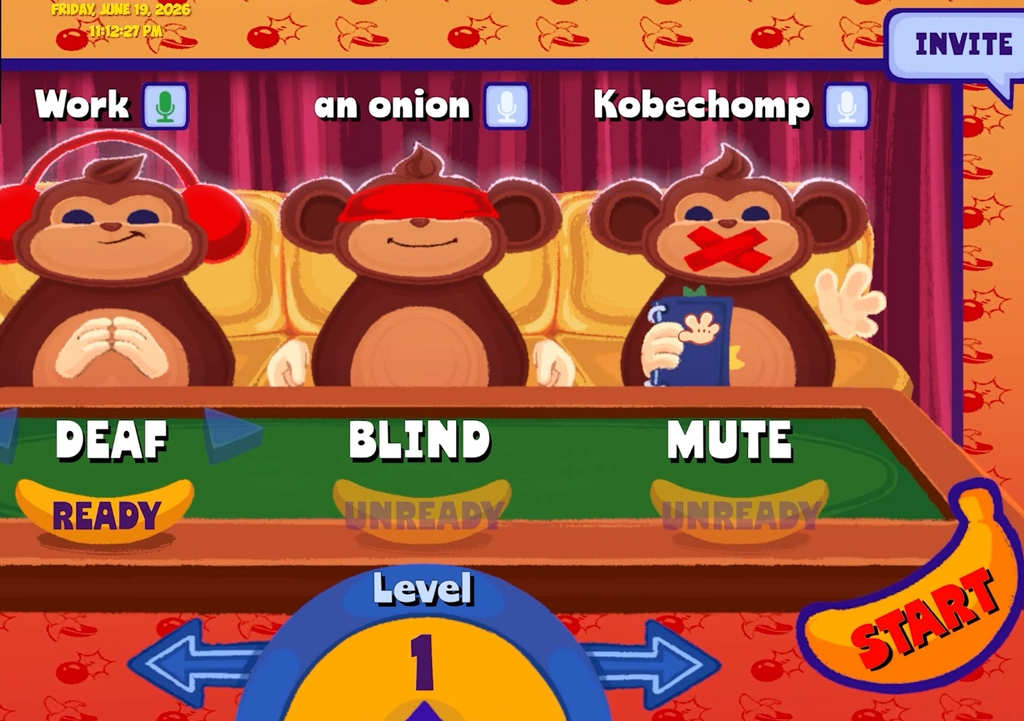
Every solution below depends on who can perceive what. Lock these limits in before you touch a bomb, because the callouts only work in one direction.
| Role | Job |
|---|---|
| Blind | Only player who touches the bomb. Reads Braille by feel and executes the input. |
| Deaf | Sees the bomb and speaks. Calls colors and numbers, relays the answer to Blind. |
| Mute | Holds the manual. Finds the answer and signals it through gestures and emotes. |
Information flows from Mute to Deaf to Blind. Agree on gestures for yes, no, and wait, and settle that left and right always mean the Blind player’s left and right. That single convention prevents most early failures.
Level 1: Cable module solution
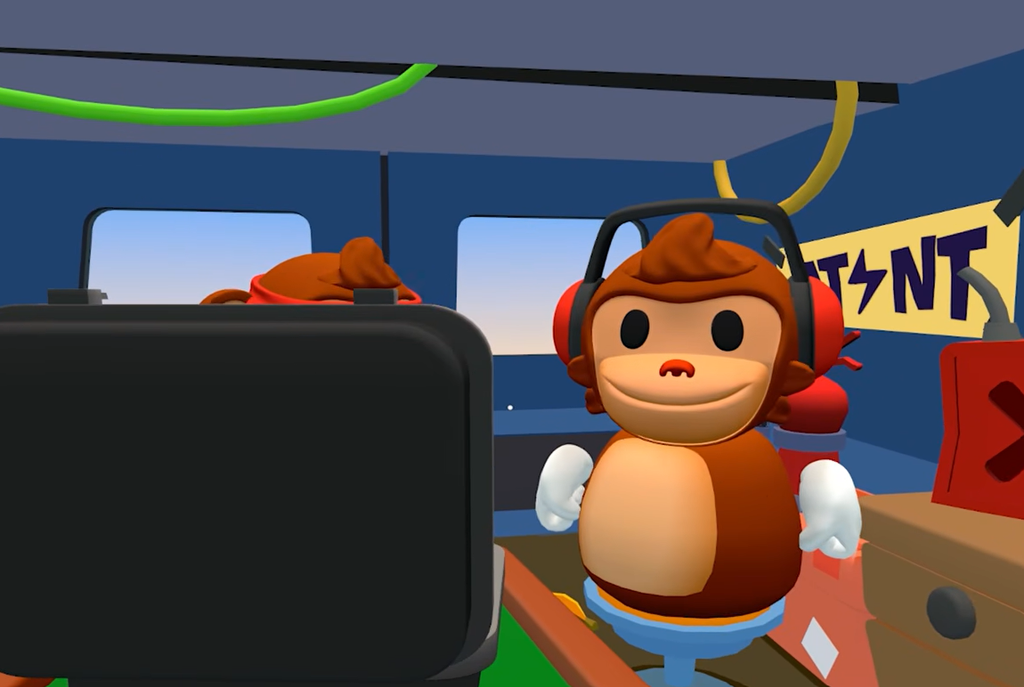
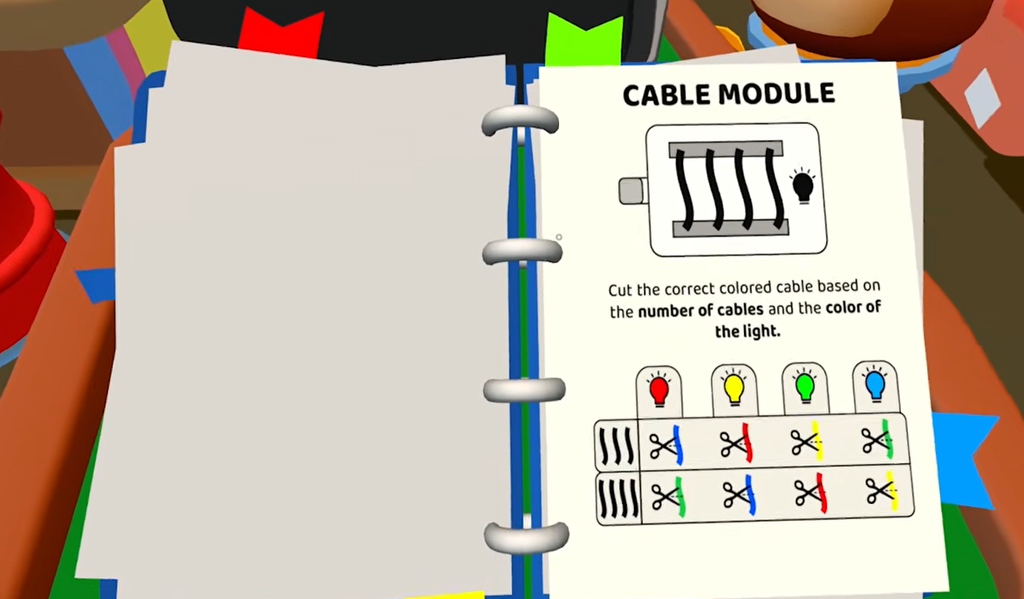
Level 1 gives you a bomb with three or four colored cables and a single lit bulb. The Deaf player calls the bulb color and the number of cables. The Mute player checks the manual to find which cable to cut, then the correct cable’s position is passed to the Blind player, who sees only an outline.
The wire count matters because three-wire and four-wire bombs use different rules. Always lead with the count.
| Bulb color | Cut (3 wires) | Cut (4 wires) |
|---|---|---|
| Green | Yellow | Red |
| Red | Blue | Green |
| Yellow | Red | Blue |
| Blue | Green | Yellow |
Occasionally a module shows a different pattern than the one above. When that happens, the Mute player follows what their own manual page displays. The method stays the same. To confirm the target quickly, the Deaf player can call one color at a time while the Mute player nods on the correct one. Once the color is agreed, call out its position so the Blind player cuts the right cable.
Level 2: Color Slider module solution
The second bomb is a set of four color sliders that all have to be moved correctly in a single sequence. One wrong move resets your progress, so patience beats speed here.
The Mute player has a module showing four colors with arrow indicators pointing up or down. When the Deaf player calls a color, the Mute player checks whether that color needs to move up or down and signals accordingly.
| Manual indicator | Signal to send | Slider action |
|---|---|---|
| Arrow points up | Thumbs up emoji | Move slider up |
| Arrow points down | Negative emoji | Move slider down |
Work through all four colors in order, keeping the sequence unbroken, and the module clears.
Level 3: Cable plus Color Slider
Level 3 does not add a new mechanic. It puts the Cable puzzle and the Color Slider puzzle on the same bomb and asks you to solve them together. Finish one module completely and announce it is clear before moving to the second, so the Blind player never acts on stale information.
Level 4: Direction module solution
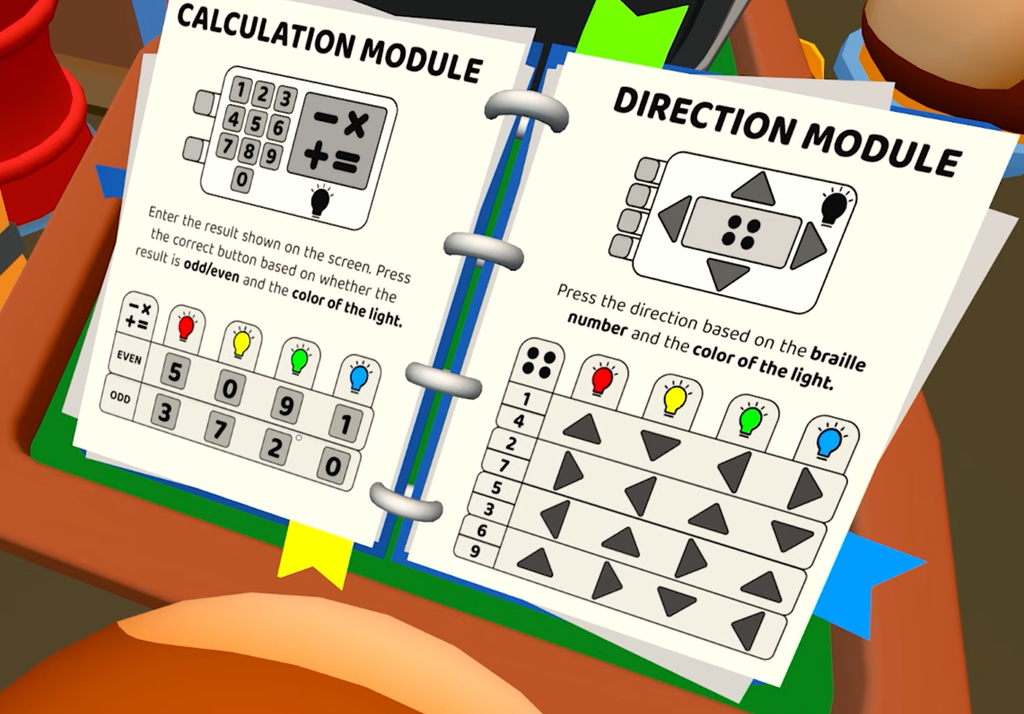
Level 4 combines the Color Slider with a Direction module. You already know the slider, so the new piece is the direction pad. This module needs input from two players. The Blind player reads the number on the terminal, which is embossed in Braille and only they can feel. The Deaf player calls the color of the light bulb.
The Mute player cross-references the Braille digit against the bulb color to find the correct direction button.
| Braille digit | Green | Yellow | Blue | Red |
|---|---|---|---|---|
| 1 | L | D | R | U |
| 2 | U | L | D | R |
| 3 | R | U | U | L |
| 4 | L | D | R | U |
| 5 | R | U | U | L |
| 6 | D | R | L | U |
| 7 | U | L | D | R |
| 8 | D | R | L | U |
| 9 | L | R | U | D |
Here L, D, R, and U mean left, down, right, and up. Your module may show a different grid, but the method holds. Read the Braille number, match the bulb color’s column, press the direction it gives, and if a wrong press changes the state, read the module fresh instead of reusing the old answer.
Level 5: Calculator module solution
Level 5 brings back the Color Slider and adds a Calculator puzzle. The Calculator has two stages, and the Blind and Deaf players carry it together.
| Equation result | Red | Green | Yellow | Blue |
|---|---|---|---|---|
| Even | 5 | 9 | 0 | 1 |
| Odd | 3 | 2 | 7 | 0 |
Using the same example, 69 is odd and the bulb was green, so the second digit is 9. Enter both stages in one uninterrupted sequence and the module clears, completing Level 5.
Note: The keypad is jumbled, so press the digit itself wherever it sits rather than the position it would occupy on a standard number pad.
How to know a module cleared and why runs fail
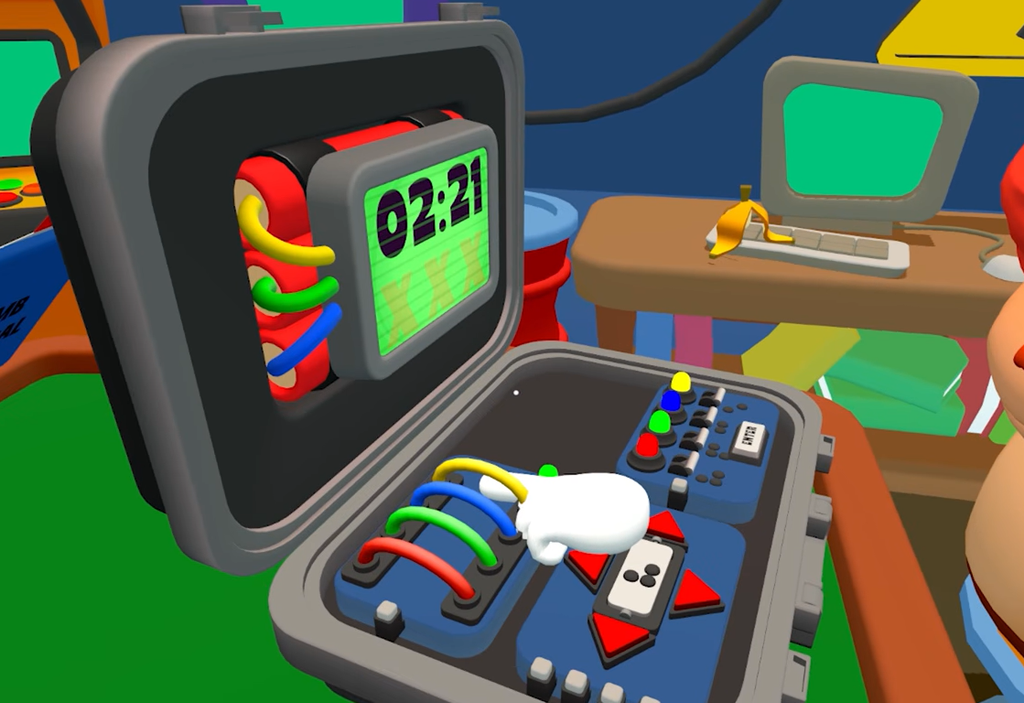
A solved module locks in and the Blind player will feel or report that it registered, at which point you announce it is done and move on. Levels 1 and 2 allow only one mistake, so a single wrong input can end the run. From Level 3 onward the allowance rises to three, but the timer still punishes hesitation.
Most failures at this stage come from a handful of repeatable errors rather than the puzzles themselves.
- Cutting or pressing before the answer has been confirmed back once.
- Calling out two modules at once, which makes the Mute player lose track.
- Guessing a Braille number instead of waiting for the Blind player to feel it.
- Reusing an old answer after a wrong input changed the light, number, or stage.
If a wrong input changes the module state, stop, re-read the whole module, and rebuild the callout from scratch. Panic inputs stack mistakes faster than calm retries, and a slow confirmed chain clears these five bombs every time.