Update 1 for Anime Origins brought the Re:Zero content into the game, and with it the Pleiadys Tower mode. The tower launched brutally tuned, especially in Act 2, and a follow-up difficulty patch trimmed the worst of it while handing out a redeemable code. Here is exactly what the tower does to you, what the patch changed, and what it costs to evolve Jolius into Jolius (Spirit Knight).
Quick answer: Redeem the code TowerFixed in Anime Origins, then expect Act 2 of Pleiadys Tower to run with Gluttony (enemy health regeneration) and Greed (unit costs start at 200%) active. Jolius evolves with 1x Sixfold Spirit Crystals, crafted from 20x Azure Remnant, 6x Violet Remnant, 6x Radiant Remnant, 4x Prismatic Remnant, and 9,000 Gold.
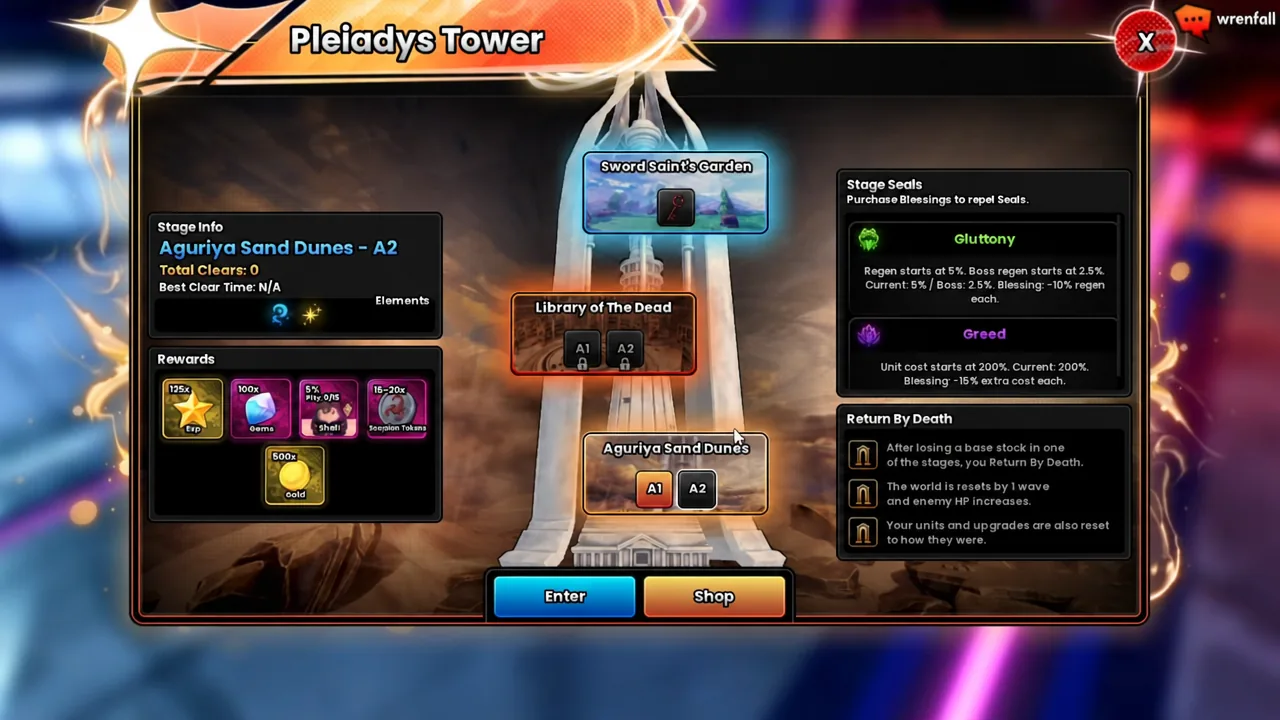
Pleiadys Tower Act 2 modifiers: Gluttony and Greed
Act 2 stages stack two modifiers that change how a run plays from the first wave. Gluttony gives enemies health regeneration, so any damage you fail to convert into a kill ticks back up. Greed raises unit deployment costs to 200% at the start of the match, which means your opening placements are half as strong as they would be anywhere else in the game.
Together they punish slow starts hard. You cannot out-DPS a regenerating enemy with a thin early board, and the inflated cost keeps that board thin for longer than usual. Aguriya Sand Dunes – A2 and Library of the Dead – A2 both sit behind this combination.
Select the Act 2 stage you want from the Pleiadys Tower menu and hit Enter to queue in. The modifier icons are shown on the stage panel before you commit.
How the Return By Death mechanic works
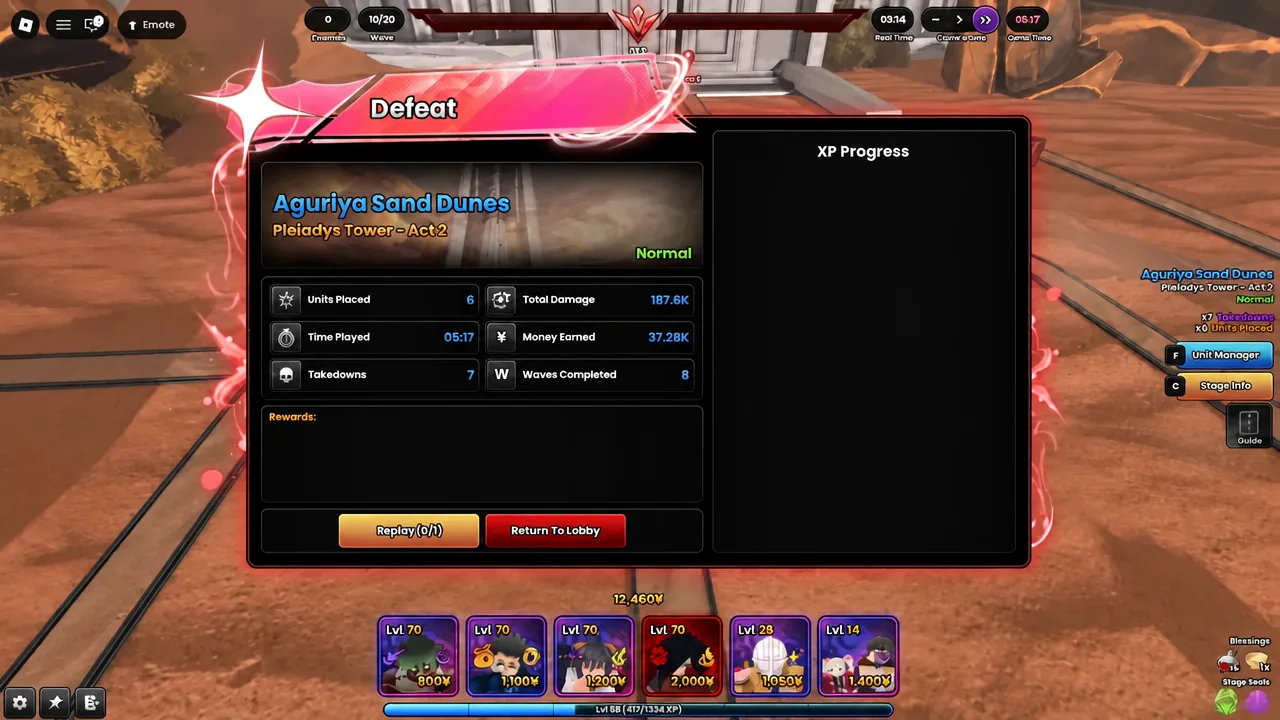
Pleiadys Tower does not end your run the moment enemies leak. Losing a base stock triggers Return By Death, which rewinds the wave counter by one and raises enemy HP for the retry. You lose ground on the timer and gain a tougher enemy pool, but you keep playing.
That rewind has a practical use. Because the wave resets rather than ending the match, deliberately letting a wave through early on lets you bank extra cash and rebuild a stronger board before the real pressure arrives. It is a trade, though. Every reset compounds enemy health, so the strategy only pays off if you convert that cash into enough damage to clear the later waves outright.
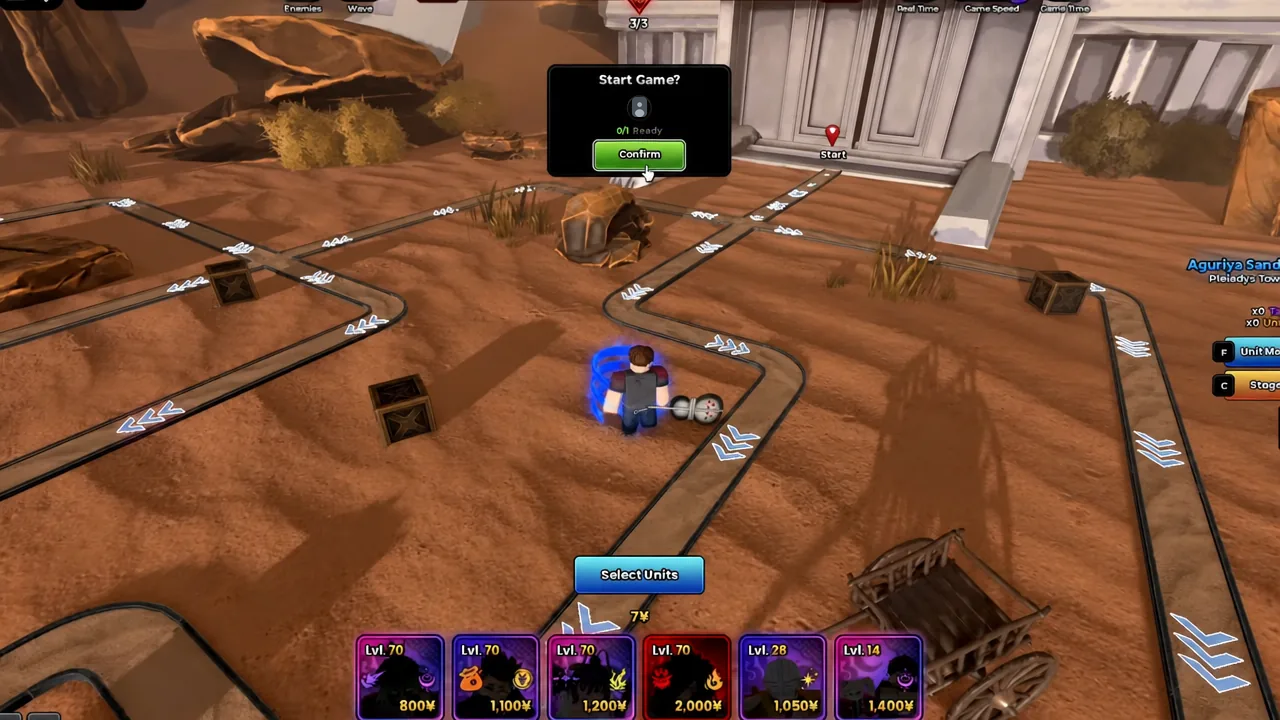
Once you are in the stage, walk your character to the doorway with the Start marker above it to begin the first wave.
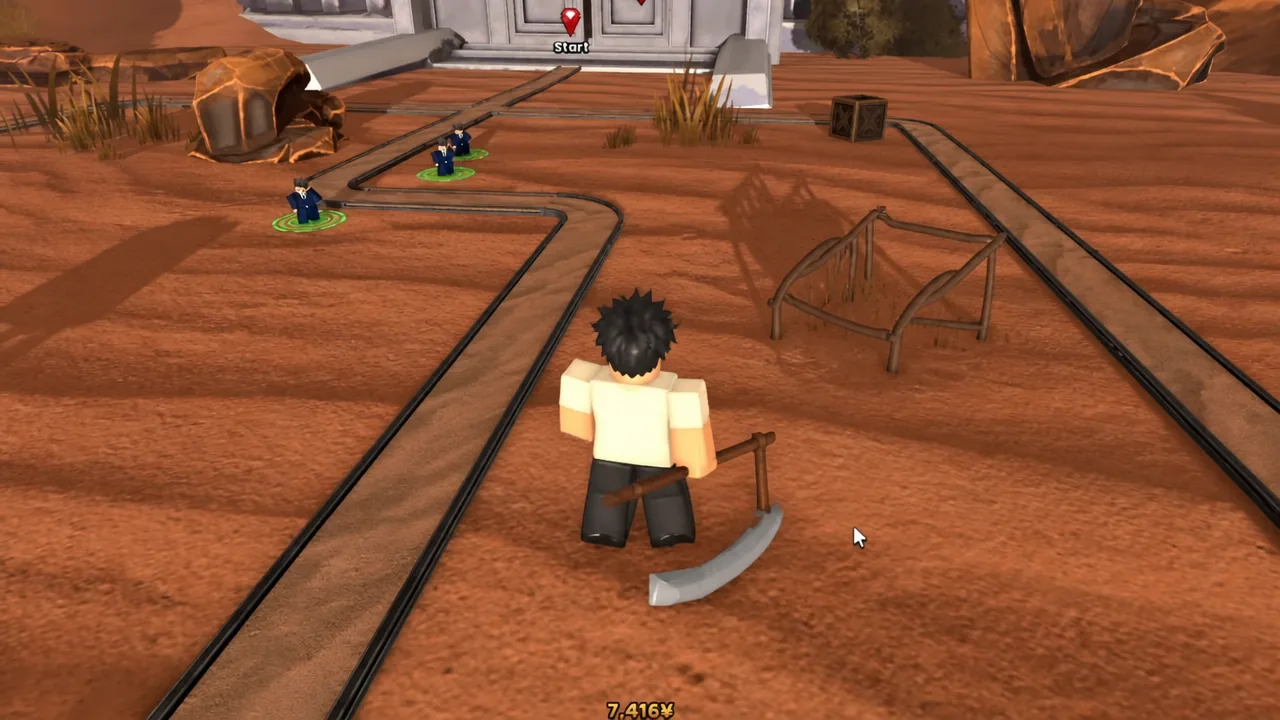
Note: on your final stock, Return By Death is no longer a safety net. Any leak from that point ends the run and drops you straight to the results screen.
Why solo Act 2 runs stall around Wave 10
The failure point in a solo Act 2 attempt is usually the same. By the back half of the run, enemies carry high base HP, regeneration is still ticking, and every earlier Return By Death has scaled them further. A single board that was affordable under Greed pricing cannot break through, and the wave leaks.
Act 2 is tuned around coordinated groups with strong evolved units rather than a solo player with a mid-tier board. If you are running alone with unevolved units, expect the wall rather than the clear.
Pleiadys Tower difficulty patch changes
The difficulty patch loosened the tower in five places. Nothing removed the modifiers outright, but the regeneration is weaker, the token payouts are far better, and progression items got cheaper.
| Change | Before | After |
|---|---|---|
| Gluttony regen on flying enemies | Active | Removed |
| Regen interval | 1s | 1.6s |
| Tokens, Sand Dunes A1 | 4–7 | 10–15 |
| Tokens, Sand Dunes A2 | 7–10 | 15–20 |
| Shaula’s Stash prices (blessings, evo items) | Higher | Decreased |
| Sword Saint’s Trial key pity | 40 | 30 |
| Sword Saint’s Trial key drop chance | 2% | 3% |
The token increase is the change that matters most day to day. Roughly doubling the payout on both Sand Dunes acts, combined with cheaper blessings and evolution items at Shaula’s Stash, cuts the number of tower runs you need before you can afford an upgrade.
The code TowerFixed was released alongside the patch. Enter it exactly as written in the in-game code box. If it worked, you will get a redemption confirmation and the reward will land in your account immediately. Codes are case sensitive and one-use per account, so a failed redemption usually means a typo or a code you already claimed.
How to evolve Jolius into Jolius (Spirit Knight)
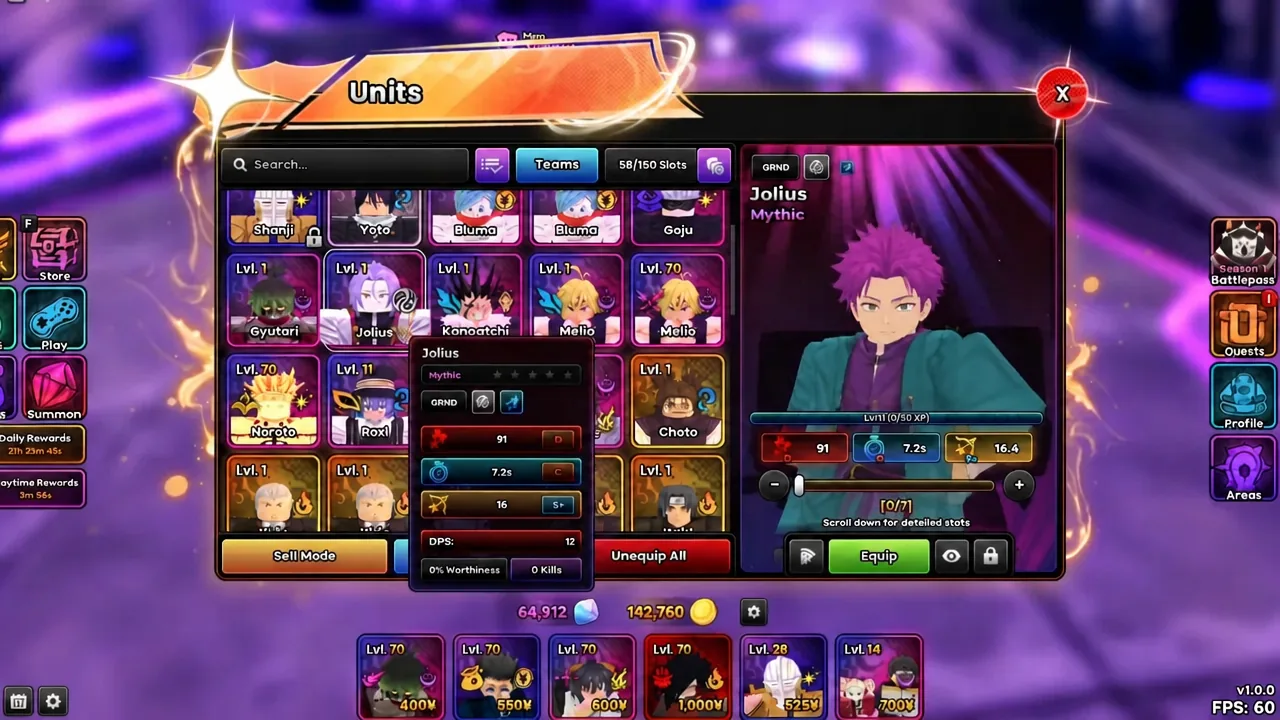
Jolius is the cheapest evolution in the update. The whole upgrade hinges on a single crafted item, Sixfold Spirit Crystals, and the remnants that feed into it.
| Material | Amount |
|---|---|
| Azure Remnant | 20 |
| Violet Remnant | 6 |
| Radiant Remnant | 6 |
| Prismatic Remnant | 4 |
| Gold | 9,000 |
Sixfold Spirit Art passive and spirit combinations
Jolius (Spirit Knight) runs a passive called Sixfold Spirit Art. Every six attacks he swaps to the next elemental spirit, cycling through Fire, Water, Wind, Earth, Light, and Dark. Each spirit applies its own status effect while it is active, so his damage profile shifts continuously rather than staying locked to one element.
The swap itself is the interesting part. When he changes spirits, he fires a Spirit Combination effect determined by the pair of the outgoing and incoming spirits. Fire rolling into Water, for example, triggers Steam Explosion. That means his output is not just the current element, it is the sequence of elements he moves through, and the effect lands on every transition.
Infinite mode is the practical place to watch the full cycle play out, since runs there last long enough for all six spirits and their combinations to come around more than once.
The tower is still steep after the patch, and Act 2 remains built for well-equipped groups rather than solo attempts. Redeem the code, farm the improved token payouts on Act 1 first, and get Jolius evolved before you spend more stocks on Aguriya Sand Dunes – A2.