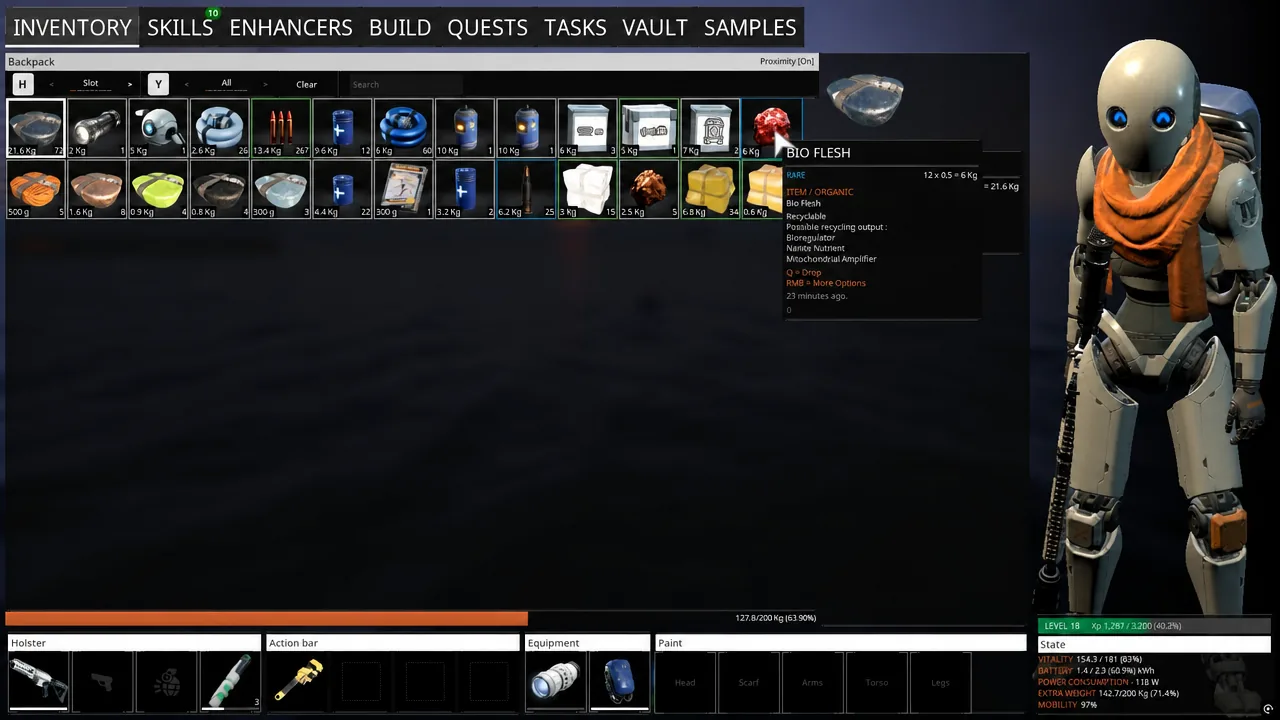
Nanite Nutrient and Mitochondrial Amplifier are the two rare food materials that gate The Last Caretaker’s strongest meals, and neither one sits on a shelf waiting to be picked up. They are manufactured, not looted, which is why players who comb through bunkers and points of interest looking for a container tend to come away empty-handed.
Quick answer: Load Bio Flesh into a Soilforge (or Soilforge Prime) that is connected to power and a fresh water line. A single batch outputs both Nanite Nutrient and Mitochondrial Amplifier together.
Nanite Nutrient and Mitochondrial Amplifier stats
Both items are classed as materials rather than finished food, so eating them directly is not the point. They exist to feed the Food Processor. The two share a rarity tier, a weight, and a stack size, and differ only in what the game tags them for.
| Property | Nanite Nutrient | Mitochondrial Amplifier |
|---|---|---|
| In-game tag | TIER I | ORGANIC – FOOD MATERIAL | TIER I | ORGANIC – EFFICIENCY |
| Rarity | Rare | Rare |
| Weight | 0.2 kg | 0.2 kg |
| Stack size | 100 | 100 |
| Produced in | Soilforge, Soilforge Prime | Soilforge, Soilforge Prime |
| Input | Bio Flesh | Bio Flesh |
Where to find Bio Flesh
Bio Flesh is the only input that matters here. It is a Tier I organic that reads as red biomass in the world and in your inventory, and it does not come from scrapping ordinary biomass or plant matter. If you have been feeding generic organics into your machines and getting nothing rare back, this is why.
The reliable sources are creature-based. Sharks respawn, which makes them the sustainable option once you can handle them. Angels drop Bio Flesh too, and dead Angel and Shark bodies are scattered around several points of interest, so a sweep of explored areas often turns up stock you walked past earlier.
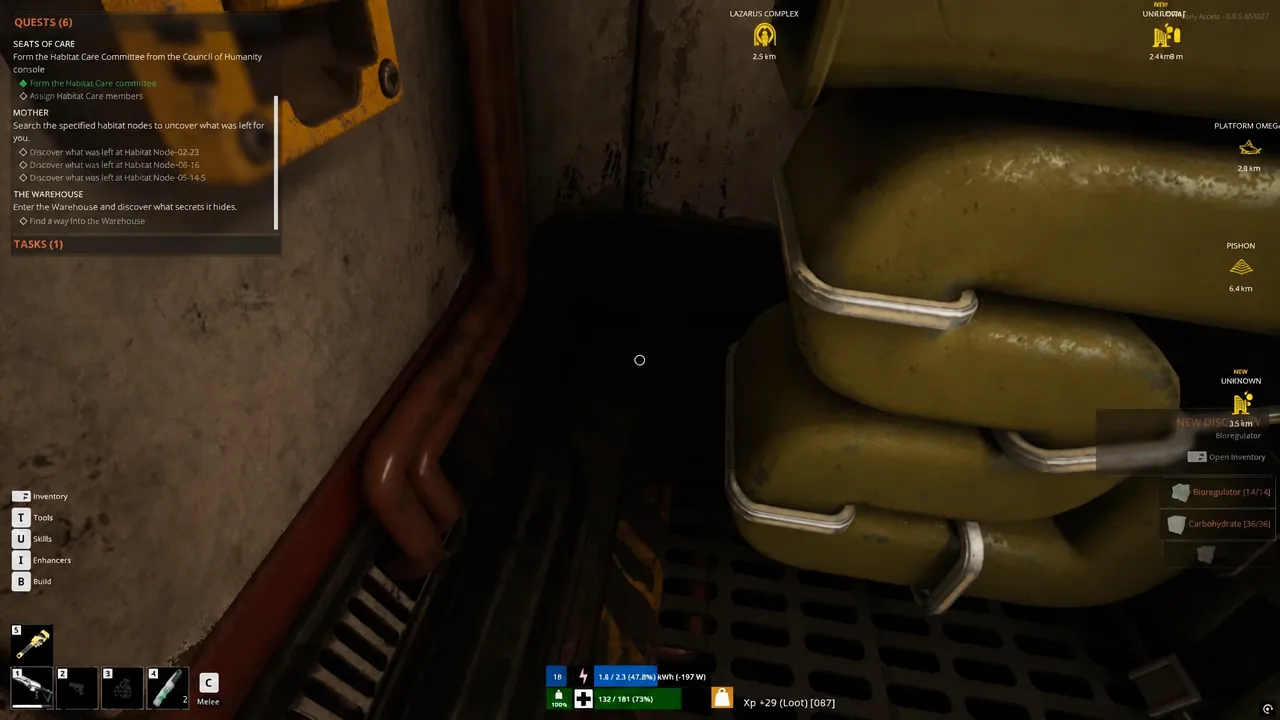
Dismantling wrecked robots is the other route. Interact with a wreck, spend the dismantle cost, and Bio Flesh comes out alongside the usual scrap components. The panel shows a running progress percentage, so you can confirm the teardown actually started before walking away.
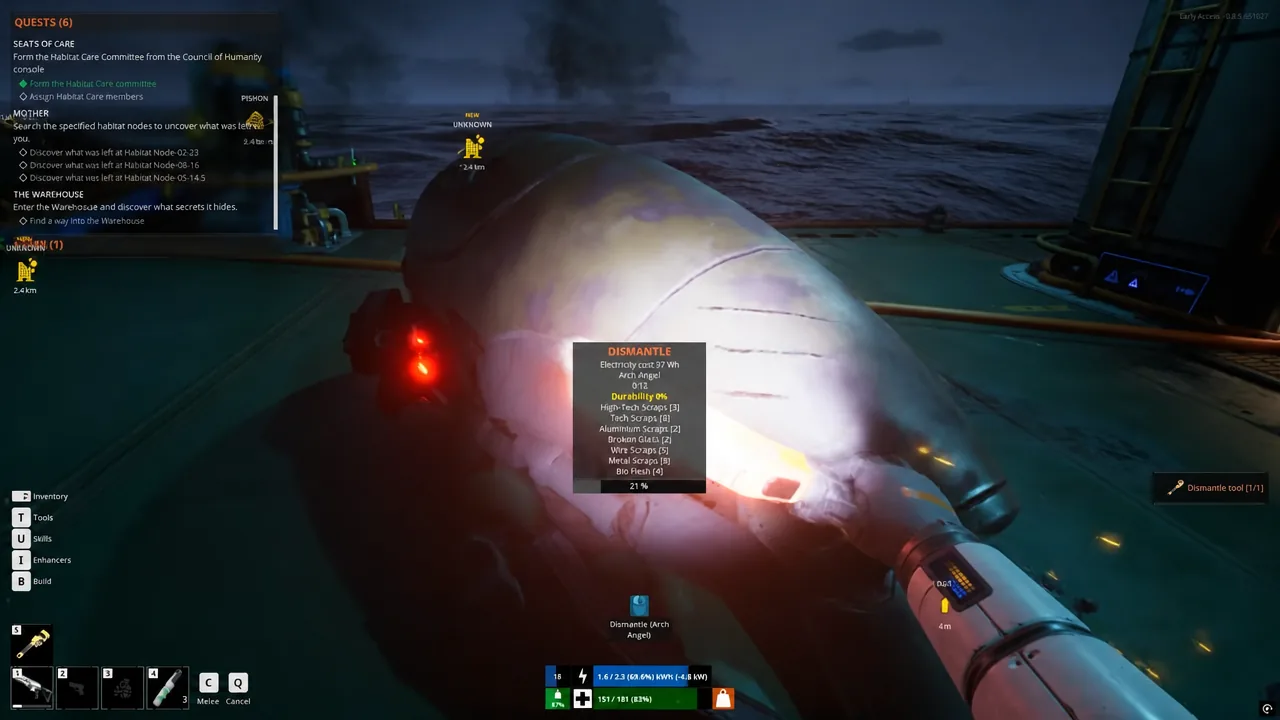
Note: a dismantle draws 47 Wh, so a long salvage run on a thin power budget will stall before your inventory fills up.
Soilforge unlock and running requirements
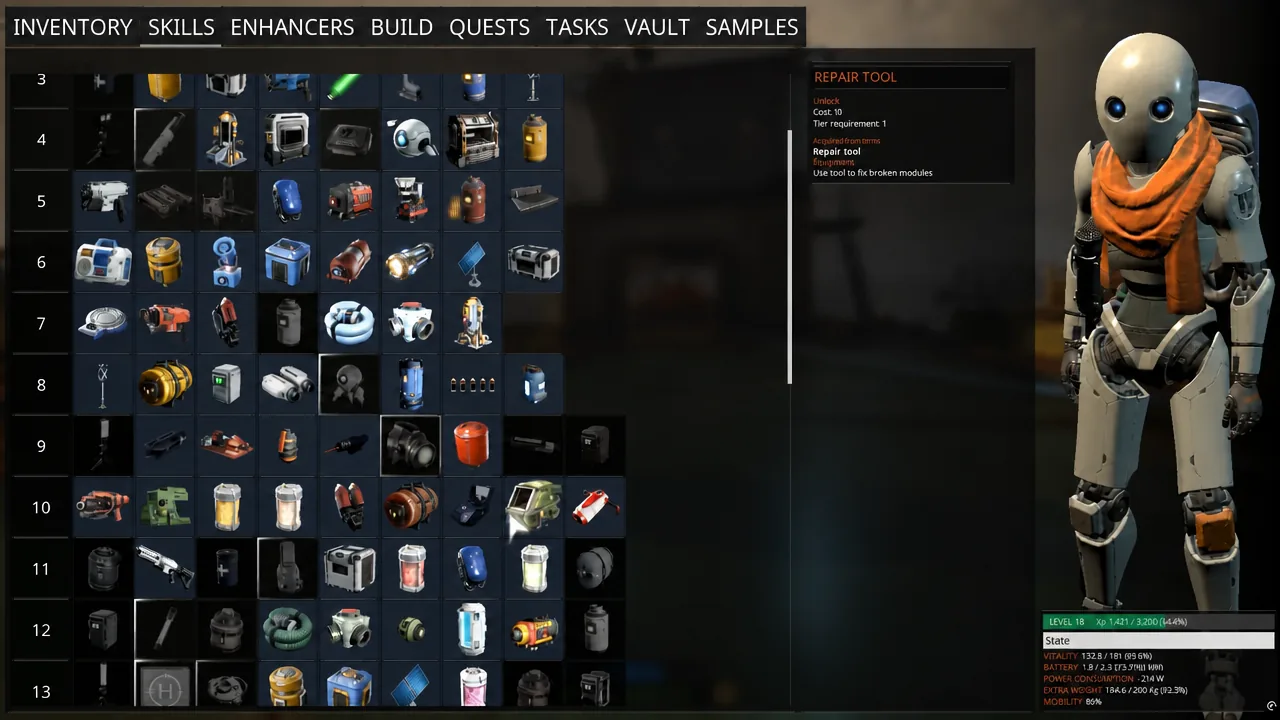
The Soilforge is a skill unlock, not a starting blueprint. Open the Skills menu and find the Soilforge entry, which costs 1 point and carries a tier requirement of 10. Until that is spent, the machine will not appear in your build options and Bio Flesh has nowhere to go.
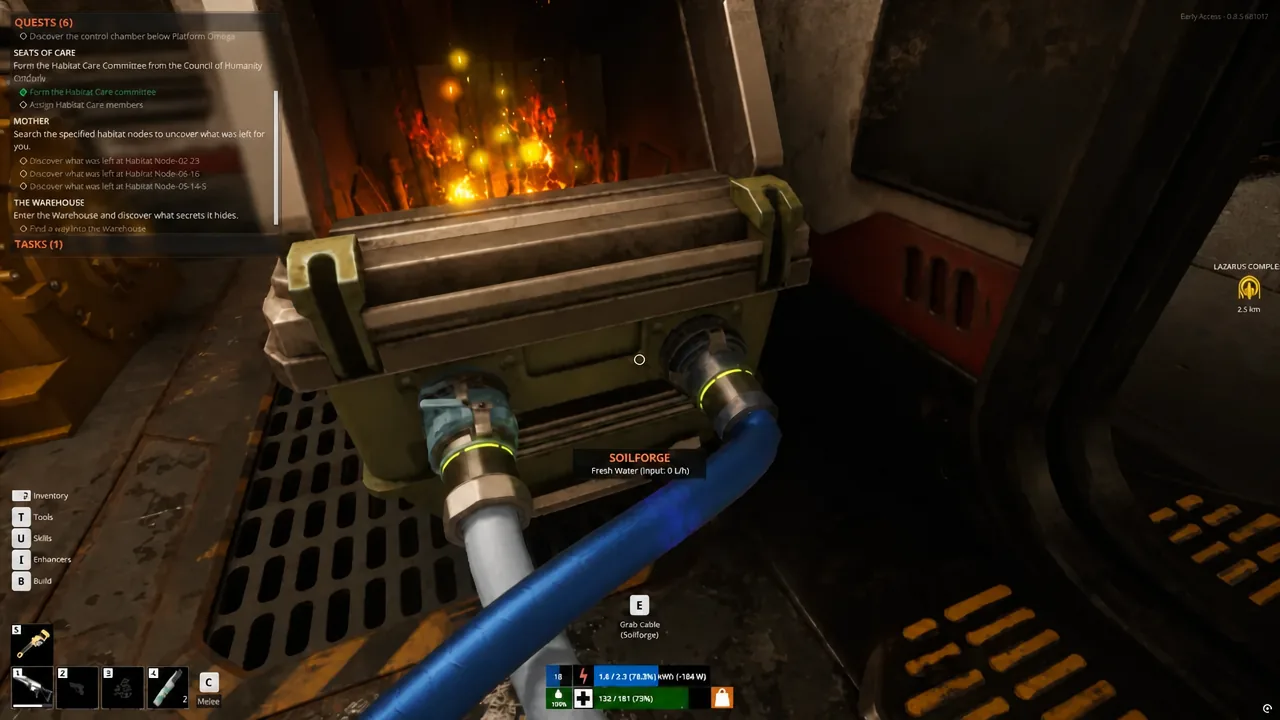
Once built, the machine has three running demands. All three must be satisfied at once or the batch will not process, and a missing water line is the most common reason a fully powered Soilforge sits idle.
| Requirement | Value |
|---|---|
| Skill cost | 1 point |
| Tier requirement | 10 |
| Electricity | 130 Wh |
| Organics | 1.0 kg/s |
| Water | 10.0 l/s (fresh) |
These figures are from the Early Access build 0.0.0.000577 and can shift with updates, so check the machine’s own consumption readout if the numbers on your base do not line up.
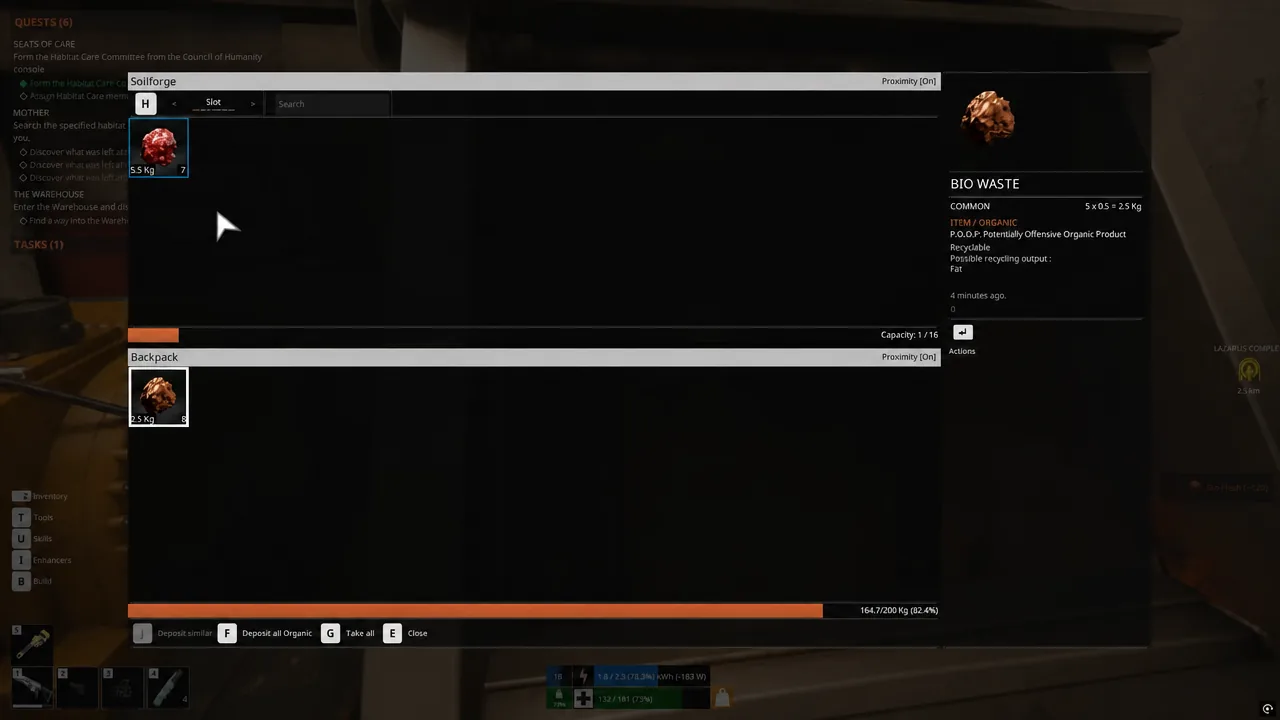
How to process Bio Flesh in the Soilforge
How to confirm it worked, and why a batch fails
Success is visible in the output slot. Two new rare materials sit there, tagged TIER I | ORGANIC – FOOD MATERIAL for the Nanite Nutrient and TIER I | ORGANIC – EFFICIENCY for the Mitochondrial Amplifier. If only scrap or Bio Waste comes out, the wrong organic went in.
When nothing is produced at all, the cause is almost always one of three things. The input is not Bio Flesh, the fresh water line is disconnected or below the required flow, or the base cannot sustain the 130 Wh draw alongside everything else you are running. Fix whichever one the machine’s status panel flags and the batch resumes.
What Nanite Nutrient and Mitochondrial Amplifier are used for
Both materials feed the Food Processor, and they only appear in the top end of the recipe list. Three of the four recipes below need Bioregulator as well, which comes from the same Bio Flesh supply chain, so plan your salvage runs around one material rather than three.
| Food | Nanite Nutrient | Mitochondrial Amplifier | Other ingredients |
|---|---|---|---|
| Mitochondrial Surge | 2x | 2x | 2x Bioregulator |
| Hyper-Evolution | 3x | 1x | 1x Bioregulator |
| Nanite Infusion | 4x | — | 1x Fat, 1x Calcium |
| Ultimate Genesis | 1x | 5x | 1x Bioregulator |
Ultimate Genesis is the heaviest draw on Mitochondrial Amplifier at five units per craft, so if that meal is the goal, stockpile Bio Flesh well before you sit down at the Food Processor. With a Soilforge already powered and plumbed, the bottleneck stops being the recipe and becomes how many Sharks and wrecks you are willing to work through.