Protein and Carbohydrate are the two food materials that keep the Food Processor running in The Last Caretaker, and neither one is found lying around the world. Both come out of a single production chain that starts with a hostile creature in the water and ends at a machine you have to unlock with a skill point.
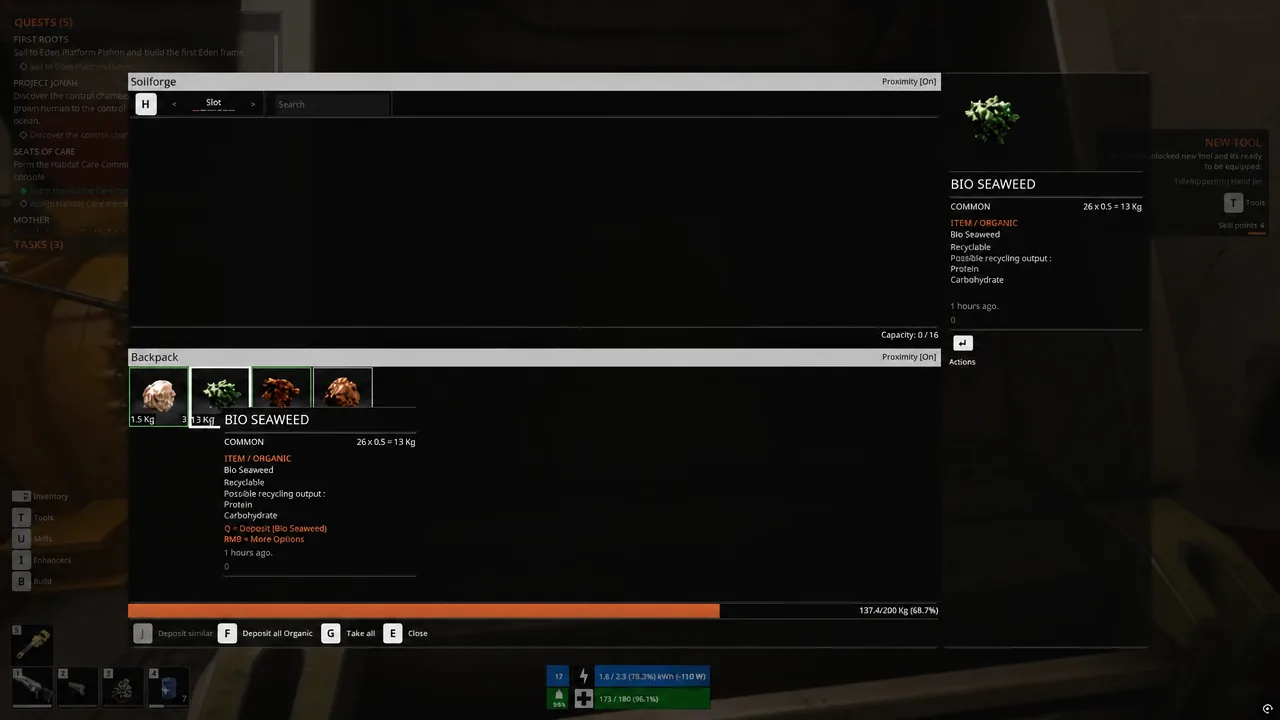
Quick answer: Kill underwater creatures to collect Bio Seaweed, then process that Bio Seaweed in a Soilforge (tier 10 unlock) that is connected to both electricity and fresh water. Protein and Carbohydrate drop from the machine’s output side.
Requirements for producing Protein and Carbohydrate
Nothing about this process is optional. Miss any one of these and the machine simply sits there with your organics inside it.
| Requirement | Detail |
|---|---|
| Input organic | Bio Seaweed |
| Machine | Soilforge or Soilforge Prime |
| Unlock | Tier requirement 10, cost 1 skill point |
| Utilities | Active electricity and fresh water lines |
| Per-batch draw | 200.0g organics, 50.0 electricity, 500.0 fresh water |
| Output | Protein and Carbohydrate, both Common, 0.2 Kg each, stack size 100 |
One thing worth clearing up early, because it trips up a lot of players: the Recycler does not convert organics into food materials. Feed Bio Seaweed into a scrap machine and it hands the seaweed straight back to you. That was an older method that no longer exists, and the Soilforge replaced it entirely.
How to farm Bio Seaweed
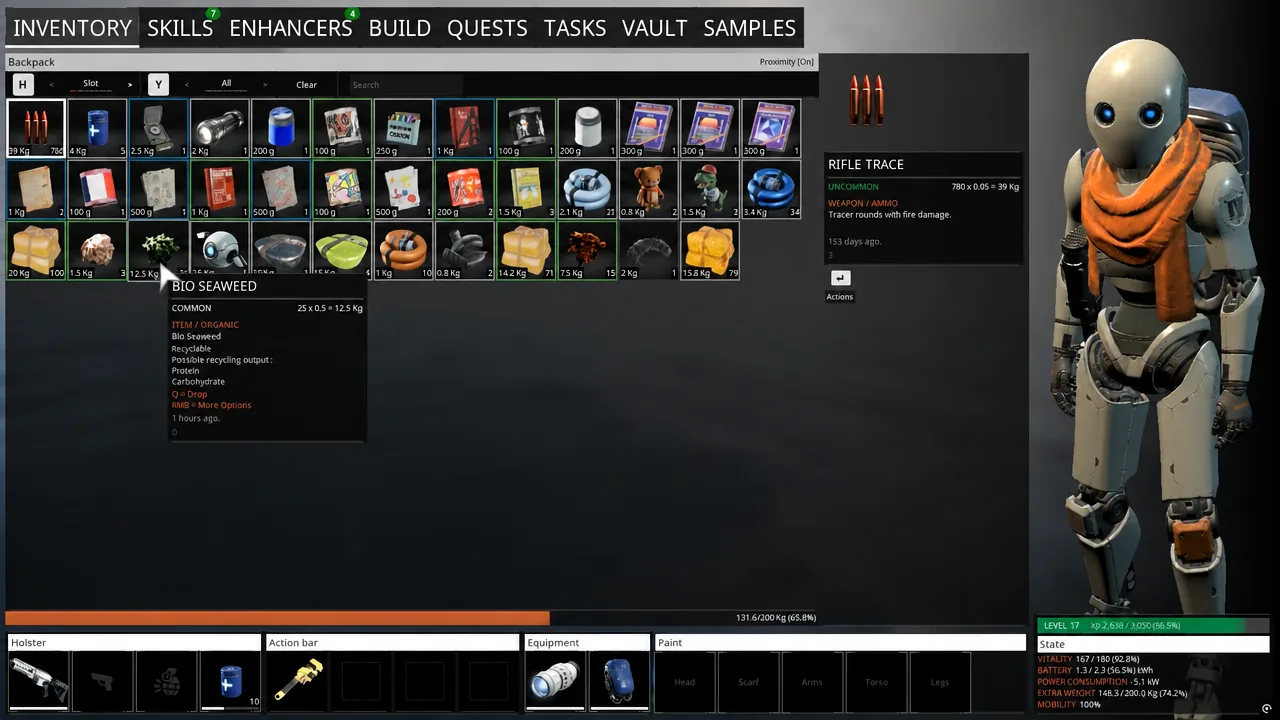
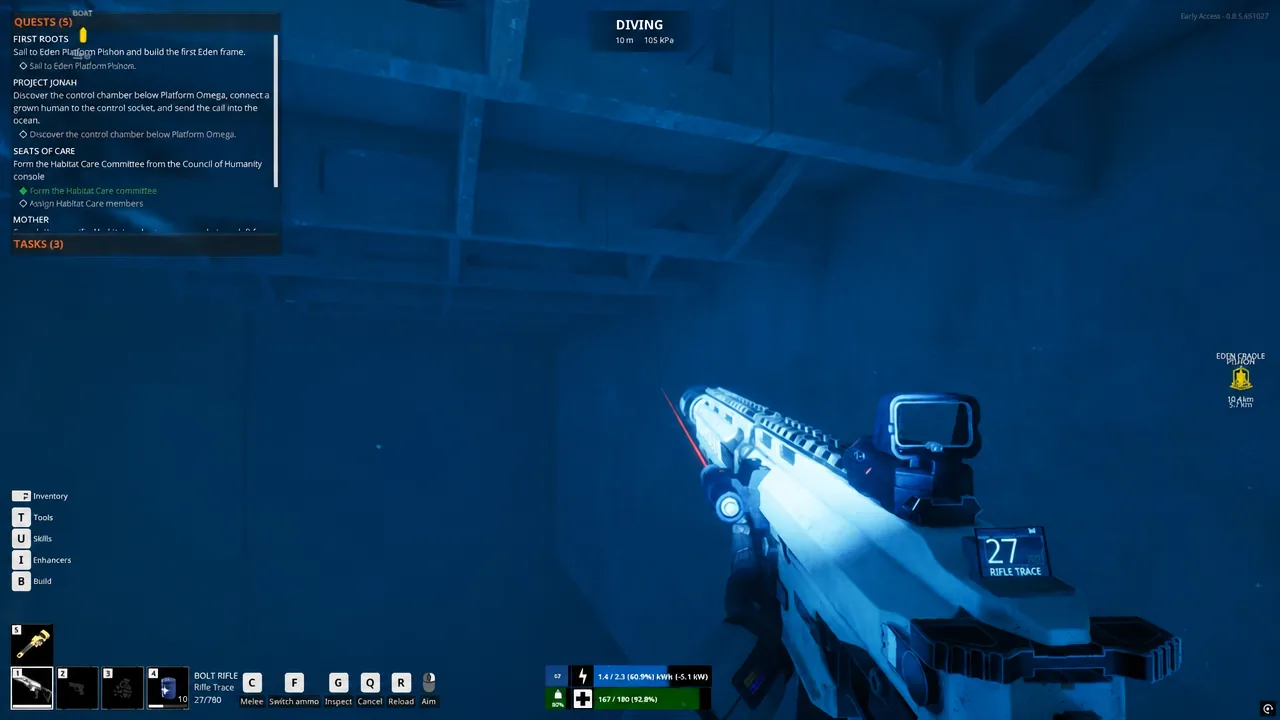
Bio Seaweed is renewable, so there is no reason to hoard it or worry about running the source dry. It drops from the creatures that attack you in open water, and the drop is generous — a single kill hands over roughly 100 Bio Seaweed, which is why a couple of night runs can cover days of cooking.

If you would rather not wait for the night cycle, points of interest work just as well. Anywhere with dense creature spawns gives the same yield per kill, and locations you are already sailing to for quest objectives make convenient farming stops on the way.
Note: Bio Seaweed also comes from The Boat’s Net and from Cocoons, so passive collection ticks along even when you are not actively hunting.
Unlock and set up the Soilforge
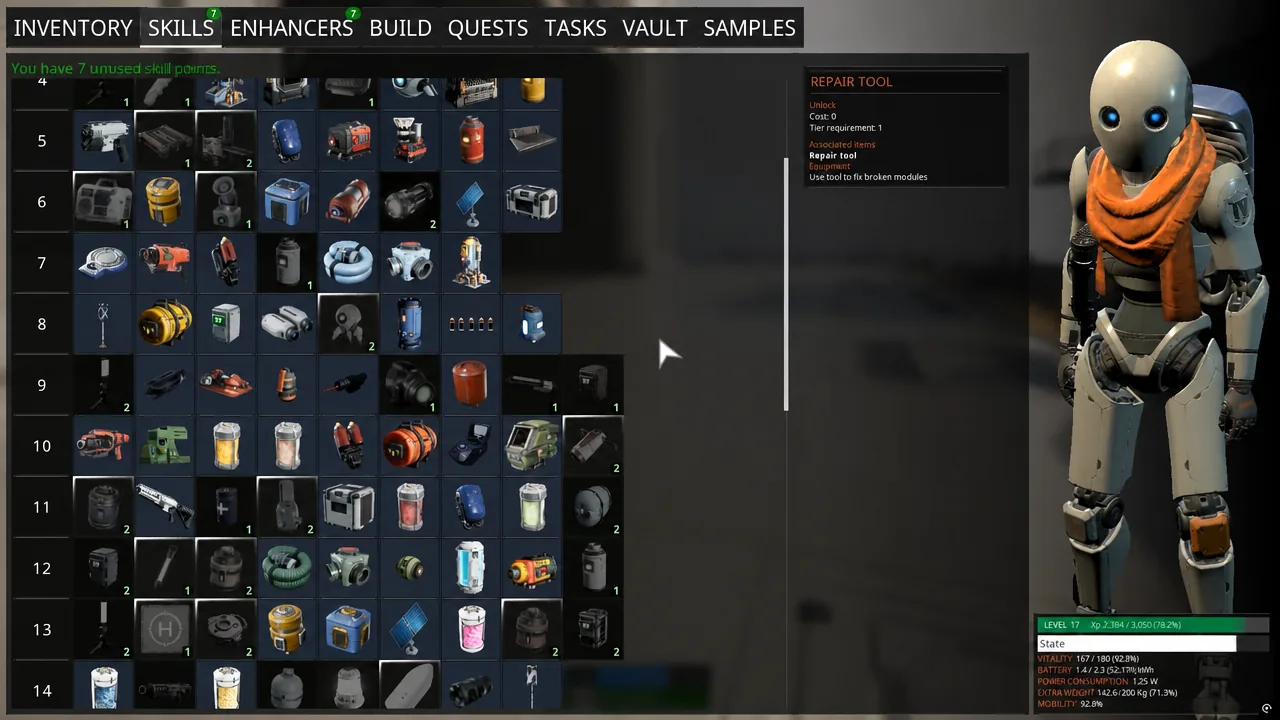
The Soilforge is a hard gate. Below tier 10 there is no way to turn organics into food materials, so if you are still levelling, farming thousands of Bio Seaweed early only fills your storage.
How to tell it worked, and what to check if it doesn’t
Success is obvious: Protein and Carbohydrate appear at the output dispenser and can be picked up as stacks of up to 100. If your organics are sitting in the input and nothing is coming out the other side, there are only a few realistic causes.
- No electricity reaching the Soilforge, or not enough of it for the cycle.
- No fresh water connection, or an empty supply.
- The wrong organic loaded — Bio Seaweed is the only input that yields Protein and Carbohydrate.
- You used a Recycler instead of a Soilforge, which returns the organics untouched.
Check power first, then water. Between them they account for almost every stalled Soilforge.
Food Processor recipes that use Protein and Carbohydrate
Once processed, both materials go straight into the Food Processor. Five recipes call for them, and the ratios vary sharply, so it is worth knowing what you are stocking for before you commit a night to farming.
| Food | Protein | Carbohydrate | Other ingredients |
|---|---|---|---|
| High-Fat | 5 | 5 | 8x Fat |
| Nutri-Core | 3 | 3 | 3x Fat |
| Mind Surge | 10 | 1 | 2x Fat |
| Physique Fuel | 4 | 2 | 2x Fat |
| Immune Boost | 2 | 3 | 1x Fat, 3x Calcium, 3x Vitamin D, 3x Omega-3 |
Mind Surge is the outlier that will drain a Protein stockpile fast, while Immune Boost is the only one of the five that also pulls in Calcium and Vitamin D — materials that come from finite Bio Light and Bio Dark rather than renewable organics.
The whole thing settles into a loop once the Soilforge is running. Hunt at night with the flashlight off, haul the Bio Seaweed back, let the machine chew through it while you handle other work, and collect Protein and Carbohydrate in bulk on your way past. Because the source is renewable, the only real limit is how many creatures you can put down before sunrise.