Vitamin D is one of the mid-tier food materials in The Last Caretaker, and it has exactly one production route. It comes out of a Soilforge, and the only thing you can put in to get it is Bio Light — the glowing organic dropped by the pink blob creatures scattered around points of interest. Miss either half of that equation and the machine simply sits there.
Quick answer: Drop Bio Light into a Soilforge that is wired to power (1500 W) and plumbed to fresh water (1.00 l/s). Each batch returns Vitamin D and Omega-3.
Vitamin D requirements in The Last Caretaker
Before you farm anything, make sure the machine side is sorted. The Soilforge is a Tier 1 build, but it still costs 10 skill points to unlock, and it needs two utility connections rather than one. Soilforge Prime accepts the same input if you have already moved up to it.
| Requirement | Detail |
|---|---|
| Machine | Soilforge (Tier 1) or Soilforge Prime |
| Unlock cost | 10 skill points |
| Electricity input | 1500 W |
| Fresh water input | 1.00 l/s |
| Input organic | Bio Light |
| Output | Vitamin D and Omega-3 |
Vitamin D itself is an uncommon material weighing 0.2 kg per unit, and it stacks to 100, so a single storage slot holds far more than most early recipes will ever ask for.
Where to find Bio Light
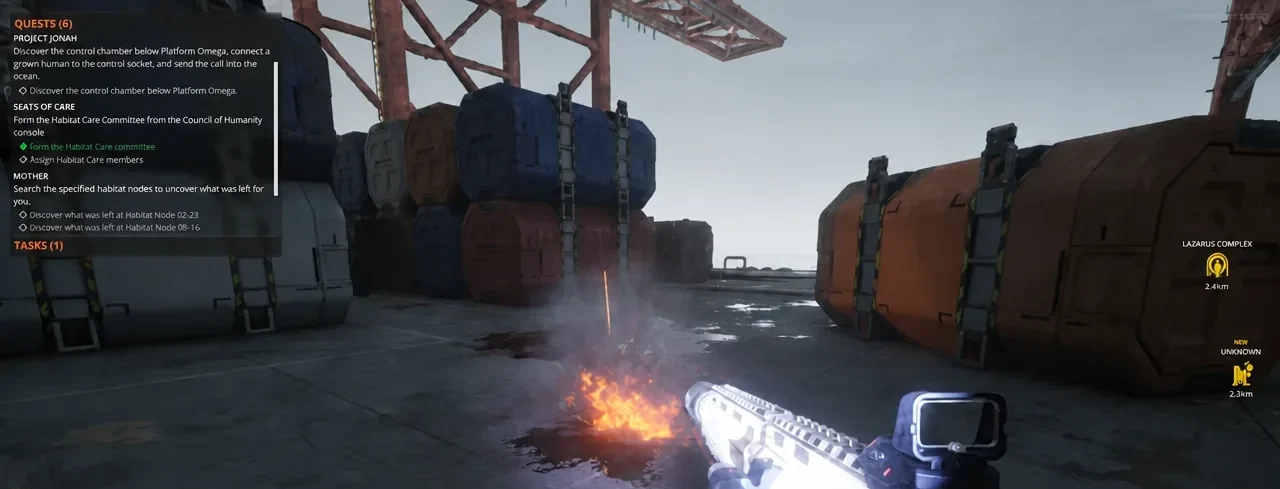
Bio Light drops from the glowing creatures that cluster around points of interest — the Lazarus Complex is a reliable example. These creatures are drawn to light, which is the single most useful thing to know about them. Carry a light source and they come to you instead of you sweeping a platform looking for them.
Killing them is straightforward with a standard weapon, and they die fast enough that a rifle is more than sufficient. There is no biome requirement and no timed spawn window to worry about.
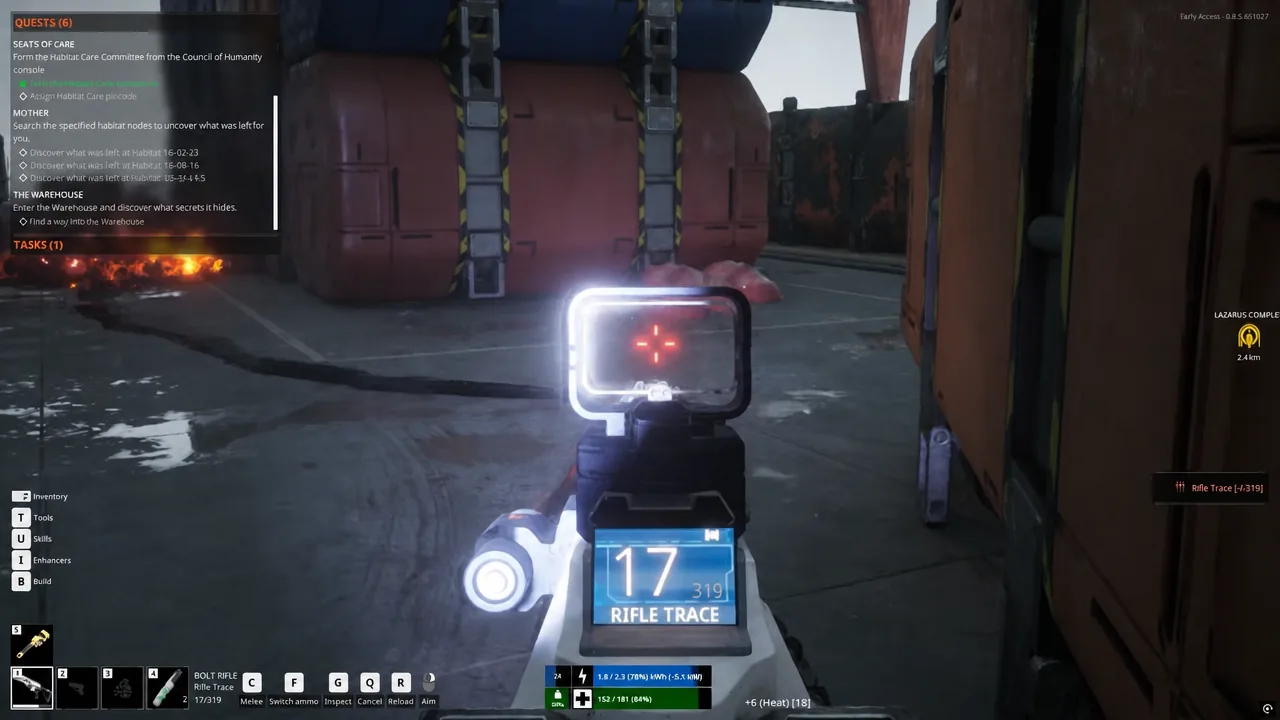
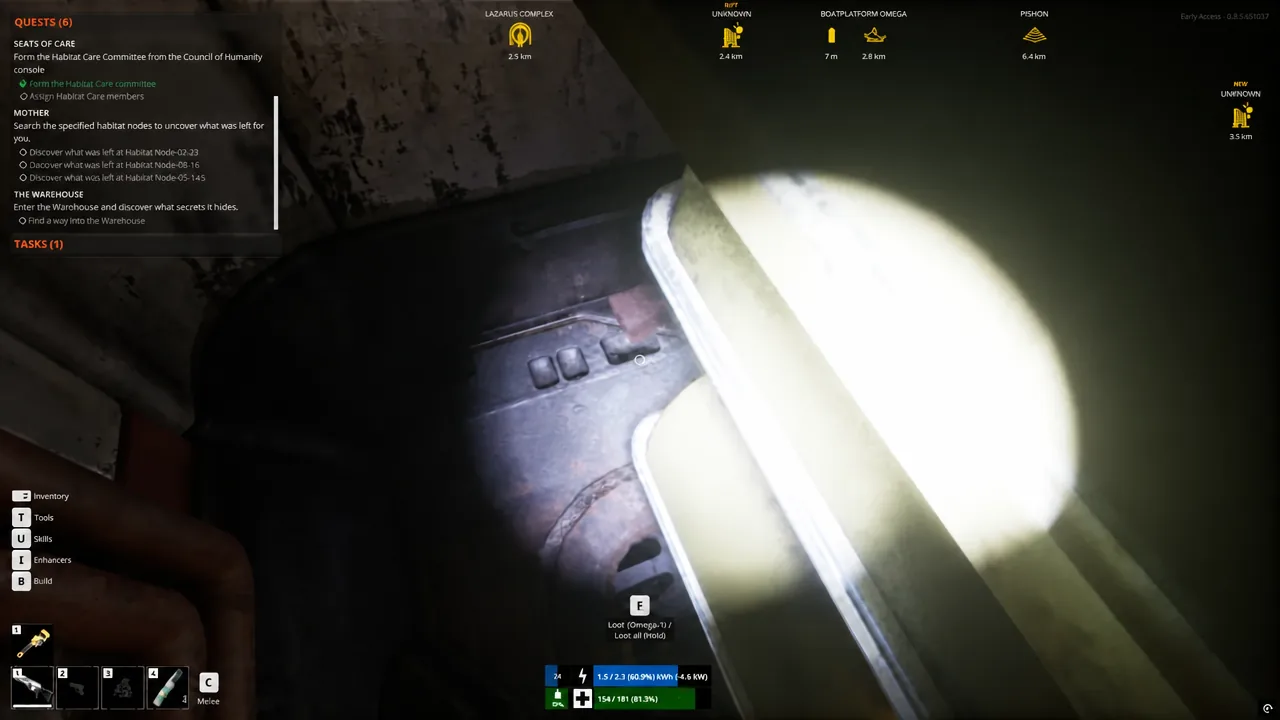
Once a creature is down, the drop is a lootable object on the ground. Aim at it and the loot prompt appears with the material name attached, so you can confirm you are actually picking up Bio Light and not something else that fell nearby.
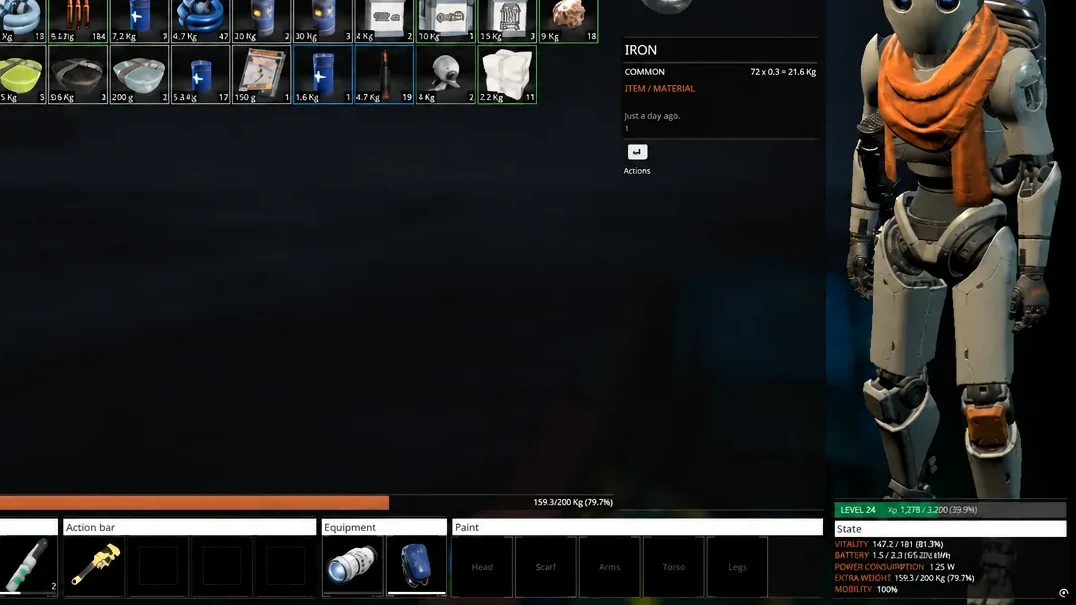
Collected Bio Light lands in your backpack alongside every other raw material, where you can check the running count before heading back to base. Five or so units are enough for a first run so you are not sprinting back and forth while you test the machine.
How to process Bio Light into Vitamin D
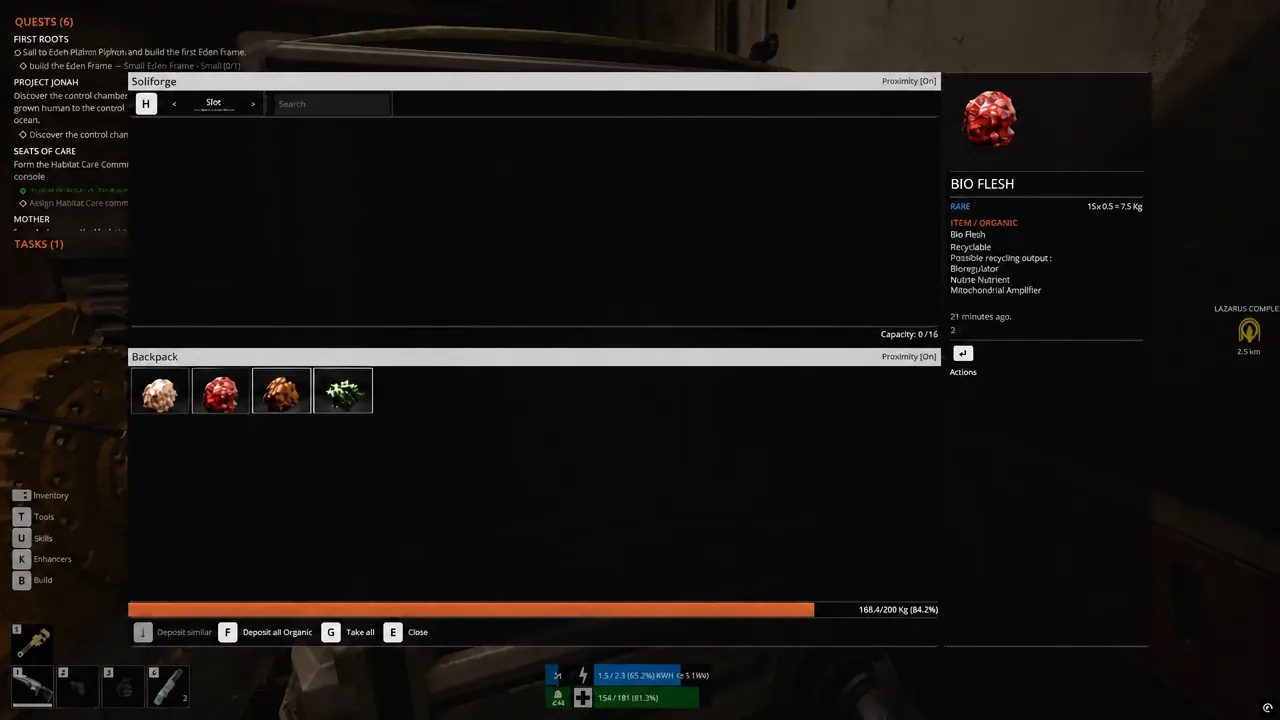
Note: The Soilforge is a general organics processor, not a Vitamin D machine. Other inputs such as Bio Flesh run through the same setup and produce different outputs, and Bio Dark — harvested from creatures in unlit areas — is what yields Calcium.
Why the Soilforge sits idle
You know the setup worked when the input slot drains and Vitamin D and Omega-3 appear in the output. If nothing moves, the cause is almost always one of a short list of things.
| Symptom | Cause |
|---|---|
| Machine powered but never starts | No fresh water line connected |
| No response at all | Electricity input below 1500 W or unconnected |
| Cycle finishes but no Vitamin D | Wrong organic loaded — only Bio Light produces it |
| Cannot build the machine | Soilforge recipe not yet unlocked |
How to keep Bio Light from running out
This is the part that catches out players who clear every platform on sight. The glowing blobs do not respawn on a timer, so a thorough sweep early on can leave a late-game save with no Vitamin D source at all. Once they are gone from a location, they are gone.
They do, however, multiply on their own if you leave breeding stock behind. Keep at least two alive whenever you harvest, and give them time — the population rebuilds slowly. Because the creatures move toward light, players use lamps as a soft pen to gather them in one spot rather than chasing them around, and a small indoor setup works as well as an outdoor one.
Tip: Letting a seed pod’s timer expire produces pink blobs, which gives you a way to seed a colony if a location has been stripped bare. A couple of sacrificed pods is enough to start a self-sustaining group.
What Vitamin D is used for
Vitamin D is not consumed directly. It is an ingredient in the Food Processor, feeding into the mid-tier foods used when growing humans in the Lazarus Pod.
- Muscle Fortification
- Endura-Growth
- Bone-Fortify
- Neuro-Boost
- Immune Boost
Because those recipes pair Vitamin D with Calcium, and Calcium depends on the equally finite Bio Dark, it is worth treating both creature populations the same way. Harvest partially, leave survivors, and check back later rather than clearing a room in one pass. The Soilforge will happily keep producing as long as something is still alive to feed it.