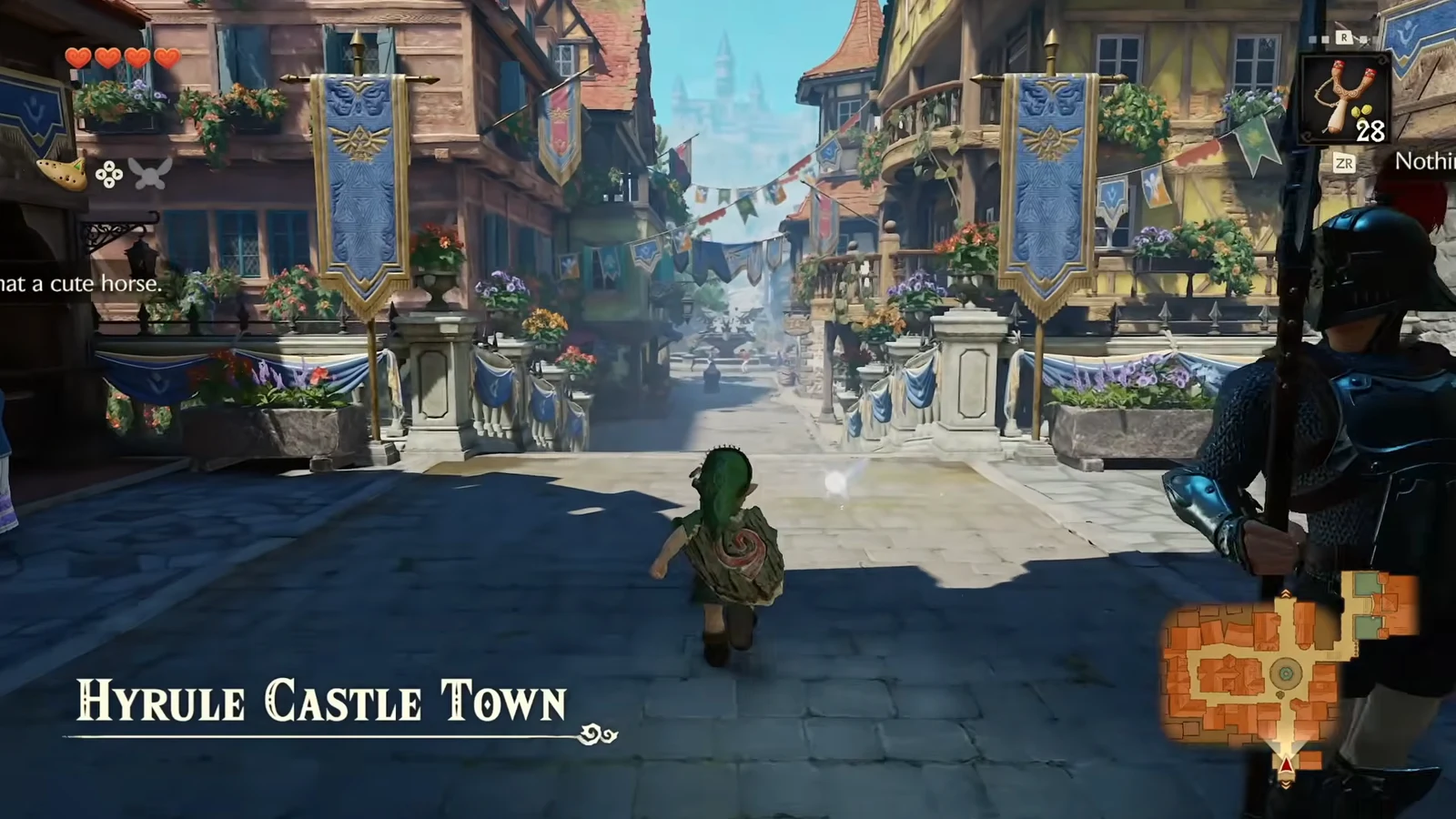
The Switch 2 version of The Legend of Zelda: Ocarina of Time is not a resolution bump on a 1998 game. It rebuilds Hyrule with modern lighting and geometry while keeping the map layout, dungeon order, and story beats intact, then layers modern control conventions on top of them. The result plays like the game people remember, with most of the friction of N64-era design quietly removed.
Quick answer: The remake keeps Hyrule at 1:1 scale but adds a manual jump button, full right-stick camera control, a sprint, a horizontal item menu, real-time day and night indoors, voiced NPCs, an orchestral re-recording, and microphone-based ocarina play. It arrives November 5, 2026 on Nintendo Switch 2 at $60 digital and $70 physical.
Release date, price, and the foil physical edition
The remake launches November 5, 2026, exclusively on Nintendo Switch 2. The digital version is $60. The physical version is $70 and ships with a textured foil cover, described as special packaging available while supplies last. Nintendo had earlier told investors only that the game was on track for late 2026 before the date was locked in.
| Detail | Value |
|---|---|
| Release date | November 5, 2026 |
| Platform | Nintendo Switch 2 |
| Digital price | $60 |
| Physical price | $70, textured foil cover art |
N64 original vs Switch 2 remake: system changes
| System | N64 original | Remake |
|---|---|---|
| Jumping | Automatic at ledges | Manual jump button |
| Camera | Fixed, nudged with shoulder buttons | Full right-stick control |
| Fast movement | Rolling | Sprint by holding the roll button |
| Item swapping | Pause menu grid | Horizontal quick-select bar |
| Day/night | Paused indoors | Runs in real time indoors |
| Dialogue | Text only | Fully voiced NPCs, silent Link |
| Ocarina input | Face buttons | Buttons or Switch 2 microphone |
| Music | N64 sequenced score | Orchestral re-recording |
Movement, camera, and jumping
The biggest feel change is the jump. Link no longer hops automatically when he runs off a ledge, and a dedicated button handles it instead. That affects platforming sections and side areas that were previously built around the auto-jump, since you now decide when to leave the ground.
The camera is on the right stick and moves freely, replacing the original’s fixed angles and shoulder-button nudges. Z-targeting is still there, with lock-on markers appearing over enemies and interactive objects. Holding the roll button now makes Link sprint, so crossing open ground no longer depends on chaining rolls.
Item swapping and the Threads of Time tracker
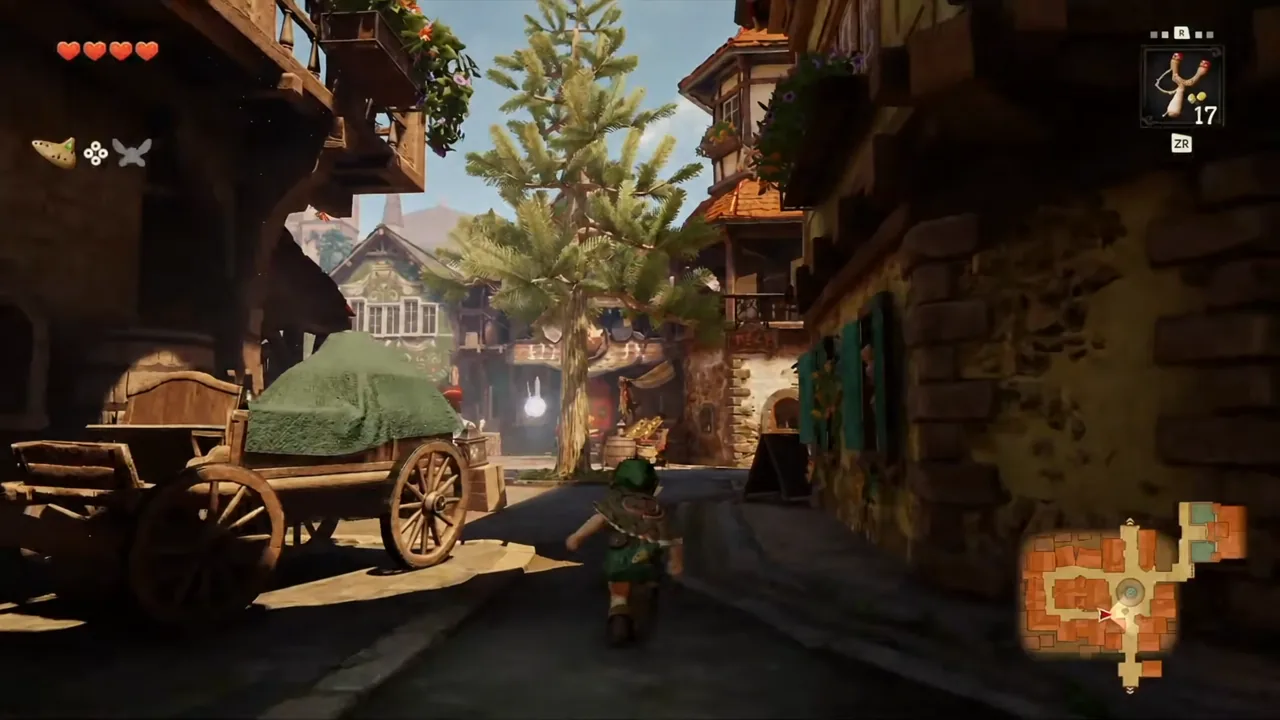
Item selection has been rebuilt as a horizontal bar, similar to the wheel-style menus in Breath of the Wild and Tears of the Kingdom. Items carry short descriptions, so the Deku Shield entry notes that it burns if it catches fire and the Fairy Slingshot lists its hold-and-release input on ZR.
The pause menu also gains a feature called Threads of Time, a tapestry that records story progress as you go. Each completed chapter is logged with a short summary, and the current objective is spelled out plainly, such as heading to Hyrule Castle after leaving Kokiri Forest. It doubles as a reminder of where you were if you put the game down for a while.
Playing the ocarina with the Switch 2 microphone
Songs can still be played the traditional way, by pressing the mapped buttons in sequence. The remake adds a second option that uses the Switch 2’s built-in microphone, letting you hum a melody or play it on a real instrument to trigger the same song. Button input remains available at all times, so the microphone is an alternative rather than a requirement.
Hyrule Field, loading screens, and shop entrances
Hyrule Field is a faithful 1:1 recreation of the original layout, not a redrawn or expanded overworld. What changes is what you can see from it, with longer draw distances and far denser environmental detail filling in space the N64 version had to leave empty.
Transitions between major areas still use short loading screens, preserving the rhythm of the original’s area boundaries. Smaller interiors work differently. Walking into a shop happens seamlessly, with no cut to a loading screen, and the day and night cycle continues to run while you are inside towns and buildings instead of freezing until you leave.
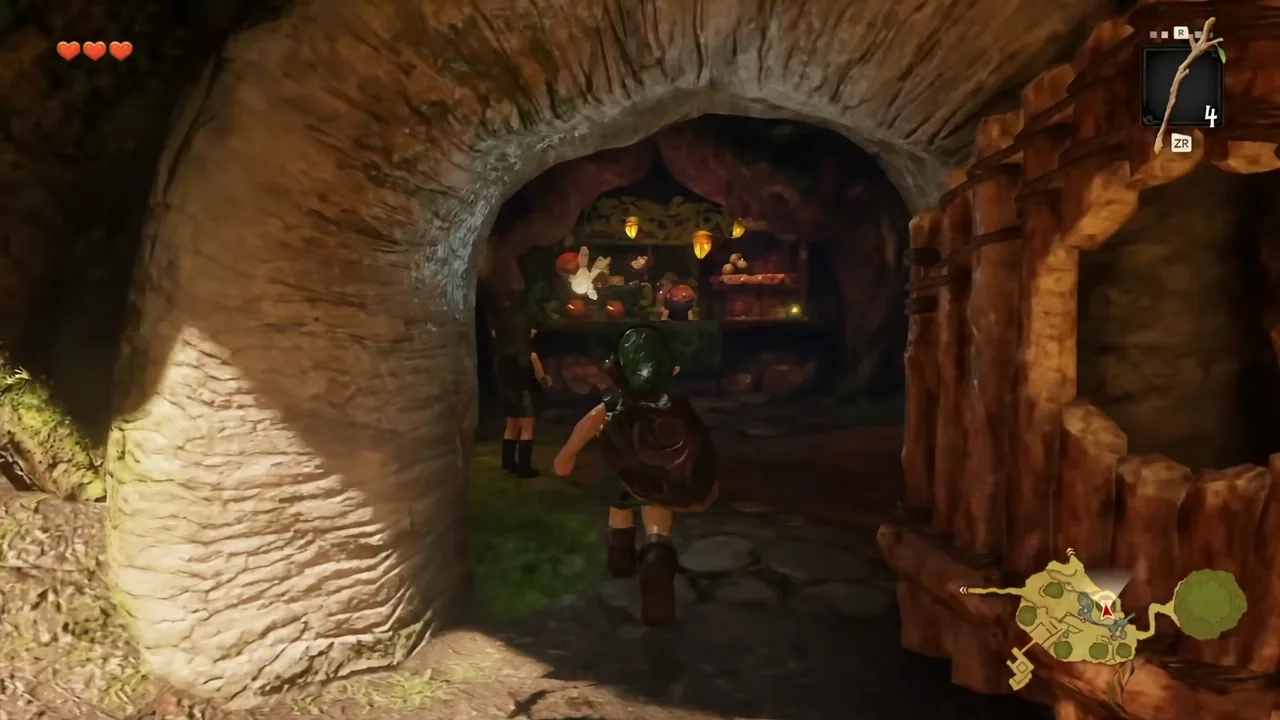
Hyrule Castle Town gets more room to breathe as well, with expanded interiors to explore rather than a handful of single-purpose rooms.
Visual overhaul and character models
The art direction leans on modern rendering, with soft global lighting, volumetric fog, and layered foliage that gives Kokiri Forest depth the original could only suggest with flat textures. It is a stylized look rather than a photoreal one, sitting closer to a storybook than to the muted palette of the N64 release.
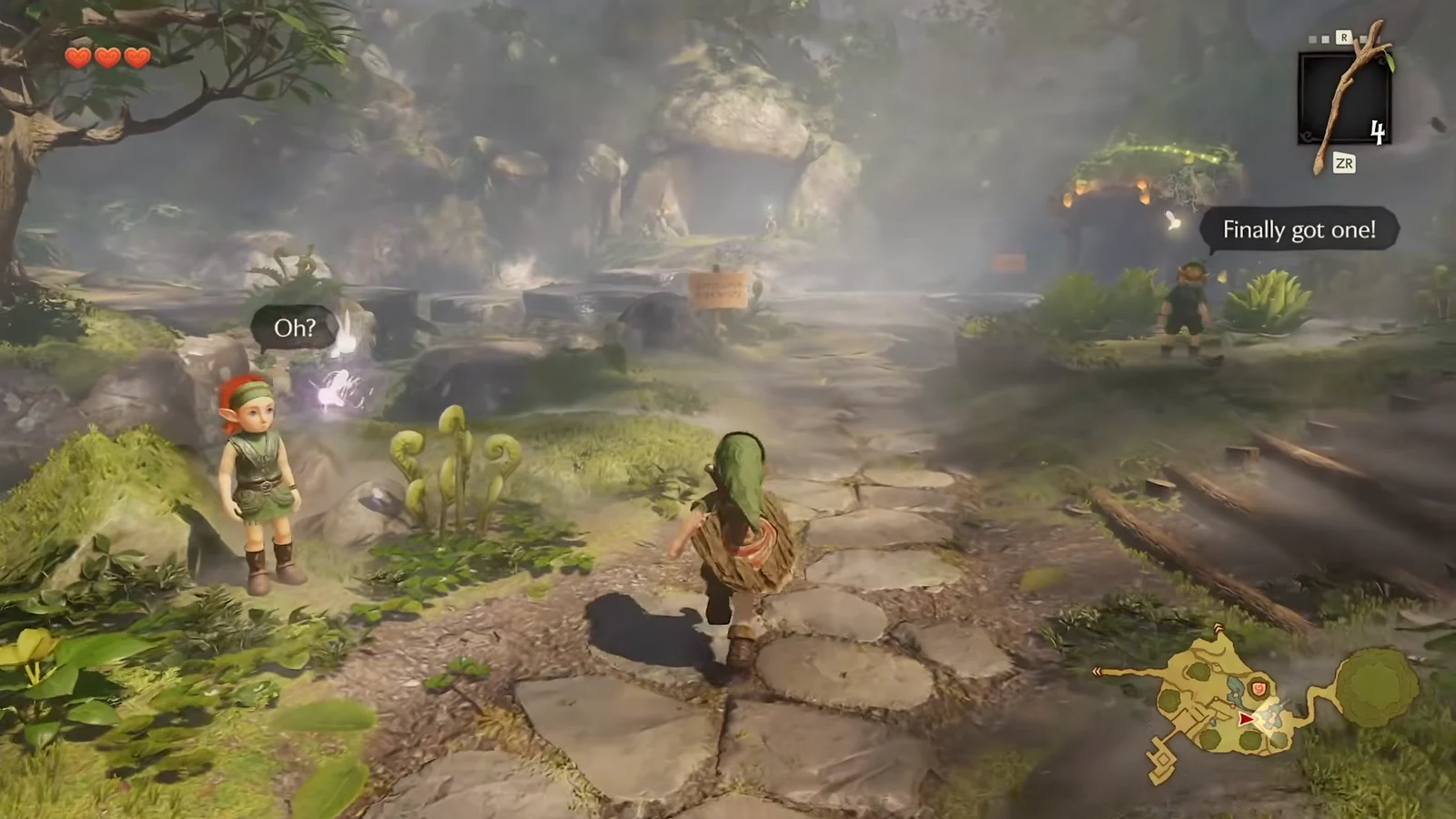
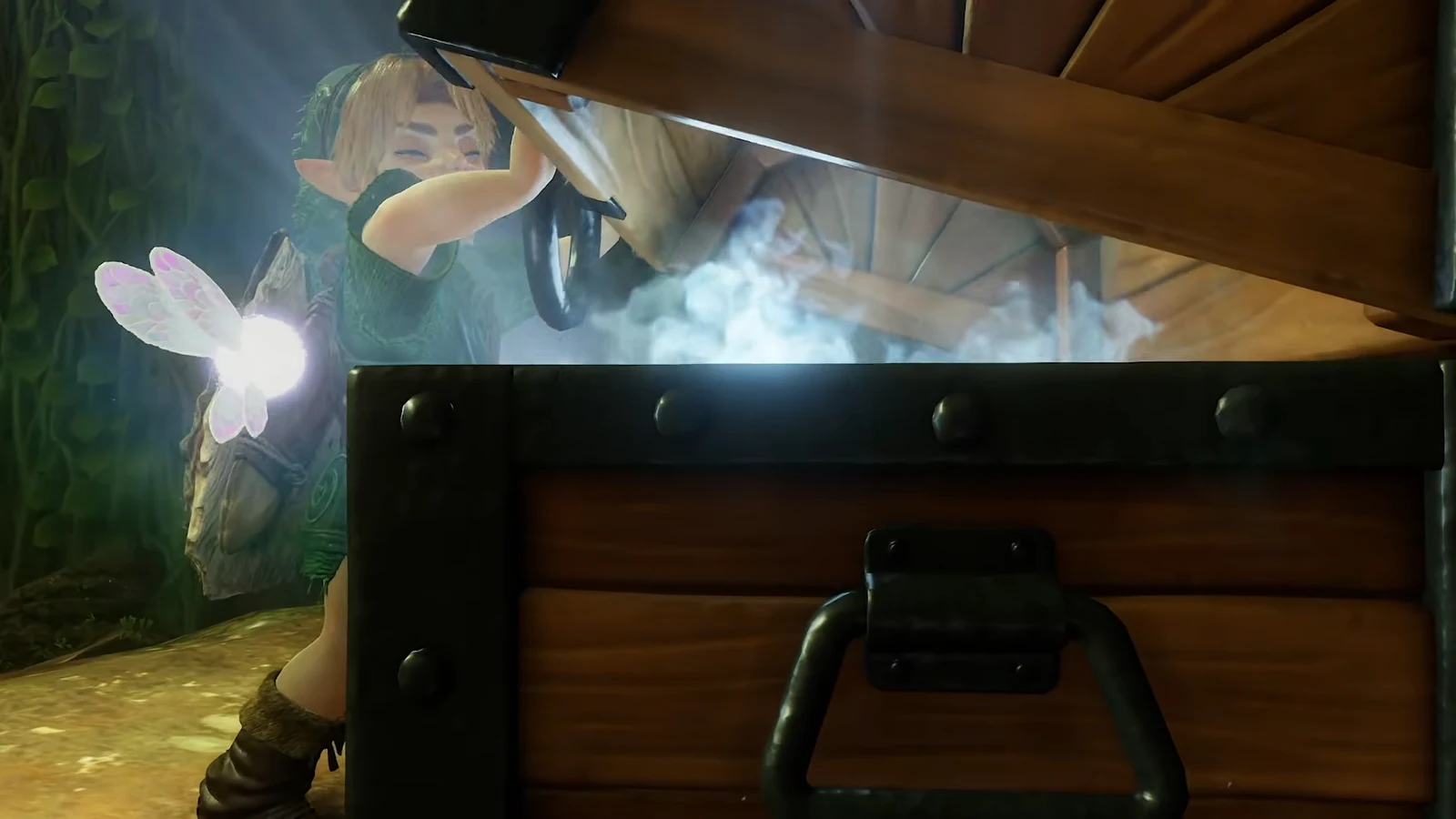
Character models get the same treatment. Child Link’s Kokiri Tunic has visible fabric weave and stitching, and equipment like the Kokiri Sword and Deku Shield now reads as carved wood and worn metal. Zelda, Saria, and adult Link are all rebuilt with detailed faces and full animation sets.
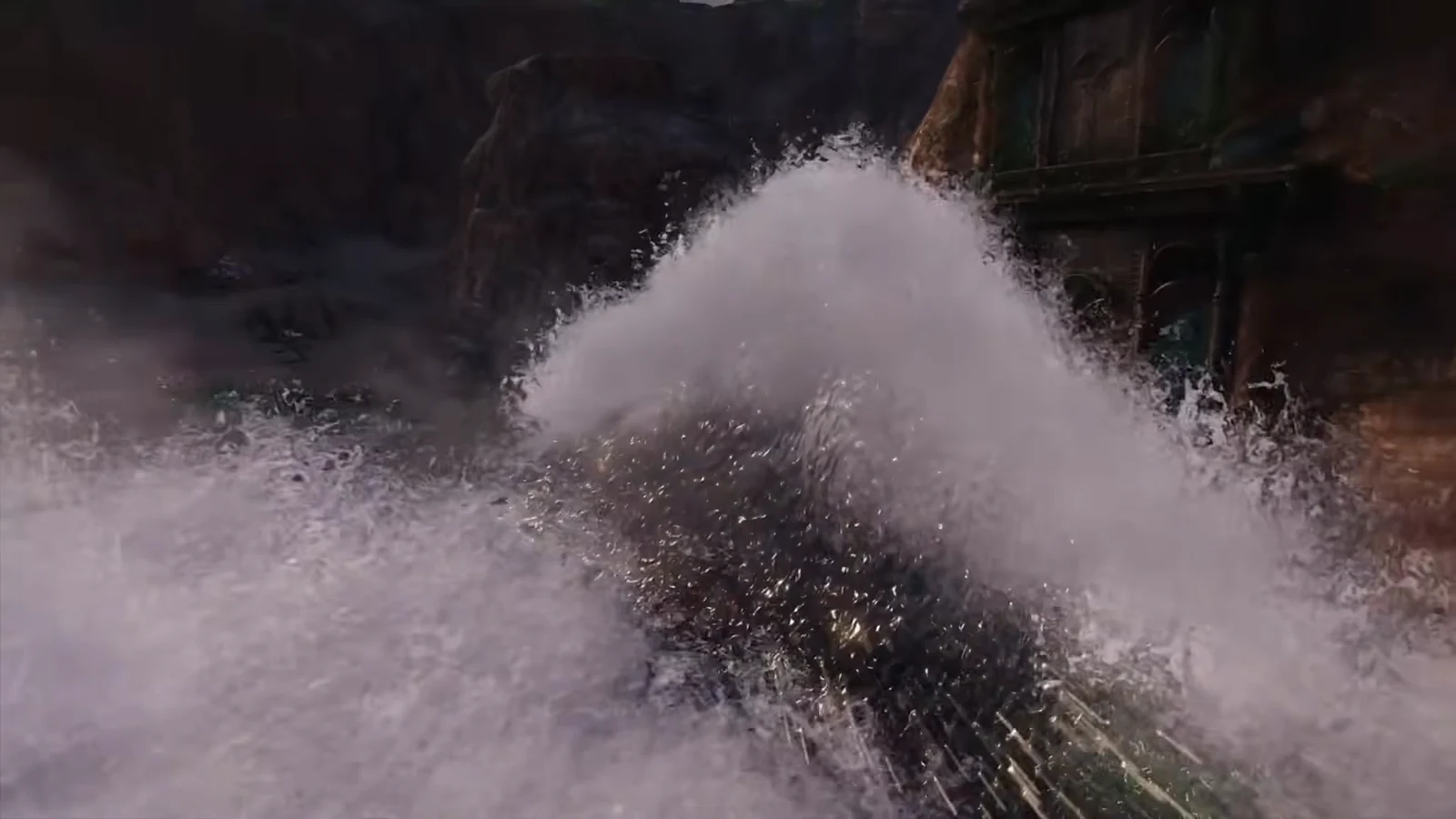
Weather is more than a filter here. Rain scenes add wet surfaces and specular highlights across characters and terrain, which is one of the clearest departures from the original’s flat shading.
Voice acting, Navi, and the orchestral score
NPCs are fully voiced, from shopkeepers greeting you at the counter to major story characters. Link is the exception and stays silent, keeping his role as the player’s stand-in.
Navi has been reworked to be less disruptive. Her hints now surface in small pop-up dialogue boxes rather than interrupting play, so guidance is available without stopping what you are doing.
Koji Kondo’s original score has been re-recorded with a full orchestra. The compositions are unchanged, so the melodies land exactly where they did in 1998, just performed by live players instead of the N64’s sound hardware.
Taken together, the changes are almost entirely about how the game controls and presents itself rather than what it contains. Hyrule’s geography, its dungeon progression, and its story are the same ones players have been mapping in their heads for nearly three decades, which puts the pressure on how the reworked camera, jump, and ocarina input hold up once the whole game is in players’ hands in November.