Grilled meat off a campfire will keep you alive in the Meadows, but it will not carry you much further. Almost every meal worth eating in Valheim — the stews, the jerky, the mead bases — comes out of a Cauldron, and the game is quiet about what you actually need to build one. The short version is that it costs metal you have to smelt yourself, and it will not cook a thing unless there is fire burning underneath it.
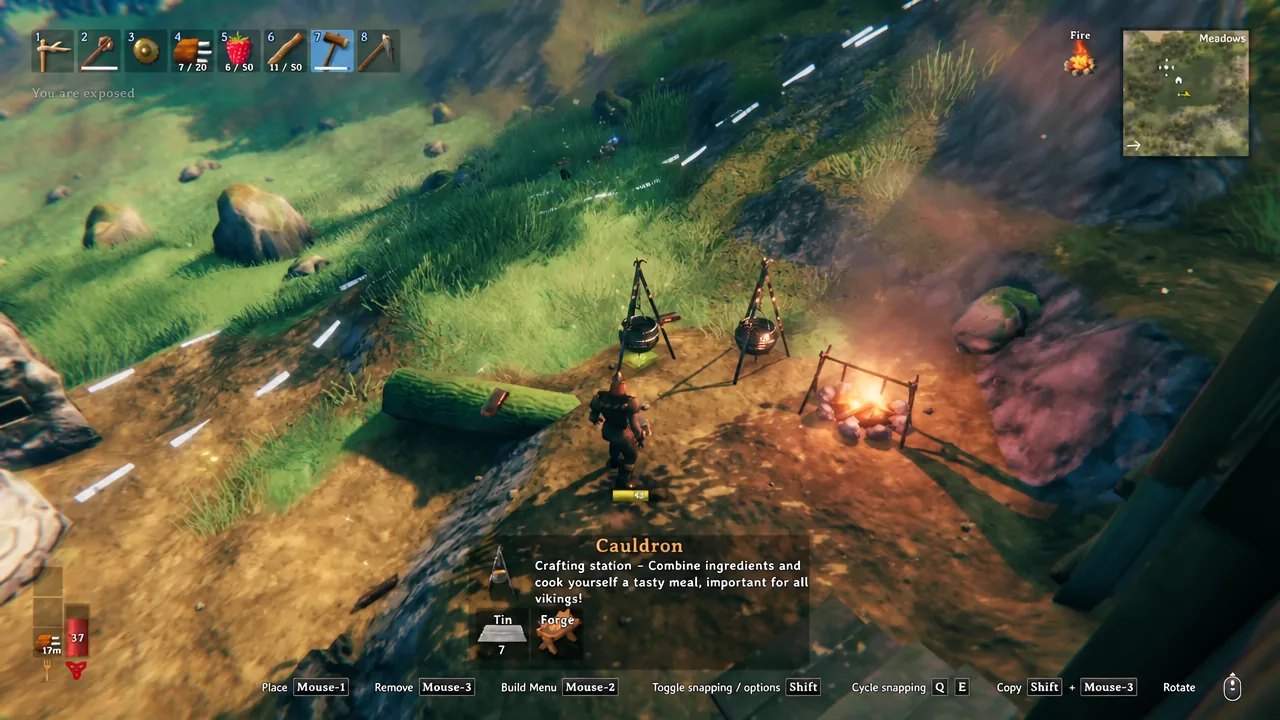
Quick answer: Smelt 10 Tin, build a Forge, then place the Cauldron from the Crafting tab of your Hammer menu and put a lit Campfire or Hearth directly beneath it.
Cauldron requirements in Valheim
Everything the Cauldron asks for sits in the Black Forest tier, so this is a project for right after your first boss kill rather than something you can rush on day one.
| Requirement | Details |
|---|---|
| Materials | Tin x10 (smelted bars, not raw ore) |
| Crafting station | Forge, built nearby when you place it |
| Tool | Hammer (Wood x3, Stone x2) |
| Heat source | Campfire (Stone x5, Wood x2) or Hearth (Stone x15) directly below |
| Skill used | Cooking |
The Forge itself needs Stone x4, Coal x4, Wood x10, and Copper x6, which means you are refining two metals before the Cauldron is even an option.
How to unlock the Cauldron recipe
The recipe does not exist in your build menu by default. It appears the moment you pick up a bar of Tin for the first time while a Forge is standing somewhere in the world. Miss either half of that and the Cauldron simply will not be listed.
How to place the Cauldron over a fire
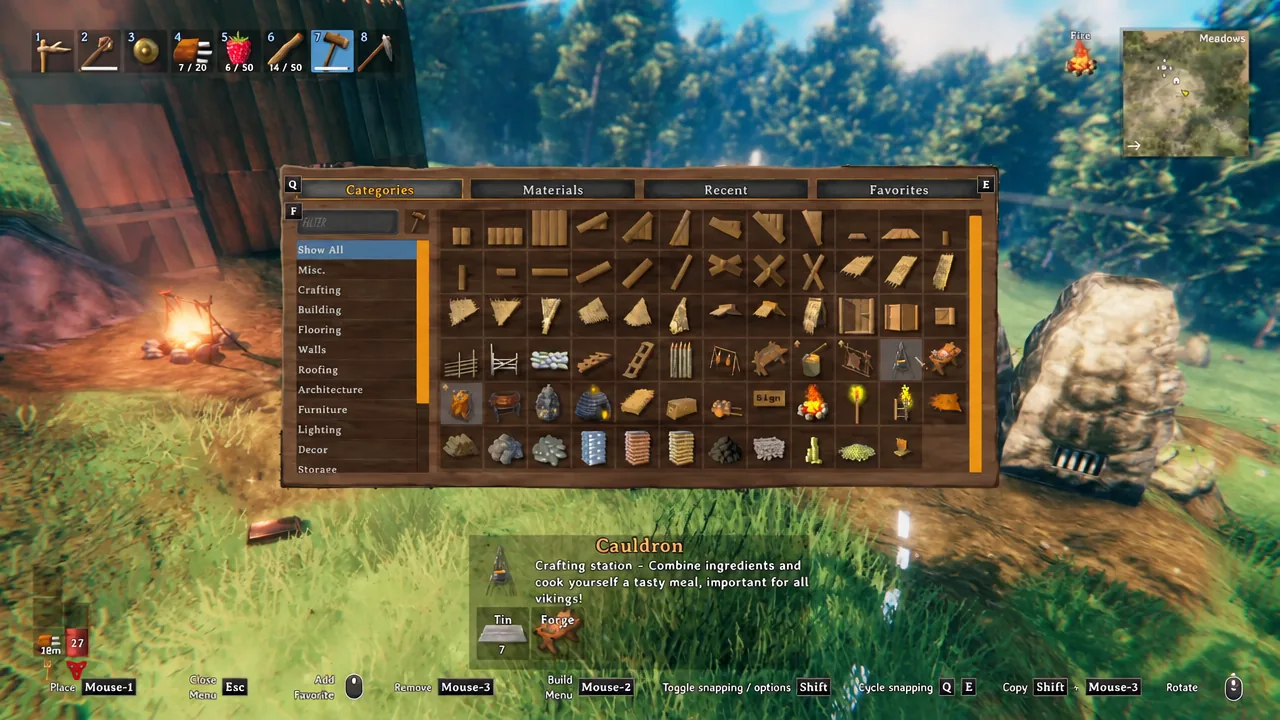
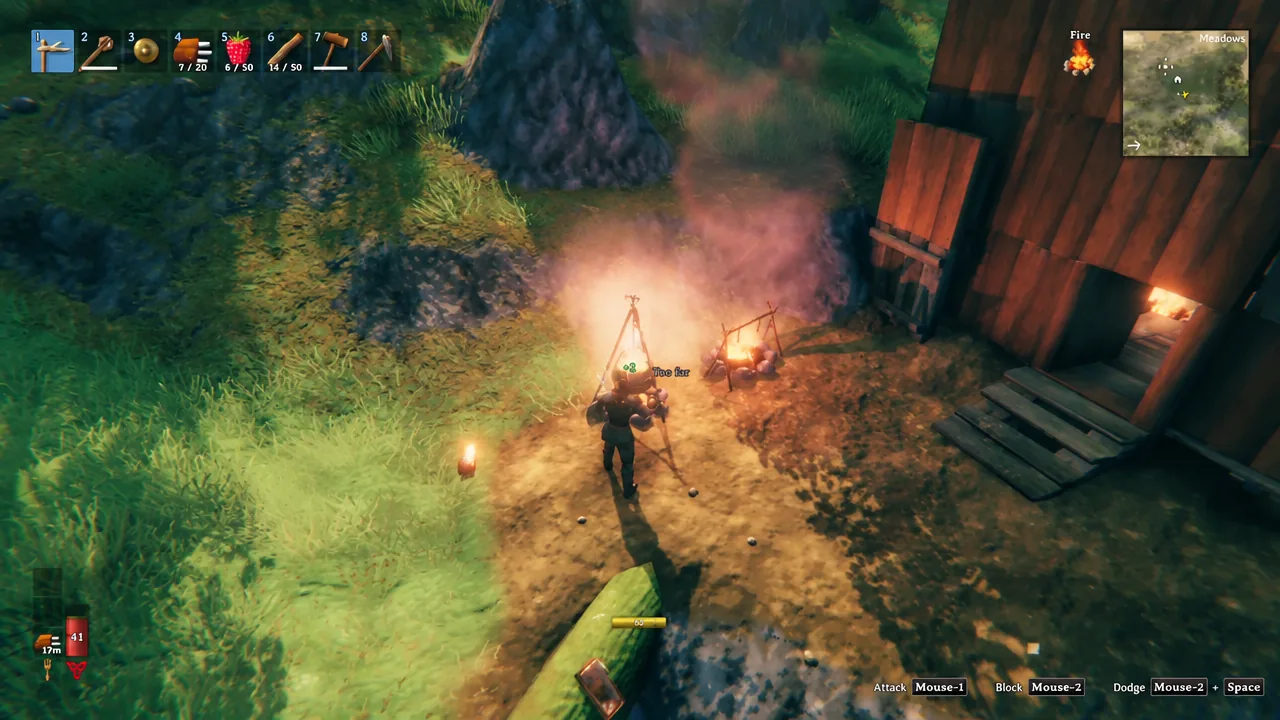
Note: once the Cauldron is down, the Forge has done its job. You can tear the Forge out and move it elsewhere without breaking the Cauldron, since the station is only checked at the moment of placement.
Confirming the Cauldron works, and why it sometimes doesn’t
Walk up and interact with the pot. If it is functioning, a cooking menu opens on the right side of the screen with a list of dishes — recipes you can afford show up in white, and ones you are missing ingredients for are greyed out. A star in the top right corner of that menu shows the Cauldron’s current level, starting at 1.
If the menu refuses to open or you see the warning that you need a lit fire below the cooking station, the cause is almost always one of these:
- The Campfire or Hearth has burned through its Wood and gone out.
- Rain put the fire out, which happens to any uncovered fire outdoors.
- The fire is next to the Cauldron rather than underneath it.
Building indoors solves the rain problem, but an enclosed fire produces smoke that will damage you if it has nowhere to go. Leave a chimney or vent hole above the hearth, and give the kitchen more floor space than you think you need — the upgrade pieces below take up a surprising amount of room.
What a level 1 Cauldron can cook
Straight out of the box, the Cauldron handles the early multi-ingredient dishes plus every mead base you have the ingredients for. The starting recipe list covers Boar jerky, Carrot soup, Cooked egg, Deer stew, Minced meat sauce, and Queen’s jam. New entries appear on their own as you pick up unfamiliar ingredients out in the world.
Select a recipe, hit Craft, and the finished food drops straight into your inventory after a short pause. Holding Shift while you cook batches five at a time, which saves a lot of clicking when you are stocking up before a boss run.
Cauldron upgrades and their materials
Each improvement is a separate structure you build from the Crafting tab and place near the Cauldron. It has to be within range to count, and you need a Workbench nearby to put the pieces down. Every one you add raises the level shown in the cooking menu by one and unlocks another tier of recipes. Some hang on walls or beams rather than sitting on the floor, so plan a beam next to the pot for the Spice rack and Pots and pans.
| Improvement | Materials | Where the materials come from |
|---|---|---|
| Spice rack | Dandelion x3, Carrot x2, Mushroom x5, Thistle x3, Turnip x3 | Meadows, Black Forest, Swamp (Turnips must be farmed) |
| Butcher’s table | Ancient bark x2, Corewood x4, Finewood x4, Silver x2 | Swamp and Mountain |
| Pots and pans | Iron x5, Copper x5, Black metal x5, Finewood x10 | Swamp, Black Forest, Plains |
| Mortar and pestle | Black marble x8, Finewood x6, Corewood x4 | Mistlands |
| Rolling pins and cutting boards | Ashwood x8, Finewood x6, Flametal x4 | Ashlands |
| Smoker | Bloodgold x5, Timberwood x6 | Deep North |
The Spice rack is the cheap one and opens up Sausages, Serpent stew, Turnip stew, and Onion soup. After that the cost curve gets steep fast. Silver for the Butcher’s table means a Mountain trip with the Wishbone from Bonemass, Black metal for Pots and pans means fighting Fulings in the Plains, and Black marble for the Mortar and pestle means mining Ancient Remains in the Mistlands with a black metal pickaxe. None of those metals can go through a portal, so budget for boat trips.
Build it once and the Cauldron stays relevant for the rest of the run, which is unusual for a Black Forest structure. Pick a corner of your base with room to grow, keep a stack of Wood next to the fire, and the pot will still be feeding you long after you have moved on to Ashlands gear.