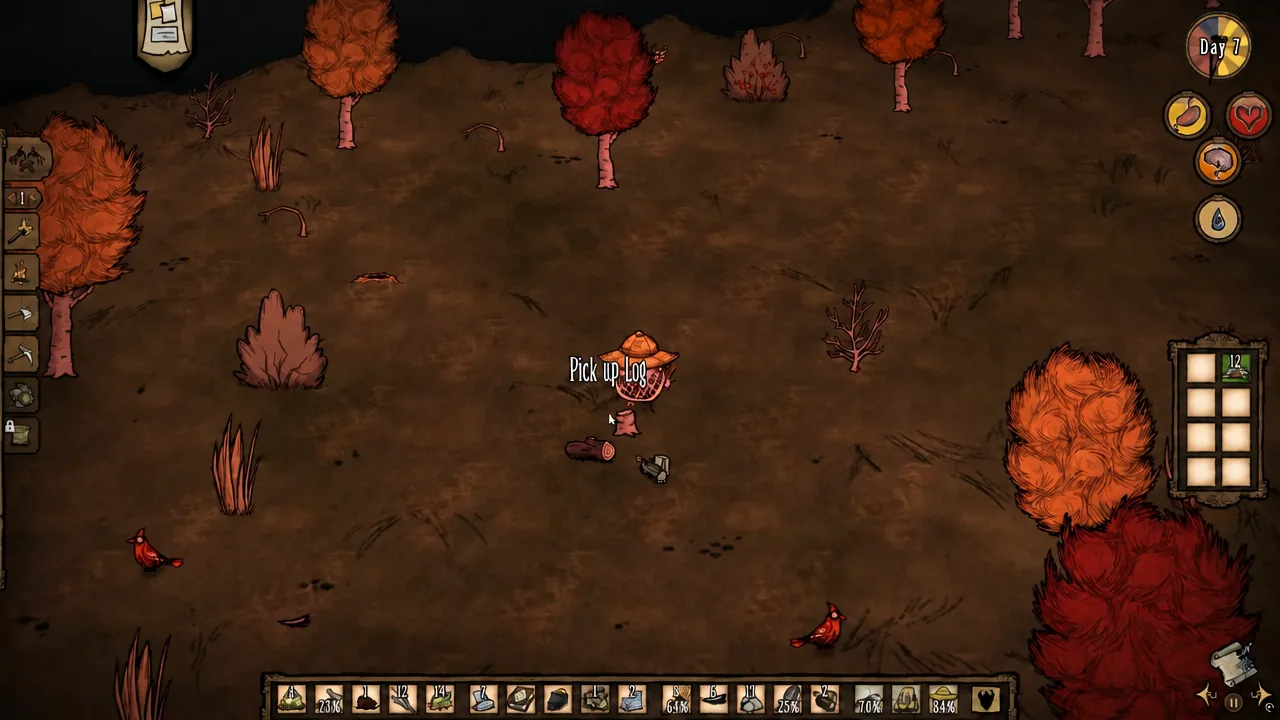
Logs are the backbone of almost everything you build in Don’t Starve Together. They fuel fires, refine into Boards, and feed into armor, science stations, and boat repairs. Getting them is simple, but the amount you walk away with depends on which trees you swing at and whether you bother with the stumps.
Quick answer: Equip an Axe, chop an Evergreen, Birchnut Tree, Mushtree, Cave Banana Tree, or Palmcone Tree until it falls, then pick up the Logs on the ground. Dig the leftover stump with a Shovel for one extra Log.
Every source of Logs in Don’t Starve Together
Chopping is the main supply line, but Logs also fall out of a few less obvious places. Here is where they come from.
| Source | How you get it |
|---|---|
| Evergreen | Chop with an Axe; yield scales with tree size |
| Birchnut Tree | Chop with an Axe |
| Mushtree | Chop with an Axe, found in the caves |
| Cave Banana Tree | Chop with an Axe underground |
| Palmcone Tree | Chop on Moon Quay Island |
| Tree Stump | Dig an Evergreen or Mushtree stump with a Shovel for one Log |
| Spiky Tree | Chance of a Log when chopped, plus another chance when the stump is dug |
| Tall Stalagmite | Rare drop (0.05%) when mined out with a Pickaxe |
| Wilson | Craft from 3 Twigs with the Transmutation skill |
Logs stack up to 20 per slot, so a single afternoon of chopping fills an inventory row fast.
How to chop trees for Logs
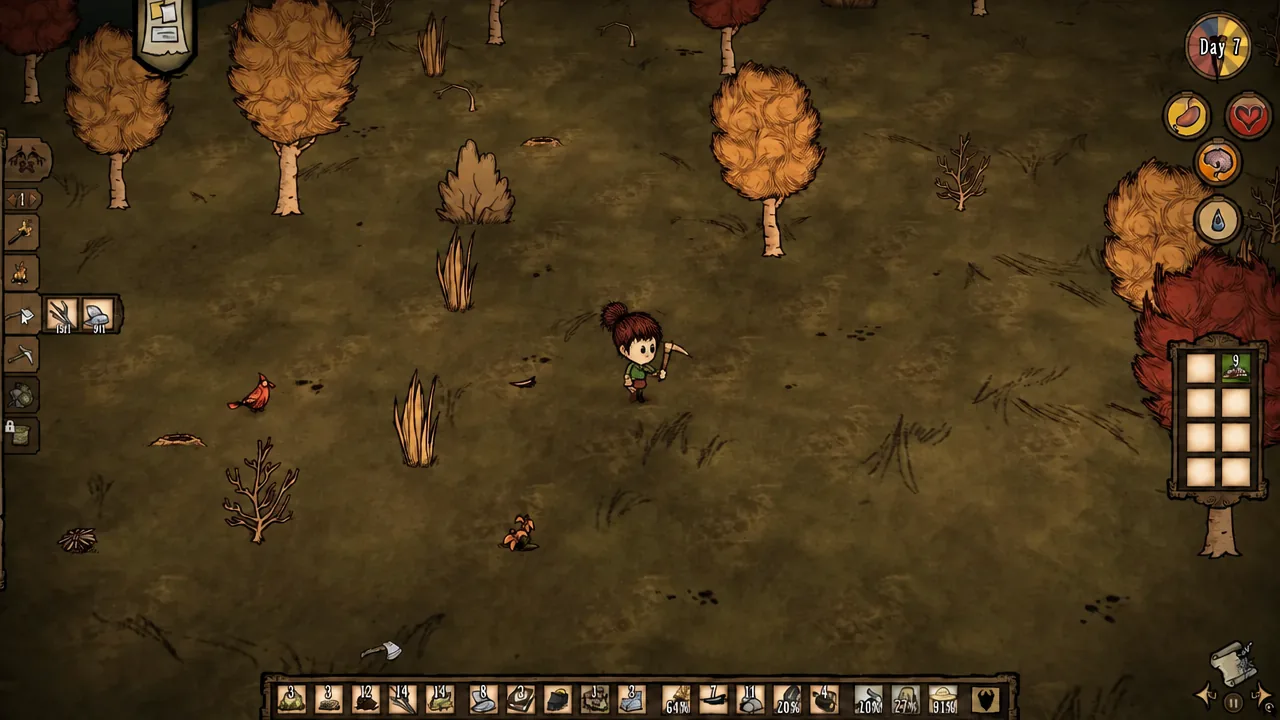
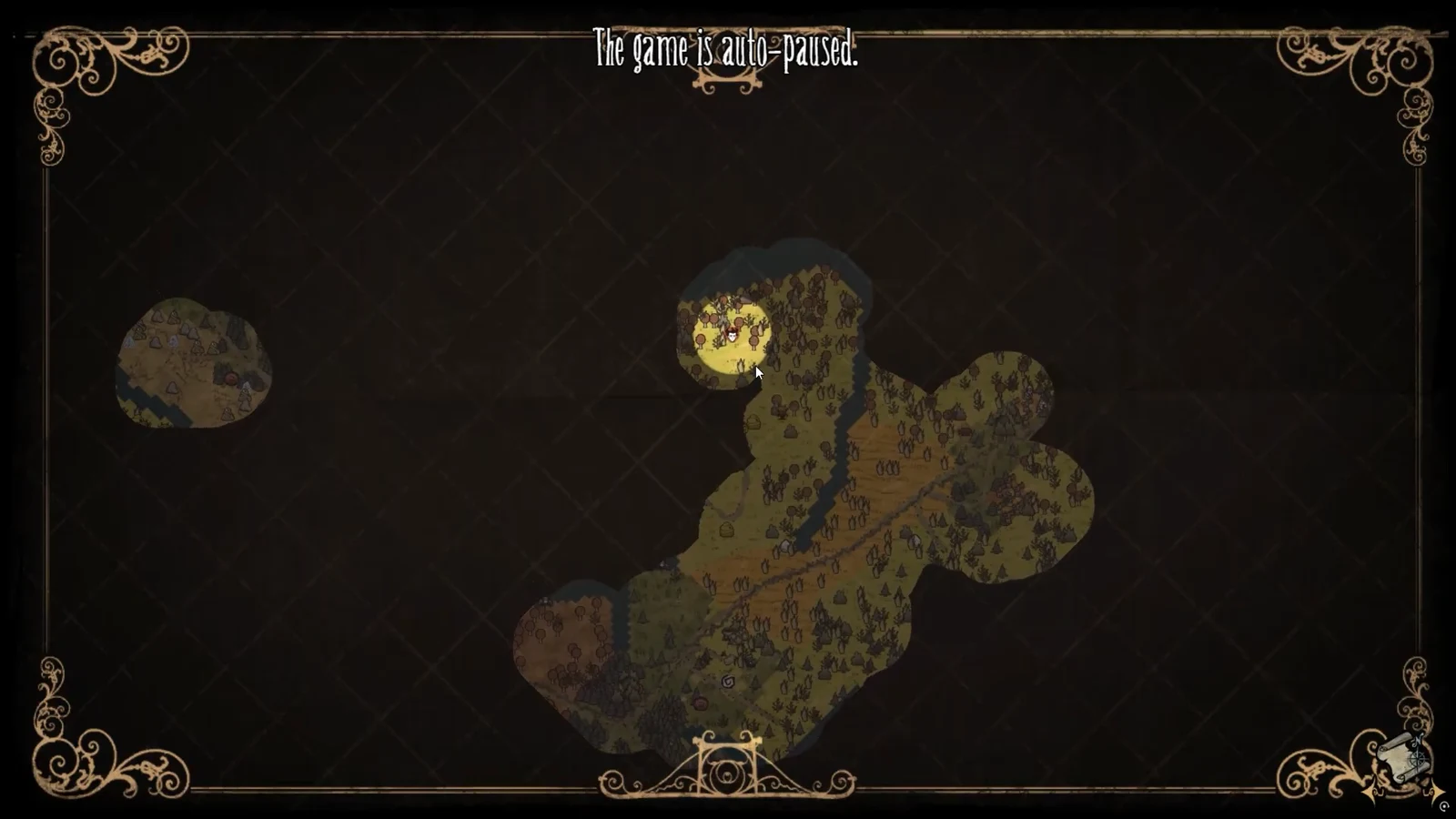
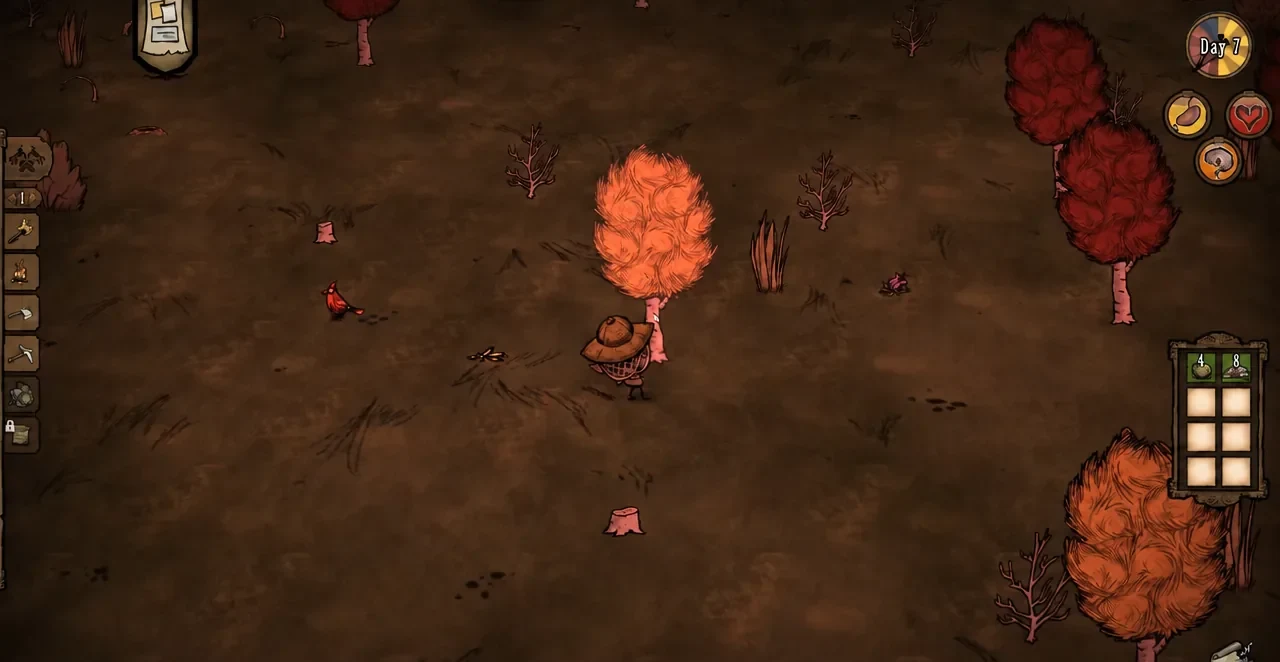
Tree size decides how many Logs you get
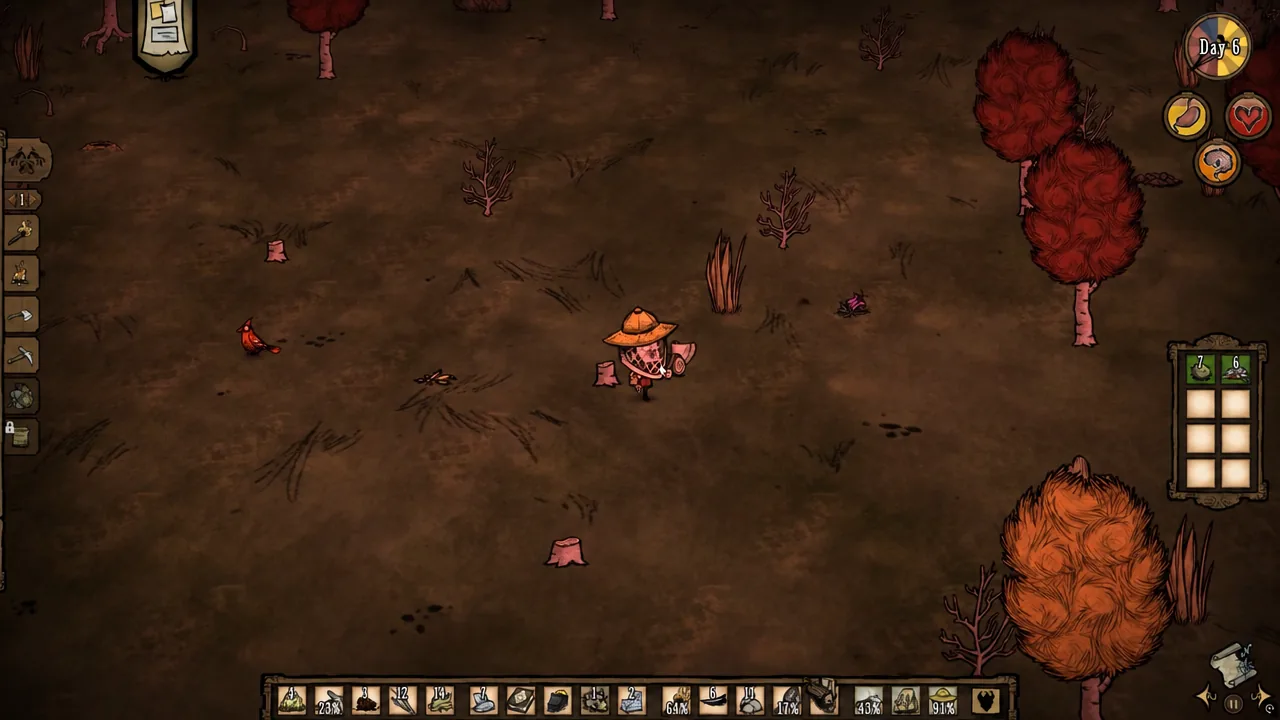
Evergreens grow through three sizes, and the payout scales with them. A sapling-sized tree is barely worth the durability, while a fully grown one triples your return for only a few extra swings.
| Evergreen size | Logs dropped |
|---|---|
| Small | 1 |
| Medium | 2 |
| Large | 3 |
Tip: If you plant Pine Cones for a renewable farm, hold off on harvesting until the trees reach full height. Chopping them early costs you two thirds of the yield.
Don’t skip the stumps
Every felled Evergreen and Mushtree leaves a stump behind, and a Shovel turns that stump into one more Log. On a large chopping run that is a meaningful bonus, and it clears the ground so you can replant.
Spiky Trees behave differently. They have a chance of dropping a Log when cut, and another chance when the stump is dug up, so treat them as a bonus rather than a reliable source. Tall Stalagmites in the caves can also cough up a Log when mined out, but at a 0.05% rate it is a curiosity, not a plan.
Wilson can craft Logs from Twigs
Wilson is the only survivor who can make Logs out of thin air, and only after unlocking the Transmutation skill on his skill tree. Once it is active, 3 Twigs convert into a single Log through his character-specific crafting filter.
That trade is not efficient enough to replace an axe, but it is useful when you are stranded on a savanna with no trees in sight and a fire that needs feeding.
What Logs are used for
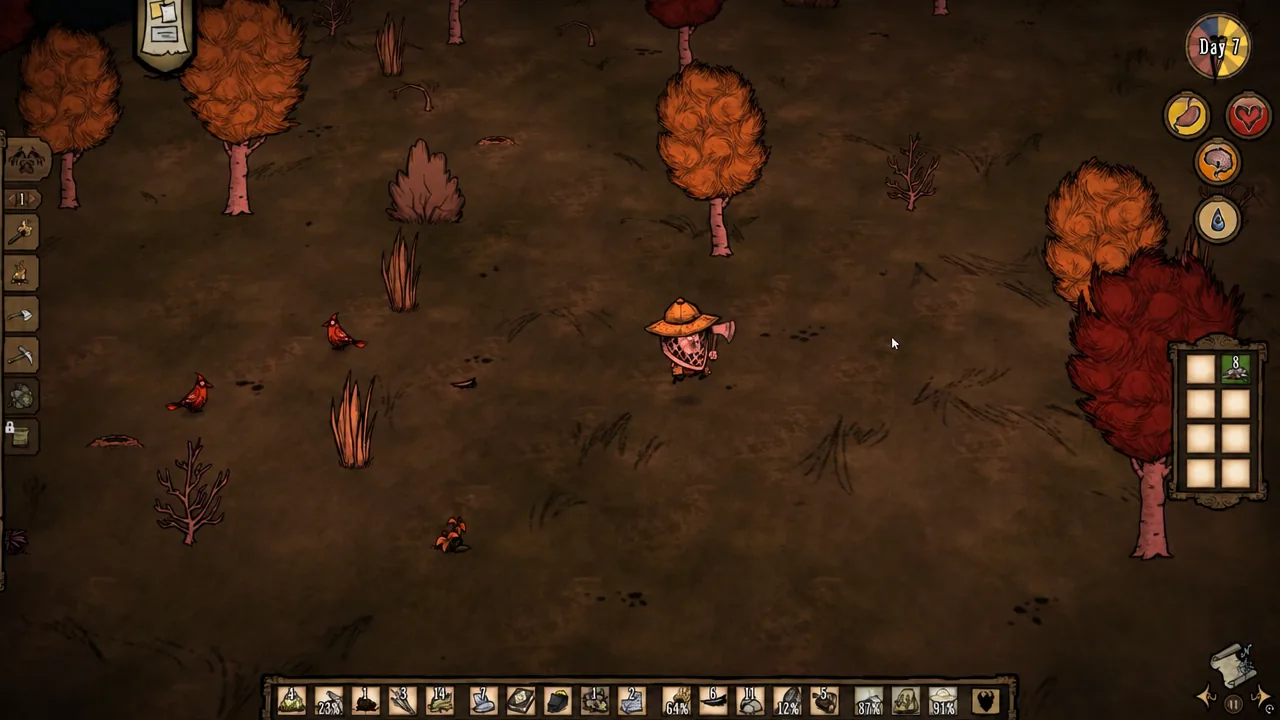
Logs burn as fuel and feed into a long list of recipes. Four of them refine into Boards at a Science Machine, which unlocks a second tier of construction, so budget accordingly when you plan a chopping trip.
| Recipe | Log cost and other materials |
|---|---|
| Boards | 4 Logs (Science Machine) |
| Campfire | 2 Logs, 3 Cut Grass |
| Fire Pit | 2 Logs, 12 Rocks |
| Log Suit | 8 Logs, 2 Rope (Science Machine) |
| Boat Patch | 2 Logs, 1 Stinger |
| Winona’s Generator | 2 Logs, Trusty Tape, 2 Nitre (Winona only) |
| Bramble-free basics | Oar, Wooden Ball Bobber, Dock Piling Kit all use Logs |
As fuel, one Log keeps a Campfire alive for 45 seconds or a Fire Pit for 90 seconds. In Werebeaver form, Woodie can eat Logs directly to top up his Log meter.
Living Logs are a separate item
If a recipe asks for a Living Log, an ordinary Log will not do. Living Logs come from killing Treeguards, from chopping down Totally Normal Trees (and digging their stumps for one more), and from Mush Gnomes in the caves. Wormwood can produce one at any time for 20 Health.
Because Treeguards spawn while you clear trees, heavy logging naturally generates both resources at once. Some players lure a wandering boss through a planted forest and let the Treeguards it triggers do the fighting.
Living Logs burn with the same fuel values as regular Logs and repair three times as much Wood Wall health, but their real value is in magic recipes such as the Shadow Manipulator and Dark Sword.
The practical takeaway is to chop full-grown trees, always dig the stumps, and replant as you go. A modest pine farm near base keeps Logs and Boards flowing without long expeditions, and it doubles as a Treeguard trap for whenever you need Living Logs.