Taming turns hostile wildlife into meat farms, pack fighters, and rideable mounts. Every wild tame in Valheim works the same way underneath, so once you learn the routine for a boar, the wolf, lox, askvin, and moose all follow the same rhythm with different food and different danger levels.
Quick answer: Trap the animal, drop its preferred food, and stay nearby but out of sight for about 30 minutes. If it stays fed and calm, roughly three food items complete the tame.
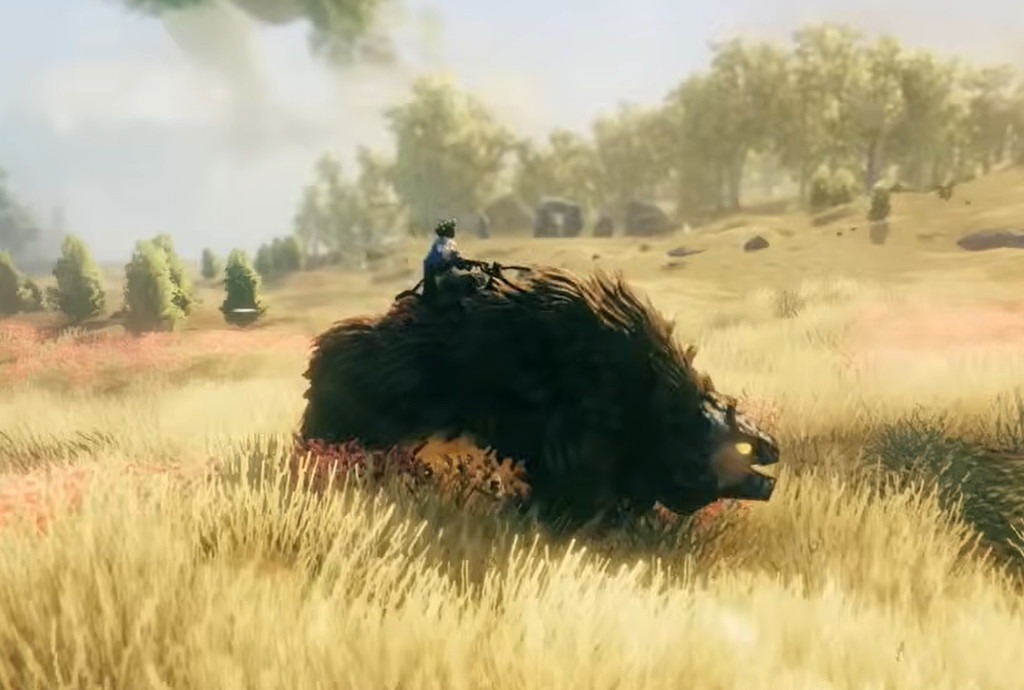
Every wild tame and where to find it
Five creatures can be tamed straight from the wild, each tied to its own biome. The Deep North update added the moose as the newest addition. Chickens are also tameable, but they hatch already tame from eggs rather than being captured, so they sit outside this list.
| Animal | Biome | Food |
|---|---|---|
| Boar | Meadows | Berries, carrots, onions, mushrooms, turnips |
| Wolf | Mountain | Any raw meat, neck tails, raw fish, sausages |
| Lox | Plains | Cloudberries, barley, flax |
| Askvin | Ashlands | Smoke puffs, vineberry clusters, fiddleheads |
| Moose | Deep North | Lingonberries |
How taming works
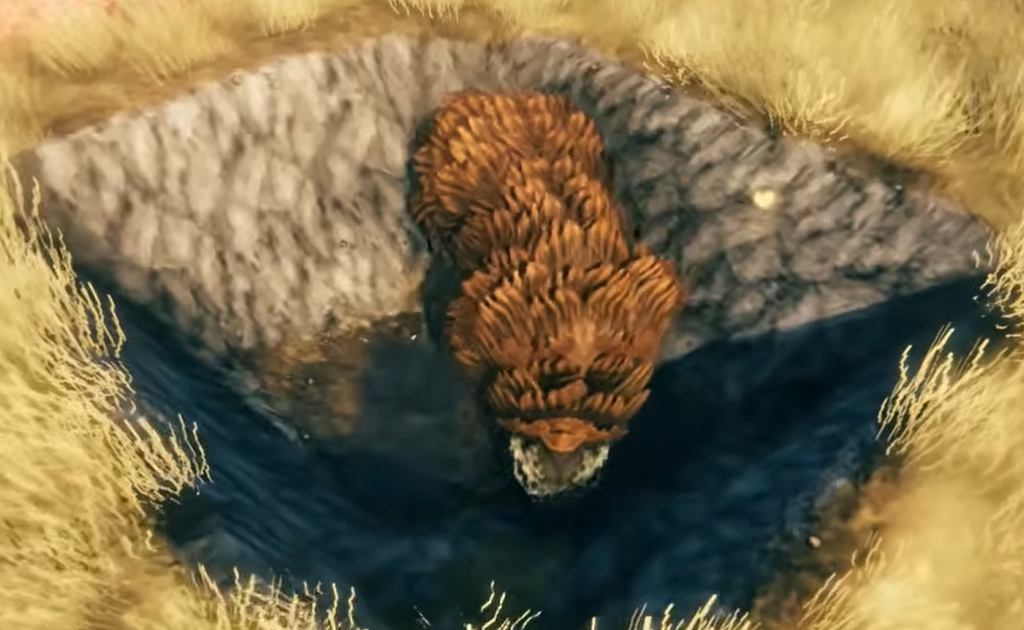
Taming fills an invisible progress bar that reaches 100% after about 30 minutes of the creature being fed and left alone. Progress only ticks up while the animal is not hungry, not alerted (no red exclamation mark), and a player is close enough to keep the area loaded. Yellow hearts mean it is eating and the tame is advancing.
A single food item keeps a creature fed for 10 minutes, so if nothing interrupts the process you only need to drop about three items total. Anything that scares the animal, such as standing too close, a nearby enemy, or fire near a boar, pauses the timer. The whole trick is arranging peace and quiet.
- Build an enclosure or dig a pit so the creature cannot wander off or take damage.
- Aggro the animal and lead it inside while it chases you, then get out and seal the gap.
- Drop a stack of its food and walk away, out of its line of sight.
- Return every few minutes to top up food until the tame finishes.
A Brew of Animal Whispers halves the taming time from 30 minutes to 15 minutes of uninterrupted feeding, which is worth crafting before you tackle the tougher creatures.
Taming each animal
Boar (Meadows)
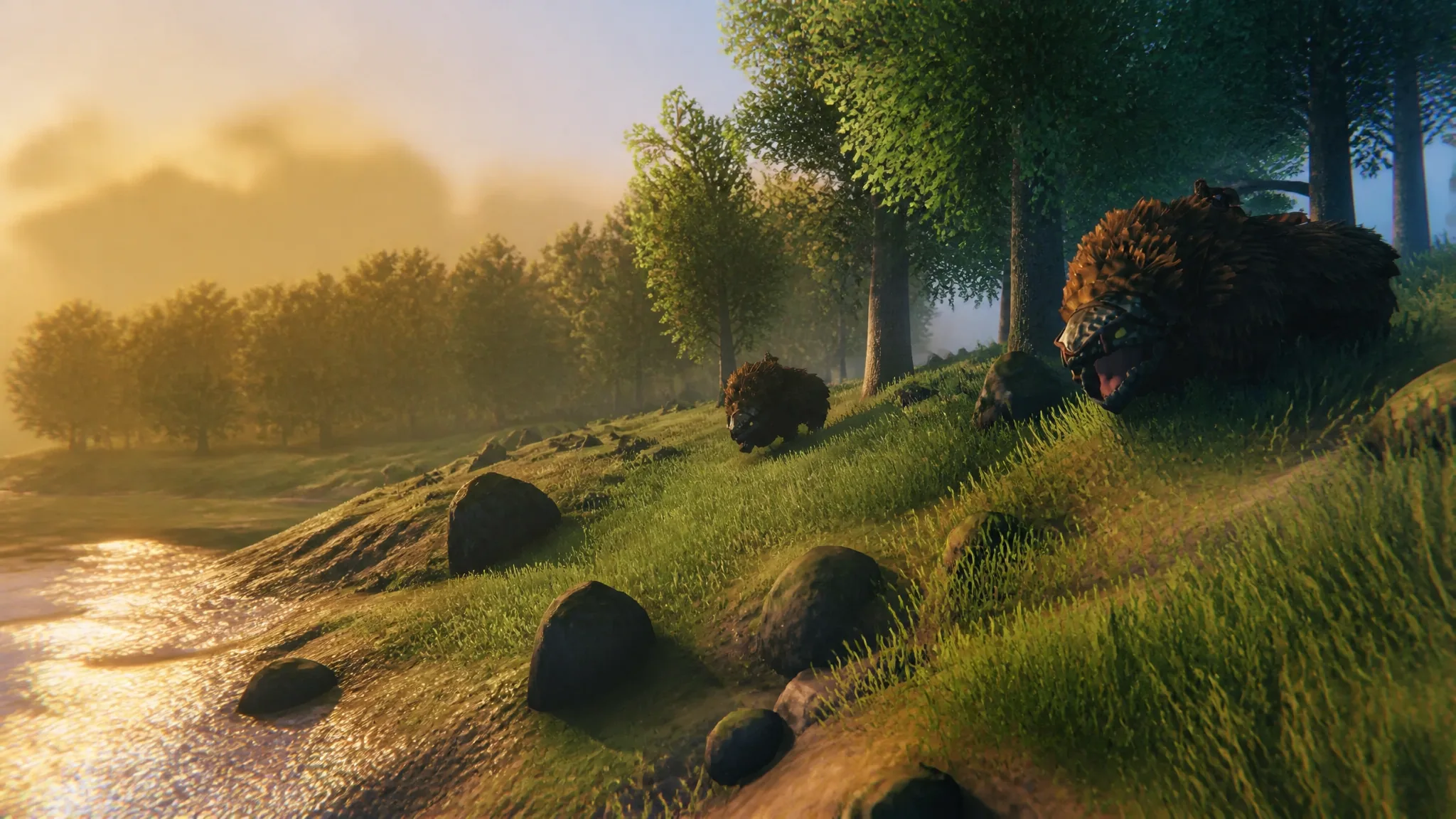
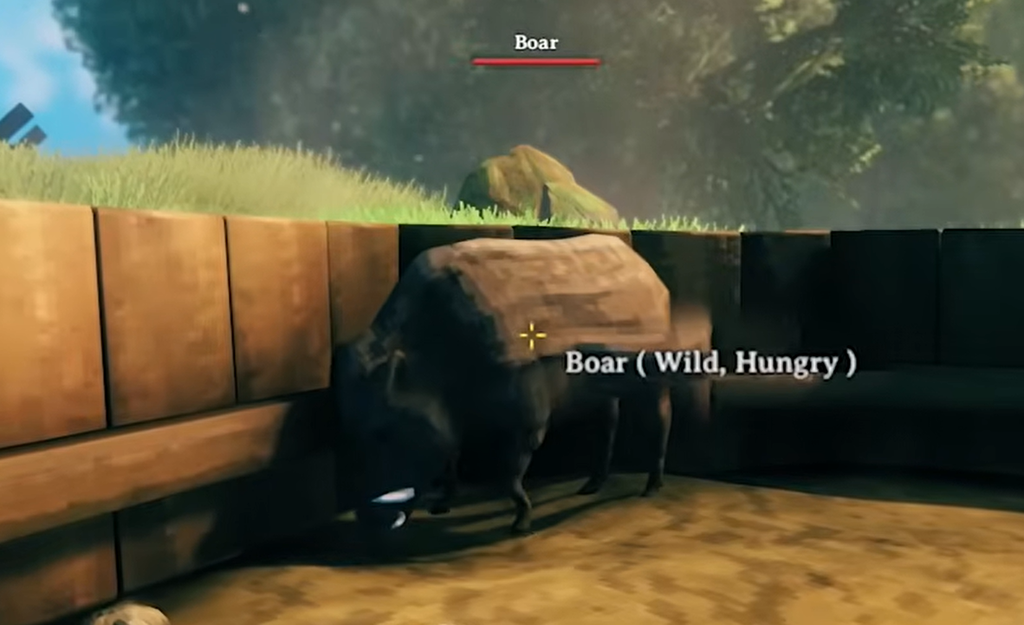
Boars are the earliest and easiest tame, and a good source of meat and leather scraps. They are aggressive but weak. Let one chase you into a wooden pen, slip out, and close the gate behind it. Drop berries or vegetables inside and back away.
Keep torches, campfires, and hearths away from the pen, since fire frightens boars and stops them eating. Two fed boars will breed piglets, and once tamed they lose their fear of fire entirely.
Wolf (Mountain)
Wolves are the best early combat companion and the only tame you can command to follow, stay, or guard. They hit hard, so bring strong armor and maxed health before you try. Find one along the foothills of the Mountain biome and lure it into an enclosure with stone walls and a metal gate, since wolves damage wooden fences.
Drop raw meat inside and return to feed it as it eats. Two-star wolves only spawn and can only be fed at night, so start taming a starred wolf after dark and keep it eating, or it will despawn at dawn. Note that tamed wolves will not follow you through portals.
Lox (Plains)
Lox are too big for normal fences and can smash even stone walls when angry, so a dug pit works best. Cut a large hole with one sloped side you can jump-climb out of, then aggro a lox and lure it in. Drop cloudberries, flax, or barley and climb out to wait.
Their size means they easily block enclosure exits, which is why a pit with an escape slope beats a walled pen. Once tamed, a lox becomes a tanky mount with a Lox saddle, ideal for crossing the open Plains.
Askvin (Ashlands)
Askvins are aggressive Ashlands reptiles that deal heavy damage, and the method mirrors the lox. Dig a pit with a slope in an area where they spawn, aggro one, and lead it in. Feed it smoke puffs, vineberry clusters, or fiddleheads while staying clear of the edge.
Wear your best armor, because you will almost certainly take hits during the capture. A tamed askvin can be ridden with a saddle and lays eggs when paired, giving you an Ashlands mount and a livestock source in one.
Moose (Deep North)
The moose is the newest tame, filling the same role a lox does but for the frozen Deep North. Build a stone enclosure, get close to aggro one, and lead it inside. Exit, drop lingonberries, and keep feeding until it is tamed.
Moose are hard to outrun, so stack any movement buffs you have before luring one. After taming, a saddle lets you ride it across the snow with ease.
How to know the tame worked
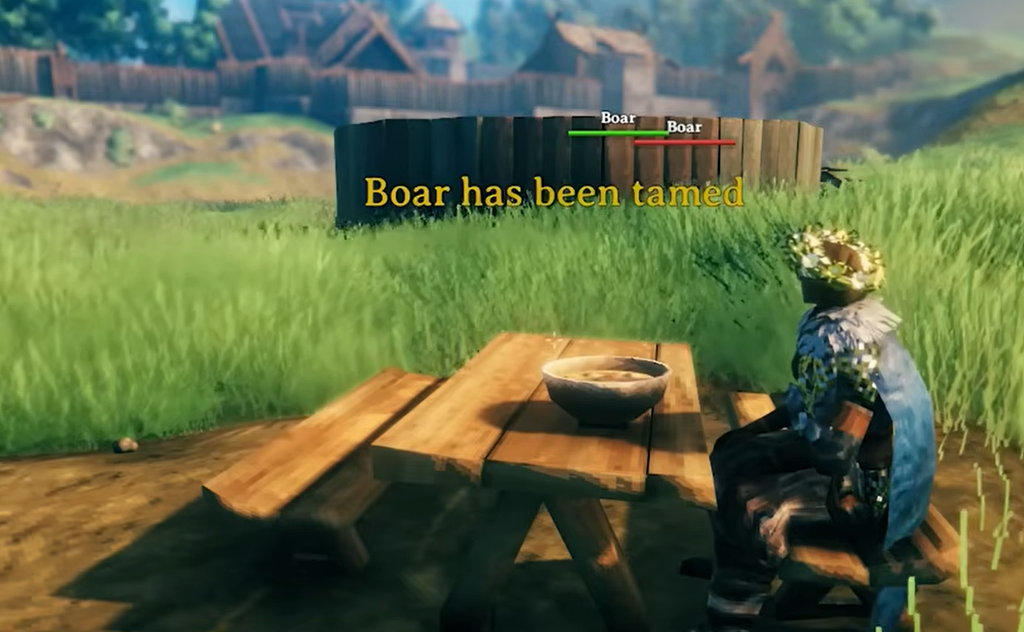
An on-screen message appears the moment taming completes. After that you can rename the creature with Shift + E, and interacting with it shows a “(name) loves you” message with a cloud of pink hearts. Boars also gain a green health bar above them once fully tamed.
A tamed creature switches to your faction, stops attacking you and your other tames, and turns on wild enemies instead. From there, two fed and calm animals of the same species can breed, passing any star ratings on to their offspring for stronger drops and better combat value.