
Every pet in Steal An Egg carries one number that decides whether it is worth the carry home: money per second. Rarity colors track that number loosely, but the gap between a $1/s Chicken and a Divine pet earning billions per second is so wide that picking the wrong target wastes hours of speed grinding. The fastest route to a big bank is knowing which pet tops each stage, and when to upgrade a pet you already own instead of hunting a new one.
Quick answer: Rank pets by money per second, never by rarity name. Chase Stag first, then Mutant Shark and Eternal pets, then stack Fracture (2.75x) or Rainbow (3.5x) mutations onto what you already have.
How money per second works in Steal an Egg
The routine stays constant: take an egg from a guarded nest, outrun the guardian to your base, and hatch it there. The pet that emerges keeps paying while equipped, with your income found by adding every equipped pet’s contribution; therefore, removing weak pets matters as much as gaining new ones.
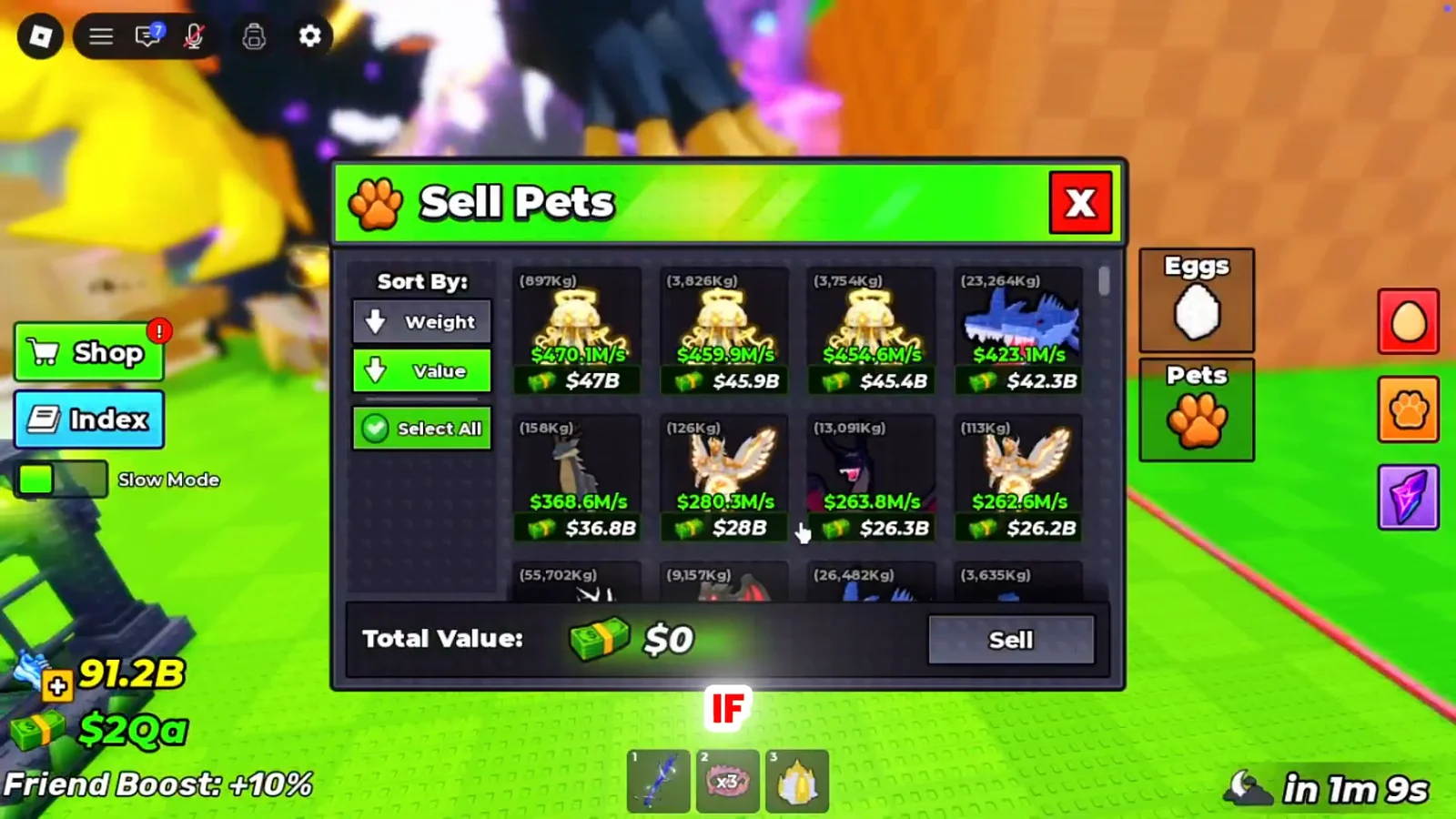
Each pet has a dev-set base income, but the number shown on your own pet card is that base multiplied by size, mutation, and your account multipliers. Two copies of the same species can display wildly different figures, so always read the card rather than assuming the species value.
The rarity ladder runs Common, Uncommon, Rare, Epic, Legendary, Mythic, Cosmic, Secret, Eternal, Divine. Income climbs with it, but not perfectly, and a big mutated Eternal will regularly beat a plain Divine.
Highest income pets in Steal an Egg
These are the biggest base earners currently tracked in the Index. Treat the figures as reference values, since the number in your server rises with size, mutations, and multipliers.
| Pet | Rarity | Base income |
|---|---|---|
| Aetheron | Divine | $6.9B/s |
| ArchAngel / World Burner | Divine | $5B/s |
| Shattered Colossus | Divine | $3.5B/s |
| Nightflame | Divine | $3B/s |
| Kitsune / Equinox | Divine / Eternal | $1.8B/s |
| Pegasus / Skeleton Horse | Eternal | $1.3B/s |
| Unicorn | Divine | $1B/s |
| Void Serpent | Eternal | $900M/s |
| Gorilla King | Eternal | $880M/s |
| Shattered Drake | Eternal | $800M/s |
Aetheron sits at the top of the Index, and the Divine block above $1B/s is effectively the ceiling of the game. Below that, the Eternal class is where realistic endgame play happens, since those pets come from rare egg spawns in biomes you can actually farm rather than from the rarest drops in the game.
Best pet to target at each stage
Starter biomes: grab the Legendary and move on
In Forest, Lake, and Desert the only pets worth real effort are the Legendaries. Brr Brr Patapim pays $1.8K/s, Axolotl $2.8K/s, and Snake $3.6K/s, which is roughly a thousand times what a starter Common earns. Bank one of those, dump everything into Speed, and leave. Farming a slightly better Epic in your current biome is always worse than opening the next biome, where the whole income scale jumps by 10x to 100x.
Mid-game: Stag eggs and bigger sizes
Once the higher zones open up, Stag is the first target that actually changes your income curve. Prioritize the largest egg you can carry rather than the first one you can reach, because size directly raises the money per second of whatever hatches. Speed and cash built here fund everything that follows.

Late-game: Mutant Shark and Eternal pets
After Stag, the upgrade path runs through Mutant Shark from Titan Temple and then the Eternal tier. These zones are contested, so raw movement speed decides whether you get home with the egg or hand it to another player. Titan Temple and Angels also host the rarest announced spawns, including the Divine Nightflame Egg and the Secret Pure Jellyfish Egg.

A failed run pays nothing. Learn one clean return route per biome and repeat it rather than gambling on a heavier egg you cannot outrun.
Speed requirements and top pet by biome
Speed is the gate on every pet above. The listed figure is the entry threshold, not a safe farming number, and heavy eggs drag your effective speed down mid-steal. Clearing a biome’s requirement and then doubling it is the practical target.
| Biome | Min. Speed | Top pet (base income) |
|---|---|---|
| Forest | None | Brr Brr Patapim ($1.8K/s) |
| Lake | 900 | Leviathan ($220K/s) |
| Desert | 10,000 | Royal Sphinx ($280K/s) |
| Jungle | 40,000 | King Snake ($3.5M/s) |
| Snow | 170,000 | Ice Dragon ($65M/s) |
| Volcano | 700,000 | Lava Dragon ($100M/s) |
| Abyss Ocean | 2,500,000 | El Maja ($130M/s) |
| Prehistoric | 18,000,000 | Mosasaurus ($180M/s) |
| Cosmic | 700,000,000 | Unicorn ($1B/s) |
| Cherry Blossom | 2,500,000,000 | Kitsune ($1.8B/s) |
Cherry Blossom is the harshest jump on the board. The entry threshold is 2.5 billion Speed, but comfortable farming there sits closer to 3.5 billion once egg weight is factored in. Titan Temple and the Angels zone sit alongside these as later additions and hold the Mutant Shark and Divine spawn pools.
Mutations pay better than chasing a new pet
Mutations are the cheapest way to multiply income because they upgrade a pet you already own instead of forcing another egg run. The two headline multipliers are Fracture at 2.75x and Rainbow at 3.5x, applied using shards. That is enough to push a Gorilla King into the billions per second without ever replacing it, and it explains why observed values for mutated pets run far above their listed base.

Stacked mutations do not scale cleanly. Combined values hit diminishing returns rather than multiplying straight through, so do not plan around a perfect 2.75 × 3.5 result.
Size works the same way as a quiet multiplier. A larger copy of a species pays noticeably more than a small one, which is why grabbing the biggest egg on a platform beats grabbing the nearest one whenever your speed allows it.
Trails, fusing, and the 2x Money gamepass
Trails are not cosmetic. They carry speed multipliers that stack on top of treadmill training, and the Trail Shop tops out with Eternal Trail at x10 Speed, Divine Trail at x14, and Moonbloom Trail at x20. Buying up the trail ladder is usually a bigger speed gain than another stretch on the treadmill.

The Fuse Machine turns three matching pets into a single stronger version that earns more than any of the originals. Duplicates sitting in your pen are otherwise wasted, so fuse as soon as a third copy lands. Equip slots start at seven and expand for $1M each, and the Equip Best button re-sorts your loadout to the highest earners automatically.
The 2x Money gamepass doubles every pet’s payout across the board. On a top-tier setup that is the difference between a Kitsune earning 14B/s and the same pet earning 28B/s, which makes it the single largest flat income increase available once your roster is strong.
How to check what a pet actually earns
Open the Index, titled All Items, and switch to the Pets tab. Every card lists the pet’s income exactly as it applies to your account, with size, mutation, and multipliers already baked in. Undiscovered entries show as “???”, so the Index doubles as a checklist of what you still need to hatch. Completing entries also pays out milestone rewards in Speed and cash via the Claim All button.
To confirm a swap worked, compare the combined per-second total on your equipped loadout before and after. If the figure went up, the new pet or mutation is earning; if it did not, the pet you replaced was the better one and should go back in. That single check settles every “is this pet worth it” question faster than any rarity label does.