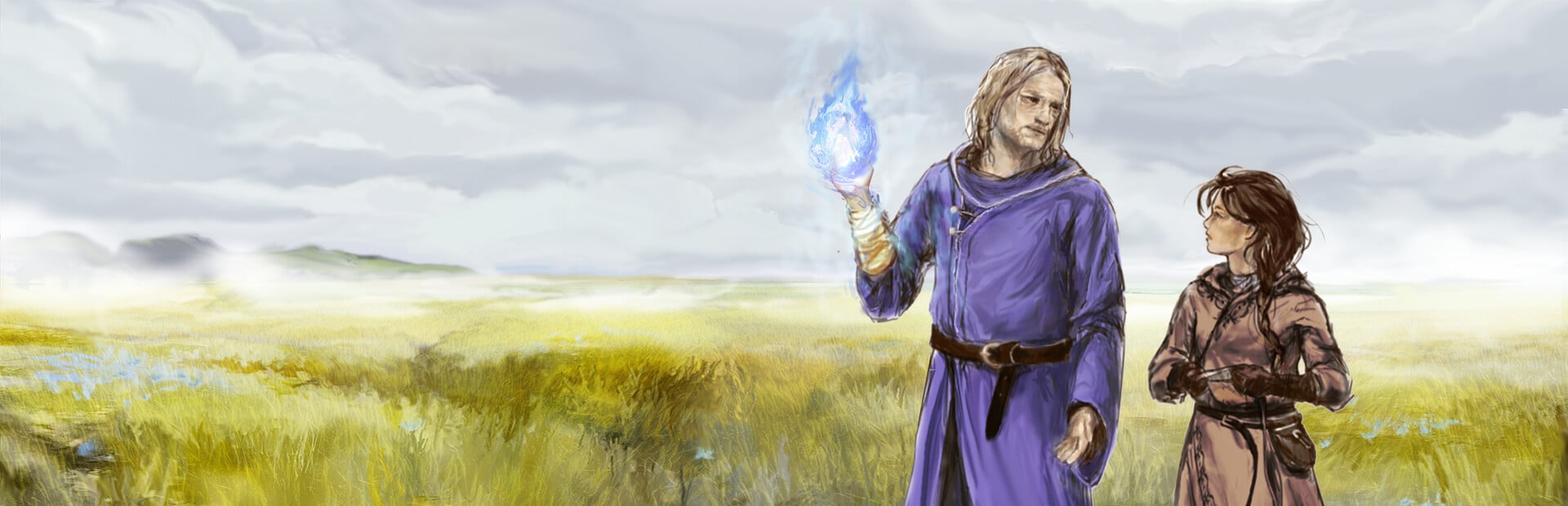
Foundlings is a pixel-art role-playing game built around mages, church authority, and the risk of being branded a heretic. It opens on a gallows, follows a young woman named Agnes through the English countryside, and mixes turn-based spell combat with conversations that can fail as easily as a fight can.
Quick answer: Foundlings is a turn-based pixel-art RPG set in 12th-century England, and its playable demo has been available on Steam since September 14.
What Foundlings is and where it is set
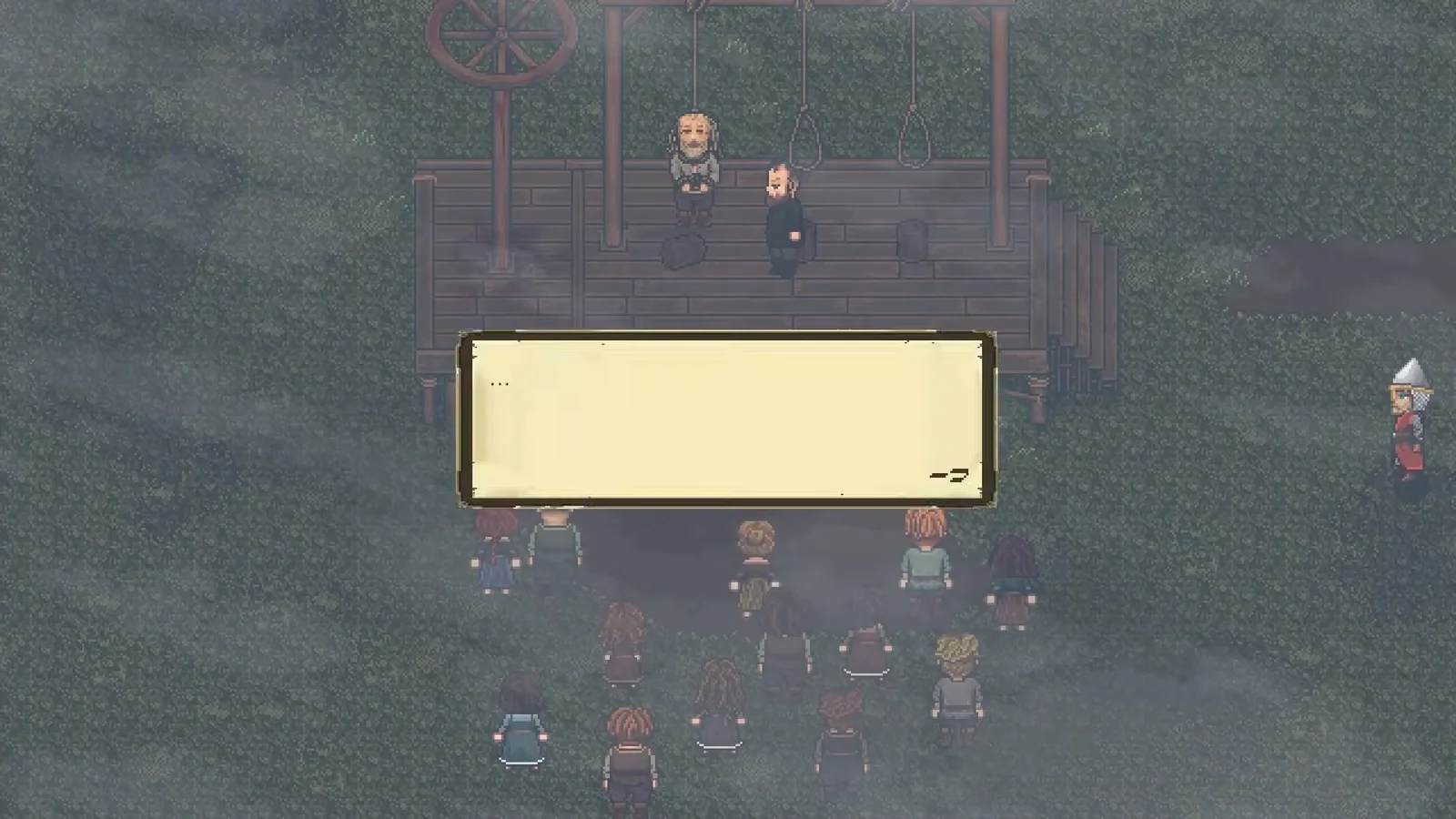
Set in 12th-century England, the pixel-art world takes you through forest trails, village churches, a shadowy mine, and a magnificent stone hall. Its premise is that practicing magic is punishable by death. The game opens with three prisoners—a male, a female, and a baby—brought before a wooden gallows as spectators debate whether the infant mage should be executed. Someone answers, “…Only the Lord knows that,” and the trapdoor opens.
From there you follow Agnes, who wears a dark blue habit and a white wimple, alongside a young man in a red tunic. These are fixed story characters rather than an avatar you create. The promise on screen is to “Experience 12th-century England…” and “…And uncover its darkest depths,” and the early hours move between quiet countryside exploration and far less welcoming interiors.
| Detail | Value |
|---|---|
| Genre | Pixel-art RPG |
| Setting | 12th-century England |
| Combat | Turn-based, circular action menu |
| Progression | Disciplines and Essences |
| Demo | Steam, from September 14 |
Turn-based combat and the spell wheel
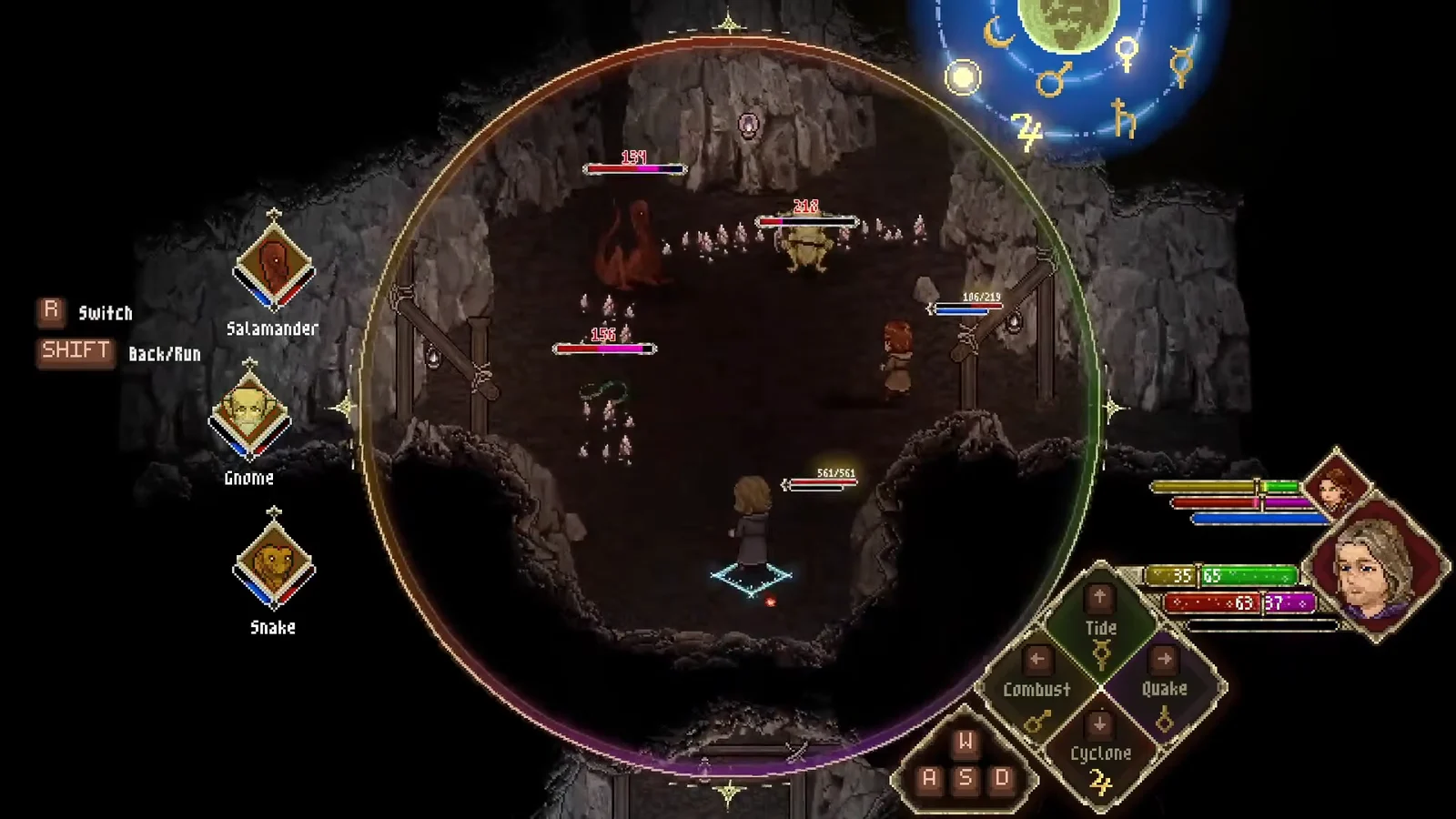
Combat unfolds in turns directly on the field, without switching to a separate battle screen. Every character occupies a circular ring, and choosing an action brings up a round command menu with options such as elemental spells. The screen’s right side displays health and resource bars, while a reticle identifies the enemy currently targeted.
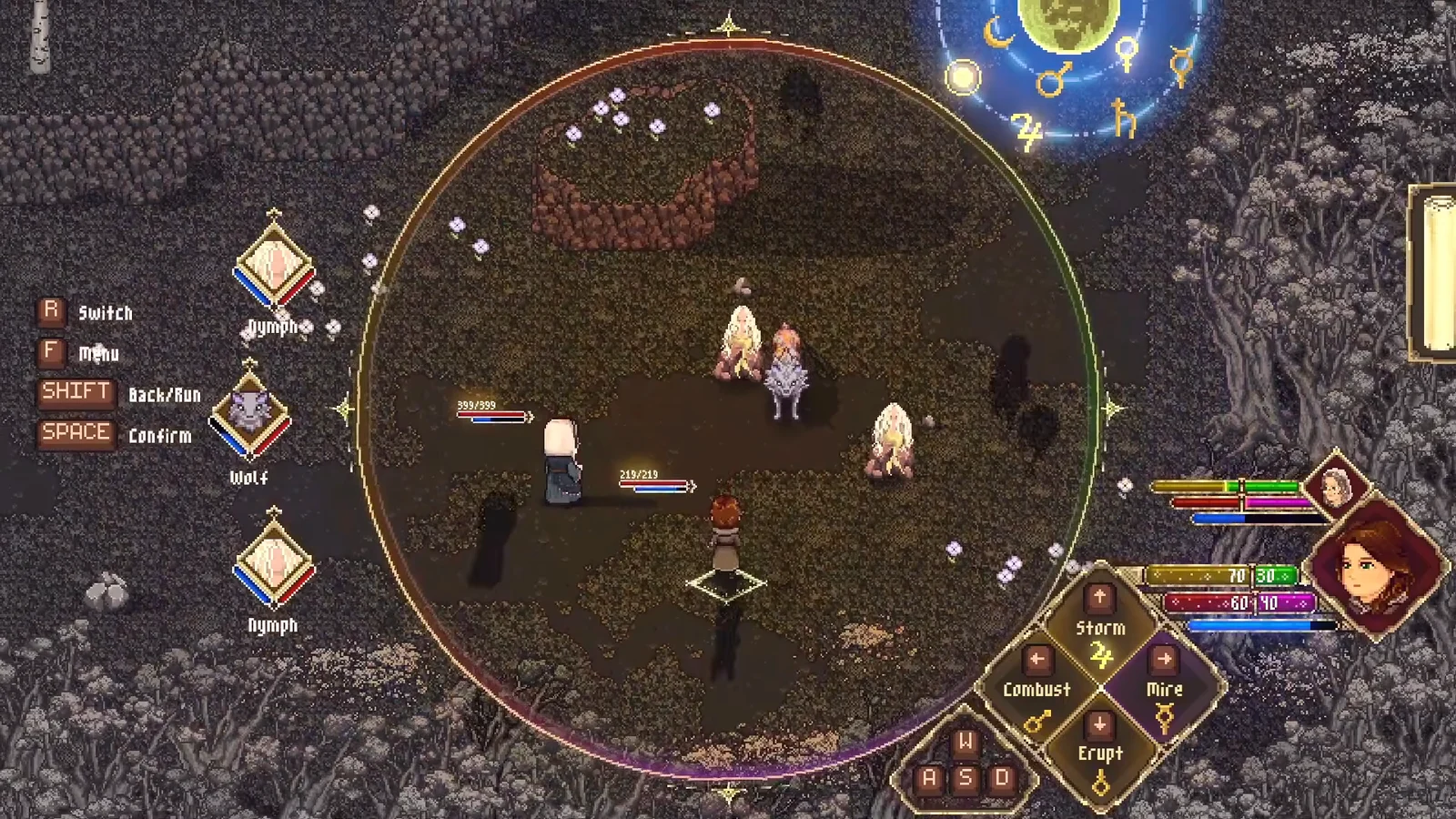
Early enemies include a Wolf and a Nymph out in the open, with a Gnome and a Salamander waiting in the darker areas. The named spells shown so far are:
- Storm, Combust, Pure, Erupt
- Tide, Cyclone, Void, Purge
- Venom, Mire, Quake
The pitch is to “Master over a dozen intricate spells,” so the full list runs past the names visible in combat and in the menu.
Combust is the clearest example of how a spell reads on screen. Cast in a forest fight against several enemies at once, it lands as a burst of fire rather than a single-target jab, which is the kind of distinction that matters when you are picking between a wheel of elements.
Disciplines and Essences in the character menu
Character growth is framed as scholarship rather than a standard class tree, under the line “Cultivate your knowledge of the arts.” The menu splits into three parts, with SPELLS on one side and two stat groups feeding into how your character performs.
Disciplines
- Theology and Dialectic
- Rhetoric and Grammar
- Astronomy and Music
- Geometry and Harmony
Essences
Alongside the Disciplines sits a set of four ESSENCES, listed as Warm, Dry, Cold, and Wet. They are the elemental half of the sheet, paired with the academic subjects rather than replacing them.
Dialogue choices and skill checks
Conversation is its own system, summed up as “Converse, persuade, acquire favours.” Choices are tagged in two ways. Some carry a personality trait in brackets, such as [Sanguine], while others show a Discipline and a success chance, such as (Theology 25%).
A church scene shows both halves of that. A Priest presses Agnes with “Come now, d’you think God hears the likes of you when you pray?” The Sanguine reply pushes back with “His forgiveness is beyond your judgment, Father!”, while the Theology option argues that “Grace is not withheld from the baptised.” The roll can go badly, and the game marks it plainly with [FAILED] before Agnes answers “…I know what I am,” instead. Failure is a normal outcome here, not a soft-lock, and the conversation carries on down a different line.
Other conversations widen the picture. Agnes notes that “The Church is very close to holding me to blame,” and an elderly woman named Grunhilde offers a reading of the stars, saying they tell much of the future but never remind us to cherish the past or live in the present.
Keyboard controls shown in the demo
The on-screen prompts during exploration cover four keys, which is enough to move, swap characters, and open the sheet where Disciplines and spells live.
R— SwitchF— MenuSHIFT— Back/RunSPACE— Confirm
The astrological floor and the shadowy figure
Past the countryside and the mine, the game moves somewhere far stranger. Agnes crosses a large metallic floor marked with astrological symbols and meets a shadowy figure whose eyes glow in the dark. Her only lines are “…Master?” and “Are you here?”, which is as much as the game gives away about who or what she is addressing.
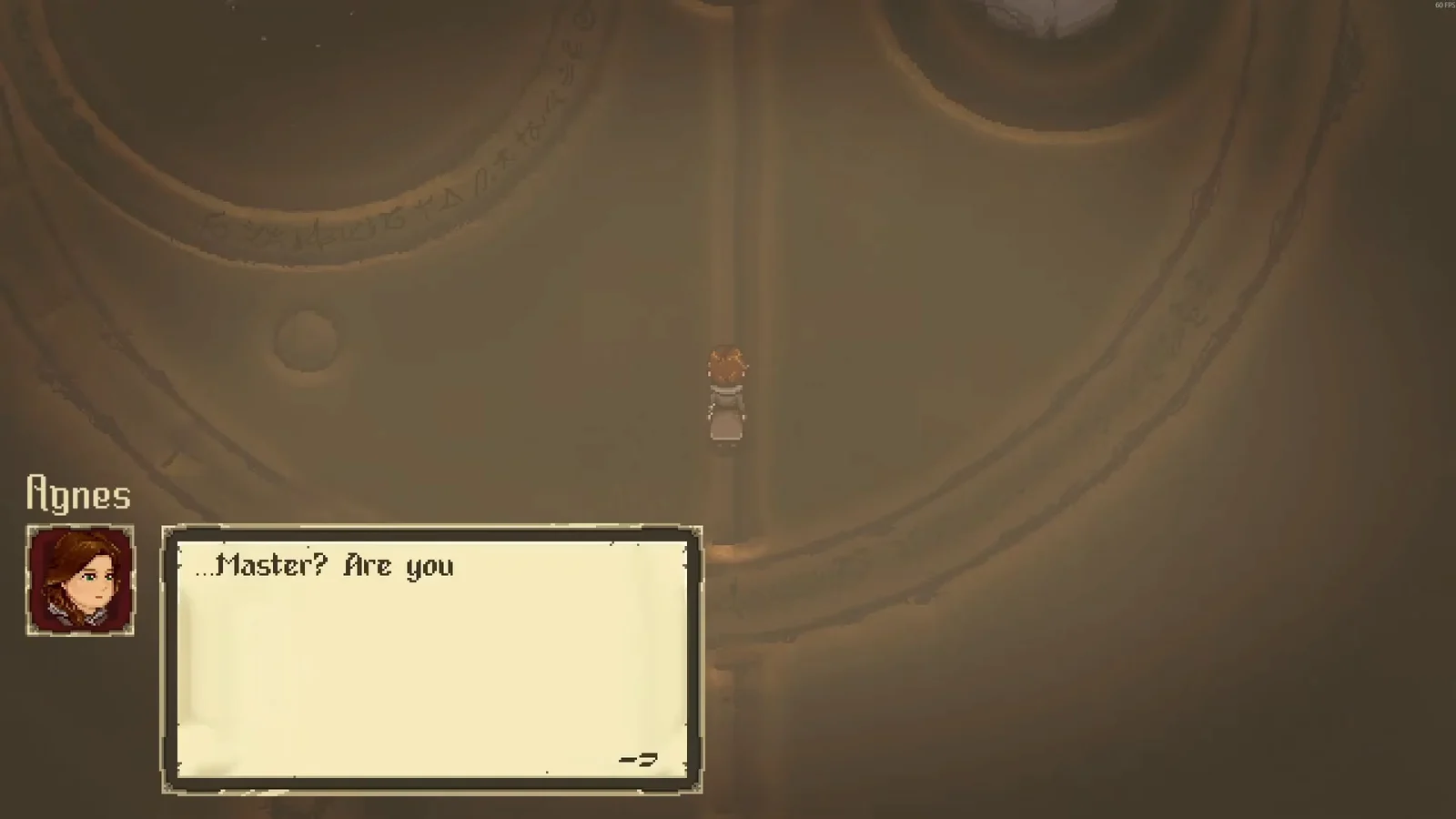
That encounter is the clearest signal of where the heresy plot is heading, and it sits behind the same ouroboros-style dragon logo the title card uses. If you want to try any of it yourself, the playable demo is on Steam, and the store page also carries a wishlist option for the full release.