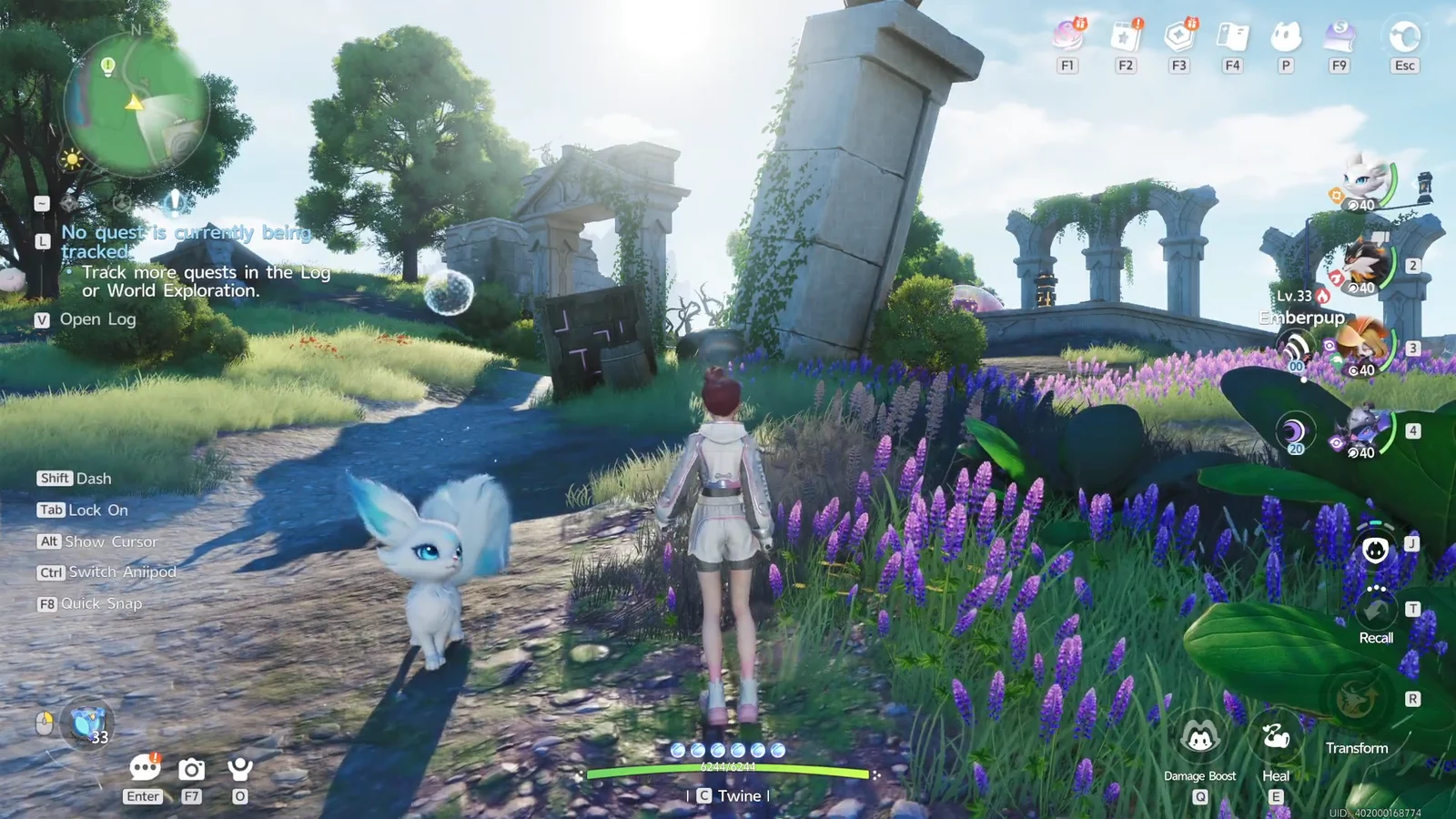
In Nimbus Fields, Iris (Grassland Form) represents the Iris family’s variant: a Lumin stage Grass Aniimo assigned the DPS role and listed as No. 11D in the Aniilog. It is among the easiest Grass creatures to obtain early, since Breezy Plains—the region it inhabits—contains more spawn points than the other three zones combined.
Quick answer: It spawns in four zones — Nimbus Fields (Lv 5–15), The Argent Strait (Lv 28–32), The Mistwoods (Lv 35–37), and Blitzwood (Lv 40–45). Nimbus Fields has by far the most spawn points.
Iris (Grassland Form) habitats and level ranges
The four habitats are spread across a wide level band, so the version you meet depends on how far you have progressed. Low-level captures come from Nimbus Fields; the Blitzwood population is more than 25 levels higher.
| Habitat | Level range | Spawn points |
|---|---|---|
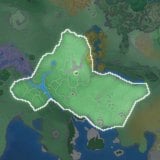 Nimbus Fields Nimbus Fields | Lv 5–15 | 108 |
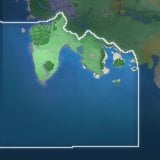 The Argent Strait The Argent Strait | Lv 28–32 | 17 |
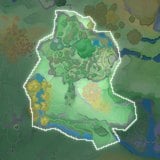 The Mistwoods The Mistwoods | Lv 35–37 | 27 |
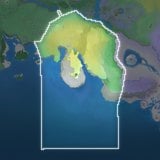 Blitzwood Blitzwood | Lv 40–45 | 19 |
Nimbus Fields is the intended starting point. With 108 spawn points it is dense enough that you rarely have to walk far between encounters, and the level range is low enough for an early party to break and capture without overkilling the target. The Argent Strait, also in Breezy Plains, is the next step up and is flagged on the world map as an Iris habitat when you hover over the region.
Hover a region on the in-game map before you travel. The tooltip lists which Aniimo can be found there, which saves a trip when you only need one species.
Catching a wild Iris (Grassland Form)
Wild Irises are small, glowing yellow flower creatures that drift around open grass and ruins. They are lightweight and float rather than run, so closing the distance is easy — the harder part is landing the capture before it scatters.

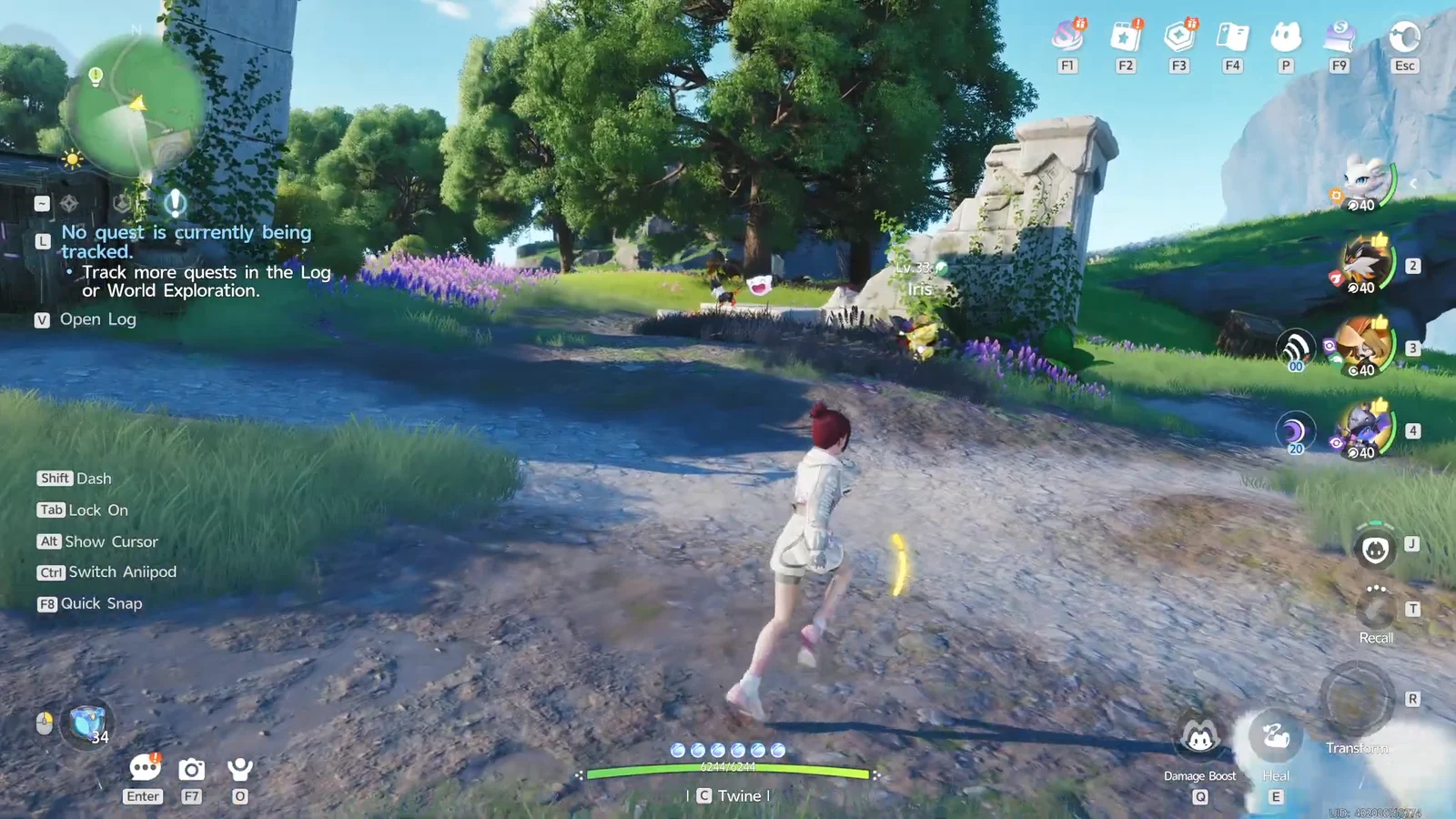
- Base catch chance on a wild spawn: 56%.
- Breaking the target applies a ×1.5 multiplier.
- Catching from behind applies a ×1.5 backstab multiplier.
- It sleeps at night, which makes an undetected approach simpler.
- Sparkling odds start at 1 in 20,000.
Those multipliers stack with the pod you are using. A late-game Anipod aimed at a broken Iris can push the displayed rate well past 90%, which is why higher-level Blitzwood spawns are not meaningfully harder to secure than the Nimbus Fields ones. Gender is an even split, and nature rolls 50/50 between Cheerful and Sensitive.
Confirming you caught the Grassland form
Iris comes in seven forms, some of which are easy to confuse. From the party menu, choose the newly captured one. The proper entry shows No. 11D in the Aniilog and lists the Grass element, DPS role, and Lumin stage tag. Its description covers Irises from the Nimbus Fields that enjoy grassland sunlight and end up gathering wool tufts on their petals.

Base stats are identical across the Iris forms, so they are a useful sanity check rather than a way to tell variants apart.
| Stat | Value |
|---|---|
 HP HP | 69 |
 Attack Attack | 101 |
| Magic Attack | 101 |
| Defense | 53 |
 Magic Defense Magic Defense | 53 |
 Break Break | 50 |
| EP Regen | 71 |
It stands 0.85 m tall and weighs 6 kg, with Leisure and Grass homeland abilities at Lv. 1.
Skills, trait, and field ability
At Lumin stage it fights with two Grass skills, both on a 1-second cooldown.
| Skill | EP cost | Power | Tag |
|---|---|---|---|
 Vortex of Petals Vortex of Petals | 20 | 60 | Damage |
| Floral Storm | 13 | 30 | Barrage |
Vortex of Petals drops a large swirl of petals under the target and grinds it down in place. It is the cheaper option per point of damage and the one you lead with against a single Aniimo you plan to capture.
Floral Storm spins Iris while it moves and fires homing petals. The petal count climbs by one over time, up to three at once, and you press the skill again to stop casting. Its innate attack is ranged and magical, using wind to hit targets at a distance.
Its trait is Disco Aniimo. On Turf, it raises Damage Amp by 30%. After combat begins, each skill hit adds 1 Dance Power; even a hit that reaches multiple targets adds only one. At 24 stacks, the following skill requires no EP. Outside battle, the Blooming mobility ability causes flowers to appear along its dance path.
Evolving into Grassland Irisal
The evolution is locked behind a fight and tied to the same region you caught it in, which is why Nimbus Fields captures are the convenient ones.

- Unlock the path by defeating the Alpha Irisal.
- Raise Iris (Grassland Form) to Lv. 18.
- Be in Nimbus Fields during daytime when you evolve it.
- Pay the cost of Sprout Stone x1.
The result is Grassland Irisal, a Nova stage DPS with 100 HP, 118 Attack, 118 P.Def, 70 M.Def, 52 Break, and 94 Regen for a base total of 504. It keeps Vortex of Petals and Floral Storm and gains Focused Beam, a 50 EP, 120 power beam that fires wider once you have built 24 Dance Power. Grassland Irisal also appears in the wild in Blitzwood if you would rather catch one outright.
Rewards for logging and releasing it
Filing a report on Iris (Grassland Form) pays out 100 Credits, and releasing a spare gives back Growth Bud x3. Given how thick the Nimbus Fields population is, duplicates pile up fast, so releasing extras is a steady trickle of growth material rather than something to hoard box space for.