Lumi Master arrived on iOS and Android on September 17th, 2026, and it borrows the shape of a monster collector without asking for the time commitment of one. There is no overworld to walk around manually. You tap a compass, spend energy, and the game rolls an encounter — a wild creature, a chest, a resource node, a rival trainer. Everything else, from base building to the PvP ladder, hangs off that one loop.
Quick answer: Spend energy on the compass to trigger random encounters, throw catch cards at wild Lumis, then assign the ones you catch to workstations at your home base to produce resources.
What Lumi Master is and where to get it
Lumi Master is a free-to-play creature-collecting RPG published by BILIBILI, built around short sessions and one-handed portrait play. The global package is about 200MB, which is deliberately small for the genre, and the hand-drawn art leans cozy rather than competitive. New players start by picking one of three starters split across Fire, Grass, and Water. The choice does not meaningfully gate early progress, so pick the one you like looking at.
The developer has committed to a steady content cadence: weekly minigames such as pinball, Lumi feeding, and co-op raids, plus seasonal updates that add 60 to 80 new Lumis. Downloading at launch also grants an Ultimate Rainbow Lumi Egg and bonus energy.
Energy and the compass system
Energy is the currency that gates everything. Tapping the green compass button on an exploration map advances you along the path and rolls an event, and you choose how much energy to sink into each spin with a multiplier that scales up to x50. Bigger spends change what can show up, not just how fast you move.
| Energy spent | What it unlocks |
|---|---|
| 1 | Chance at blue (rare) Lumis |
| 5 | Chance at gold Lumis |
| 10 | Chance at rainbow Lumis |
| 20 | Two Lumis catchable at once |
| 50 | Five Lumis catchable at once |
Energy comes back from treasure chests found while exploring, from ranked event rewards, and from timed regeneration. Running dry mid-chapter is common early on, which is usually the cue to head home and let your workers produce for a while.
A 5x speed toggle exists for exploration, and it matters when you are chasing an Alpha Lumi that is actively running from you.
Catching Lumis with cards
Captures use cards instead of balls. Cards range from basic green up to rainbow master cards, and the higher the rarity, the better your catch rate. During the throw you aim a reticle, and landing it cleanly awards a Perfect x1.5 bonus to the capture. Feeding a wild Lumi before throwing also improves your odds.
Cards are a crafted resource. Assigning a Lumi to the Basic Card Station at your base produces them, which is why running out of cards and running out of energy tend to happen at the same time.
Wild encounters come in three flavors. Regular Lumis can be thrown at directly, tougher ones require a battle first, and Alpha Lumis — like Hexdeer in the Rainforest or Echofrog on the Beach — are roaming bosses that flee, hit far harder than your early team, and unlock a special entry in the area index once beaten and caught.
Automating the grind
The Auto Advance settings menu lets you hand the loop over to the game. You can set which card rarities it is allowed to spend, enable auto-battling, turn on auto-exchange, and set Flora’s Choice preferences so it only stops for things you care about. Surplus creatures pile up fast, so the storage screen includes rarity filters and a bulk Release option that converts extras into resources.
Stats, leveling, and evolution
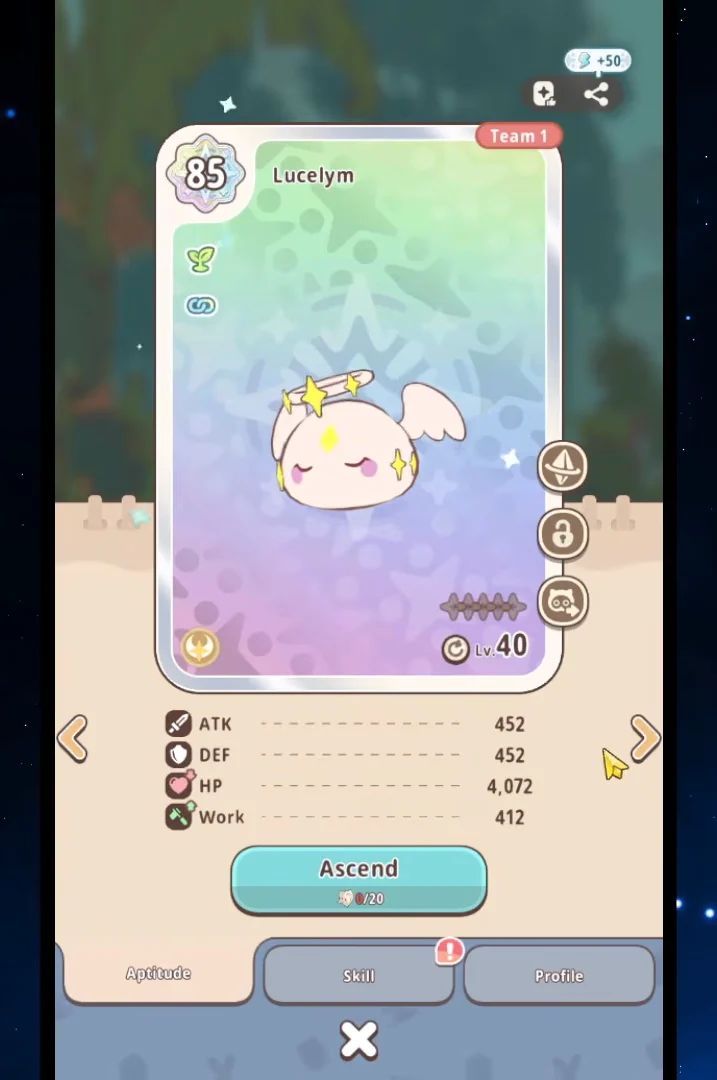
Every Lumi carries ATK, DEF, HP, and a Work value, plus a rating potential tier shown as Gold, Purple, or Rainbow. That last number is the one worth checking before you invest, since it caps how strong a creature becomes. Leveling consumes Starlit Leaves gathered during exploration, and skills are interchangeable rather than locked to a species.
Evolution runs through the Ascend button on a Lumi’s profile and follows multi-stage chains — Zorrat becomes Zoricata, which becomes Zoryx. Evolution Fruit, one of the ranked PvP ladder rewards, feeds that process.
Battles, gyms, and the PvP ladder
Combat is turn-based and elemental, with the usual rock-paper-scissors relationships — Grass folds to Fire, and Fire and Lightning are the answers to Ice opponents. Skills draw from an energy gauge, so the strongest moves cannot be spammed, and you can swap the active Lumi mid-fight to fix a bad matchup.
You begin with a single battle slot and unlock more as you go, topping out at three Lumis on the field. Exploration level 8, for instance, grants Lumi Deployment Limit +1. Once you have the room, mixing elements is more reliable than stacking one type.
The Arena menu holds two things. Gym leaders sit in each region — Turnip guards the Rainforest — and clearing a gym you have already beaten can be handled with Quick Battle, which resolves the fight instantly. The PvP Ladder is the ranked side, where you build a three-Lumi team, pick a lead, and get matched against another player for rewards including Evolution Fruit and energy.
Self-destruct moves are in the skill pool and easy to fire off by accident in a ladder match. Check what your lead actually has equipped before queuing.
Home base building and Lumi jobs
Your camp is the passive half of the game. It starts as Humble Camp and levels up into larger settlements such as Modest Foothold as you build, with the Lumi statue acting as the town hall that clears new land and unlocks plots. Buildings each produce something specific.
- Lumberyard — wood
- Meteor Altar — Starlet Gems
- Basic Card Station — Lumi Cards
- Candy House — Berry Candy and other treats
- Farm — food crops
- Observatory and decor plots — camp level and cosmetics
Assignment is where the Work stat pays off. Each Lumi shows a work speed percentage for a given station, so a creature sitting at 111 percent is materially better there than a filler unit. Check the number before you drop someone into a slot.
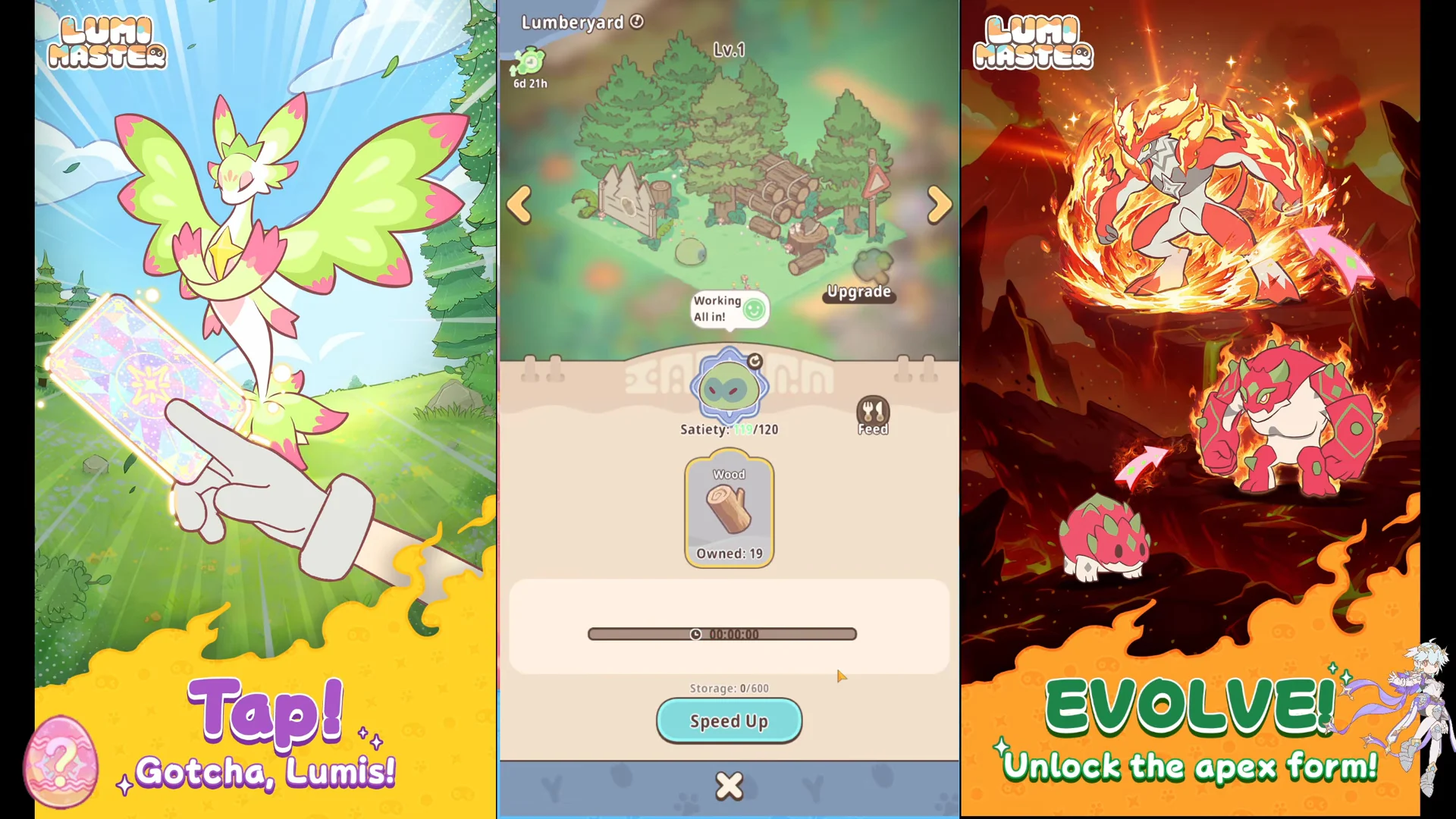
Workers also get hungry. Each assigned Lumi has a hunger value visible on its info panel, and if it reaches zero, production stops. You can feed individually, use max feed, or serve food at the Restaurant platform so creatures walk over and eat on their own. One serving slot is available at first, with more unlocked later.
Chapter quests, maps, and area unlocks
Progression is driven by chapter tasks in the bottom-left corner, backed by side tasks and a daily task point tracker. The objectives are concrete — build a specific structure, craft Lumi Cards, catch five Lumis from a given region — and following them is the fastest way through a base menu that can feel overloaded in the first hour.
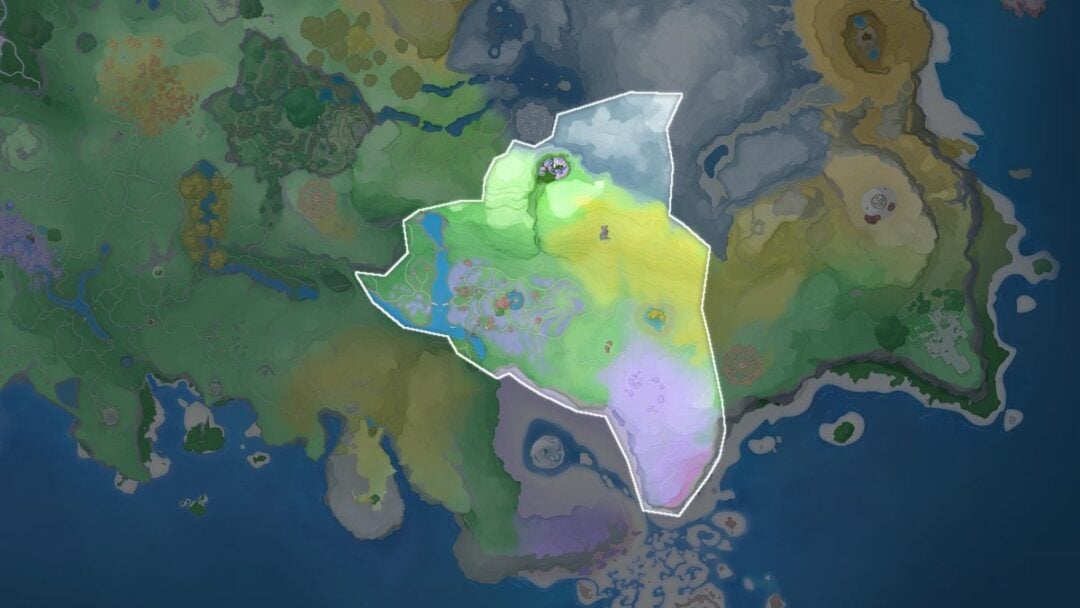
Maps unlock in sequence: Rainforest, Beach, Volcano, Desert, and Snow Mountain. Each holds its own roster of Lumis tracked in an overview completion screen, and each ends with a special creature you have to hunt down. Reaching exploration level 10 and finishing the Chapter 2 tasks, for example, connects the Volcano map.
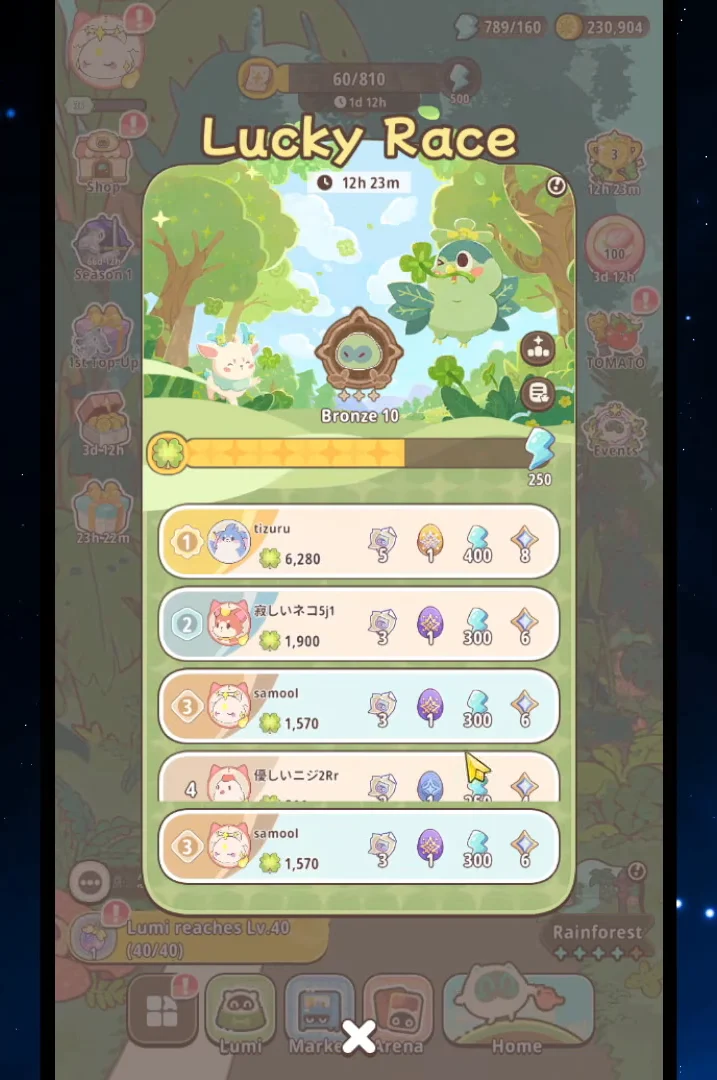
Server events run alongside the campaign. Lucky Race is the visible one at launch, a leaderboard with a countdown timer and milestone rewards that free-to-play players can clear through normal progression.
Multiplayer, trading, and Explorer Plaza
Lumi Master is always online. Global Chat sits over the exploration view, and Explorer Plaza is a shared town square split into channels where you can tap other players’ profiles, add them, and visit their personalized bases.
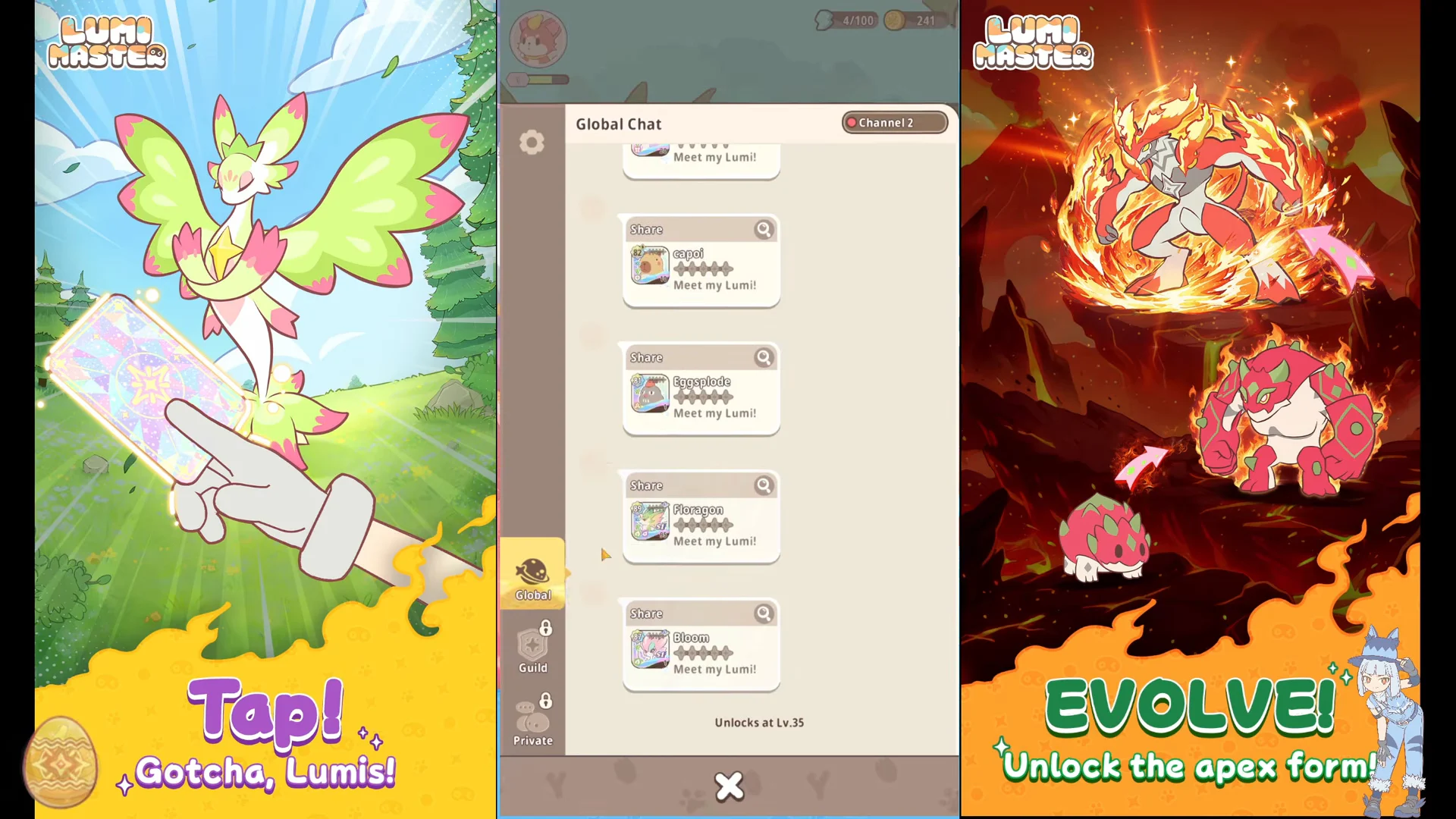
Other players’ camps double as a minigame. Prank portals drop you into someone else’s base, where you can tap buildings or swipe coins from their Lumis for a small payout. There is also a Trade market with player listings, pitched by the developer as the non-pay-to-win route to a strong team through auctioning rare Lumis. Guilds exist but stay locked until Exploration Lv. 45.
How Lumi Master makes money
The shop is split into Featured Offers, Daily Packs, top-up coin bundles, an Outfit Shop for cosmetics, and Monthly Memberships. There are no ads. Pricing is the most common complaint in early player reviews, with roughly $12 asked for a single outfit and around $6 for resources you can also produce yourself at the base.
Two hours in, the shape of Lumi Master is clear enough: a compass tap, a card throw, a worker reassignment, repeat. The systems layered on top — ratings, evolution chains, the trade market, the ladder — give it somewhere to go, and the five-minute session design means none of it demands a sitting. Whether the shop prices settle is the open question, and the one the early audience keeps raising.