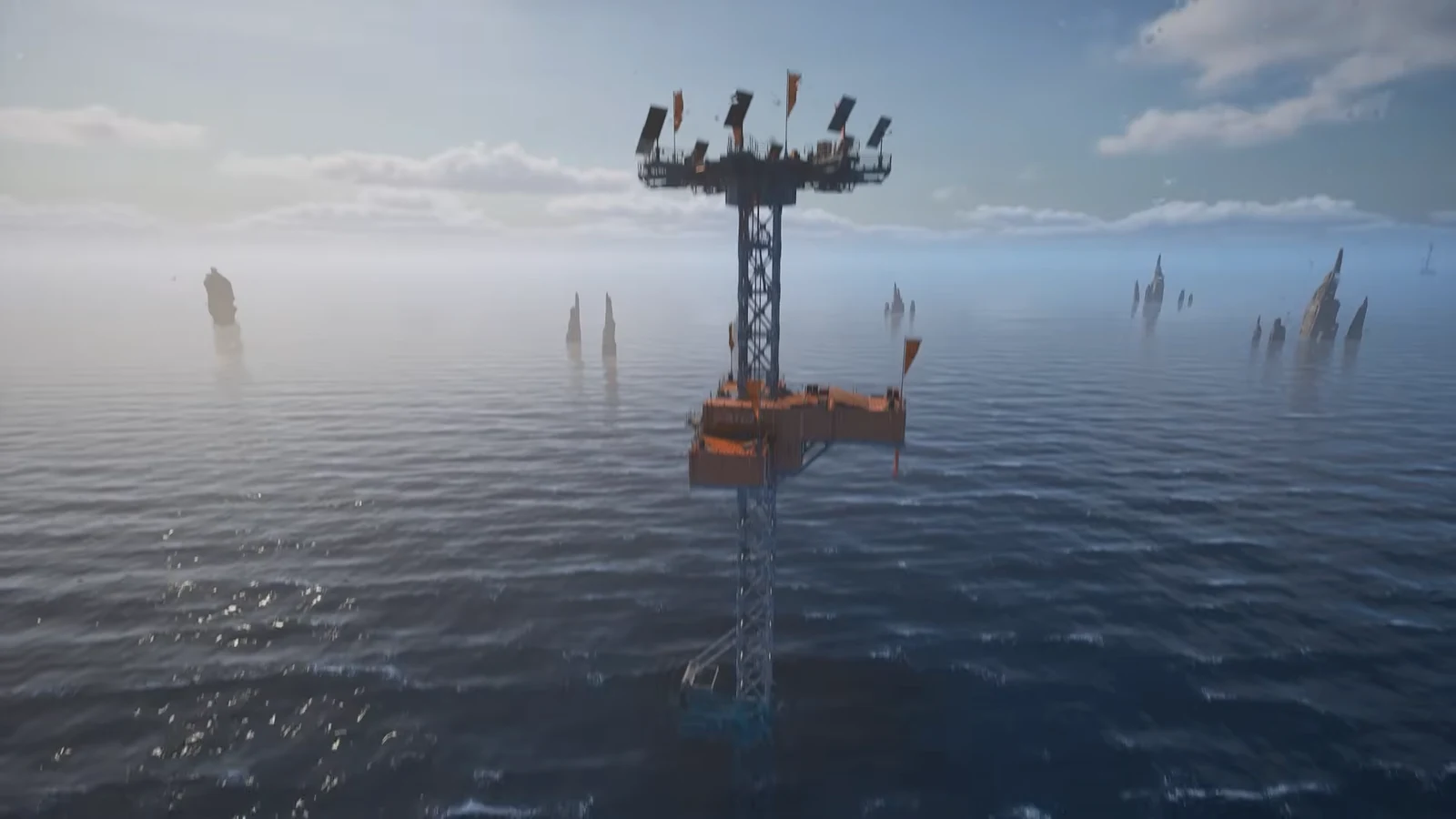
Earth is under water. What’s left pokes through the surface as rock spires, rusted towers, floating docks, and sealed vaults, and you wake up as a machine with one job on its task list. The Last Caretaker turns that premise into a first-person survival-crafting game where almost nothing is harvested in the traditional sense — you take apart what humanity left behind and rebuild it into something that keeps the mission going.
Quick answer: The Last Caretaker is a single-player survival-crafting game from Helsinki studio Channel37, in Early Access on Steam and the Epic Games Store since November 6, 2025, priced $34.99 / €29.99 / £26.99.
What you play and what the mission is
You are the last active Caretaker, a reawakened machine built to save humanity rather than to survive for its own sake. The long-term objective is to recover human seeds, restore the Lazarus Complex, raise the next generation, and eventually launch them into orbit. Everything else — the boat, the power grids, the weapons — exists to service that chain.
The story arrives through places rather than cutscenes. Sanctuary docks, refuel outposts, underwater cities, and forgotten seed vaults each carry logs, memories, and leftovers from a civilization that tried to outlast its own planet. Quest lines carry names like MOTHER, EDEN CRADLE, THE ISOLATION, QUARANTINE STACKS, and SIGNAL CHAIN, and a companion system keeps talking to you over the radio as you work.
The crafting loop: dismantle, recycle, unlock
There are no trees to chop. The world is the salvage yard, and the modular crafting system runs on three activities that feed each other.
| Activity | Tool or station | What you get |
|---|---|---|
| Dismantle | Dismantle Tool | Parts and scrap from furniture and machinery |
| Recycle | Recycler | Base materials from parts, scrap, and finished items |
| Craft and unlock | Fabricator, Skills menu | New recipes at higher skill tiers |
Skills level up as you dismantle, recycle, and craft, and each tier opens more blueprints. It’s common to unlock an item well before you have the materials or the infrastructure to use it, so front-loading salvage work early pays off later. The Salvage Gyro — a small helicopter you assemble on a helipad — is one of the blueprints you buy this way.
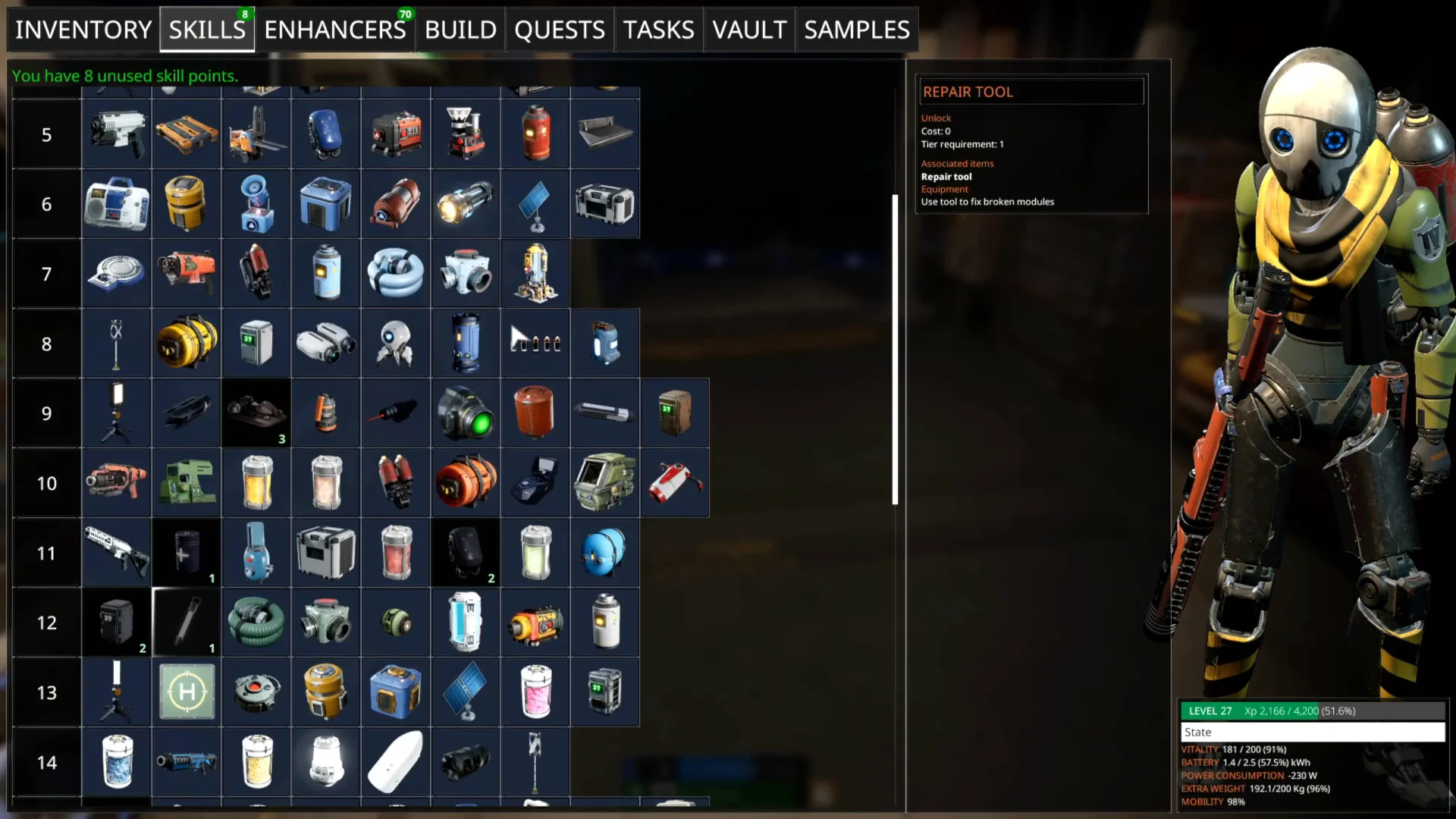
Dismantle items while their durability is still full or close to it. You get back the complete list of parts used to build them, which you can then run through the Recycler for raw materials.
Starting tools and your first materials at Sanctuary Dock 37
You begin with a Torch and a Repair Tool already in your toolbar. The Dismantle Tool follows shortly after, and it’s the one that actually starts the economy. Sanctuary Dock 37, the opening area, is full of old furniture and machinery worth stripping.
Each location holds a finite amount of easy salvage, so clearing a site thoroughly before you sail on matters more than it does in most survival games. Two early unlocks are worth aiming at: the Diesel Generator at skill level 4, which converts Bio resources into diesel, and the Diesel Tank at level 8, which expands storage past the boat’s built-in 2,000L limit.
The boat is your base, workshop, and only real home
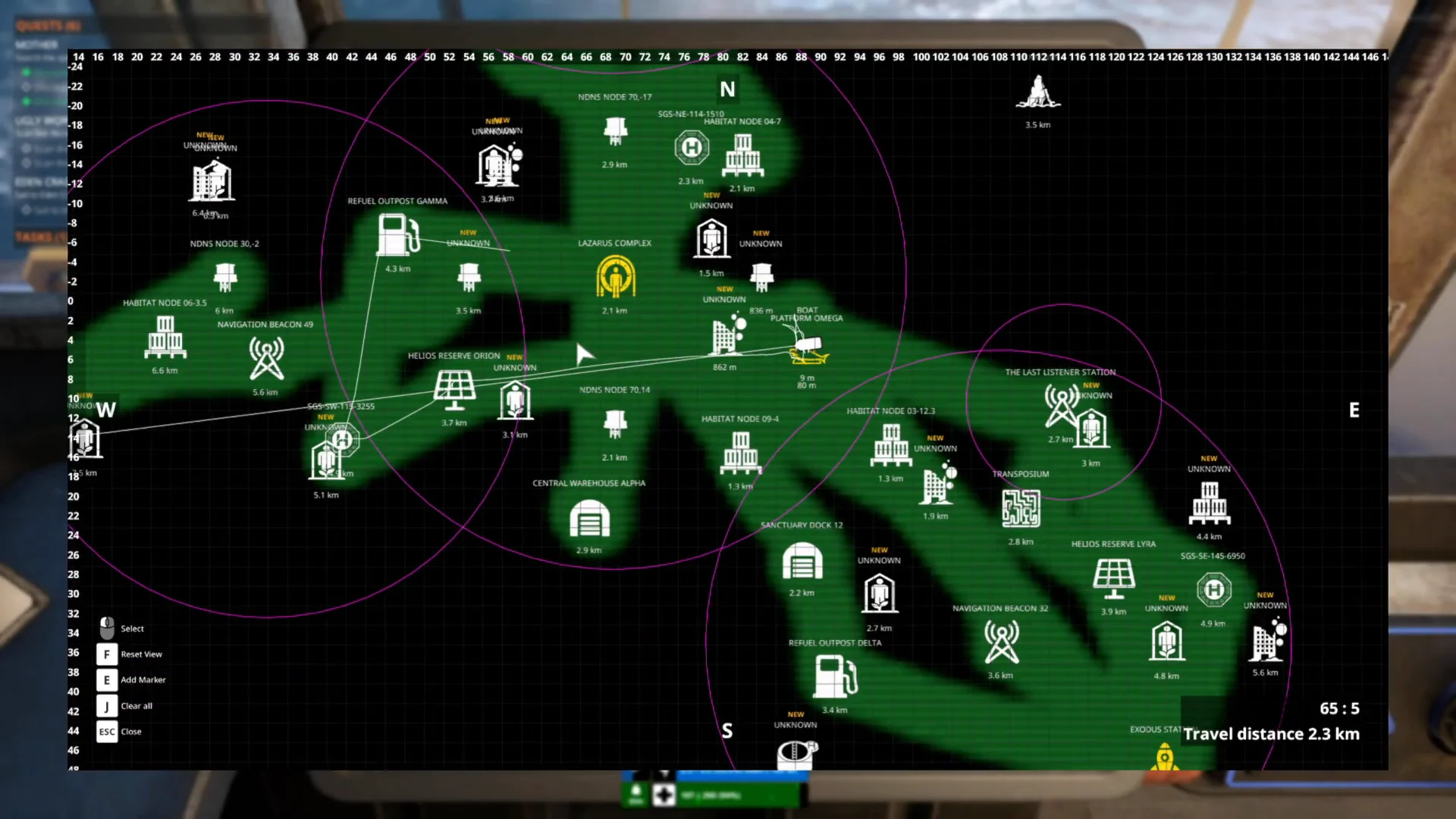
Your vessel does everything a land base would. The cabin holds a nav map terminal showing floating platforms, islands, and habitat nodes, plus the waypoints you mark from radio transmissions. The helm has digital gauges, fuel readouts, and a throttle, and the lower deck is where cargo containers and the item recycler live.
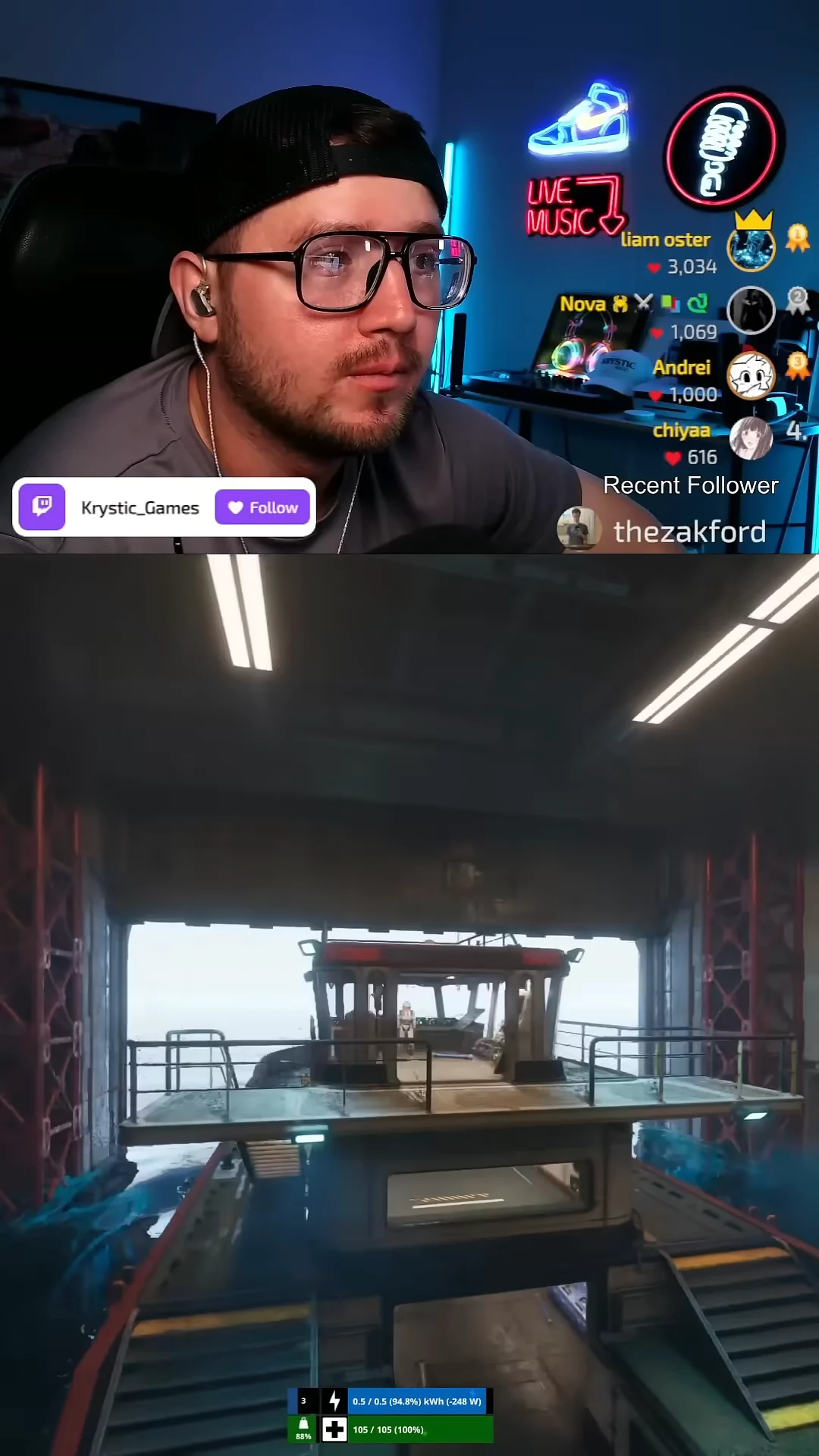
Sailing out of the hangar and into open water is the moment the game opens up. The ocean is physically simulated, and heavy weather throws the boat around enough that rough seas become a genuine planning problem rather than scenery.
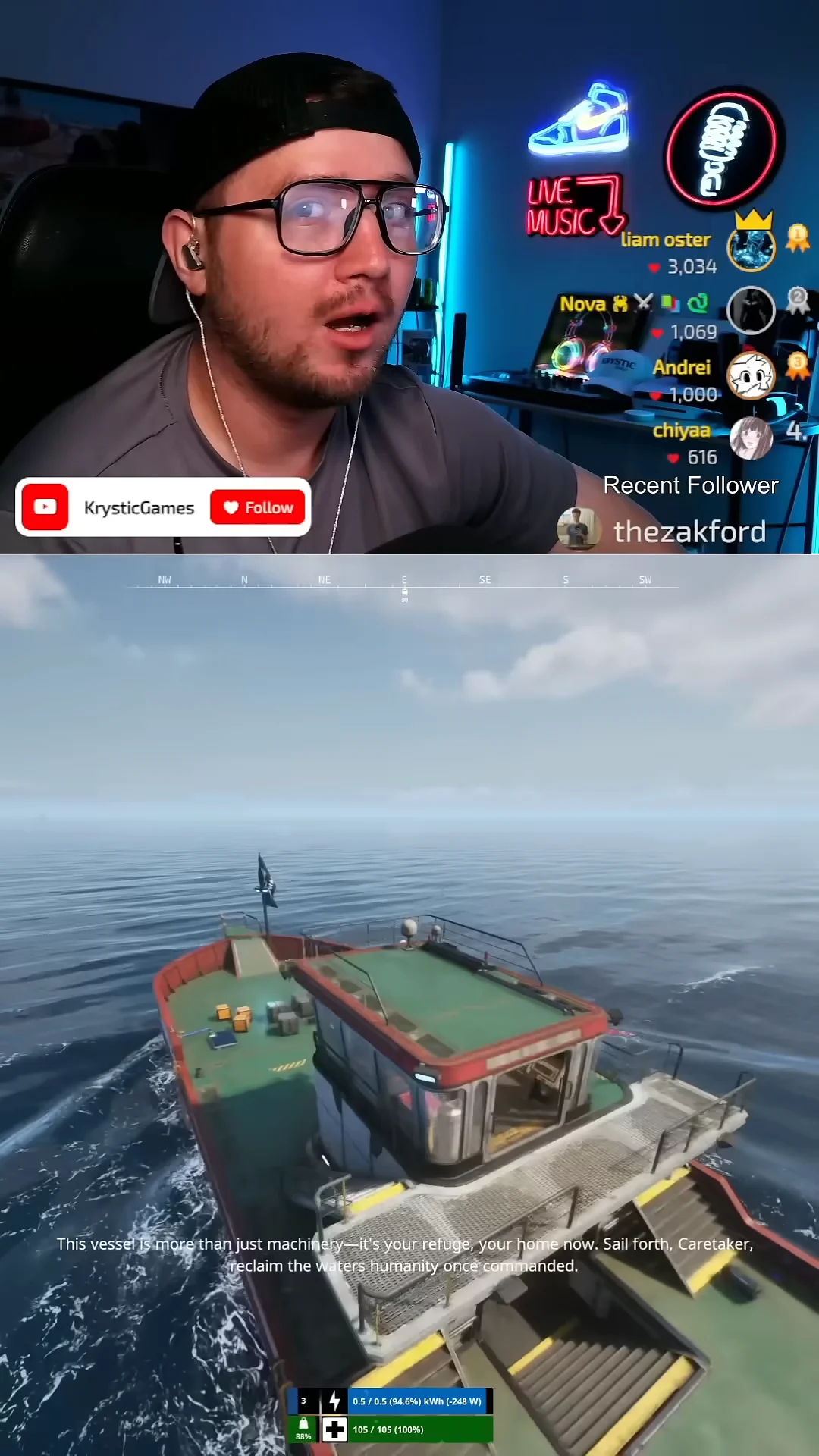
Modules on the deck take damage and need the Repair Tool. You can also build onto the boat, adding things like a mooring socket so a cable can hold the hull against a dock, or a helipad for the Salvage Gyro. A brass telescope helps pick distant spires out of the fog before you commit fuel to the crossing.
Fluids and storage planning in the mid-game
Diesel, water, and specialized gases define mid-game progress, and they all need containment. The boat’s diesel tank is the only fluid storage you get for free. Everything else requires you to build the container first, which means a wasted trip if you arrive at a source with nothing to put it in.
Craft your storage before you go collecting. There is no improvised way to carry a fluid you have no tank for.
Spires, Quarantine Stacks, and the Receiver Spine
Expeditions follow a repeatable shape. Radio transmissions hand you coordinates, you mark them on the nav map, you sail out, anchor alongside a rock spire, and climb. On the way up you mine copper, iron, gold, and titanium nuggets, clear obstacles, and fight whatever has moved into the ruins.
Quarantine Stacks are the gated version of that. A voice log recorded at Quarantine Stack AMEN describes a door that opens for signal instead of hands, with four slots “like ribs,” and the vault behind it stays shut until the Receiver Spine is fed the right components. Those components are Power Triodes, scattered across neighbouring towers — Power Triode 336 sits on a terminal at Quarantine Stack Dawn, on a platform high enough that you need the gyrocopter to reach it.
Caretaker, completion unlocks that door; force cannot.
Vertical traversal is a craftable problem too. Player-built platforms, portable oxygen extractors, and eventually the Salvage Gyro all exist to get you higher up structures that were never meant to be climbed from sea level.
Threats, deaths, and Backup Stations
Combat is resource-based, which means every fight is also a spending decision. Crafting a rifle, a flamethrower, or grenades costs materials you might want for infrastructure, and sometimes leaving is the cheaper answer. Rogue machines, hostile flying insects and their cliffside nests, and giant sharks in the water around anchored spires all push back — shark carcasses can be salvaged for raw resources afterwards.
Light-averse slugs are their own nuisance. They avoid any light source and die when a torch is shone on them from close range, which is why players ring their boats with lamps.
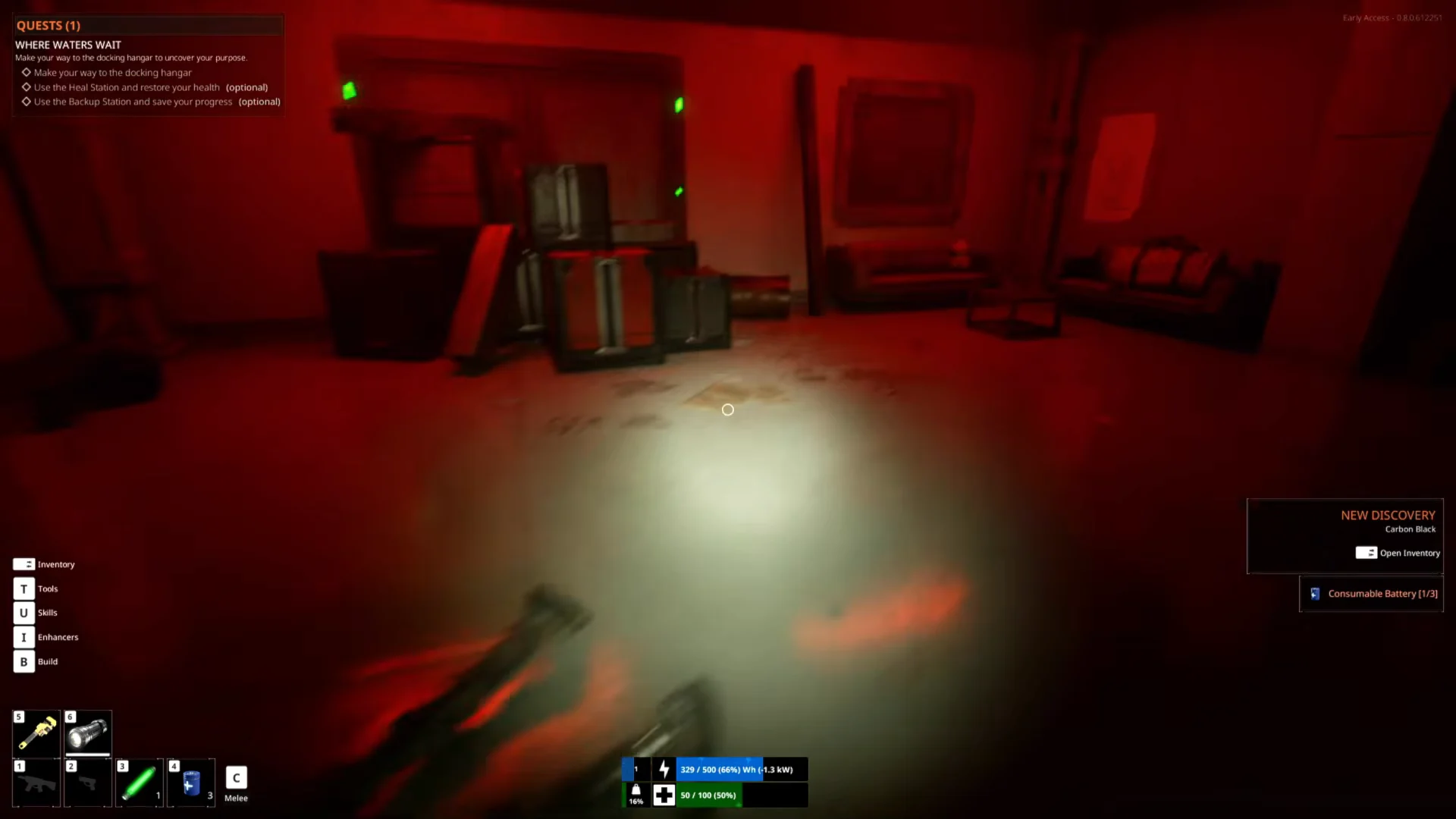
The bigger risk on a spire run is gravity. A slip off an upper walkway ends in a termination screen, and you resume from your last backup. That makes Backup Stations, the save terminals found inside shelters, the first thing worth triggering when you reach a new site. Heal Stations sit alongside them and restore health once you connect a data cable to them.
Price, platforms, and system requirements
The game is single-player only, first-person, and currently in Early Access. English is the only full-audio language, with interface and subtitle support for a dozen languages including German, French, Russian, Simplified Chinese, Polish, Brazilian Portuguese, Spanish, Italian, Japanese, and Ukrainian. There are 15 Steam achievements, Steam Cloud saves, and Family Sharing. Channel37 also took a Finnish Game Awards 2025 win for it.
| Component | Minimum | Recommended |
|---|---|---|
| OS | Windows 10 64-bit | Windows 10 64-bit |
| CPU | Quad-core, 3.2 GHz | Core i5 / Ryzen 5, 3.5 GHz |
| RAM | 16 GB | 32 GB |
| GPU | GTX 1070 / RX 5700 | RTX 2070 / RX 6700 XT |
| Storage | 30 GB | 30 GB |
A free demo is still available if you want to test the sailing and the salvage loop before paying. The game is also sold on the Epic Games Store.
Early Access roadmap and the 1.0 launch window
Channel37 has shipped a steady run of numbered updates since launch, including Last Humans, Ocean – The Final Frontier, Curiosity Wakes, Below Us, and Update 5.0: New Horizons, which added the first stage of Project Eden, Cultural Memories, the Theta-9 area, Project Jonah, new tools, and rougher seas. Update 6.0 is due on PC in early October.
The studio has set version 1.0 and an Xbox release for spring 2027, with Game Pass availability on day one and further updates planned after full launch. Until then, the Early Access build already runs a complete progression arc from your first dismantled chair at Sanctuary Dock 37 to a gyrocopter landing on a quarantine tower, and the nine-person team is still filling in the gaps between them.