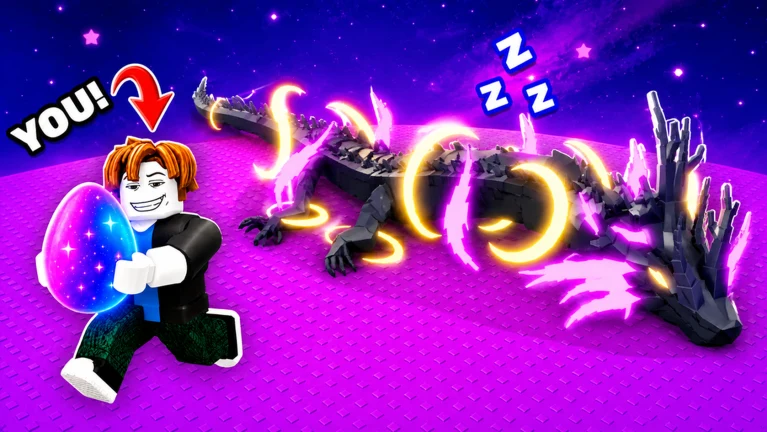
Divine is the rarest tier a pet can carry in Steal An Egg, and most players spend days without ever seeing one drop. The names that circulate most are Kitsune and Nightflame, both of which show up as glowing eggs during a stock reset before someone races them home. A recent 24-hour run by the creator Codezzy pulled three of them, two Divine Kitsune Eggs out of Cherry Blossom and one Divine Nightflame Egg out of Titan Temple, then fused the Kitsunes into a single giant pet earning $196B/s. That run is a useful window into how Divine actually behaves, from its odds to the mutation and fusion steps that make it worth chasing.
Quick answer: Steal An Egg’s highest rarity is Divine, with a 0.008% chance—about 1 in 12,500. It is selected at random when stock resets every five minutes, then its name and biome are announced across the server.
Divine egg odds versus Secret and Eternal
The three rare tiers players pursue have sharply different completion rates. Roblox profile badge totals reflect the odds almost exactly: Divine is about six times rarer than Secret.
| Tier | Odds | Badge wins |
|---|---|---|
| Secret (Mythic) | 0.051% (~1 in 1,960) | 31.2M+ |
| Eternal (Legendary) | 0.046% (~1 in 2,170) | 19.8M+ |
| Divine (Celestial) | 0.008% (~1 in 12,500) | 1.69M+ |
Divine has been completed about 18 times less often than Secret, closely reflecting the gap between their odds. Since each hatch is independent, the probability of getting at least one Divine after multiple tries is P = 1 - (1 - p)ⁿ, with p representing the drop rate and n the number of hatches. The calculation gives an average of about 12,500 hatches to get one Divine. That figure is an average, not a guarantee: many players go beyond 12,500 without getting one, and a long run without a Divine does not improve the odds on the next hatch.
How the stock reset and spawn timing work
Stock is the set of eggs available to steal at any moment, and it is not permanent. The whole map cycles on a five-minute timer. Each cycle runs about 4 minutes 50 seconds of active play, then closes for a 10-second night period where the field resets and every egg grows 30 times faster.
| Mechanic | Time | What happens |
|---|---|---|
| Egg reset | 5 minutes | New eggs respawn across the map |
| Active collection | 4 min 50 sec | You can enter biomes and grab eggs |
| Night/reset | 10 seconds | Field closes; eggs reset and grow 30x |
Each reset determines Secret, Eternal, and Divine egg appearances at random, so none is assured in a particular cycle. If an egg appears, a server-wide alert identifies the pet and its biome; that is how the Kitsune and Nightflame notices appeared during Codezzy’s run.

Spawns spread across every biome, and the later zones hold the rarer pools. The gate new players miss is movement speed. Later biomes require more of it just to enter, so a Divine that lands somewhere you cannot reach is worthless to you. A Divine Kitsune Egg glows brightly enough to spot from a distance in Cherry Blossom, with a steal prompt floating above the nest.
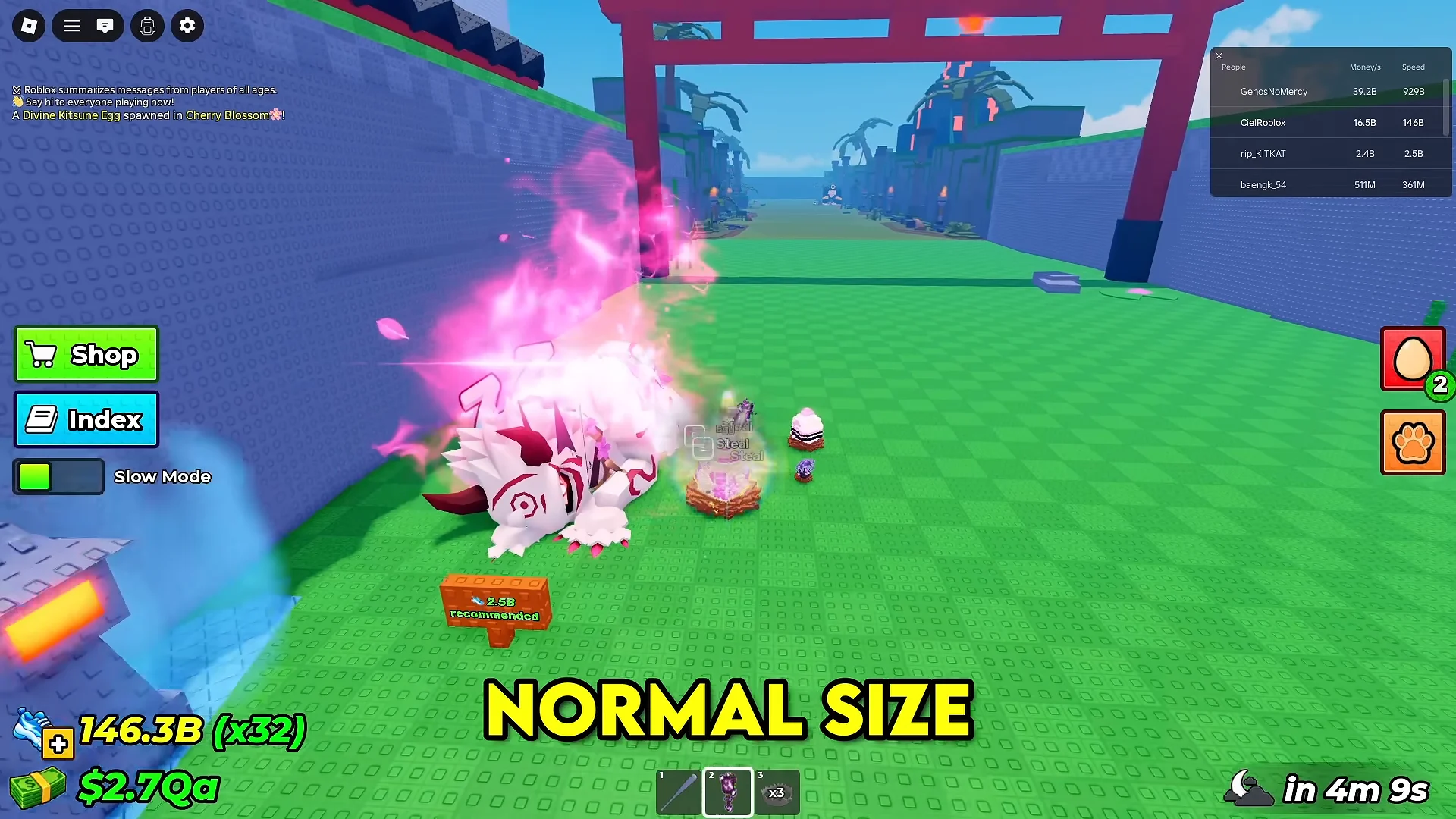
Because eggs rotate every five minutes, checking what is in stock before committing to a far biome costs less than a failed run. External stock displays can trail the in-game timer by a few seconds, so confirm the egg is still there before sprinting.
Luck multipliers and the hourly event
Only luck boosts change the base drop chance. There are three conditions to watch, with the strongest available only while the Admin event is active at the top of the hour.
| Multiplier | Source | When it applies |
|---|---|---|
| 1x | Base luck | Always |
| 2x | Admin event | Top of the hour |
| 3x | Admin + VIP Pass | Hourly event only |
The 3x rate comes from combining bonuses, rather than from a separate buff: you need the VIP pass while the Admin 2x event is active. That makes the start of each hour the best time to use hatches. Holding eggs until then beats opening them at a steady 1x rate.
What the 24-hour Divine run showed
The challenge was simple to state and hard to do: steal three Divine eggs inside a day. The zone track runs Snow, Volcano, Abyss Ocean, Prehistoric, Cosmic, Cherry Blossom, Titan Temple, and Demons, so every Divine steal means sprinting deep into that track and then carrying a heavy egg back past other players who want to intercept it. To keep pace, Codezzy bought a 1.25x Speed potion from Dr. Scramble’s Experiments for 375 currency before each long push.

Grabbing an egg is rarely the hard part. Getting it home is. Both Divine Kitsune Eggs came out of Cherry Blossom, and the Divine Nightflame Egg came from Titan Temple, each after a spawn alert. Once secured, an egg goes into a pen to incubate. A massive fused egg can carry an incubation timer of more than a day, which is why the run leaned on the paid Instant Grow All option to skip it.

Hatched on their own, the Divine pets were solid but not spectacular. The two Scrambled Mutation Kitsunes produced $8.8B/s and $8.4B/s, and the Scrambled Mutation Nightflame landed at $16B/s. The real jump came from combining them.
Mutations and fusion: how the $196B/s Kitsune was built
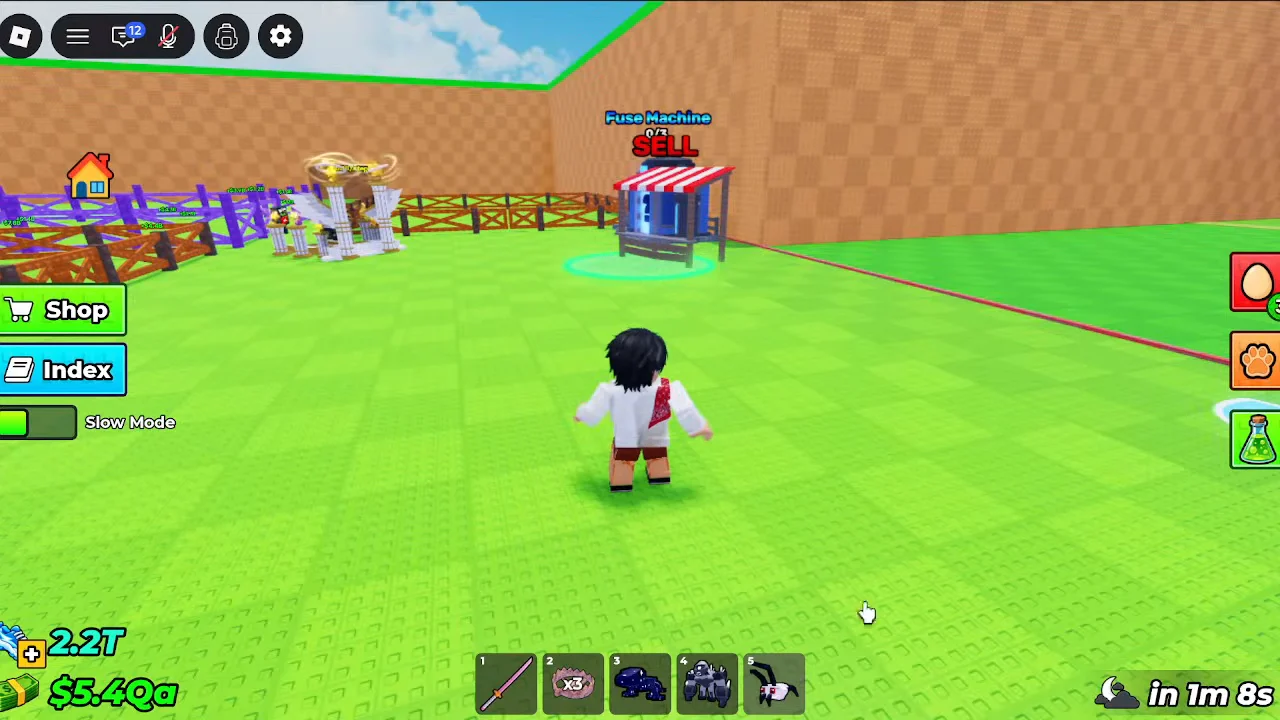
The Fuse Machine takes three of the same pet and combines them into a single new egg. Better pets feed more luck into the result, and applying mutations before fusing sharply raises the odds of a massive fused pet. In the run, three mutated Divine Kitsunes went into the machine for $4.8T, producing a 14,870kg Divine Kitsune egg.
That giant egg then took two mutations before hatching. A Fractured Mutation was applied using Fractured Shards, and a Scrambled Mutation came from Dr. Scramble’s potions at 475 currency each. Instant Grow All, priced at 64 Robux, skipped the roughly 1 day 10 hour incubation timer. The egg hatched into a giant Divine Fractured + Scrambled Mutation Kitsune earning $196B/s, which pushed total income to $3.5T/s and the leaderboard money figure to 3,530B.
These figures show that rarity determines a pet’s starting income, while mutations and size add multipliers. A large mutated pet can therefore earn more than an unmodified pet of higher rarity; the fused Kitsune far out-earned the three individual Kitsunes used to create it.
The Rift as a second route to Divine
Stealing spawns is not the only path to a Divine pet. The Rift runs a sacrifice system with a pity counter. Handing over pets you do not want, pulled straight from your collection, builds pity toward a Rift Egg, and reaching the 49/50 threshold and offering the final pets triggers a purple eruption that awards the egg. Repeated sacrifice cycles can reset pity to 0/50, the signal that a Divine was pulled through that route.

Most of what you hatch across the 100-plus pets in rotation will be filler, and that is normal. The Rift is where that filler becomes progress instead of clogging your inventory.
How to tell a Divine hatch actually landed
You will know right away. A Divine hatch awards the Celestial-tier Divine badge on your Roblox profile, and the pet appears in your collection under the Divine rarity label rather than Secret or Eternal. If no badge fires, the hatch was a lower tier no matter how flashy the effect looked.
Updates can change the pet count, odds, and rotation schedule, so check the current in-game information before spending anything. Getting a Divine takes patience and good timing more than sheer hours; arriving at the hourly luck period with eggs ready beats hatching unpredictably.