A dice game dressed up as a 1980s television broadcast, with a mascot who welds himself together out of dead CRT sets. That is the pitch behind The Zibbo Show, the strategy title from Tessera Studios, and the cinematic reveal finally attaches a date to it.
Quick answer: The Zibbo Show is dated October 29, 2026, developed and published by Tessera Studios, with Steam, Epic Games, PlayStation, Xbox, Nintendo Switch, App Store, and Google Play logos shown at launch.
The Zibbo Show release date, platforms, and developer
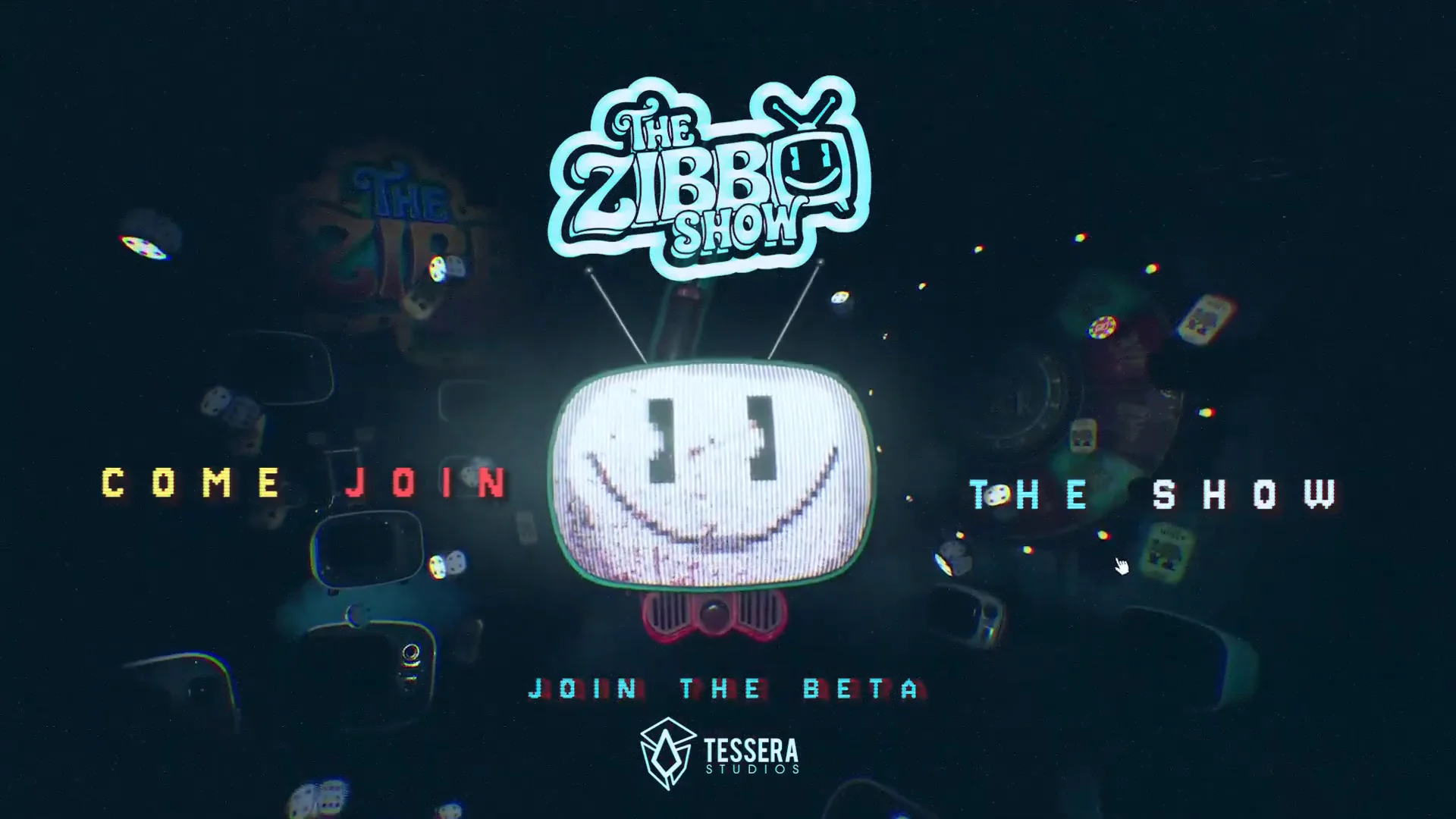
The closing card of the cinematic puts the neon show logo over a wall of televisions, alongside a wishlist prompt and the launch date. The end screen then hands off to the Tessera Studios logo, which handles both development and publishing.
| Detail | Confirmed |
|---|---|
| Release date | October 29, 2026 |
| Developer and publisher | Tessera Studios |
| Genre | Indie strategy, dice and deck building |
| Price | Not announced |
The platform logos stacked under the date cover a wide spread:
- Steam
- Epic Games
- PlayStation
- Xbox
- Nintendo Switch
- App Store
- Google Play
The Steam store listing is still tagged as a Windows PC release, so the console and mobile versions shown on the end card do not yet have their own dated storefront pages.
What the Behind the Curtain cinematic shows
The cinematic opens on a dark tunnel that lights up to reveal walls of retro CRT televisions hissing with static, while a game show announcer greets the audience for “another exciting episode of the Zibbo Show.” The framing is pure broadcast nostalgia, and it holds that tone for roughly forty seconds before it turns.

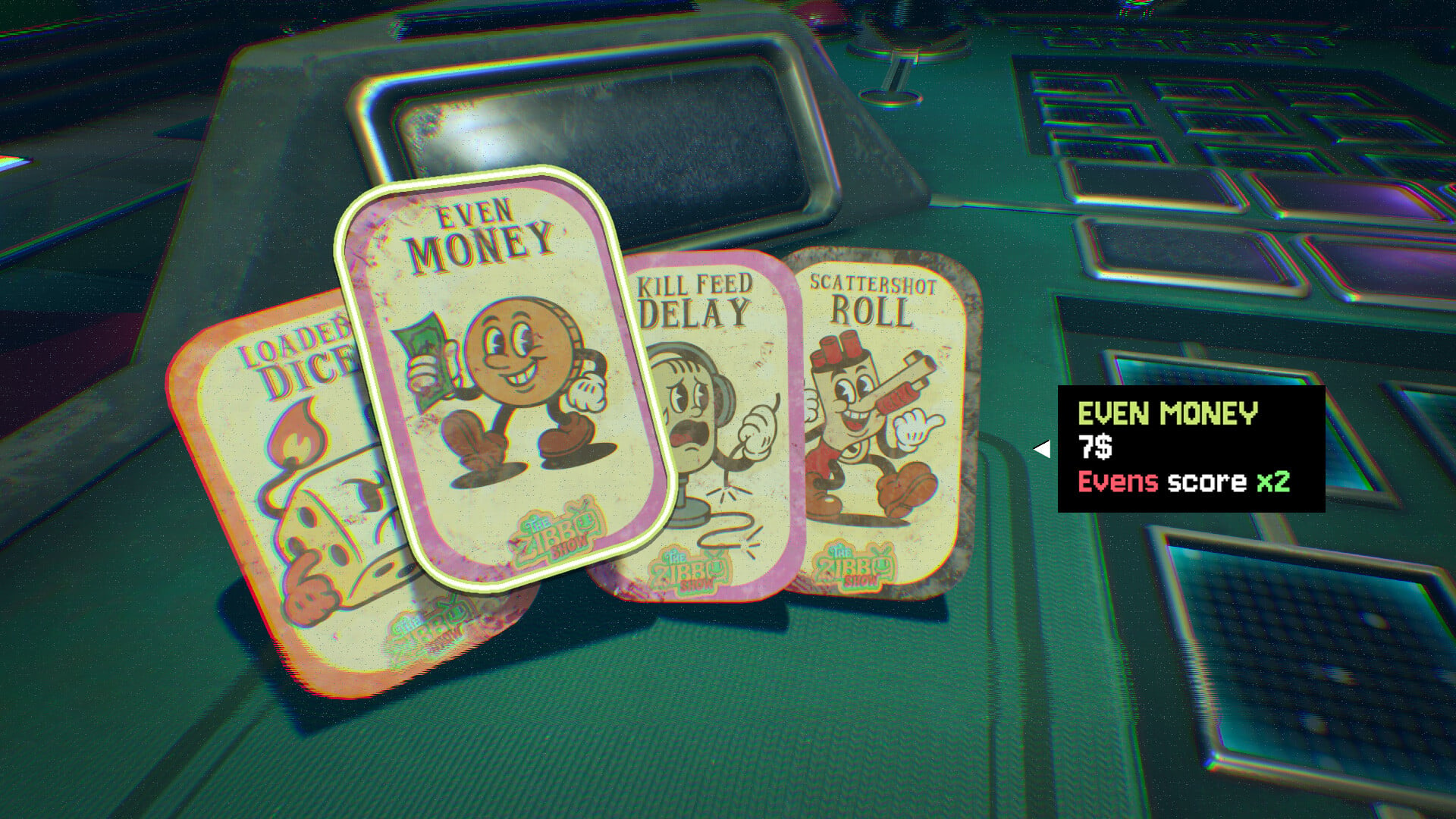
From the corridor the camera drops onto the game table itself, where glowing dice tumble across a surface covered in chips, cartoon-illustrated cards including Loaded Dice, and dried blood. The narrator describes luck that can change a contestant’s life forever, which is the trailer’s polite way of explaining the stakes.
A cutaway to a storage room shows how far the show has crept into daily life. A cardboard standee of the mascot holds a microphone beside boxes of plushies and signs reading PICK ME! and REMEMBER TO SMILE!, while the narrator calls the program a household favorite.
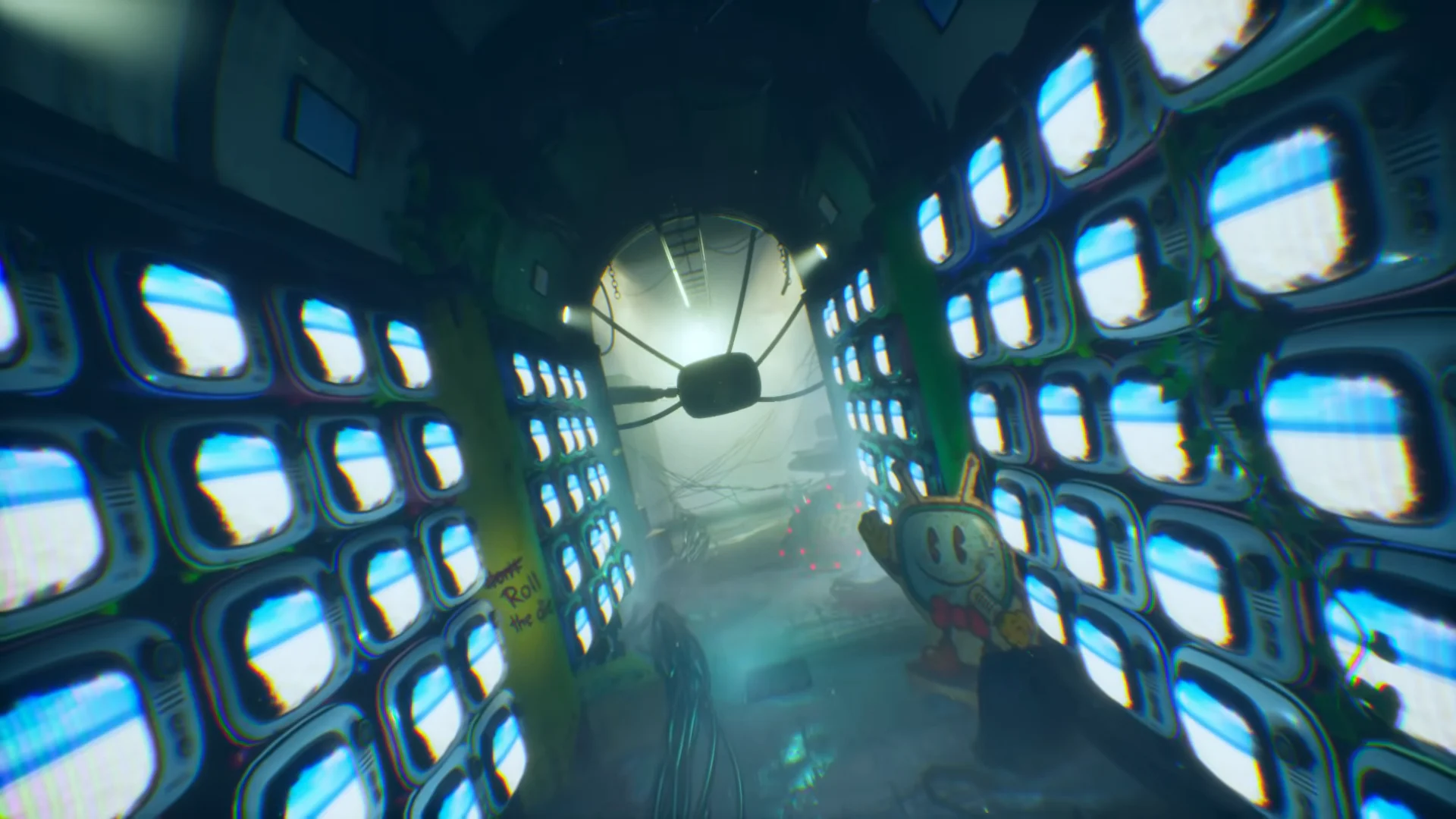
Then the reveal. A mechanical claw drops a broken television onto a heap of discarded sets, a bloodied hand lies still beside scattered dice and cards, and the narrator admits that none of last week’s contestants made it to the end. Mechanical arms weld and power a central television suspended on cables, which flickers to life with a pixelated smiling face glitching through blood splatter. That is Zibbo, the host.
How the dice game works
Under the horror staging is a fairly readable tabletop scoring game. Two contestants sit on opposite sides of a green casino-style table, each with their own grid, and a shared round counter and betting pool sit to the side. Scores tick up match by match, and the player with the higher total moves on.
Roll and place
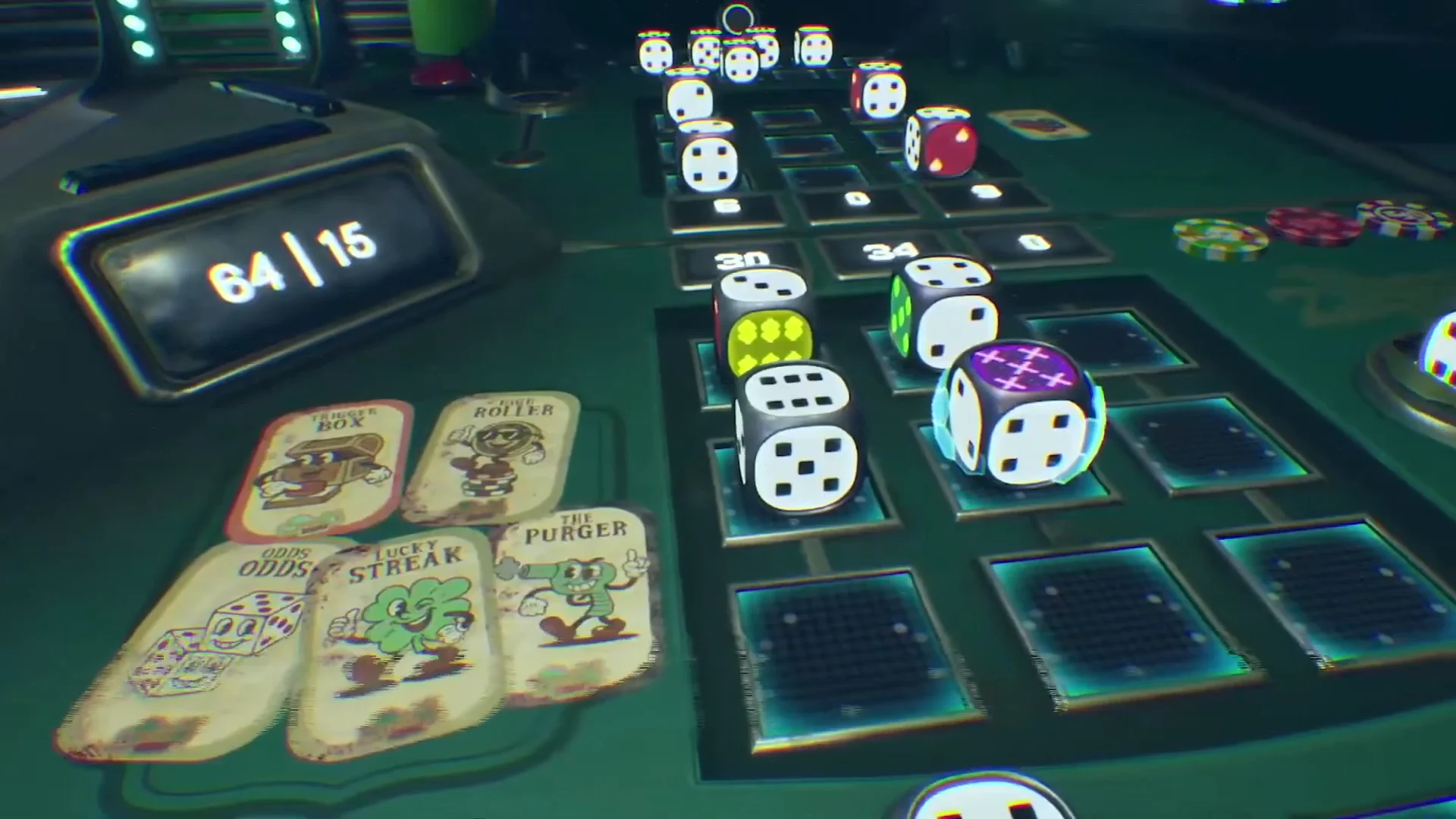
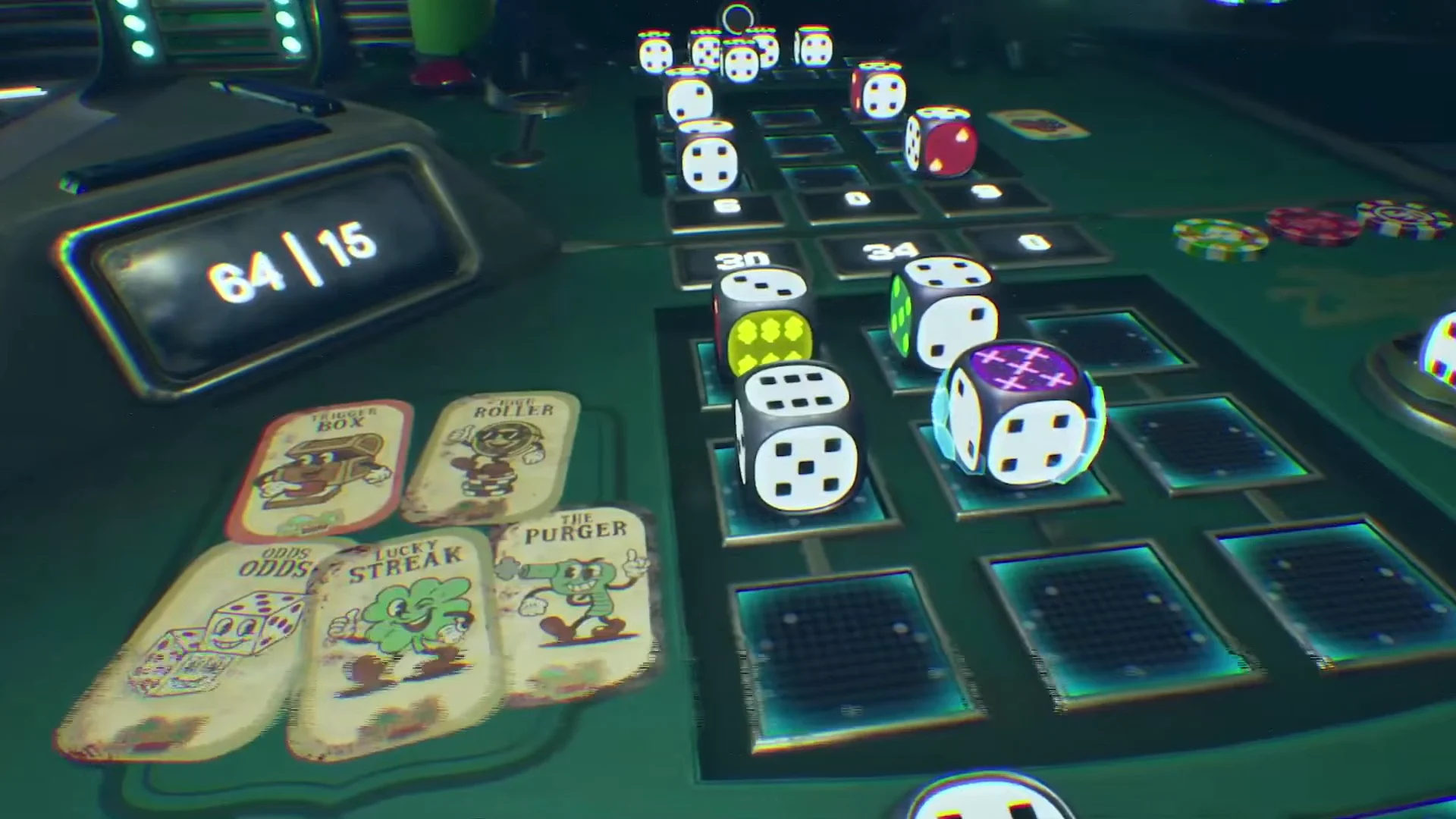
Each turn starts with a roll. Dice scatter across the table and then lock into slots on a 3×3 grid, with columns carrying their own numerical values. Chips stack beside the board and a bank total runs into the tens of thousands, so the money on the table matters as much as the placement.
Sum and multiply
Scoring is additive first and multiplicative second. Dice locked into a column are totalled, then multipliers attached to the tiles stack on top, which is how a modest board turns into a run of 202 points against an opponent sitting at 84. Matching identical numbers in a column is the engine behind the biggest swings.
Deck building and dice customization
Between rounds you assemble a deck of power cards with names like Kill Feed Delay, Cherry Bomb, Trigger Box, The Box, The Purger, and Streak. Their effects are printed on the card, so Trigger Box grants an extra turn when three identical numbers land in the same column. The in-game shop sells cards, single-use chips, replacement die faces, and tickets for a Spin the Luck wheel.
Those die faces are the second layer of customization. Instead of standard pips, dice can carry glowing symbols, suits, and multiplier markings, letting you load a die toward the outcome your deck wants. Beat enough rounds and the show is yours, which the game announces with a gold-trimmed YOU WIN marquee that lowers from the ceiling under a burst of confetti.
Contestants and opponents
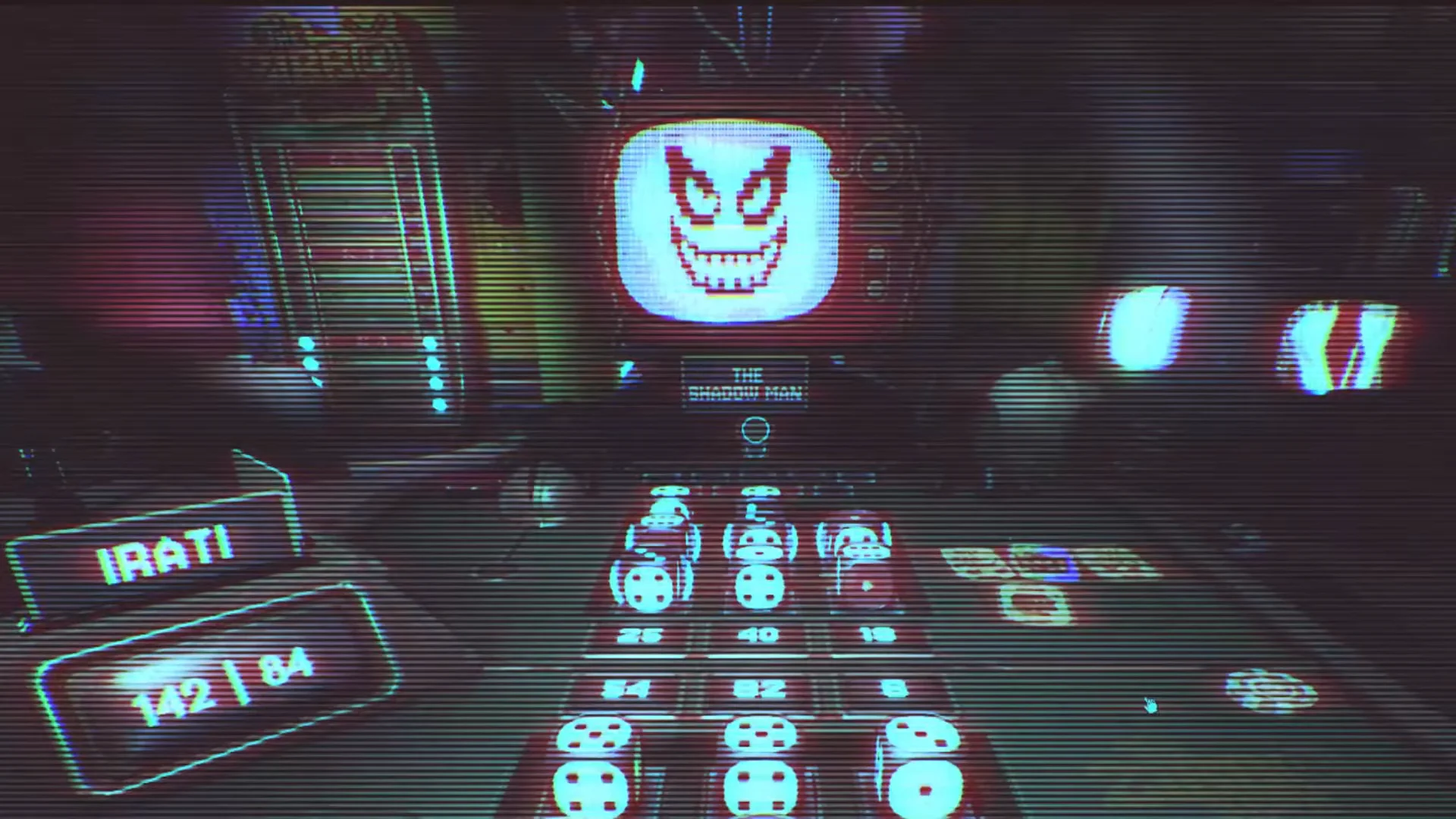
Opponents sit across the table as television sets rather than bodies. Some screens show live-action human faces, bound, gagged, or visibly distressed, under glitching prompts that flash SAVE! YOUR LIFE and HAVE FUN!. Named rivals seen in play include Clara, Frank, and Irati.
Others are not people at all. The Shadow Man appears on a red monitor as a sinister white pixel grin, the closest thing to a boss encounter shown so far. Between matches the camera drifts through the studio past clocks, hanging monitors, robotic broadcast cameras on tripods, and corridors stained with blood.
Demo and beta access on Steam
You do not have to wait for launch to try the dice board. A playable demo is out on Steam, marked on the end card of the gameplay trailer, and a separate beta sign-up has also been promoted with a COME JOIN THE SHOW prompt. Both run through the game’s Steam page.
Everything shown so far points at the same design idea. The math is simple enough to read at a glance, the deck and the dice faces are where the strategy lives, and the studio around the table is there to remind you what happens to the losing contestant. October 29 is when the broadcast goes live.