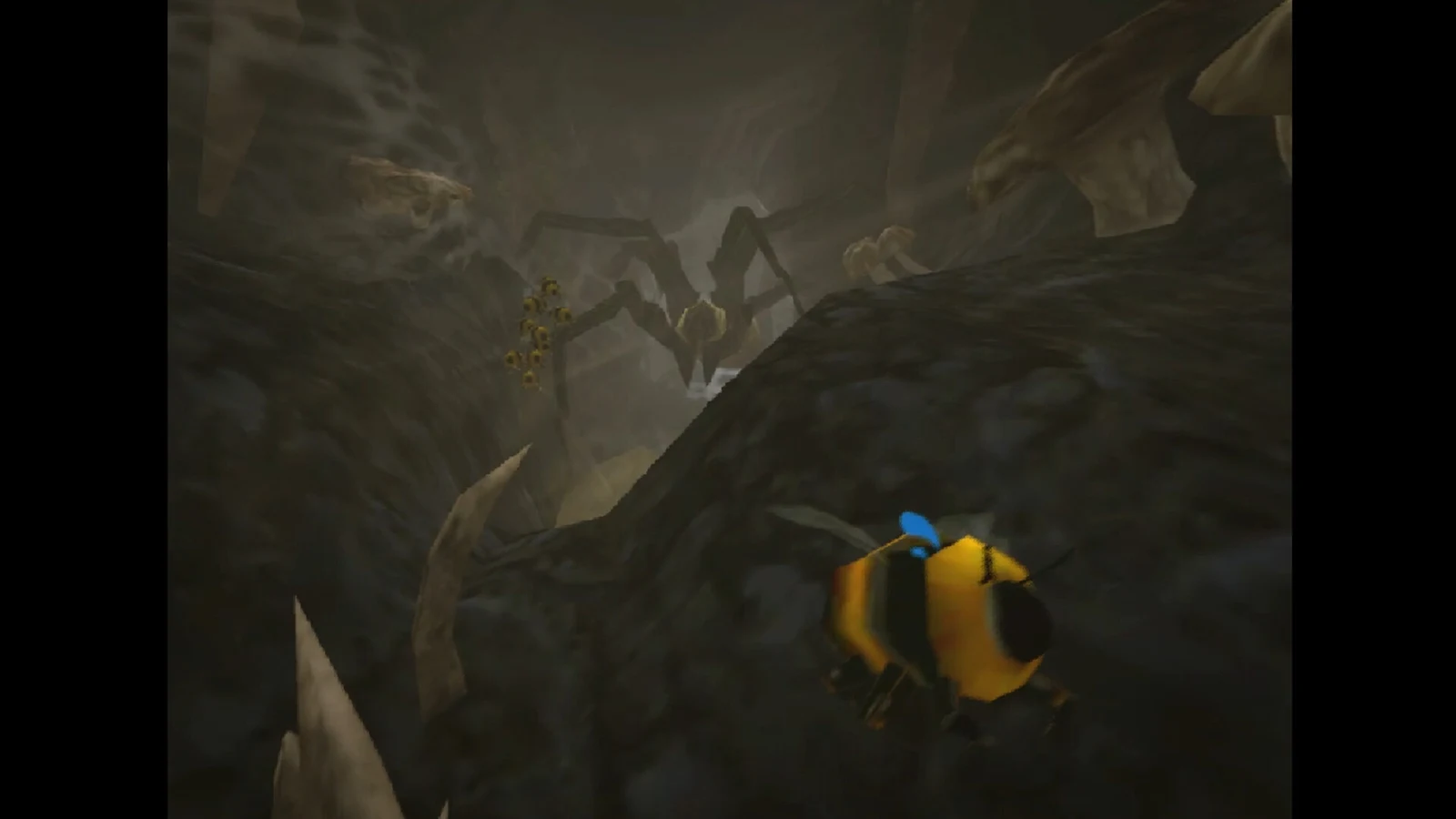
Tumblebee puts you in control of a single bumblebee crawling through a dark cave system, looking for 20 captive baby bees sealed inside white cocoons. Giant spiders live in the same tunnels, and they are the only thing standing between a clean run and starting over.
Quick answer: Free all 20 bees in a single run. Any spider that grabs you wraps the bee in silk and drops the counter back to 1/20, so move between flowers with stamina to spare and hide under leaves.
The 20-bee rescue count and what resets it
Every rescued bee bumps an on-screen counter that reads out of 20. Bees are held in cocoons and behind sealed pockets of the cave, and bursting one adds it to the tally immediately. Freed bees do not disappear afterward; they fall in behind the player bee as an escort swarm that grows visibly larger as the count climbs.
Getting caught is the only hard failure. A spider that reaches you triggers a web-wrapping animation, the screen blacks out, and the bee wakes up inside a cocoon back at the start of the cave with the counter reset to 1/20. There is no partial credit for bees you had already collected, which is why a capture at 14/20 costs just as much as one at 6/20.
Tumblebee controls: rolling, flying and hiding
The bee has two ways to travel and one way to disappear. Rolling costs nothing and is fastest downhill, flight drains energy, and hiding is what breaks a spider’s line of sight once it is already hunting you.
| Input | Action |
|---|---|
| Space | Jump |
| Shift | Fly (drains energy) |
| Mouse | Hide and throw items |
| Movement keys | Roll and tumble along terrain |
Rolling downhill at speed is the cheapest way to clear the opening stretch of the cave. Chaining tumbles down rock ledges gets the first three or four bees collected while the energy meter stays untouched, which matters because the deeper sections need flight.
The pause menu holds the keybinding list and the audio sliders, including separate speaker and music volume controls. It is worth opening once early, since sound is a genuine warning system in the lower tunnels.

How stamina works: pollen flowers and leaf rests
Flight runs off an energy meter, and the cave gives you two ways to refill it. Glowing blue flowers recharge the bee when you pollinate them, spraying yellow nectar and topping the meter back up. Resting on a leaf also recovers energy, more slowly, but without needing to find a bloom.
Treat the flowers as checkpoints on a route rather than something you visit when the meter is already empty. Rolling from bloom to bloom and arriving at a spider zone with a full meter is the difference between escaping an ambush in the air and being stranded on the floor.
The large central blossom can be pollinated with the whole swarm gathered around it, which is the safest place to reset energy before a deep push.
How the spiders behave in the cave
Spiders are not scattered randomly. They are tied to specific triggers and specific pieces of terrain, and once you know which is which, most captures become avoidable.
Cocoon ambushes
Bursting a cocoon is itself a trigger. Several rescues wake a spider directly, either splitting open a neighboring cocoon to reveal twitching legs or launching a full-size spider out of the wall that immediately gives chase. Plan an exit before you break the silk, not after.
Ceiling drops and shaft chases
Spiders drop silently from the ceiling, and they do it most often when the bee is mid-flight in open space. Vertical shafts are the worst offender, because a pursuing spider can follow you down the entire drop and catch you at the exit. Hug the walls, check corners before committing to a glide, and use short hops rather than long crossings.
The Big Ass Spider boss
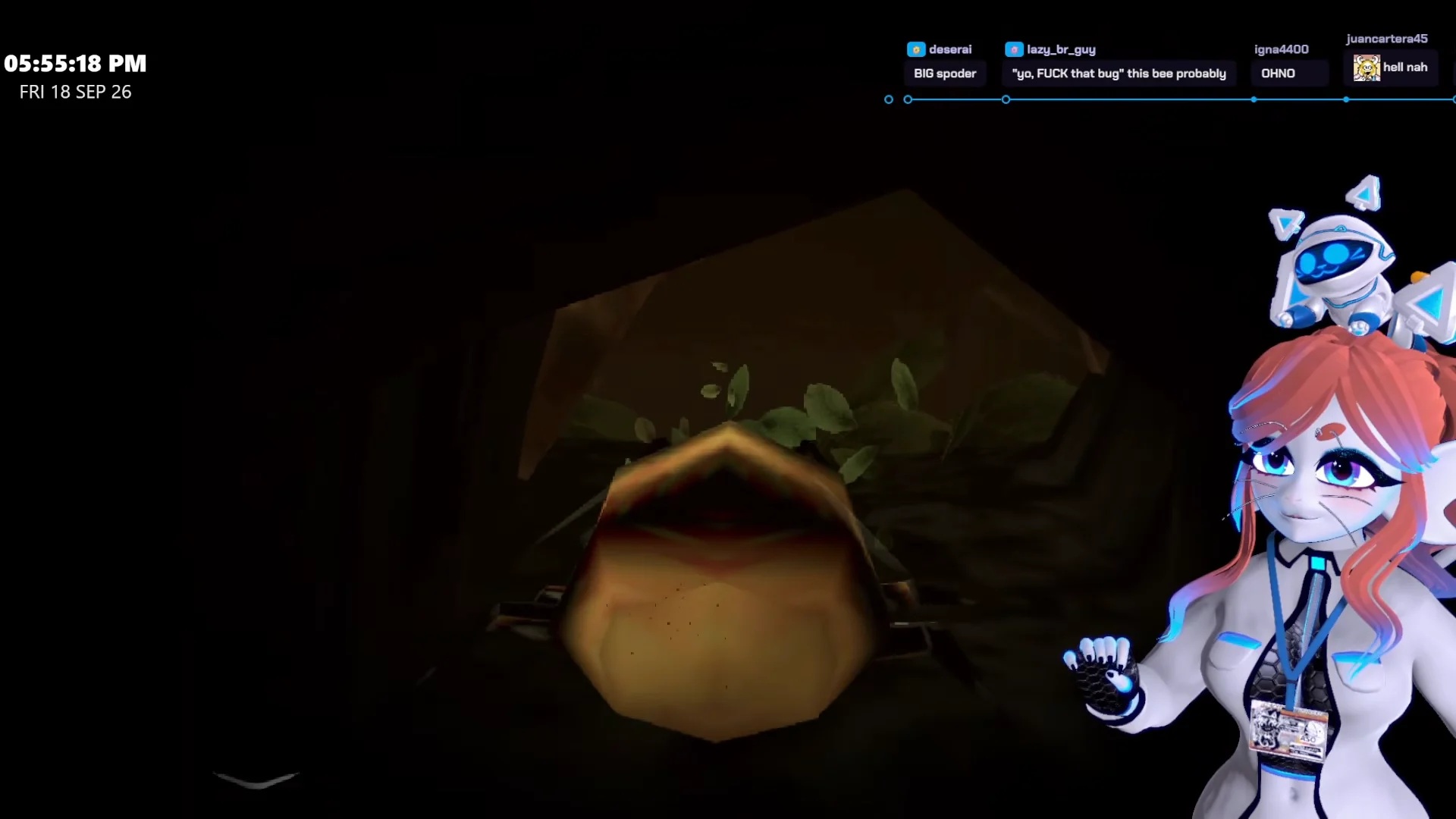
One encounter is flagged as a boss. A health bar labeled Big Ass Spider appears in the bottom-left corner as the creature fills a cave opening, and the correct response is to get under a leaf and stay there. Leaving cover early is what gets the bee picked up.
Spiders camping a cocoon
Later cocoons can have two aggressive spiders parked on top of them. Watching from a leaf hide point lets you read the patrol pattern, and the reliable solution is a single dash in, one burst, and an immediate retreat before either spider turns. Trying to fight or wait them out does not work; they do not leave.
Distractions, leaves and mushroom bounces
The cave hands you a few tools that cost nothing and are easy to forget under pressure.
- Leaves are hiding spots that break a spider’s line of sight, including while one patrols directly overhead.
- A beetle can be thrown as a distraction to pull attention away from a nest you need to cross.
- Springy mushroom caps launch the bee across gaps without spending flight energy.
- Narrow crevices are escape routes, including out of the main spider den.
A mushroom launch throws you forward with no control over where you land, and it can drop the bee straight into a waiting spider. Scout the far side before bouncing.
How to confirm a rescue counted
Two things confirm a successful rescue. The counter ticks up by one the moment the cocoon bursts, and the freed bee joins the trail behind you. By the halfway mark you should have a visible swarm buzzing alongside the player bee, and by 16/20 the escort is large enough to circle the central flower while you pollinate it.
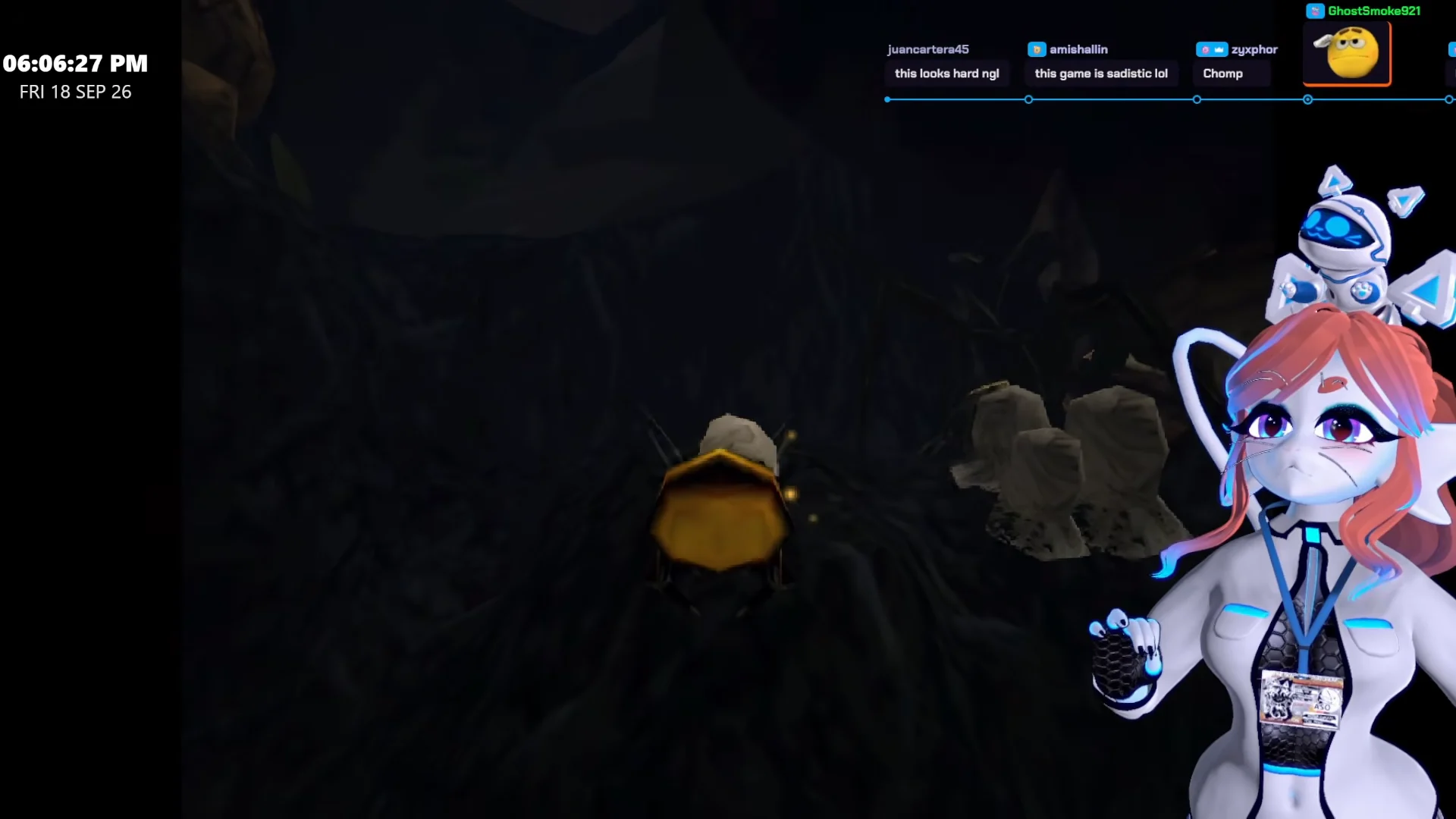
If the counter reads 1/20 after a black screen, the run reset and the swarm is gone. Recollect along the upper tunnel path first, since those early bees are reachable by rolling alone and cost no stamina.
The giant enemy spider meme and real arachnophobia
The phrase attached to runs like this one comes from a long-running internet joke built around a narrated shot of a towering spider stepping over a city skyline, followed by a bewildered reaction. It has been recycled endlessly across short-form video, and it now gets applied to just about any oversized arachnid in a game.

The fear is real even when the spider is not. Studies measuring reactions to live arthropods put spiders at the top of the fear scale, well above beetles and cockroaches, with fast and unpredictable movement being one of the strongest triggers. That is precisely what Tumblebee’s cave leans on, and it is why an arachnophobia warning before entering the tunnels is a reasonable courtesy.
For the record, the large spider most people actually meet indoors, the giant house spider, is venomous but not dangerous. Verified bites produce local pain, redness and mild swelling, and every documented case resolved completely.
A finished Tumblebee run is less about reflexes than route memory. Learn where the flowers sit, which cocoons wake something, and which leaves sit close enough to a cocoon to duck back under, and the same tunnels that swallowed a dozen attempts start feeling survivable.