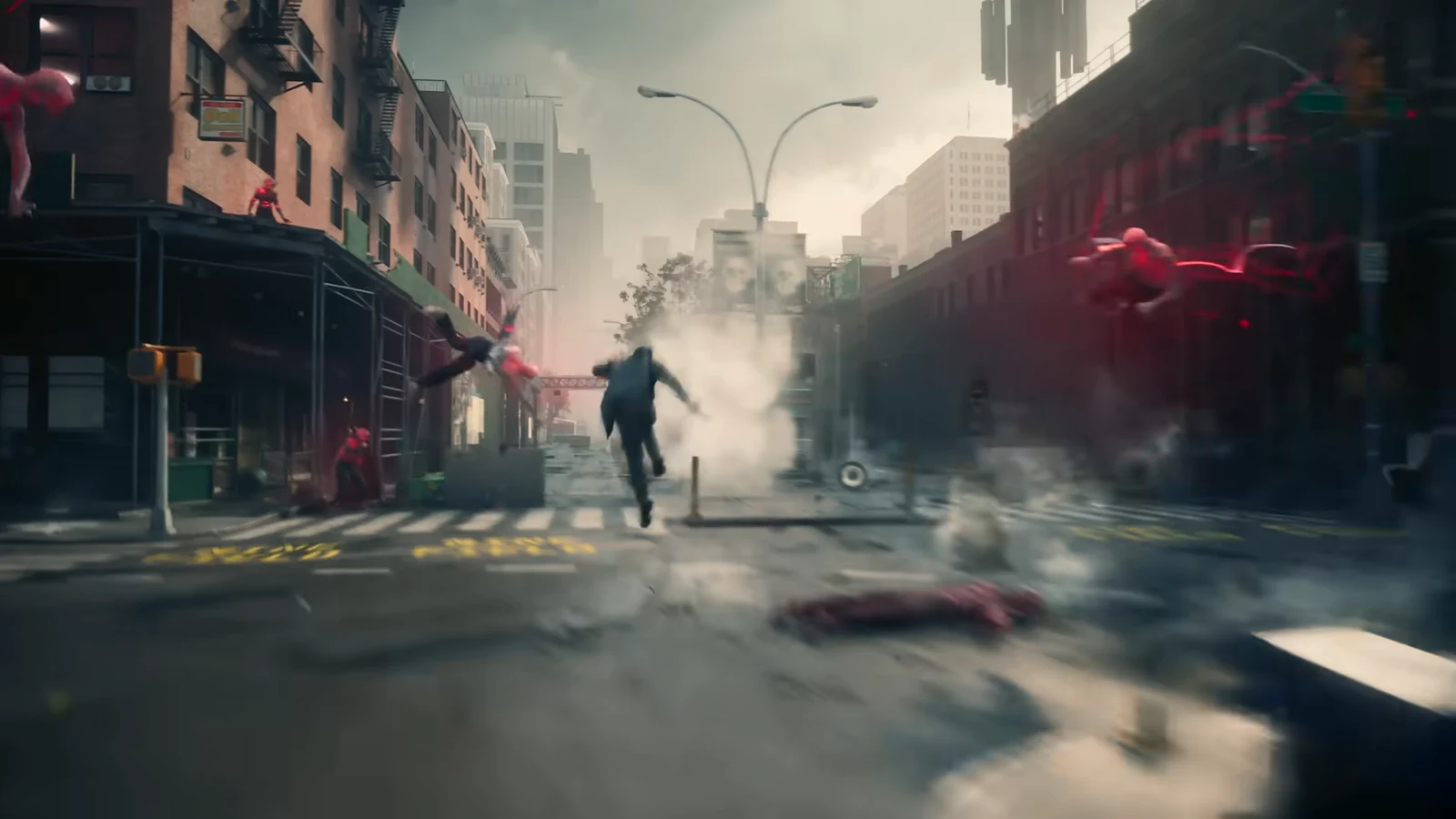
Seven years after the Oldest House went into lockdown, Remedy Entertainment is handing the series over to Dylan Faden — and swapping the Service Weapon for a shapeshifting melee weapon called the Aberrant. Control Resonant is an action role-playing game set across a paranaturally warped Manhattan, and it lands on consoles and PC this week.
Quick answer: Control Resonant reaches players worldwide on September 24, 2026. It will be available on PlayStation 5, Xbox Series X|S, and PC through Steam and Epic Games Store, with GeForce NOW available from launch. The Mac release follows later in 2026.
Control Resonant release date and platforms
| Platform | Release | Where to buy |
|---|---|---|
| PlayStation 5 | September 24, 2026 | PlayStation Store |
| Xbox Series X|S | September 24, 2026 | Xbox store |
| PC | September 24, 2026 | Steam, Epic Games Store |
| Cloud | September 24, 2026 | GeForce NOW |
| Mac | Later in 2026 | Steam, App Store |
Digital and physical editions have been open for pre-order since Remedy locked the date, and the game went gold on August 18, 2026. If you want to buy or pre-load on PC, the CONTROL Resonant Steam page is the place to start.
Story setup and where Jesse Faden fits
The sequel picks up seven years after the first game. The Oldest House has been sealed to keep the Hiss contained, but FBC Director Jesse Faden has vanished, and the threats have spilled out into downtown Manhattan. The Hiss, an invasive organism called the Mold, and a new form of resonance are all reshaping the city.
Dylan is released from FBC custody as a last resort. He is a “parautilitarian” designated P6, raised inside the Bureau by Head of Research Dr. Darling, and infamous internally for the deaths he caused while under the Hiss’s influence. Working alongside the agency that kidnapped and tortured him as a child, he searches for his sister while trying to stop the Patterning from spreading. His handler, agent Zoe De Vera, is a new character built specifically for that friction.
You do not need to have played the 2019 original. The game opens with a recap that catches newcomers up on the FBC, the Oldest House, and Jesse’s story.
How combat works with the Aberrant
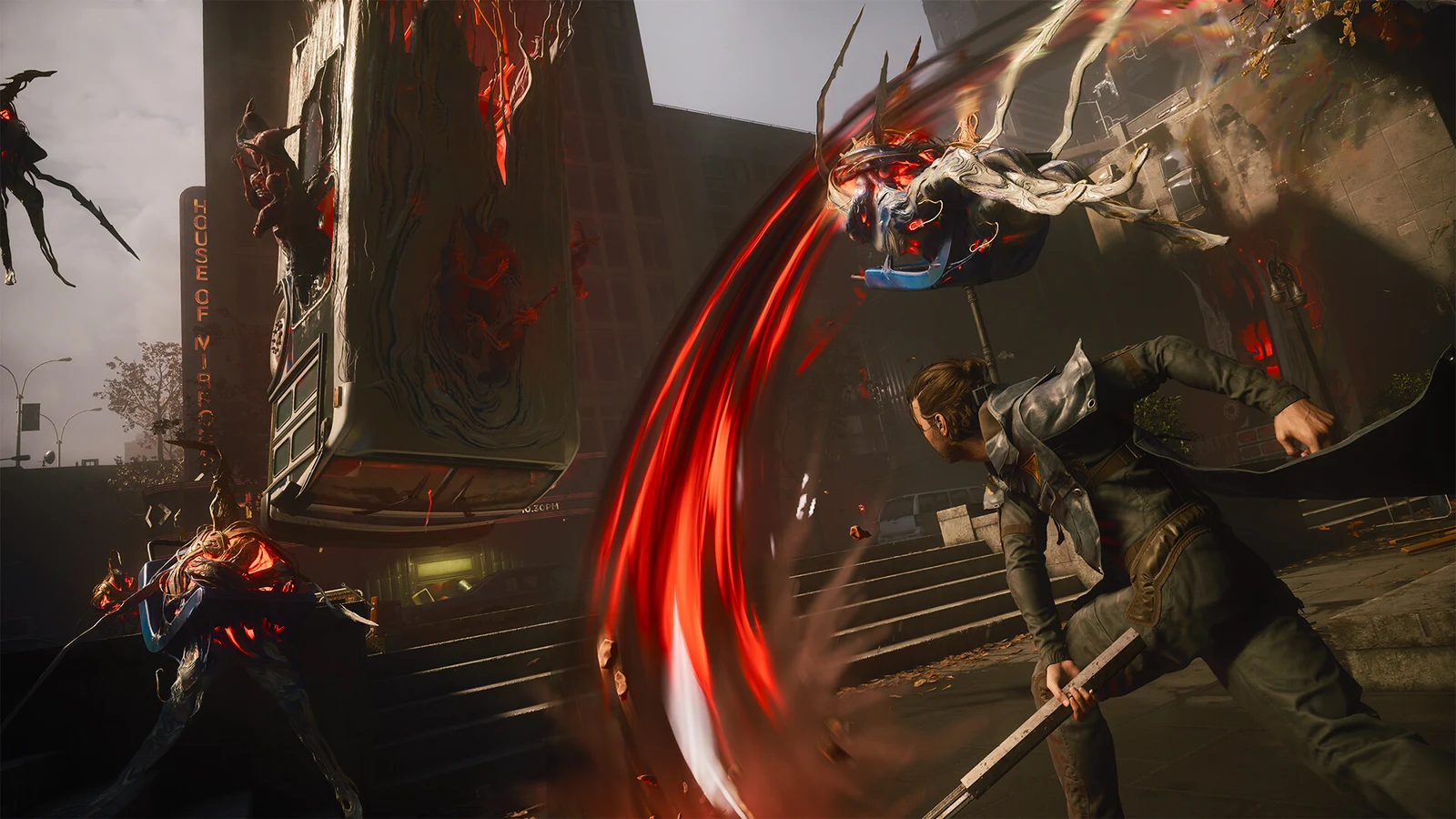
The biggest mechanical break from the original is the shift away from third-person shooting. Dylan’s weapon, the Aberrant, is a piece of shapeshifting metal that takes several forms — fast paired clubs with a critical-hit chance, a slower scythe that sweeps wide, and a middle-weight form that deals bonus damage from behind enemies. You can equip up to three melee weapons at once.
Fights run on a stagger-and-execute loop. Attacks fill an enemy’s Falter meter, and a Falter finisher grants Dominance, a temporary damage buff. Enemies killed normally drop health; enemies executed through Falter do not, but while Dominance is active, kills drop extra health. That trade is the core risk-reward decision in every encounter.
- No parry and no block — the combat model is built entirely around aggression.
- Dodging at the right moment opens a counter window, with extra buffs depending on your build.
- Up to six special abilities can be equipped at a time, including shields, telekinetics, and friendly summons.
- Character statistics, multiple talent trees, and customisable weapons replace the first game’s lack of build systems.
- Respec tokens are handed out regularly, so switching builds mid-run is cheap.
Build variety is wide — three main weapons, three secondary weapons, six combo finishers, and many ability combinations. The caveat is depth rather than breadth: once you learn enemy priority, most encounters settle into a familiar rhythm regardless of which loadout you run.
Exploration, movement, and game length
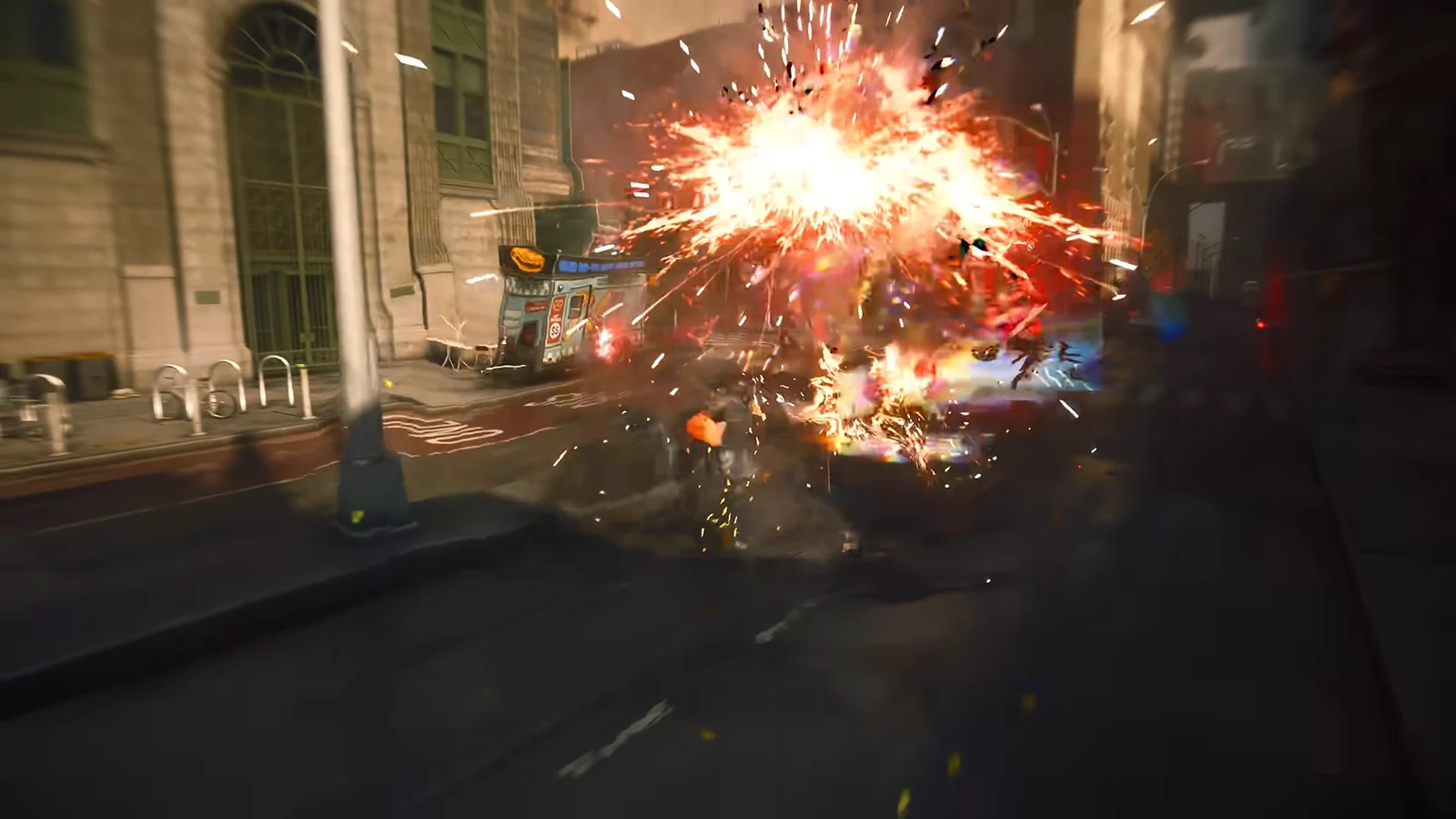
Control Resonant uses several sizable, separate zones instead of an open-world map. These areas contain side activities, concealed encounters, and discoveries you can skip. Most of the Oldest House is no longer accessible, but some important sections can still be explored; in exchange, the game presents a shifting, folding version of Manhattan rather than a true-to-life city recreation.
Traversal is generous. Dylan can double jump, glide, and air dash twice in any order, which turns point-to-point movement into platforming. Each zone also reacts to your progress: enemy encounters stop spawning in areas you clear, and FBC researchers and Rangers move into the newly safe blocks until you defeat that zone’s Resonant Entity boss.
The main story runs roughly 30 to 40 hours, with a substantial amount of optional content on top. Side quests lean into Remedy’s weirder instincts — chasing a baby stroller across rooftops, life-or-death karaoke, playing spot-the-difference with an extradimensional taxi.
Comb each zone for upgrade materials before pushing the story. Skipping optional objectives is the fastest way to end up on the wrong side of the difficulty curve early on.
Difficulty and Assist Mode
On its default difficulty, the game is demanding without being a soulslike, and the early hours are the hardest stretch before your ability kit fills out. Assist Mode offers custom difficulty options with individual sliders, plus a handful of presets if you would rather not tune each value yourself. It is the intended route for players who are here mainly for the story.
PC features: Path tracing, DLSS 4.5, and RTX Mega Geometry
The game runs on Remedy’s in-house Northlight Engine, the same GPU-driven renderer rebuilt for Alan Wake 2 with mesh shaders and single-pixel occlusion culling. Where the first Control leaned on reflective brutalist interiors, the sequel spends most of its time outdoors in Manhattan with more diffused materials, which is a harder lighting problem.
On PC, path tracing is supported, developed in collaboration with Nvidia. Remedy also integrated RTX Mega Geometry, which speeds up building bounding volume hierarchies for ray tracing in scenes with heavy geometry. It uses nested Cluster-Level Acceleration Structures inside the BVH instead of low-resolution proxy geometry, and rebuilds only the affected clusters when level of detail changes, cutting CPU overhead.
GeForce RTX systems get the full DLSS 4.5 suite at launch, including Ray Reconstruction for image quality and Dynamic Multi Frame Generation on RTX 50 Series cards. A Game Ready Driver arrives before the September 24 launch.
How to get the game free with a GeForce RTX 50 Series GPU
Qualifying hardware purchases from participating retailers include a GeForce RTX 5090, 5080, 5070 Ti, or 5070 desktop system or graphics card, plus laptops equipped with an RTX 5090, 5080, 5070 Ti, or 5070 Laptop GPU. Nvidia includes a Steam copy of the game with those purchases, while supplies last.
What reviews flagged before launch
Reviews went live on September 18, 2026, and the split is fairly consistent. Art direction, level design, and the writing around Dylan and Zoe draw the strongest praise, as does the technical performance of Northlight in busy fights. The recurring criticisms are that combat is flashy but settles into a predictable order of operations, and that the open-zone city streets feel repetitive compared to the Oldest House’s labyrinth.
That balance is worth keeping in mind if you are deciding between platforms. The PC version is the one carrying path tracing and the DLSS 4.5 feature set, but the underlying design — melee-first combat, build experimentation, and a 30-hour-plus story with a lot of optional weirdness around it — is the same wherever you play it on September 24.