Dungeon points are the gate in front of nearly every meaningful weapon upgrade in Project Slayers. You do not find them in the open world or buy them with Wen — you earn them by clearing stages inside the Ouwigahara Dungeon, then spend them at the dungeon shop on upgraded katanas, claws, scythes, and fox masks. The katana upgrades matter most, because they are also the entry requirement for the Devourer and Polar growth weapons later on.
Quick answer: Clear Ouwigahara Dungeon stages to earn points, then buy upgrades from the dungeon shop — 1,850 points for masks and the Metal Scythe, 2,000 for Skull Claws, and 3,000 for each upgraded katana.
Ouwigahara Dungeon shop: point costs and requirements
Every katana in the 3,000-point bracket is an upgrade of a weapon you already own, not a fresh drop. If you do not have the matching base katana in your inventory, the upgraded version will not be available to purchase.
| Weapon | Points | Requires | Stats |
|---|---|---|---|
| Dark Cloud Katana | 3,000 | Lightning Katana | Sword +3 / durability ×2.15 / +5% breath |
| Tornadic Katana | 3,000 | Wind Katana | Sword +3 / durability ×2.15 / +5% breath |
| Waterfall Katana | 3,000 | Water Katana | Sword +3 / durability ×2.15 / +5% breath |
| Cloud Katana | 3,000 | Mist Katana | Sword +3 / durability ×2.15 / +5% breath |
| Butterfly Katana | 3,000 | Insect Katana | Sword +3 / durability ×2.15 / +5% breath |
| Volcanic Katana | 3,000 | Flame Katana | Sword +3 / durability ×2.15 / +5% breath |
| Skull Claws | 2,000 | — | Claw +3 / durability ×2.15 |
| Metal Scythe | 1,850 | Scythe | Weapon +2 / durability ×2.15 / Block +1 |
All six upgraded katanas share identical numbers, so the only real decision is which base katana you already hold. Durability is the biggest jump — ×2.15 against the ×1.6 to ×1.75 range on most box katanas.
Fox masks at 1,850 points
| Mask | Stats |
|---|---|
| Fawx Mask | 50% health regen / +40 max health |
| Foxie Mask | 50% health regen / +35 max health |
| Flower Fox Mask | 20% health regen / +30 max health |
| Blue Fox Mask | 10% health regen / +55 max health |
| Fox King Mask | 3% health regen / +20 stamina / 3% stamina regen |
| Purple Foxie Mask | 3% health regen / +20 stamina / 3% stamina regen |
All six cost the same, so the Fawx Mask is the straightforward pick for sustain, while the Blue Fox Mask trades regeneration for the larger flat health pool.
Ouwigahara Dungeon points vs. the timed wave dungeon
Two different things in the game are called dungeons, and only one of them pays out points. The older wave dungeon sits west of Kiribating Village on Map 1 (level 0+) and in the center of Wop City in Ouwohana (level 50+). It has a waiting area that acts as a safe zone, and every two hours everyone standing inside is teleported into the event.
That version pays Wen and spins, scaling up per wave — 300 Wen, two clan spins and one demon art spin after the first wave, climbing to 3,000 Wen, 20 clan spins and 10 BDA spins on the tenth. You must finish all waves to collect anything. The stage-based Ouwigahara Dungeon, entered through the arena lobby with a party, is the one that feeds the point shop above.
Because Slayers 2 is its own Roblox experience, it has no access to your Project Slayers levels, gear, or Wen. Dungeon points, along with anything purchased using them, remain in the original game.
How to start an Ouwigahara Dungeon run
Stage events that change how you fight
Stages can roll a modifier that is announced with a banner as the wave starts. They stack onto the normal enemy spawns and they are the main reason otherwise routine runs collapse.
| Event | Effect |
|---|---|
| Multi Disaster / Double Health | Enemies spawn with doubled health |
| Double Damage | Damage output is doubled |
| Double Movement Speed | Enemies close distance at double speed |
| No Health Regen | Health regeneration is switched off |
| Myopia | The screen darkens and visibility drops sharply |
| Petrify | Enemies are frozen solid in place |
Elevated terrain is the standard answer to the worst of these. Climbing onto a high rock or block structure during Myopia or a double-speed wave lets you fight enemies one at a time as they path up to you, instead of being surrounded in the dark. Health Regen orbs and pickups such as Wisteria Poisoning also drop during stages and are worth grabbing before the timer ends.
Boss stages and the mid-run shop
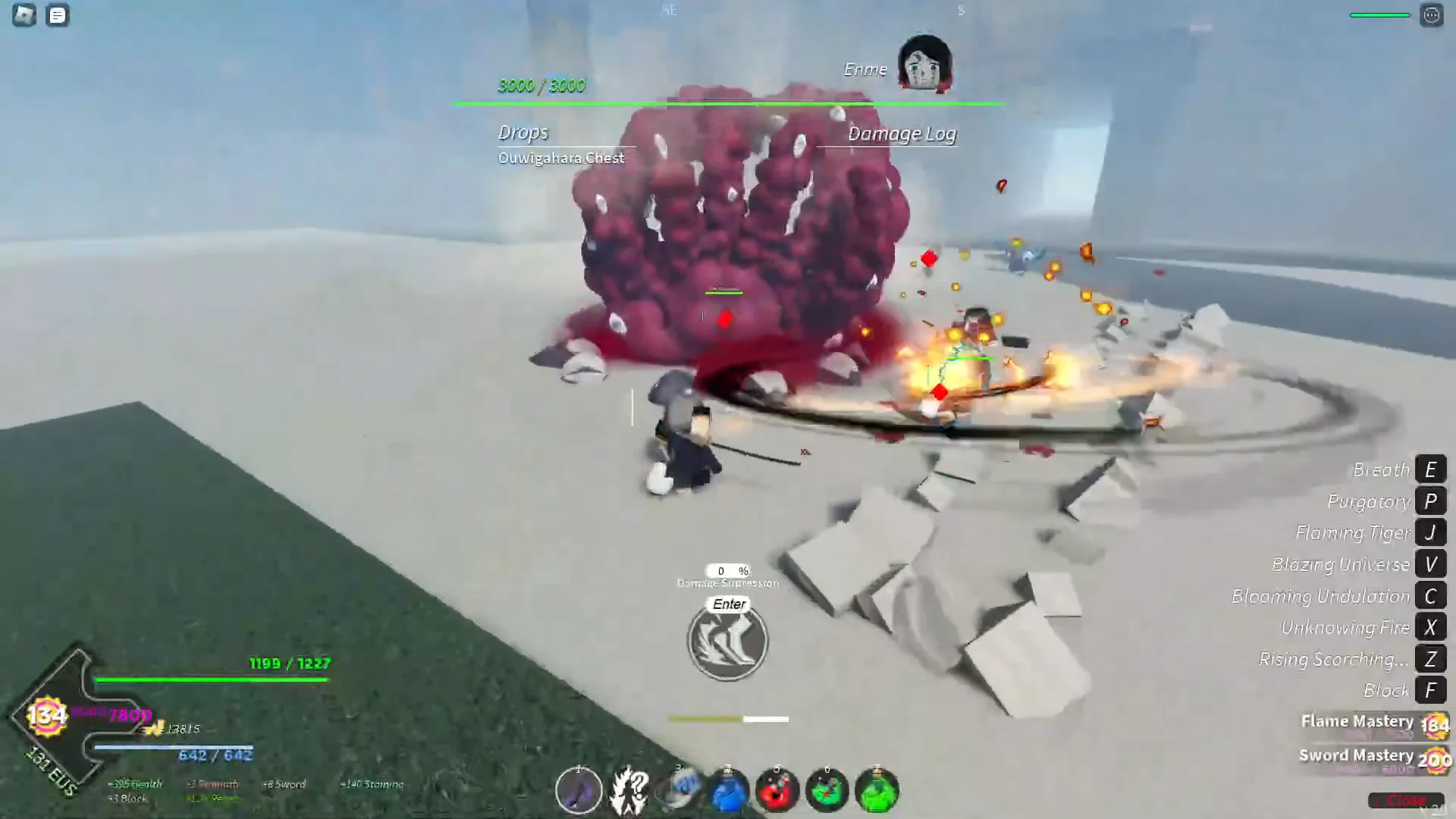
Bosses break up the mob waves at fixed intervals. Stage 5 spawns Diooo with a 3,500 health bar, which a full party can burn down by focusing it together rather than splitting aggro across the remaining trash mobs.
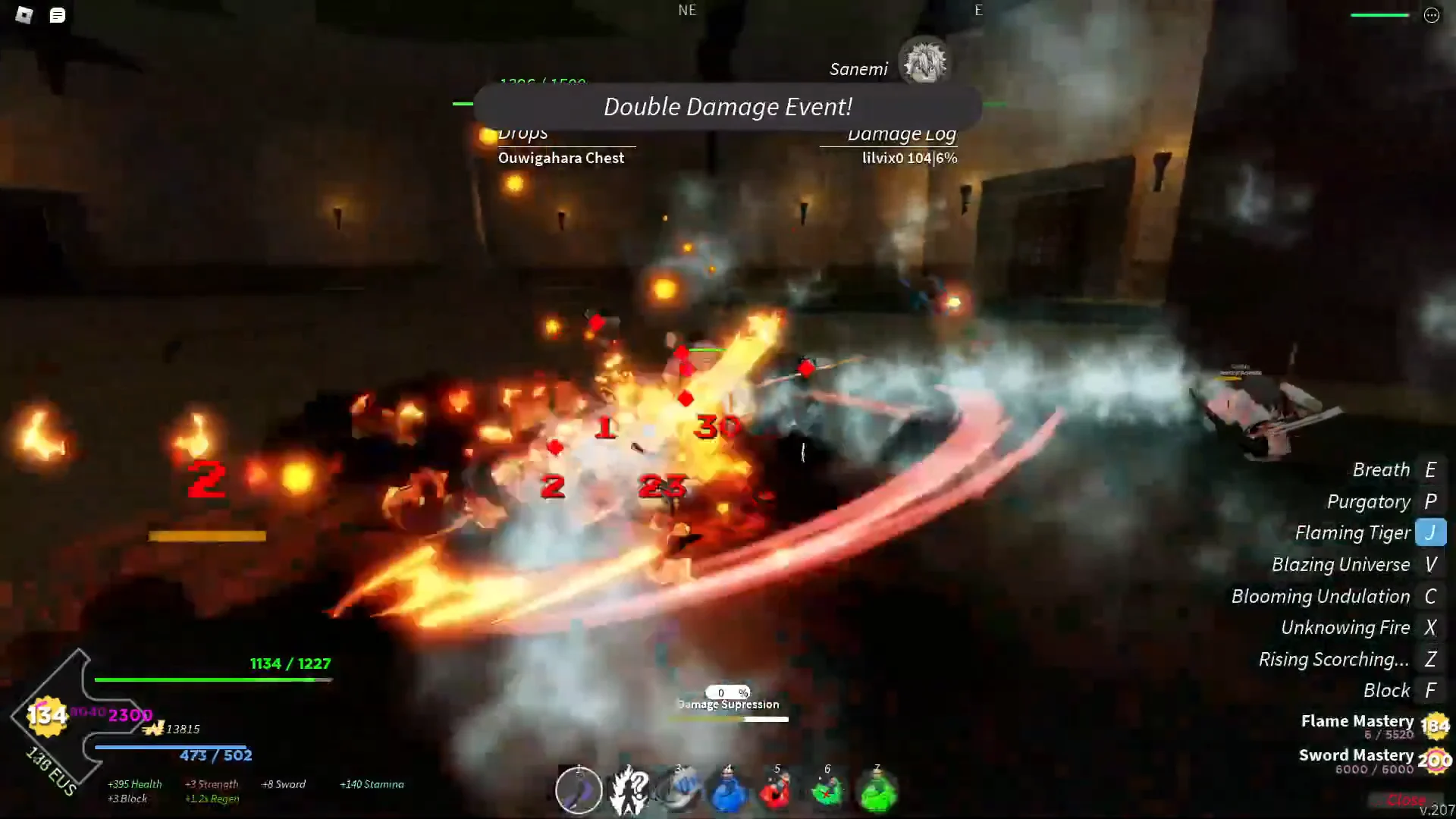
Stage 10 brings Sanemi inside a lit room with a 1,500 health bar. That fight frequently lands alongside the Double Damage Event, which makes it one of the fastest boss clears in a run if your party is already grouped when the gate opens.
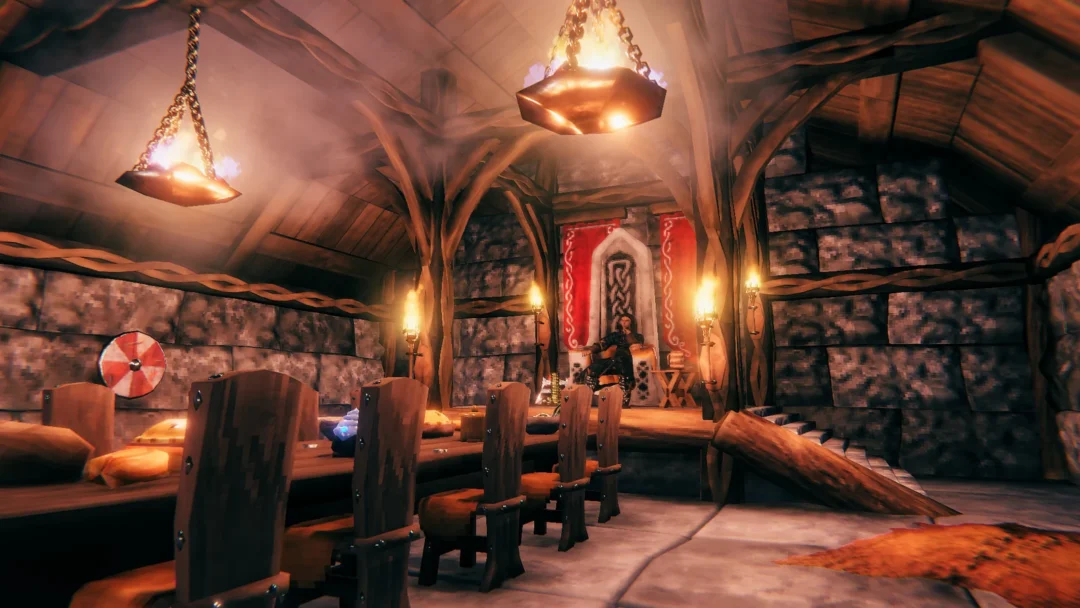
Between stages you can also step into the wooden store area lined with weapon racks and mask displays. Interacting with the wall there lets you buy EXP repeatedly, and each successful transaction confirms with a “Successfully purchased EXP!” popup on screen.
Turning dungeon weapons into Devourer and Polar gear
The point-shop weapons are a stepping stone. Growth weapons cost 150,000 Wen and 10 ore each, and they only unlock once you own the right dungeon purchases first.
| Growth weapon | Requires | Effect |
|---|---|---|
| Devourer Katana | Volcanic, Dark Cloud and Butterfly Katana | Instant kill below 10% HP at Tier 3+ |
| Polar Katana | Cloud, Waterfall and Tornadic Katana | 5% freeze-stun chance at Tier 3+ |
| Devourer Scythe | Skull Scythe | Instant kill below 10% HP at Tier 3+ |
| Polar Scythe | Metal Scythe | 5% freeze-stun chance at Tier 3+ |
Every growth weapon carries ×5.0 durability, far above anything in the point shop. The Devourer Katana is the expensive one in practice, since it demands three separate 3,000-point purchases — 9,000 dungeon points before you spend a single Wen.
Season leaderboard rewards
Points also feed a competitive ranking, tracked on the Top Competitive Points Season 1 billboard in the arena hub. Two items come from placement rather than a straight purchase.
- Champion Katana — Season 1 rewards. Sword +10, durability ×2.15, +7% breath damage, +10% NPC damage, +5% critical chance.
- Champion Mask — leaderboard reward. +150 max health, +50 stamina, 25% health regen, 10% stamina regen, 5% total damage, 2.5% NPC damage, 2% breath damage.
Check the billboard between runs to confirm your point total is climbing. If a stage stalls with no enemies spawning and the next countdown never appears, the run is stuck and you will need to return to the lobby and requeue — points only bank from stages that actually register as cleared.