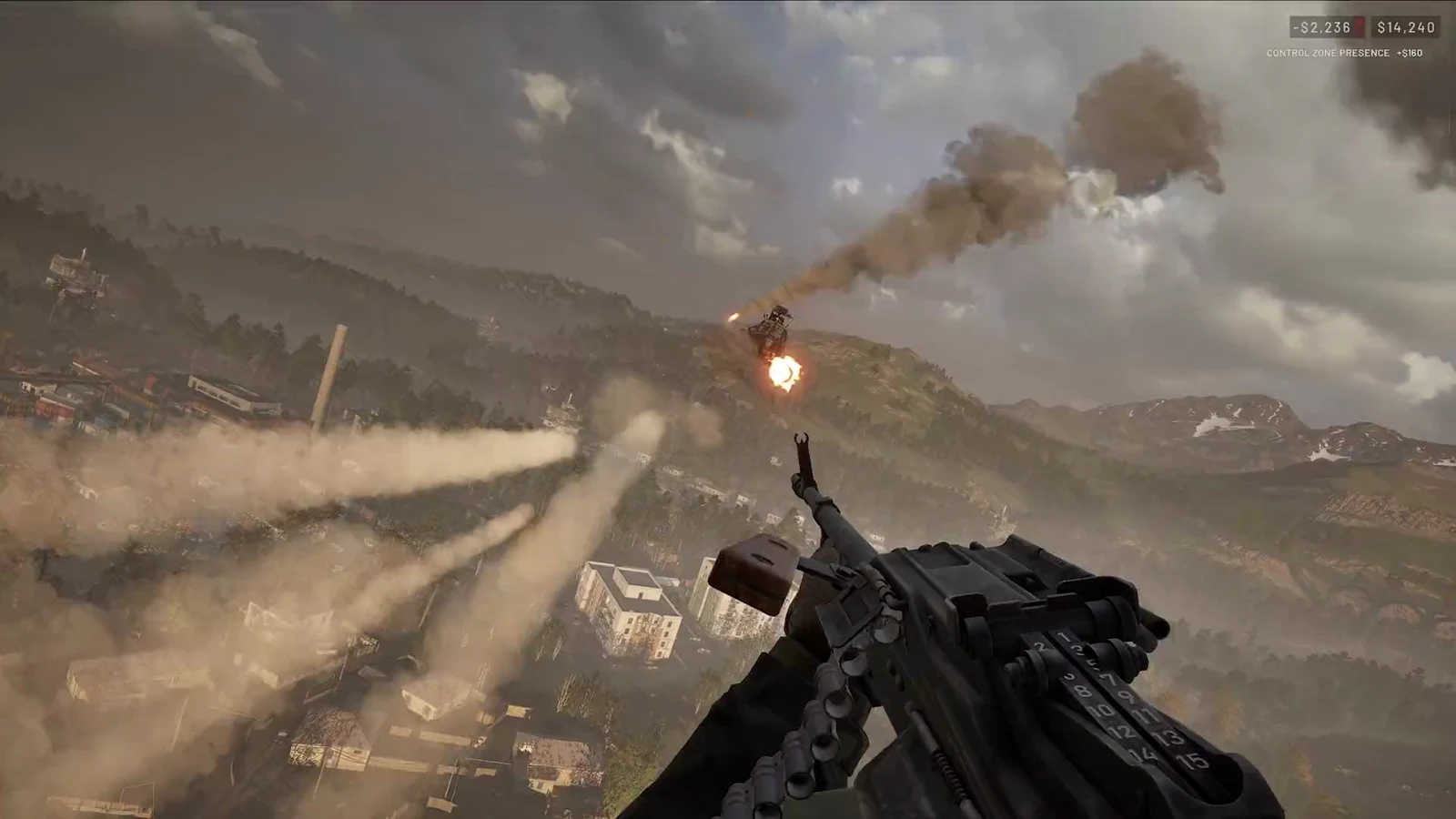
An unarmed transport helicopter, stuffed with passengers who cycle grenade launchers instead of reloading them, has become one of the fastest ways to flatten a fortified position in WARDOGS. Players call it the “redneck attack heli,” and a recent top-tier pilot session put it on display: after being repeatedly knocked out of the sky by automated base defenses, the pilot switched from armed gunships to a light transport MH-6 loaded with door gunners firing 40mm grenades on a loop.
Quick answer: The redneck attack heli is a light transport MH-6 whose passengers hot-swap pre-loaded MGL-40 grenade launchers to skip reload animations, while the pilot circle-strafes enemy bases at low altitude and collects assist and defense payouts.
What the redneck attack heli is
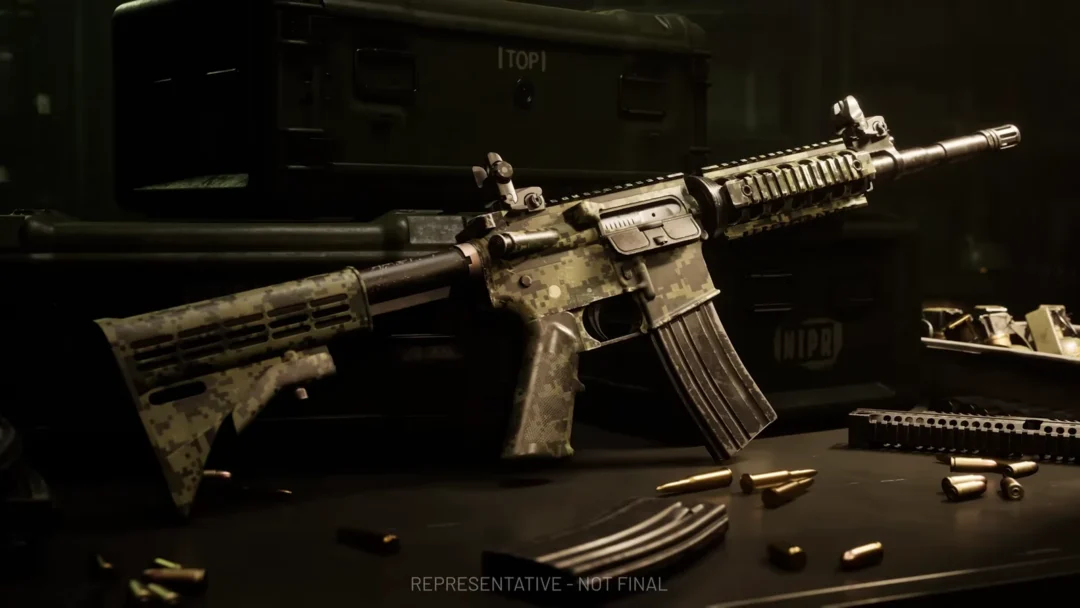
The core of the tactic is a weapon-swap trick. An MGL-40 grenade launcher has a slow reload, so instead of reloading, a passenger fires one launcher empty, opens the inventory, and pulls out another launcher that is already loaded. Rotating weapons directly inside a helicopter passenger seat skips certain reload steps under the game’s current inventory rules, which turns a slow area weapon into a near-continuous stream of 40mm grenades.
The whole setup is built around keeping that stream going. Passengers carry several pre-loaded MGL-40s across their primary and backpack slots, and the crew stocks support supply crates at base with 40mm rounds and spare launchers before a run. The pilot then flies tight circles around an enemy Forward Operating Base or a cluster of infantry so the gunners never lose their firing angle.
- A light transport helicopter (the MH-6) instead of an armed gunship.
- Passengers holding multiple pre-loaded MGL-40 launchers.
- Supply crates filled with 40mm ammunition and extra launchers.
- A pilot flying continuous circle-strafes at low altitude.
- Gunners swapping launchers in the inventory rather than reloading.
The usual target is the enemy Forward Operating Base, a $7,500 structure that lets a faction build larger fortifications, store items and resources, and hold ground. Concentrated grenade fire tears through those builds and the players defending them.
Why the pilot earns so much from it
The payout explains why players adopted this approach. When onboard gunners score kills, the transport pilot receives the full rewards for kill assists and control-zone defense. A crew that clears squads from a valuable zone can bring in hundreds of thousands in cash in minutes. The pilot can earn those assists without firing a shot.
That sits on top of the normal Pilot economy, which already rewards moving people. Ferrying a passenger from base into the combat zone pays cash and Pilot XP, with a bonus when that passenger survives a fight, and dropping riders inside the Hot Zone doubles both the XP and the money. Stack the grenade-crew assists on those trips and the earnings climb quickly.
The anti-air problem it dodges
Helicopters in WARDOGS are fragile against layered defenses. Automated CIWS emplacements built inside structures, shoulder-fired Igla missiles carried by infantry, and concentrated anti-materiel small-arms fire can each erase an expensive aircraft in seconds. In the session, a CIWS gun hidden inside a building shot the pilot’s helicopter down outright, and even heavier gunships like the Havoc struggle against those static guns in urban sectors.
The counter is altitude and terrain. Flying low, under about 30 meters, drops the aircraft below radar coverage and breaks missile lock-ons, and hugging hills and tree lines hides the helicopter from launchers that need line of sight. Flares matter too: they only work once a missile is already in the air, not while a lock is still being acquired.
That is why the redneck heli leans on a small, agile transport rather than a slow gunship. It can hug the ground between passes and duck behind cover the moment a missile warning sounds.
The helicopters in the session
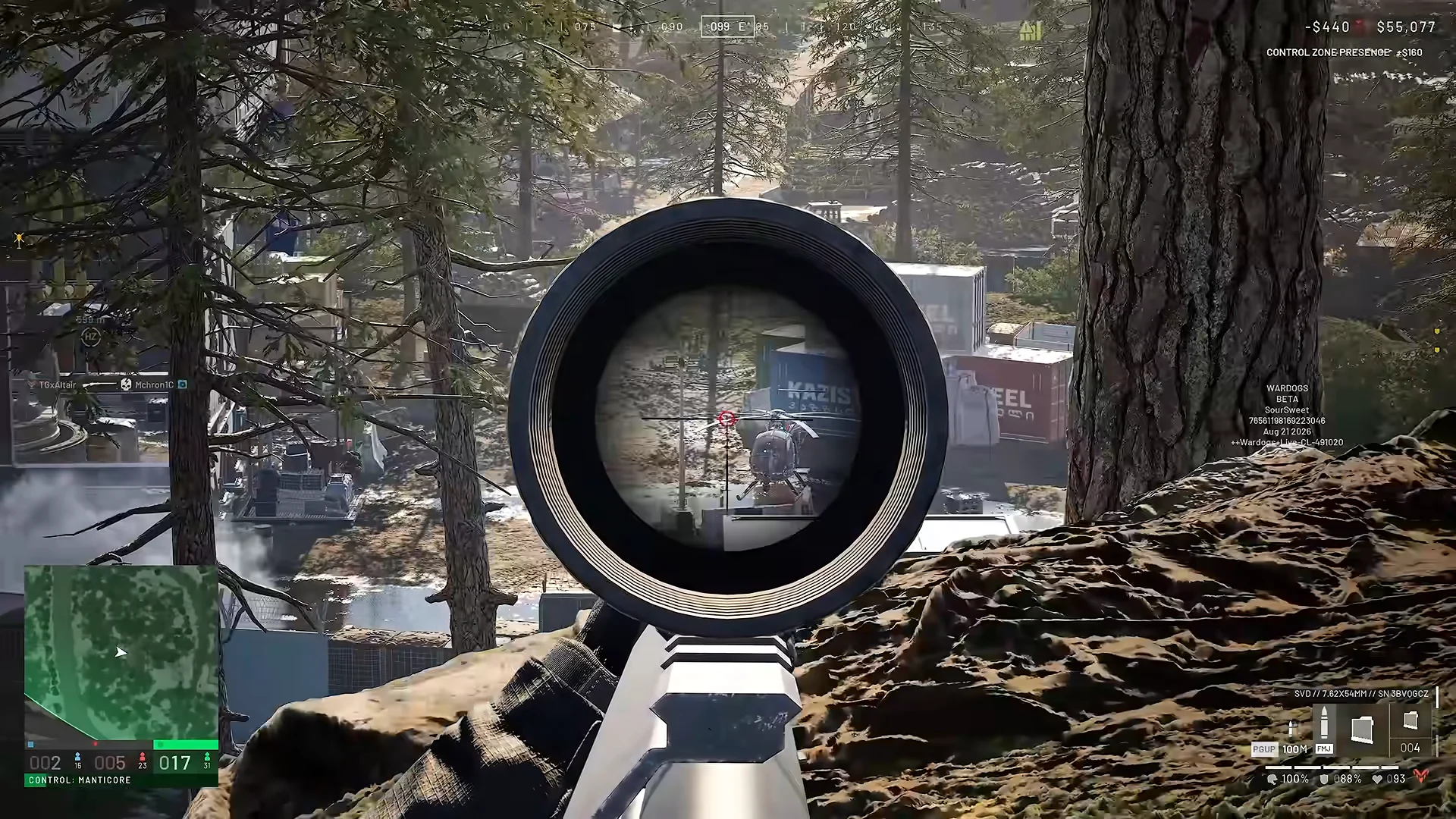
The run cycled through several airframes before settling on the transport approach. The free MH-6 is the platform the grenade crews use, while the AH-6M and the Havoc are the armed options that kept getting shot down. The Z20 Lakota is the heavy transport, useful when a crew wants more seats on board.
| Helicopter | Seats | Buy cost | Unlock |
|---|---|---|---|
 MH-6 MH-6 | 6 | $6,250 | Free from Pilot start |
| AH-6M (miniguns) | 2 | $7,000 | Pilot 4, $50,000 |
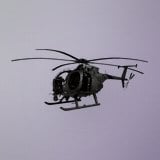 Z20 Lakota Z20 Lakota | 13 | $7,400 | Pilot 10, $35,000 |
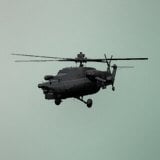 Havoc Havoc | 2 | $18,000 | Pilot 35, $500,000 |
The Z20 Lakota is a Transport-class aircraft with a top speed of 445 km/h, 13 seats, a 120-litre fuel tank, and a burn rate of 4.4 litres per kilometre. It is bought from the vehicle vendor at your faction’s safe zone and is never placed in the world during a match. Unlocking it costs a one-time $35,000 fee at Pilot level 10.
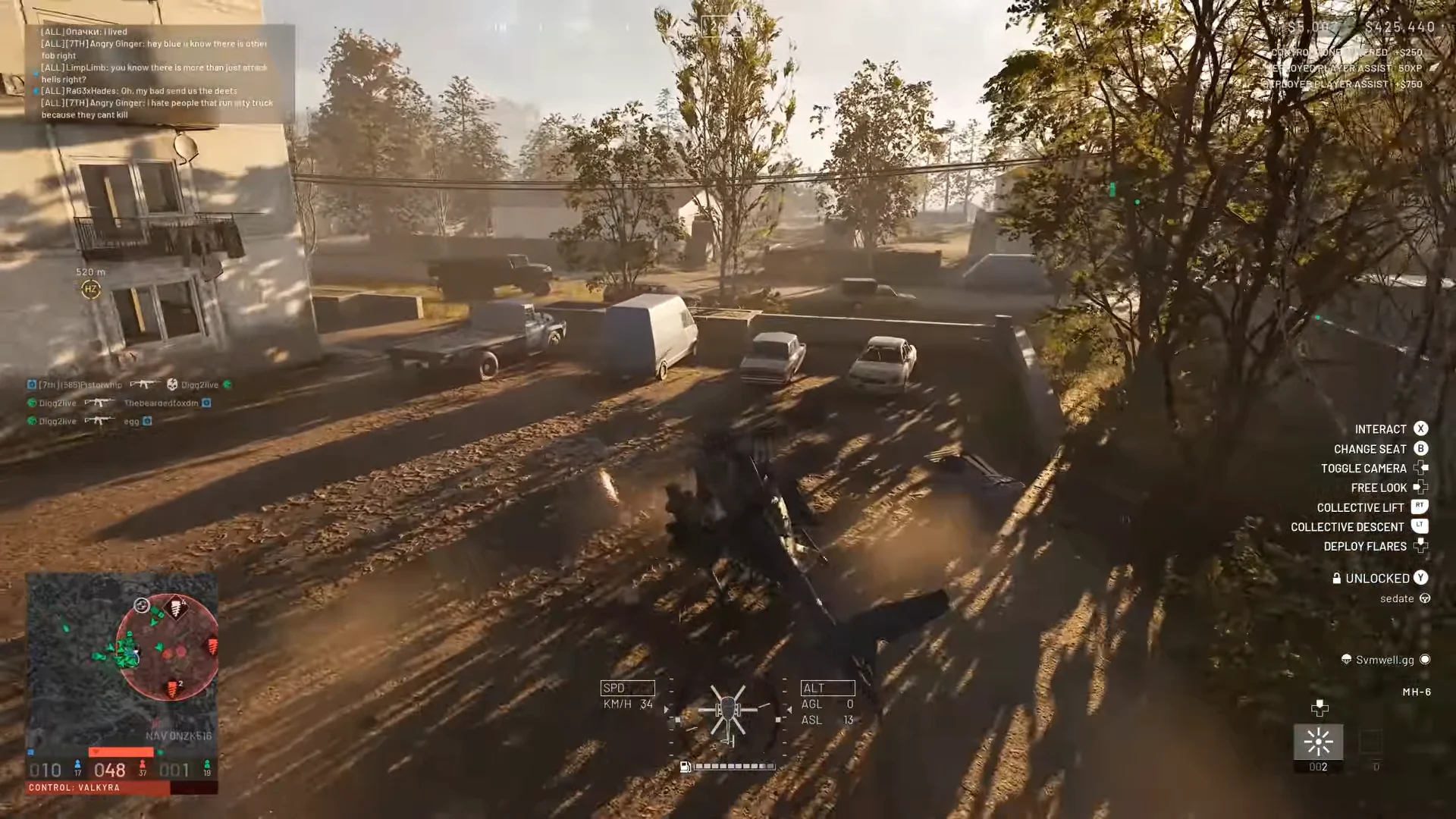
Whatever the airframe, the flying looks the same in practice: fast, low approaches onto rooftops and tight urban spots to drop or support troops. In the session the pilot repeatedly settled onto raised concrete pads, threading between chimneys and other obstacles to reach a firing position.
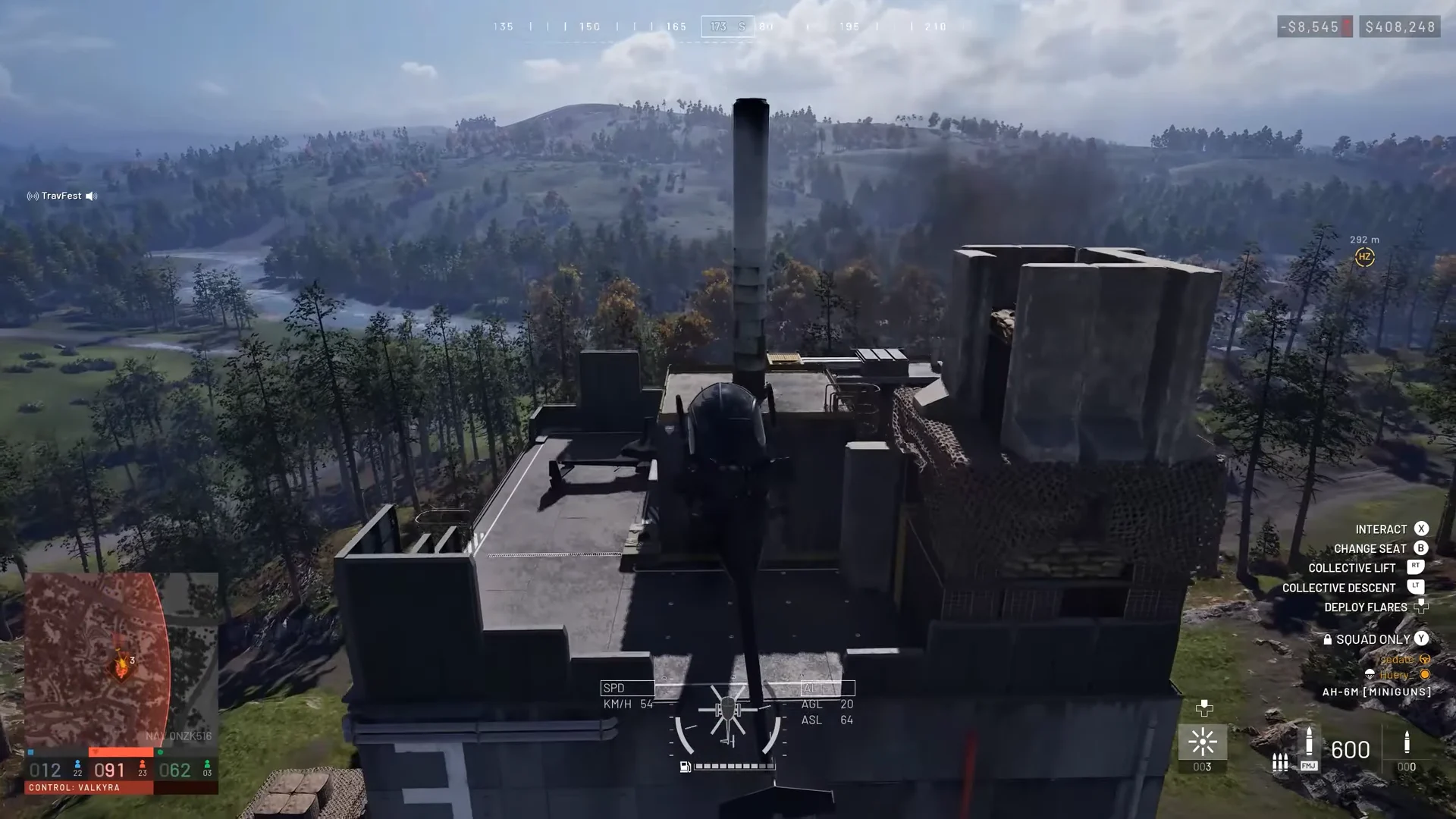
Landing discipline keeps the run going
The tactic falls apart the moment the helicopter is destroyed, so most of the skill on show is about arriving slowly and leaving fast. Approaches are lined up early, speed is bled off before the landing zone, and tight spots surrounded by trees are cleared with a controlled nose-down descent rather than a hard flare that can catch a rotor on branches.
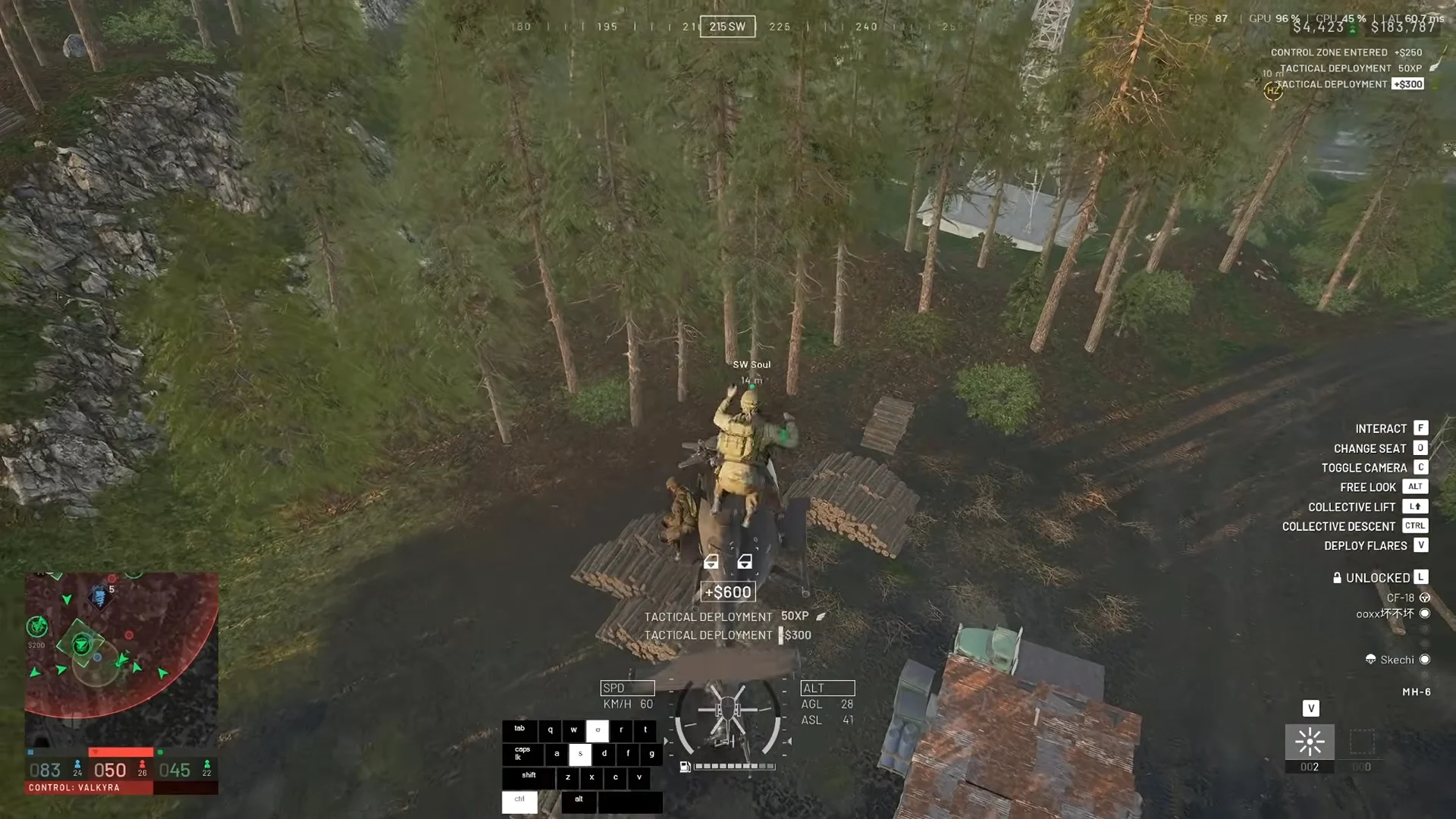
A useful habit on show is pre-rotating the fuselage before touchdown so the aircraft is already pointed toward its escape route. That way the pilot can lift off and run the instant the gunners have done their work or a missile warning starts.
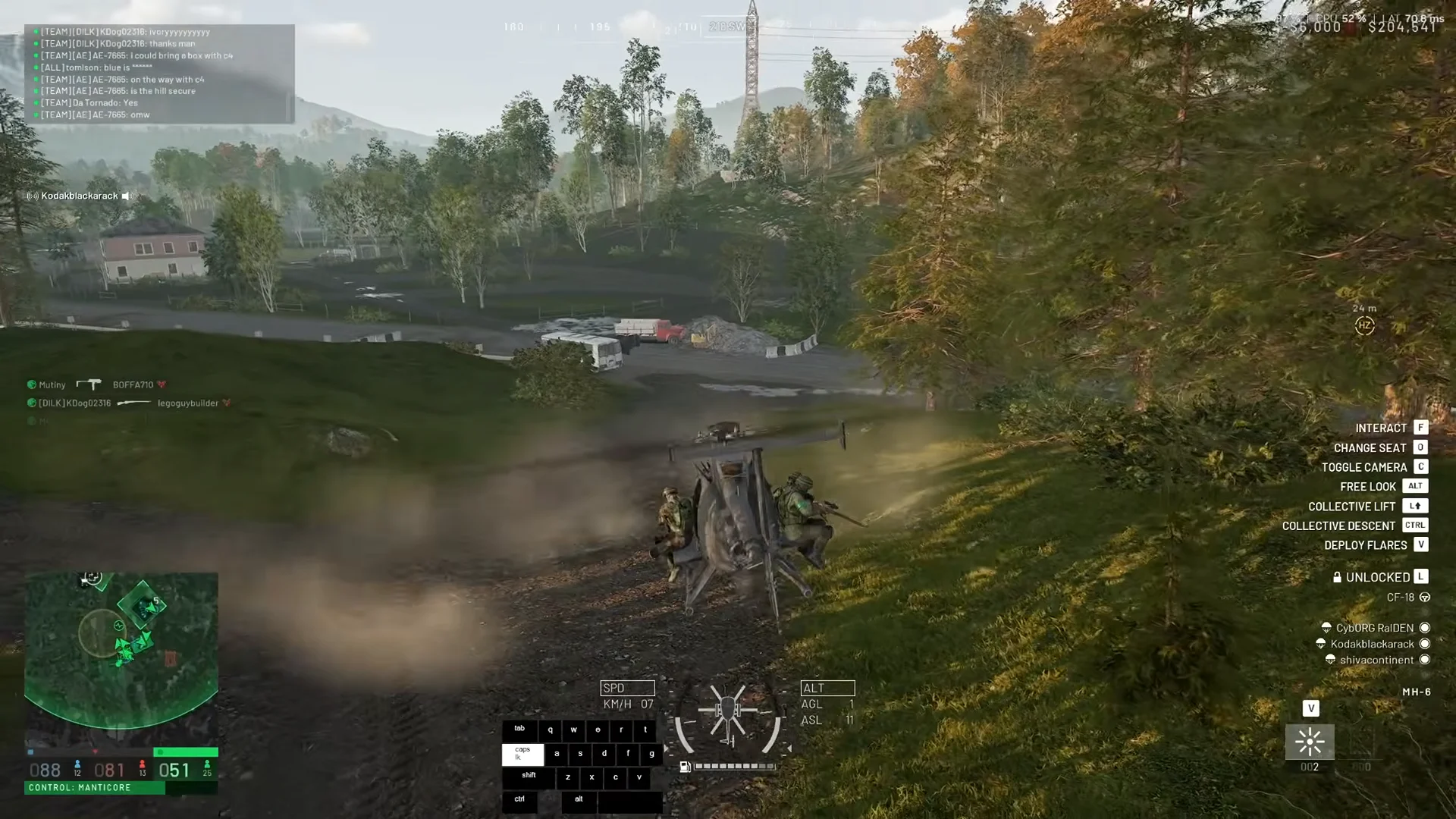
The same care applies to squad drops in built-up areas. A landing tucked beside an apartment block or in an alley keeps passengers close to cover instead of exposed in the open.
When the heli goes down
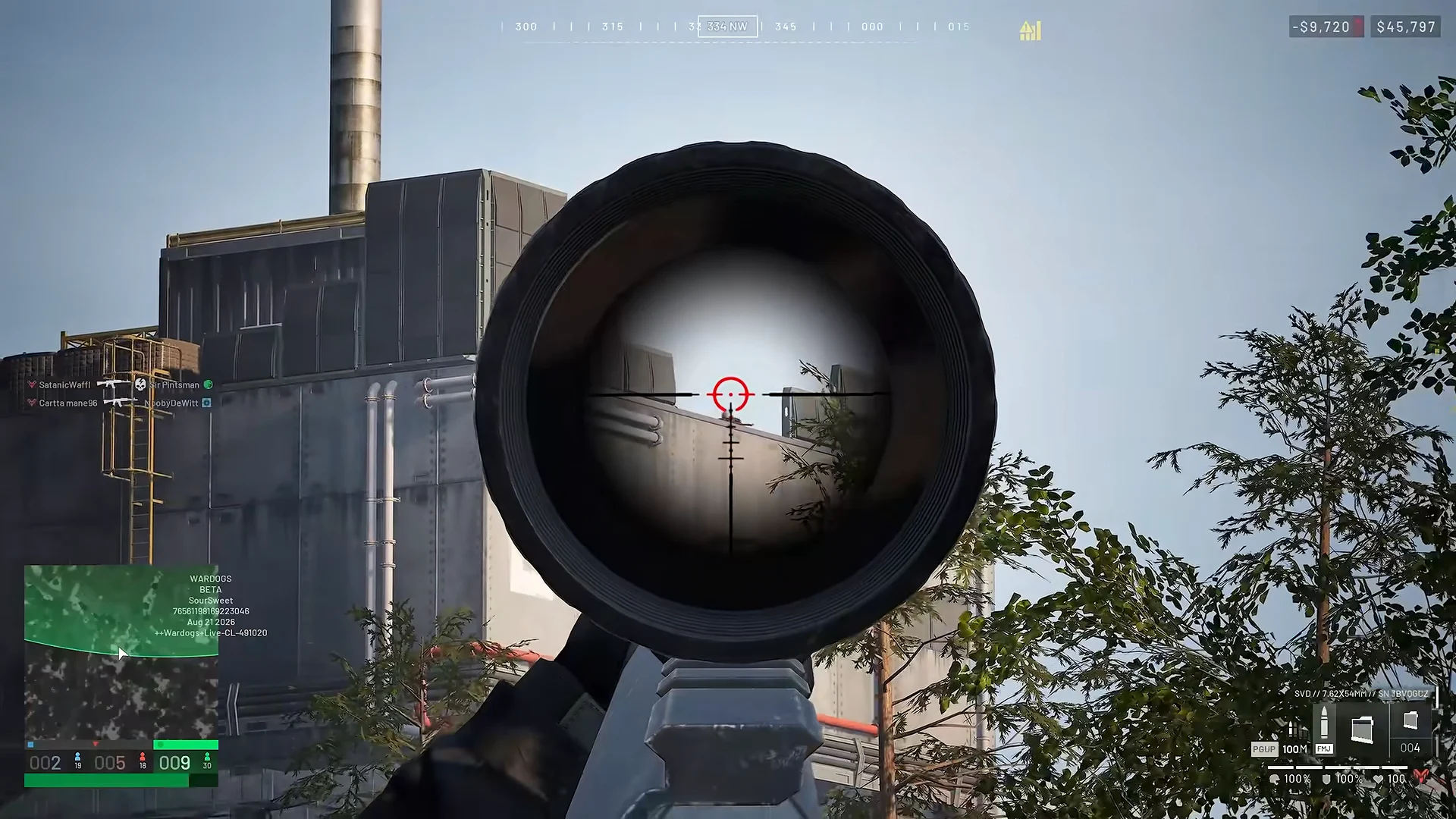
Because helicopters die easily to base defenses, the session also shows the fallback: switching to an infantry loadout and pushing the same objectives on foot. That means sniping from elevated positions like water towers, rooftops and train cars, then assaulting the FOB directly when the air option is gone.
The takeaway from the whole run is that the redneck attack heli is powerful precisely because it sidesteps the reload timers and the anti-air that hold gunships back. It leans on a cheap, nimble transport, a crew that never stops firing, and a payout system that rewards the pilot for every assist. As an Early Access build, the weapon-swap behavior and the payouts it feeds could change in a future patch, but for now it is one of the most profitable things a pilot can do in the air.