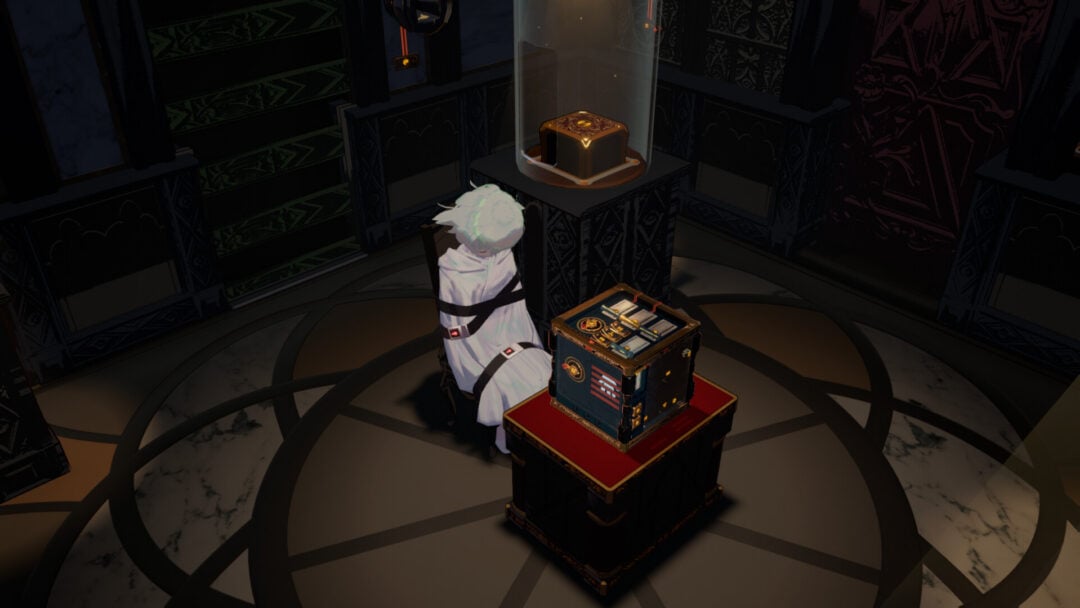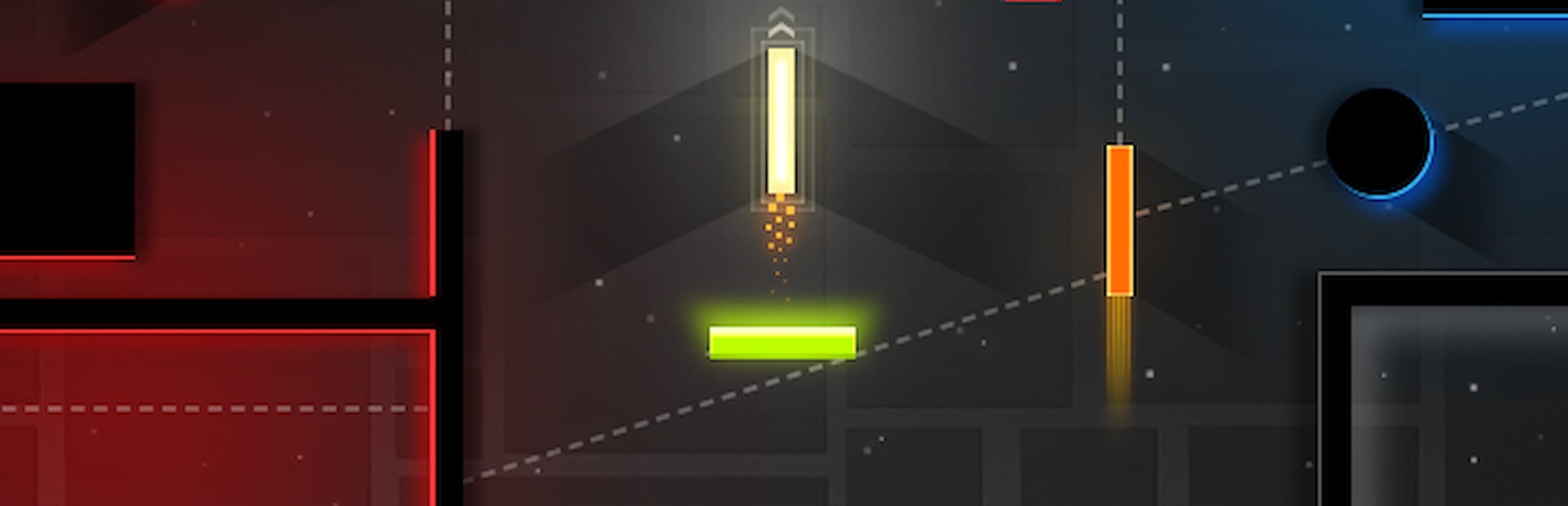
The damaged robot puzzle in Arknights: Endfield’s “fix the robot” sequence looks like a freeform wiring minigame, but the layout is static and follows clear, repeatable rules. Once those rules are understood, you can tell immediately whether a proposed configuration is valid or why it fails, instead of slowly toggling tiles.
Quick answer: The v40053 robot puzzle is solved by matching a single, fixed tile pattern: every powered start node must be connected to its required end node using uninterrupted paths, no dead-end branches, and no loops. If even one path branches, loops back, or leaves a powered line hanging, the robot does not complete, and the panel stays in its inactive state.
Robot v40053 puzzle state (what the panel is checking)
The robot puzzle panel is not random. It checks three simple state conditions every time you submit:
- All required endpoints are powered. Every endpoint that is marked as required for this step must have a continuous connection from exactly one active power source.
- No extra powered tiles exist. You cannot leave “live” paths that do not terminate at a required endpoint. If a powered line ends in an empty tile, the configuration fails.
- No closed loops are allowed. A path that returns to an earlier powered tile and forms a cycle is treated as invalid even if all endpoints are lit.
Visually, the correct configuration for the v40053 puzzle creates a tree: power sources at the “roots”, target nodes at the “leaves”, and no extra branches or circles in between.
How the panel mechanics work
The panel tiles behave deterministically. Every interaction changes only one thing about the network:
- Tile taps toggle orientation or state. Each tile can be off, straight, corner, or a junction depending on its type. When you tap it, it cycles through the allowed shapes for that tile. The game never gives a shape that would visually contradict the tile’s geometry.
- Connections propagate in straight lines. Once a tile shape is set, power follows its visible lines and corners exactly. If a line visually continues into another tile edge, that edge is considered connected.
- Conflicting connections are resolved visually. If you rotate a tile so that it “points” toward a blank face of a neighbour with no matching line, there is no connection, and the current stops at that mismatch.
The validation check only cares about whether each endpoint is powered by a clean path that respects these geometric constraints.
How to verify that the v40053 layout is correct
When all three checks pass, interacting with the panel triggers the robot repair: the robot’s dialogue or quest state advances, and the panel stops needing further adjustment.
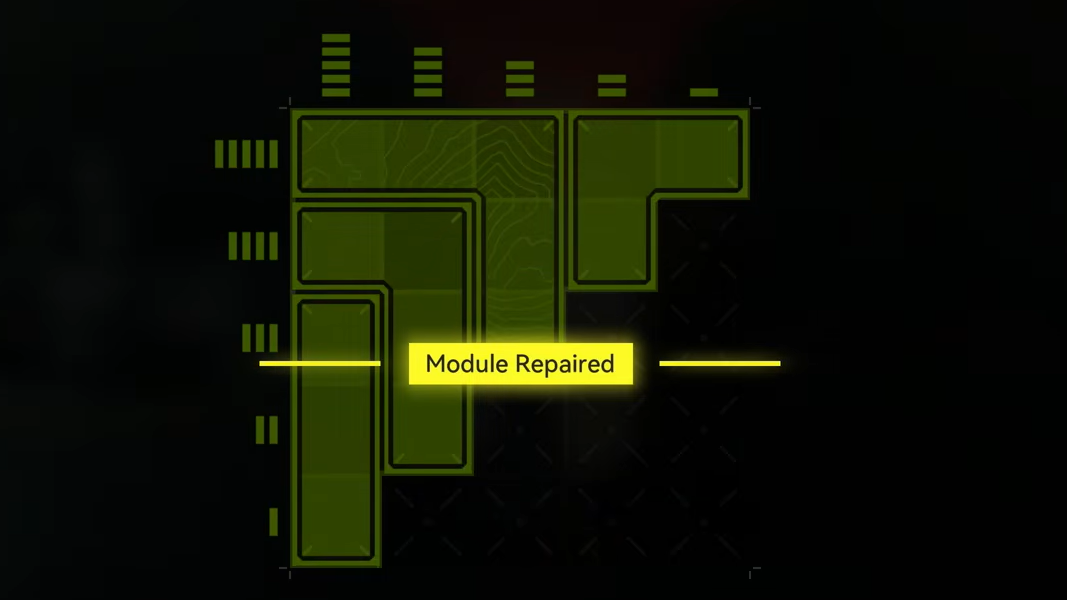
Common failure reasons on the last robot panel
The last robot panel in the sequence is noticeably stricter and catches a few recurring mistakes:
- “Almost correct” extra segment. Many players build a configuration that powers all endpoints but leaves one tiny side path powered. The panel rejects this because every powered segment must contribute to a valid route.
- Hidden branch inside a junction tile. Junction-capable tiles can be rotated into a T shape. If any T-shape sends power into a line that does not reach an endpoint, the layout fails even if the other two directions are correct.
- Unintentional loop at the center. A small ring of four corner tiles in the middle often closes into a neat square. It looks tidy but creates a loop: break the square so each segment only passes through once.
Whenever a configuration “looks right” but the robot does not react, re-check the center tiles for loops and the outermost glowing end segments for dead ends. The error almost always lies there rather than at the endpoints themselves.
Once the logic behind the robot v40053 panel is clear, the puzzle stops being a guessing exercise. Treat each tile as part of a loop-free tree that connects sources to marked endpoints only, and the correct configuration becomes easy to recognize and verify.