project; VIRAI: DOOMER’s LIFE ESCAPE is about a woman whose only working life runs through a VR headset. When that headset stops connecting, the rest of the game follows from that loss. Its gameplay trailer at The MIX Fall Game Showcase 2026 runs about a minute. In that time it moves from a bright idol fantasy to a dark bedroom, then through a mix of pixel art, low-poly 3D, and anime cutscenes, and ends with a Steam wishlist prompt.
Quick answer: It is a psychological horror RPG and life sim from RIKANIMATION and boddiul, published by Beep Japan. It is planned for Q1 2027 on Steam for Windows and macOS, and a demo is listed on the store page.
Hicha, Virai, and the VITA platform
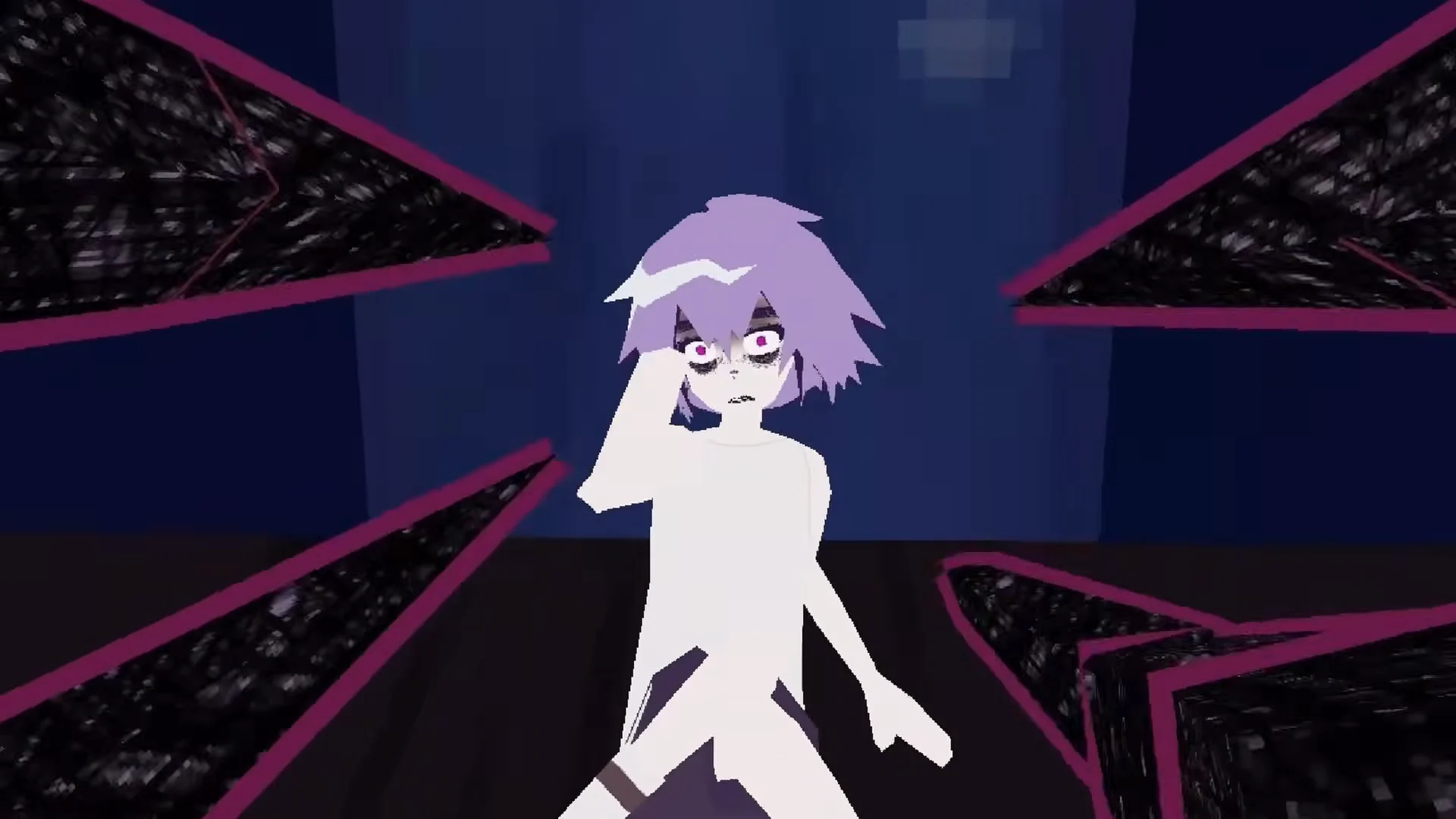
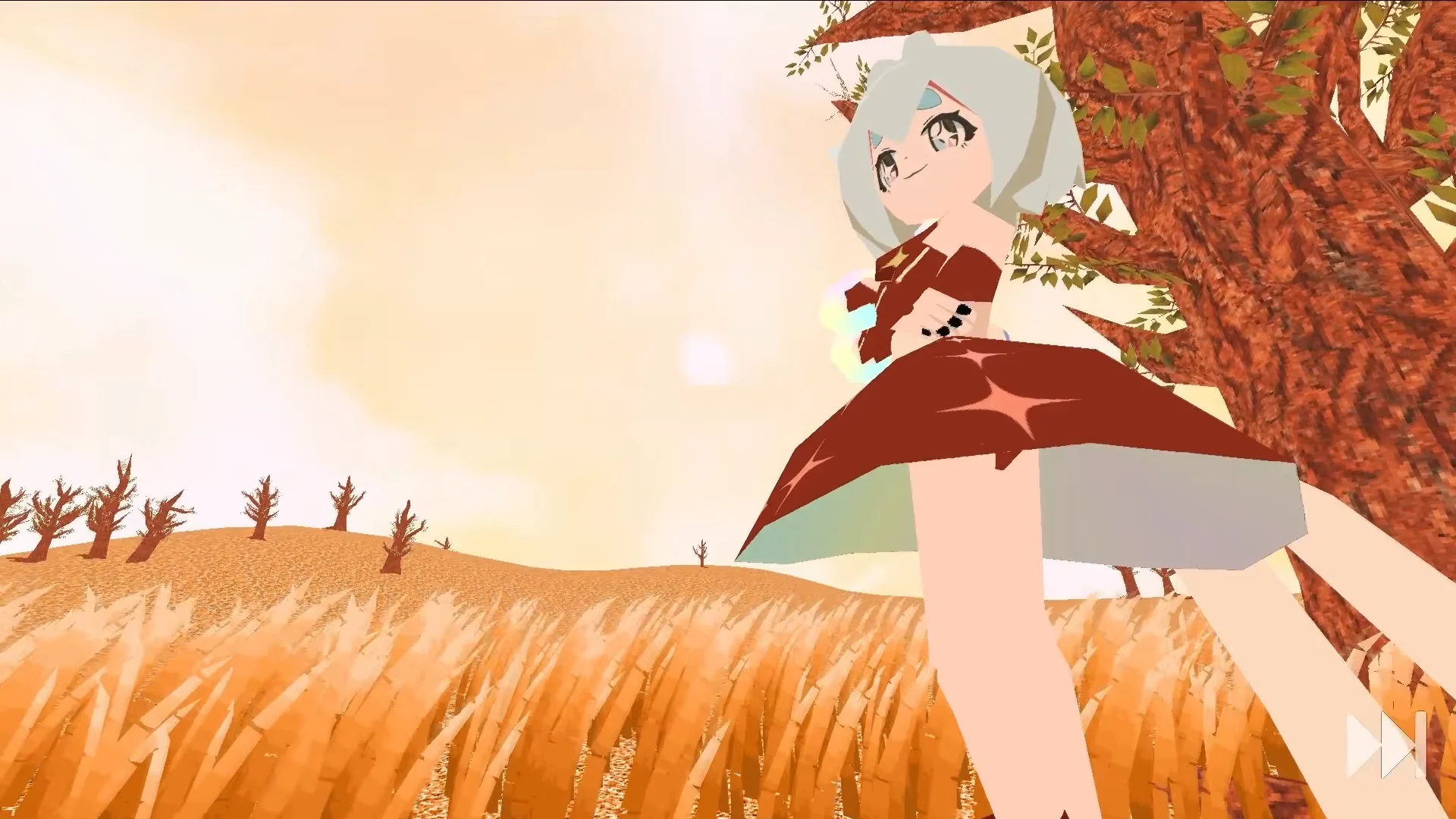
You play as Hicha, a hikikomori who almost never leaves her apartment. She has no friends to speak of. Online, she is Virai, a blue-haired VTuber idol singer with a large following on VITA, a virtual reality platform where fans gather for her live concerts. The two characters are drawn very differently. Virai wears a starry idol dress. Hicha has messy grey-purple hair, heavy eye bags, and an oversized dark hoodie.
The trailer opens with VITA’s pitch in short text cards. You can be beautiful, popular, and loved. You can be anyone, “EXCEPT YOURSELF.” A quick montage follows of virtual life, including streaming desks, open fields, and custom rooms, while the slogans build up to calling VITA “YOUR REASON TO EXIST…”
Then the connection fails. An error screen reads “COULD NOT CONNECT TO VITA…” and “ACCESS DENIED,” and the word “GONE.” appears. Hicha pulls off her headset in a dim bedroom full of anime posters, with several monitors showing 20:35. The rest of the trailer asks one question. Do you fight to get Virai back, or try to save Hicha’s real life? The final card reads “CHOOSE WHICH LIFE TO SAVE,” followed by “IF YOU CAN.”
Visual styles shown in the trailer
The game changes its art style to match Hicha’s mood, and the trailer cuts between styles constantly. These are the ones it shows:
| Style | What it shows |
|---|---|
| 2D pixel side-scrolling | Running across city rooftops |
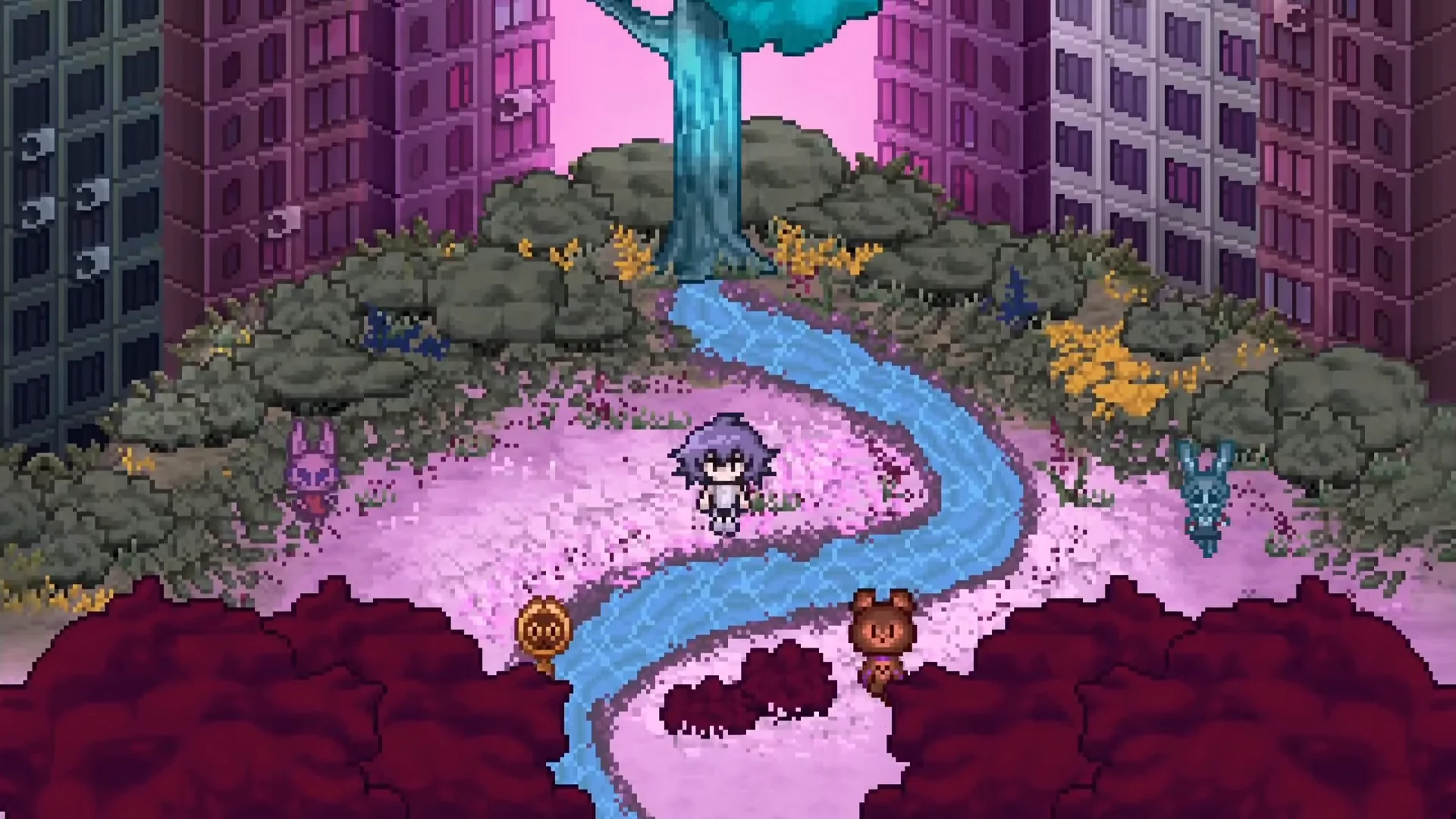
| Top-down pixel art | Eerie hallways, a city clearing |
| First-person retro 3D | Corridor and dungeon navigation |
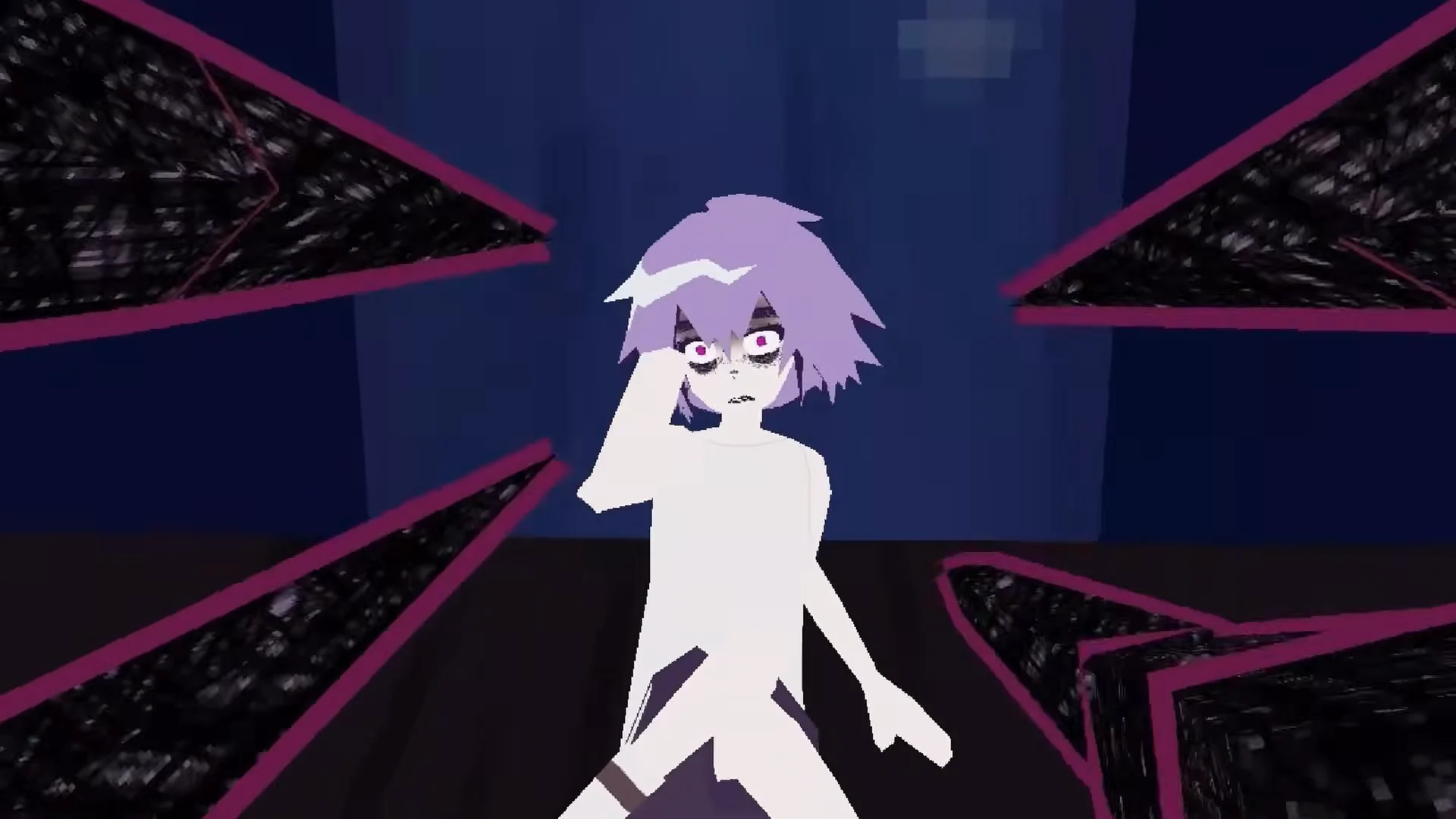
| Stylized 3D | Hicha facing shadowy claws |
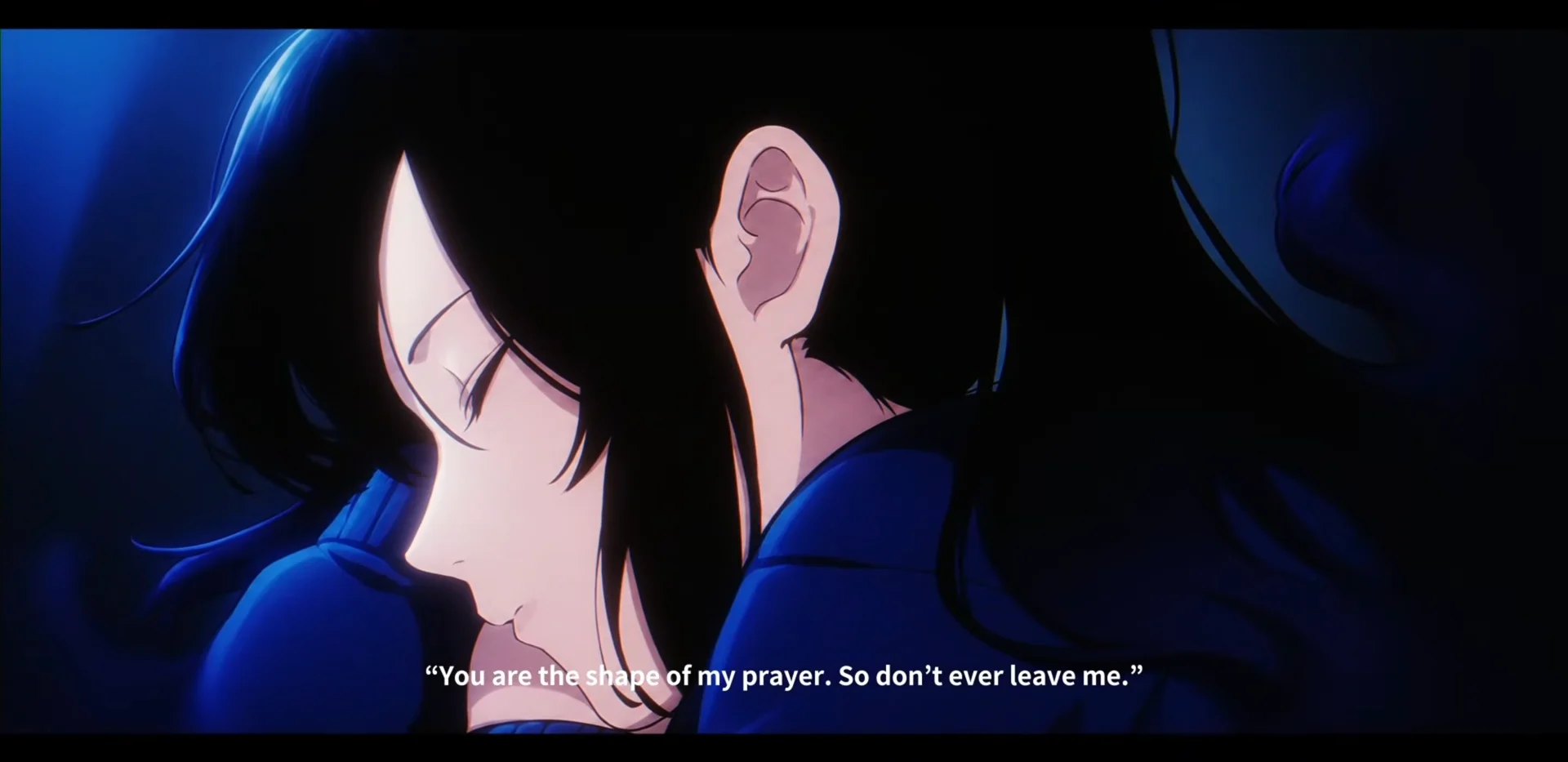
| Anime cutscenes | Virai’s concerts, the bedroom reveal |
Not every pixel-art scene is grim. One top-down sequence shows a clearing in the city built around a bright blue tree and river. It stands out sharply against the dark, corrupted rooms that come right after it.
The 3D scenes carry most of the horror. The trailer cuts between Hicha surrounded by dark, clawed shapes and memories of Virai on stage. It ends on Hicha alone on a barren grey shoreline, turning toward the camera.
How the life sim and endings work
Under the horror is a daily-life simulator. Hicha eats, sleeps, plays console games, and slowly falls apart. Earlier footage showed her searching kitchen cabinets for instant noodles to restore health. It also showed a SANITY meter dropping by 100 as the days changed from “DAY 1” to “DAY X.” Choices carry forward. A bad habit leads to another, and one good day does not undo the bad ones before it.
- Hicha’s mental state reacts to every decision you make.
- As Virai, she performs concerts, poses in a virtual studio, and gains followers.
- Outside her apartment, she can walk the streets and buy instant noodles at a convenience store.
- A social feed called Vitter and characters like Joel connect her to other people.
- Surreal dream sequences offer joke choices, such as “Run,” “RUN,” and “RUUUUUUUUUN.”
The game has 10 endings, each based on how you guide Hicha. They range from hope and acceptance to escape, obsession, and revenge. The soundtrack includes an original score plus 10 licensed Russian doomer and post-punk tracks. The art is in project: Virai: Doomer’s Life Escape, the artist behind “An Alt Girl for Skoof.” The developers describe the game as a psychological thriller with a dark, gloomy atmosphere.
project; VIRAI release date, platforms, and requirements
project; VIRAI is planned for Q1 2027, and no exact launch day has been confirmed. The Steam store page has a demo download and a wishlist button. The game is single-player and supports Steam Achievements and Family Sharing. It offers interface text and subtitles in English, Russian, Japanese, Brazilian Portuguese, Latin American Spanish, and Simplified and Traditional Chinese. It has no full voice audio.
| Minimum spec | Windows | macOS |
|---|---|---|
| OS | Windows 8.1 or higher | macOS 10.14 or later |
| Processor | i5 or higher | 1.3 GHz Intel Core M |
| Memory | 2 GB RAM | 8 GB RAM |
| Graphics | 2 GB video memory, DirectX 11 | Intel HD Graphics 5300 |
| Storage | 1 GB | 1 GB |
The Steam client itself now requires Windows 10 or later and no longer supports macOS 10.14 or older. In practice, the listed minimum operating systems are lower than what you will actually need.
These requirements fit a 1 GB indie game built mostly from 2D art. The trailer focuses on mood and style rather than mechanics. The demo is where you can try the life-sim systems, including the sanity meter and the noodles, before the full release in early 2027.