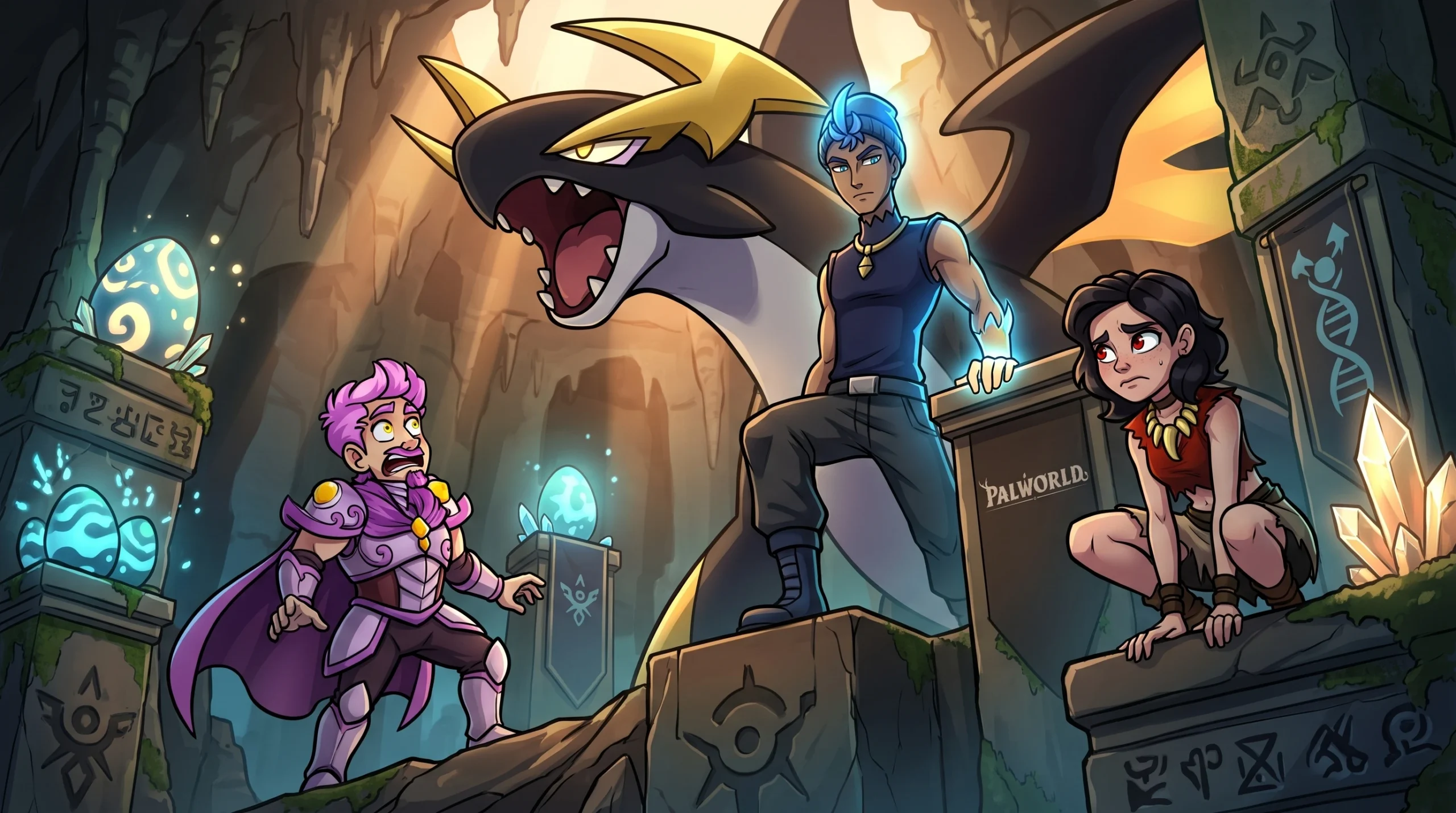
Breeding is how you turn a working base into a roster of Pals built for exactly what you need, whether that’s a fast worker, a tower-boss fighter, or a rare species you would rather not hunt for in the wild. In Palworld 1.0 the system runs on a Breeding Farm, a steady cake supply, and a fixed formula that decides which Pal hatches from any two parents.
Quick answer: Build a Breeding Farm, place one male and one female Pal inside, keep Cake in its chest, then pick up the egg it produces and hatch it in an Egg Incubator. The offspring’s species and passive skills come from both parents.
What you need before you breed
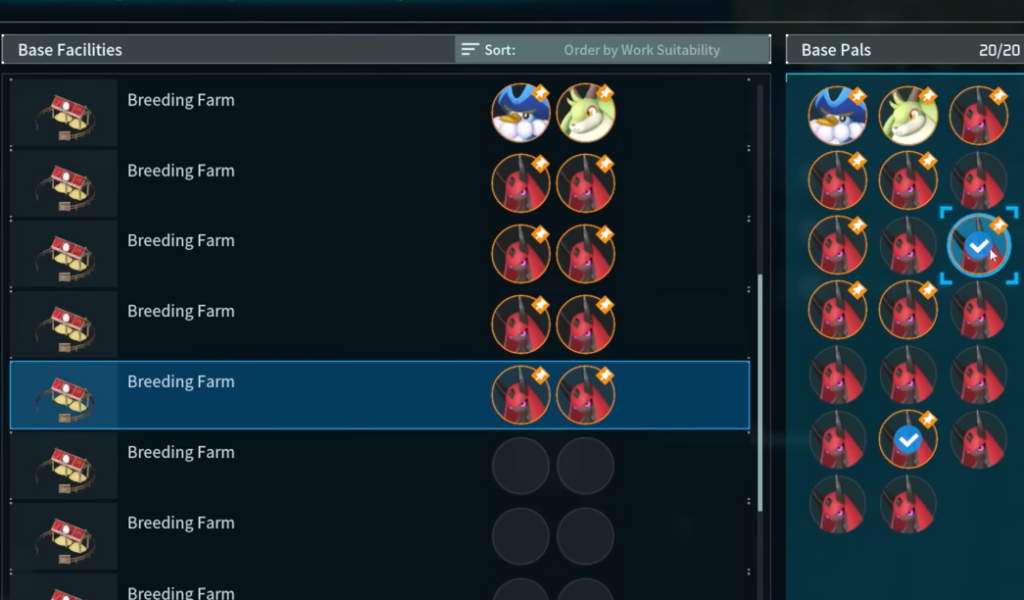
Breeding unlocks through the technology tree, with the Breeding Farm becoming available around the late teens in character levels. Before you commit to a project, make sure every piece below is in place, because a farm with no cake simply sits idle and produces nothing.
| Requirement | Why it matters |
|---|---|
| Breeding Farm | The structure where a pair produces eggs. |
| One male Pal | Half the pairing; parents do not need to be the same species. |
| One female Pal | The other half of the pairing. |
| Cake | Consumed for every breeding attempt; must sit in the farm’s chest. |
| Egg Incubator | Hatches the egg the pair produces. |
| Base space and work cap | Enough room and Pal capacity so breeding tasks actually run. |
The basic breeding loop
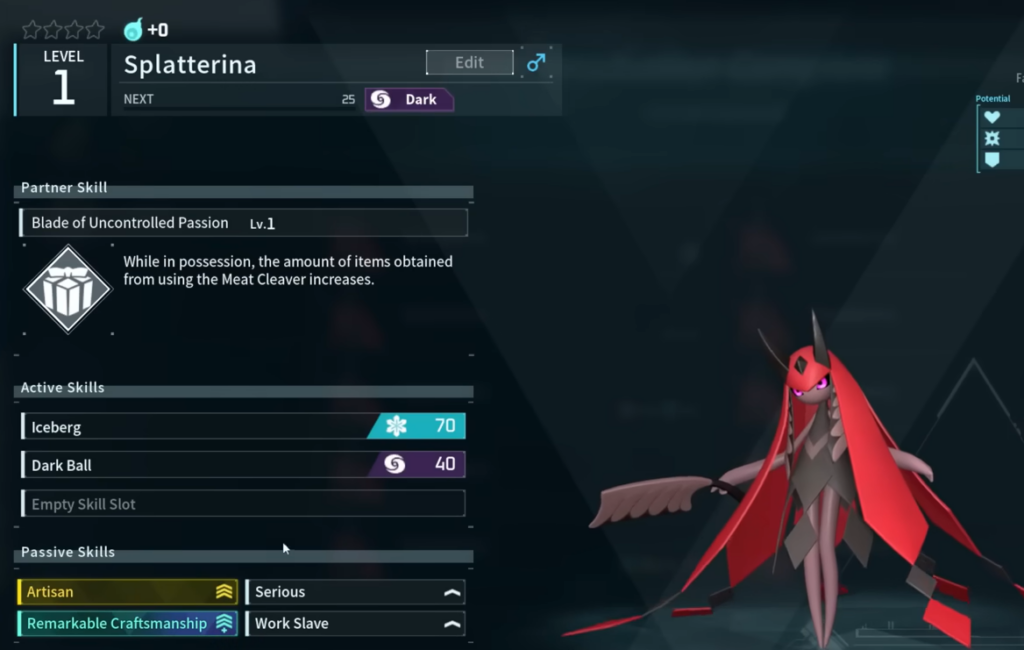
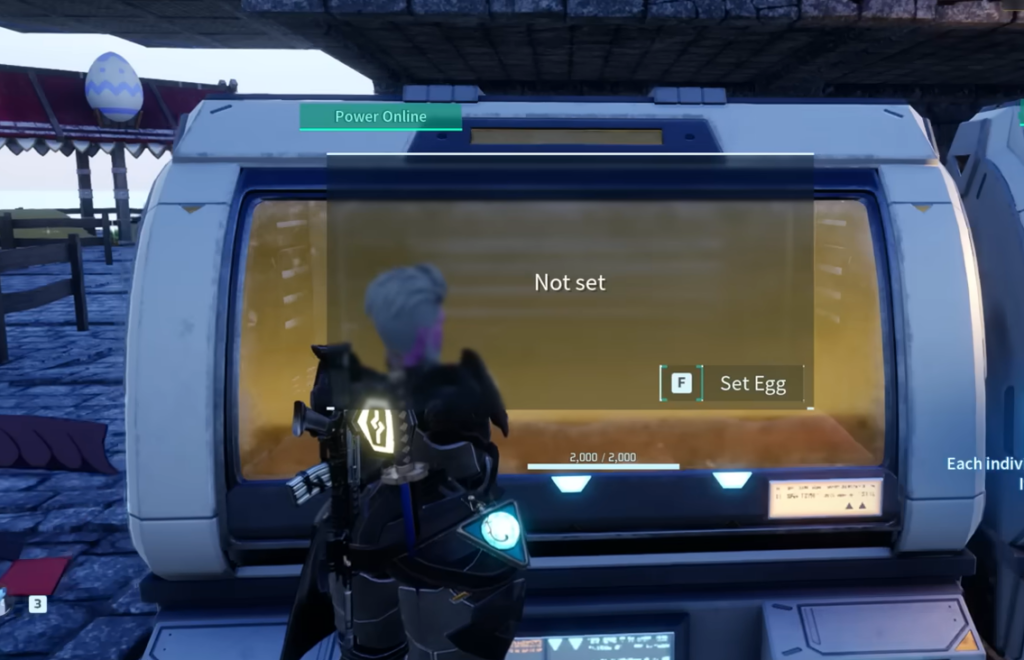
You know it worked when an egg shows up in the farm and, after incubation, a new Pal hatches. If nothing is produced, the usual cause is an empty cake chest or a pairing that is missing one gender.
How the child species is decided
Every Pal carries a hidden internal breeding value. When you pair two of them, the game blends those two values through a fixed formula and lands on a child species, which can be something neither parent is. That is the mechanic behind reaching rare or powerful Pals without waiting on a lucky wild spawn.
Because most Pals can breed with a wide range of other species, there are hundreds of viable combinations. Same-species pairing is the exception worth noting: it is the most reliable way to preserve passive skills, work suitability, and combat traits across several generations, since the child stays the same species you started with.
A breeding calculator takes the guesswork out of this. Feed it two parents to see the resulting child, or pick a target Pal to see every parent combination and the shortest chain to reach it. That is far quicker than testing pairings by hand when you are hunting a specific species.
Passing down the passive skills you want
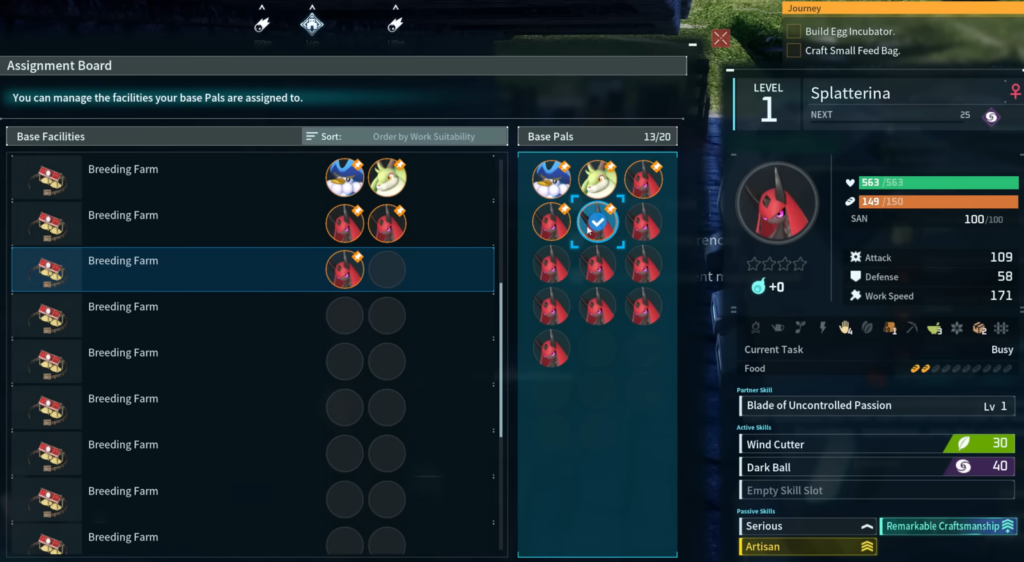
Inheritance is the real reason to breed instead of catch. Each offspring first rolls passive skills inherited from both parents, then may pick up random extras. A child most often lands with a single passive, and a clean four-passive result is rare, so reaching a perfect Pal usually takes several generations of pairing the best children back together.
The key trick is to reduce noise. The fewer unwanted passives your parents carry, the higher the chance the traits you actually want get passed on. A dependable loop looks like this:
- Catch several copies of the same Pal and keep only those with useful passives.
- Breed them together, then replace weaker parents with any offspring that improved.
- Repeat until every passive you want is stacked on one Pal.
Decide the target species first, then pick parents that already carry the passives you want to keep. Popular combat passives include Legend, Demon God, Musclehead, and Ferocious. For workers, Artisan, Serious, Work Slave, and Lucky are the go-to picks. Rainbow Passives are among the rarest bonuses in the game and are worth chasing only for end-game builds.
Note: Specialize rather than spread thin. A Pal built purely for Work Speed or purely for combat outperforms one you try to make do everything.
Alpha Pals as parents
Alpha Pals can be used in the Breeding Farm like any other parent. Pairing two Alphas does not guarantee an Alpha child, but there is a small chance the offspring inherits the Alpha status. Alphas have larger models and more HP, so this is useful when you want a bigger, tankier version of a favorite species.
Skill Fruits for active moves
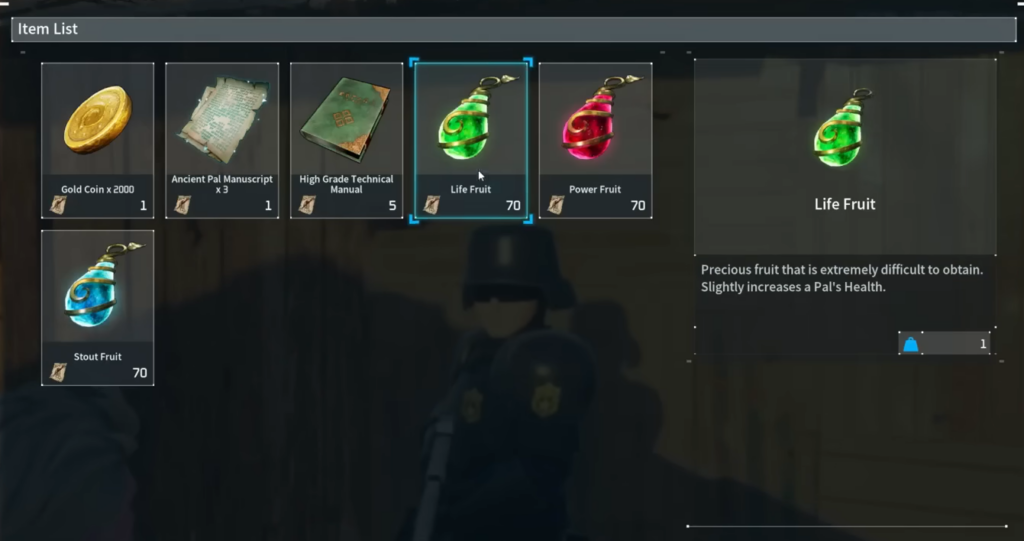
Breeding shapes passive skills, but it does not set a Pal’s active moveset. Skill Fruits handle that job by teaching new active skills after the Pal is bred. Combine the two, and you get a Pal with both the passives you inherited and the active attacks you want.
You can find Skill Fruits from Skill Fruit Trees, dungeon rewards, Oil Rig rewards, and other late-game exploration. Save your rarest fruits for the final Pal in a project rather than spending them on a mid-generation parent you plan to replace.
Keep the cake pipeline running
Cake is the bottleneck on any long breeding run. It is cooked at a cooking station and takes Flour, Milk, Eggs, Honey, and Red Berries. Set up the ingredient farms before you start a big project, because the moment the farm’s chest runs dry, egg production stops.
Incubation speed depends on egg size, environmental temperature, your incubation speed multiplier, and world settings. On a dedicated server you can adjust egg incubation time and breeding timers directly through world settings, which cuts hatch waits when a project spans dozens of generations.
Common reasons breeding stalls
| Symptom | Cause |
|---|---|
| No egg is produced | Cake chest is empty, or the pair is missing a male or female. |
| Wanted passives keep dropping | Parents carry too many unwanted passives diluting the roll. |
| Wrong child species | The parent pairing resolves to a different species; check a breeding calculator. |
| Eggs hatch too slowly | Incubation multiplier or temperature is working against you; adjust world settings on a server. |
Once the loop is dialed in, breeding becomes the most direct path to the exact Pals you want. Pick a species, line up parents that carry only the passives worth keeping, feed the cake pipeline, and each generation moves you closer to a Pal built for base work, exploration, or the hardest fights in the game.