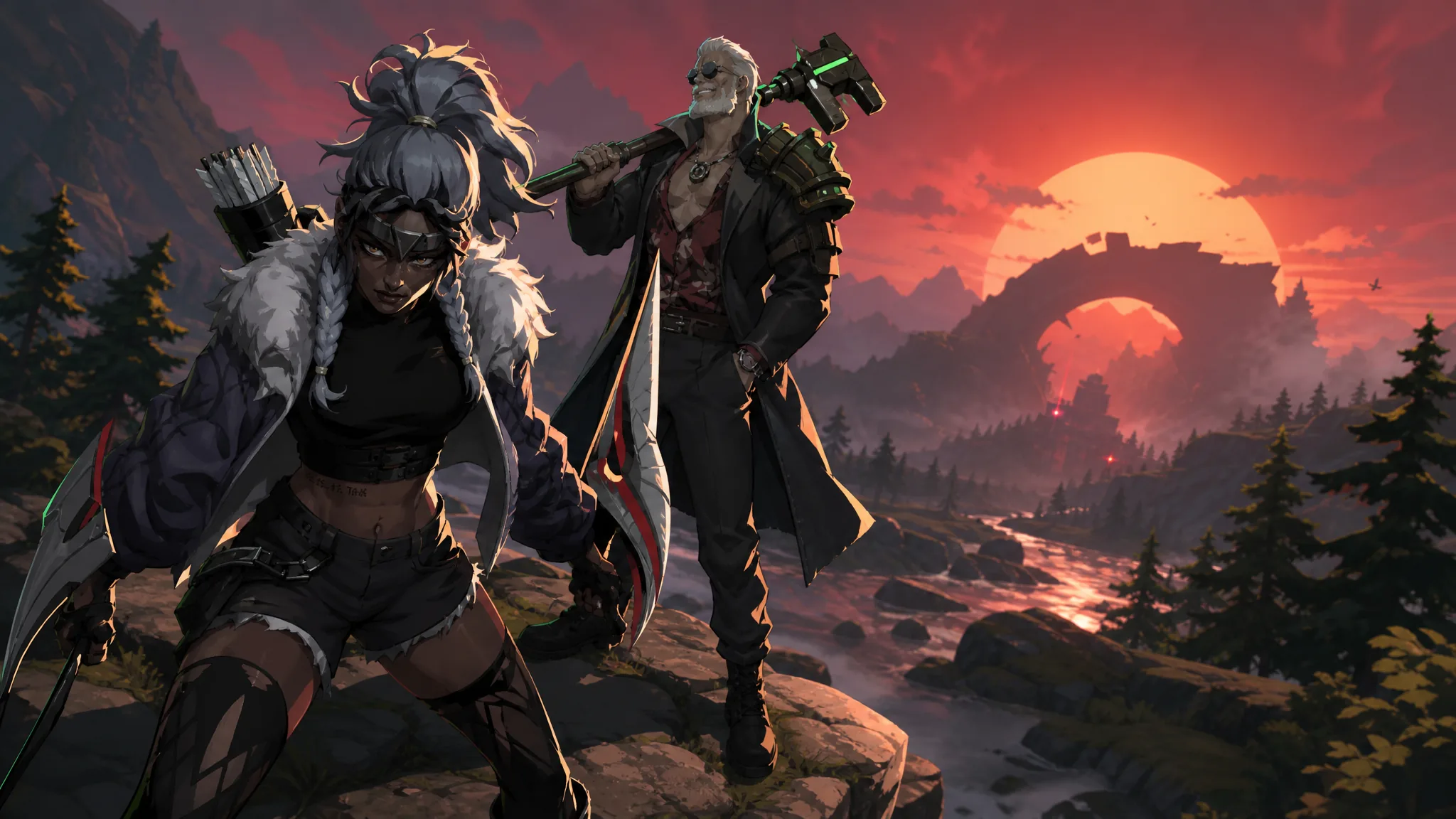
Guildrun is a roguelike, so no two runs deal you the same shop or relics. But the game still rewards you for building around a small set of heroes who scale reliably no matter what the board throws at you. Anchor your party on a few dependable carries and the auto-combat stops feeling random.
Quick answer: Draft around Funke, Ming, Aria, Pimenta, or Kai, upgrade one of them toward Rank A or S, and let the rest of your party cover the roles that hero does not. Each one turns a single scaling path into consistent damage, tankiness, or crowd control.
Why hero picks matter more than a fixed comp
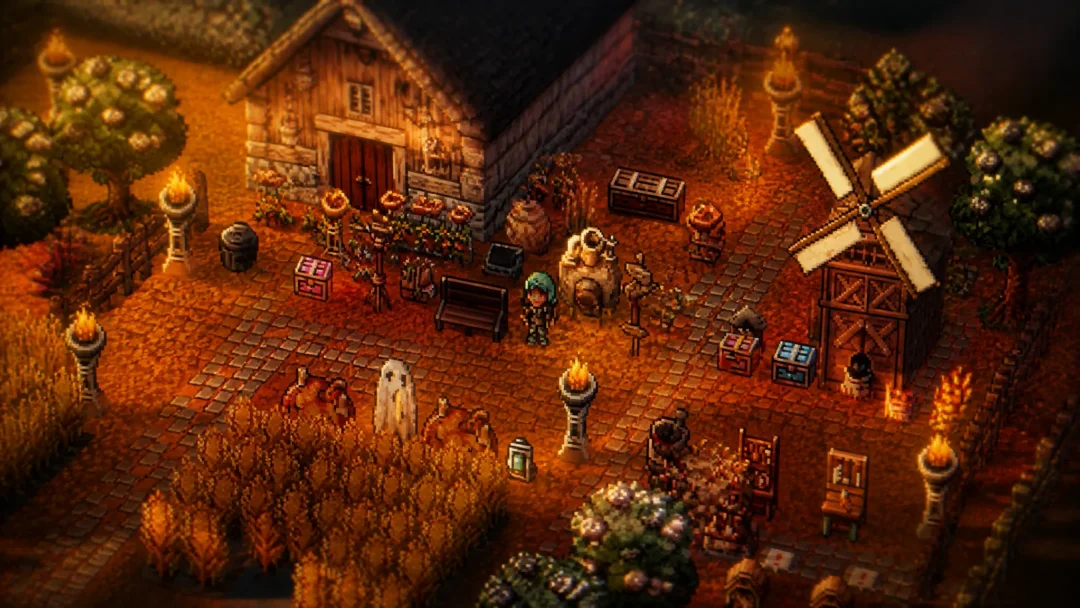
Guildrun is a single-player PvE auto-battler from Leyline where you draft heroes on a hex grid, fight automatically, and shop for specs, relics, and items across a roughly 20-minute run. Because combat resolves on its own, you cannot fix a bad party mid-fight. That is why the heroes you commit to matter so much.
Every hero climbs letter ranks from C up to S, and higher ranks unlock stronger passives and effects. The heroes below are worth building around because their upgrade paths pay off in a clear, repeatable way. Point your gold and rank-ups at one of them, then round out the front line, damage seat, and support slots with whatever the shop offers. You can grab the free demo on the Steam store page (AppID 3669200) if you want to try these picks yourself.
Funke: ranged mage carry that stacks burns
Funke is a mage who throws fireballs from range, which makes him a safe backline damage seat. As you rank him up, his attack range grows and he piles more burn stacks onto enemies. Reach Rank S and he becomes a relentless damage engine, gaining crit and magic boosts along with freeze effects that slow the enemy down.
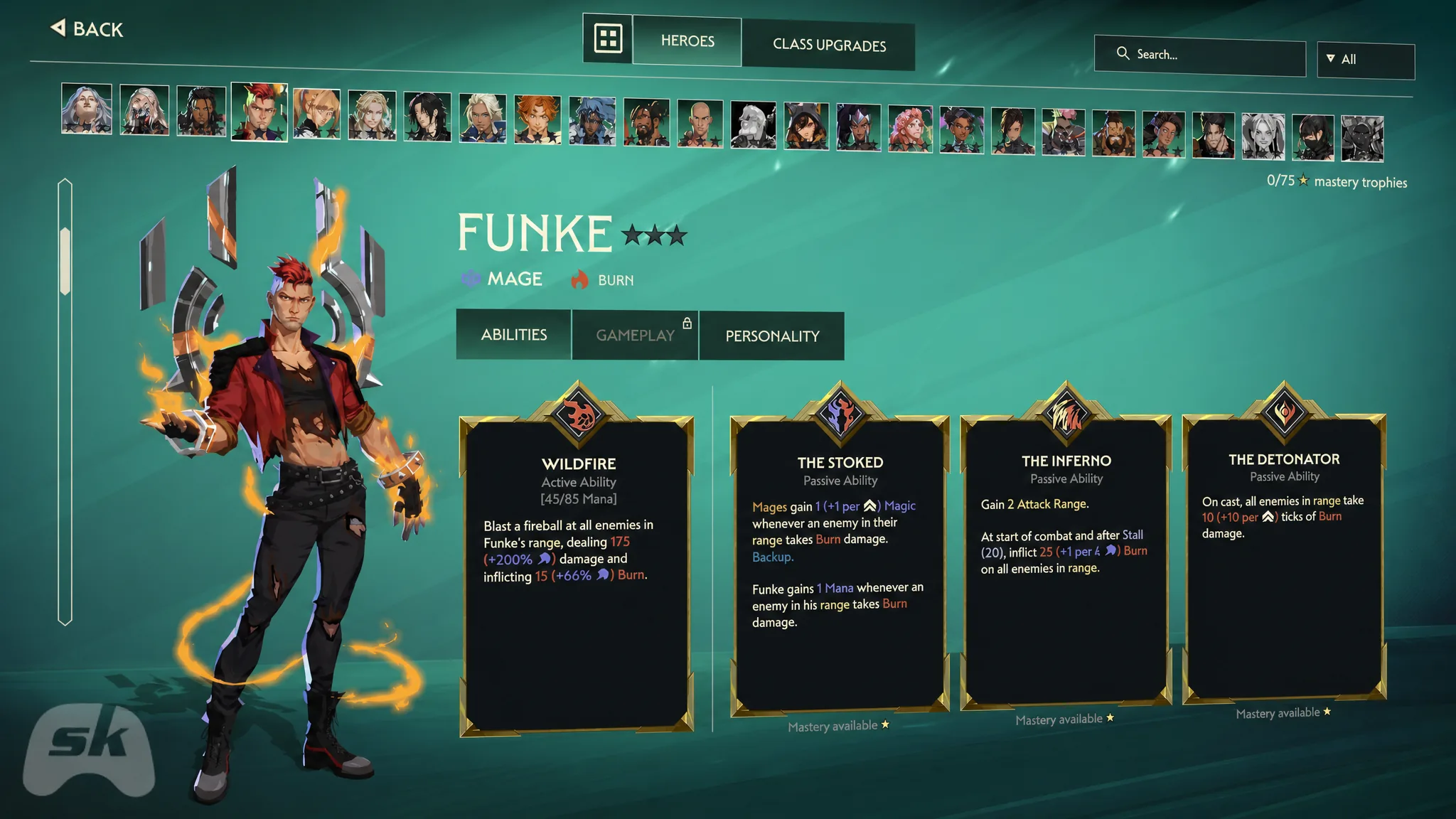
Keep Funke on a back-row hex behind a durable front line so he can stack burns without getting pulled. He is the clearest example of a hero who scales purely with rank investment.
Ming: melee vanguard bruiser
If you prefer to charge into the fight, Ming is your front-line pick. He is a vanguard who dives in, weakens enemies, and spreads burns with his attacks. Every upgrade makes him tougher to kill, and once you hit Rank A or S he picks up Omnivamp for lifesteal and Taunt, which forces enemies to focus on him.
Taunt is the reason Ming pairs so well with a fragile backline carry like Funke. He soaks the dive and keeps enemy attention off your damage dealers, while lifesteal lets him stay standing through long fights.
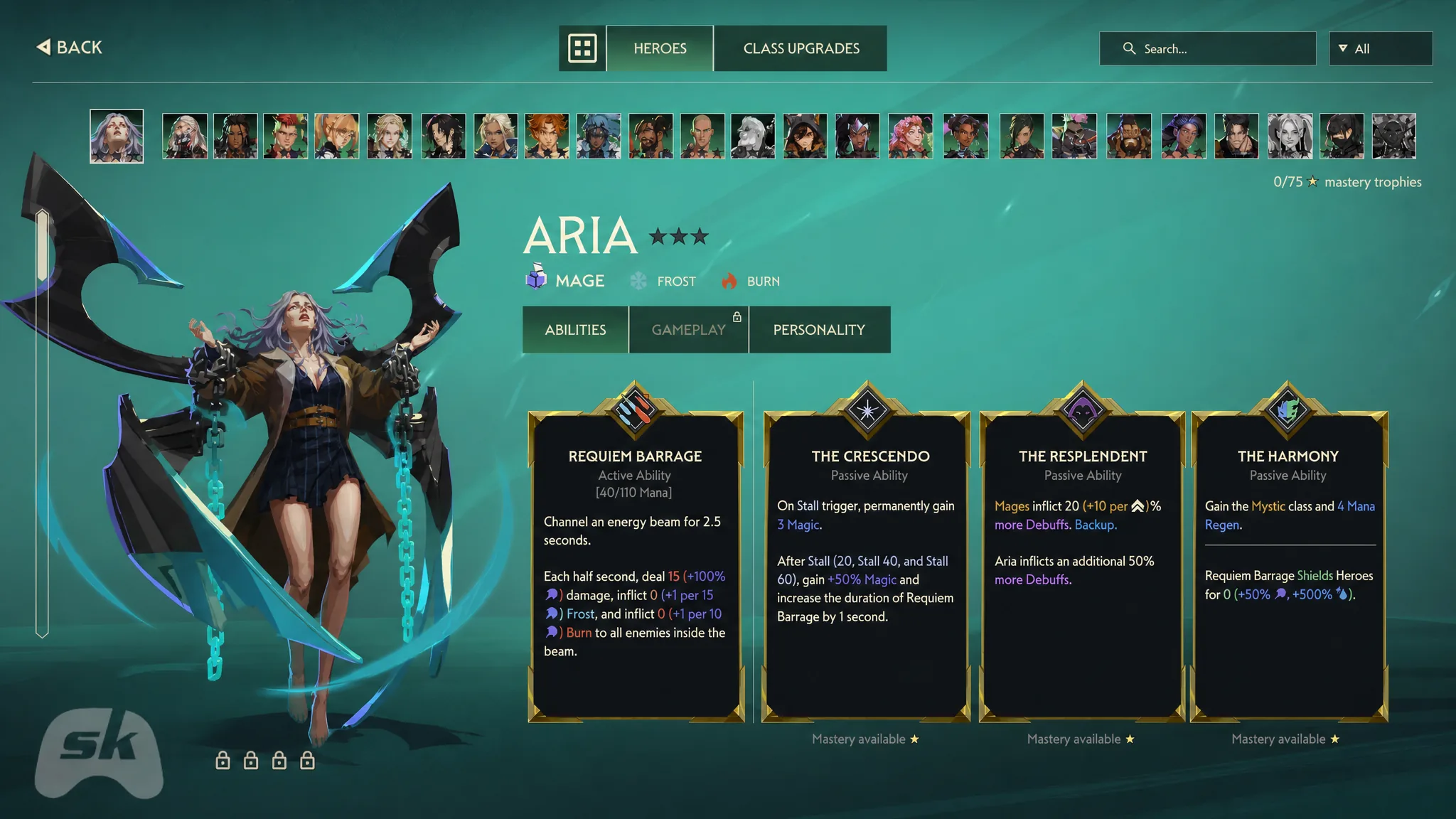
Aria: frost and burn mage with heavy sustain
Aria is a second strong mage option, blending frost and burn magic with a lean toward frost effects. What sets her apart is survivability. She carries several mana regeneration perks, so she can cast her spells far more often than most casters and rarely runs dry.
Her constant casting and frost slows make her a good pick when you want a damage seat that also softens the enemy tempo. She is hard to remove from a fight, which keeps your damage output steady into the later waves.
Pimenta: poison tank that grinds enemies down
Pimenta is a tank on paper, but her value is poison. Her Pepper Spray ability drops a poison cloud every few seconds from the moment you unlock her, chipping away at the enemy front line. Upgrade her further and she gains strong health and mana regeneration, letting her outlast tougher enemies.
Because damage-over-time scales with fight length, Pimenta gets better the longer a battle runs. That makes her a natural anchor for slower, attrition-style comps and for Endless pushes where sustain beats burst.
Kai: warrior crit carry that ramps late
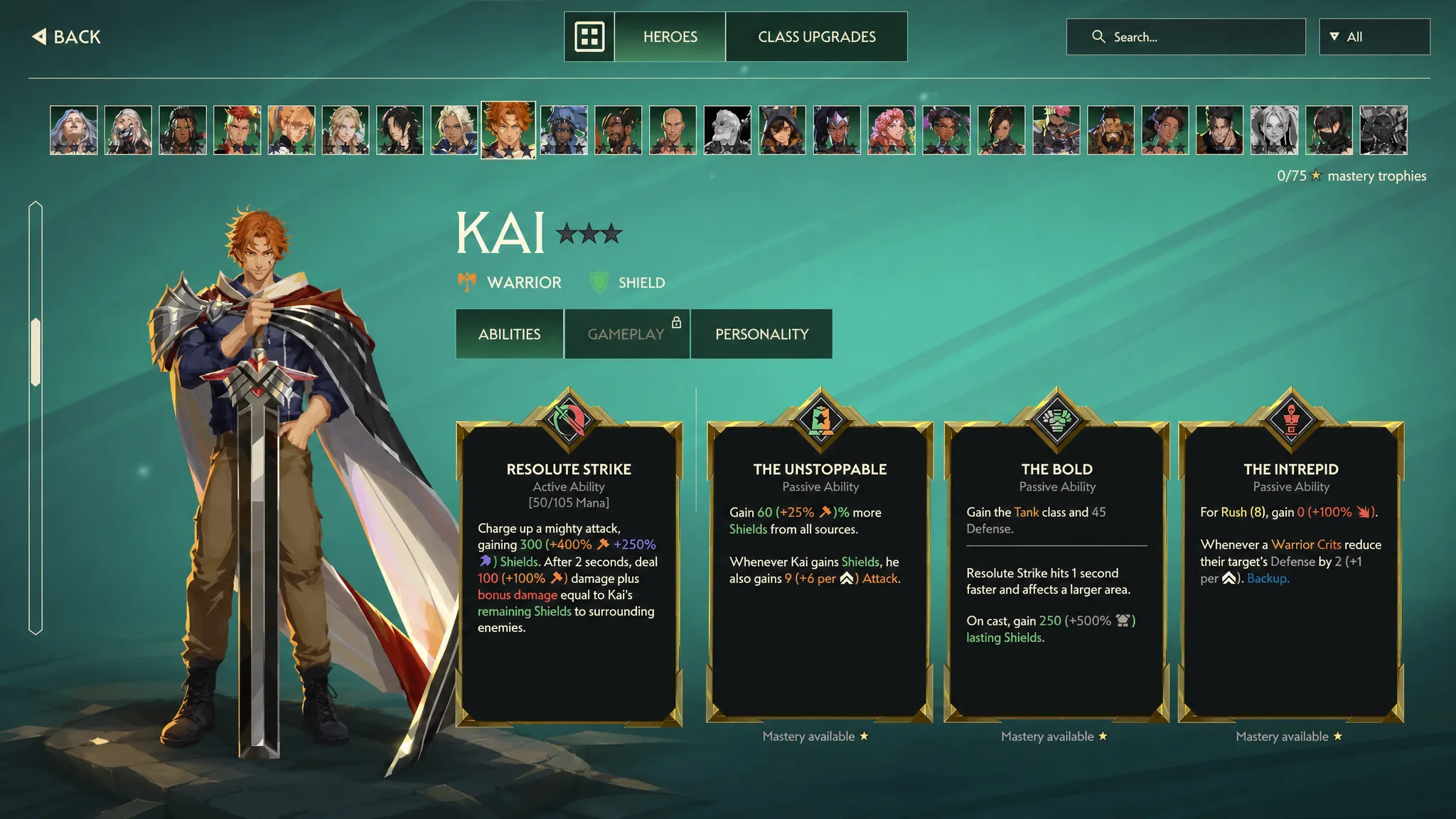
Kai is a warrior who rewards patience. Reach Rank B and you unlock The Intrepid passive to raise his crit chance. Push him to Rank A or S and he stacks even stronger crit perks alongside Omnivamp and Rush, a short burst of extra movement speed.
Kai is a late-bloomer, so he fits runs where you can protect him early and let him ramp. Kai also has a dedicated shield-stacking route built around start-of-combat shields and rank-ups, if you want to lean into durability instead of pure crit.
Hero roles at a comparison
Use this to slot each hero into the right seat and avoid stacking two heroes who want the same job.
| Hero | Class | Role | Key payoff |
|---|---|---|---|
| Funke | Mage | Backline damage | Growing range, burn stacks, crit and freeze at Rank S |
| Ming | Vanguard | Front line | Burns, plus Omnivamp and Taunt at Rank A/S |
| Aria | Mage | Backline damage | Frost and burn with heavy mana regen for constant casts |
| Pimenta | Tank | Front line | Pepper Spray poison cloud, health and mana regen |
| Kai | Warrior | Damage carry | The Intrepid crit boost, Omnivamp and Rush at Rank A/S |
How to build around these heroes
Picking a strong hero is only half the job. Guildrun rewards a two-role core with a flex slot, not a party of five heroes each chasing a different relic theme. Set your intent early and let the shop follow it.
Note: If two shops in a row push a trait your board does not hold, or your carry keeps dying, fix roles and pivot before buying more damage relics. Respec tools exist so you can change a hero’s job mid-run when a defining relic shows up.
None of these heroes is a guaranteed win on its own, and difficulty modifiers can punish burst-only or heal-heavy plans. But building around one reliable carry, covering the roles it lacks, and committing to two relic themes is the fastest way to make each run feel steady instead of luck-dependent.